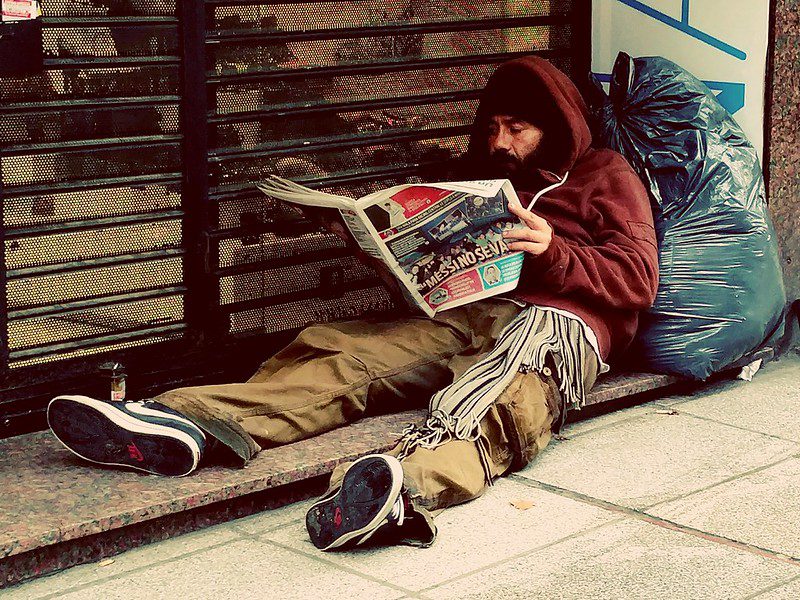
The Czech Republic has a population of about 10 million people. About 11,000 of these people experience homelessness. However, due to a lack of data collection, this number is inaccurate. According to the Expert Group, which the Ministry of Labour and Social Affairs created, around 100,000 people were homeless or at risk of homelessness as of 2017. The government has stepped in to help prevent homelessness, but the current policies in place are not sufficient to reduce homelessness in the Czech Republic.
Current Policies and Issues
Policies are in place to prevent individuals and families from losing their homes. An act on assistance in material need came into effect in 2007. This act regulates how the government provides assistance and assures basic living conditions to people in homeless situations. Additionally, the system serves as motivation to active effort for ensuring a means to meet basic necessities in life and to prevent social exclusion.
According to the act, municipal authorities are responsible for providing benefits in a few ways. One way is an allowance of living. This covers cases of material need that tackles the insufficient income of a person or family. Furthermore, beneficiaries have an entitlement to an allowance of living if the person or family’s income is less than the amount of living after the deduction of reasonable housing costs.
A second way is the supplement of housing. This tackles cases where the income of the person or family including the allowance is insufficient in covering housing costs. A third way is extraordinary immediate assistance. This goes to low-income persons who find themselves in situations that require immediate solutions. These situations might include a serious threat to health, natural disasters, not having enough resources to cover essential expenditures, not having enough resources to cover basic necessities for dependent children and persons at risk of social exclusion. The act helped about 1.2 million people receive benefits in its first year of implementation.
Services for the Homeless
There are services available to help people manage homelessness. These services include hostels, day centers, halfway houses and outreach programs. Day centers offer people emergency assistance, meals and facilities for personal hygiene. Moreover, they distribute clothes and organize cultural and educational programs. However, hostels have proven to be a problem. Owners of hostels have taken advantage of people by up charging their services. Furthermore, the conditions are also substandard and unsanitary.
Additionally, homelessness in the Czech Republic faces a lack of funding for services. Regional and national authorities co-manage the current system of annual calls for proposals. This means that homeless people are reliant on unstable funding sources. As a result, facilities have shut down over time due to the lack of funding.
How the Czech Republic Plans to Tackle Homelessness
The government plans to tackle homelessness with four sets of goals in 2020. The first set of goals involves access to housing. This includes the standardization of state support for public housing and creating a functioning system of homelessness prevention. The functioning system supports formerly homeless people who obtained housing so they do not lose their homes again.
Furthermore, it supports the implementation of tools to enable the transition of people from being homeless to entering housing. It is also working toward more effective use of the existing instruments of the system’s benefits, the reinforcement of the coordinating and planning role of municipalities within extended powers in relation to people in an adverse housing situation and the creation of supporting instruments for implementing those roles.
The second goal has to do with social services. Social services will better respond to the needs of homeless people and people at risk of losing their house in adverse social situations. The third set of goals relates to access to healthcare. This plan is to increase accessibility, create possibilities and focus on prevention with comprehensive healthcare for homeless people. Additionally, this goal also includes raising awareness to the general public, healthcare workers and social service workers to de-stigmatize homeless people.
The final set of goals involves awareness, involvement and cooperation. This plan is to create a network for retrieving information that is concentrated in municipalities. It has extended powers focused on homelessness among relevant stakeholders working with homeless people. This will fulfill conditions for statistics, records, communication, mobility of homeless people and the use of social services. In addition, the plan is to create an effective system of primary prevention through training, education and awareness-raising.
How NGOs Have Helped the Homeless
Homeless people in the Czech Republic often rely on NGOs for assistance. IQ Roma Servis is an NGO that implemented a project called the Housing First concept that provided housing for more than 400 families in the Czech Republic in 2016. The project had a municipality in Brno provide flats to families who previously lived in a form of a homeless shelter. Moreover, families also received intensive case management and a substantial housing subsidy.
A study occurred to understand the effects of this project. As a result, the study found a decrease in the time families spent homeless and found an improvement in housing security. Other positive outcomes include an improvement in the mental health of mothers, decreased use of emergency health services, decreased sickness in children, better social integration of the parents, improved financial security in households, decreased feelings of social anomaly and improvement in overall quality of life.
The government has a long way to go to prevent homelessness in the Czech Republic. If the government provides additional support and organizations to help the homeless population, it should be able to provide aid to more than 100,000 citizens who are at risk.
– Jackson Lebedun
Photo: Flickr

Maternal Mortality in Sub-Saharan Africa
Maternal mortality refers to the death of a woman due to causes related to or aggravated by her pregnancy and/or childbirth. Almost all (99%) of maternal deaths occur in developing countries, and 68% occur in Sub-Saharan Africa alone. The Trends in Maternal Mortality 2000-2017 report is a joint effort by WHO, UNICEF, UNFPA, World Bank Group and the United Nations Population Division. Its statistics showcase huge global health disparities that leave African mothers extremely vulnerable, showing that maternal mortality in Sub-Saharan Africa is a prevalent issue.
Health Inequality in Maternal Healthcare
Almost all maternal deaths are preventable, yet in 2017, Sub-Saharan Africans suffered from the highest maternal mortality ratio (MMR) of 533 maternal deaths per 100,000 live births, or 200,000 maternal deaths a year. All three countries with the highest MMR globally with over 1,000 deaths per 100,000 live births, considered an extremely high rate, are in Sub-Saharan Africa: South Sudan (1,150), Chad (1,140) and Sierra Leone (112). In comparison, the 2017 MMR in North America and Western Europe was 18 and five.
The fact that MMR is under 10 in many countries means that current technology and medical knowledge are already capable of reducing MMR to almost zero. The global imperative is to improve health infrastructure and education in developing nations so that they, too, can access services and resources available to protect mothers in the developed world.
The Importance of Access
Lack of access to health facilities and medical professionals is among the main reasons for maternal deaths. Currently, in Africa, there are 985 people for every nurse/midwife and 3,324 people for every medical doctor. This means that many pregnant women do not receive antenatal, delivery and newborn care, which greatly increases their risk of dying from severe bleeding, infections or other complications. Ensuring that there are accessible and affordable health facilities for all women would eliminate risks of preventable and treatable deaths.
Adolescent Pregnancy
Improving sexual health education is key to eliminating adolescent pregnancies, which account for a significant portion of maternal mortality in Sub-Saharan Africa. Adolescent girls, especially those under 15, have a higher risk of maternal mortality compared to older women. In 2014, there were 224 adolescents per 1,000 cases of pregnancy in the Democratic Republic of Congo – the highest teenage pregnancy rate in the world, followed by Liberia (221) and Niger (204). Improvements in sexual health education would inform young girls of contraceptive options, family planning methods and safe abortion facilities.
Progress Tracker
Significant efforts have succeeded in reducing maternal mortality in Sub-Saharan Africa. From 2000 to 2017, Sub-Saharan Africa has achieved a substantial reduction of 39% of maternal mortality (from 870 to 533 maternal deaths per 100,000 live births). A significant number of countries in this region have reduced their MMR by more than half, such as Rwanda (79%), Mongolia (71%), Eritrea (63%), Zambia (60%) and Cabo Verde (51%).
WHO has stated that improving maternal health remains one of their key priorities. In 2015, the global health organization launched the Global Strategy for Women’s, Children’s and Adolescents’ Health aimed at ending all preventable deaths of women, children and adolescents. The UN’s Sustainable Development Goal target 3.1, also launched in 2015, aims to reduce global MMR to less than 70 per 100,000 live births by 2030. While the current MMR in Africa is still seven times less than the target, promising results from past and current campaigns indicate that a better future is within reach.
– Alice Nguyen
Photo: Flickr
Homelessness in the Czech Republic
The Czech Republic has a population of about 10 million people. About 11,000 of these people experience homelessness. However, due to a lack of data collection, this number is inaccurate. According to the Expert Group, which the Ministry of Labour and Social Affairs created, around 100,000 people were homeless or at risk of homelessness as of 2017. The government has stepped in to help prevent homelessness, but the current policies in place are not sufficient to reduce homelessness in the Czech Republic.
Current Policies and Issues
Policies are in place to prevent individuals and families from losing their homes. An act on assistance in material need came into effect in 2007. This act regulates how the government provides assistance and assures basic living conditions to people in homeless situations. Additionally, the system serves as motivation to active effort for ensuring a means to meet basic necessities in life and to prevent social exclusion.
According to the act, municipal authorities are responsible for providing benefits in a few ways. One way is an allowance of living. This covers cases of material need that tackles the insufficient income of a person or family. Furthermore, beneficiaries have an entitlement to an allowance of living if the person or family’s income is less than the amount of living after the deduction of reasonable housing costs.
A second way is the supplement of housing. This tackles cases where the income of the person or family including the allowance is insufficient in covering housing costs. A third way is extraordinary immediate assistance. This goes to low-income persons who find themselves in situations that require immediate solutions. These situations might include a serious threat to health, natural disasters, not having enough resources to cover essential expenditures, not having enough resources to cover basic necessities for dependent children and persons at risk of social exclusion. The act helped about 1.2 million people receive benefits in its first year of implementation.
Services for the Homeless
There are services available to help people manage homelessness. These services include hostels, day centers, halfway houses and outreach programs. Day centers offer people emergency assistance, meals and facilities for personal hygiene. Moreover, they distribute clothes and organize cultural and educational programs. However, hostels have proven to be a problem. Owners of hostels have taken advantage of people by up charging their services. Furthermore, the conditions are also substandard and unsanitary.
Additionally, homelessness in the Czech Republic faces a lack of funding for services. Regional and national authorities co-manage the current system of annual calls for proposals. This means that homeless people are reliant on unstable funding sources. As a result, facilities have shut down over time due to the lack of funding.
How the Czech Republic Plans to Tackle Homelessness
The government plans to tackle homelessness with four sets of goals in 2020. The first set of goals involves access to housing. This includes the standardization of state support for public housing and creating a functioning system of homelessness prevention. The functioning system supports formerly homeless people who obtained housing so they do not lose their homes again.
Furthermore, it supports the implementation of tools to enable the transition of people from being homeless to entering housing. It is also working toward more effective use of the existing instruments of the system’s benefits, the reinforcement of the coordinating and planning role of municipalities within extended powers in relation to people in an adverse housing situation and the creation of supporting instruments for implementing those roles.
The second goal has to do with social services. Social services will better respond to the needs of homeless people and people at risk of losing their house in adverse social situations. The third set of goals relates to access to healthcare. This plan is to increase accessibility, create possibilities and focus on prevention with comprehensive healthcare for homeless people. Additionally, this goal also includes raising awareness to the general public, healthcare workers and social service workers to de-stigmatize homeless people.
The final set of goals involves awareness, involvement and cooperation. This plan is to create a network for retrieving information that is concentrated in municipalities. It has extended powers focused on homelessness among relevant stakeholders working with homeless people. This will fulfill conditions for statistics, records, communication, mobility of homeless people and the use of social services. In addition, the plan is to create an effective system of primary prevention through training, education and awareness-raising.
How NGOs Have Helped the Homeless
Homeless people in the Czech Republic often rely on NGOs for assistance. IQ Roma Servis is an NGO that implemented a project called the Housing First concept that provided housing for more than 400 families in the Czech Republic in 2016. The project had a municipality in Brno provide flats to families who previously lived in a form of a homeless shelter. Moreover, families also received intensive case management and a substantial housing subsidy.
A study occurred to understand the effects of this project. As a result, the study found a decrease in the time families spent homeless and found an improvement in housing security. Other positive outcomes include an improvement in the mental health of mothers, decreased use of emergency health services, decreased sickness in children, better social integration of the parents, improved financial security in households, decreased feelings of social anomaly and improvement in overall quality of life.
The government has a long way to go to prevent homelessness in the Czech Republic. If the government provides additional support and organizations to help the homeless population, it should be able to provide aid to more than 100,000 citizens who are at risk.
– Jackson Lebedun
Photo: Flickr
How the WTO Fights Poverty
The World Trade Organization (WTO) is one of the youngest, international economic organizations in the world. However, it plays an important role in the international economy and the global fight against poverty. Originating from the Uruguay Round negotiations which took place from 1986 to 1994, the WTO took over the functions of the General Agreement on Tariffs and Trade (GATT) in 1995. Since then, it has been the setting for global trade negotiations. The main role of the WTO is to assess trade barriers between countries and solve them through diplomatic negotiation. The goal of the WTO is to achieve full, fair trade and a fully globalized economy. In doing so, the WTO fights poverty around the world.
Global Trade and Global Poverty Reduction
As global trade profits continue to rise, the need for a powerful and well-directed WTO is strong. According to the WTO, merchandise exports have increased by an average of 6% every year since the 1950s. Furthermore, global trade has grown 50% more than the global economy outputs every year and “total exports in 2016 were 250 times the level of 1948.” Global poverty reduction and global trade can play hand-in-hand. The WTO ensures that the two are harmonious as possible. By focusing on developing countries, protecting the most vulnerable populations and giving less powerful countries voices on the international stage, the WTO fights poverty in unique and effective ways.
Building Trade Capacity in Developing Countries
One way in which the WTO fights poverty is through global development. Also, the inclusion of low income in the global trade market. The WTO has a powerful commitment to assist developing countries in maximizing their trade potential. This, in an effort to achieve stable footing on the world stage. The WTO allows developing countries more time to meet certain commitments. Moreover, it plays an active role in building trade infrastructure across the developing world. One of the WTO’s most powerful policies is the Aid for Trade initiative launched in 2005. The initiative works to build developing countries’ trade capacity through investments in infrastructure. More than $340 billion supports growing economies through this initiative.
Creating Jobs and Meeting International Standards
Another key WTO program fighting poverty is the Enhanced Integrated Framework (EIF). The mission of the program is to assist developing nations “in their use of trade as an engine for growth, sustainable development, and poverty reduction.” EIF has worked in 51 countries, ensuring country ownership of trading ports. Moreover, EIF acts as an “honest broker” in trade negotiations and helps countries fight poverty by creating new trade-related jobs. EIF has invested more than $220 million into supporting the world’s poorest countries, through trade.
The WTO is also working to ensure that developing countries interested in entering into global trade can meet “international standards for food safety, plant and animal health”. This way, they can effectively access global markets. The program is called the Standards and Trade Development Facility (STDF) and it works to ensure that developing economies are prepared for the demands and standards of the global economy.
Increased Participation in Global Trade Leads to Poverty Reduction
The statistics speak for themselves as to how the WTO fights poverty. According to the World Bank, developing countries make nearly 50% of all global trade, an increase “from 33% in 2000.” Coinciding with the increase in developing countries’ role in global trade is a sharp decline in global poverty. Nearly 1 billion people have risen out of extreme poverty since 1990, underscoring the clear linkage between increased trade capacity and poverty reduction. The WTO is ensuring that citizens of all nations can participate in and benefit from global trade by providing a new road, source of employment or new exported goods.
The WTO indirectly affects poverty by facilitating the growth in trade that has brought about significant decreases in poverty. Increased trade brings employment and infrastructure to communities that never would have seen them without their nations’ entry into the global economy. Through its programs, the WTO affects poverty on a large scale by ensuring that the global trade market is just that, truly global.
– Garrett O’Brien
Photo: Flickr
5 Facts About the Crisis in the Sahel
5 Facts About the Crisis in the Sahel
A Global Commitment to Change
Due to the displacement crisis in the Sahel, 24 million people — with half of those being children — urgently need access to essential health services. According to OCHA, $2.8 billion would effectively provide aid to these impoverished individuals in the Sahel. An extra $638 million would adequately mitigate the impacts of COVID-19 in the region. The $2.8 million investment would help increase employment and political stability. Furthermore, it would assist refugees and implement new and ongoing programs in the Sahel.
France and the G5 (the five Sahel countries: Burkina Faso, Mali, Mauritania, Niger and Chad) held a meeting to acknowledge the crisis. The main issues being, instability and terrorist threats pervading the Sahel. The participants committed to a strategy that focuses on combating terrorism and creating sustainable change through institutional reform.
A Final Outlook
The Sahel is the most impoverished region globally and faces challenges from persistent threats. Additionally, COVID-19 threatens to exacerbate previous issues and is estimated to forcibly displace 1 million people across the Sahel region. One surefire way that the Sahel will steadily improve is through support from the U.S. and other nations to fund programs for more effective governance, healthcare and education.
– Isabella Thorpe
Photo: Flickr
Evolution and Healthcare in the UAE
The United Arab Emirates (U.A.E.) has undergone many transformations throughout the years. This is because of the discovery of oil in 1958. In 1971, after gaining independence from Great Britain, seven different monarchies came together to form the federation that stands to this day. It is already a highly-developed country but continues to modernize and diversify. Moreover, many of the changes have to do with healthcare in the U.A.E.
The Evolution of the UAE
The U.A.E. has historically been very reliant on oil production with the region holding the fifth-largest oil reserve in the world. The availability of oil has been a great advantage to kickstart their economy and help it flourish into the second-largest economy in the Middle East. However, there has been a focus on transforming the oil-based economy into a service-based economy — similar to what is seen in other developed countries. Major infrastructure projects have been completed in the hope of making the U.A.E. a giant in the tourism industry. The country has made great strides from the era of British colonialism with a high standard of living and an estimated GDP per capita of $41,000.
Additionally, in past decades, the U.A.E. has worked to build off its oil-based society. Due to high temperatures, citizens of the U.A.E. are among the largest consumers of energy in the world. The government has looked to expand on alternative energy sources. In 2013 Abu Dhabi opened a major solar power plant, capable of powering up to 20,000 homes. Furthermore, in 2009, construction began on four nuclear power plants; one of them is currently operating.
Healthcare in the UAE
The U.A.E. has many advantages working in their favor when it comes to building a comprehensive healthcare system for its citizenry. As the U.A.E. was able to develop so quickly, consequently it lacks a current, deeply rooted healthcare network. The government can observe the most effective practices and employ the newest technologies. The quality of care in the U.A.E. has made it a hot spot for medical tourism.
In recent years, there has been growth in the private healthcare sector. As a result, healthcare in public hospitals is free for citizens. The government also subsidizes health insurance for citizens. The combination of premium quality care and low costs lead to world-renowned healthcare in the U.A.E. The system has been able to handle COVID-19 patients with relative ease. For example, 66,000 Emiratis have contracted the virus and only 370 have lost their lives.
Migrant Workers Slip Through the Cracks
Furthermore, the U.A.E. has gone through an unprecedented boom in the construction of skyscrapers. To fill their labor needs, the U.A.E. has a heavy dependence on foreign labor. Migrants make up about 90% of the Emirati’s population. Those 8 million migrants are mostly migrant workers from surrounding countries in search of economic opportunity. Employers exploit them while treating them as outsiders. They do not have access to the perks enjoyed by Emirati nationals. Less than 30% of Emirati, companies are required to provide health insurance to employees. Normally, only the most serious injuries receive medical attention. Additionally, construction work is very dangerous in the U.A.E.; between eight and 10 bodies are sent to their native countries, each month.
Although the U.A.E. is a very wealthy collection of states, they have been unable to guarantee quality healthcare for all. Migrant workers overwork for nominal wages. Whether it is by choice or a result of their societal structure, these laborers do not get to enjoy the fruits of their labor.
– Matthew Beach
Photo: Flickr
Hunger and Malnutrition in New Caledonia
New Caledonia is a French territory off the east coast of Australia. Like many Pacific Island nations, its main food staples include fish, fruit and coconut. While food insecurity is not a prevalent issue in the territory as a whole, food deserts are certainly. Rising food prices drive the poorest citizens — most often, those of the Kanak community (New Caledonia’s indigenous Melanesian population) — to scrounge for their needed caloric intake. Cheap food products sacrifice nutrition for convenience and the prevalence of these food deserts in New Caledonia has prevented the entire population from enjoying the sustenance the island has to offer. These are the factors that are contributing to the problem of malnutrition in New Caledonia.
Growth in Both Prosperity and Food Prices?
Growth stunting and hunger levels are generally low in New Caledonia. However, as food prices rise, it becomes difficult for rural and tribal communities (which have been most affected by the country’s spike in poverty rates) to maintain healthy diets. These increases follow the nation’s growth in prosperity — derived from its lucrative nickel industry and payments from mainland France.
Malnutrition in New Caledonia arises from economic and geographical limitations. Despite how the territory seems to flourish, wealth is unequally distributed. This, in turn, leads to a significant portion of the population struggling with rising food prices. When markets lack competition, sellers can raise the price of goods without the risk of a competitor undercutting them. On top of wealth and wage disparities, the poorest populations in the country cannot afford nutritional food.
A Victim of Geography
Like most islands, New Caledonia operates under the constraints of its remoteness, which involves limited space and a smaller, local market. Food prices are about 33% higher in New Caledonia, with inflation having risen in the territory at a faster rate than it did in France. Those above the poverty line in New Caledonia spend only about a quarter of their income on food. Yet, for the 17% living below it — they might spend more than half of their income on food. In New Caledonia, 85% of adults eat fish at least once a week. Of the total amount fished, 92% is used for subsistence, which leaves the remaining 8% for the market.
While New Caledonia has several great agricultural staples, the reliance on agriculture has been decreasing due to a reduction in available land (as well as the increase of non-agricultural jobs). The distribution of available agricultural land parallels the disparity in wealth distribution and food security concerning the Kanak community and the rest of New Caledonia’s population. The predominantly European-settled Southern Province holds about 22% of New Caledonia’s limited farmland. Meanwhile, the native Kanak Northern Province holds only about 14%.
During 2004–2006, the prevalence of undernourishment in the population was at 9.6%. This rate decreased in the next decade, dropping to 8.2% during 2017–2019. For comparison, the rate of undernourishment in the U.S., one of the wealthiest nations in the world, is less than 2.5%.
Closing the Gaps
While hunger is not an issue for all of its citizens, malnutrition in New Caledonia tends to plague those who receive less of the territory’s wealth as compared with others. As food prices rise, many of those who do not receive proper nutrition fall into the lower-income bracket and thus, below the poverty line. Also, this unfortunately tends to include members of the Kanak community. This wealth disparity (and subsequent nutrition disparity) is exacerbated by lower rates of education and job training within the Kanak communities. This of course results in lower rates of employment among the Kanak. By first bridging the education and employment gap, closures on the wealth and nutritional gaps can then follow.
– Catherine Lin
Photo: Flickr
Botswana Wives Granted Equal Land Ownership
On September 17, 2020, Botswana President Mokgweetsi Masisi announced that wives will now be able to own land independently from their husbands. This is an amendment to the 2015 Land Policy that prevented women from owning land independently if their husband was already a landowner or even co-owning land equally along with their husbands. Botswana, a landlocked country located in Africa, had also prevented widowed women from inheriting their deceased husband’s property. Because people considered women to be their husband’s property, the deceased husband’s inheritance would then pass down to a male relative, leaving the widow without any land to live or work on. Now that Botswana gives women equal land ownership, wives can regain independence inside of marriage. Married women are able to choose their own plot of land, which includes both state-owned and tribal land.
Measures Toward Equal Land Ownership
Unmarried women could purchase land after the 2015 Land Policy passed, but married women and widows had always experienced exclusion from this right. Additionally, husbands had the power to sell a property without consulting their wives, preventing them from having access to land used to work. Because Botswana gives women equal land ownership, wives are now equal to their husbands.
As an extra measure, President Masisi encouraged non-governmental organizations to teach women about their rights. Women will also have access to legal support to assist them in securing their success as landowners. This additional project will ensure the enforcement of the amendment so that as many women as possible can benefit from it.
This amendment is especially important during the COVID-19 pandemic, as widows previously could not inherit their husband’s land. Widows face the threat of becoming social outcasts and typically have no choice but to marry male relatives to grant security. Now that Botswana gives women equal land ownership, widows are able to support themselves and remain independent.
Women in Agriculture in Botswana
Land ownership is especially important for women in order to make a living from farming. About 80% of Botswana’s population are farmers, the majority being single women who can own land. Married women now will have an equal opportunity to work and contribute to their family income. Less than one month after President Masisi’s announcement, 53% of the 620,660 people on a waitlist to purchase property were women according to Botswana’s land audits reports. Globally, only 15% of female farmers own land, despite women making up the majority of farmworkers.
When announcing the new amendment, President Masisi said “The Botswana Land Policy 2015 was discriminatory against married women and did not give them equal treatment with men, and I am happy to report that this discriminatory sub-section has since been repealed.”
Botswana certainly has a long way to go with securing women’s rights, but protecting widows and granting wives equality to their husbands is a huge step in the right direction. Botswana’s recognition of married women’s rights to own land promises further advancements in women’s rights.
– Karena Korbin
Photo: Flickr
Strawberries Support Poverty Eradication in Senegal
A strawberry company named FraiSen is boosting economic growth in Africa and demonstrating that social enterprises are the future of innovations in poverty eradication in Senegal.
Poverty in Senegal
Senegal has long-term peace and political stability. However, much of the country is still in poverty. According to the World Food Program, 39% of the Senegal population live in poverty. In addition, about 75% of families suffer from chronic poverty. Poverty in Senegal has critical links to irregularities in the agricultural industry. Unpredictable rainfall patterns and inefficient farming practices have resulted in a struggling overall economy.
Alarming Job Loss in Africa
Additionally, the global COVID-19 outbreak is taking a major toll on African economies. As the African Development Bank reported, projections have determined that 24 to 30 million Africans could lose their jobs in 2020 alone. This is especially serious because many developing countries in Africa, like Senegal, already suffer high rates of poverty.
Social enterprises could be the solution to the poverty that the global COVID-19 outbreak in Africa has caused. According to a British Council study, “Social enterprises are five times more likely to support vulnerable groups like women and people living in poverty than profit-first businesses … which could be key in helping those hardest hit by job losses during COVID-19.” Social enterprises are a beneficial tool for African economies recovering from the pandemic. It is also a critical part of innovation in poverty eradication in Senegal.
Social Enterprise in Senegal
In Senegal, a technology and innovation hub called Kosmos Innovation Center is working to cultivate sustainable economic growth in West Africa by sponsoring new social enterprises. The Kosmos Innovation Center aims to contribute to the creation of healthier and more diverse economies. It will do this by helping the new generation of entrepreneurs and facilitating innovation in sectors beyond oil and gas. By supporting African businesses, Kosmos Innovation Center is creating jobs and reducing poverty in Africa.
So What About Strawberries?
One of Kosmos’ projects is a social enterprise in Dakar, Senegal called FraiSen. FraiSen is a centralized network of small strawberry farms in Senegal along with several African countries. Due to the country’s climate, the strawberry industry had great potential in Senegal in the past. However, the industry lacked the technical and transportation resources and efficiency necessary to make the industry profitable on an international scale.
FraiSen gives the necessary resources and training to the small strawberry farms in order to maximize the strawberry yield and export them to other African countries and even to Europe. By facilitating and connecting these small businesses, FraiSen is creating higher-paying job opportunities in impoverished communities. It bolsters the “Made in Africa” label across the continent. Currently, FraiSen receives orders for approximately 10 tons of strawberries per week.
FraiSen is just one example of a social enterprise that is reducing poverty by growing small, African businesses and creating sustainable job opportunities in developing countries. Its success demonstrates the potential for Senegal to more widely use social enterprises as an innovation in poverty eradication in Senegal.
– Courtney Bergsieker
Photo: Flickr
Impact of RSPO on Sustainable Palm Oil Production
RSPO’s Initiative
The palm oil industry is large in size. As a result, it does not have many regulations. The side effects that come with this are significant. They include improper and unethical farming, unequal pay for workers and unsafe working conditions. The most predominant consequence is deforestation.
By recognizing these malpractices and their impact on the employees and environment, RSPO sought a new and progressive technique. After being formally established in April 2004, the RSPO introduced its Principles and Criteria (P&C) for the production of sustainable palm oil. To account for unique national laws and the complexity of the palm oil supply chain, the P&C undergoes revision every five years and varies internationally. However, the fundamental elements remain the same.
Additionally, the P&C prioritizes deforestation prevention. This means that companies are unable to clear or cultivate in substantially forested areas containing valuable biodiversity or fragile ecosystems. In addition, the requirements also highlight the fair treatment of workers, abiding with international labor rights standards. They also decreased the use of harmful pesticides and chemicals. If these main guidelines, along with the others stated on the P&C, are successfully implemented and reviewed, palm oil producers are certified by the RSPO.
RSPO’s Theory of Change
By providing specific guidelines to guarantee sustainability certification, RSPO is mobilizing its main vision: to make sustainable palm oil the norm. Its Theory of Change protocol outlines the procedures in place to attain this goal. The roadmap analyzes the effectiveness of its outputs on three main areas: prosperity, the planet and the people.
Furthermore, one main effort which benefits the people is an increase in smallholder participation and overall mobilization of growers. This in turn leads to improved risk management and safer work practices. These smallholders are small-scale farmers with low hectarage and family-run labor. RSPO certification of smallholders improves their management practices, quality of fruit and yield and access to markets.
Progress Made in Mexico
Overall, the long-term progression on the Theory of Change roadmap suggests that farmers will experience more sustainable and financially stable lifestyles. This past year, Oleopalma became the first RSPO-certified company in Mexico. Since small-scale farmers account for 90% of Mexico’s palm oil farmers, this achievement will reflect widely in the prosperity of the people. After Columbia, Mexico is the largest consumer of palm oil in Latin America. This reaffirms the key benefits coming forward from this transformation. It is also the largest sourcing market for PepsiCo’s palm oil supply. This correlation suggests not only a drastic improvement in the lives of workers but eventually the environment and economy as well.
– Samantha Acevedo-Hernandez
Photo: Flickr
How Uruguay Was Prepared to Combat COVID-19
Uruguay’s History and Financial Situation
Uruguay, despite being located in South America, is more comparable to countries in Europe and not without reason. In the pre-colonial era, the entire region likely had a population of only around 10,000. Diseases brought by the first settlers in the 17th century killed most of that small population and so the area was left largely empty save for a few scattered groups of native people. After more than a century of fighting over the territory between colonial powers, Uruguay gained independence in 1830 and began to become a modern state by the 1870s.
In the late 19th century, hundreds of thousands of Europeans emigrated to Uruguay, bringing with them economic connections to the continent as well as better agricultural knowledge which kickstarted the country’s economy. Throughout the 20th century, despite some political conflicts, Uruguay made strides at becoming a developed country and brought its extreme poverty rate to the single digits. Since the early 2000s, the country has seen significant reductions in poverty and large improvements in healthcare capability and overall quality of life.
In a span of just 12 years from 2006 to 2018, the poverty rate in Uruguay decreased from more than 30% to 8%, while the extreme poverty rate went from 2.5% to 0.1%. Uruguay diversified its economy from one mostly reliant on its neighbors, Argentina and Brazil, to splitting its most important trade partners four ways, with China and the European Union becoming its two largest partners. Its success in creating a working, safe democracy in the 21st century has opened up the country as a popular tourism destination and tourism now accounts for nearly 10% of Uruguay’s GDP. Uruguay maintains the largest middle class in the Americas consisting of more than 60% of its population, fueling economic growth as most people in the country hold savings and can afford to buy consumer goods.
Uruguay’s Prepared Response to COVID-19
All of Uruguay’s recent economic success has allowed the country to create a well-functioning healthcare system capable of keeping its citizens healthy. Its history and geographical small size have led the country to be prepared to combat COVID-19. Uruguay’s health system, a mix of public and private care which also allows the lowest-income residents of the country to get high-quality care at low or zero-cost, was prepared to handle a crisis. Broad support for the government meant that at the start of the pandemic, citizens trusted their public health officials and followed the guidelines they put out.
The Uruguayan health system, unlike most others in South America, also had the capability to make its own COVID-19 PCR tests from the start of the pandemic—allowing public health officials to contact trace early cases. In May, when a region of Uruguay bordering Brazil saw a small outbreak, the public health response was immediate. As described by Dr. Rafael Radi, the coordinator of Uruguay’s scientific advisory group, “Within 24 hours there was a contingent of people—epidemiologists, nurses, physicians went to Treinta y Tres to completely follow the transmission chain, test every single person and follow up the contacts of the contacts.” Such strong measures make it difficult for the virus to gain a hold in the country.
Despite being located right next to Brazil, a COVID-19 hotspot, Uruguay was able to combat COVID-19 and reopen its internal economy quickly. Masks are required indoors and on public transport and are encouraged everywhere else. Most schools and universities in the country are open with in-person classes. To date, Uruguay has reported fewer than 3,000 cases of COVID-19 and 52 deaths. Already achieving high-income status, if Uruguay can continue its economic growth post-COVID-19 and improve its education system to train its youth for the future, the country is well on its way to being a truly developed nation on par with other small countries like Singapore and Ireland.
– Jeff Keare
Photo: Flickr