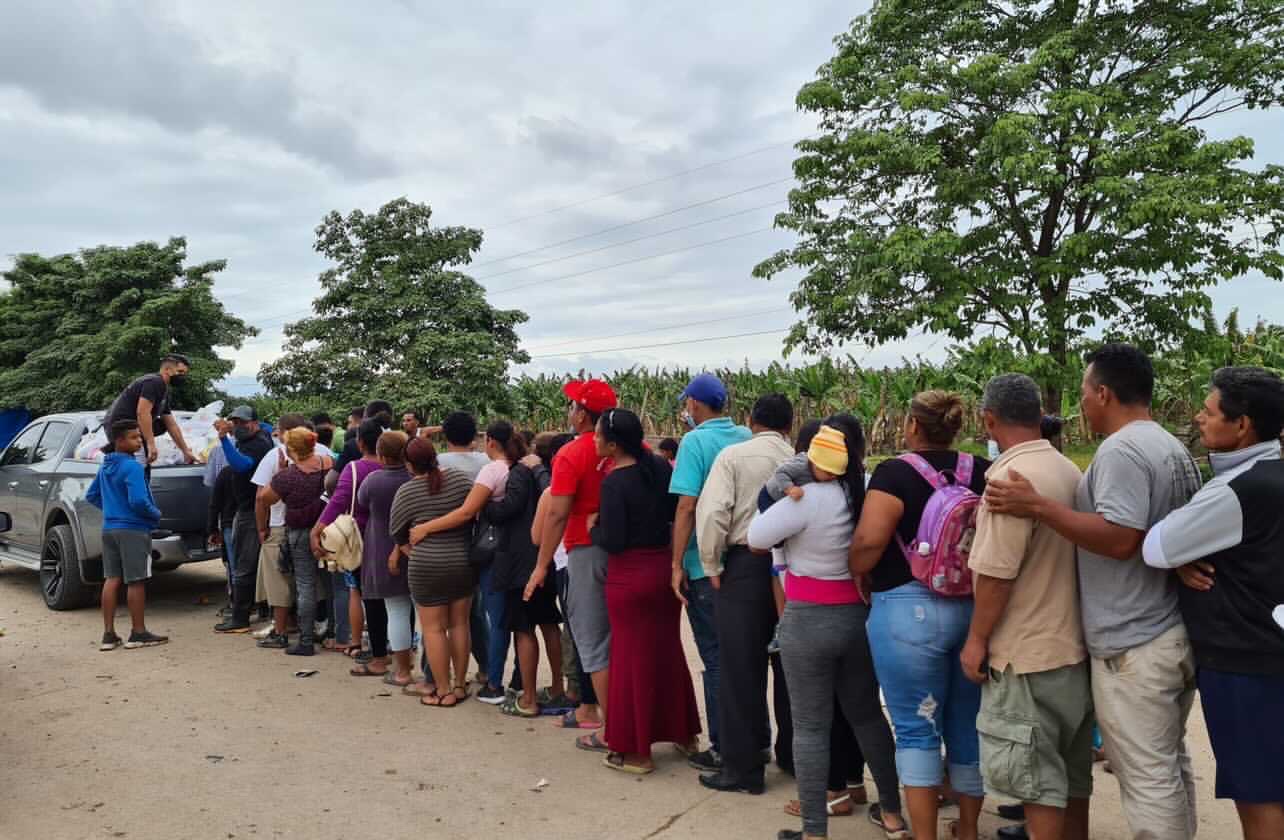
Families in Honduras found strength within community ties and organizations like Humanity and Hope, despite the impact of COVID-19 on poverty in Honduras. There have been 249,118 COVID-19 infections in Honduras since the start of the pandemic. In May 2021, Honduras reported the highest peak with an estimated 1,000 infections a day, according to the Reuters COVID-19 tracker.
Prior to the pandemic, 40% of the total population in Honduras did not have employment. COVID-19 affected 250,000 families into food security due to job loss, according to the World Food Programme (WFP).
Supporting the Community
Despite the impacts of COVID-19 on poverty in Honduras, family communities within Honduras assisted others by handing them food and toiletries during the hardest times of the pandemic. Organizations like Humanity and Hope also stepped up, serving the communities of La Coroza, La Cuchilla and Remolino to help them become sustainable on their own.
Humanity and Hope, a nonprofit organization located in El Progreso, Honduras, initiated team and volunteer trips after a year of lockdown. Caleb Mejia, director of trips and Honduran volunteers, said people from different parts of the world take these trips and encounter the hardships of communities.
“Humanity and Hope does not want people to come down to Honduras and dig a hole or paint a school, and that’s it,” said Mejia in an interview with The Borgen Project. “You can see something through television or through your phone, but it will never, ever be the same if you actually experience it.”
Humanity and Hope
Humanity and Hope operates on six different pillars: infrastructure, economy, community, health, education and leadership. According to Mejia, volunteer trips occur once a month with a focus on a pillar.
In July 2020, H&H’s annual health trip served nearly 1,010 people in a week. The annual health trip consisted of a team of 18 staff members, volunteers and assistance from the Honduran Red Cross and dentists.
“Along that week, we ended up doing triage, pharmacy, doctor consultations and hosted experience trips,” said Mejia.
When Hurricane Eta stepped in amidst a pandemic, Honduran communities suffered complete destruction. Despite the devastation and impacts of COVID-19 on poverty in Honduras, communities of Honduran family members, even those outside the U.S., came together to help others.
“I had the means and the people who were willing to help,” said Ashley Carrasco in an interview with The Borgen Project, a resident of California. “I helped because Honduras is my home, the love of my life.”
Ashley Carrasco and Franklin Castillo
In November 2020, Carrasco and her family fundraised an estimate of $4,000 for the communities of San Pedro Sula and Santa Barbara. Carrasco used the means of social media to fundraise on the Venmo app to provide to families affected by the pandemic and hurricane.
Carrasco and her family, located in the United States, shared their fundraiser with every possible follower. She transferred the collected funds to her cousin, Franklin Castillo, located in San Pedro Sula, Honduras, to purchase grains, diapers, baby formula, mattresses and toilet paper to distribute to the community.
“I witnessed many people losing their homes due to the hurricane and floods,” said Castillo in an interview with The Borgen Project. “The government’s response was slow like always. I have seen communities do more for each other than the government.”
Castillo raised a total of $9,000 with the help of family members in the U.S. He distributed the toiletries and food supplies estimated to last each family at least two weeks to nearly 300 families within communities that were impacted by COVID-19 and the hurricane.
Castillo continues to give a portion of his business earnings to the community. He said the pandemic is still affecting people as Honduras initiated vaccinations to the elderly, a small percentage of the population. According to Our World in Data, research university of Oxford, only 0.6% of the population has received two doses of the vaccine.
“I saw a positive change in the community,” said Castillo. “People who did not have much were trying to help others. My family and I were able to help, all thanks to God.”
– Diana Vasquez
Photo: Franklin Castillo

Bringing Clean Water to Native Reservations
Lack of Access
Native Americans are 19 times more likely than white people to not have indoor plumbing in their households. This lack of access, prevalent on reservations, is largely due to outdated or broken water systems that reservations do not have the funding to properly repair. If passed, the Infrastructure Act will help provide funding for these repairs, amounting to $150 million over five years.
Poverty on Reservations
The main reason for the inability of Native American reservations to repair these faulty water systems is a lack of funding. This is directly related to the high poverty levels seen on reservations. About 30% of Native Americans are currently living in poverty, with that number climbing up to 63% on reservations. Despite the rising rates of Native Americans attending school, the unemployment rate has increased and wages have decreased.
Water and Poverty
There is a well-established link between a lack of clean water and poverty levels. Without clean water, individuals and communities are unable to properly clean, wash their hands, bathe or have successful agriculture. A lack of water can also lead to increased conflict and exacerbate gender inequalities. Women are more likely to spend their time going to get water which takes away from time that could be spent in school. Water is particularly necessary for women at key hygienic times, such as during menstruation or childbirth.
COVID-19 and a Lack of Water
This lack of access to clean water leads to increasing health issues as well, something that has been painfully obvious in the last two years as a result of the pandemic. Native Americans are 3 times more likely than non-Hispanic white people to contract the virus. Pre-existing racial and health care inequalities also pose challenges to receiving the same standard of care. If everyone had access to drinking water and could access adequate sanitation, global disease could be reduced by as much as 10%.
Water Infrastructure Act
Improving access to clean water on native reservations is imperative. This act, Senate Bill 421, will work directly in the Columbia River Basin to target Native American reservations in that area. It directs the Environmental Protection Agency to fix the water systems that serve the basin. The bill will expand the Indian Reservation Drinking Water Program and work to alleviate the problems that come with a lack of access to clean water.
If passed, this bill will help many residents of native reservations. Currently, the program only helps the Missouri River Basin and the upper Rio Grande Basin, but this bill will work to change that. Access to clean water is a fundamental need for all humans. Passing this bill will help the country take a step forward in ensuring this need is met for all people.
– Alessandra Heitmann
Photo: Flickr
Greenland’s Foreign Aid Dilemma
Many countries around the world benefit from foreign aid, but few rely on it for their livelihood. Greenland is one of the few countries that would struggle to exist at all without it, as Greenland’s foreign aid is essential to its economy. Each year, Denmark, Greenland’s former colonial ruler, gives the island nation about $591 million in subsidies. That represents about 60% of the Greenlandic government’s budget and comes to more than $10,000 for every person living in Greenland. The subsidy, however, is not the cure-all Denmark might hope it to be.
Greenland’s Foreign Aid and Social World
Greenland is a land of contradictions. It is the largest island in the world, yet has a population of fewer than 60,000 people. Its average income is about $33,000, placing it far above the international average, yet Greenland also suffers from a suicide rate seven times higher than in the United States, and a poverty rate of 16.2% as of 2015. Traditional practices remain the norm in many parts of the country. Fishing accounts for 90% of Greenland’s exports, and dog sleds are still a common sight in the island’s undeveloped interior.
How can Greenland receive so much aid and still suffer from such social ills? Part of the answer lies in international politics. Although Greenland is nominally independent, many of its politics are still under the control of Denmark. Worried about losing influence in Greenland, Denmark has often blocked other countries’ efforts to invest in Greenland.
For example, Denmark raised objections to a $12.1 million aid package to Greenland from the U.S. in 2020. While politicians raised some valid concerns about the package (particularly in light of President Trump’s tactless 2019 offer to buy Greenland from Denmark), the fact remains that foreign investment would almost certainly enrich Greenlanders. This would be especially relevant if Greenlanders, rather than Danes, were the ones to make decisions about foreign aid.
Potential Wealth in Greenland
On the other hand, Greenland itself enjoys huge sources of potential wealth. The island is strategically located in the arctic region. Greenland also possesses valuable mineral deposits in its interior, which global warming will eventually uncover. Unfortunately, Denmark’s reluctance to permit foreign aid, and a lack of local capital, have prevented Greenland from taking advantage of these resources.
Greenland’s dependence on Danish money is a major source of instability for the country. Were the Danish government to change its policy, Greenland’s fragile economy would collapse. Greenland’s reliance on fish also creates uncertainty, since fish prices tend to fluctuate quickly. Economic development, as well as investment from a variety of countries, would remove much of the country’s economic uncertainty.
The goal of foreign investment should be to make countries prosperous and, eventually, self-sufficient. Greenland, however, shows few signs of becoming more economically independent from Denmark. Greenland’s GDP has grown very slowly and actually shrank between 2013 and 2014, despite Denmark’s funding. Danish aid to Greenland seems to have become an absent-minded gift, rather than an aid program with a clear purpose and goals.
Consequences of Denmark’s Aid
If Denmark sticks to the status quo of offering aid but preventing others from doing the same, Greenland will continue to suffer from its high poverty rate. Denmark will still have to pay huge sums of cash to keep the Greenlandic economy afloat.
However, if Denmark were to permit more investment in Greenland and put more emphasis on helping Greenland achieve self-sufficiency, Greenland would become wealthier and its economy would be more stable. This would in turn benefit Denmark because Greenland would eventually no longer need so much financial support. Whatever Greenland’s foreign aid future holds, it seems clear that it can do better than the status quo.
– Thomas Brodey
Photo: Flickr
The Role of US Aid in Uruguay
Among all of the Latin American countries, Uruguay is unique for numerous reasons. Compared to many other countries located in the Americas, Uruguay has a fairly high per capita income. Rates of inequality and poverty are extremely low in Uruguay and extreme poverty itself is virtually nonexistent. Uruguay’s middle class is vast compared to other nations in the Americas. Its middle class makes up more than 60% of the country’s population. Uruguay’s economy has been so successful that back in 2013, the World Bank gave Uruguay the status of a high-income country. Given how successful Uruguay’s economy has been, it seems hard to believe that the country would need any form of aid. However, U.S. aid in Uruguay is prevalent in the country, and it benefits the people of Uruguay and the other nations in the Americas.
The US/Uruguay Relationship
The relationship between the U.S. and Uruguay dates back to 1867. The relationship between the two countries is incredibly strong due to its longevity. Both the U.S. and Uruguay have aligned values. Among these is the importance of democracy, viable economic policies and protection of the environment. Because of the long-existing relationship between the two countries and their similar values, it is less surprising that there is U.S. aid in Uruguay.
The Purpose of US Aid in Uruguay
There are two main reasons the U.S. gives aid to Uruguay. One is to encourage Uruguay to take active involvement in international affairs. The other is to help Uruguay improve security within its borders. Uruguay might be a high-income country, but its military is not fully professionalized. The aid that the U.S. provides can allow Uruguay to develop its military further, which would help strengthen the country’s security. Doing so will also allow Uruguay to help in international affairs. Uruguay has a long history of helping with peacekeeping missions and has provided vast amounts of personnel to peacekeeping operations conducted by the United Nations (U.N.). These peacekeeping operations allow Uruguay to help its neighbors in the Americas.
Economic Partnership
Both the U.S. and Uruguay have economic partnerships as well. According to the most recent available data, the U.S. had $1.6 billion of foreign direct investment in Uruguay in 2017. Around 120 U.S.-owned businesses are in operation in Uruguay as well. While Uruguay’s economy is in a healthy state, the economic relations with the U.S. ensure that it can maintain its economy with help from a reliable ally.
US Support of Uruguayan Education
U.S. aid in Uruguay has also come in the form of education. Uruguay has been a full supporter of Fulbright programs for some time. The Fulbright Commission and its programs allow students from various countries to study abroad. The Uruguayan government contributes $500,000 annually in support of these programs. This monetary support allows Uruguayan students to obtain scholarships that will allow them to travel to the U.S. to pursue postgraduate studies.
The Uruguayan government also spends up to $100,000 for English teachers to assist Uruguayan students in learning English. Studying in the U.S. is beneficial for Uruguayan students and any other students as well. Obtaining new knowledge will allow these students to return to their home country and obtain well-paying careers. This, in turn, will be beneficial for the economy of the home country.
The U.S. aid in Uruguay and the economic relationship that both countries share are beneficial for both sides. In particular, Uruguay can strengthen itself and be a servant of peace in the Americas. The economic relationship that Uruguay has also allowed the country to maintain its healthy economic state.
– Jacob E. Lee
Photo: Flickr
Pandemic Refugees in the United States
The COVID-19 pandemic has greatly affected refugees, causing a migration crisis and hindering equality among poor people. Millions of people have experienced displacement from their homes since the outbreak began. This massive displacement created a concentration of immigrants in urban areas seeking asylum. The term for these individuals is “pandemic refugees.” Pandemic refugees in the United States are individuals the virus severely affected who desire a place to seek asylum and better-quality health services. However, the virus spread rapidly across borders, making it harder for refugees to find places that are genuinely safe.
Actions from the IOM
The International Organization for Migration (IOM), which is the United Nations’ migration agency, has worked hard to provide shelter to those the COVID-19 pandemic displaced. The organization also partnered with the World Food Program (WFP) to fight for people currently facing food and sanitary crises. Poverty deprives people of access to health facilities, allowing them to potentially avoid the virus. Additionally, the lack of new jobs and the government imposing quarantines have led people to seek help from organizations or even become pandemic refugees forced to cross borders looking for a better living standard.
Reaching the United States
Devastated economies have caused millions of individuals to flee to the United States, potentially traveling long distances in their journeys. Dozens of people pile up on the border between Mexico and the United States. These refugees pack minimum necessities and hit the road, attempting to cross the border and start a new life as unauthorized U.S. citizens. The Biden administration has encountered a significant number of refugees seeking prosperity and asylum in the aftermath of the pandemic. The U.S. Border Patrol has stated that refugees try to cross the borders daily. These numbers are quickly growing to overwhelming amounts.
Opportunity and Despair
While pandemic refugees in the United States seek a better life, they also encounter difficulties when searching for jobs. Compared to documented citizens, opportunities for undocumented citizens are different. Governments frequently attempt to send them back to their home country. Because of this, vulnerable groups like refugees are paying the highest price during the COVID-19 pandemic. Complications from the pandemic have created despair for individuals who flee their land and families. The closure of borders and restrictions on movement limit individuals’ access to food, housing and overall security. There are few cases of success and opportunities for refugees who fled their home countries seeking better opportunities. Security is also a significant problem for refugees since they are vulnerable groups and can spread the virus.
US COVID-19 Response
The United States has responded to the pandemic with a relief package of $11 billion for a global response. The U.S. government has worked hard to stop extreme poverty levels during the pandemic, and increase vaccination numbers and sustainable development. The country has also implemented unemployment benefits to give extra money to qualified unemployed individuals. Nevertheless, the U.S. must extend more of these protections to pandemic refugees. If it does, pandemic refugees in the United States will obtain the assistance and security they deserve to protect themselves and their families.
– Ainara Ruano Cervantes
Photo: Flickr
Ways to Improve Global Health Systems
The Importance of Using Telehealth
One service that can be convenient for people who do not have access to transportation or cannot make appointments to see healthcare providers is telehealth. The number of patients using telehealth has increased throughout the COVID-19 pandemic. More people have been taking advantage of telehealth due to not being able to see doctors face-to-face. Using telehealth can expand a variety of services to patients around the world. With many patients wanting to continue accessing services through telehealth, improving its quality can help improve global health systems.
Teladoc and Microsoft to Develop Virtual Care Program
A new collaboration between Microsoft and Teladoc Health will focus on expanding virtual care. Their goal is to find ways to increase positive experiences and improve the circumstances of healthcare systems. With more healthcare providers using online services, one component of the collaboration includes working on methods that make it easier for employees to do their jobs efficiently. Certainly, this collaboration can help improve healthcare systems with the option of providing healthcare services virtually.
THRIVE to Help Improve Healthcare Systems
Franz Strategic Solutions recently created THRIVE, an initiative to provide healthcare to people who do not have access to different services. Further, many people would receive healthcare benefits from a variety of programs. One of the initiative’s main priorities is on improving healthcare systems. THRIVE plans to create solutions to issues within healthcare systems through components such as technology. Through its partnership with RDI Healthcare, THRIVE plans to focus on increasing positive outcomes for patients within healthcare systems.
How COVID-19 Has Impacted Healthcare Systems
The COVID-19 pandemic has highlighted various issues that potentially led to many people not trusting health care systems. One area that requires focus is the number of healthcare workers because many parts of the world struggle due to the lack of people working in healthcare systems. Having more healthcare workers can bring some benefits, such as increased patient care and lower health disparities. Increasing the amount of money for health-related purposes can help improve the quality of healthcare systems. Another thing that requires consideration is the healthcare system’s components. It is necessary to provide certain services such as outreach and child care.
Telehealth has been an important service within healthcare systems throughout the COVID-19 pandemic. Certainly, the collaboration between Teladoc Health and Microsoft is prioritizing virtual care options for healthcare systems. THRIVE is one initiative that can be beneficial to many healthcare systems. In conclusion, the number of healthcare workers and healthcare service options is essential to the quality of a healthcare system.
– Chloe Moody
Photo: Wikimedia Commons
Eradicating Poverty Using OpenTabs Browser Extension
Barriers to Financing
Every day, financial institutions reject the loan applications of thousands of low-income people looking to escape the poverty trap and start their own businesses as these populations are labeled high-risk and high-cost customers. Crowdfunding loans offered by international nonprofit organizations such as Kiva are often the only means low-income people can afford to help them launch their businesses. Inspired by the impact that microloans have in combating poverty and hoping to make lending easier, 20-year-old Umberto Greco and his colleague Matheus Paro created OpenTabs.
The Story Behind OpenTabs
Umberto Greco told The Borgen Project that on a mission to make crowdfunding loans “affordable and convenient” for lenders in 2019, Greco and Paro created a free web browser extension that allows users to raise funds to provide microloans to people all over the world. Established as a nonprofit organization, OpenTabs allows its users to “passively raise funds” simply by adding the OpenTabs extension to their browsers. By replacing users’ tabbing pages with paid advertising banners, OpenTabs was able to provide more than 107 microloans in more than 18 different countries since its founding in 2019.
How OpenTabs Works
The 2019 award-winning startup, OpenTabs, generates revenue to provide microloans by placing non-intrusive advertisements on the corner of each tab users open. OpenTabs can raise on average one-tenth of a penny for every tab that OpenTabs users open at no cost to users. OpenTabs can transfer all the funds raised through advertisements and turn the advertisements into microloans by using universal nonprofit microfinancing platforms such as Kiva.
After a borrower pays the loan back, usually between 8 and 18 months later, the same funds go towards providing loans to new people. In addition to providing opportunities for underprivileged people by simply opening tabs on a browser, people who add the extension also help save trees. By partnering with Rainforest Trust, a nonprofit environmental organization, OpenTabs will help users protect one tree for every 10 tabs users open. Since its partnership with Rainforest Trust, OpenTabs browser extension has allowed users to save 453,265 trees.
OpenTabs browser extension aids people with busy schedules in helping to provide thousands of impoverished people with the opportunity to start their own businesses. Providing people with the opportunity to start their own businesses and provide for their families allows impoverished people to obtain a steady income. The income helps by improving their living standards and contributing to the local economy and national productivity. Yet, what truly makes the extension effective is its ability to grant financing at no cost for users. Users who would like to join the fight against poverty while lacking the funds to do it can now participate in fundraising by allowing companies to do the funding in exchange for non-intrusive advertising.
– Carolina Cadena
Photo: Flickr
Humanity and Hope: The Impact of COVID-19 on Poverty in Honduras
Families in Honduras found strength within community ties and organizations like Humanity and Hope, despite the impact of COVID-19 on poverty in Honduras. There have been 249,118 COVID-19 infections in Honduras since the start of the pandemic. In May 2021, Honduras reported the highest peak with an estimated 1,000 infections a day, according to the Reuters COVID-19 tracker.
Prior to the pandemic, 40% of the total population in Honduras did not have employment. COVID-19 affected 250,000 families into food security due to job loss, according to the World Food Programme (WFP).
Supporting the Community
Despite the impacts of COVID-19 on poverty in Honduras, family communities within Honduras assisted others by handing them food and toiletries during the hardest times of the pandemic. Organizations like Humanity and Hope also stepped up, serving the communities of La Coroza, La Cuchilla and Remolino to help them become sustainable on their own.
Humanity and Hope, a nonprofit organization located in El Progreso, Honduras, initiated team and volunteer trips after a year of lockdown. Caleb Mejia, director of trips and Honduran volunteers, said people from different parts of the world take these trips and encounter the hardships of communities.
“Humanity and Hope does not want people to come down to Honduras and dig a hole or paint a school, and that’s it,” said Mejia in an interview with The Borgen Project. “You can see something through television or through your phone, but it will never, ever be the same if you actually experience it.”
Humanity and Hope
Humanity and Hope operates on six different pillars: infrastructure, economy, community, health, education and leadership. According to Mejia, volunteer trips occur once a month with a focus on a pillar.
In July 2020, H&H’s annual health trip served nearly 1,010 people in a week. The annual health trip consisted of a team of 18 staff members, volunteers and assistance from the Honduran Red Cross and dentists.
“Along that week, we ended up doing triage, pharmacy, doctor consultations and hosted experience trips,” said Mejia.
When Hurricane Eta stepped in amidst a pandemic, Honduran communities suffered complete destruction. Despite the devastation and impacts of COVID-19 on poverty in Honduras, communities of Honduran family members, even those outside the U.S., came together to help others.
“I had the means and the people who were willing to help,” said Ashley Carrasco in an interview with The Borgen Project, a resident of California. “I helped because Honduras is my home, the love of my life.”
Ashley Carrasco and Franklin Castillo
In November 2020, Carrasco and her family fundraised an estimate of $4,000 for the communities of San Pedro Sula and Santa Barbara. Carrasco used the means of social media to fundraise on the Venmo app to provide to families affected by the pandemic and hurricane.
Carrasco and her family, located in the United States, shared their fundraiser with every possible follower. She transferred the collected funds to her cousin, Franklin Castillo, located in San Pedro Sula, Honduras, to purchase grains, diapers, baby formula, mattresses and toilet paper to distribute to the community.
“I witnessed many people losing their homes due to the hurricane and floods,” said Castillo in an interview with The Borgen Project. “The government’s response was slow like always. I have seen communities do more for each other than the government.”
Castillo raised a total of $9,000 with the help of family members in the U.S. He distributed the toiletries and food supplies estimated to last each family at least two weeks to nearly 300 families within communities that were impacted by COVID-19 and the hurricane.
Castillo continues to give a portion of his business earnings to the community. He said the pandemic is still affecting people as Honduras initiated vaccinations to the elderly, a small percentage of the population. According to Our World in Data, research university of Oxford, only 0.6% of the population has received two doses of the vaccine.
“I saw a positive change in the community,” said Castillo. “People who did not have much were trying to help others. My family and I were able to help, all thanks to God.”
– Diana Vasquez
Photo: Franklin Castillo
10 Facts About Water Quality in Bangladesh
10 Facts About Water Quality in Bangladesh
The Road Ahead
Bangladesh has shown steady and vast improvements in many areas. Life expectancy has grown dramatically in the past few years and now averages 72 years. Bangladesh’s per capita income has also increased and is growing faster than Pakistan’s. Furthermore, Bangladesh shows an upward trend in per capita GDP with an increase of 6% per year. However, water quality still poses a critical issue in Bangladesh. With commitment from the government and humanitarian organizations to resolve the water crisis, Bangladesh will continue to grow and prosper.
– Kate A. Trott
Photo: UNICEF
Charlize Theron Hosts Africa Outreach Project Gala
The Charlize Theron Africa Outreach Project
Theron created the Charlize Theron Africa Outreach Project in 2007. The project prevents the spread of HIV by aiding in the healthcare and education of young people. The project’s primary goal is to allow young Africans to have promising futures free from disease and give them an equal chance at life. To further this commitment, the initiative assists other African firms in helping address societal needs by providing university grants to young Africans.
Many solutions exist in the fight against the spread of HIV in South Africa, including education. South African women are less probable to get HIV if they complete university. In this way, providing young people with access to quality education intertwines with the fight against HIV. Accordingly, Theron’s gala directed the donations to helping South Africans receive the necessary education to remain healthy and live productive and fulfilling lives.
The Need for Aid
According to the Charlize Theron Africa Outreach Project, 67% of people infected with HIV reside in South Africa. The organization projects that 26 million people in the area currently live with HIV. In addition, almost 4,600 South Africans are diagnosed with HIV per week. Moreover, South Africa “represents less than 1% of the world’s population” but constitutes 20% of those infected with HIV worldwide.
The Charlize Theron Africa Outreach Project also states that education in South Africa is plagued with challenges such as school abandonment and limited accessibility to school supplies. As a result, citizens have a tough time finishing school. In fact, nearly 50% of South Africans who begin college leave prior to finishing their studies.
Furthermore, many young students experience the burdens of absent teachers, substance abuse, sexual abuse and early pregnancy on top of being impoverished. Consequently, less than half of students who start the first grade end up graduating from 12th grade. In addition, a lower percentage of these young students are eligible for college. As such, the youth cannot contribute to the region’s economic development, which keeps the region impoverished.
Theron’s 2020 Fundraiser
In August 2020, Theron held a fundraising party similar to this year’s June 2021 gala. The 2020 fundraiser featured a drive-in screening of “Mad Max: Fury Road.” Once again, the proceeds went toward the Charlize Theron Africa Outreach Project. Theron held the event in the parking lot of the Grove Mall in Los Angeles. However, the party only allowed 90 vehicles due to COVID-19 guidelines and cost $1,000 for two individuals. Attendants remained in their cars and listened in to “the night’s audio” by tuning into 89.1 FM.
Theron has used her celebrity platform to raise awareness about successful approaches to stop the spread of HIV and safeguard those already infected with it. The star’s strategy to encourage donations is very creative and garners much-needed support in the fight against HIV. Through more galas or other creative fundraising avenues, the Charlize Theron Africa Outreach Project will be able to sustain the valuable aid it provides to young Africans by improving access to education and decreasing the risk of HIV.
– Jannique McDonald
Photo: Flickr
Managing Poverty and COVID-19 in Cambodia
The IDPoor card is a critical resource in the United Nations’ new COVID-19 Cash Transfer Programme. This program aims to support socioeconomically disadvantaged citizens who COVID-19 in Cambodia has impacted. The IDPoor card, which the country implemented in October 2020, is a form of payment to impoverished families and individuals that helps them access essential resources like food, housing, healthcare treatment, education and more.
IDPoor Card in Action
The Cash Transfer Programme provides Cambodians with financial resources for housing security and healthcare access. The Cambodian government registers individuals in need of economic assistance and indicates how much aid they can receive. With financial support from the U.N. and UNICEF, the Cambodian government has significantly improved the daily lives of impoverished Cambodians.
Yom Malai is a Cambodian woman who received the IDPoor card and described her experience in a U.N. News Article: “We collect the money from a money transfer service,” she says. “During the COVID-19 pandemic, it has been a great help for my family. In addition, if we ever need to go to the hospital, we get medical treatment, care and medicine free of charge.”
Malai also explained the review process necessary to receive a card. It includes interviewing applicants and recording details about each household. By doing this, the government gains a holistic picture of each family’s financial resources and needs. Malai’s experience demonstrates the necessity of the IDPoor card in reducing global poverty, particularly in regions that are suffering economically due to COVID-19.
Poverty on the Rise
Even before COVID-19, Cambodians faced a disproportionately high amount of poverty. The U.N. calculated the hypothetical rise of poverty in this region in 2019, predicting that the impoverished population would increase to 17.6%, more than two times the impoverished count in 2019. Moreover, COVID-19 exacerbated many Cambodians’ financial disadvantages as the country’s economy limited jobs and healthcare needs increased. Specifically, the unemployment rate in Cambodia in 2020 was 3.2%, much higher than the 2019 rate of 0.7%.
The Cash Transfer Programme provides financial assistance to citizens registered with an IDPoor card. Each monthly payment depends on a household’s specific situation and needs. The already existing Cash Transfer Programme received further funding and spread to include as many impoverished Cambodians as possible. This act is a ray of hope amid the impact of COVID-19 in Cambodia.
For individuals who qualify, the card also acts as a form of medical insurance. It allows registered Cambodians to receive healthcare treatments or consultations without being charged. This healthcare coverage is extremely helpful to families as medical bills and incurred costs are large components of poverty.
In a UNICEF article, a young woman named Leont Yong Phin conveyed how her IDPoor card has helped her. “I’m still paying back a loan from when I got bad typhoid,” she says. “This money means I can repay and afford food. We’ve never had help like this before, it’s so reassuring.”
Encouraging Equity
In addition to providing necessary economic support and medical access, the IDPoor card program is essential for encouraging equity in Cambodia and reducing the disadvantages that come with certain socioeconomic conditions. By reviewing applicants’ economic history and family situation, the government can adequately provide the support necessary to address all citizens’ needs. In this way, the Cash Transfer Programme helps Cambodians with daily expenses and works to end inequity across the country.
Although the impact of COVID-19 in Cambodia has been significant, the IDPoor card and Cash Transfer Programme are greatly improving life for many Cambodians. With more support from international organizations like the United Nations, nonprofit organizations and even individuals, the program can provide even more resources to impoverished Cambodians.
– Kristen Quinonez
Photo: Flickr