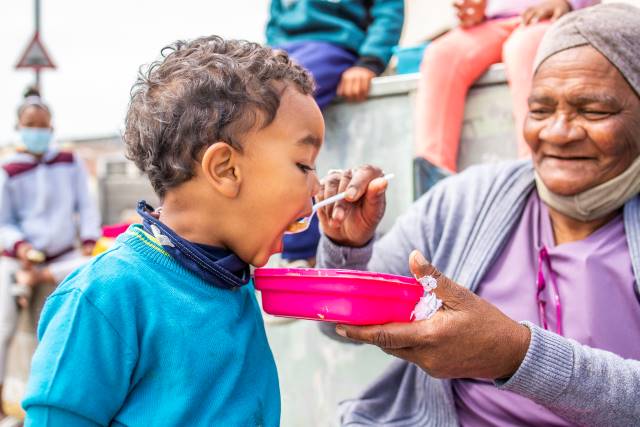
 South Africa is one of the most developed African countries and the continent’s largest stock exchange. However, despite its advanced economy, South Africa still has much work to do to solve its key issues, one of them being food insecurity. According to Statistics South Africa, in 2017, 6.8 million South Africans faced hunger. Although the number of food-insecure populations has plummeted by more than half from 13.5 million in 2002, roughly 11% of the country’s population struggled to put food on the table in 2019. However, a closer look at South Africa reveals that hunger is not a national-level issue but rather a household-level issue. Although the country produces enough food for its citizens, approximately 10 million tonnes of food goes to waste in a year. FoodForward SA aims to alleviate hunger in South Africa by rescuing and redistributing surplus food that would otherwise go to waste.
The FoodForward SA Mission
FoodForward SA is a South African nonprofit that was established in 2009 to alleviate hunger in South Africa by rescuing quality edible food for subsequent redistribution to people in need. FoodForward SA partners with various local beneficiary organizations (BOs) to extend its impact to rural and urban communities. Through these BOs, the organization widens the scope of its impact to large numbers of vulnerable South Africans, which it would otherwise not reach if it were acting alone.
The FoodShare Innovation
Before 2018, FoodForwad SA relied on a complex logistics chain to gather, categorize, store surplus food from donor agencies and redistribute the food to beneficiary organizations. In 2018, however, this ended with the organization’s innovation, “FoodShare,” a cyber platform to help save quality food that would otherwise end up in landfills by virtually connecting food outlets with beneficiary organizations, consequently promoting a smoother redistribution process. In addition to connecting donors and beneficiaries, FoodShare also allows for easy inventory optimization, tonnage measurement and offline monitoring and evaluation, among other features.
Breakfast Program
About nine years ago, FoodForward SA embarked on a partnership with Kellogg’s, a U.S. multinational food manufacturing company. The Kellogg’s Breakfast for Better Days Programme is a school feeding initiative dedicated to providing breakfast to vulnerable primary and secondary school children in South Africa. In 2020, the program covered the South African provinces of Gauteng, KwaZulu-Natal and both the Eastern and Western Cape, reaching roughly 37,000 children. The collaborative efforts of FoodForward SA and Kellogg’s help the initiative expand its reach and impact. In 2021, Kellogg’s hopes to extend the program’s impact to more vulnerable areas in South Africa.
Mobile Rural Depot Programme
FoodFoward SA’s Mobile Rural Depot Programme was started in 2019 to alleviate hunger in South Africa by making quality surplus food accessible to more than 25 identified and underserved rural communities. FoodForward SA deploys trucks loaded with food supplies to each depot region to deliver food to communities. BOs from neighboring communities subsequently gather to collect and redistribute the food. Following the delivery, empty trucks stop by the areas’ farms to stockpile surplus agricultural supplies, which are taken back to a warehouse.
COVID-19’s Impact: A Blessing in Disguise
Whereas the ongoing COVID-19 pandemic has exerted a toll on food banks globally, FoodForward SA has a different story. In an interview with The Borgen Project, Deidre Adams, the nonprofit’s fund development manager, discussed FoodForward SA’s immediate action during COVID-19 and its resulting success.
Adams explains that the COVID-19 pandemic required the organization to rapidly scale its operations to meet increasing food insecurity. The managing director of FoodForward SA, Andy Du Plessis, put out a food security appeal of R50,000 in order to extend its scale of food aid. The R50 million appeal sparked an influx of donations from local and international donors, totaling R90 million, almost doubling the initial target.
“By not only reaching but exceeding our appeal target, we have been able to scale rapidly so that currently, and within nine months only, we are feeding around 475,000 people daily,” Adams says. Through its Mobile Rural Depot (MRD) Programme alone, FoodForward SA currently reaches 62,000 vulnerable people in rural communities disproportionately affected by the pandemic.
Future Prospects
Despite FoodForward SA’s remarkable success, the organization never stops searching for innovative ways to alleviate hunger in South Africa by reaching as many vulnerable communities as possible and seeking more financial support to reach all of the country’s nine provinces. In response to whether the organization’s progress provides hope of attaining its vision, “a South Africa without hunger,” Adams remarked that connecting the world of surplus to the world of need can indeed eradicate hunger in South Africa.
By 2024, FoodForward SA hopes to have expanded the number of beneficiaries to one million people. “As we expand our operations to reach one million people, we would like to call on food supply chain role players to donate their surplus food to FoodForward SA, which allows them to save on dumping costs,” Adams says.
During the 2020/2021 fiscal year alone, the organization issued 29 million meals. To ensure that its resources reach the intended beneficiaries, the organization pays unannounced monitoring and evaluation visits to its beneficiary organizations once a quarter. Although from the current state affairs, it is indubitable that South Africa still has a steep hill to climb to achieve zero hunger, FoodForward SA’s exceptional work promises rewarding outcomes in due time.
– Mbabazi Divine
Photo: Courtesy of FoodForward SA

Activists Combat Period Poverty in Kenya
For many young girls in Kenya, properly managing a menstrual cycle with adequate sanitary products is a luxury. Roughly one million Kenyan girls miss out on education each month because they are unable to afford menstrual products. Girls and women are unable to work or participate in education for days at a time, placing them at a disadvantage in comparison to their male peers. Some girls even resort to sharing menstrual products in a desperate attempt to find a solution to period poverty in Kenya. Though access to menstrual products is a multi-faceted issue in Kenya, activists are making it possible for girls to properly manage their periods and continue with life as usual.
Period Poverty in Kenya
Research shows that 65% of Kenyan women and girls are unable to afford basic sanitary pads. As a consequence, girls often rely on the men in their lives for period products and some girls engage in transactional sex in order to secure sanitary products, perpetuating a patriarchal cycle of reliance and exploitation.
Milcah Hadida
Menstrual hygiene ambassador Milcah Hadida is combating period poverty in an innovative way. Hadida collects sanitary products from donors and delivers the products to vulnerable girls in Kenya via bicycle. Through her efforts, she has reached 2,300 girls in just five months.
For her mobilization against period poverty in Kenya’s Tana River County, Hadida recently received the prestigious Florence Nightingale Medal. This award “recognizes exemplary service in the areas of public health and nursing education.” In addition to delivering period products to girls in rural Kenya, she has also called on the health administration of the county to develop policies to address period poverty.
Megan White Mukuria
Megan White Mukuria is the founder of ZanaAfrica, a social enterprise founded in 2007 with its headquarters in Nairobi, Kenya. ZanaAfrica combats period poverty through a hybrid model of feminine products and education. ZanaAfrica manufactures and distributes high-quality, low-cost menstrual products through the Kenyan marketplace. The enterprise couples the distribution of sanitary products with sexual and reproductive health education.
Through this combination, Mukuria and her team build a safe ecosystem where girls can navigate their adolescence in a safe and healthy manner. They also frame the period products through an aspirational lens, “creating safe spaces to learn about health and reclaim dignity.” Since 2011, the Bill and Melinda Gates Foundation has supported ZanaAfrica with several grants. Between 2013 and 2018, ZanaAfrica impacted almost 50,000 girls in Kenya.
Emmie Erondanga
Emmie Erondanga is the director of Miss Koch Kenya (MKK) women’s advocacy NGO, founded in 2001 with the aim of addressing the vulnerability of young girls in the Korogocho slum in Nairobi, Kenya. MKK intervenes against socio-economic issues that contribute to the disempowerment of young women in Kenya and provides free pads to girls in slums, when possible.
MKK’s work has been increasingly relevant with the impacts of COVID-19 as thousands of girls struggle to access sanitary products in lockdown. Because government pads are only accessible at school, Erondanga’s mobilization has helped fill gaps in the Kenyan government-funded sanitary towel program. Erondanga has been instrumental in advocating for reproductive health education in Kenya, aiming to reduce the stigma around periods and puberty.
When girls and women have adequate access to menstrual products, they are able to continue with their school and work endeavors. Overall, a world without period poverty means girls and women can contribute to economic growth in a more significant way, thus reducing global poverty.
– Alysha Mohamed
Photo: Flickr
A Focus on Solidarity Work in Colombia
Harmful Instead of Helpful
The Borgen Project interviewed Dr. Jessica Srikantia, an associate professor at George Mason University who spent years participating in solidarity work in Colombia with Indigenous and Afro-Colombian communities. She witnessed firsthand the consequences of structural violence on vulnerable communities.
To combat the humanitarian crisis in Colombia, global aid organizations have primarily funded the Colombian government to support nutrition and economic development. Although these organizations may have good intentions, according to Dr. Srikantia, they may contribute to ongoing human rights violations. In a process she labels “self-interested aid,” these humanitarian organizations may be doing more harm than good.
A common form of damaging humanitarian intervention is the introduction of genetically modified organisms (GMOs) into local agriculture. The use of pesticides and GMO crops threatens the biodiversity of countries like Colombia, home to more than 30 species of maize. Grassroots organizations are trying to eliminate the use of GMO crops. As an alternative, grassroots groups advocate for providing local farmers with access to seeds and funding to preserve and expand the existing crops.
“Decolonizing” Aid
To conduct her solidarity work in Colombia, Dr. Srikantia had to “decolonize” her mind by learning to understand what communities need rather than implementing western “developed” methods. She stresses the distinction between on-the-ground grassroots organizations and organizations that work from a distance through existing power structures.
The first type of organization works with communities to be self-sufficient and maintain their identity. The other type tries to assimilate communities into the global economy, which can be detrimental to local culture and identity. Real solidarity happens when an organization builds a relationship with a community, she says.
Dr. Srikantia’s solidarity work in Colombia took the form of an urgent action response plan. This included organizing people, calling Congress, raising awareness and actively working on the ground. She referred to what she was doing as “putting out fires.” She also lobbied for policy reform to prevent damage to vulnerable communities.
Reclaiming What is Sacred
Dr. Srikantia believes the key to ending human rights violations can be found when “we reclaim what is sacred.” In Colombia, she witnessed communities that lived with respect for the interconnectedness of all living things. The current global development paradigm focuses on privatizing to create wealth. A better method, however, is to help communities by allowing them to keep their cultural identities and current way of existing.
Dr. Srikantia suggests that instead of trying to integrate groups into the global economy, humanitarian organizations should teach them to be self-sufficient and help them be content with what they have. Instead of teaching insecurity, which will only harm vulnerable communities, people need to learn to reclaim what is sacred: living with respect for the interconnectedness of life.
– Gerardo Valladares
Photo: Flickr
Combating Child Malnutrition in Nepal
Child Malnutrition in Nepal
According to the United Nations World Food Programme, Nepal ranks as the 148th most impoverished country in the world out of 189 countries. It continues to struggle with low general well-being because of civil unrest, a difficult geographical landscape and poor infrastructure. A combination of these factors has also impacted food availability. Food that is available often lacks the nutrients necessary for children to maintain proper health and growth. As a result of malnutrition, children battle stunted physical and mental growth, severe weight loss and compromised immune systems.
In addition to poor nutrition, many children are also exposed to contaminated water, which can lead to chronic diseases. According to the Nepali Times, a recent Johns Hopkins University survey showed that severe malnutrition impacting children younger than 5 could cause 4,000 childhood deaths a year due to insufficient food from lack of income caused by the pandemic. A quarter of Nepal’s population already lives under the poverty line. The pandemic has pushed more families closer to impoverishment.
The Solution
Due to multiple failed government efforts to help assist families, it is clear that part of the issue lies in the poorly structured national, provincial and local governments. Though the government has made efforts to tackle malnutrition in Nepal, including the Multi-Sectoral Nutrition Plan that led to major strides against child malnutrition in the past, the issue persists.
To combat child malnutrition in Nepal, UNICEF has partnered with the government of Nepal in order to treat malnourished children with nutrition response and recovery actions. It has also taken the initiative to educate and provide resources for pregnant and breastfeeding mothers. Nutrition education aims to raise awareness of the importance of ensuring infants receive essential nutrients.
Furthermore, UNICEF is helping the government of Nepal to strengthen its response to prevent more malnutrition in the country. Nutritional assistance is also provided in the form of micronutrient powder for children and iron folate supplements for pregnant and breastfeeding mothers.
The Road Ahead
Though child malnutrition in Nepal has worsened during the COVID-19 pandemic, there is still hope. With help from UNICEF and other humanitarian organizations, Nepal has a chance to address this persistent issue. Moving forward, it is essential that the government and humanitarian organizations continue to prioritize child malnutrition in Nepal.
– Allie Degner
Photo: Flickr
Aicha Chenna and Association Solidarité Feminine
Aicha Chenna’s Beginning
The activist Aicha Chenna began her journey as a state nurse and a social worker in the 1960s. As an employee at the Ministry of Social Affairs, Aicha Chenna witnessed single mothers having to abandon their babies for adoption, sometimes against their will. Aicha Chenna recounted, “In my office sat a young woman who was nursing her baby. She was about to sign the adoption papers and took the baby away from her breast to do so. The little one screamed and cried. That was the moment when it clicked for me. I had just had a baby myself and had recently returned from maternity leave. That night, I couldn’t sleep. The story kept going around and around in my head.” It was then that Aicha Chenna vowed to help single mothers.
Association Solidarité Feminine
Aicha Chenna established Association Solidarité Feminine (ASF) in 1985 in Casablanca. The goal of the association is to stand in solidarity with single mothers. The organization aims to help unmarried mothers stay united with their children and be able to be part of society. ASF offers single mothers a place to stay, literacy classes and job training. Further, the association has now added therapy counseling, cuisine and pastries training, sewing and accounting classes, fitness services and medicinal training. All of these services include daily childcare options and legal support. In this way, these single mothers gain the ability and support needed to reenter society.
The organization started modestly with two kitchens and some kiosks to aid 12 mothers. Since then, ASF has expanded into three separate locations. The Ain Sebaa center in Casablanca has dedicated itself to mothers in need of mental and emotional support. It provides educational services as well, including literacy classes. After women complete six months at the center, they meet with a social worker and a psychologist to discuss work options and training, including the restaurant or spa industry.
Progress For Moroccan Mothers
The activist Aicha Chenna, the Moroccan Mother Teresa, made strides in Moroccan society. Both Chenna and ASF received recognition and support from the Moroccan royal family. As such, the family laws underwent modification in 2004. The new laws state that extramarital sex is no longer a crime. Additionally, there are now paternity tests and new developments regarding the legal handling of children born outside of marriage. Thanks to the efforts of this daring activist, the chains of the societal taboos broke. Chenna’s work has saved the lives of thousands of single mothers and their children. These empowered mothers and their kids are able to rise out of poverty, decrease the number of social pressures they carry and lead full lives.
– Zineb Williams
Photo: Flickr
The Fight Against Child Marriage in Iraq
Child marriage consists of a formal or an informal union between two participants where at least one participant is younger than 18, according to UNICEF. Forced child marriage mostly occurs in countries where poverty is prevalent such as India, Africa and the Middle East, including Iraq.
Child Marriage Statistics in Iraq
According to The World, a public radio program, Iraq’s gross domestic product (GDP) decreased by $38 million from 2013 to 2017 due to decreasing oil prices and economic collapse in its struggle against ISIS. Many associated the decrease in GDP with an increase in the percentage of child marriages, which rose to 24% in 2016, surpassing the percentage of child marriages in 1997 by 9%. The trends in these percentages indicate that there is a correlation between the percentage of child marriage in Iraq and the country’s economic state.
According to the International Federation of Gynecology and Obstetrics (FIGO), the percentage of women aged 20-24 who married before the age of 18 was 27% in 2018, indicating that the current female population of those married before the age of 18 in Iraq consists of 5.6 million out of 20.7 million women. FIGO also reports that child marriage is more common among impoverished families who reside in rural areas, rather than among wealthy families who live in urban areas. The percentage of child marriages in rural versus urban areas differs by 1%, signifying that approximately 207,000 more young girls enter into early marriage in rural areas than urban areas.
Iraq’s Personal Status Law
Iraq’s Personal Status Law forbids child marriage and increases women’s marriage and custody rights. Despite the sound solidarity of this law, article 8 of Iraq’s Personal Status Law allows for a judge to authorize an underage marriage if the judge concludes that the action is urgently necessary or if the father of the bride gives his approval of the marriage.
Child marriage supporters in Iraq continuously push for proposed amendments to the Personal Status Law to abolish legal difficulties when forcing children into marriage. The parliament in Iraq has rejected these proposals, including an amendment that would allow for families to have their own laws in religious communities, thereby authorizing the families to offer their 8-year-old daughters for marriage.
Article 8 of the Personal Status Law allows a loophole for judges to authorize underage marriages with or without permission from a father, even though the article is noncompliant with the Convention on the Elimination of All Forms of Discrimination Against Women (CEDAW), which works to gain equality for women and eliminate patriarchal norms that discriminate against women.
Risks Associated with Child Marriage
Young girls who enter child marriage are not only susceptible to physical health risks including rape, early pregnancy and early delivery, but they are also vulnerable to psychological risks, including experiencing social shielding from their families and domestic violence. Due to substandard responses by officials, violence and rape continue to present themselves as consistent issues in child marriages.
Although Iraq has criminalized rape, the government can drop charges as long as the victim and perpetrator get married. Since Iraq has not criminalized rape between spouses, the government receives few reports of domestic violence issues and families of the two spouses usually discuss resolutions.
Reasons for Child Marriage in Iraq
Oftentimes, families force young female family members into marriage for financial benefit or to settle feuds and make amends with another family. Additionally, the monetary benefits that follow a marriage may reduce an economic burden or provide more income to a family living in poverty. In communities where schools are available for women, families may marry off their daughters earlier to avoid payments for schooling. On the contrary, some parents believe that marrying their daughters early will protect them and ensure that their futures are stable.
Organizations Fighting Child Marriage
In 2016, the United Nations announced an initiative called the Global Programme to End Child Marriage, which has assisted 7.9 million girls from 2016 to 2019. The program increases education and healthcare access for young girls, educates families about the risks of child marriage and supports governments in developing strategies to end child marriage.
Additionally, Girls Not Brides is a program that has committed itself to put an end to child marriage. Girls Not Brides ensures that girls in more than 100 different countries, including countries in the Middle East, are able to achieve their life goals. Girls Not Brides consists of approximately 1,500 member organizations that raise awareness about child marriage, hold governments accountable to create national strategies to end child marriage and share solutions with communities and families. UNICEF reports that the combined efforts of organizations that combat child marriage, including Girls Not Brides, have prevented 25 million arranged child marriages.
The Road Ahead
Child marriage in Iraq is a controversial, ongoing practice despite Iraq’s Personal Status Law that emerged to prevent the occurrence of underage marriage. Young girls in Iraq who enter into marriage provide monetary gain for their families, especially those living in poverty, but experience physical and psychological damage that lasts a lifetime. Organizations such as the United Nations and Girls Not Brides continue to aid victims of child marriage in Iraq by providing healthcare, education and support. Hopefully, with the continued efforts of various NGOs, incidents of child marriage in Iraq will significantly reduce.
– Lauren Spiers
Photo: Flickr
Investing in Renewable Energy in Africa
How COVID-19 Impacts Electricity Access
The COVID-19 pandemic has negatively impacted energy access in Africa. For several years prior to the pandemic, the number of people with access to electricity was steadily increasing, but in 2020, progress was lost as 13 million more people had no access to electricity in Africa. As many countries struggle to recover from the impacts of COVID-19, investing in renewable energy in Africa is more critical than ever.
Fortunately, the world has not given up on investing in renewable energy in Africa during the pandemic. In 2020, direct foreign investment in Africa fell by around 16% overall, according to the United Nations Conference on Trade and Development. This percentage of reduction was even higher in specific regions such as North Africa. However, “international project finance deals” in the renewable energy sector rose by 28% from a little more than $9 billion in 2019 to $11 billion in 2020.
Developing Efficient Energy Systems in Africa
One notable organization investing in renewable energy in Africa is the World Bank Group (WBG), which has invested around $2.3 billion in the West Africa Power Pool (WAPP) over the course of roughly 10 years. The project aims to provide “universal access to electricity” in 15 specific West African countries by 2030. Some of its methods include installing power grids and developing battery-energy storage technologies that will maximize energy efficiency and renewability.
As recently as June 10, 2021, the WBG provided $465 million to start the Regional Electricity Access and Battery-Energy Storage Technologies Project. This project will refine policies surrounding these technologies while also greatly expanding them. It will also help the rural and impoverished Sahel region between the Sahara Desert and the southern savannah.
Shoprite’s Solar Power Initiative
Domestic companies are also investing in renewable energy in Africa. South African retail chain, Shoprite, aims to promote solar power by installing miniature grids across South Africa to provide widespread access to electricity. The company aims for 25% of South African electricity to come from renewable sources in the foreseeable future. This is certainly feasible given that many countries generate much more solar power than South Africa despite being less sunny. Due to the sustainability and affordability of solar power as a renewable energy source, investing in solar power will likely save significant amounts of money in the long run.
Development of renewable energy in Africa is growing and it may help African nations recover from the COVID-19 pandemic. Moreover, the sustainability of renewable energy may eventually bestow greater economic security to Africa.
– Sawyer Lachance
Photo: Flickr
COVID-19 Vaccinations in Serbia
Vaccine Statistics in Serbia
Serbia’s COVID-19 vaccination campaign has been successful so far as more than 38% of Serbians are fully vaccinated against COVID-19 as of July 5, 2021. So far, the government has administered more than five million doses of COVID-19 vaccinations in Serbia. According to the latest COVID-19 statistics from Reuters, Serbia is experiencing roughly 114 new daily infections, equating to 11 positive COVID-19 tests per 100,000 people tested. During the last officially reported week, Serbia reached a daily average of more than 10,000 administered COVID-19 vaccinations.
Pfizer Vaccine Approval for Children
Serbia’s medical agency now allows children between the ages of 12 and 15 to receive the Pfizer vaccine. The Medicines and Medical Devices Agency of Serbia approved this after carefully considering the research of many clinical trials conducted in other nations. Serbian government health official, Mirsad Djerlek, says children with underlying health conditions are a priority as they are more vulnerable to contracting COVID-19.
Vaccine Incentives
Serbia’s initial intention was to have half of the population vaccinated by the end of June 2021. Data indicates that Serbia did not reach this goal, but nevertheless, Serbia is still reaching a significant number of people with its vaccination campaign.
To encourage citizens to get vaccinated, President Aleksandar Vucic promised that citizens who got vaccinated before the end of May 2021 would receive a cash incentive of $30. Vucic’s expectation was to have three million people vaccinated by the end of May 2021. Serbia has made vaccination sites more accessible with locations in shopping malls. To further boost vaccination rates, Serbia announced that it would also be offering vouchers to those who get vaccinated.
Partnering with Russia
Serbia has partnered with Russia to ramp up Russia’s Sputnik V vaccine manufacturing. In June 2021, Serbia’s Institute of Virology, Vaccines and Sera “Torlak” in Belgrade began production. President Vucic and Russian President Vladimir Putin came to this agreement while acknowledging the importance of collaborative efforts in fighting the global COVID-19 pandemic.
Vaccine Successes
When it comes to COVID-19 vaccinations in Serbia, the country has seen success so far. Serbia is getting close to vaccinating half of its population. More categories of the population are now eligible for the Pfizer vaccine and Serbians are receiving incentives to encourage vaccinations. Serbia is also giving a helping hand to other countries by providing vaccine donations to several countries. In May 2021, Serbia donated 100,000 vaccines to the Czech Republic, among other donations. As a production site for Russia’s Sputnik V COVID-19 vaccine, Serbia is certainly playing a significant role in combating the COVID-19 pandemic.
– Chloe Moody
Photo: Flickr
FoodForward SA Alleviates Hunger in South Africa
The FoodForward SA Mission
FoodForward SA is a South African nonprofit that was established in 2009 to alleviate hunger in South Africa by rescuing quality edible food for subsequent redistribution to people in need. FoodForward SA partners with various local beneficiary organizations (BOs) to extend its impact to rural and urban communities. Through these BOs, the organization widens the scope of its impact to large numbers of vulnerable South Africans, which it would otherwise not reach if it were acting alone.
The FoodShare Innovation
Before 2018, FoodForwad SA relied on a complex logistics chain to gather, categorize, store surplus food from donor agencies and redistribute the food to beneficiary organizations. In 2018, however, this ended with the organization’s innovation, “FoodShare,” a cyber platform to help save quality food that would otherwise end up in landfills by virtually connecting food outlets with beneficiary organizations, consequently promoting a smoother redistribution process. In addition to connecting donors and beneficiaries, FoodShare also allows for easy inventory optimization, tonnage measurement and offline monitoring and evaluation, among other features.
Breakfast Program
About nine years ago, FoodForward SA embarked on a partnership with Kellogg’s, a U.S. multinational food manufacturing company. The Kellogg’s Breakfast for Better Days Programme is a school feeding initiative dedicated to providing breakfast to vulnerable primary and secondary school children in South Africa. In 2020, the program covered the South African provinces of Gauteng, KwaZulu-Natal and both the Eastern and Western Cape, reaching roughly 37,000 children. The collaborative efforts of FoodForward SA and Kellogg’s help the initiative expand its reach and impact. In 2021, Kellogg’s hopes to extend the program’s impact to more vulnerable areas in South Africa.
Mobile Rural Depot Programme
FoodFoward SA’s Mobile Rural Depot Programme was started in 2019 to alleviate hunger in South Africa by making quality surplus food accessible to more than 25 identified and underserved rural communities. FoodForward SA deploys trucks loaded with food supplies to each depot region to deliver food to communities. BOs from neighboring communities subsequently gather to collect and redistribute the food. Following the delivery, empty trucks stop by the areas’ farms to stockpile surplus agricultural supplies, which are taken back to a warehouse.
COVID-19’s Impact: A Blessing in Disguise
Whereas the ongoing COVID-19 pandemic has exerted a toll on food banks globally, FoodForward SA has a different story. In an interview with The Borgen Project, Deidre Adams, the nonprofit’s fund development manager, discussed FoodForward SA’s immediate action during COVID-19 and its resulting success.
Adams explains that the COVID-19 pandemic required the organization to rapidly scale its operations to meet increasing food insecurity. The managing director of FoodForward SA, Andy Du Plessis, put out a food security appeal of R50,000 in order to extend its scale of food aid. The R50 million appeal sparked an influx of donations from local and international donors, totaling R90 million, almost doubling the initial target.
“By not only reaching but exceeding our appeal target, we have been able to scale rapidly so that currently, and within nine months only, we are feeding around 475,000 people daily,” Adams says. Through its Mobile Rural Depot (MRD) Programme alone, FoodForward SA currently reaches 62,000 vulnerable people in rural communities disproportionately affected by the pandemic.
Future Prospects
Despite FoodForward SA’s remarkable success, the organization never stops searching for innovative ways to alleviate hunger in South Africa by reaching as many vulnerable communities as possible and seeking more financial support to reach all of the country’s nine provinces. In response to whether the organization’s progress provides hope of attaining its vision, “a South Africa without hunger,” Adams remarked that connecting the world of surplus to the world of need can indeed eradicate hunger in South Africa.
By 2024, FoodForward SA hopes to have expanded the number of beneficiaries to one million people. “As we expand our operations to reach one million people, we would like to call on food supply chain role players to donate their surplus food to FoodForward SA, which allows them to save on dumping costs,” Adams says.
During the 2020/2021 fiscal year alone, the organization issued 29 million meals. To ensure that its resources reach the intended beneficiaries, the organization pays unannounced monitoring and evaluation visits to its beneficiary organizations once a quarter. Although from the current state affairs, it is indubitable that South Africa still has a steep hill to climb to achieve zero hunger, FoodForward SA’s exceptional work promises rewarding outcomes in due time.
– Mbabazi Divine
Photo: Courtesy of FoodForward SA
The Issue of Female Genital Mutilation in Chad
The Prevalence of Female Genital Mutilation in Chad
BMC Public Health explains that, in Chad, the citizenry continues FGM practices in both religious and traditional contexts. FGM is a hazardous practice, often done without anesthetic, putting girls and women at risk of both short and long-term health effects. These effects include genital swelling, bleeding, the inability to pass feces and urine, urinary tract infections and birth complications, among other consequences.
A BMC Public Health research article based on data from 2014-2015 indicates that, in Chad, 50.2% of women and 12.9% of girls have been genitally mutilated, endangering their health. There are multiple conditions that affect this staggering statistic. First, BMC Public Health explains that women with lower levels of education are more likely to experience FGM. Poverty levels also drive the practice as impoverished families have their daughters undergo FGM with the intention of marrying them off, granting impoverished families dowries and the benefits of marrying into a wealthier family. The practice of FGM tends to follow ethnic and religious traditions and is most common among the Sara ethnic group and other Muslim tribes.
Addressing FGM in Chad
While FGM prevalence has been decreasing throughout much of the world, Chad, Mali and Sierra Leone have seen an increase of 2–8% over the last 30 years. This increase in prevalence demonstrates the importance of efforts addressing FGM in Chad, especially now, when poverty rates are heightened due to COVID-19. With the help of NGOs, the U.S. government and tribal leaders, Chad is fighting the deeply entrenched traditions of FGM to protect the well-being of young women and girls.
NGOs play a vitally important role in the creation of long-term programs aimed at changing societal and cultural norms surrounding female genital mutilation in Chad. These NGOs can expand their reach with support from the Chadian government. For example, the Chadian government aided the Chadian Association for Family Well-Being in its work surrounding FGM education and awareness. This education includes seminars, campaigns and conferences explaining the dangers of FGM.
The Role of the US
Not only has Chad’s government stepped up to combat FGM but the U.S. has played a critical role in education surrounding FGM practices. From 1997 to 1999, the U.S. Embassy’s Democracy and Human Rights Fund supported a locally implemented FGM education program to change norms surrounding FGM in Chad. This resulted in a roundtable meeting with “doctors, judges, parliamentarians and NGO representatives, a national seminar” and four regional seminars, all of which helped spread awareness of the dangers of FGM in Chad.
Mobilizing Tribal Leaders to Fight FGM
Due to the cultural and ethnic ties surrounding the practice of female genital mutilation in Chad, tribal leaders have played an important part in the movement to end FGM. Because of the trust bestowed upon tribal leaders, they can increase awareness about FGM’s consequences and generate support for the laws banning its practice among ethnic groups throughout the country. In order to motivate and educate tribal leaders, the Red Cross of Chad set up an advocacy program that creates initiatives and training sessions for tribal leaders to combat FGM in their communities.
While the inhumane practice of FGM continues in Chad due to deeply entrenched cultural roots, the U.S. and Chadian governments play consequential roles in combating the prevalence of FGM. This support is crucial as female genital mutilation in Chad severely harms girls’ and women’s health, impacting their futures and their abilities to rise out of poverty.
– Haylee Ann Ramsey-Code
Photo: Flickr
Poverty and Mexico
The current recession in Mexico started before the pandemic had arrived, but when COVID-19 hit the country, the livelihoods of Mexican citizens changed as access to health services and food became more difficult.
The Pandemic’s Impact on Poverty
“The Covid-19 health emergency has deepened the challenges that face social development policy in every aspect, particularly for incomes, health, education and the diet of Mexican people,” said development evaluation agency Coneval in an interview with Reuters.
Since the pandemic hit, citizens have felt its effects. Now, about half the Mexican population lives below the poverty line, with careful lines dividing standards of poverty between rural and urban areas. In total, almost 56 million people in Mexico are now below the poverty line; out of that 56 million, about 9% live in extreme poverty.
The Pandemic’s Medical and Economic Consequences
In May 2020, the number of people who were confirmed with the virus was at a then-high of 35,000. Out of that number, about 3,400 died due to the coronavirus. Health care has become difficult to come by for Mexican citizens; since 2018, “Mexicans lacking access to health services grew 12 percentage points.” This has left 35 million people unable to get adequate care for their illnesses. When businesses shut down because of the pandemic, nearly 350,000 jobs were lost. This pressured people to live off of their savings to sustain themselves.
President Andres Manuel Lopez Obrador has stated that he is prepared to look at the situation through different approaches and wants to give aid to the people.
Possible Solutions
“So, that is one form to measure poverty and to measure people’s wellbeing […] I have others. A very important one: what we are setting aside as economic support for households,” said President Obrador.
One of the ways the Obrador Administration is trying to alleviate poverty in the country is to raise the current minimum wage up to about $7.10 a day. There is hope that citizens will have more money to support themselves and their families.
In response to the overall pandemic, the government has sought to strengthen its test and trace strategy. In addition, one goal is to widen the distribution of the social protection payments in an effort to control the outbreak and stabilize the economy. The U.S. has also pledged to deliver 8.5 million COVID vaccines for citizens to become inoculated.
“We believe we are in a very good moment in our relationship with the [United States],” said Mexican Foreign Secretary Marcelo Ebard in an interview with El Paso Times.
– Demetrous Nobles
Photo: Flickr