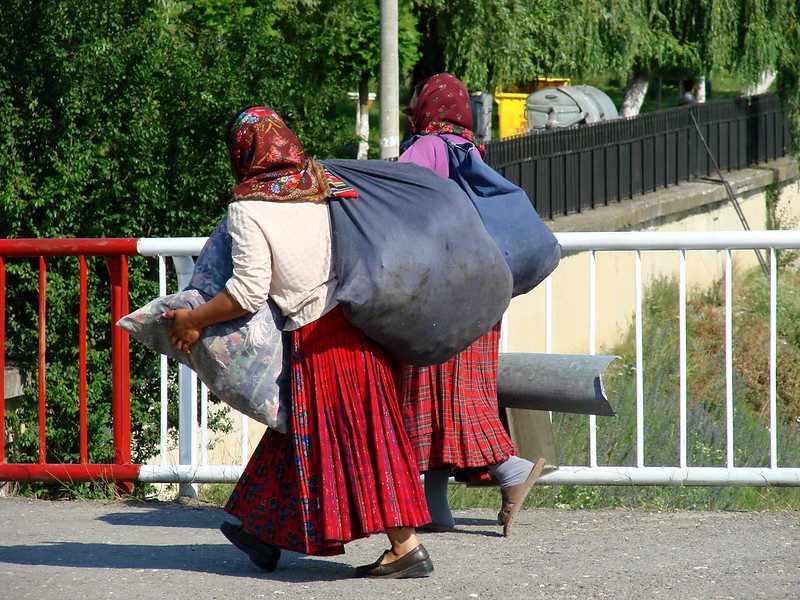
Bucharest, the capital of Romania, is a vibrant urban city with booming contemporary institutions and a greater income per capita than the European Union average. However, there remains a population of individuals that do not benefit from Bucharest’s expanding economy: the Roma. Poverty among the Roma in Bucharest is of particular concern. According to Brookings, the Roma in Romania face an employment rate of about 72% and endure a poverty rate of almost 70%.
Who Are the Roma People?
Scholars agree that the Roma people’s ancestors immigrated to Europe from the Punjab region of Northern India, across “what is now Iran, Armenia and Turkey.” From the ninth century forward, the Roma progressively expanded throughout Europe.
As a nomadic group traveling with few essentials or assets, the Roma face widespread marginalization in Europe. Dating back to the 14th century, some of the Roma arrived in Bucharest, Romania, where they became slaves of the state, institutions or private people. In 1860, the Roma became free but they still relied completely on the state and landowners for sustenance and survival. Some Roma attempted to break this dependency by banding together in clans and migrating.
The Roma in Bucharest
The European Union (EU) is home to “between 10 million and 12 million Roma” people. According to the Council of Europe, roughly 1.85 million Roma reside in Romania and make up 8.32% of the population. These are all preliminary estimates because the Roma people usually choose to reveal their ethnicity only to other Roma people. This renders it challenging to estimate the actual number of Roma people in Romania’s capital of Bucharest, although there is no uncertainty that a considerable number of Roma people reside in Bucharest.
Roma Poverty
The Roma people live and travel in close-knit groups with large families. The Roma are one of Europe’s most prominent ethnic minorities. Aside from these characteristics, people know very little about the Roma people; they speak their own language, which is undocumented, they have unique traditions and they keep to themselves.
Poverty among the Roma in Bucharest is largely the most pressing issue within their communities. Seen as a “problem” within Bucharest, the Roma population reside in slums or ghettos where they live in close quarters with few possessions. In the slums, the Roma often live in squalor with minimal food or water.
The Roma people labor in very specific occupations such as fortune-telling, metalwork and agricultural work. Some, on the other hand, do not occupy genuine occupations, but instead, steal and swindle in order to supplement their income due to their circumstances of poverty. Because the Roma face high rates of unemployment, they end up with minimal means of survival.
Apart from marginalization, one of the main issues that greatly contributes to their circumstances of poverty is a lack of education. Because of a lack of documentation or identification, the Roma struggle to access education, health care and other essential services. The Roma experience profound deprivation across every standard — education, employment and health.
Roma Discrimination
In Bucharest, Europeans often refer to the Roma people as Gypsies, which is a discriminatory term when used by individuals of non-Roma descent. In fact, the term “Gypsy” is one of the most derogatory social labels in Europe, particularly in Romania. The discrimination the Roma endure also impacts their access to the necessary services and resources to live a better quality of life.
What is the Drug Problem?
Many Roma people in Bucharest rely on drugs to help them cope with their difficult circumstances. Drug use is common among individuals of all ages in Bucharest’s Roma ghettos. In an interview with author Max Daly, Dan Popescu, harm-reduction services coordinator at the Asociatia Romana Anti-SIDA (ARAS) said that “The general public’s attitude to the Roma and to the drug addicts is that we are wasting money on nothing, that it’s better to let them die than to help them.”
Due to their lack of legitimate identification, only 45% of the Roma have access to health care and welfare benefits. Roma drug users often use unclean needles, leaving their community with high rates of HIV and hepatitis C. The fact that authorities rarely acknowledge the Roma only exacerbates the situation.
The Good News
The Romanian Harm Reduction Network (RHRN) aims to reduce “risky behaviors” linked with drug abuse “by increasing the degree of communication between partner organizations and improving the quality of services for drug users at the national level.” RHRN develops and encourages reforms aimed at facilitating the application of successful socioeconomic strategies and initiatives aimed at drug users and various socially marginalized subgroups.
To address the drug problem among people in Bucharest, the RHRN provides training to professionals to enhance their “capacity in harm reduction and HIV prevention service provision.” The curriculum covers topics such as syringe exchange initiatives and treatment with opiate substitutes as well as guidelines for communication and advocacy. These collective efforts ensure a more comprehensive response to the drug problem in Romania, with a particular focus on marginalized groups like the Roma.
Despite the fact that the Roma encounter poverty and oppression in Bucharest, various groups are working to help them rise out of poverty to become an empowered, self-sufficient and thriving population.
– Tiffany Lewallyn
Photo: Flickr

Poverty Reduction Initiatives in Guatemala
Many know Guatemala for its volcanic landscape, Mayan culture and the colonial city of Antigua, a UNESCO World Heritage Site. However, Guatemala has regularly faced high rates of poverty and economic inequality with the effects of the COVID-19 exacerbating it. Fortunately, organizations are coming together to form sustainable poverty reduction initiatives in Guatemala which will protect the environment while creating opportunity within Guatemala. The number of people living in poverty in Guatemala is very high. In fact, according to World Bank data from 2020, 47% of individuals live in poverty. As a result, poverty reduction in Guatemala is very important and the emerging poverty reduction measures are vital to improving public health and improving quality of life.
Reducing Deforestation to Improve Economic Stability
Deforestation is a problem throughout Central America’s rainforests due to the high demand for lumber throughout the world. It has caused negative effects on the agricultural environment leading to challenges for farmers throughout Guatemala. Reaching Sustainable Development Goals (SDGs) while increasing job opportunities is vital to protecting agricultural commodities and decreasing poverty.
Enrique Samayoa, a farmer from El Jute, told Americas Quarterly that environmental challenges and deforestation have led to greater rainfall and flooding. Deforestation leads to this flooding, which trees and vegetation usually absorb, and causes soil erosion. This means that when a flood occurs, it washes away nutrients in the top layer of soil, creating a poor environment for agricultural workers.
Fortunately, organizations like Utz Che’ Community Forestry Association and Sustainable Harvest are leading the effort to create sustainable poverty reduction initiatives in Guatemala. Utz Che translates from the Mayan K’iche language to “Good Tree.” This organization is responsible for protecting more than 74,000 hectares of forest in the mountains of Guatemala.
It is increasing opportunities for Guatemalans by training thousands of families in better farming practices. As the forest provides livelihoods for villagers, Utz Che’ communities are planting trees to improve their lives. Poverty reduction in Guatemala is a key aspect of this Utz Che’s mission because, with a healthy environment, farmers’ livelihoods will flourish as well.
When soil erosion decreases the number of crops that farmers could produce, employees may lose their job which can lead to an increase in poverty. Sustainable Harvest and an organization called ASPROGUATE worked together in 2021 to help decrease gender inequities by focusing on women-owned and sustainably run farms.
Empowering Guatemala’s Youth
Reactiva Guate is a crowdfunding platform for young entrepreneurs which started in 2020. It creates opportunities for young people with business plans to help their communities after the pandemic greatly impacted the economy. This organization appeals to venture capital to invest in young peoples’ ideas to overcome the economic crisis and has successfully raised thousands of dollars.
According to Statista, “31.3% of the employees in Guatemala were active in the agricultural sector, 18.73% in industry and 49.98% in the service sector.” Providing alternative careers for Guatemalans that focus on decreasing the effects of environmental challenges will help improve the quality of life for people there.
A massive vaccination program began in February 2021. Since then, municipal workers have promoted vaccinations by going house to house to reach unvaccinated people. The Guatemala Ministry of Health said that 88.8% of the eligible residents of Guatemala City have received their first dose. These statistics are good news that could bring tourism back into the country. It could create more job opportunities for youth and impoverished individuals.
Revamping Transportation to Improve Accessibility
UNDP is working with Transmetro, a transportation program that began in 2008. It helps expand the bus system in Guatemala City from one bus line to seven. Improving the transit system is vital to creating accessibility to jobs within Guatemala City. Without an available mode of transportation, many individuals are unable to find work. This initiative will create greater access to jobs and education.
These sustainable poverty reduction initiatives in Guatemala are vital to improving the opportunities available to its citizens and while keeping the environment safe and sustainable. This could improve the situation in Guatemala and lead to poverty reduction in the country.
– Robert Moncayo
Photo: Flickr
Poverty Among the Roma in Bucharest
Bucharest, the capital of Romania, is a vibrant urban city with booming contemporary institutions and a greater income per capita than the European Union average. However, there remains a population of individuals that do not benefit from Bucharest’s expanding economy: the Roma. Poverty among the Roma in Bucharest is of particular concern. According to Brookings, the Roma in Romania face an employment rate of about 72% and endure a poverty rate of almost 70%.
Who Are the Roma People?
Scholars agree that the Roma people’s ancestors immigrated to Europe from the Punjab region of Northern India, across “what is now Iran, Armenia and Turkey.” From the ninth century forward, the Roma progressively expanded throughout Europe.
As a nomadic group traveling with few essentials or assets, the Roma face widespread marginalization in Europe. Dating back to the 14th century, some of the Roma arrived in Bucharest, Romania, where they became slaves of the state, institutions or private people. In 1860, the Roma became free but they still relied completely on the state and landowners for sustenance and survival. Some Roma attempted to break this dependency by banding together in clans and migrating.
The Roma in Bucharest
The European Union (EU) is home to “between 10 million and 12 million Roma” people. According to the Council of Europe, roughly 1.85 million Roma reside in Romania and make up 8.32% of the population. These are all preliminary estimates because the Roma people usually choose to reveal their ethnicity only to other Roma people. This renders it challenging to estimate the actual number of Roma people in Romania’s capital of Bucharest, although there is no uncertainty that a considerable number of Roma people reside in Bucharest.
Roma Poverty
The Roma people live and travel in close-knit groups with large families. The Roma are one of Europe’s most prominent ethnic minorities. Aside from these characteristics, people know very little about the Roma people; they speak their own language, which is undocumented, they have unique traditions and they keep to themselves.
Poverty among the Roma in Bucharest is largely the most pressing issue within their communities. Seen as a “problem” within Bucharest, the Roma population reside in slums or ghettos where they live in close quarters with few possessions. In the slums, the Roma often live in squalor with minimal food or water.
The Roma people labor in very specific occupations such as fortune-telling, metalwork and agricultural work. Some, on the other hand, do not occupy genuine occupations, but instead, steal and swindle in order to supplement their income due to their circumstances of poverty. Because the Roma face high rates of unemployment, they end up with minimal means of survival.
Apart from marginalization, one of the main issues that greatly contributes to their circumstances of poverty is a lack of education. Because of a lack of documentation or identification, the Roma struggle to access education, health care and other essential services. The Roma experience profound deprivation across every standard — education, employment and health.
Roma Discrimination
In Bucharest, Europeans often refer to the Roma people as Gypsies, which is a discriminatory term when used by individuals of non-Roma descent. In fact, the term “Gypsy” is one of the most derogatory social labels in Europe, particularly in Romania. The discrimination the Roma endure also impacts their access to the necessary services and resources to live a better quality of life.
What is the Drug Problem?
Many Roma people in Bucharest rely on drugs to help them cope with their difficult circumstances. Drug use is common among individuals of all ages in Bucharest’s Roma ghettos. In an interview with author Max Daly, Dan Popescu, harm-reduction services coordinator at the Asociatia Romana Anti-SIDA (ARAS) said that “The general public’s attitude to the Roma and to the drug addicts is that we are wasting money on nothing, that it’s better to let them die than to help them.”
Due to their lack of legitimate identification, only 45% of the Roma have access to health care and welfare benefits. Roma drug users often use unclean needles, leaving their community with high rates of HIV and hepatitis C. The fact that authorities rarely acknowledge the Roma only exacerbates the situation.
The Good News
The Romanian Harm Reduction Network (RHRN) aims to reduce “risky behaviors” linked with drug abuse “by increasing the degree of communication between partner organizations and improving the quality of services for drug users at the national level.” RHRN develops and encourages reforms aimed at facilitating the application of successful socioeconomic strategies and initiatives aimed at drug users and various socially marginalized subgroups.
To address the drug problem among people in Bucharest, the RHRN provides training to professionals to enhance their “capacity in harm reduction and HIV prevention service provision.” The curriculum covers topics such as syringe exchange initiatives and treatment with opiate substitutes as well as guidelines for communication and advocacy. These collective efforts ensure a more comprehensive response to the drug problem in Romania, with a particular focus on marginalized groups like the Roma.
Despite the fact that the Roma encounter poverty and oppression in Bucharest, various groups are working to help them rise out of poverty to become an empowered, self-sufficient and thriving population.
– Tiffany Lewallyn
Photo: Flickr
Nonprofit Efforts to Support Iraqi Orphans
Iraq’s youth stand as one of the most vulnerable yet valuable populations in Iraq’s war-torn nation. The humanitarian crisis in the conflict-ridden country of Iraq has led to a poverty rate of 24.8% as of March 2021. One of the most tragic consequences of the conflict and violence in Iraq is the fact that, in 2012, there were almost “2.5 million Iraqi orphans.” Although these statistics stem from the time of the brutal Saddam Hussein regime, the situation regarding orphans in Iraq remains dire. Currently, Iraqi Children’s Hope indicates that there are 700,000 Iraqi orphans.
Iraqi Orphans
To put the situation in perspective, one must note that in 2020, Iraq’s age 0-14 population stood at 37.02% of the total population in contrast to 7.53% of the population in the age category of 55 and older. Just as a comparison, 18.37% of the U.S. population is in the 0-14 age range, and, in 2014, more than 34% of U.S. citizens were 50 and older. Because Iraq’s youth make up a significant portion of the population, Iraqi children stand as essential human capital amid a dwindling older generation. Yet, millions of Iraqi orphans often have no support system and no shelter, making them susceptible to the lure of trafficking and a life of crime. This fact coupled with the statistic that almost “3.2 million school-aged Iraqi children [are] out of school” means that support to Iraqi children must become a priority.
However, with Iraqi orphans in mind, three nonprofits are working to alleviate the impacts of the last 40 years of conflict.
Iraqi Children’s Hope
Iraqi Children’s Hope works directly with Iraqi orphans, “enabling them to thrive educationally and economically” to ensure a better quality of life and lessen the impacts of poverty and war. The organization “prioritize[s] orphans who cannot afford to attend private schools or pay tutoring fees” through the Children Tutoring for Success program. The program supports “orphan students in grades 1-8 through homework assistance and various other academic needs.” Iraqi Children’s Hope also focuses on food drives for widowed mothers and orphaned children. For example, during Ramadan 2021, an Islamic tradition in which families fast from sunrise to sunset, the Iraq branch distributed more than 700 food packages to orphan families and other families in need.
The Iraqi Orphan Foundation
The United Kingdom-based Iraqi Orphan Foundation emphasizes supporting vulnerable groups through forms of humanitarian aid and advancing the education of Iraqi orphaned youth. The foundation reaches children across several towns and cities in Iraq. Through its Sponsor an Orphan program that prompts individuals to donate a minimum of £20 per month per child, the Iraqi Orphan Foundation has supported more than 6,000 orphans. In 2019, the organization raised more than £560,000 in donations to support Iraqi orphans. The organization also focuses on direct food distribution for children without sponsors. For Ramadan 2021, the organization distributed “more than 400 food parcels to the families of orphans.”
The Iraqi Children Foundation (ICF)
Iraqi Children Foundation (ICF) commits to supporting at-risk Iraqi children “who are vulnerable to abuse, neglect and exploitation by criminals, traffickers and extremists.” Its scope includes orphans. One of its unique programs is the Hope Bus where volunteers transform an old bus into a lively, child-friendly classroom. Each bus provides about 50 orphans and street children “with tutoring, nutrition, [health support], social services and childhood fun.” Each child participates in the Hope Bus program for a year in preparation for a traditional school. More than 500 children have attended the Hope Bus so far. The program has provided more than 36,700 healthy meals to students and all 2020 graduates “now have their legal documents.”
ICF Street Lawyers
The ICF Street Lawyers program provides “legal protection for children” to safeguard them from traffickers, criminals and other forms of exploitation. Street Lawyers also “help children obtain legal documents required to enroll in school and access government benefits.”
Children make up 25% of all human trafficking victims. Orphans, often without protection or security, are the most vulnerable to trafficking. About 168 million children around the world end up as child laborers with 50% coerced into hazardous work that damages physical and mental well-being. Human trafficking is difficult to track as less than 0.5% of cases are reported. From May 2016 to April 2021, ICF provided “legal protection and defense” to 1,469 children.
An example of ICF’s extensive impact is the story of Ahmed. Ahmed and his widowed mother earn an income by selling milk from their cow. One day, instead of selling the milk, he shared the milk with the Hope Bus children. This type of generosity despite poverty is a testament to the impact of ICF’s work.
The impacts of Iraq’s political turmoil affect Iraqi children most severely, especially Iraqi orphans. However, there is hope as nonprofits commit to addressing the void in government efforts by supporting the nation’s children, ensuring a brighter future for the youngest generation.
– Imaan Chaudhry
Photo: Flickr
5 Organizations Aiding PwDs in Kenya
The COVID-19 pandemic has devastated countries worldwide with illness, fear and economic instability. However, its impact has not been equal for everyone. The pandemic has affected persons with disabilities (PwDs) disproportionately. More than 15% of the global population are PwDs, 80% of whom live in developing countries. More than 2.2% (0.9 million people) of the population are PwDs in Kenya, according to the 2019 census.
Connection Between Poverty and Disability
There is undoubtedly a strong correlation between poverty and disability. According to The Aga Khan University, approximately 67% of PwDs in Kenya live in poverty. Before COVID-19, Kenyans living with disabilities already faced pre-existing challenges in accessing health care, education and the workforce. Now, these challenges are deeper than ever as a consequence of the measures to control the virus transmission and expansion, and their impact on the socio-economic aspects of life and service delivery.
Organizations and individuals all over the world have racked their brains to find innovative solutions that could make life easier again after COVID-19. However, most of these organizations and individuals did not have PwDs in mind. This problem is not exclusive to the COVID-19 era. For persons with disabilities, especially in developing countries like Kenya, solutions and innovation itself are limited for most present-day challenges.
Concerned by this situation, UNDP in Kenya decided to launch an innovation challenge. It Is inviting solutions responding to the socio-economic challenges experienced by PwDs during the pandemic. This way, UNDP Kenya seeks to harness the power of innovation for disability inclusion and social cohesion to promote a stable and secure environment for PwDs to thrive.
UNDP invited registered Kenyan organizations or companies in order to provide those with disabilities access to education, employment and other opportunities. UNDP encouraged the applicants to focus on one of five different areas; Access to Technology, Access to Information, Access to Health Care, Access to Education, Access to Opportunities and Access to Financial Products/Services.
Submissions of applications emerged all over the country and after a rigorous evaluation process, UNDP selected five winners. The five winning organizations received a grant of $8,000 to assist in further development and scale-up of the solutions.
5 Innovative Solutions Improving the Lives of PwDs in Kenya
Looking Ahead
All these great solutions not only validate Kenya as a hub of knowledge and innovation, but they also show technological transformation is about improving each citizen’s experience, leaving no one behind.
Innovation has and definitely will continue to have a great role in Kenya’s response and recovery to the COVID-19 crisis. Investing in building solutions that can improve the lives of PwDs represents a massive opportunity for Kenya to ensure that its growth is genuinely inclusive and transformational, something crucial for the future of the country.
– Alejandra del Carmen Jimeno
Photo: Flickr
5 Facts About The Weeknd’s Charitable Work
Abel Tesfaye, better known as The Weeknd to R&B fanatics, is one of the world’s most well-known musicians. However, his passion extends far beyond his love songs. The Weeknd’s charitable work positions him as a humanitarian celebrity as he uses his celebrity platform to help those in need.
The Weeknd’s Biography
The Weeknd was born in Toronto, Canada, to parents who are immigrants from Ethiopia. The musician grew up in Scarborough, Canada, where “the working poverty rate” stands at roughly 10% and 13% of the population is non-working poor. These circumstances of poverty prompted The Weeknd to take action to reduce poverty in the area and beyond.
5 Facts About The Weeknd’s Charitable Work
Descending from parents who immigrated from Ethiopia to Canada jumpstarted The Weeknd’s strong passion for helping people in Ethiopia, Canada and beyond. His desire to provide people with entertaining music has made him into a household name throughout the United States, but his ability to influence does not end with just that. Through donations and a commitment to use social media to raise awareness of global issues, The Weeknd’s charitable work makes him a rockstar, both on and off stage.
– Nia Hinson
Photo: Flickr
How Tramadol is Fueling the Global Opioid Crisis
Political pundits and policymakers have acknowledged the severity of the U.S. opioid crisis. However, there is also a drug that is quietly wreaking havoc on developing nations. Many have touted tramadol as a safer alternative to other opioids. However, it has instead fostered addiction in the poorest nations and bankrolled terrorists. Authorities fear that the drug’s growing popularity may even destabilize entire regions, causing the global opioid crisis.
Is Tramadol Safe?
At first glance, it is not clear how tramadol is fueling the global opioid crisis. In 2021, the National Institute of Health (NIH) released a study declaring that tramadol has “a low potential for abuse” and has a significantly lower rate of nonmedical use than comparator opioids.
In addition, the World Health Organization (WHO) Expert Committee on Drug Dependence has reviewed the drug several times. It recommended against regulation in its most recent report. The main reasons are its concerns that regulation may hinder access to the drug in developing nations.
However, a closer look at the drug and its effect on the developing world demonstrates clearly how tramadol is fueling the global opioid crisis. Tramadol is an opioid that medical professionals use to treat moderate to severe pain. It may cause nausea, dizziness, constipation, headaches, respiratory depression and even death.
Tramadol and the Global Opioid Crisis
Despite its presentation as a safe alternative to opioids such as Vicodin, there are plentiful examples of how tramadol is fueling the global opioid crisis:
Tramadol Trouble Shooting
Despite the growing problem, many have paid attention. For instance, UNODC met in July 2019 to discuss its West Africa report. Representatives from West Africa, India, the European Union (EU), Interpol and WHO were a few of the guests that attended the meeting to discuss how tramadol is fueling the global opioid crisis.
Not only are organizations, nations and individuals paying attention, but they are also actively strategizing to mitigate the crisis. The meeting highlighted the need for international cooperation and increased law enforcement. Lastly, there was great emphasis on the need for uniform regulation of the pharmaceuticals, in hopes that cooperation would crush the illicit market while meeting demand.
– Richard Vieira
Photo: Unsplash
Fighting for Better Education in Nigeria
Education can act as a golden ticket out of poverty for younger generations in Nigeria. Thus, its absence only hinders a fruitful future for Nigerians all around the country. By fighting for better education in Nigeria, Co-Creation Hub is ensuring that Nigerian students have a reliable pathway to pursue their ambitions and goals.
Nigeria’s Absence of Education
Completing the early steps of education is vital to securing basic knowledge of the language and how the world functions. However, an appalling one in three Nigerian children do not complete primary school and 27.2% of children between the ages of 6 to 11 do not attend school at all.
The intrinsic benefits of early education—learning basic life skills, developing a work ethic and establishing connections with teachers and the community—are thus absent during the most moldable years in the lives of Nigerian youth.
Furthermore, 25.8% of children between the age of 12 to 17 have zero access to an education facility of any kind. The teen years are crucial for identity building and socializing. Grade school is an amazing opportunity to tap into these two fundamental aspects of life. The percentage of Nigerian teens who miss out on these opportunities is too high for the 21st century.
COVID-19’s Impact on Education in Nigeria
After the pandemic hit, school closures have affected 73.8% of the world’s school population. Prior to the pandemic, an estimated total of 10.2 million Nigerian children was out of school. That number has only increased after the start of the pandemic.
Remote education in Nigeria is only available to financially privileged students. Rural children are becoming increasingly disconnected from modern-day teaching. The pupil-teacher ratio in Nigeria was 37.55 in 2010.
What is Co-Creation Hub and How Does it Help?
Co-Creation Hub (CcHUB) is Nigeria’s first multi-purpose, open-living lab space provider designed to catalyze creativity and STEM-based work. Within the Co-Creation Hub’s laboratories, staff provides accessible and effective education in STEM subjects to Nigerian kids, adolescents and teens.
Bosum Tijani founded CcHUB in 2010 to innovate Nigeria’s education. The rest of its five areas of focus are digital security, startup funding, design for health and innovation support. The Hub’s four education-oriented programs in Nigeria educated more than 11,000 students in 200 schools. One of the programs has also helped 5,000 internet users who relied on remote settings because of COVID-19.
CcHUB trains new and willing teachers in a teaching technique known as inquiry-based learning. This technique actively places the students at the center of their learning, thus fostering critical thinking, cooperation and a genuine desire to learn.
This organization also offers its computer labs as free and safe learning spaces open to any student in Nigeria. These learning spaces provide STEM education via game-based, online computer lessons purposefully engineered to spark an interest in the sciences. CcHUB has received funding from Microsoft, The Bill & Melinda Gates Foundation, Facebook, BBC and VISA among several others.
Facebook has collaborated with one of CcHUB’s educational programs called Safe Online with Facebook. This campaign has reached out to students of all ages in 10 different Nigerian cities to teach vital internet browsing safety skills.
The growing trend of incorporating the internet into education has benefited dozens of countries worldwide. Online learning is now opening up a slew of possibilities for young Nigerians. The drastic digital changes in education in Nigeria are keeping the country in the loop of the newest online era of schooling.
– Fidelia Gavrilenko
Photo: Flickr
Aiding Refugees in the Polish Border Crisis
In recent months, thousands of men, women and children have attempted crossing the freezing wooded border between Poland and Belarus leading to the Polish border crisis. The migrants are hailing from the Middle East and North Africa. One Syrian family paid upwards of $16,000 to travel to Belarus with the promise of entry into the EU. Once they arrived at the EU border in western Belarus, however, Polish authorities were unwilling to allow undocumented migrants into their borders. They are leaving people in limbo between the two countries and in danger of succumbing to the elements.
A New Refugee Crisis for Europe?
Poland and the EU have pointed fingers at Alexander Lukashenko, the Belarusian president, for manufacturing this crisis by luring migrants and flooding the EU borders. The Polish border crisis reached significant levels and threatened the EU with another influx of migrants like the continent saw in 2015.
The crisis has calmed down in the last weeks, as the first snowfall arrived in the area. Flights from the Middle East to Belarus remained on the ground and the repatriation of migrants took place. However, about 7,000 migrants remain on the Belarusian side of the border in makeshift tent camps.
Blocking the Border
Belarus has refused aid from Polish humanitarian organizations for the migrants. In September 2021, the Polish government established a state of emergency that prohibited media, medics and NGOs from entering the border zone. Anna Dąbrowska told The Borgen Project in an interview that this is a strategy for the government to “block free media from informing the public” about the situation.
The Missing Migrants Project, an initiative that records disappearances and deaths of refugees, has recorded 16 missing or dead migrants at the Belarus-EU border so far. However, these numbers may be higher on the Belarusian side due to a lack of information from the Belarusian authorities.
The Border Group: A Grassroots Initiative
Poland’s refusal to allow media into the border zone has forced journalists and activists to work quietly. They often work during the night to bring light to this humanitarian crisis. Grupa Granica (The Border Group) is a grassroots network of 14 Polish NGOs monitoring the situation and assisting migrants on the ground by providing supplies and legal aid. One of the most important tasks it faces is finding refugees and getting to them before Polish authorities do.
Dąbrowska said that with time there have been “more and more brutal actions by the border guards and the army.” Activists set up a hotline number that refugees can call when lost or in need of help. Once volunteers reach the migrants, they provide them with food, water, sleeping bags, shoes and other supplies collected as donations from good samaritans. As winter approaches, Dąbrowska said that aid workers and volunteers “rarely meet people in good physical and mental condition,” and that they often have not eaten or drank anything in days.
Homo Faber, an organization within The Border Group to which Anna Dąbrowska belongs, provides legal help to the refugees so they can claim asylum and continue their journeys. Homo Faber works in detention centers in Poland, providing further assistance there. For example, it partners with psychologists across Poland that give free services to refugees who have experienced trauma or abuse on their journeys.
Many refugees have made it into Poland and even Germany, but some have not been so lucky. Often, Polish border guards push migrants back over the border into Belarus instead of taking them to processing centers.
While the Polish border crisis has alleviated, Dąbrowska told The Borgen Project that there is still work to do. “Regardless of the length of the crisis we will carry out aid activities,” she said. However, she is worried about keeping the crisis at the forefront of public discourse as the plight of refugees becomes a “common occurrence” and one that is “less interesting” to citizens detached from the situation.
The Ways People Can Help
While the Polish border crisis is taking place out of the view of many, there are many ways people can help out. People can stay up to date with the work of The Border Group and learn more about migration and refugees. “It will be important to support us in the long term as organizations and individual activists,” said Dąbrowska, who hopes that the initiative continues to flourish.
Another way individuals can help is by talking to friends and family about the crisis. It is especially important to reach people who might approach this topic with indifference.
Individuals can also support leaders at home. The refugee emergency in Poland and Belarus has the potential to disrupt U.S. politics as well and our leaders must stay involved. One can communicate their concerns to their members of Congress.
– Emma Tkacz
Photo: Flickr
5 Programs Supporting Refugees in France
Over the past decade, Europe has become a hub for migrants and refugees fleeing conflict and unrest. Selling most if not all of their personal belongings, families leave their homes behind with eyes set on safer borders in Europe. France is among the most popular nations to settle in — during 2020 alone, 87,659 people applied for asylum in France. For those who do survive the journey, which includes walking, hitchhiking and overcrowded boats, new challenges await. Although the poverty rate in France stood at 14.8% in 2018, refugees and asylum seekers face disproportionately higher rates of poverty. When they first arrive in France, many of these families end up in tents and shanty settlements with little access to clean water and food. However, several programs aim to support refugees in France.
5 Programs Supporting Refugees in France
Journeying thousands of miles in unsafe conditions in search of a better life, refugees find new challenges waiting for them when they arrive in Europe. These five organizations try to address the many facets of integrating and starting a life in a new society.
– Owen Mutiganda
Photo: Flickr
Natural Disaster Resilience Policies to Protect the Impoverished
Not only do natural disasters cost the global economy $520 billion annually but extreme weather also thrusts 26 million global citizens into poverty annually. People enduring poverty experience the adverse effects of floods, earthquakes and other natural disasters more severely because they often live in “fragile housing in disaster-prone areas” and take up employment in industries, such as “farming and agriculture,” that are more “susceptible to extreme weather events.” In response to extreme weather and the impact it has on vulnerable populations, the World Bank and the Global Facility for Disaster Reduction and Recovery (GFDRR) released a report that puts forth the idea of natural disaster resilience policies to protect the impoverished from natural disasters and help them to cope with the consequences. The suggestions in this report to the 2016 U.N. Climate Change Conference aim to implement early warning systems and improve access to personal banking, social protection systems and other critical investments.
What are Natural Disaster Resilience Policies?
The purpose of a resilience policy is to help those living in developing countries develop resilience, which refers to “the ability of individuals, communities and states and their institutions to absorb and recover from shocks [while] positively adapting and transforming their structures and means for living in the face of long-term changes and uncertainty.”
With calls for a resilience policy package, specific countries can tackle the financial strain that comes after a natural disaster. For instance, in September 2020, Haiti received a payout of about $7 million “on its Excess Rainfall (XSR) parametric insurance policy following the passage of Tropical Cyclone Laura.” By having their own resilience policies, developing countries can help their most impoverished citizens in the aftermath of natural disasters.
The nature of insurance policies introduced under the resilience policy benefits those facing the impacts of natural disasters by paying out automatically when conditions “meet or exceed pre-agreed thresholds” regarding wind speed, rainfall or economic losses through insurance policies called parametric policies.
The Economic Benefits of Resilience Policies
The World Bank and GFDRR’s suggestions for resilience policies propose improving disaster risk management (DRM) in 117 countries. For instance, Angola, a country in Central Africa, could potentially see “$160 million a year in gains” if the country were to implement “scalable safety nets” to support the nation’s most impoverished citizens in the aftermath of a natural disaster. Countries with resilience policies are already noting benefits. Due to “an innovative insurance program, Haiti, Barbados, Saint Lucia and St. Vincent and the Grenadines received a payout of $29 million in support of recovery efforts after suffering the effects of Hurricane Matthew.”
Scalable safety nets must consist of flexible systems and procedures, including registration and payment mechanisms that will “enable the safety net [to] increase (and decrease) assistance when appropriate” and provide “good quality risk information to understand when a shock has occurred” to allow contingency planning to provide the disbursement of the fund after a disaster.
How Governments Can Assist
Governments can help end global poverty and support those in developing countries after a natural disaster through investments in infrastructure and developing appropriate land-use policies and building regulations. The U.S. Agency for International Development intends to utilize disaster risk reduction (DRR) programs to achieve resilience in countries experiencing extreme weather conditions. Striving for longer-term prevention, the DRR programs will focus on attaining objectives such as “prioritizing and strengthening early warning, preparedness, mitigation and prevention” and “transitions to foster resilience and [support] diversified livelihood strategies” to help impoverished people withstand extreme weather and the impact of natural disasters.
Natural disaster resilience policies can provide better housing and create better employment opportunities for those living in poverty by diversifying the workforce. For instance, in Uganda, “72% of [Uganda’s] labor force works in agriculture,” which is an area that is “highly climate-sensitive.” This puts one of Uganda’s main exports, coffee, at risk in the face of natural disasters or extreme weather events that could potentially prevent the country from producing and harvesting its export. Droughts in 2020 led to the loss of about 50% “of all coffee yields” in Uganda.
By reducing the impact of natural disasters on communities worldwide through resilience policies, poverty can decrease as countries will be better able to adapt to extreme weather changes “and boost the resilience and prosperity of their most vulnerable citizens.” With the ability “to cope, rebuild and rebound,” millions of people can remain out of poverty.
– Grace Watson
Photo: Flickr