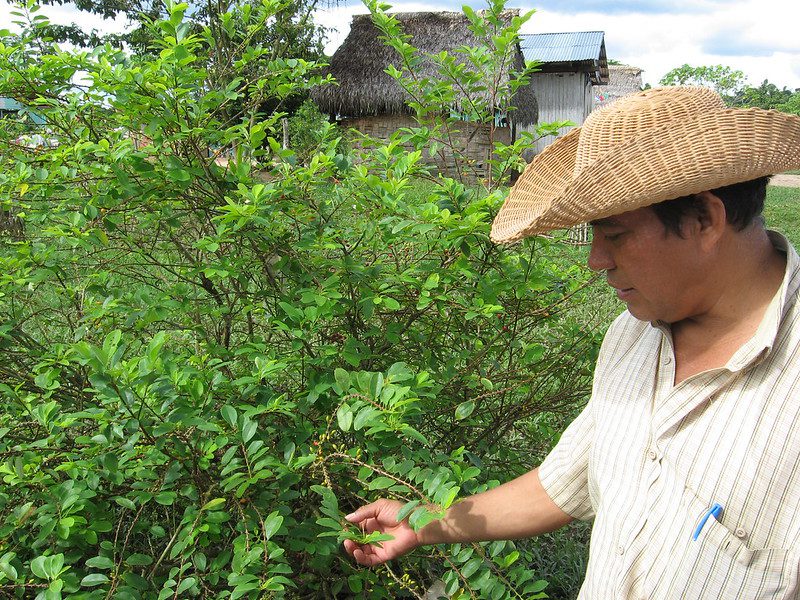
Being abundant in the controversial coca leaf, Peru is one of the world’s leading producers of cocaine. In coordination with international groups, the Peruvian government has set the stage to dismantle the Peruvian cocaine industry.
Understanding the Coca Plant and the Peruvian Cocaine Industry
Coca is relatively abundant among the three major cocaine-producing nations of the world: Colombia, Peru and Bolivia. The indigenous peoples of the Andes have traditionally used the coca plant for centuries. In its raw form, the plant performs as a benign stimulant often compared with coffee, suppressing a user’s pain, appetite and exhaustion and treating altitude sickness. However, when synthesizing the coca plant, the result is a highly addictive stimulant known as cocaine. Today, millions of people throughout the Andean and Amazonian regions chew coca leaves and brew tea from them.
According to the U.S. Department of State, Peru is the world’s second-largest producer of cocaine. Most of the cocaine that Peru yields either undergoes distribution throughout Latin America or goes to Europe, the United States, Mexico and Asia. During the COVID-19 pandemic, the Peruvian cocaine industry reached peak coca cultivation at 88,200 hectares, the White House Office of National Drug Control Policy (ONDCP) reported. In 2021, there was a documented decrease in production from the previous year at 84,400 hectares. The present quantities of production emphasize the need for better termination efforts and more stable alternative economic development strategies for the rural citizens of Peru.
Peru is an economically developing country. As a result of its stable economic growth and investments in health, education and infrastructure, Peru has reduced hunger and poverty rates in the last 10 years. Currently, a quarter (22%) of Peru’s population lives in poverty and experiences food insecurity, especially those residing within the country’s rural areas. In these impoverished rural areas, the Peruvian cocaine industry thrives as desperate citizens turn to drug selling as a means of income.
Carving a Path to Alternative Development
The Peruvian government is making serious efforts to eradicate cocaine from its borders and develop safer and more sustainable economic opportunities for rural residents. The U.S. Department of State’s Bureau of International Narcotics and Law Enforcement Affairs (INL) has coordinated with Peru’s counternarcotics and law enforcement to enhance the Peruvian justice system.
Before the pandemic, the INL aided the Peruvian government in eliminating more than 25,000 hectares of coca and approximately 220 metric tons of cocaine from their markets. This was a major victory as they were able to rid the Valley of Apurímac, Ene and Manraro River (VRAEM) of coca. VRAEM is vital to the Peruvian cocaine industry, as the area produces two-thirds of all cocaine in Peru.
For more than 25 years, the United Nations Office on Drugs and Crime (UNODC) has been a key supporter and sponsor of alternative development in Peru. UNODC directly collaborated with more than 8,000 farming families that were once heavily dependent on coca plant farming. This was possible through the creation of forestry administration, indigenous ecosystem protection, livestock breeding and the development of legally sustainable economies in coffee, cacao and palm oil. In recent years, UNODC has implemented programs that bolstered residents’ social and economic situations in coca cultivating sectors via “farmer-led” small enterprises that contribute to the overall economy.
USAID
USAID has also played a crucial role in alternative development campaigns against the Peruvian cocaine industry. The agency backed the Peruvian National Counternarcotics Policy by arranging alternative strategies for the growing of coca plants and by building Peru’s capabilities to challenge drug cartels. Like with UNODC, USAID supports previous coca-reliant regions to develop legitimate sources of income via farming investments in coffee, cacao, bananas and lumber. In 2021, USAID uplifted more than 70,000 families to shift to legal and sustainable economies. In addition, the agency has coordinated with several companies in Peru’s private sector, local governments, communities and investors to integrate millions of dollars into the growing economies and the protection of the Peruvian Amazon.
PRISMA
PRISMA is a Peruvian organization centered on empowering Peru’s most exposed citizens and providing access to opportunities via alternative development efforts. The organization started in 1986 and began with the purpose of reducing food insecurity among the nation’s children. It collaborates will all levels of government, international aid organizations, universities, interested members of the private sector and mobilized communities. PRISMA mainly operates in Peru but has been active in Ecuador, Mexico, Panama, Uruguay and Equatorial Guinea through its many years of service.
The Peruvian government continues making significant strides in transforming rural citizens’ livelihoods. The nation views the cocaine endemic as a national and international security issue. Peru and its collaborators continue to bolster the coca-reliant rural communities to transition into safer, legal and reliable economic development.
– Ricardo Silva
Photo: Flickr

US Provides $116 Million in Aid to Mozambique Amid Humanitarian Crisis
Recent Conflicts in Mozambique
Since 2017, the terrorist group al-Shabaab has been destroying Mozambique’s northern province, Cabo Delgado. Cabo Delgado contains much of Mozambique’s rich natural gas supply, which is vital to its economy. Al-Shabaab has committed several violent acts toward the people who live there such as destroying schools and hospitals, kidnapping children and killing numerous people. In March 2022, 88,000 people fled the town of Palma because of a terrorist attack. This destruction has threatened the continuation of many gas fields in the province.
Along with the terrorism, cyclone Gombe wreaked havoc on the country in March 2022. This was only one of three natural disasters that struck Mozambique during its cyclonic season. The hurricane affected approximately 736,015 people or 148,253 families and displaced around 23,000 people. Additionally, Gombe destroyed an estimated 91,000 hectares (approximately 225,000 acres) of crops.
In total, because of these issues, more than 800,000 people have experienced displacement. Mozambique has not been able to recover from the damage of these two problems it has faced, especially with the current Russia-Ukraine war and the food insecurity it has caused.
Relief to Mozambique
The United States has a history of giving foreign aid to African countries. In 2019, the U.S. donated an estimated total of $7.1 billion to sub-Saharan Africa. This aid went towards addressing health and humanitarian issues. The U.S. is also Mozambique’s biggest donor as it provides more than $560 million annually.
Currently, in Africa, there are 27.1 million refugees and 53 million internally displaced people, and 800,000 of them are located in Mozambique.
In addition to the $592 million already pledged to countries in the Horn of Africa, the U.S. has committed $116 million in aid to Mozambique. This funding is part of Biden’s plan to provide a total of $2 billion to African nations and those affected by the Russian-Ukrainian war. Feed the Future, an organization that President Obama established, has labeled Mozambique as one of the eight countries the organization will target to increase its support and stop its humanitarian issues. Other partners of USAID have also pledged to send other resources to help with the food, water, sanitary, hygienic and agricultural needs.
Aid to Improve Mozambique’s Infrastructure
In addition to the $116 million aid package to Mozambique, the U.S. plans to invest $10 million to help address the country’s infrastructure and development needs. Some of this money will go toward helping smallholder farmers develop sustainable farming practices while also allowing them to access a wide variety of crops to grow.
The U.S. is hard at work ensuring that Putin’s invasion of Ukraine affected receive assistance. Its donation of $116 million to aid Mozambique is just a portion of its end goal of donating $2 billion to countries affected by this war. Millions across these countries will receive aid and relief, helping alleviate some of the damage that the Russian-Ukrainian war caused. Mozambique specifically will greatly benefit from this money, and the 800,000 displaced persons will receive resources to help their situation.
– Janae O’Connell
Photo: Wikimedia
Addressing Tree Inequality is Key to Achieving the SDGs
People surviving on less than $1.90 daily live in extreme poverty, which accounts for 9.2% of the global population in line with a 2021 World Vision report. With worldwide disruptions to economic activity amid the COVID-19 pandemic, progress against global inequality is continuously under threat, especially as 97 million more individuals fell into extreme poverty in 2020 the World Bank testified. A 2020 ForestNation report has revealed a causal relationship between tree canopy and income, stating a clear association between high income and green-rich areas. One can see this trend on the island of Montreal, highlighting an apparent discrepancy between the prosperous Town of Mount Royal and a low-income neighborhood, Parc-Extension.
According to a 2021 CBC News Analysis of City of Montreal and Census Data, the average household income for the former accounts for $110,000, equating to 30% tree cover. Meanwhile, the latter assumes a median income ranging from $32,000 to $40,000 with only 6%-15% tree cover.
Addressing Tree Inequality is Key to Achieving the SDGs
Planting trees in both rural and urban areas strengthens the world’s economic systems by introducing new opportunities for employment and trade. The timber sector validates this, generating worldwide economic contributions worth $600 billion, equivalent to 1% of global Gross Domestic Product (GDP), while also providing a total of 54.2 million formal and informal employment opportunities as per the World Bank.
According to the Global Assistance Report, trees provide valuable nutritional support necessary for eradicating food insecurity. One billion of the world’s population relies on forests to secure food, with women and children resembling an unprecedented share. This illustrates how addressing tree inequality is key to achieving the SDGs via reducing inequality and hunger and improving human welfare, livelihood and food security.
Trees help improve agriculture by creating an environment favorable for growing crops. By regulating the temperature and improving moisture, trees reduce soil salinization and make crops less sensitive to weather fluctuations and especially violent winds. Recognizing that agriculture assumes an essential role in enhancing worldwide economic development, accounting for 4% of global GDP according to the World Bank, this highlights one way how addressing tree inequality is key to achieving the SDGs by attaining economic growth and improved standards of living.
UNICEF defines quality education as access to rudimentary literacy and numeracy skills for every human irrespective of one’s origin. ForestNation shows that planting trees can improve a student’s cognition and linguistic, scientific and mathematical proficiency. Trees can widen students’ knowledge of environmental and ecological matters, as well as spark curiosity and innovation amongst them, which illustrates the positive ramifications of expanding access to trees in education.
Positive Work Across the Globe
Several organizations have launched various worldwide efforts to lead reforestation. Since 2015, ForestNation, a for-profit sustainable business, has aided Tanzania in planting trees across the country. Today, the number of trees that the business planted exceeds 1 million, which brings eminent contributions to Tanzania’s wealth. For example, every 100 fully grown fruit-bearing trees including mangos and bananas generate around $173 in income. Knowing that agriculture represents one-quarter of Tanzania’s GDP, indicates significant economic development within the country.
In Morocco, the country sought to lead an initiative to overcome the country’s susceptibility to drought, collaborating with civil society, the government aims to plant 800,000 trees by 2024 in varying parts of the country. Such a partnership aims to reinforce the agricultural sector’s strength and provide food sources necessary for socioeconomic development, particularly since agriculture assumes 30% of Morocco’s employment and 20% of GDP.
To build inclusive development among rural and urban areas across Turkmenistan, the United Nations Development Programme (UNDP) aided a tree planting campaign on the national level. Following training sessions that USAID funded, and with support from several local community, private sector and administrator representatives, around 5,000 fruit-bearing tree seedlings have undergone implementation in two different project areas. Such a sustainable endeavor plays an important role in developing Turkmenistan’s agriculture and widens its income sources according to the UNDP.
Overall, tree equality has proven effective in enabling the world to stay on track to achieving the SDGs by 2030, as the positive impact of trees can trickle down from addressing poverty to other SDGs.
– Noor Al-Zubi
Photo: Flickr
Examining Japan’s Middle Class
Although the Japanese economy is the third largest in the world according to its nominal GDP, its middle class has begun to contract. Unemployment and poverty resulting from COVID-19 revealed new patterns of decreasing consumerism and stagnant wages. While Japan’s middle class is slowly disappearing, there are a few solutions from both corporate policy and grassroots organizations that are attempting to alleviate poverty and reinvigorate citizens with low income.
Poverty in Japan
In the 1980s, the once booming Japanese economy met economic stagnation during the 10 years known as the “Lost Decade,” spanning from 1990 to the early 2000s.
Before the crisis, which the real estate market caused, Japan’s annual GDP growth rate was 0.82% higher than that of the United States. However, the bursting of the real estate bubble lowered Japan’s growth rate to a feeble 1.14% during the Lost Decade. Many view the Lost Decade as one of the events that began the fading of Japan’s middle class.
From 2020 to 2021, estimates stated that one in six people living in Japan lived in relative poverty. According to some workers, open work is scarce in the aftermath of the pandemic, and Japanese media seldom covers these stories of hardship. Notably, women, who often take retail jobs with temporary contracts to balance work with childcare, experienced economic hardship after most retail shut down during the pandemic. In early 2020, around 40% of the labor force took on “non-regular” jobs, which pay lower wages and often end in swift termination.
Japan’s Middle Class
According to Oxford Economist Shigeto Nagai, a drop in consumer spending could follow the shrinking middle class. In 2020, after a steep increase in sales tax the year before, COVID-19 caused consumer spending to plummet further. Japan’s Ministry of Economy, Trade and Industry reported a 12.3% decline in retail consumption from 2019. More than 10 million Japanese citizens earn less than $19,000 per year, and having less disposable income exacerbates the issue of falling consumer spending.
A “life-time employment system” also contributes to the shrinking of Japan’s middle class. Companies value taking care of employees after retirement as well as seniority-based wages. This results in an emphasis on long-term company loyalty, and raises in wages are difficult to achieve. However, as previously mentioned, nearly half of the labor force participants work in non-regular jobs. This poses a significant problem to middle-class households in which stability is a necessity.
Alleviating Poverty
Established in 2000, the World Bank and the government of Japan conceived The Japan Social Development Fund (JSDF) to alleviate the effects of the Lost Decade. Since its founding, the government has provided approximately $855 million to support its projects. These projects aim to reach the population that often cannot access aid from charitable organizations, and intends to empower and protect impoverished communities. Similarly, small, grassroots organizations in Japan help alleviate poverty by providing support for their prefectures. For example, groups such as Food Bank Kochi and NPO Gift provide food and activities for communities that have become impoverished. The Kagoshima Volunteer Bank, which aims to teach and care for single-family households, provides educational services to communities.
In regards to the corporate world, economist Shigeto Nagai has suggested that start-ups in Japan will offer higher wages to new workers and recent graduates as compared to established corporations and that this type of shift in the labor sector could ultimately increase the economic flexibility of the middle class.
– Caroline Zientek
Photo: Flickr
6 Facts About Democracy in West Africa
Since it enacted democratic reforms more than two decades ago, West Africa has made substantial progress in democracy and human development. However, recent armed conflicts, corruption scandals and constitutional rights suppressions have caused recent setbacks in democracy in West Africa. One can see this in the form of undemocratic constitution modifications used to retain power, coups in several West African nations, social media restrictions and insurgencies. Although the region is much more stable than before its democratization, those in power must correct recent violence and corruption in West African nations to ensure that democracy in West Africa is viable long term.
6 Facts About Democracy in West Africa
Looking Ahead
Although democracy in West Africa has been on an upward trajectory since the early 2000s, the recent spike in coups, political extremism and terrorism have caused setbacks to the democratic progress that West African nations previously oversaw. Through economic sanctioning of undemocratic actors on the global scale and grassroots peacemaking strategies, nations outside of West Africa have also demonstrated an interest in the region’s development.
– Salvatore Brancato
Photo: Wikipedia Commons
Pricepally: Nigerian Startup Fights High Food Costs
Pricepally is a food co-op that connects Nigeria’s urban consumers directly with farmers and wholesalers, thus bolstering Nigeria’s urban centers against the impending global food crisis. Luther Lawoyin originally developed Pricepally in 2019 to make food more affordable and accessible for Nigerians. The digital startup uses modern technology to connect urban consumers directly with wholesalers and farmers, bypassing the country’s inefficient food supply infrastructure, which contributes to high food costs. Additionally, the Nigerian startup fights high food costs by enabling customers to pool their resources with other Pricepally users to invest in bulk purchases, providing further savings.
An Instant Hit
Lawoyin came up with the idea for Pricepally after monitoring his new family’s collective grocery expenses. After doing some research, he realized that Nigeria’s outdated supply chain infrastructure resulted in “a lack of integration” between consumers and producers. Intermediaries meant to connect rural producers with urban consumers lacked a sound data structure, meaning that farmers had no way of knowing current market demands. The Nigerian startup fights high food costs caused by an inefficient and inequitable market structure by providing a community-based platform that benefits both consumers and producers.
Following its launch in November 2019, Nigerians quickly recognized Pricepally as a valuable consumer platform amid high inflation. The digital startup’s popularity skyrocketed when the COVID-19 pandemic hit in early 2020, providing consumers with a safe method of obtaining essential resources. The Lagos-based startup met the needs of quarantined populations, quickly obtaining a government license to travel despite pandemic restrictions.
Pricepally began as a modest operation with only seven employees operating solely within the city of Lagos. Within months of its debut, Principally received funding from multiple investors, allowing it to rapidly expand operations to include the Nigerian capital of Abuja, serving more than 5,000 consumers per month.
Benefits Farmers and Consumers Alike
While Pricepally’s creator initially developed the platform with urban customers in mind, its operation has become an incredibly beneficial mechanism by which smallholder farmers can expand their market access. Chronic underinvestment and an outdated supply chain infrastructure have caused Nigeria’s smallholder farmers to become embroiled in poverty. A lack of basic facilities such as transportation routes, energy and water irrigation systems deter investors and leads to inefficiency and significant agricultural losses. In fact, Nigeria’s agricultural industry loses anywhere from 55% to 72% of Nigeria’s fresh produce before it even enters the domestic market.
Pricepally works to overcome these structural pitfalls by acting as a fair and reliable middleman, using its mobile and web-based services to connect farmers with consumers. This reduces the various intermediaries that once clogged the value chain, providing an equitable and transparent procurement process that empowers small-scale farmers to attain fair prices. In the spirit of transparency, Pricepally has begun featuring farmer’s profiles on its website, ensuring people can trust that they are buying high-quality produce. The Nigerian startup fights high food costs by streamlining the supply chain process in a manner that optimizes both transparency and equitability.
Future Goals
Pricepally recently started working with Prosper Africa, a U.S. government operation aimed at expanding bilateral trade and investment between African nations and the United States. This partnership works to secure U.S. investment and further expand Pricepally’s operational capacity.
In early 2022, Pricepally expanded its operations to the Nigerian coastal city of Port Harcourt, meaning the startup now serves consumers in Nigeria’s three largest urban centers. The most recent operational expansion increases Pricepally’s customer base while also connecting more markets and expanding overall supplies.
As investments continue to pour in, Pricepally is focused on improving its warehouse and processing facilities and investing in tech support so that the digital platform can serve more consumers each month. In the long-term, Lawoyin hopes to continue expanding operations to encompass other African nations struggling with similar supply chain and infrastructure issues.
As Pricepally continues to grow, it hopes to expand support for smallholder farmers within Nigeria as well as throughout the rest of Africa. Many of Nigeria’s farmers are simply trying to make ends meet, but Lawoyin hopes to transform farming to make it a viable career choice. He plans to do so by investing in programs aimed at addressing the issues that smallholder farmers face, including a lack of proper education, infrastructure and financing.
Within only three years, Pricepally has transformed the agricultural sector of Nigeria for the better. The Nigerian startup fights high food costs by leveraging shared economy principles that benefit consumers and producers alike, streamlining the procurement process and cutting out unnecessary intermediaries. As the startup continues to expand its operational capacity, it has the potential to transform the food supply chain of countless African nations, thus bolstering the world’s most vulnerable populations against the threat of food insecurity.
– Mollie Lund
Photo: Wikipedia Commons
The Success of Poverty Reduction in Cambodia
Over the last decade, poverty reduction in Cambodia has successfully reached and exceeded governmental goals. Significant economic growth and an increase in earnings allowed Cambodia to reduce poverty by more than half since 2009.
History of Poverty and Instability in Cambodia
In the 1970s, the Khmer Rouge, a communist movement, took control of Cambodia. Through a five-year civil war, it was able to gain control of the country, maintaining control for the following four years.
The ultimate goal of the Khmer Rouge was to transform Cambodia into an entirely agrarian state, and it did this by slaughtering anyone perceived to be an intellectual and by emptying the country’s cities. The Khmer Rouge movement killed hundreds of thousands of Cambodians during the four-year period that Khmer Rouge had control, and even more people died from disease or starvation.
Despite a short four-year reign for the Khmer Rouge, 30 years of violence and instability followed. Cambodia now had to recover from a massive genocidal effort, the effects of which resulted in as much as 40% of the population still in poverty by 2009.
Poverty Reduction Efforts
Following the fall of the Khmer Rouge, Cambodia underwent the daunting task of reopening itself to the international market and rebuilding its governmental structure. According to the World Bank, “Cambodia’s open borders to international trade and investment have helped attract foreign direct investment to support manufacturing, construction, and tourism.” Such efforts have resulted in consistent economic growth.
The Cambodian government has committed to revising its poverty line procedure every 15 years. This is necessary because rapid economic growth requires consistent reevaluation of poverty standards and allows the government to better monitor poverty reduction in Cambodia. The current poverty line requires someone to earn less than $2.70 a day to be considered in poverty.
Additionally, a new cash transfer program launched in June 2020, benefitting around 2.8 million Cambodians. This program demonstrates the continuous and novel efforts of the Cambodian government toward once again creating economic and political stability throughout.
Poverty Reduction Effects
As a result of the aforementioned efforts, around 17.8% of the Cambodian population was in poverty as of 2020, compared to 40% in 2009. This means that in just over a decade, poverty in Cambodia has reduced by more than half.
The Cambodian government has successfully exceeded its poverty reduction goals. While it committed to an annual 1% decrease, it has achieved an annual 1.6% decrease.
Quality of life factors has also improved. According to the World Bank, “from 2000 to 2017, life expectancy increased from 58 years to 69; the under-five mortality rate decreased from 107 to 29 per 1,000 live births; and primary school completion rate increased from 51% to 90%.”
Efforts in poverty reduction in Cambodia over the past decade have been overwhelmingly successful. A combination of international trade and government oversight has allowed for economic growth within Cambodia, increasing stability for those living there. The results reflect significant reductions in poverty across the country.
– Eleanor Corbin
Photo: Flickr
Wheat Crisis in Lebanon
Lebanon is facing a crippling economic crisis that forced more than three-quarters of its population into poverty, and the latest manifestation of this is its wheat crisis. Following the 2020 Beirut explosion, the country lacks any national reserves and relies on foreign imports for wheat. Before the conflict in Ukraine, the country imported approximately 80% of its wheat from Russia and Ukraine. Lebanon is currently struggling to find new markets that satisfy its wheat demand, given its low purchasing power amid the pandemic inflation.
Current Situation
Ever since the start of the war in Ukraine, Russia has blocked all Ukrainian grain exports via the black sea, resulting in a hefty surge in bread prices in Lebanon. Although Ukraine and Russia, through negotiations facilitated by the U.N., have signed an agreement expressing intent to restart grain exports, the deal’s legitimacy is in question as Russia attacked the Ukrainian port city of Odesa less than 24 hours following the initiation of the agreement. In fact, the offense pushed grain prices even higher.
According to the Lebanon Crisis Analytics Team at Mercy Corps, the price of wheat flour has increased by 209% since the beginning of the Russian invasion. The annual food and beverage inflation, which rose to a staggering 332% in June, exacerbates this. As of today, 22% of Lebanese households are food insecure.
International Aid
Lebanon has already received a $150 million loan from the World Bank to fund immediate wheat imports to provide poor and vulnerable households and other displaced populations with affordable food options. Lebanon’s Minister of Economy and Trade, Amin Salam, projects that the loan will cover food supplies for six to nine months. As the global price of wheat has been decreasing, Salam believes that the loan will most likely last for eight months. During this timeframe, Salam seeks to receive an additional $3 billion loan from the International Monetary Fund (IMF) as part of a promised package of support pending approval.
In addition to importing food, Lebanon also plans to build two new grain silos, which will cost approximately $100 million. According to Salam, several countries have already expressed interest in supporting the project, including Germany, the United States, France, the United Arab Emirates and Qatar.
The project received official approval following the technical feasibility study that the European Bank for Reconstruction and Development conducted. The current plan is to construct two grain silos north of Beirut in the Tripoli Port and the eastern Bekaa Valley. The new silos will be fully operational in around a year and will hold approximately 125,000 tons of grain, equivalent to nine months of reserves.
Building the new grain silos is a significant step forward for Lebanon’s crisis management. In addition to easing the pressure of wheat imports, which are expensive and at times slow, the silos also point to the beginnings of more organized economic planning, which might well lift the country out of its economic collapse.
– Emily Xin
Photo: Flickr
4 Circular Economy Projects Fighting Poverty in Southern Africa
Southern Africa faces huge numerous management issues, with South Africa recovering or recycling only 34.5% of its waste in 2017. However, organizations are mobilizing communities to tackle both this issue of waste and poverty through one tactic. Circular economy projects empower disadvantaged communities to clear and upcycle waste, creating income opportunities and helping the environment. Here is some information about some circular economy projects and what they are doing to eliminate poverty in southern Africa.
Wasteland Graced Land Project
Headed by Dreamcatcher Foundation’s Anthea Roussow and University of Brighton waste expert Ryan Woodward, the 2020 Wasteland Graced Land project has helped transform the South African town of Melkhoutfontein into a tourist destination by turning its plastic waste into sellable products. Thanks to a £65,000 grant from the British Council’s Developing Inclusive and Creative Economies, the project has empowered locals to create crafts and souvenirs such as jewelry, toys, mosaics and bowls – all from Melhoutfontein’s waste products. Grant money goes toward paying stipends to crafters and provides a small income for waste collectors, enabling many women and unemployed youth to better provide for their families and develop their business skills.
Flip Flop Recycling Company
Founded by Julie Church in 2005, the Nairobi-based FlipFlop Recycling Company (FFRC) upcycles flip-flops that have washed up on the shores of the Kenyan coast into 100 different products. This includes jewelry – some of which has appeared on the catwalk at Paris fashion week. The company buys flip-flops from women who collect them at the coast, employs workers to wash and repair these flip-flops and pays artisans to rehash the flip-flops into various products which it finally sells to the shop. The FFRC provides communities with business training and multiple income opportunities, employing around 40 people at its Nairobi facility in 2012.
3R Ecopoint Network
3R Ecopoint Network is based in the seaside town of Vilanculos, Mozambique, and is focused on reducing the amount of plastic waste that ends up in the Indian Ocean. However, it has also improved the lives of local waste pickers, who play a vital role in salvaging reusable material yet are socially excluded and often seen as criminals or failures. By setting up secondary collection points which buy recyclable waste and selling this waste to recycling industries, 3R Ecopoint Network has not only reduced waste volumes in Vilanculos but also increased the revenue for waste pickers by 23, 525MZN from 2019-2022. One impacted individual is Teresa Navelane, who is now able to buy basic food items using the income she receives from collecting recyclables.
Watamu Marine Association
Negative perceptions about waste pickers are also an issue in Kenya, where the informal waste management sector continues to suffer without proper infrastructure and government support. The Watamu Marine Association (WMA) assists waste pickers outcast by society by creating a plastic waste value chain running between the local community and tourism industry in Watamu and surrounding areas. WMA has employed 100 waste pickers from disadvantaged backgrounds, who earn a weekly income through the sponsored “Cash 4 Trash” beach clean-ups. This income empowers women and youth to participate in business ventures and improve their living standards.
These four circular economy projects have had a significant impact on the communities they work in. Their continued work should offer livelihoods to many individuals and have an even further effect on the reduction of waste.
– Imogen Scott
Photo: Flickr
3 Facts About Child Poverty in Italy
In 2020, about 5.6 million people in Italy were living in absolute poverty, meaning they greatly struggled to obtain basic needs, including water, food and shelter. More than 20% of those people were children. Though Italy is not on the list of poor countries in the EU, its population of children in poverty has steadily grown over the last few years. Child poverty in Italy has become a worsening crisis. Here are three facts about child poverty in Italy.
The Link Between Child Labor and Child Poverty in Italy
In 2015, approximately 340,000 children had to work to financially support their families. The Italian government does not have a standardized system for measuring child labor, which is why no consistent data has been released in the last few years. Researchers are concerned that child labor has sharply risen amid this gap in data, especially due to the coronavirus pandemic.
Most of the children who had to work lived in Southern Italy, where there is significant segregation among social classes. Working kids typically come from impoverished multi-child households. An only child runs a 7% risk of living in poverty, whereas a child with siblings faces a 30% chance of poverty. These kids tend to work after school or miss school to work. In many areas of Italy, child labor is often culturally acceptable in workplaces like restaurants because customers think they are family businesses.
In the process of trying to make more money, some child workers fall into the hands of criminal organizations, such as the Mafia, according to Humanium. These organizations often pay kids higher than average wages in exchange for requiring them to sell drugs on the streets of low-income areas with high rates of violence. Criminal organizations often force young girls to make money through sex work.
How the EU and Italian Government are Eliminating Child Poverty in Italy
In 2021, the EU implemented the European Child Guarantee, under which member states create their own Child Guarantee National Action Plan (NAP) aimed at improving the lives of children and decreasing child poverty. The Italian government collaborated with local organizations and submitted its NAP to the EU in April 2021.
In its NAP, the Italian government focuses on early childhood education and childcare. Italy plans to provide more support to caregivers and further integrate children that are national citizens with immigrant children, especially those coming from Ukraine. The government is planning to ensure that all children have access to healthy meals at school and that more full-time schools are available for working parents. To help fight child poverty in Italy, the government has said that it will implement special support measures for children from underserved communities.
The Tree of Life Foundation is Helping Kids
The Tree of Life Foundation — or the L’Albero della Vita in Italian — focuses on providing children with proper nutrition, comprehensive health care and social and sports activities. The organization started in 1997 as a volunteer program, and about a decade later, the Tree of Life became an official Non-Governmental Organization (NGO) in Italy. Since becoming an NGO, the program has expanded to other countries across the world.
In its latest response to growing child poverty in Italy, the Tree of Life Foundation gave baskets of staples to families that included groceries, children’s clothing and educational materials. It also provided families with an education program to learn how to best manage their household budget. The Tree of Life offers individual counseling, parent-support programs, workshops for children and employment-guidance meetings. The organization has created a network where impoverished families can support and learn from one another, and it prioritizes supporting mothers and pregnant people.
Looking Ahead
Though poverty is worsening in Italy, and child poverty is no exception, community members work to protect kids. Local communities help children in need by volunteering, assisting families and mothers, donating meals and speaking up when they see signs of child abuse, homelessness or child labor. Multiple NGOs in Italy are fighting child poverty and asking the government to do more simultaneously. Hopefully, the country’s NAP will make important systemic changes that help alleviate child poverty in Italy.
– Delaney Murray
Photo: Flickr
Dismantling the Peruvian Cocaine Industry
Being abundant in the controversial coca leaf, Peru is one of the world’s leading producers of cocaine. In coordination with international groups, the Peruvian government has set the stage to dismantle the Peruvian cocaine industry.
Understanding the Coca Plant and the Peruvian Cocaine Industry
Coca is relatively abundant among the three major cocaine-producing nations of the world: Colombia, Peru and Bolivia. The indigenous peoples of the Andes have traditionally used the coca plant for centuries. In its raw form, the plant performs as a benign stimulant often compared with coffee, suppressing a user’s pain, appetite and exhaustion and treating altitude sickness. However, when synthesizing the coca plant, the result is a highly addictive stimulant known as cocaine. Today, millions of people throughout the Andean and Amazonian regions chew coca leaves and brew tea from them.
According to the U.S. Department of State, Peru is the world’s second-largest producer of cocaine. Most of the cocaine that Peru yields either undergoes distribution throughout Latin America or goes to Europe, the United States, Mexico and Asia. During the COVID-19 pandemic, the Peruvian cocaine industry reached peak coca cultivation at 88,200 hectares, the White House Office of National Drug Control Policy (ONDCP) reported. In 2021, there was a documented decrease in production from the previous year at 84,400 hectares. The present quantities of production emphasize the need for better termination efforts and more stable alternative economic development strategies for the rural citizens of Peru.
Peru is an economically developing country. As a result of its stable economic growth and investments in health, education and infrastructure, Peru has reduced hunger and poverty rates in the last 10 years. Currently, a quarter (22%) of Peru’s population lives in poverty and experiences food insecurity, especially those residing within the country’s rural areas. In these impoverished rural areas, the Peruvian cocaine industry thrives as desperate citizens turn to drug selling as a means of income.
Carving a Path to Alternative Development
The Peruvian government is making serious efforts to eradicate cocaine from its borders and develop safer and more sustainable economic opportunities for rural residents. The U.S. Department of State’s Bureau of International Narcotics and Law Enforcement Affairs (INL) has coordinated with Peru’s counternarcotics and law enforcement to enhance the Peruvian justice system.
Before the pandemic, the INL aided the Peruvian government in eliminating more than 25,000 hectares of coca and approximately 220 metric tons of cocaine from their markets. This was a major victory as they were able to rid the Valley of Apurímac, Ene and Manraro River (VRAEM) of coca. VRAEM is vital to the Peruvian cocaine industry, as the area produces two-thirds of all cocaine in Peru.
For more than 25 years, the United Nations Office on Drugs and Crime (UNODC) has been a key supporter and sponsor of alternative development in Peru. UNODC directly collaborated with more than 8,000 farming families that were once heavily dependent on coca plant farming. This was possible through the creation of forestry administration, indigenous ecosystem protection, livestock breeding and the development of legally sustainable economies in coffee, cacao and palm oil. In recent years, UNODC has implemented programs that bolstered residents’ social and economic situations in coca cultivating sectors via “farmer-led” small enterprises that contribute to the overall economy.
USAID
USAID has also played a crucial role in alternative development campaigns against the Peruvian cocaine industry. The agency backed the Peruvian National Counternarcotics Policy by arranging alternative strategies for the growing of coca plants and by building Peru’s capabilities to challenge drug cartels. Like with UNODC, USAID supports previous coca-reliant regions to develop legitimate sources of income via farming investments in coffee, cacao, bananas and lumber. In 2021, USAID uplifted more than 70,000 families to shift to legal and sustainable economies. In addition, the agency has coordinated with several companies in Peru’s private sector, local governments, communities and investors to integrate millions of dollars into the growing economies and the protection of the Peruvian Amazon.
PRISMA
PRISMA is a Peruvian organization centered on empowering Peru’s most exposed citizens and providing access to opportunities via alternative development efforts. The organization started in 1986 and began with the purpose of reducing food insecurity among the nation’s children. It collaborates will all levels of government, international aid organizations, universities, interested members of the private sector and mobilized communities. PRISMA mainly operates in Peru but has been active in Ecuador, Mexico, Panama, Uruguay and Equatorial Guinea through its many years of service.
The Peruvian government continues making significant strides in transforming rural citizens’ livelihoods. The nation views the cocaine endemic as a national and international security issue. Peru and its collaborators continue to bolster the coca-reliant rural communities to transition into safer, legal and reliable economic development.
– Ricardo Silva
Photo: Flickr