Pricepally: Nigerian Startup Fights High Food Costs
Pricepally is a food co-op that connects Nigeria’s urban consumers directly with farmers and wholesalers, thus bolstering Nigeria’s urban centers against the impending global food crisis. Luther Lawoyin originally developed Pricepally in 2019 to make food more affordable and accessible for Nigerians. The digital startup uses modern technology to connect urban consumers directly with wholesalers and farmers, bypassing the country’s inefficient food supply infrastructure, which contributes to high food costs. Additionally, the Nigerian startup fights high food costs by enabling customers to pool their resources with other Pricepally users to invest in bulk purchases, providing further savings.
An Instant Hit
Lawoyin came up with the idea for Pricepally after monitoring his new family’s collective grocery expenses. After doing some research, he realized that Nigeria’s outdated supply chain infrastructure resulted in “a lack of integration” between consumers and producers. Intermediaries meant to connect rural producers with urban consumers lacked a sound data structure, meaning that farmers had no way of knowing current market demands. The Nigerian startup fights high food costs caused by an inefficient and inequitable market structure by providing a community-based platform that benefits both consumers and producers.
Following its launch in November 2019, Nigerians quickly recognized Pricepally as a valuable consumer platform amid high inflation. The digital startup’s popularity skyrocketed when the COVID-19 pandemic hit in early 2020, providing consumers with a safe method of obtaining essential resources. The Lagos-based startup met the needs of quarantined populations, quickly obtaining a government license to travel despite pandemic restrictions.
Pricepally began as a modest operation with only seven employees operating solely within the city of Lagos. Within months of its debut, Principally received funding from multiple investors, allowing it to rapidly expand operations to include the Nigerian capital of Abuja, serving more than 5,000 consumers per month.
Benefits Farmers and Consumers Alike
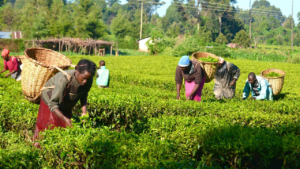
While Pricepally’s creator initially developed the platform with urban customers in mind, its operation has become an incredibly beneficial mechanism by which smallholder farmers can expand their market access. Chronic underinvestment and an outdated supply chain infrastructure have caused Nigeria’s smallholder farmers to become embroiled in poverty. A lack of basic facilities such as transportation routes, energy and water irrigation systems deter investors and leads to inefficiency and significant agricultural losses. In fact, Nigeria’s agricultural industry loses anywhere from 55% to 72% of Nigeria’s fresh produce before it even enters the domestic market.
Pricepally works to overcome these structural pitfalls by acting as a fair and reliable middleman, using its mobile and web-based services to connect farmers with consumers. This reduces the various intermediaries that once clogged the value chain, providing an equitable and transparent procurement process that empowers small-scale farmers to attain fair prices. In the spirit of transparency, Pricepally has begun featuring farmer’s profiles on its website, ensuring people can trust that they are buying high-quality produce. The Nigerian startup fights high food costs by streamlining the supply chain process in a manner that optimizes both transparency and equitability.
Future Goals
Pricepally recently started working with Prosper Africa, a U.S. government operation aimed at expanding bilateral trade and investment between African nations and the United States. This partnership works to secure U.S. investment and further expand Pricepally’s operational capacity.
In early 2022, Pricepally expanded its operations to the Nigerian coastal city of Port Harcourt, meaning the startup now serves consumers in Nigeria’s three largest urban centers. The most recent operational expansion increases Pricepally’s customer base while also connecting more markets and expanding overall supplies.
As investments continue to pour in, Pricepally is focused on improving its warehouse and processing facilities and investing in tech support so that the digital platform can serve more consumers each month. In the long-term, Lawoyin hopes to continue expanding operations to encompass other African nations struggling with similar supply chain and infrastructure issues.
As Pricepally continues to grow, it hopes to expand support for smallholder farmers within Nigeria as well as throughout the rest of Africa. Many of Nigeria’s farmers are simply trying to make ends meet, but Lawoyin hopes to transform farming to make it a viable career choice. He plans to do so by investing in programs aimed at addressing the issues that smallholder farmers face, including a lack of proper education, infrastructure and financing.
Within only three years, Pricepally has transformed the agricultural sector of Nigeria for the better. The Nigerian startup fights high food costs by leveraging shared economy principles that benefit consumers and producers alike, streamlining the procurement process and cutting out unnecessary intermediaries. As the startup continues to expand its operational capacity, it has the potential to transform the food supply chain of countless African nations, thus bolstering the world’s most vulnerable populations against the threat of food insecurity.
– Mollie Lund
Photo: Wikipedia Commons
