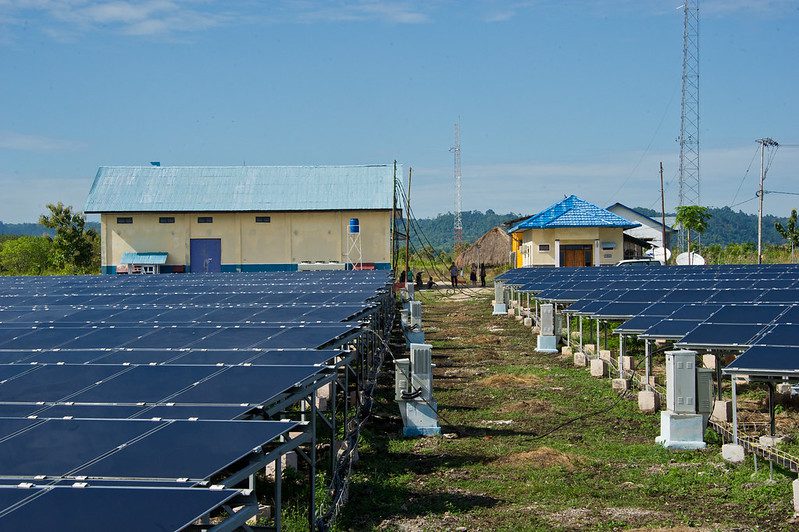
Located in Southeast Asia, Myanmar stands as one of the least developed countries and has the “lowest electrification rate” on the continent. According to the Myanmar Information Management Unit (MIMU) in 2022, “80[%]of rural people have no access to grid electricity.” Considering the importance of electricity for sustainable growth, access to electricity is vital for poverty reduction. Inadequate electrification in Myanmar is a prolonged problem, recently aggravated by the COVID-19 pandemic and the February 2021 coup. Myanmar needs more sustainable approaches to reduce energy poverty in Myanmar and promote economic growth.
Overview of Energy Poverty in Myanmar
Due to the lack of access to grid electricity in the rural areas of Myanmar, most of the rural population depend on “candles, kerosene, batteries and power generators” to go about their daily activities, according to the International Trade Administration.
According to the Miller Center for Social Entrepreneurship, approximately 26% of the population in Myanmar lived in poverty in 2020. Furthermore, poverty rates in rural areas are double that of Myanmar’s urban areas. The lack of affordable and reliable access to electricity has hindered the economic growth of these areas especially.
According to the Miller Center, “Universal access to energy [can] provide an enormous boost to economic development, job creation and infrastructure improvements, particularly in rural communities.” Myanmar has set a target to expand access to electricity to 100% by 2030. However, the February 2021 coup “has thrown Myanmar into an economic crisis and put its electrification plans in peril,” The Globe and Mail reported.
Impact of the Military Regime in Myanmar
In February 2021, General Min Aung Hlaing and his junta overthrew the democratically elected government. The military takeover has led to halted cash flows, a devaluation of the currency and increasing costs for fuel and food. In addition, citizens face blackouts and “prolonged power cuts.” Not only does this impact households but it also detrimentally impacts businesses and students’ education.
When the coup occurred, many energy sector investors retracted from projects entirely or placed projects on pause. As a result, the military-run Ministry of Electricity and Energy “struggled to operate its infrastructure, honor contractual obligations, cover costs or follow through on projects,” The Globe and Mail reported.
The International Trade Administration confirmed this, stating that “Energy projects approved before the military takeover have been suspended due to the political and economic turmoil in the country.” As such, Myanmar is in dire need of foreign funding and investment in the power sector.
Actions to Address Energy Poverty in Myanmar
According to the Ministry of Electric Power (MOEP), the annual demand for power in Myanmar is rising annually from 15% to 17%. With the goal of providing “nationwide electricity access by the year 2030,” the government of Myanmar is planning to introduce a sustainable energy mix of “hydropower, natural gas, coal and renewable energy” to supply electricity to about 10 million homes in Myanmar under the National Electrification Plan (NEP).
Because of numerous electricity blackouts due to power decline since early 2022, the energy ministry in Myanmar started to focus on “damage control” and “attracting new foreign investment.”
In fact, Myanmar has an abundance of renewable energy resources to meet its energy needs. For instance, from 2016 to 2020, under the NEP plan, the Department of Rural Development (DRD) implemented “off-grid electrification” by using mini-grids and solar systems in rural communities. More than 430,000 households in 8,568 rural villages received these benefits, which provided electrical access to more than 2.1 million people. This success has encouraged Myanmar to expand off-grid renewable systems.
Nevertheless, political and economic turmoil under the military regime in Myanmar is causing power outages that directly impact the population, especially in rural areas. Also, “unsettled political and economic policies, unclear rules and guidelines and a shortage of skilled labor” as well as “corruption, lack of transparency in the tender and procurement process and banking issues” pose barriers for potential investors, the International Trade Administration said.
More investment in off-grid renewable energy sources can increase the accessibility of electricity in Myanmar. Because the national grid infrastructure in Myanmar is not well established, rural communities will benefit from the development of renewable mini-grids. The development of further off-grid renewable electrification systems will decrease energy poverty in Myanmar.
– Youngwook Chun
Photo: Flickr

Support to Bangladeshi Women After Cyclone Amphan
Poverty has been disproportionately affecting women in Bangladesh in the aftermath of natural disasters such as Cyclone Amphan. In commitment to the Generation Equality Compact on Women Peace and Security and Humanitarian Action (WPS-HA), U.N. Women has worked with local partners in Bangladesh to aid in economic recovery and provide support to Bangladeshi women, especially post-natural disasters, by issuing grants and providing vocational training to local women.
Gender and Economic Disparity in Bangladesh
In 2019, 20.5% of Bangladesh’s citizens fell under the national poverty line, according to the Asian Development Bank. Furthermore, the unemployment rate for Bangladeshi females in 2021 stood at almost 8% whereas the unemployment rate for males in Bangladesh stood at 4.1% in 2021, according to International Labour Organization (ILO) estimates. In 2019, the workforce participation rate for Bangladeshi males aged 15-64 stood at 84% but only 38% for females in the same age group. Furthermore, in 2022, the literacy rate among men stood at 76.56% whereas for women it stood at 72.82%.
When comparing the margin of difference between literacy rates and employment rates among Bangladeshi men and women, it is clear that women face inequalities that result in their exclusion and marginalization, pushing them deeper into poverty.
Story of Mahmuda Khatun
When Cyclone Amphan hit Bangladesh in 2020, many people lost their livelihoods and fell deeper into poverty, including Mahmuda Khatun’s household. Khatun wished to start a small business to help support her family but she faced barriers such as “a lack of banking history” and inadequate financial literacy. She reached out to the Prerona Foundation for help, “a local women’s organization supported by U.N. Women.”
The Prerona Foundation works with vulnerable women to improve their economic resilience, especially in crisis-prone areas. The Foundation helped Khatun establish a livelihood by providing training and a loan for her to start a poultry farm to generate income. Khatun now provides for her two daughters and husband by raising poultry. Since its beginnings, her business has flourished and Khatun now earns about 17,000 takas ($200 USD) per month.
Multi-Industry Glass Ceilings
Organizations like the Prerona Foundation and U.N. Women recognize the importance of involving and providing support to Bangladeshi women in the wake of humanitarian crises and natural disasters. Women are a key catalyst in a community’s response and recovery and are often end up out of the equation albeit being valuable agents.
Furthermore, when one woman receives uplifting, the benefits do not stop there. Khatun is now looking to help other women in her community by providing vocational training and championing women’s empowerment in Bangladesh. According to U.N. Women, in 2020, “less than 60% of Bangladeshi women have access to credit,” which stands as a significant barrier to their entrepreneurial potential. Moreover, about a third of the nation’s labor force consists of female employees and less than 5% of them hold formal positions. Bangladeshi women also “earn 21% less than their male counterparts.”
Rising Through Recovery
Given such statistics, it can seem daunting for women in Bangladesh to assume financial independence and see success, especially amid a natural disaster like Cyclone Amphan. However, U.N. Women continues to work with dozens of civil society and local women’s organizations on the ground to help address these systemic issues.
In 2022, U.N. Women has also partnered with the U.N. Development Programme (UNDP) to further “gender equality and women’s empowerment in Bangladesh.” Both institutions have “signed an inter-agency agreement” for 2022-2026 to establish “gender-responsive inclusive governance,” reduce discrimination against women, and advance “women’s economic empowerment and access to justice,” among other aims.
Going forward, the focus will be on starting a normative agenda, establishing gender-inclusive legislation, providing financing to advance gender equality and supporting women-led businesses. This partnership also stresses the importance of addressing gender-based violence in Cox’s Bazar, placing women in leadership roles and providing females with the skills training, services and resources to thrive.
Given the commitment, both at a local and international level, there is hope for more Bangladeshi women to rise out of poverty despite the impacts of Cyclone Amphan.
– Samyudha Rajesh
Photo: Flickr
Aid to Pakistan Amid Flooding
In the aftermath of Pakistan’s devastating 2022 floods, many different groups have stepped up to provide humanitarian aid, including nations, NGOs and the Pakistani diaspora community.
The 2022 Pakistan Floods
Beginning in June 2022, a severe monsoon season in Pakistan led to historic flooding and landslides that swept through the nation, destroying towns and rendering millions of Pakistanis homeless. In total, the flooding has impacted at least 33 million people and left one-third of the nation underwater. In Karachi, authorities have reported outbreaks of cholera and dengue fever, with thousands of patients traveling to hospitals and public health centers for treatment.
Pakistani children in particular face vulnerability to waterborne diseases, and their education has experienced disruption as the floods have ravaged thousands of Pakistani schools. As of October 2022, 10 million children are now in need 0f life-saving support.
According to Pakistani authorities, the flood waters may not fully subside for months. More than 1,500 people have died since the floods began, and damages are estimated at more than $30 billion. Food scarcity is now a serious issue, as the flooding has devastated the nation’s agricultural sector. Amidst this catastrophic event for Pakistan, organizations are stepping up to provide lifesaving support to those affected, and to help the nation rebuild.
Nations and Humanitarian Organizations Supporting Pakistan
The U.S. government has allocated significant ongoing humanitarian aid to Pakistan. Since the crisis began, the U.S. military has flown more than 400 metric tons of supplies, which should assist at least 300,000 victims. Additionally, in August 2022, the U.S. government provided more than $30 million in relief assistance to Pakistan through USAID.
Additionally, the United Kingdom provided $1.8 million of aid in August. In a public statement, the late Queen Elizabeth II expressed that the “United Kingdom stands in solidarity with Pakistan” in its efforts to recover.
As of September, the U.N.’s Central Emergency Relief fund has pledged $10 million to Pakistan for public health measures such as preventing waterborne disease and improving access to clean water and food.
The United Nations International Children’s Emergency Relief Fund (UNICEF) is sending emergency medical supplies to women and children in the regions that have suffered the most destruction, specifically to combat malnutrition and waterborne illnesses. UNICEF has also underscored its commitment to ensuring children in the nation can resume their education as soon as possible.
The United Arab Emirates has been a leader in providing aid to Pakistan amidst the flooding, sending numerous planeloads of supplies through an ‘air bridge’ between the two nations. Emirates, a UAE airline, declared it would provide free cargo space on its passenger aircraft to fly additional aid to Pakistan.
Grassroots Efforts to Provide Relief to Pakistan
While large humanitarian efforts by governments and other bureaucracies are important, one should not overlook grassroots relief efforts.
In Atlanta, Pakistani immigrant Imran Khan is raising money to provide food, medicine and other emergency supplies to those affected by the flooding. Khan began his efforts by reaching out to friends and family members, but his fundraising mission quickly spread to the local community. He started an online fundraising campaign to continue delivering relief packages, where he has raised more than $3,000.
Sami Khan, the owner of an ice cream shop in Connecticut, held a fundraiser called ‘Pints for Pakistan,’ sending the day’s proceeds to UNICEF relief efforts. Hearing accounts from family and friends about the devastation caused in his homeland inspired Khan, who is originally from Pakistan to act. Dozens of community members, including a state representative, came to support the fundraiser.
The Importance of Continued Support
Procuring humanitarian aid to Pakistan is an ongoing process, and the efforts described here, as well as many others, are actively saving lives in Pakistan. As this crisis will not be over in the immediate future, continued public support for international aid is crucial.
– Oliver De Jonghe
Photo: Flickr
Poverty from the Israel-Palestine Conflict
The Israeli-Palestinian conflict is an ongoing geopolitical and humanitarian issue, which has extensively damaged both nations. The large-scale conflict erupted as recently as May 2021. Poverty from the Israel-Palestine conflict has particularly affected Palestinians’ quality of life, as many of them live as refugees both in Palestine and neighboring countries.
Conditions in Palestinian Refugee Camps
Since the establishment of Israel in 1948, the number of Palestinian refugees has grown to around 5.6 million. Around 1.5 million live in camps run by the United Nations Relief Works Agency for Palestinian Refugees (UNRWA), a U.N. agency founded in 1949 to handle Palestinian refugees. Refugees are in the neighboring countries of Jordan, Lebanon and Syria as well as the Palestinian enclaves of the West Bank and Gaza Strip. Most of them are located in Jordan and the Gaza Strip.
Lack of Health Care
In the West Bank and Gaza Strip specifically, Palestinian refugees face inhumane conditions of disease, a lack of education and difficulty in accessing water and food. Malnutrition is a major concern in Gaza. In 2019, 56% of Palestinians there were food insecure. Child stunting has also increased in Gaza refugee camps from 8.2% in 1996 to 13.2% in 2017.
Accessing health care for Palestinian refugees is difficult. In many situations, medical supplies are not available, and those who cannot access health care in the camps are often unable to seek treatment outside of them because of high costs.
Lack of Education
Palestinian children also have trouble accessing education. While the UNRWA provides education aid to around 500,000 children, the conditions are often poor and drop-out rates high. Children who can go to school must sit in overcrowded classrooms with limited learning time on foundational subjects. Extracurriculars and education for those who are disabled are unsupported because of the lack of teachers and educators.
Gaza in Trouble
About 1.5 million refugees live in the Gaza Strip, almost twice as many as in the West Bank. Jonathan Graubart, a professor at San Diego State University who specializes in Israel-Palestine relations and international law, told The Borgen Project: “It’s been very devastating to the Palestinians in Gaza. Israelis took out the source of the power. There are record heat waves, so there are health issues. Wastewater treatment has deteriorated.” “Conditions are worse,” he said. “Briefly, there was a relaxation of the strict embargo on the goods in Gaza, but that has been clamped down because of the recent attacks.” This embargo means that those living in the refugee camps cannot access supplies or foreign markets.
Poverty from the Israel-Palestine conflict has only progressed during the COVID-19 pandemic. In 2021, the poverty rate in Gaza had risen to 59%, up from 43% five years prior, due to poor living conditions and a high unemployment rate. Unemployment in the Gaza Strip was 45% in 2021, and 17% in the West Bank.
Philippe Lazzarini, the Commissioner-General of the UNRWA, stated, “People are struggling in their daily lives to make ends meet. People are struggling daily to ensure one meal for their family.”
Alleviating Poverty from the Israel-Palestine Conflict
The UNRWA has been aiding Palestinians throughout their time at these camps. They have provided a variety of services across 300 areas including medical care, social services and emergency relief across Gaza. While the United States, the UNWRA’s biggest donor, cut funding during the Trump administration, it was resumed in 2021, with around $360 million coming through Congress, the State Department and USAID.
Since 1991, the World Food Programme (WFP) has sent food assistance to non-refugee populations in Palestine to eliminate poverty. It has recently begun to supply greenhouses and farming animals, as well as education for the youth population and people with disabilities so they can get jobs.
The World Health Organization (WHO) advocates for Palestinians and their health care. In 2019, they established surgical and trauma centers and gave enough supplies to treat tens of thousands of people. In 2021, they called for access to medicinal supplies in Gaza during the Hamas-Israel conflict.
Poverty from the Israel-Palestine conflict is a major concern among the Palestinians in refugee camps and Palestine proper. Many can’t access food, health care or education, and have to live in inhumane conditions. Aid is helping vulnerable populations, but there is still a lot of work to be done to eradicate and prevent further poverty in these areas.
– Janae O’Connell
Photo: Flickr
Migration to Turkey
Migration to Turkey has hit an all-time high as Turkey is home to “one of the largest migrant populations in the world,” hosting about 4 million refugees and asylum seekers as of 2022, according to the United Nations High Commissioner for Refugees (UNHCR). According to the International Organization for Migration, historically, Turkey has stood as “a country of origin, transit and destination for migrants” due to its “geopolitical location on the route from the Middle East to Europe” and the conflicts occurring in neighboring countries. Turkey’s migration history dates back to the 1400s, under the rule of the Ottoman Empire.
Conflict and Violence as a Contributing Factor
Past historic conflicts such as World War II and the Kosovo War significantly contributed to the migration to Turkey while the Syrian civil war and the 2021 Taliban offensive remain the cause of more recent waves of migration.
One of the significant conflict-induced migrations to mention is the Bulgarian Turkish emigration that took place in 1989. Turks who ended up in Bulgarian territory while it was under Ottoman rule had to leave Bulgaria due to political pressure and violence in 1989. Nearly 400,000 ethnic Turks then emigrated back to Turkey. The Bulgarian emigration prompted further waves of migration from the Balkans.
In the 1990s, amid the Bosnian War, about 20,000 Bosnian refugees fled to Turkey in search of safety. In time to come, a similar number of refugees from Kosovo and Macedonia sought refuge within Turkish borders, also due to conflict and violence in their home countries.
The Syrian Refugee Crisis
The number of refugees coming from the Balkans remains relatively small compared to the scale of recent migration waves that hit Turkey. According to World Vision, as of 2021, data indicates that there are more than 6.8 million displaced Syrian refugees. Nearly 4 million of these Syrian refugees currently reside in Turkey.
The first wave of Syrian refugees came about in 2011 when the Syrian civil war just broke out. The world then had to accommodate a large number of war-fleeing refugees from Syria who are currently still unable to return to their country as the conflict rages on.
Turkey as a Country of Refuge
Hosting the largest population of Syrian refugees comes with great responsibility for the Turkish government in terms of meeting the economic and social needs of the migrants.
Turkey spent nearly $350 million of its budget on addressing the refugee crisis in 2022, according to the UNHCR. A large amount of that budget went to “realizing rights in safe environments” and “empowering communities and achieving gender equality.”
In 2021, the EU approved a budget of €149.6 million to fund the vulnerable Syrian refugees residing in Turkey. With the combined EU funding and the Turkish government’s budget for refugees, Syrian refugees are able to receive the support necessary to integrate into Turkish society and into the formal economy.
Alongside government support, there are many nonprofit organizations helping refugees. Established in 2015, Small Projects Istanbul (SPI) is an Istanbul-based nonprofit helping displaced families from the MENA region reestablish their lives through various programs. With a specific focus on youth and women, according to its website, SPI runs a number of initiatives to “promote access to education, protection, social services, psycho-social support and livelihoods.”
At present, Turkey is a major hub for war-fleeing migrants and a representative of exemplary migrant policies.
– Selin Oztuncman
Photo: Flickr
Poverty Reduction in China
In 1949, China was one of the world’s poorest countries with only 10 countries having a lower GDP. Now, however, it received the classification of being a high-income status country, with 800 million people having risen out of poverty since the 1980s. In 2021, the Chinese government announced that it had eradicated absolute poverty in the country. As a result of this strong and sustained development, the globe has recognized poverty reduction in China as a success.
A Brief History of China’s Success
The number of people living in China with incomes less than $1.90 per day, which is the international poverty line as defined by the World Bank to help track global extreme poverty, has fallen down significantly. An important achievement, this represents a 75% global reduction of those living in extreme poverty. This significant reduction has enabled China to become a “moderately prosperous society in all respects,” with poverty reduction in the country a result of continued economic growth and reforms starting from the 1980s. Key developments across the decades include:
Poverty Reduction Under Xi Jinping
Since becoming the leader of China in 2012, Xi Jinping implemented his own policies to attain further poverty reduction in China. The core action includes deploying funds to cover several areas such as financing for rural infrastructure, agricultural subsidies and discounted loans. Other strategies include:
Human Capital Failure
Despite poverty reduction in China receiving worldwide recognition, there are still a significant number of people who remain vulnerable and live in poverty. Human capital, especially in rural areas, remains underdeveloped. This is due to deficient education, with 63% of students dropping out of school before they graduate high school. There is also the issue of malnutrition, health problems and lack of childhood development for children.
Not only does the lack of efficient human capital negatively impact the future of rural children and their families, but it also threatens the stable future of China, even derailing the country’s success in poverty reduction. Currently, around 70% of the Chinese labor force lacks a high school education. As the country moves towards an innovation-driven economy, something which began during the reform period, between 200 and 300 million working-age Chinese may become unemployable. As a result, this is something that China needs to address.
The Future
In August 2021, President Xi introduced the concept of common prosperity at the Central Committee for Financial and Economic Affairs with the aim of achieving it by 2050. He has referred to this term as being present when the incomes of low-income groups increase and there is societal fairness, balanced regional development and an emphasis on people-centered growth.
Common prosperity signals a new era for the country (ending the reform period), where socialist modernization receives recognition as pivotal for China’s continued poverty reduction. Along with focusing on the areas mentioned above, it seeks to address the perceived social ills which have stemmed and grown from capitalism and unchecked growth.
Common prosperity represents an optimistic future for poverty reduction in China. It shows the care and attention placed on social development, along with the continual attention directed to economic growth. President Xi hopes to make “solid progress” on this goal in 2035, and then to “achieve common prosperity by 2050.”
– Harkiran Bharij
Photo: Flickr
Energy Poverty in Myanmar
Located in Southeast Asia, Myanmar stands as one of the least developed countries and has the “lowest electrification rate” on the continent. According to the Myanmar Information Management Unit (MIMU) in 2022, “80[%]of rural people have no access to grid electricity.” Considering the importance of electricity for sustainable growth, access to electricity is vital for poverty reduction. Inadequate electrification in Myanmar is a prolonged problem, recently aggravated by the COVID-19 pandemic and the February 2021 coup. Myanmar needs more sustainable approaches to reduce energy poverty in Myanmar and promote economic growth.
Overview of Energy Poverty in Myanmar
Due to the lack of access to grid electricity in the rural areas of Myanmar, most of the rural population depend on “candles, kerosene, batteries and power generators” to go about their daily activities, according to the International Trade Administration.
According to the Miller Center for Social Entrepreneurship, approximately 26% of the population in Myanmar lived in poverty in 2020. Furthermore, poverty rates in rural areas are double that of Myanmar’s urban areas. The lack of affordable and reliable access to electricity has hindered the economic growth of these areas especially.
According to the Miller Center, “Universal access to energy [can] provide an enormous boost to economic development, job creation and infrastructure improvements, particularly in rural communities.” Myanmar has set a target to expand access to electricity to 100% by 2030. However, the February 2021 coup “has thrown Myanmar into an economic crisis and put its electrification plans in peril,” The Globe and Mail reported.
Impact of the Military Regime in Myanmar
In February 2021, General Min Aung Hlaing and his junta overthrew the democratically elected government. The military takeover has led to halted cash flows, a devaluation of the currency and increasing costs for fuel and food. In addition, citizens face blackouts and “prolonged power cuts.” Not only does this impact households but it also detrimentally impacts businesses and students’ education.
When the coup occurred, many energy sector investors retracted from projects entirely or placed projects on pause. As a result, the military-run Ministry of Electricity and Energy “struggled to operate its infrastructure, honor contractual obligations, cover costs or follow through on projects,” The Globe and Mail reported.
The International Trade Administration confirmed this, stating that “Energy projects approved before the military takeover have been suspended due to the political and economic turmoil in the country.” As such, Myanmar is in dire need of foreign funding and investment in the power sector.
Actions to Address Energy Poverty in Myanmar
According to the Ministry of Electric Power (MOEP), the annual demand for power in Myanmar is rising annually from 15% to 17%. With the goal of providing “nationwide electricity access by the year 2030,” the government of Myanmar is planning to introduce a sustainable energy mix of “hydropower, natural gas, coal and renewable energy” to supply electricity to about 10 million homes in Myanmar under the National Electrification Plan (NEP).
Because of numerous electricity blackouts due to power decline since early 2022, the energy ministry in Myanmar started to focus on “damage control” and “attracting new foreign investment.”
In fact, Myanmar has an abundance of renewable energy resources to meet its energy needs. For instance, from 2016 to 2020, under the NEP plan, the Department of Rural Development (DRD) implemented “off-grid electrification” by using mini-grids and solar systems in rural communities. More than 430,000 households in 8,568 rural villages received these benefits, which provided electrical access to more than 2.1 million people. This success has encouraged Myanmar to expand off-grid renewable systems.
Nevertheless, political and economic turmoil under the military regime in Myanmar is causing power outages that directly impact the population, especially in rural areas. Also, “unsettled political and economic policies, unclear rules and guidelines and a shortage of skilled labor” as well as “corruption, lack of transparency in the tender and procurement process and banking issues” pose barriers for potential investors, the International Trade Administration said.
More investment in off-grid renewable energy sources can increase the accessibility of electricity in Myanmar. Because the national grid infrastructure in Myanmar is not well established, rural communities will benefit from the development of renewable mini-grids. The development of further off-grid renewable electrification systems will decrease energy poverty in Myanmar.
– Youngwook Chun
Photo: Flickr
The Kazungula Bridge Transforming Trade in Southern Africa
According to the World Bank, 58% of the Zambian population lives in extreme poverty, and 13% are unemployed. Although it is one of the poorest countries in the world, Zambia has an abundance of natural resources. However, it is landlocked. Its neighboring country Botswana, on the other hand, has a significantly lower percentage of poverty, around 20% of the population. A large part of its economy depends solely on diamonds which makes the country vulnerable to external economic factors. Both Zambia and Botswana would greatly benefit from increased trade to fuel economic growth and tackle poverty. However, the completion of the Kazungula Bridge will transform trade and boost economic growth.
The Zambezi River
The Zambezi river separates Zambia and Botswana. More specifically, this flow of water joins five countries together: Zambia, Angola, Namibia, Zimbabwe and Botswana. Separated only by the river, this geographical point forms one of Africa’s most important trade triangles. The area is vitally important to expanding the local markets of the countries involved. Before, the only way to cross the river was to load trucks onto a pontoon and wait for good weather. Now, according to African Business, the completion of the Kazungula Bridge will become “a key driver for the progress and sustainable economic growth of the African continent.”
Life Before the Kazungula Bridge
Before the building of the Kazungula Bridge, crossing between Zambia and Botswana was difficult and time-consuming. According to CNN, the river was a major obstacle to trucks and traders “from Lubumbashi in the Democratic Republic of Congo (DRC) to Durban, South Africa…” Vehicles would load up two by two into pontoons just to be hindered by strong currents and heavy rains. What was physically a 10-15 minute journey would take up to 15 days when waiting for the right weather conditions.
Furthermore, going through customs was a complicated process, especially with all the different countries involved at this major trading point. According to African Business, “traders and transporters along Southern Africa’s North-South Corridor have long been dogged by decrepit infrastructure, border delays and traffic jams, heightening both the cost and time of trade.”
Looking into the Future
Now, with the Kazungula Bridge in place, the passage has become much easier. The bridge is dramatically reducing congestion, lowering the cost of business and boosting trade not only between Zambia and Botswana but also around the world. According to CNN, copper from the DRC, Zambia and Tanzania pass through before heading toward China. Food from South Africa and mining equipment from Tanzania pass through before going to the rest of Africa.
Carlos Lopez, an economist and professor at the University of Cape Town, believes the Kazungula Bridge will spark trade and tourism. “We are talking about the confluence of Victoria Falls, Chobe, and Zambia’s most famous national parks… The potential to boost that type of eco-tourist offer is enormous…” With the level of poverty in Zambia and other neighboring countries, the completion of the Kazungula will hopefully be a boost to the economy. As truck driver Memory Lambie says, crossing into Zambia used to take two weeks with 10km long queues. “Now, it’s easy,” she says, “The bridge is 100% perfect to us.”
– Emilie Zhang
Photo: Flickr
Addressing Children’s Mental Health in the Philippines
In the Philippines, in 2018, children younger than 18 accounted for about 40% of the population, according to UNICEF data. The Philippine Development Plan for 2017-2023 points out that children stand “among the most vulnerable population groups in society.” Furthermore, the National Statistics Office (NSO) highlights that “mental health illnesses rank as the third most common form of morbidity among Filipinos.” The COVID-19 pandemic has exacerbated mental health issues, making it crucial to address children’s mental health in the Philippines.
Overview of Children’s Mental Health in the Philippines
A 2015 Global School-based Student Health Survey (GSHS) highlights that approximately 17% of Filipino students aged 13 to 17 had attempted suicide once a year at minimum. This data indicates that mental issues among the youth have been an issue even before the pandemic. Notably, from March 2020 to May 2020, the Filipino government documented a “260% increase in online child abuse reports,” including instances of sexual exploitation, which has a direct impact on mental well-being.
Impact of COVID-19
At the beginning of the pandemic, the Philippines’ “militaristic approach” to lockdowns also affected children’s mental health due to the fear of violence under the military presence in communities, according to a study by Grace Zurielle C. Malolos and others.
This strict confinement limited physical activities and social interaction among adolescents, aggravating the stability of children’s mental health in the Philippines. In April 2020, when the Philippines implemented a total lockdown, a survey of 200 children aged 6-12 years old in both public and private schools in Luzon, Philippines, showed that the participants expressed feelings of sadness, fear, anger and disappointment, among other emotions. The study also found that parents’ views regarding the lockdown had a major impact on children’s mental health in the Philippines.
Impact of Extreme Weather
Because of its geographic location, the Philippines faces at least 20 typhoons annually. The Philippines faced 22 tropical typhoons in the year 2020 alone, causing numerous casualties. Overall, extreme weather patterns in the Philippines have had both direct and indirect impacts on the mental health conditions of Filipino children due to the destruction of schools and homes and increased feelings of stress and anxiety, among other impacts.
There is also the indirect impact of the psychological phenomenon known as “climate anxiety” or “eco-anxiety.” A 2021 Current Psychology article highlights that the threat of extreme weather patterns causes an increase in family stress, suicide ideation and amplification of past trauma. This aspect of children’s mental health in the Philippines often goes overlooked.
Efforts to Improve Children’s Mental Health in the Philippines
In 2021, the USAID RenewHealth Project collaborated with the Philippine Department of Health (DOH) to launch the first mobile application to improve mental health in the Philippines. This mobile application, called the Lusog-Isip app, provides access to self-care resources and self-help services for mental health needs. This includes workbooks, activities, journals, audio and more.
A pilot test of the app reveals that users experienced “improved well-being and the ability to use certain coping strategies such as cognitive reappraisal and emotional expression.” In the event that a user requires mental health resources that the app cannot provide, the app directs the user to these resources. The app will undergo further refining to ensure that it is most beneficial to the most vulnerable groups, such as young people.
With a commitment to serving the most vulnerable populations, the government can improve children’s mental health in the Philippines.
– Youngwook Chun
Photo: Flickr
No One Left Behind: Protecting Disabled Children in Ukraine
The current crisis in Ukraine has disrupted the lives of millions. Among the affected, disabled children in Ukraine are the most vulnerable to the impact of displacement, abuse and abandonment.
Child Poverty in Ukraine
The United Nations defines poverty not simply as the absence of money but rather as a scarcity of vital resources needed to survive. It is a concept that various internal and external factors influenced. Family income, societal status, natural disasters and armed conflicts all contribute. Before Russia’s invasion, the nation had approximately 90,000 disabled children residing in institutions such as orphanages or boarding schools.
While censuses can measure the monetary value, they cannot attest to the lack of resources available for institutional care facilities. At state institutions, disabled children and their caretakers are experiencing waves of infrastructural deterioration. They are experiencing overcrowding, poor quality of care due to understaffing and shortages in hygienic, medicinal and food supplies.
When all these variables combine, it creates the perfect environment for vulnerable individuals to experience the direst situations. The Arc, an American NGO dedicated to promoting equality and inclusivity, estimates a total of 2.7 million people with disabilities live in Ukraine. Despite the large population, only 4% of Ukrainian infrastructure is reachable to citizens with disabilities. For example, Ukrainian authorities are using its subway system as bomb shelters, which are inaccessible to many disabled citizens.
The Impact of War on Disabled Children
Since the war between Ukraine and Russia began, more than 4 million children have experienced displacement: externally as refugees or internally. Overwhelmed authorities returned thousands of disabled children to their points of origin without assessing how safe they would be in their home environments. This dire course of action significantly impacts impoverished disabled children. Many are returning to areas where they cannot receive proper protection, care or other services needed to survive. The constant internal migration of disabled children in Ukraine further exposes them to dangerous situations; for instance, disabled girls face higher risks of abuse and abandonment.
There is a severe history of war disproportionately impacting the lives of impoverished and disabled people everywhere. This is primarily due to societal stigmas which can prevent families of children with disabilities from receiving appropriate humanitarian action and response. During times of conflict, children with disabilities are more likely to be a part of civilian casualties. This tragedy is due to inadequate and inaccessible resources such as advanced warnings, evacuations, transportation, humanitarian aid, shelters and inclusive services.
Protecting Disabled Children in Ukraine
However, countless organizations have become involved in providing relief. The United Nations Children’s Fund (UNICEF) has been working in Ukraine since 1997 and remains the leading organization that provides humanitarian aid for children. UNICEF and its associates have prioritized awareness campaigns to minimize human rights violations against disabled children in Ukraine. Mobile “child protection” teams also emerged to administer mental health resources to displaced children and caregivers. UNICEF also sponsors local Ukrainian associates to accommodate rehabilitation services, accessible technology, inclusive supplies, essential sanitation items and others.
In addition, UNICEF has developed “Blue Dot Hubs” in Ukraine’s bordering countries, taking in refugees. The hubs act as checkpoints where migrating families are equipped with vital information. This is also a space to document, identify and protect unaccompanied or separated children. UNICEF has also built child-friendly spaces. Here, displaced children can be kids and have access to family reunification services and trained professionals like psychologists and social workers. This kind of aid can be directly beneficial for children with disabilities.
As of Monday, August 8, 2022, USAID, in cooperation with the U.S. government, arranged for an additional $4.5 billion in direct aid to the government of Ukraine. The support will help Ukrainian authorities continue to manage infrastructural functions. Meaning, this will include the power to hospitals, humanitarian assistance and compensation to essential workers. The additional relief also provides vital economic and social subsidies. Those who benefit are internally displaced and impoverished citizens and disabled children in Ukraine.
Political figures, celebrities and non-governmental organizations sustain calling for immediate aid and action to protect disabled children in Ukraine and elsewhere. Foreign support and humanitarian assistance continue to funnel essential resources in hopes of counteracting the symptoms of war.
– Ricardo Silva
Photo: Flickr
How the Maasai Community is Tackling Poverty
As the Indigenous Maasai community faces adverse losses of their homes, primarily due to the loss of Indigenous land rights, they face impoverished conditions that affect their survivability. However, community efforts to reclaim their land, ensure their rights and engage in profitable capitalistic ventures are how the Maasai community is tackling poverty.
The Indigenous Maasai Community
Native to the Indigenous Maasai community in Kenya is the Maasai Mara, an open savanna that has provided food, water and land for the pastoralist community for generations. However, a decline in access to and freedom in the Maasai Mara has expressed detrimental outcomes, as poverty rates increase amongst the Maasai community. Chief among the challenges is the increasing loss of Indigenous land rights, with the Maasai community having to leave their lands into unaccustomed livelihoods as tourism takes center stage.
Biodiversity Loss and Poverty
The Indigenous knowledge of the Maasai community on biodiversity conservation is relevant and imperative in contemporary conversations about sustainability. However, with strategies to undermine the full realization of Indigenous land rights, the Maasai community faces a stark reality of poverty. According to Nelson Ole Reiyia, a co-founder of the Nashulai Maasai Conservancy, “we saw a bleak future, threatened by land selling, land grabs for commodification, by tourist preserves, by the collapse of our rivers and grasslands, and by unsustainable fragmentation as electric fences carved up and closed off the wildlife migratory corridors.” In actuality, biodiversity loss driven by the commodification of indigenous ecosystems leads to high poverty rates in the affected indigenous communities.
Therefore, as biodiversity loss strains the ecosystem, further affecting tourism and other economic activities, the marginalization of the Maasai community poses substantial risks to their well-being. Narok County, home to the Maasai Mara National Park, reported an absolute poverty rate of 33.7%, with 12% of the population suffering from food poverty. Additionally, the loss of Indigenous land rights has led to long-term food insecurity, as the members lack the resources to live their pastoralist lifestyle. Arguably, the failure of the government to support their livelihoods and incorporate their indigenous knowledge in biodiversity conservation has worsened their financial conditions, forcing many into poverty.
Indigenous Maasai Community Efforts to Eradicate Poverty
How the Maasai community is tackling poverty is a matter of local, national, and global efforts to realize their indigenous land rights and engage them in commercial activities within the contemporary world. As biodiversity conservation accelerates the recognition of the challenges of the Maasai community, its members are increasingly proactive in promoting biodiversity conservation as they articulate ways to eradicate poverty. The Nashulai Maasai Conservancy is one such drive that has facilitated a river restoration program to provide clean water, an organic village-kitchen garden and fundraising drives to mitigate food insecurity.
Biodiversity Conservation and Poverty Eradication
Biodiversity conservation idealizes innovative, nature-based solutions as necessary to mitigating poverty, especially since they incorporate multiple perspectives, including the local. The Maasai community has showcased resilience in guarding existing ecosystems, with their indigenous lifestyles at the root of their knowledge. Through community leadership, the Maasai community in Nashulai Maasai Conservancy has established a management plan based on rotation grazing to capture the advantages of the migratory patterns witnessed in the Maasai Mara. This development plays into the Maasai community’s indigenous knowledge through their age-old customs and traditions. Ultimately, an infusion of current knowledge on agriculture captures the best of both worlds.
Realizing Indigenous Land Rights
Establishing social, political and economic frameworks around indigenous land rights is how the Maasai community is tackling poverty. The Maasai community in Tanzania has encouraged political and legal recognition of Indigenous land rights as they fight against government efforts to evict them from the land. In Kenya, efforts by the Maasai community to establish capitalistic and poverty eradication schemes have been critical in advancing their economic capabilities to retain their land rights. Moreover, funding of conservancies has taken point in driving recognition of the indigenous Maasai community.
With biodiversity loss causing notable challenges in accessing resources, the World Wild Life (WWL) has lauded achieving indigenous land rights as a necessary step in combating climate change and ensuring a financially sustainable future. Notably, collaborations with national and global organizations such as the Nawiri Group to create sustainable practices are how the Maasai community is tackling poverty.
As the Maasai community sustains the indigenous lifestyle, biodiversity conservation through community efforts and the realization of land rights is tackling poverty. However, the onus is on the Kenyan government to accelerate its efforts through policies and laws that preserve their culture and traditions.
– Hanying Wang
Photo: Flickr