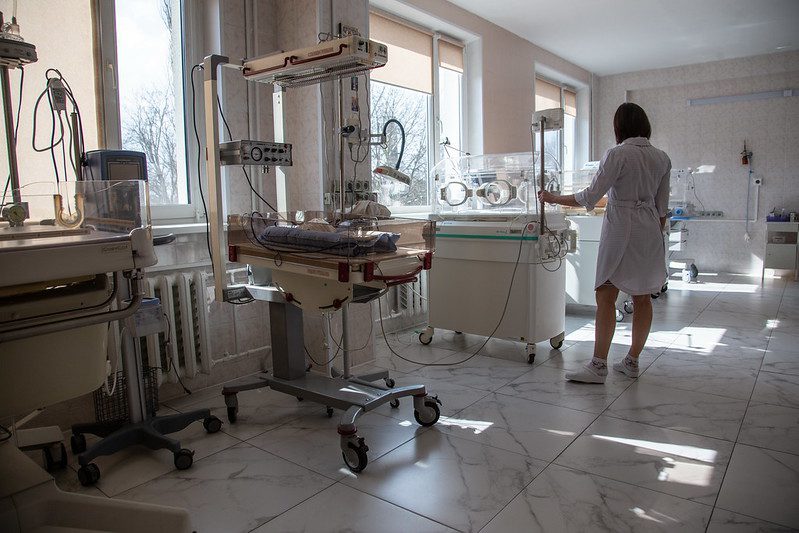
 November 2023 marks the 19th month of war between Russia and Ukraine. Since the beginning of the war, on February 24, 2022, the U.N. reports as of September 2023 that 9,701 civilians have been killed and 17,748 injured. Of these deaths, 545 are children. Between May and August of 2023, child casualties have increased more than 7%, as compared to early 2023, due to increased Russian attacks. The nonprofit Embrace is distributing portable infant warmers in Ukraine to provide babies with lifesaving warmth to keep them alive in such harsh environments.
A Loss of Medical Care
Dr. Rodwan Abouharb of University College London has researched the causes of death during the war and has found that beyond the deaths from actual fighting, food shortages, disease and decreased access to medical care are the leading causes. The Ukrainian government now needs to redistribute funds from health care to defense, creating more inaccessibility to proper medical services for civilians.
Russia has targeted health care facilities throughout the war, including maternity hospitals. The World Health Organization has recorded 859 attacks on such facilities. The March 9, 2022, missile attack on Maternity Hospital #3 in Mariupol became known as one of the most horrific instances of mother and infant endangerment.
Lifesaving Baby Bundles
The American nonprofit Embrace has saved over 475,000 babies globally with its portable incubators, known as Embrace Warmers. Infant deaths often occur due to complications regulating body temperature, and premature babies are especially at risk. Embrace Warmers provide the necessary temperature control at a fraction of the cost of traditional incubators, which often cost more than $20,000.
These innovative incubators are also portable, a significant advantage in war-torn, impoverished areas such as Ukraine where medical care must often be offered in places other than a hospital. They are also reusable, intuitive to use, able to work without stable electricity and feature easy-to-clean antimicrobial fabric.
Impact in Ukraine
CEO and co-founder of Embrace, Jane Chen, says the company’s GoFundMe fundraiser, launched back in 2022, quickly raised her goal of $600,000 to manufacture the incubators and distribute them to babies in need in Ukraine. Global shortages delayed the production process early on but a production company in India helped manufacture the incubators as quickly as possible and prepared them to be shipped to Ukraine by September 2022. Flexport Inc., a logistics and supply-chain management company, became one of Embrace’s biggest supporters by shipping the incubators pro bono.
One of the biggest challenges was distributing the Embrace Warmers in Ukraine on the ground to medical staff whose everyday operations are severely disrupted by the war. Embrace’s partnership with UNICEF has brought 150 incubators to hospitals in cities including Dnipro, Sumy and Pokrovsk. Hope, Nova Ukraine and the National Humanitarian Aid Agency in Zdorovi have also been instrumental in distribution.
Chen estimates that the Embrace Warmers in Ukraine have saved over 15,000 babies over the last year as the company continues to donate incubators monthly. “Providing assistance to vulnerable newborns on their first day of life is really special, and also to be able to bring hope to this next generation of Ukrainians, to their families, loved ones and caretakers,” said Chen. Embrace has received many letters from Ukrainian medical facilities expressing gratitude for the lifesaving devices.
The war wages on, but infant warmers in Ukraine are saving lives. Due to these portable incubators, parents, doctors and nurses can rest easier knowing that infants can be easily transported and cared for even during the toughest times.
– Isabella Rothe
Photo: Flickr

AgriPredict: The App Assisting Small-Scale Farmers in Zambia
As more and more small-scale farmers in Zambia are encouraged by the state to move to small-scale commercial farming, more efficient tools are required to enable the farmers to navigate the rough waters of weather pattern changes, crop disease and market penetration. AgriPredict, a platform explicitly curated for farmers, is doing just that.
Agriculture in Zambia: Untapped Hectares
Most of Zambia’s poverty-stricken communities are concentrated in rural areas that bestow the land on which 90% of the country’s farming practices take shape. Trade liberalization and the private sector prioritization of imported goods have run roughshod over the kinds of agricultural development policies that would enable small-scale farmers in Zambia to yield more crops, enhancing food security and potential profits.
The inadequate development of the agriculture sector materializes in many ways, most consequentially being the absence of irrigation systems and the lack of technologies and mechanizations available to farmers. Because of this, small-scale farmers in Zambia rely heavily on natural weather patterns. Of course, these patterns have become much more unpredictable due to the effects of natural disasters, causing shorter periods of rain and longer spells of drought.
What’s more, the 2016/2017 farming season in Zambia saw maize, the country’s primary cash crop, become victim to the fall armyworm pest, leading to the devastation of the staple crop. 90% of fields were infested, allowing the fractious pest to have a devastating impact on the food security and incomes of small-scale farmers in Zambia.
AgriPredict: Revolutionizing Farming
Having realized the constraints that small-scale farmers in Zambia must confront to enter the market, coupled with the challenges they persistently face in subsistence farming, AgriPredict set out to alleviate the hardships of the country’s agricultural producers. Averaging 26,000 users over November 2022, AgriPredict is a platform designed to provide farmers with detailed information regarding crop diseases, weather patterns and changes, the best agri-services related to their needs and potential sellers to connect with.
AgriPredict functions via an app that can be downloaded on smartphones and a USSD code-based service that can be used with any kind of phone. This is essential as the pioneers of AgriPredict discovered early on that smartphone usage amongst small-scale farmers in Zambia was initially low. Combining artificial intelligence with agriculture, the app enables farmers to take a picture of their affected crop and receive an instant diagnosis of the diseased plant. Information regarding agro-dealer locations and possible crop treatment options are also provided to the user, thus aiding them in protecting their yields and income.
The ambitious minds behind AgriPredict sought to construct a tool that would prevent the mass crop destruction between 2016 and 2017 from happening again, so perhaps most importantly, the platform is specially equipped with an early warning system that notifies farmers when an external threat from a pest arises. AgriPredict is the ideal risk-management tool for farmers across Zambia as it allows them to increase the efficiency of their agricultural production without the high costs of consulting agronomists.
The Future of Farming
Abundant with rich, fertile land, it is atypical for such a country to experience the same agricultural underdevelopment as Zambia. AgriPredict has identified the main challenges that have withheld small-scale farmers in Zambia from achieving maximum yields of crops and in turn, has created a platform to propel agricultural producers into the future of farming, a future where food is secure and crops are safe. Technological advancements within the agriculture sector, such as AgriPredict, allow Zambia’s poverty-affected rural communities to access more opportunities with less risk, thereby demonstrating the significant impact that an app can have on life.
– Zara Brown
Photo: Flickr
Saving Lives with Infant Warmers in Ukraine
A Loss of Medical Care
Dr. Rodwan Abouharb of University College London has researched the causes of death during the war and has found that beyond the deaths from actual fighting, food shortages, disease and decreased access to medical care are the leading causes. The Ukrainian government now needs to redistribute funds from health care to defense, creating more inaccessibility to proper medical services for civilians.
Russia has targeted health care facilities throughout the war, including maternity hospitals. The World Health Organization has recorded 859 attacks on such facilities. The March 9, 2022, missile attack on Maternity Hospital #3 in Mariupol became known as one of the most horrific instances of mother and infant endangerment.
Lifesaving Baby Bundles
The American nonprofit Embrace has saved over 475,000 babies globally with its portable incubators, known as Embrace Warmers. Infant deaths often occur due to complications regulating body temperature, and premature babies are especially at risk. Embrace Warmers provide the necessary temperature control at a fraction of the cost of traditional incubators, which often cost more than $20,000.
These innovative incubators are also portable, a significant advantage in war-torn, impoverished areas such as Ukraine where medical care must often be offered in places other than a hospital. They are also reusable, intuitive to use, able to work without stable electricity and feature easy-to-clean antimicrobial fabric.
Impact in Ukraine
CEO and co-founder of Embrace, Jane Chen, says the company’s GoFundMe fundraiser, launched back in 2022, quickly raised her goal of $600,000 to manufacture the incubators and distribute them to babies in need in Ukraine. Global shortages delayed the production process early on but a production company in India helped manufacture the incubators as quickly as possible and prepared them to be shipped to Ukraine by September 2022. Flexport Inc., a logistics and supply-chain management company, became one of Embrace’s biggest supporters by shipping the incubators pro bono.
One of the biggest challenges was distributing the Embrace Warmers in Ukraine on the ground to medical staff whose everyday operations are severely disrupted by the war. Embrace’s partnership with UNICEF has brought 150 incubators to hospitals in cities including Dnipro, Sumy and Pokrovsk. Hope, Nova Ukraine and the National Humanitarian Aid Agency in Zdorovi have also been instrumental in distribution.
Chen estimates that the Embrace Warmers in Ukraine have saved over 15,000 babies over the last year as the company continues to donate incubators monthly. “Providing assistance to vulnerable newborns on their first day of life is really special, and also to be able to bring hope to this next generation of Ukrainians, to their families, loved ones and caretakers,” said Chen. Embrace has received many letters from Ukrainian medical facilities expressing gratitude for the lifesaving devices.
The war wages on, but infant warmers in Ukraine are saving lives. Due to these portable incubators, parents, doctors and nurses can rest easier knowing that infants can be easily transported and cared for even during the toughest times.
– Isabella Rothe
Photo: Flickr
Orange Sweet Potato Combats Malnutrition in Uganda
Background
A 2011 Uganda Demographic and Health Survey found that prolonged Vitamin A deficiency can have devastating health defects such as eye damage and blindness, mental retardation, reproductive disorders, impaired growth in children and can put them at a greater risk of disease due to a reduced immune system. According to Feed the Future, in Uganda, 38% of children suffer from vitamin deficiency and 70% from iron deficiency.
According to the 2022 Karamoja IPC for acute malnutrition report, food insecurity was 40% in 2022, up 10% from the previous year. Vitamin A tablets and food supplements are available to those who can afford them or know how to find them, but they are not a solution to malnutrition in impoverished areas. A cheaper, more accessible option is needed. Since 2006, Feed the Future has worked on biofortification, which involves sharing and breeding crops with high levels of certain micronutrients.
USAID Partnership
In 2007, HarvestPlus, partnered with the United States’ Feed the Future and released the orange-fleshed sweet potato (OFSP), which is rich in Vitamin A, to provide an easy solution to issues of malnutrition in countries like Uganda. This became the first biofortified crop that contains provitamin A (PVA) carotenoids–antioxidants that become Vitamin A. It is cross-bred with other varieties of potatoes and has a high yield with a quick maturing rate.
World Vision Uganda began a project called the Resilience and Livelihoods Programme to provide families with the sweet potato vine, teaching them how to grow and sustain this crop season after season. In 2018, the number of underweight children under five dropped 2.6% from 2015. Now, about one in eight are growing and consuming the sweet potato, reducing malnutrition in Uganda through agriculture, according to World Vision Uganda.
The project has also been supported by USAID “under the United States Feed the Future Initiative through two successive projects: the current USAID Meals for Nutrition Biofortified Solutions in Uganda (MENU) and the previous USAID Developing and Delivering Biofortified Crops (DDBC) project,” according to HarvestPlus. They have developed six new types of Vitamin A-rich potatoes in addition to High Iron Beans (HIB).
According to HarvestPlus, “sweet potatoes that are high in provitamin A can provide up to 100% of daily Vitamin A needs and contribute to a reduction in vitamin A deficiency in regions where daily sweet potato consumption is high. More than 95% of the world’s sweet potato crop is grown in developing countries.”
This crop has not only changed the lives and futures of individual families but of entire communities where it can be shared for the benefit of all. Three times a week is the dietary recommendation for children to consume orange-fleshed sweet potatoes. High Iron Beans are also recommended to increase blood count. This is also a crop that supports the economy, as potatoes are one of Uganda’s biggest exports.
Final Thoughts
According to the World Bank, gross domestic profit (GDP) increased to 5.3% in 2023 from 4.7% the year before. Inflation decreased by more than half, from 10.7% in 2022 to just 5% in June 2023. They are projected to reduce poverty to 40.7% by 2025, compared to 40.7% in 2023. The future of agriculture looks brighter for Uganda as they utilize biofortified crops to not only generate an income but fight for better nutrition for their children. HarvestPlus continues to work with food businesses and processors to create products with biofortified ingredients such as porridge, baby food and bread.
– Jennifer Arias
Photo: Unsplash
How the GPE Is Strengthening Education in Tanzania
The GPE’s Partnership With Tanzania
Since 2013, the GPE has partnered with Tanzania, working closely with UNESCO, to improve the quality of education both on Tanzania’s mainland and in Zanzibar. Total grant support over the past decade exceeds $3 million for Tanzania’s sectors in program development and implementation, sector plan development, COVID-19 relief and system capacity and transformation. These sectors address “persistent challenges, including poor school conditions, teacher shortages and teacher effectiveness, in systemic and sustainable ways.” The grants also go toward programming to increase young girls’ access to education through policies promoting gender equality and inclusion.
GPE-Supported Projects in Tanzania
Aiming to improve three priority reform areas — teacher workforce planning and management, gender equality and inclusion and the teaching and learning environment generally — the Global Partnership for Education has implemented several projects within Tanzania. Pamodzi for Inclusive Education in South-East Africa (PIESEA) focuses on promoting inclusive education policies and increasing public awareness of education policies implemented in Tanzania, as well as Kenya and Malawi.
PIESEA has developed a national strategy for inclusive education in Tanzania, which provides data on inclusive education for policy making, increases funding for inclusive education and increases community demand for an inclusive educational environment. The Global Partnership for Education is also working on a project to strengthen engagement in education planning, policy dialogue and monitoring. Objectives at the launch of the project include:
GPE’s Achievements Within Tanzania
Since 2013, Tanzania has experienced growth in gender equality within schooling systems through “improved girls’ transition rates from primary to lower secondary school and a recent reversal of a policy banning pregnant girls from attending school.” Removing the ban, which restricted girls who were pregnant from receiving education, was a step in the right direction for GPE within Tanzania, as this was one of their primary policy goals aiming to achieve gender equality. According to a World Bank study from 2020, secondary school enrollment increased from 1.8 million in 2015 to 2.2 million in 2018, a significant success for the education system in Tanzania.
However, 300,000 children in 2018 and 2019 could not receive secondary education due to a lack of space. According to 2020 data, 60,000 children drop out of lower secondary education each year, 5,500 of those children being pregnant girls.
The Global Partnership for Education recognizes that, each year, policies need to be reevaluated and reformed — the current operating model in Tanzania is GPE 2025, which focuses mainly on teacher workforce planning and management as the priority reform, ultimately aiming to achieve increased mobilization efforts for providing education within Tanzania.
– Marisa Kole
Photo: Flickr
How 4 USAID Programs in Laos Fight Poverty
History
Lao People’s Democratic Republic is a bustling nation bordered by Cambodia, Thailand, Vietnam, China and Myanmar. Officially becoming the Lao People’s Democratic Republic on December 2, 1975, the country has become an integral Southeast Asian nation with 7.5 million people. Despite making strides in development in the last two decades, the country faces numerous challenges stemming from an unskilled workforce and economic hurdles. These challenges have caused Laos to remain one of the poorest nations in Southeast Asia, with 18.3% of people living below the poverty line and 10% of employed people on only $1.90 a day.
Here are the four USAID programs in Laos that help support its economic reforms and sustainable growth.
1. Backing Businesses
The Laos government emphasizes a diverse economy with room for jobs in numerous sectors to improve the country’s economic conditions. USAID directly assists two key enterprises to support their endeavors: the Laos Business Environment (LBE) and the Laos Micro Enterprise (LME). The LBE helps business operations in the private sector. At the same time, the LME is a thorough support system for the rural markets. Together, these two enterprises create a backbone by which the Laos government can enhance its economy.
2. Educating Youth
To lift a country out of poverty, its population needs to be provided with a proper education. The Laos government and USAID understand this and have created critical programs to facilitate mass education. Learn to Read teaches reading skills to Lao children, especially those who are not native speakers or have disabilities. All Children Learning has similar goals, though it narrows the focus on providing vital recovery for education sectors hurt by the COVID-19 pandemic.
3. Harvesting Energy
Reducing greenhouse gasses is a significant part of USAID’s bracket in Laos. Working together with the Laos government, USAID has established The Regional Southeast Asia Smart Power Program. It involves USAID directly assisting the Mekong’s transition toward energy security by partnering with organizations such as Japan U.S. Mekong Power Partnership (JUMPP). USAID helps Laos manage its electricity more efficiently by providing this support system, allowing it to be used more frequently for various projects. In addition, USAID partners with Électricitédu Laos (EDL) to help strengthen assets and manage the grid.
4. Improving Health Care
With 43 out of 1000 newborns perishing before their 5th birthday, USAID partners with the Laos government in essential health-related services to boost the nation’s health care systems. Regarding COVID-19 assistance, USAID provided 3 million vaccine doses to the Lao people while improving treatments and detection. Another program, the Capacity Strengthening on Maternal Child Health and Nutrition Project (LMCHN), improves new mothers’ and children’s well-being, nutrition and maternal health. USAID also provides strategic support to the country’s fight against HIV, malaria and other infectious diseases.
Without a doubt, Laos is developing rapidly. According to the World Bank, the poverty rate in Laos has halved from 46% to 18%. However, there is still a long way to go. USAID’s work through its programs in Laos is a testament to the country’s desire to improve the living conditions of its population and lift the Lao people out of the trenches of poverty.
– Atheeth Ravikrishnan
Photo: Flickr
Addressing Child Poverty in Kosovo
How Kosovo Became Independent
Since the conclusion of the Yugoslavia civil war that split the nation in 2001, Kosovo represents the ethnic tension that remained unresolved from the 10-year conflict. During this war, Serbia brutally massacred the Albanians in Kosovo, leading to the United States Department of State investigating the “ethnic cleansing.” Even after investigating Serbia’s war crimes, Kosovo remained within Serbia after the war. The ethnic Albanians in Kosovo, who make up a staggering 92% of the population, were displeased with being part of Serbia. Their discontent was answered with the establishment of an independent entity in 2008, but Serbia to this day views Kosovo as a Province within Serbia, not an independent nation.
Challenges with Social Protection
Ambassador Tomáš Szunyog, the Head of the EU Office in Kosovo, said that lack of spending on social protection is not the sole issue, as “allocations to beneficiaries of different social protection schemes are not adequate and equitable, and create inequalities.” The World Bank reported that of the bottom 20% of earners in Kosovo, just around a fourth of them qualified for Social Assistance Scheme benefits, Kosovo’s social protection package. Szunyog added that it is the government’s responsibility to ensure their social programs are employed effectively.
Ways to Reduce Child Poverty in Kosovo
Despite this apparent peril for Kosovo’s youth, the World Bank outlined a list of alterations to lower child poverty in Kosovo. The two main components of Kosovo’s society that need to be adjusted are their health care and education. The aforementioned high mortality rate in the youth is due to increased health costs, thus by reforming their health care.
Additionally, by investing in early education, Kosovo’s workforce will increase in skill, which, according to the World Bank, provides a 13% return on investment each year. Investing in the youth’s intellect and health will strengthen the workforce, boosting the economy and lowering child poverty in the nation.
To address the child poverty crisis, Kosovo’s president, Vjosa Osmani, introduced a national call to action in 2022, focusing on emphasizing the intellectual development of the nation’s youth. Osmani stated that Kosovo will ensure stable leadership and a strong vision for their early child development programs, and their funding in child development will increase. With child development at the forefront of the nation’s vision for improving the future, it has adjusted the social protection allocations to impact those in dire need and now look to cultivate a young generation of workers to stimulate the economy, putting an end to Kosovo’s child poverty crisis.
The Soskosovo Project
One organization that is supporting the children who this crisis is affecting is the Soskosovo project, which sends financial aid packages to families to support the health and educational needs in the poverty-stricken nation—additionally, the project aids in funding psychosocial aid for families, aiding the nation’s mental stability.
Putting an end to Kosovo’s child poverty will help children like Xhaka and Shaqiri will be able to prosper in the land they call home.
– Dimitri Lykidis
Photo: Flickr
Chil Femtech Center: Africa’s First E-Hygiene Shop
Africa’s Health Challenges
Finding decent health care is a continuous struggle for those in Africa due to underfunded national health systems, a lack of basic infrastructure to provide essential resources such as clean water or electricity and a shortage of equipped health care workers. The Ebola epidemic exposed the flawed health status in Africa, and the recent statistics paint a grim picture. The World Health Organization (WHO) reports that Africa is responsible for “the global burden of diseases but has access to only 3% of health workers and less than 1% of the world’s financial resources.”
This recent initiative for more accessible health care stems from the WHO’s alarming statistics report, exposing that half of the world’s health facilities lack basic hygiene essentials. Without clean water, antibacterial soap and alcohol-based cleaning stations within hospitals or bathrooms, the number of infected individuals will only increase. According to the WHO, “Around 3.85 billion people use these facilities, putting them at greater risk of infection, including 688 million people who receive care at facilities with no hygiene services at all.”
E-Hygiene Shop
The E-Hygiene Shop will follow an E-pharmacy model offering various medically approved hygiene products from global brands. The program is currently being tested in school sickbays but has plans to expand all across Africa. The initiative also includes a flexible “buy now, pay later” option, allowing health facilities to upgrade their hygienic standards without increasing costs. The program’s primary goals include delivering health, cleaning and janitorial supplies at an affordable price while carrying significant stock and working directly with African, U.K. and USA-based hygiene product manufacturers. To reach the inaccessible population in the Middle East & Africa, secure medical services through the center’s network of spokes communicate to its hubs using their artificial intelligence chatbot connected to compatible telemedicine devices.
Dr. Shamim Nabuuma, the co-founder and CEO of Chil Femtech Center, emphasized the urgency of this matter, stating, “It is unacceptable for a patient to walk into a health facility for treatment, only to contract an additional ailment due to inadequate hygiene standards. Our E-Hygiene Shop is a bold step towards ensuring patients receive care in infection-free environments, which is pivotal for their complete Recovery.” She created the program strictly to fight back against breast cancer using e-oncology services guided by AI and drone-powered transportation of cervical cancer specimens from remote rural villages to laboratories.
Progress for the Future
The launch of the Chil Femtech Center’s new E-Hygiene Shop marks a significant stride toward enhancing health and well-being across Africa. This action is consistent with the center’s steady dedication to providing partner health care facilities with the necessary equipment to meet the requirements of prestigious health care facilities within urban areas. By providing easy access to essential hygiene products and fostering awareness about the importance of global health, this initiative can uplift communities and improve the continent’s health status. The integration of technology not only facilitates convenience but also signifies a progressive approach toward addressing health care challenges.
– Samantha J. Rentfro
Photo: Flickr
How to Overcome Period Poverty In Bolivia
Socioeconomic Factors
One of the primary drivers of period poverty in Bolivia is the country’s high level of income inequality. With more than 80% of people in rural Bolivia living below the poverty line, it is no surprise many families struggle just to afford their basic needs. For low-income households, buying sanitary products is not affordable, leading to using less hygienic alternatives.
Effects on Education
Insufficient awareness of menstruation contributes significantly to period poverty in Bolivia. Lack of adequate menstrual education leaves many girls and women uninformed about menstruation, causing them to feel ashamed and misinformed. Without proper education, women may not know how to manage their periods hygienically, exacerbating the problem.
UNESCO reports that the teachers in one school report that “boys make fun of girls if they know she is menstruating, they see it as something ugly and icky. However, this is due to a lack of knowledge and guidance from home.”
The consequence is girls are missing school during their menstruation, leading to lower attendance and performance. This can perpetuate the cycle of poverty by being denied educational opportunities and a chance to break free from the cycle of poverty.
Additionally, children learn about periods from their ancestors’ traditions and beliefs. These beliefs are not based on science and are confusing about periods for young girls. Girls are advised not to bathe during their period to avoid health complications like blood clots, stomach pain, irregular cycles and infertility.
Ongoing Efforts
Schools in Bolivia have not yet focused on menstrual hygiene in their education and health care systems. However, they have made progress in improving water, sanitation and hygiene (WASH) facilities in schools.
According to data from the Bolivian Ministry of Education, most rural schools in the country are equipped with only one toilet per school. Moreover, the statistics reveal that 32% of these schools have hand-washing sinks, while 29% lack showers on their premises. Alarmingly, 13% of schools do not have access to clean water.
In response to these sanitation challenges, UNICEF has launched an intervention program targeting rural schools and communities. The first program involves the construction of Urine Diverting Dry (UDD) toilets in 21 rural schools. UDD toilets function by dividing urine from feces, which can be reused for agriculture, mostly in places where water and sewage facilities are scarce. The installation of toilets will be followed by an anthropological study to understand their use in rural Andean regions of Bolivia. Although UDD toilets do not address period poverty directly, they bring various indirect benefits. The list comprises better sanitation and hygiene, increased privacy and dignity, decreased health hazards and water conservation.
Addressing Period Poverty in Bolivia
In conclusion, period poverty in Bolivia is a complex issue with far-reaching consequences for the well-being and empowerment of women and girls. It requires a multifaceted approach, and the following systems need to be put into place to see radical change:
While period poverty in Bolivia has been an ongoing issue, efforts are in place to make a difference. Through continued work, period poverty should become a thing of the past in Bolivia.
– Sophie Higham
Photo: Pixabay
Child Poverty in Bosnia and Herzegovina
Not only did the socio-economic conditions of post-war Bosnia make development difficult, the country’s high exposure to floods, landslides, earthquakes and wildfires posed serious problems. Twenty percent of Bosnia is susceptible to floods, which can severely impact infrastructure and leave thousands homeless.
The Rise of Child Poverty in Bosnia and Herzegovina
According to UNICEF, almost all children under the age of four are deprived of at least one dimension of multidimensional poverty. Child poverty in Bosnia and Herzegovina is rising at alarming rates. In 2011, 30.6% of children lived in poverty, compared to 23.4% of the total population. The right to education is not standardized within the country, and due to the practical division of the nation, there are numerous cases of discrimination against students based on their origin.
The Impact of Child Poverty on Education
The lack of education perpetuates a vicious cycle of child poverty in Bosnia and Herzegovina as the intergenerational poverty transfer is a stark reminder of the need to improve education provisions for all children within the country. Children, adolescents and the rural population are the most affected by poverty within the country and children of ethnic minorities, including the Romani, face increased adversity due to heightened discrimination.
Romani Communities and Poverty
During the war, Romani families had to leave their homes and rarely recovered their houses. Even today, much of the Roma community lives in incredibly harsh conditions and often in extreme poverty. Generally, the education levels for Romani children, and girls in particular, are weak. A report from the European Commission in 2020 found that ethnic discrimination against the Roma community is evident in the provision of services like housing, health care, education and employment. Numerous children are victims of trafficking, mainly young girls and adolescents, who are targets of prostitution rings. These networks kidnap or, less often, pay the parents to take advantage of young girls in Bosnia, in the Balkans region and throughout Europe. However, work by the government and NGOs within the country is being maintained to prevent child trafficking.
Government Support for Poverty
The government implemented the 2020-2023 national strategy, and the State Coordinator produced an annual progress report and coordinated meetings with international organizations and local NGOs. The government has continuously funded these NGOs as they have begun to increasingly involve law enforcement and social workers in potential cases of child trafficking. In cooperation with NGO-run shelters, the government provided accommodation, psycho-social support, medical assistance, food and hygiene and legal assistance.
The government is making strides in eliminating the worst forms of child labor in the country. The Council of Ministers approved the National Action Plan for the Social Inclusion of Roma, which aims to improve education access for Roma children. In addition, the Anti-Trafficking Strike Force expanded its membership to include representatives from outside agencies.
World Vision and UNICEF Assisting with Child Rights
World Vision is another organization that aims to improve child rights in Bosnia and Herzegovina. It works to improve overall coordination and collaborative action between the government and civil society, as well as improve efforts to remove all barriers present in children’s lives within the country. Its goal is to amplify the voices of young people in the state, which, in turn, empowers them to seek change.
UNICEF is another critical player as their public information campaigns regarding improving child education and early health care reached more than 1.6 million people. During the COVID-19 pandemic, they educated 2,294 parents about the importance of child immunizations and worked on air pollution programs through youth activism to encourage discussions with local authorities about preventing respiratory illnesses seen in children.
The work of developmental organizations within Bosnia and Herzegovina is vital in ensuring increased provisions to reduce child poverty in Bosnia and Herzegovina.
– Maryam Rana
Photo: Flickr
USAID Programs in Libya Not Deterred by Cyclone Daniel
In response, the United States Agency for International Development (USAID) provided $1 million in humanitarian assistance along with a Disaster Assistance Response Team. This team conducted needs analyses and connected with Libyan authorities and international partners to remedy the devastations on the ground.
USAID programs have a long history in Libya. Prior to Cyclone Daniel, USAID dedicated more than $178 million across five programs intended to improve democracy, governance and economic growth.
More than 2 million Libyans currently live in poverty, and approximately 125,000 remain internally displaced. The USAID programs in Libya aim to lessen poverty by increasing the capacity of the state to respond to the needs of the people, stimulating the workforce and reducing the prospects of violence.
USAID Programs in Libya
Looking Ahead
The situation in Libya is complicated. After the fall of Gaddafi, Libya split into two rival governments: the UN-supported democracy of Tripoli and the Libyan National Army (LNA). The LNA has shut down several ports for oil exports, suffocating the Libyan economy. As a result, USAID programs that focus on economic reform and business development have become critically important in Libya. With the help of USAID and implementation of its anti-corruption programs, transparency initiatives and legal reform, Libya can rebuild itself into a unified government.
– Anthony Coletta
Photo: Flickr