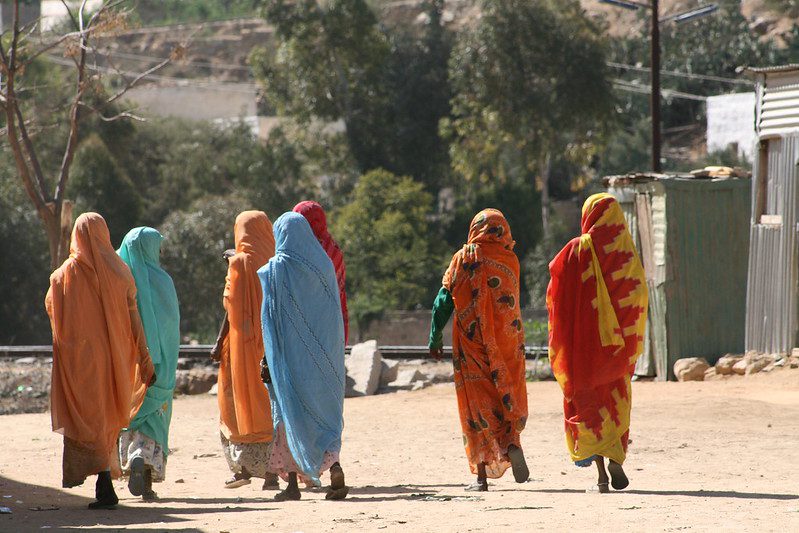
 Women have played a pivotal role in the building of the Northeastern African country of Eritrea. After a 30-year-long conflict, Eritrea achieved independence from its neighboring country of Ethiopia. During the war, Eritrean women made up one-third of the army. They actively participated in combat, breaking from previous societal patterns of gender inequality and discrimination. The historical work of Eritrean women to the liberation of the nation paved the way for gender inequality awareness and ensuring women’s rights in Eritrea.
Advancing Women’s Rights in Eritrea
In 1979, 14 years before the end of the conflict, the National Union of Eritrean Women (NUEW) began its operations. The organization advocates for civil laws that protect women’s rights in Eritrea. Some other points of action by NUEW include work toward fair access to educational resources and minimizing poverty among Eritrean women. A 2023 UNDP report states that ever since Eritrea became independent, gender equality became a key focus of the Eritrean government.
Eritrean women today hold governmental positions and get empowerment through freedom of land ownership, amongst other gender equality reforms outlined in the country’s constitution. According to a 2020 report by the Convention on the Elimination of All Forms of Discrimination Against Women (CEDAW), women occupied 22% of the parliament seats. Improved literacy also shows the progress of women’s rights in Eritrea. The literacy rates for girls increased from 54.8% in 2008 to 68.9% in 2018.
However, additional data shows that there is still more work necessary in advancing women’s rights in Eritrea. The World Bank Gender Landscape shows a 14% gap in labor force participation between the genders. It also shows that in the national parliament, men occupy 3.5 seats for every seat that women occupy.
Female Genital Mutilation (FGM)
Despite Eritrea’s progress in gender equality as a result of women’s wartime contributions, women’s rights in Eritrea remain at risk. Traditions and cultural norms prevent the full attainment of gender equality.
The practice of female genital mutilation (FGM) has had a steady decline since the 2007 ban. While this significantly reduced the harmful practice, a UNICEF 2021 report shows that FGM still takes place in some rural areas. In 2010, the prevalence of FGM was as high as 33.2% among girls under 15. In 2016, the percentage decreased to 3.8% among the same population.
The UNFPA-UNICEF Joint Programme is working toward the complete eradication of the practice by 2030.
With the Ministry of Health, of Labor and Social Welfare as well as the National Union of Eritrean Women, the program aims for its collaborative approach to work as a primary tool for the eradication of FGM. The engagement of the different institutions helps with the discussion of FGM beyond culture and tradition. They hold community events and open and communal conversations regarding this particular issue.
The program aims to raise awareness of its physical dangers and related health concerns, as well as introduce girls’ and women’s rights into the conversation. The same 2021 UNICEF report shows that 425 community events to discuss FGM took place in 2019 across a multitude of villages in Eritrea.
Human Rights Concern Eritrea (HRCE)
Elizabeth Chyrum founded Human Rights Concern Eritrea (HRCE), a nonprofit organization that highlighted different concerns regarding women’s rights in the country in 2017. The organization reported a continuous violation of women’s rights in the country and, therefore the breach of the U.N. Convention on the Elimination of All Forms of Discrimination Against Women (CEDAW). According to HRCE, Eritrean women are at high risk of suffering from sexual abuse practices, stating that the subject is still taboo within parts of the nation.
HRCE’s targeting actions toward helping women in Eritrea include conducting interviews and research to better understand human rights violations against Eritrean women. The nonprofit also issues calls to action for the Eritrean government and aid agencies, advocating for easy access to sanitary products for women, protection of women in detention centers and support for women who are victims of harassment.
The Future
Alongside the work of organizations such as UNICEF and NUEW, the UNDP has proposed the Global UNDP Gender Equality Strategy for the years 2022 to 2025.
This strategy uses the “Six Signature Solutions” for the advancement of women’s rights in Eritrea. Instead of focusing on gender equality alone, the strategy targets other topics of concern, like the environment and governance, according to a 2023 UNDP report. UNDP looks at gender inequality in the environment and assesses that extreme weather, such as droughts, highly affects the livelihood of Eritrean women.
Among other advancements, the “Six Signature Solutions” aims to empower women by improving their access to business ownership. By also targeting governance, the UNDP looks for gender inequality in public institutions and does so by, among other initiatives, designating gender focal points in governmental offices.
Despite the country’s notable advancements, persistent challenges still threaten the full implementation of gender equality in Eritrea. Efforts by its government, alongside national and international organizations, highlight ongoing violations and emphasize the collective commitment that is needed to advance gender equality in the country.
– Paula Pujol-Gibson
Photo: Flickr

Period Poverty in the Maldives
Period Poverty
Period poverty refers to the lack of access to menstrual hygiene products, adequate sanitation facilities and education on menstrual health. This issue particularly affects individuals who cannot afford or readily obtain necessary menstrual products, leading to challenges in managing their periods with dignity and comfort. Period poverty affects around 500 million women and girls worldwide. It is not just an economic issue but also encompasses social and cultural barriers, including stigmas and taboos surrounding menstruation.
The Sensitivity of Sexual Health in the Maldives
In the Maldives, strict religious beliefs silence discussions regarding sexual health. The conservative religious landscape has harvested an environment of shame and sensitivity around topics such as non-marital sexual activity, reproductive health and menstruation, resulting in a stigma that prevents open discussions and advancements in these areas. This obstacle has significantly hampered efforts to combat period poverty in the country, depriving women of access to healthcare, education, and hygienic and affordable products.
The capital city of Male primarily houses sexual health services that may offer women an opportunity to seek care and access. With over a thousand islands, nearly 200 of which are inhabited, this poses an extreme challenge of accessibility for people not within reachable distance, especially those living in rural areas. In addition to this, there is a lack of access to menstrual products due to the landscape and barriers to traveling.
The lack of sexual healthcare for women, coupled with a reluctance to address these issues, results in a cycle that harms women and girls across the Maldives. The religious and cultural sensitivity surrounding the topic has created ongoing challenges for women and the issue of period poverty in the Maldives.
As periods are still a taboo subject in the Maldives, there is very little discussion surrounding them, especially in school systems. These problems are at risk of not being addressed throughout the country, specifically within parliament. As of 2021, women occupied only 4.6% of parliamentary seats in the country. This underrepresentation of women in leadership and policy-making positions further imposes a barrier to women’s rights and breaks the stigma around sexual health and menstruation.
Making Efforts
One project has served as a beacon of hope for the country and its citizens amidst the challenges of access that women face in the Maldives. In 2019, Zero Waste Maldives launched the Cupvert initiative to make menstrual health information more widely accessible to women across the country, while also educating them on eco-friendly and sustainable ways to manage their periods. Education and awareness are a large part of the Cupvert initiative, spreading information to break the silence surrounding menstruation and sexual health care. The initiative does this through campaigns, workshops and outreach projects. By educating women on menstrual health, Cupvert wants to empower them to continue the conversation and make informed decisions regarding their menstrual health.
In addition to education and outreach, Cupvert promotes sustainable and eco-friendly menstrual products, which hold a more practical use in the Maldives. Products like reusable cloth pads or menstrual cups are easier to use in an area like the Maldives, where the geographic landscape prevents easy traveling and access to stores or markets.
Since its launch, Culvert has reached more than 45,000 people across the Maldives, according to Zero Waste Maldives. This project has sparked conversations, educated women, challenged societal norms and offered practical solutions to such a large issue. Cupvert goes beyond just spreading awareness, it actively sparks a sense of empowerment and belonging for women across the country, one that they have never experienced before. It has sparked a major progression for women’s health, one that will hopefully serve as a stepping stone toward accessibility and the elimination of period poverty in the Maldives.
Looking Forward
The issue of period poverty in the Maldives is deeply rooted in religious and cultural sensitivity. Despite the challenges posed by a lack of sexual health care accessibility, societal stigma and the underrepresentation of women in leadership, the Cupvert initiative stands out as a beacon of hope. By sparking empowerment and challenging societal norms, Cupvert signifies a crucial step toward breaking the silence surrounding menstruation and eliminating period poverty in the nation. The success of this initiative highlights the potential for positive change and a brighter future ahead for women’s health in the Maldives.
– Katherine Barrows
Photo: Pixabay
Child Marriage in the Dominican Republic
During her time in office, Melany spent hours with the President, advocating and discussing the prioritization of protecting children and in 2021, a year after Melany’s symbolic “presidency,” the Dominican Republic passed Law 1-21, making it illegal for a person under 18 to marry under any circumstance.
History and Effects of Child Marriage
According to the International Justice Mission (IJM), among all Latin American and Caribbean countries, the Dominican Republic has the highest rates of child marriage, defined as “any formal marriage or informal union between a child under the age of 18 and an adult or another child.” According to UNICEF, approximately 36% of women between ages 20 and 24 were first married before turning 18 in the Dominican Republic, compared to 15% in Haiti, 8% in Jamaica and 26% in Cuba.
The consequences of these unions reach from the individual level to the national level and even worldwide, with profound effects on a country’s economy and living standards. In 2017, the World Bank found that individuals married under the age of 18 are more likely to drop out of school, resulting in a shortened education that disqualifies them from job opportunities and reduces their earnings in the labor market.
It also found that being married during childhood is a likely predictor of pregnancy before the age of 18. The addition of supporting a child adds financial demand on top of the already limiting conditions of shortened education and job disqualification, creating a poverty-vulnerable environment.
Advocacy Efforts and Improvements
To combat the financial consequences and causes of child marriage in the Dominican Republic, Crecer Contenta, a program set up in 2012 by Plan International that Melany is also part of, collaborates with 120 communities around the country to set up an extracurricular class.
The class provides financial education to young girls, covering topics such as money management, entrepreneurial pursuits and life skills to help them overcome social issues within their communities. It also educates parents to promote community solidarity against child marriage and emphasizes the widespread benefits of keeping children in school and out of marriage.
According to Plan International, about 540 young girls have felt the impacts of Crecer Contenta. The program recently completed its nine-month program in five Dominican communities, working with 88 girls to develop their financial skills and instill the importance of completing education.
While child marriage is illegal in the Dominican Republic it continues informally. More than three years after her time in office, Melany continues her fight against these informal unions with the support of Crecer Contenta and Plan International by her side.
– Emily Shapiro
Photo: Unsplash
Mental Health in Monaco
A Brief History
The history of mental health in Monaco reflects a gradual evolution from limited government attention and action to a more comprehensive and proactive approach involving multiple parties. Historically, mental health was not central to Monaco’s policy landscape. Despite this, the majority of people pay nothing for mental health services in Monaco because of full insurance, this is the same with psychotropic medicines.
The care and treatment of persons with mental health conditions including psychosis, bipolar disorder and depression is also included in the national health insurance or is reimbursed. As of 2020 the number of total treatment cases of psychosis, both inpatient and outpatient, was a population of 245. According to the Mental Health Atlas 2020, the government’s most recent legal effort to protect mental health dates back to 1981, which indicates a relatively long period with limited legislative emphasis on an essential aspect of health care.
This stasis changed with the introduction of the “Psychological Stability and Wellbeing” mental health plan in 2022. The government of Monaco, before this initiative, last implemented a mental health policy in 2014, according to the Mental Health Atlas 2020. Its lack of activity in this regard demonstrates a significant gap in addressing the evolving challenges of mental health, especially considering the aftermath of the COVID-19 pandemic. The government’s unveiling of the new plan differed from previous limited approaches, emphasizing a more holistic and forward-looking strategy.
The New Plan
The “Psychological Stability and Wellbeing” mental health plan represents a landmark development, showcasing Monaco’s commitment to addressing mental health challenges comprehensively. Didier Gamerdinger, Monaco’s Minister of Health and Social Affairs, launched the plan in March 2022, according to the Government of Monaco. He presented it as a five-year initiative aimed at providing extensive health, medical and social services to individuals facing mental health challenges throughout their lives. The collaboration between numerous groups in Monaco including the Department of Justice, National Council, Monaco City Hall, Police Department, Department of Education, Youth and Sport, Department of Social Welfare and Social Services, Princess Grace Hospital, Office of Occupational Medicine, health care professionals and various charities, allowed for the creation of this landmark legislation.
This plan introduces a multifaceted approach, consisting of three main components: the promotion of mental health, prevention, and early identification of mental distress and addiction. With 53 actionable points outlined within these components, the plan aims to be a proactive and adaptable strategy to meet the evolving needs of the population of Monaco.
One notable aspect of Monaco’s mental health strategy is its emphasis on children’s health care and the development of expert-patient programs. By prioritizing these areas, the plan aims to empower individuals with chronic conditions, allowing them to take control of their health, improve their quality of life and enhance their understanding and management of their conditions.
In Conclusion
Overall, Monaco’s history with mental health has undergone a transformative shift, from a historical lack of central focus to the implementation of a progressive and comprehensive mental health plan. The recent initiatives reflect a commitment to providing accessible, extensive, and high-quality mental health services, as well as addressing societal challenges such as stigma and social inclusion. The ongoing efforts underscore Monaco’s dedication to fostering a mentally healthy and supportive community for its residents.
– Ani Gonzalez Ward
Photo: Flickr
Women’s Rights in Eritrea
Advancing Women’s Rights in Eritrea
In 1979, 14 years before the end of the conflict, the National Union of Eritrean Women (NUEW) began its operations. The organization advocates for civil laws that protect women’s rights in Eritrea. Some other points of action by NUEW include work toward fair access to educational resources and minimizing poverty among Eritrean women. A 2023 UNDP report states that ever since Eritrea became independent, gender equality became a key focus of the Eritrean government.
Eritrean women today hold governmental positions and get empowerment through freedom of land ownership, amongst other gender equality reforms outlined in the country’s constitution. According to a 2020 report by the Convention on the Elimination of All Forms of Discrimination Against Women (CEDAW), women occupied 22% of the parliament seats. Improved literacy also shows the progress of women’s rights in Eritrea. The literacy rates for girls increased from 54.8% in 2008 to 68.9% in 2018.
However, additional data shows that there is still more work necessary in advancing women’s rights in Eritrea. The World Bank Gender Landscape shows a 14% gap in labor force participation between the genders. It also shows that in the national parliament, men occupy 3.5 seats for every seat that women occupy.
Female Genital Mutilation (FGM)
Despite Eritrea’s progress in gender equality as a result of women’s wartime contributions, women’s rights in Eritrea remain at risk. Traditions and cultural norms prevent the full attainment of gender equality.
The practice of female genital mutilation (FGM) has had a steady decline since the 2007 ban. While this significantly reduced the harmful practice, a UNICEF 2021 report shows that FGM still takes place in some rural areas. In 2010, the prevalence of FGM was as high as 33.2% among girls under 15. In 2016, the percentage decreased to 3.8% among the same population.
The UNFPA-UNICEF Joint Programme is working toward the complete eradication of the practice by 2030.
With the Ministry of Health, of Labor and Social Welfare as well as the National Union of Eritrean Women, the program aims for its collaborative approach to work as a primary tool for the eradication of FGM. The engagement of the different institutions helps with the discussion of FGM beyond culture and tradition. They hold community events and open and communal conversations regarding this particular issue.
The program aims to raise awareness of its physical dangers and related health concerns, as well as introduce girls’ and women’s rights into the conversation. The same 2021 UNICEF report shows that 425 community events to discuss FGM took place in 2019 across a multitude of villages in Eritrea.
Human Rights Concern Eritrea (HRCE)
Elizabeth Chyrum founded Human Rights Concern Eritrea (HRCE), a nonprofit organization that highlighted different concerns regarding women’s rights in the country in 2017. The organization reported a continuous violation of women’s rights in the country and, therefore the breach of the U.N. Convention on the Elimination of All Forms of Discrimination Against Women (CEDAW). According to HRCE, Eritrean women are at high risk of suffering from sexual abuse practices, stating that the subject is still taboo within parts of the nation.
HRCE’s targeting actions toward helping women in Eritrea include conducting interviews and research to better understand human rights violations against Eritrean women. The nonprofit also issues calls to action for the Eritrean government and aid agencies, advocating for easy access to sanitary products for women, protection of women in detention centers and support for women who are victims of harassment.
The Future
Alongside the work of organizations such as UNICEF and NUEW, the UNDP has proposed the Global UNDP Gender Equality Strategy for the years 2022 to 2025.
This strategy uses the “Six Signature Solutions” for the advancement of women’s rights in Eritrea. Instead of focusing on gender equality alone, the strategy targets other topics of concern, like the environment and governance, according to a 2023 UNDP report. UNDP looks at gender inequality in the environment and assesses that extreme weather, such as droughts, highly affects the livelihood of Eritrean women.
Among other advancements, the “Six Signature Solutions” aims to empower women by improving their access to business ownership. By also targeting governance, the UNDP looks for gender inequality in public institutions and does so by, among other initiatives, designating gender focal points in governmental offices.
Despite the country’s notable advancements, persistent challenges still threaten the full implementation of gender equality in Eritrea. Efforts by its government, alongside national and international organizations, highlight ongoing violations and emphasize the collective commitment that is needed to advance gender equality in the country.
– Paula Pujol-Gibson
Photo: Flickr
Gender Inequality and Women’s Treatment in Somalia
Current Picture
Somalia ranks fourth lowest in the gender equality index with one of the highest maternal and infant mortality rates in the world. The nation has a long history of gender inequality, male dominance, and mistreatment of women and children, which is brought up through generations. The reason why the country continues to see high levels of abuse in women and girls is because of society’s grip on the crisis.
In Somalia, a staggering 98% of girls deal with abuse. Girls between the ages of 9 and 15 experience sexual violence, exploitation and physical abuse. Without any legal framework protecting girls’ rights, about 35% of girls undergo child marriage, which contributes to the alarming number of abuse cases.
Most women and girls deal with genital mutilation, which is named the silent epidemic by Women of Concern Honouree, Ifrah Ahmed. She states, “Parents, communities, religious leaders, [and] elders still think that this is a tradition that should be kept and continued… There is no common understanding and awareness of the issue.” The main reason why there are still cases of this type of abuse is because of generational practice.
Maternal Health
Somalia is also one of the worst countries to become a mother. One out of 12 mothers in Somalia die due to pregnancy complications. A study in 2017 found that many causes of maternal deaths are preventable. According to the study, 25 of the 30 women refused to seek care because they believed that staying away from the doctor keeps them healthy. The lack of education and basing decisions on superstition contribute to the high levels of maternal mortality rate alongside scarce medicine in more rural parts of the country.
Why are women dying preventable deaths? It is because Somali women are denied the right to an education. The 2022 USAID report found that only 35% of women have some years of school. Only 25% of girls attended primary education in formal schools. The lack of education leads to a lack of skills that can help women become independent and prevent deaths.
Women have limited access to the justice system, which leads to more unresolved cases of gender-based violence, and the government continues to leave legislation on the drawing board. For example, the Somaliland Sexual Offences Law of 2018, which proposed prohibiting sexual harassment, remains to be implemented. The government does not prioritize women’s rights, even with women in the Parliament.
Organizations Improving Women’s Treatment in Somalia
Save the Children has urged the government of Somalia to prioritize the protection of women and children in response to the country’s ratification of many U.N. Human Rights Conventions, which led to the country committing to advance the rights of women and girls.
Somali Women Empowerment Organization (SWEO) is an organization that aims to unite and promote women’s abilities and roles in Somali society. The Somali Women Empowerment Organization is a nonprofit organization established in 2010 that focuses on training girls and young women in Somalia on how to get involved in politics through seminars. The goal is to inspire the next generation of women to fight for a shift in women’s rights.
U.N. Women is another organization that advocates for women’s rights, and its involvement in Somalia has it working extensively with the government and civil society to create programs, laws, and policies for women’s well-being. A crucial program U.N. Women are working towards is the Sustainable Development Goals, which advocates for girls and young women to aspire to participate in the fight for women’s rights. The program also helps create economic and social development, which is crucial when tackling gender inequality issues in the government.
– Sebastian Llerena
Photo: Flickr
3 Organizations Working Toward Poverty Reduction in Liberia
The Pro-Poor Agenda for Prosperity and Development in Liberia is daring and has broad goals. The International Monetary Fund (IMF) outlined that Liberia seeks to eliminate poverty and hunger, bridge gender inequalities, provide comprehensive education and increase its people’s overall quality of health.
In Liberia, the number of households below the extreme poverty line increased to more than 50% as of 2021. Half of Liberia’s families live on less than $2 a day. Countries have tried many ways to tackle the problem of poverty. Some have worked, some have not and some are still being studied. The following are organizations working toward poverty reduction in Liberia.
3 Organizations Working Toward Poverty Reduction in Liberia
What’s Next?
Several initiatives and organizations are actively working to alleviate global poverty and support poverty reduction efforts in Liberia. While the examples mentioned above are just a few, there is hope for new opportunities that aim to create a safer and more equitable Liberia.
– Antonio Muhs
Photo: Wikimedia Commons
Human Trafficking in the Banks of Lake Volta
Trafficked children work rigorously, day and night, for their masters, with or without food. They often face the dangerous aspects of the work. During an interview with the Cable News Network (CNN), humanitarian photographer Lisa Kristine reported that every child she spoke to during a visit to the lake knew someone who had drowned. At that time, children who had died through trafficking were declared as dying from natural causes and policemen refused to initiate criminal charges against the culprits.
Risk Factors
Certain factors plunge young children, as young as 5 years old, into work. While for some parents, it is more about letting their children acquire important survival skills, for others, it is cultural. Certain ethnic groups, especially the ethnic groups closer to the sea, deem the involvement of children in fishing as a sociocultural activity.
The National Plan of Action for the Elimination of Human Trafficking in Ghana
Ghana has made certain efforts in its fight against trafficking. In March 2022, the 2022-2026 National Plan of Action (NPA) for the Elimination of Human Trafficking in Ghana was implemented to curb human trafficking through direct and indirect actions. According to the foreword of the plan, the NPA is a five-year strategic plan that serves as an interface and a guideline for all stakeholders working in the field of human trafficking. The NPA has 12 objectives: three for protection, prevention and partnership; two for prosecution and an objective for Monitoring, Evaluation and Research.
The Torkor Model to Curb Trafficking
A partnership agreement involving the General Agricultural Workers’ Union (GAWU) of Ghana, the International Labour Organization (ILO) and the Inland Canoe Fisher’s Association has been trailblazing in their effort to fight child labor prevalent in the fish supply chain in Torkor. Torkor is located on the eastern coast of Lake Volta. The Torkor model encompasses four key projects: the installation of a public address system that raises the community’s awareness and sensitivity to child labor; the establishment of ‘bridge’ schools to integrate child laborers; an efficient monitoring system to track the activities of children in and around the lake and the setup of women’s fish smoking and processing cooperatives that address the vital socioeconomic roles of women in society.
Help From Elsewhere
Apart from the government, nonprofit institutions like the International Justice Mission and Free the Slaves are actively contributing to the ongoing fight against child trafficking on the Lake in Ghana. Free the Slaves, through its Growing up Free Initiative, reorients survivors of trafficking on the Lake. The program encompasses strategies aimed at building the capacity of civil society organizations through training, education and community mobilization. The goal is to empower communities to recognize trafficked children, meet their basic needs and spearhead a change in attitudes within communities facing high rates of trafficking.
The IJM, on the other hand, advocates for trauma-informed justice in Ghana, collaborating with authorities and survivor-led groups to eradicate child trafficking through awareness and action. Ghana may not have made giant steps in its efforts to curb child trafficking on Lake Volta, but just like the ocean, these small drops of progress are pooling together to make a notable impact.
-Angela Agyeiwaa Darkwah
Photo: Flickr
Hunger in The Bahamas: Everything You Need To Know
The Facts
Surprising. The Bahamas is a country that is currently unable to produce enough food for its residents and relies heavily on imports. One out of every 10 Bahamians lives below the poverty line and experiences severe food insecurity. Many accessible foods are less healthy choices and often lead to early signs of hypertension and high blood pressure. A dozen eggs cost $7.50 on average. Meanwhile, residents who fall below the poverty line have less than $4 per day to spend on food. Agriculture lends no mercy to hunger in The Bahamas, as the country is covered in rock and limestone. Salty waters and soils make farming and growing crops difficult or impossible in some areas. The country grows many exotic fruits quite well and is in the process of improving farming practices and increasing produce overall.
The Fix
Education. Many people affected by hunger in The Bahamas are residents who lack formal education. Studies revealed that when the head of household has no formal education, the incidence of poverty is 25%. That number is almost cut in half when the head of household has a primary education. Families that have a head with some college and are living in poverty are less than 1%. Agricultural education is also essential to improving crop production within the country and lowering the need for imports and the overall cost of goods. Alternative farming techniques and improving irrigation are a few ways the region is looking to grow its food production. Other solutions include creating raised garden beds with imported soil and various hydroponic practices.
The Future
Promising. Numerous NGOs are working around the clock to help the fight against hunger and food insecurities. One major contributor to the success of the region is the Bahamas Feeding Network (BFN). Since 2013, the Bahamas Feeding Network has faithfully served the country and continues to make great strides in its fight against hunger in The Bahamas. Partnering with Fidelity Insurance, BFN has hosted two ‘Tee-Off for Hunger Golf Tournaments.’ The tournament raised enough money to provide 750,000 meals in 2023. Royal Caribbean International joined forces with the Bahamas Feeding Network in 2019 and has since raised more than $500,000 and fed countless families during the holidays. Educating residents and farmers are programs like Convoy of Hope. Convoy of Hope recently teamed with the University of Missouri College of Agriculture and together assisted local farmers with training sessions where specialists trained local growers on various practices for growing produce. Those growers then carry valuable new information and skills back to the region to teach others.
Looking Ahead
Many locals struggle to afford food and the agriculture of the region makes it difficult for sustainable produce to grow. Many practices are currently in place to alleviate the food insecurity issues Bahmaians are facing. Formal education is the most vital resource in combating hunger in The Bahamas. Teaching alternative farming practices and techniques also plays a significant role. Organizations like the Bahamas Feeding Network are critical in providing meals and assistance, while programs like Convoy of Hope help educate the future growers of the region with knowledge and advanced farming practices. These programs assist with the push toward The Bahamas being a more self-sustaining region and eliminating hunger in The Bahamas for good.
– Ryan Johnson
Photo: Pixabay
5 Facts About Poverty in Fiji
5 Facts About Poverty in Fiji
Looking Ahead
As a small island nation still recovering from a global pandemic, Fiji has obstacles to overcome on its path to poverty reduction, with its 2030 sustainability goals still at risk. A strong economic recovery may be essential, with a revitalization of the tourism and agricultural sector as a priority for the government. AOP’s initiatives and continued commitments from ADB, which pledged $150 million in 2022 for the Sustainable and Resilient Recovery Program, provide reason to be hopeful about the fight against poverty in Fiji.
– Sam Waterkeyn
Photo: Wikimedia Commons
The Potential of the Sisal Plant in Addressing Period Poverty
Three Stanford researchers, Anton Molina, Anesta Kothari and Manu Prakash, are working on a solution to these struggles by asking, “Can Plants Help End “Period Poverty?” and they found their answer: Sisal.
Sisal Plant, The Key to Ending Period Poverty
The sisal plant is an agave plant that is originally from Mexico. The sisal plant is grown for the fibers in its leaves to create ropes. While the main focus of the sisal plant has been on the production of ropes, Molina, Kothair and Prakash have found that the plant can be efficient in producing pads. The researchers used a chemical process to remove the plant cell walls from the sisal plant. They can blend the rest of the plant and create a fluffier, absorbent material.
The blended material is optimal in developing countries because the chemicals they use to remove the cell walls are local to various countries. The sisal plant can also grow in arid areas and does not need much upkeep to maintain its length. According to Communications Engineering, “Sisal can be harvested year-round across a variety of geographies, yielding over 200,000 tonnes globally in 2020.”
More Comfort and Absorption
These plant-based pads provide users with a more efficient pad for comfort and absorption than hemp and flex seed pads. According to Communications Engineering, “There is a clear difference in porosity between the two materials with flax-derived fluff pulp being much denser than the hemp-derived fluff pulp and both, in turn, being less dense than cotton-CMP.”
In an interview with Nature Journal, the Stanford team shared more about the sisal and its effectiveness. The sisal fibers could absorb liquids better than other cotton materials. “It has the right amount of cellulose that fibers…the part of the plant that holds the water, making it a viable center of the menstrual pad.”
How Can This Help End Period Poverty?
Period poverty is a global plight many organizations have tried to battle through donations of a supply of period products. However, because of the need for more awareness of the dire situation, those who donate do not think to add period products or present the correct products needed for particular countries. Period products are not as accessible in developing countries as many women cannot afford to buy them monthly because they are too expensive.
Culturing the sisal plant allows women to process and create their pads at a cheaper rate without worrying about monthly expenses. The Stanford researchers continue to spread information about their plant-based pads and, through their efforts, have developed an efficient and hopeful path to ending period poverty using a hardy plant.
– Jessica Jean-Baptiste
Photo: Flickr