Women’s Rights in Eritrea
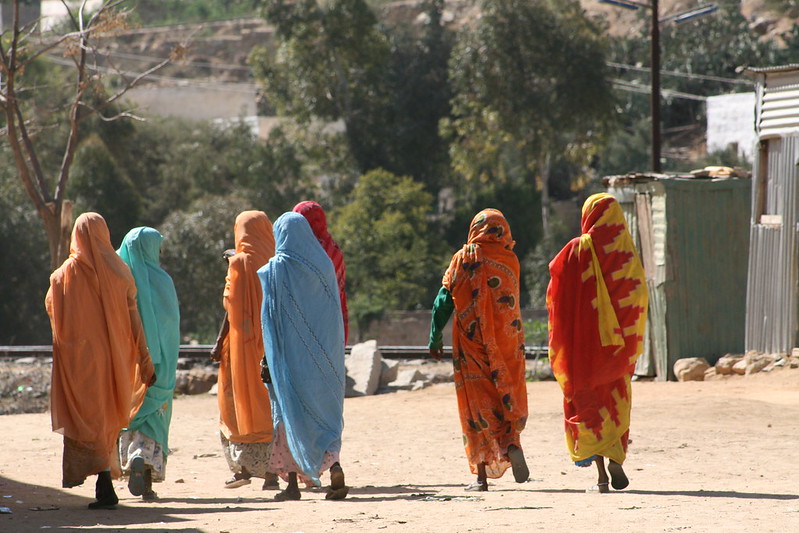 Women have played a pivotal role in the building of the Northeastern African country of Eritrea. After a 30-year-long conflict, Eritrea achieved independence from its neighboring country of Ethiopia. During the war, Eritrean women made up one-third of the army. They actively participated in combat, breaking from previous societal patterns of gender inequality and discrimination. The historical work of Eritrean women to the liberation of the nation paved the way for gender inequality awareness and ensuring women’s rights in Eritrea.
Advancing Women’s Rights in Eritrea
In 1979, 14 years before the end of the conflict, the National Union of Eritrean Women (NUEW) began its operations. The organization advocates for civil laws that protect women’s rights in Eritrea. Some other points of action by NUEW include work toward fair access to educational resources and minimizing poverty among Eritrean women. A 2023 UNDP report states that ever since Eritrea became independent, gender equality became a key focus of the Eritrean government.
Eritrean women today hold governmental positions and get empowerment through freedom of land ownership, amongst other gender equality reforms outlined in the country’s constitution. According to a 2020 report by the Convention on the Elimination of All Forms of Discrimination Against Women (CEDAW), women occupied 22% of the parliament seats. Improved literacy also shows the progress of women’s rights in Eritrea. The literacy rates for girls increased from 54.8% in 2008 to 68.9% in 2018.
However, additional data shows that there is still more work necessary in advancing women’s rights in Eritrea. The World Bank Gender Landscape shows a 14% gap in labor force participation between the genders. It also shows that in the national parliament, men occupy 3.5 seats for every seat that women occupy.
Female Genital Mutilation (FGM)
Despite Eritrea’s progress in gender equality as a result of women’s wartime contributions, women’s rights in Eritrea remain at risk. Traditions and cultural norms prevent the full attainment of gender equality.
The practice of female genital mutilation (FGM) has had a steady decline since the 2007 ban. While this significantly reduced the harmful practice, a UNICEF 2021 report shows that FGM still takes place in some rural areas. In 2010, the prevalence of FGM was as high as 33.2% among girls under 15. In 2016, the percentage decreased to 3.8% among the same population.
The UNFPA-UNICEF Joint Programme is working toward the complete eradication of the practice by 2030.
With the Ministry of Health, of Labor and Social Welfare as well as the National Union of Eritrean Women, the program aims for its collaborative approach to work as a primary tool for the eradication of FGM. The engagement of the different institutions helps with the discussion of FGM beyond culture and tradition. They hold community events and open and communal conversations regarding this particular issue.
The program aims to raise awareness of its physical dangers and related health concerns, as well as introduce girls’ and women’s rights into the conversation. The same 2021 UNICEF report shows that 425 community events to discuss FGM took place in 2019 across a multitude of villages in Eritrea.
Human Rights Concern Eritrea (HRCE)
Elizabeth Chyrum founded Human Rights Concern Eritrea (HRCE), a nonprofit organization that highlighted different concerns regarding women’s rights in the country in 2017. The organization reported a continuous violation of women’s rights in the country and, therefore the breach of the U.N. Convention on the Elimination of All Forms of Discrimination Against Women (CEDAW). According to HRCE, Eritrean women are at high risk of suffering from sexual abuse practices, stating that the subject is still taboo within parts of the nation.
HRCE’s targeting actions toward helping women in Eritrea include conducting interviews and research to better understand human rights violations against Eritrean women. The nonprofit also issues calls to action for the Eritrean government and aid agencies, advocating for easy access to sanitary products for women, protection of women in detention centers and support for women who are victims of harassment.
The Future
Alongside the work of organizations such as UNICEF and NUEW, the UNDP has proposed the Global UNDP Gender Equality Strategy for the years 2022 to 2025.
This strategy uses the “Six Signature Solutions” for the advancement of women’s rights in Eritrea. Instead of focusing on gender equality alone, the strategy targets other topics of concern, like the environment and governance, according to a 2023 UNDP report. UNDP looks at gender inequality in the environment and assesses that extreme weather, such as droughts, highly affects the livelihood of Eritrean women.
Among other advancements, the “Six Signature Solutions” aims to empower women by improving their access to business ownership. By also targeting governance, the UNDP looks for gender inequality in public institutions and does so by, among other initiatives, designating gender focal points in governmental offices.
Despite the country’s notable advancements, persistent challenges still threaten the full implementation of gender equality in Eritrea. Efforts by its government, alongside national and international organizations, highlight ongoing violations and emphasize the collective commitment that is needed to advance gender equality in the country.
– Paula Pujol-Gibson
Photo: Flickr
