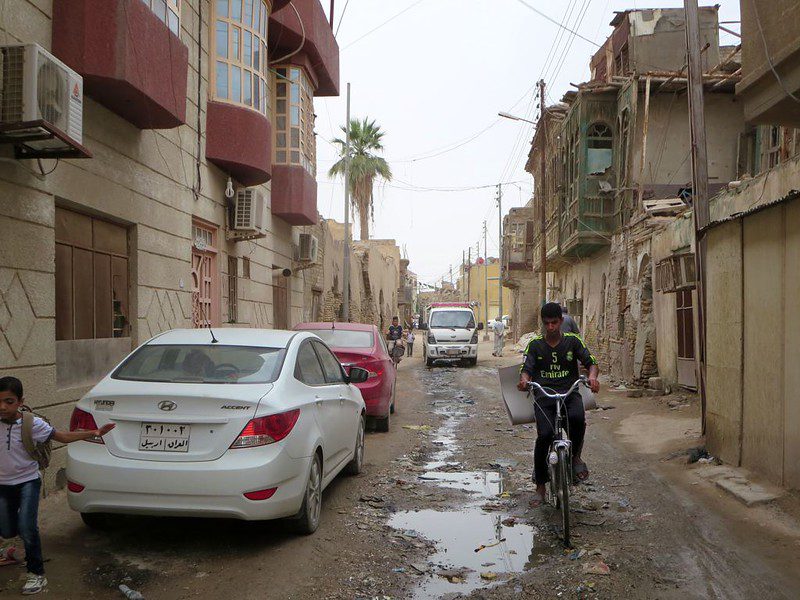
 Iraq is a major political entity in the Middle East region and its proximity to the Tigris and Euphrates rivers has supported a long history of innovating civilizations. However, the aftereffects of war and political turmoil continue to threaten its population of 41 million. From 1979 to 2003, authoritarian president Saddam Hussein presided over the country until a U.S. invasion forced his removal and precipitated the Iraq War. Since then, Iraq has conducted parliamentary elections and made progress toward a transparent democracy.
However, ISIS-related conflicts and a lingering U.S. presence have hindered Iraq’s success and its governmental agencies have been slow to meet its citizens’ needs. Under Hussein, drug trafficking and recreational drug use were illegal, even punishable by death. However, since Hussein’s fall and the Iraq War, anti-drug policies have eased and the country’s economy has continued to struggle.
In 2022, according to Iraq’s Ministry of Planning, 25% of Iraqis lived below the poverty line. Similarly, the U.N. ‘s 2020 World Drug Report evidenced a steady increase in drug trafficking in Iraq since 2003, constituting a veritable crisis. Here’s what to know about drug abuse in Iraq.
High Unemployment Encourages Drug Abuse in Iraq
The U.S. invasion of Iraq in 2003 severely disrupted its local industry. Additionally, the succeeding conflicts of the past 20 years have only further stunted economic development, private sector growth and social security reform. In 2022, Iraq’s Ministry of Planning partnered with the International Labor Organization (ILO) to conduct a labor force survey.
The study reported a national unemployment rate of 16.5% or one unemployed person for every five employed persons. The unemployment rate proved particularly high amongst Iraqi youth, standing at 35.8%. In Basra, a vital port city in Iraq’s southern region, its appellate court found that among arrested drug offenders, roughly 90% were unemployed. As drug officials note, traffickers often target the country’s underprivileged, encouraging addiction and participation in the drug trade.
Crystal Meth Poses the Most Serious Threat
Under Hussein, the Iraqi drug trade existed mostly underground, deterred by harsh penalties and tight border control. However, after the U.S. invasion and Hussein’s deposing in 2003, the Iraqi borders have softened, allowing an influx of drugs from neighboring countries like Iran and Afghanistan.
Since 2017, Afghani drug manufacturers have accelerated the production of methamphetamine, utilizing the ephedra plant that grows naturally on Afghan hillsides. Iraq has proven a valuable market as it battles high unemployment and political instability. Crystal meth accounts for 60% of the Iraqi drug trade and many have sought the drug as an antidote to trauma or job insecurity, hoping to score more hours and better wages.
Widespread Corruption Prevents Anti-Drug Mobilization
Since 2003, anti-crime networks have deteriorated, particularly in Basra, where religious and tribal factions continue to vie for control. Like Iraq’s capital, Baghdad, Basra is at the center of the Iraqi drug problem and its designated anti-drug units are mobilized nightly. However, lack of funding, government corruption and inadequate technology have hindered the units’ efficacy.
Additionally, Iraq’s Popular Mobilization Units–militia groups formed in 2014 to combat ISIS–are allegedly complicit in the drug trade, exerting influence amongst traffickers and government officials alike. Tellingly, anti-drug units have yet to capture any high-level traffickers whose identities remain unknown or protected.
The Prison System and Drug Abuse in Iraq
The government’s response to drug abuse in Iraq has mostly consisted of criminal penalties, threatening up to three years in prison for individuals who use, possess or transport illegal drugs. In 2018, 1400 people in Basra alone were convicted of sale or possession of illegal drugs, predominantly crystal meth.
In the first six months of 2022, the Iraqi government arrested 8000 people on drug-related charges, overcrowding both pre-trial holding cells and state-run prisons. After release, many offenders are discriminated against for their addiction and criminal history and often struggle to find reliable work. Without employment opportunities, some return to the drug trade, aiming to save themselves and their families from poverty.
Road to Recovery
As a predominantly Muslim country, Iraq has struggled to address addiction openly, resorting instead to police crackdowns. Drug users who voluntarily seek treatment are exempt from criminal penalties, but space in rehabilitation facilities remains limited. For instance, Basra has just one rehab center, with only 44 available beds, despite its population of 4 million.
However, in July 2023, Iraqi Prime Minister Mohammed Shia’ al-Sudani ordered the establishment of rehabilitation facilities in all Iraqi provinces except the Kurdistan region. Similarly, al-Sudani ordered Iraq’s state media to organize awareness campaigns, explaining the toll of drug use and associated criminal penalties. In expanding its rehabilitation system, the government seeks to decrease repeat offenders and challenge widespread drug abuse in Iraq.
Final Remark
Ever since 2003, Iraq has struggled to maintain a functioning economy and its poverty and unemployment rates have accordingly spiked. Coping with both financial insecurity and recurring conflict, many Iraqis have turned to drugs, especially crystal meth, to provide salvation, straining Iraqi police forces and clogging its prison system. Government officials, recognizing the danger of drug abuse in Iraq, have promised an upgrade to its network of rehabilitation centers. However, critics note that drug abuse will decrease only when Iraq improves its economic outlook and offers its citizens a chance of success outside of the drug trade.
– Sydney Verdi
Photo: Flickr

What to Know About Drug Abuse in Iraq
However, ISIS-related conflicts and a lingering U.S. presence have hindered Iraq’s success and its governmental agencies have been slow to meet its citizens’ needs. Under Hussein, drug trafficking and recreational drug use were illegal, even punishable by death. However, since Hussein’s fall and the Iraq War, anti-drug policies have eased and the country’s economy has continued to struggle.
In 2022, according to Iraq’s Ministry of Planning, 25% of Iraqis lived below the poverty line. Similarly, the U.N. ‘s 2020 World Drug Report evidenced a steady increase in drug trafficking in Iraq since 2003, constituting a veritable crisis. Here’s what to know about drug abuse in Iraq.
High Unemployment Encourages Drug Abuse in Iraq
The U.S. invasion of Iraq in 2003 severely disrupted its local industry. Additionally, the succeeding conflicts of the past 20 years have only further stunted economic development, private sector growth and social security reform. In 2022, Iraq’s Ministry of Planning partnered with the International Labor Organization (ILO) to conduct a labor force survey.
The study reported a national unemployment rate of 16.5% or one unemployed person for every five employed persons. The unemployment rate proved particularly high amongst Iraqi youth, standing at 35.8%. In Basra, a vital port city in Iraq’s southern region, its appellate court found that among arrested drug offenders, roughly 90% were unemployed. As drug officials note, traffickers often target the country’s underprivileged, encouraging addiction and participation in the drug trade.
Crystal Meth Poses the Most Serious Threat
Under Hussein, the Iraqi drug trade existed mostly underground, deterred by harsh penalties and tight border control. However, after the U.S. invasion and Hussein’s deposing in 2003, the Iraqi borders have softened, allowing an influx of drugs from neighboring countries like Iran and Afghanistan.
Since 2017, Afghani drug manufacturers have accelerated the production of methamphetamine, utilizing the ephedra plant that grows naturally on Afghan hillsides. Iraq has proven a valuable market as it battles high unemployment and political instability. Crystal meth accounts for 60% of the Iraqi drug trade and many have sought the drug as an antidote to trauma or job insecurity, hoping to score more hours and better wages.
Widespread Corruption Prevents Anti-Drug Mobilization
Since 2003, anti-crime networks have deteriorated, particularly in Basra, where religious and tribal factions continue to vie for control. Like Iraq’s capital, Baghdad, Basra is at the center of the Iraqi drug problem and its designated anti-drug units are mobilized nightly. However, lack of funding, government corruption and inadequate technology have hindered the units’ efficacy.
Additionally, Iraq’s Popular Mobilization Units–militia groups formed in 2014 to combat ISIS–are allegedly complicit in the drug trade, exerting influence amongst traffickers and government officials alike. Tellingly, anti-drug units have yet to capture any high-level traffickers whose identities remain unknown or protected.
The Prison System and Drug Abuse in Iraq
The government’s response to drug abuse in Iraq has mostly consisted of criminal penalties, threatening up to three years in prison for individuals who use, possess or transport illegal drugs. In 2018, 1400 people in Basra alone were convicted of sale or possession of illegal drugs, predominantly crystal meth.
In the first six months of 2022, the Iraqi government arrested 8000 people on drug-related charges, overcrowding both pre-trial holding cells and state-run prisons. After release, many offenders are discriminated against for their addiction and criminal history and often struggle to find reliable work. Without employment opportunities, some return to the drug trade, aiming to save themselves and their families from poverty.
Road to Recovery
As a predominantly Muslim country, Iraq has struggled to address addiction openly, resorting instead to police crackdowns. Drug users who voluntarily seek treatment are exempt from criminal penalties, but space in rehabilitation facilities remains limited. For instance, Basra has just one rehab center, with only 44 available beds, despite its population of 4 million.
However, in July 2023, Iraqi Prime Minister Mohammed Shia’ al-Sudani ordered the establishment of rehabilitation facilities in all Iraqi provinces except the Kurdistan region. Similarly, al-Sudani ordered Iraq’s state media to organize awareness campaigns, explaining the toll of drug use and associated criminal penalties. In expanding its rehabilitation system, the government seeks to decrease repeat offenders and challenge widespread drug abuse in Iraq.
Final Remark
Ever since 2003, Iraq has struggled to maintain a functioning economy and its poverty and unemployment rates have accordingly spiked. Coping with both financial insecurity and recurring conflict, many Iraqis have turned to drugs, especially crystal meth, to provide salvation, straining Iraqi police forces and clogging its prison system. Government officials, recognizing the danger of drug abuse in Iraq, have promised an upgrade to its network of rehabilitation centers. However, critics note that drug abuse will decrease only when Iraq improves its economic outlook and offers its citizens a chance of success outside of the drug trade.
– Sydney Verdi
Photo: Flickr
Social Programs Help Panama
Despite the economic growth projections, Panama suffers, like other nations, from disproportionate income distribution. This income inequality affects rural indigenous groups as well as Afro-Panamanian populations, with estimates showing that less than 15% live outside of poverty. The Ministerio de Desarrollo Social (Ministry of Social Development) assists low-income families and poor people with disabilities through financial and mental health services. These social programs help Panama receive much-needed aid for greater income equality between its socioeconomic groups.
USAID Partners With Panama to Tackle Poverty
From the mid-60s through 1982, Panama collaborated with the United States Agency for International Development (USAID) to enhance the well-being of its citizens. Through initiatives focused on agricultural diversification and research, numerous families experienced a rise in income. Simultaneously, public infrastructure projects, including the development of streets, roads and water and sewage systems, were implemented, contributing to a reduction in deforestation. These changes ensure that future generations will prosper through Panama’s natural resources.
USAID assistance continued through three legacy institutions, hoping to sustain Panama’s natural resources. Of these, two have demonstrated notable success. For instance, the Chagres National Park Fund actively funds the management of the Chagres River Basin. This basin plays a critical role in supplying the necessary water required for the operation of the Panama Canal, accounting for 45% of its operational needs and approximately 80% of the water is utilized for human consumption in Panama City, home to around 1.5 million residents. The second successful initiative, the Darien National Park Fund, is dedicated to protecting the 1.4 million acres that struggled under deforestation. These social programs help Panama establish opportunities for its citizens to flourish and learn to operate with minimal external assistance.
Red de Oportunidades Provide Economic Support to Poor Households
Red de Oportunidades, aptly named Network of Opportunities, seeks to dismantle the cyclical nature of extreme intragenerational poverty in Panama. This initiative is directed towards mothers in extreme poverty with children between the ages of 0 to 18. These households will receive around 50 Panamanian Balboa per month so long as they fall under these conditions.
Guardian Angel Programme Helps Panamanians With Disabilities
In addition to assisting low-income households, the Guardian Angel Programme established an economic allowance for those with severe disabilities. Not only money transfers but the program will require participants to attend “lectures, courses and seminars for psychological and medical orientation and accession to the education system in the case of minors.” By providing these resources, social programs help Panama provide sessions to help integrate severely disabled people into their society to live healthy and balanced lives.
Conclusion
The synergy between USAID programs and Panama’s Ministry of Social Development has substantially addressed the immediate needs, leaving little room for massive overhauls. What is essentially needed now is tuning and improving the current programs. This is to ensure the indigenous people of Panama continue to receive the necessary resources to become economically stable and learn to be effective citizens of Panama.
– Luis Lujano-Garcia
Photo: Unsplash
Living Conditions and Poverty in French Polynesia
More than 100 islands make up French Polynesia, covering areas as vast as Europe. French Polynesia is home to at least 300,000 individuals, and 55% of the most populated islands live off less than $1,150 a month.
The State of Poverty
At 10%, the unemployment rate is high in French Polynesia, where 13% of the population works harvesting local agriculture such as coconuts, pineapples, cassava, sugar cane, eggs, tropical fruit and tomatoes and another 19% in the growing industry throughout the islands.
Currently, 16% of French Polynesia live below the poverty line and roughly 75,000 live on less than $600 monthly. One Pacific franc equals $0.0092 and maintains a consistent decline in exchange rates.
In correlation to being a territory of France via considerable autonomy, France subsidizes $300 million per year to French Polynesia. This money is often used to aid with the availability and purchases of everyday goods such as rice, beans, baguettes and crackers. Air Tahiti Nui is also subsidized to help boost tourism and local jobs.
Living Conditions in French Polynesia
In harsh reality, when searching “Tahiti homes,” photos indicate a false correlation between how locals truly live, often showing luxury vacation homes and beachside getaway huts. On the other hand, when searching “Tahiti homes, poverty,” these results represent the vast majority of home size, condition and expectations of how most live.
In reference to supplies mentioned earlier, only the islands of Tahiti, Moorea and Bora Bora have access to tap water, which is often heavily sanitized and can cause stomach sickness. Large water jugs are used throughout the island as water is collected and sealed from springs high in the tropical mountains.
“I remember walking down the streets and seeing homes that are so different from what I’d seen in America,” said Matthew Ward, former missionary and resident of two years. “I’d walk into these homes no bigger than a normal-sized American kitchen, and all they had was in that small area. Seeing the poverty in French Polynesia was a humbling experience that I’ll never forget, not only seeing it but living like them too.”
The impoverished live throughout the main islands but are particularly heavy in cities like Fa’a’ā and other poor regains near Papeete, where 20,000 remain dispossessed as large getaway homes scatter the shorelines and mountain hillsides.
“Most people would have what they needed, bare necessities, you could say,” Ward said, “I’d see rats and ants around the homes, and it was just so common. We focused primarily on helping the locals by providing service and fostering Christlike relationships with those around the island.”
In a study from IWGIA, one-fifth of the population of French Polynesia was living below the poverty line as recently as 2022.
Steps Toward Progress in Tahiti
Among the ways to aid and mitigate poverty in French Polynesia are donations. The SOS Children’s Villages of Canada has collected donations aiding French Polynesia since 1994, when it first appeared there to aid those in need.
Specific regions of aid are directed toward nutrition, quality health care and nurturing homes, to name a few. Since the beginning, SOS Children’s Villages have aided 51 orphaned and abandoned children throughout the capital region of Papeete.
– Chandler Doerr
Photo: Flickr
Unpacking Period Poverty in Liberia
Period Struggles and Poverty
Period poverty in Liberia is intricately linked to the issue of widespread poverty, with a significant portion of the population unable to afford menstrual hygiene products. UNICEF found that approximately 64% of Liberians live below the national poverty line. The financial burden of purchasing menstrual supplies exacerbates the economic challenges that women and girls in the country face. Furthermore, missed school or work days due to period-related issues directly impact their educational and income-generating opportunities, reinforcing the cycle of poverty. In addition, the lack of proper sanitation facilities further compounds the problem of period poverty in Liberia, affecting the overall health and dignity of women and girls.
Legal Reforms
Liberia is taking optimistic strides to address period poverty through specific legal reforms. Recently, the Liberian government eliminated import taxes on menstrual hygiene products, making them more affordable and accessible. The Ministry of Education has also introduced policies aimed at ensuring schools provide adequate sanitation facilities and promote menstrual hygiene education. These reforms are part of broader gender equality initiatives in Liberia, emphasizing the importance of menstrual health and dignity. By enacting these legal changes, the government aims to reduce the financial burden on women and girls and improve overall well-being.
Days for Girls Liberia
Days For Girls Liberia is an organization dedicated to tackling period poverty in Liberia with optimism. This organization is actively working to provide reusable menstrual hygiene kits and menstrual health education to underserved communities. By distributing these kits, Days for Girls Liberia empowers women and girls to manage their periods hygienically and with dignity. Moreover, the organization conducts workshops to raise awareness about menstrual health and break down the societal stigmas surrounding menstruation. The organization’s tireless efforts are contributing to improved menstrual health and overall well-being for Liberian women and girls.
Dr. Maymunah Kadree and Girls Empowerment Initiative Liberia
Dr. Maymunah Kadree, the founder of Girls Empowerment Initiative Liberia, is a driving force in the fight against period poverty in Liberia. Through her organization, Dr. Kadree has been providing menstrual hygiene education and distributing reusable menstrual products to girls in underserved communities. She hopes to empower girls to manage their periods confidently and continue their education without interruption through her efforts. Dr. Kadree’s work also aims to break down cultural taboos surrounding menstruation, promoting open dialogue and awareness about menstrual health. Her dedication and optimism have made a significant impact on improving the lives of young girls by addressing period poverty in Liberia.
– Nathaniel George
Photo: Flickr
Gross National Happiness Promotes Women’s Rights in Bhutan
Women in Society
Although Bhutanese women may be perceived as enjoying relatively free lifestyles, the social status of women remains decidedly below that of men. Perceptions that women are “less confident, capable and strong and sexually more vulnerable than men” strongly dictate the roles women hold in all areas of life, including in the workplace or even in health care. Evidence of this is seen through declining political participation from 13.8% in 2008 to 8.3% in 2013, precipitating further perceptions of women as inferior to men and greatly silencing the female voice in government areas with the potential to address the issue of women’s rights in Bhutan.
Gender-Based Violence
Despite the introduction of the Domestic Violence Prevention Act (DVPA 2013), gender-based violence remains a highly prevalent issue. Even four years after the DVPA came into action, “13.9% of women faced physical violence from intimate partners in their lifetime”, equating to “more than two in every five women.” Violence against women in Bhutan exists in three main categories: sexual, emotional and physical. Shockingly, an average of “3 in 10 women aged 15-49 experience at least one of these, with 17.9% of all victims of abuse suffering all three.
Economy and Industry
Bhutanese women ‘continue to have lower labor force participation rates as compared to men,’ fuelling social stereotypes that women are ‘economic dependents.’ This is arguably a contributing factor to the disproportionate unemployment rates in Bhutan, affecting 2.9% of women yet only 2.1% of men in 2015. However, even amongst employed women, the work differs significantly between men and women, as more women work in ‘vulnerable, low paid or undervalued jobs.’ This proves how women not only have to fight harder to secure employment in Bhutan, but face challenges within industry, forced to work in underpaid and underappreciated jobs. It also highlights the need to change the attitudes of all members of society to elicit concrete social change in women’s rights in Bhutan.
Poverty Among Bhutanese Women
In Bhutan, poverty is a greater issue among women in comparison to men. With 1.1% of employed women living below the international poverty line, and only 0.8% of men, the standards of living in Bhutan are a clear indicator of gender inequality. This is arguably a result of lower adult literacy rates amongst women, at 62.8%, compared to 77.9% for men. A demographic’s literacy skills can directly influence living standards, determining employability and an awareness of one’s situation.
However, Bhutan is a leading nation in South Asia in promoting gender equality in education. The country has made basic education free and a constitutional right, “taking serious measures to implement the United Nations’ education for all agenda and millennium development Goals.” Genevieve Boyreau, the Resident Representative and Senior Country Economist from The World Bank, argues that “the quality of jobs for women is still an issue. Improving job quality and productivity for women would enhance gender equality and promote economic growth.”
Ongoing Efforts
Although Bhutan has yet to achieve gender equality, the last few years have seen the introduction of many strategies and legislations that aim to bring change.
The United Nations Population Fund (UNFPA) is collaborating with the government and other external organizations and groups to develop and advocate for “gaps in policies and their implementation for the realization of gender equality,” as well as supporting women and youth-led organizations to promote the empowerment of women both from within the government and on a communal level.
Moreover, the world-famous philosophy of Gross Nation Happiness (GNH) is “integral to Bhutan’s growth process,” striving to “create an environment wherein every man, woman and child is included and benefits from development and growth,” showing how wider national programs can help to improve women’s rights in Bhutan. The health sector is also addressing the issue, as the Ministry of Health and Respect Educate Nurture and Empower Women has signed a Memorandum of Understanding (MoU) dedicated to empowering women and girls.
Conclusion
The social and political work in place to promote gender equality is helping to reform social perceptions of the role of women in Bhutan, providing hope for a future where men and women are equally valued in all spheres of life.
– Chloe Thomas
Photo: Flickr
Direct Cash Transfers: Is There a Case for Giving Directly?
Conventional and Alternative Modes of ODA
Traditional foreign aid efforts often come in the form of building new schools, providing water wells in rural areas of developing countries and infrastructure projects to boost employment to kickstart economies.
However, increasingly in recent years, the case for new approaches to providing ODA has gained traction, most catalyzed by the suboptimal use of foreign aid funding.
Direct Cash Transfers as a Viable Option
Direct Cash Transfers could be one solution to this problem, an opinion held by Rory Stewart, former President and now advisor of the international non profit organization, GiveDirectly. Founded in 2009, GiveDirectly has disbursed $700M+ in cash directly to about 1.5 million people living in poverty. GiveDirectly currently has a presence in Bangladesh, DRC, Kenya, Liberia, Malawi, Mozambique, Morocco, Nigeria, Rwanda, Turkey, Uganda, USA and Yemen.
According to Stewart, who is the former UK Member of Parliament (MP) for Penrith and the Border:
“Unconditional cash transfers have been proven to deliver support to those that need it with unprecedented speed and scale, meaning we now have the opportunity to do something historic.”
Assumptions are often made regarding how this money is likely to be utilized by those receiving it. GiveDirectly claims that it is most often used for “medicine; cows and goats and chickens; school fees; water; solar lights; tin roofs; irrigation; motorcycles to jumpstart taxi services; businesses to generate income; and more.” But how credible are these claims?
A Compelling Case for Direct Cash Transfers
In their efforts to demonstrate the effectiveness of their work, GiveDirectly highlights evidence from multiple sources. For example, according to research conducted in a study by ODI,
“Evidence was extracted from 165 studies, covering 56 cash transfer programs in low- and middle-income countries … There is strong evidence that cash transfers are associated with reductions in monetary poverty.”
GiveDirectly also calls upon the opinion of fellow non profit, Give Well, who dedicate their efforts to highlighting to donors the best channels for their cash. According to Give Well, “Cash transfers have the strongest track record we’ve seen for a non-health intervention, and are a priority program of ours.”
Claims of misuse for direct cash transfers are also disregarded by a paper produced by the World Bank in 2017. After reviewing quantitative evidence from 19 studies on the effect of direct cash transfers, and a further 11 studies measuring what the recipients of direct cash transfers spent the money on, the paper found that cash transfers significantly reduced spending on ‘temptation goods.’
The statistics paint only part of the picture. Many ODA projects still boast tremendous success in improving living standards in developing countries, improving education levels and boosting economic progression. However, these statistics have led many to believe that there must be a better way to allocate foreign aid budgets.
Although traditional means of providing ODA will likely continue to be allocated a significant proportion of Western foreign aid budgets, the efforts of GiveDirectly certainly provide a compelling case for direct cash transfers to take up a larger percentage of aid budgets in the future.
– Ethan Leyden
Photo: Flickr
How China’s Investment in the Middle East Is Helping Poverty
China’s investment in the Middle East is making a notable impact on alleviating poverty, particularly in the areas of trade, infrastructure and energy. With more than half of its oil supply originating from the Persian Gulf, the nation stands as the largest global importer of oil. The Persian Gulf region contributes nearly a third of the world’s oil production and hosts more than half of the global reserves of crude oil and gas.
Trade and Economic Partnerships
Initiatives like the Belt and Road Initiative (BRI) show China’s proactive involvement with the Middle East and highlight an attempt to strengthen economic ties. The cooperative frameworks promote economic growth and improve connectedness. The diversification of local economies helps Middle Eastern nations grow more and more integrated into China’s wider economic network. Increased trade and economic ties show how Chinese investment is helping tackle poverty by creating the foundation for equitable and sustainable economic growth.
China’s engagements with the countries involved in the initiative stood at $59.5 billion in 2021 and $60.5 billion in 2020. Additionally, the report reveals that China and Iraq are collaborating on several other projects, including the $5 billion Al-Khairat heavy oil power plant in the province of Karbala. Egypt holds a pivotal role in the Belt and Road Initiative, having signed multiple contracts amounting to $18 billion with China in 2018. Beijing is actively engaged in significant projects such as the new administrative capital of Cairo and the Economic-Technological Development Area within Egypt’s Suez Canal Economic Zone in Ain Sokhna.
Infrastructure Investments
China’s involvement in infrastructure development is reshaping the landscape of the Middle East, positioning the nation as the region’s primary economic partner. Through the creation of an environment that fosters business growth, job creation and increased economic opportunities for the local population, improved infrastructure catalyzes increased trade, tourism and overall economic development. This strategic involvement highlights China’s commitment to fostering sustainable growth and mutually beneficial partnerships in the Middle East.
In an official statement, a notable Chinese company proposed investing up to $10 billion in infrastructure projects in the Autonomous Kurdistan region of northern Iraq in 2023. Mohammed Shukri, Chairman of the Kurdistan Investment Commission, stated, as cited by Aliqtisadi News and other Iraqi outlets, “This Chinese group has made an offer to invest $10 billion in projects in Kurdistan, covering rail networks, power, roads, water dams and other sectors.”
Energy Sector Investments
China’s significant energy sector investments in the Middle East, especially in gas and oil, indicate a strategic alignment of economic interests and cooperation between the two regions. Notably, China has emerged as the largest non-oil trading partner for both Saudi Arabia and the United Arab Emirates (UAE) on a global scale. Furthermore, the UAE has maintained its position as China’s second-largest trading partner.
These investments go beyond securing a stable energy supply to offering substantial benefits to the governments and economies of the Middle East. The influx of capital into the energy industry, facilitated by joint ventures and partnerships, can lead to increased job opportunities and the growth of auxiliary sectors. Additionally, the significant profits made from these energy projects serve as a crucial source of funding for Middle Eastern governments. This financial support enables them to allocate funds for infrastructure, social programs and initiatives aimed at poverty reduction.
Future Outlook
China’s investment in the Middle East plays a vital role in addressing poverty and catalyzing revolutionary developments in the region. These investments have the potential to significantly alleviate poverty by fostering economic growth, job creation and technological advancements.
To guarantee that the advantages are equitable and sustainable, however, rigorous assessment of environmental and social aspects will be essential, along with efficient governance. Sustained observation, communication and flexible policies are necessary as China and the Middle East work together to create a prosperous future.
– Ellen Jones
Photo: Flickr
Everything You Need to Know About Poverty in Yemen
Here is everything you need to know about poverty in Yemen.
1. The Yemeni Civil War has destabilized the government
The Yemeni Civil War is a conflict primarily between Yemen’s internationally recognized government and the Houthi rebel movement, which claims its stronghold in Yemen’s northern territories. In 2011, uprisings forced Yemen’s authoritarian president, Ali Abdullah Saleh, to cede power to his deputy, Abdrabbuh Mansur Hadi. However, Hadi struggled to address the country’s corruption, food insecurity and militant incursions. In 2014, the Houthi rebel movement, allied with former president Saleh, seized control of Sana’a, Yemen’s capital and most populous city. The Houthis are an Iranian-backed Shiite group that has long undermined Yemen’s predominantly Sunni government. In 2015, Saudi Arabia and 8 other Sunni states with the help of U.S., U.K. and French aid, launched air attacks, hoping to restore president Hadi to power. The ensuing civil war has prompted a large-scale humanitarian crisis and has claimed the lives of over 15,000 civilians. Those remaining have been challenged with famine, poverty and disease outbreak.
2. The Yemeni economy continues to fail
Even before the outbreak of its civil war, Yemen struggled to keep pace with changing markets. Political corruption hampered Yemen’s economy, while revenues from oil and gas reserves continued to decline. The civil war has further damaged economic infrastructure, contributing to high unemployment and poverty rates, while also alienating international investment. Since the conflict’s onset, the Yemeni economy has shrunk by half.
3. Many Yemenis have been displaced by conflict
Civilian vulnerability to military attack has forced an estimated 4.5 million people or 14% of Yemen’s population to flee their homes. Many Yemenis have been displaced multiple times since 2015, ranking Yemen in the top six of internal displacement crises worldwide. As Yemenis continue to live in exile, they strain already limited food, water and sanitation resources.
4. Yemen nears famine
As a food-deficient country, Yemen has often relied upon imports to nourish its population. However, its civil war has stymied international trade and weakened its access to food supplies. Food prices have soared, hindering accessibility for Yemen’s poverty-stricken population. As a result, hunger is rampant, with many Yemenis forced to skip meals or to severely restrict portion size. Some have pawned belongings and sold assets to raise money for adequate food supplies. Oftentimes, Yemeni women struggle the most, giving portions to children and family members at the expense of their own nourishment.
5. Poverty in Yemen affects women and girls disproportionately
Women and children make up 80% of Yemen’s displaced population, with women heading 26% of displaced households. In the midst of such upheaval, women and girls are especially vulnerable to gender-based violence, often falling victim to child marriage and human trafficking. Widespread food insecurity and an eroding health care system have led to a severe increase in the maternal mortality rate: one woman dies in childbirth every two hours.
6. Communities are vulnerable to infectious diseases
Both the civil war and COVID-19 have strained Yemen’s already fragile healthcare system. 46% of healthcare facilities across the country are only partially functioning or completely defunct, due to insufficient staff, funding and medical resources. Similarly, large-scale displacement and infrastructure collapse has hampered access to clean water and sanitation facilities, with 9.4 million people in acute need of water, sanitation and hygiene services. As a result, communicable diseases have run rampant, including measles, diphtheria and polio. Yemen is also reporting an unprecedented cholera outbreak. From 2012 to 2021, Yemen reported an estimated 2.5 million cholera cases, with 4,000 cholera-related deaths.
7. Humanitarian aid combats poverty in Yemen
The crisis in Yemen has caught the attention of the international humanitarian community. With 21.6 million Yemenis in need of aid, the UN has designated Yemen the worst humanitarian crisis in the world. Despite Houthi attempts to block aid packages, several leading organizations have joined the effort to improve food access, water availability and medical services. For instance, UNICEF is supplying therapeutic food to treat acute malnutrition in children. Similarly, the United Nations Population Fund hopes to allocate $7 million to improve women’s access to reproductive and neonatal care, reaching an estimated 3.9 million people.
A Look Ahead
Though the civil war in Yemen continues to deny the Yemeni population economic security, adequate food supplies and basic health services, there is some chance of peace. In 2022, the UN brokered a ceasefire between Houthi rebels and the Yemeni government, which was renewed to extend from April to October 2022. Though the truce has technically expired, a mutual diplomacy has slowed the conflict, allowing back-channel discussions between Saudi and Houthi representatives to continue, albeit slowly. As the negotiations unfold, civilians hope for an escape from hunger, violence and poverty in Yemen.
– Sydney Verdi
Photo: Flickr
Community Initiatives in Malawi Are Fighting for Women’s Rights
United Nations Population Fund (UNFPA) Malawi
UNFPA Malawi is a U.N. agency initiated by the United Nations Development Assistance Framework, which is a planning process offering financial and technical assistance to support Malawi’s development. UNFPA Malawi’s Gender Equality and Women Empowerment program is currently supported in 13 districts, working alongside the Malawi Government and nongovernmental organizations to empower young girls and women.
UNFPA’s Sexual and Reproductive Health and Rights program advocates for increased access to reproductive and health care services for women in Malawi. The program introduced Basic Emergency Obstetric and Newborn Care within multiple community health services, an initiative aimed at reducing maternal mortality rates among young women.
Girls Not Brides Malawi
A recent roundtable discussion saw Amal Clooney, Melinda French Gates, Michelle Obama, representatives from Girls Not Brides Malawi and a high court judge from the Women’s Lawyers’ Association speak about forced child marriage in Malawi. Mrs. Clooney presented several advocacy routes with the help of Girls Not Brides Malawi to aid the country’s legislation in ending child marriages and allocate financial resources within the Government of Malawi’s national budget.
Following the roundtable, President Chakwera’s announced an increase in his efforts to end forced child marriage. President Chakwera plans to work with the Minister of Gender and the Minister of Justice to adjust laws not in accordance with the minimum marriage age. Furthermore, Mrs. Clooney met with President Chakwera to standardize domestic legislation in accordance with the standards upheld by the SADC Model Law on Eradicating Child Marriage and Protecting Children Already in Marriage.
Mlirima Development Network
The Mlirima Development Network is a UNFPA-supported group that combats gender-based violence and child marriage across Malawi. The network trains community leaders on the importance of advocating for gender equality through UNFPA’s Safeguard Young People program. Currently, the program empowers survivors of child marriage and domestic violence while raising awareness of the dangers of brutality against women in each district.
The network has rescued 30 girls from child marriage, using resources at their disposal to finance the girls’ education and enroll them in schools. Group Village Heads such as Group Village Head Fraiton Pintu in Chikwawa work alongside the network to dismantle harmful traditions hindering the future of young girls in their communities. Presently, Group Village Head Pintu is implementing bylaws to reform traditional initiation ceremonies by choosing progressive young women to teach the next generation of girls.
Community Action Groups
Community Action Groups are cohorts created to counter domestic and sexual violence against women in Mangochi, a township in southern Malawi. The absence of efficient reporting systems prompted UNFPA and the Embassy of Iceland in Malawi to support 44 CAGs across three traditional villages in Mangochi: Chowe, Lulanga and Makanjira. Furthermore, the establishment of CAGs encourages more women to speak out against their abusers, with 208 cases of violence reported through the groups since 2022.
A Look Ahead
Local communities continue to build on the initiatives in Malawi conducted by the UNFPA, advocating for the rights of women and girls across the country. On the other hand, the importance of this work is not lost upon the citizens of Malawi, many of whom recognize gender equality as a human right and strive to empower the next generation of young people willing to fight for women’s freedoms.
– Megha Gupta
Photo: Flickr
Poverty and Air Pollution in Tajikistan
Air pollution hurts everyone, but those experiencing poverty are hit the hardest. Developing countries such as Tajikistan rank the highest for deaths linked to air pollution, likely due to weaker laws surrounding pollution control and vehicle emissions and the prevalence of coal power stations. Additionally, low-income groups are exposed to more pollutants through highway-adjacent housing and outdoor occupations. A green taxi project offers a solution to the problem of air pollution in Tajikistan by introducing electric vehicles as an alternative mode of transportation.
The Adverse Effects of Air Pollution
The World Health Organization (WHO) estimates that air pollution causes 7 million premature deaths per year globally. With an air quality index of 111 PM2.5 at the time of writing, Tajikistan’s air pollution is 7.4 times higher than the recommended limit that the WHO has set. An air quality index above 100 is considered unhealthy. Among cities in Tajikistan, Kulob scores the highest on the index (232 PM2.5), followed by Khorugh (198), Isfara (195) and the capital, Dushanbe (193).
PM2.5 stands for fine particulate matter and it is defined as particles measuring 2.5 micrometers or smaller in diameter. A significant portion of outdoor PM2.5 originates from emissions associated with the combustion of gasoline, diesel fuel, oil or wood. According to the WHO’s Global Burden of Disease Project, PM2.5 is linked to the greatest proportion of air pollution-related health complications worldwide. Its ability to penetrate deep into the lungs regularly results in premature mortality, heart and lung disease complications, bronchitis, asthma and other dangerous respiratory symptoms.
The Poorest Suffer the Most
About 716 million people living on $1.90 per day are exposed to unsafe levels of PM2.5. It is a well-known fact that developing countries that are industrializing depend heavily on polluting industries. This dependence poses a serious risk to the health of low-income groups, who are more likely to work outdoors and live in poor communities near busy roads or industrial plants, which increases their exposure to PM2.5. Air pollution exacerbates health issues such as asthma and limited access to adequate health care increases mortality rates in poor communities.
Beth Gardiner, an environmental journalist and author of “Choked: The Age of Air Pollution and the Fight For A Cleaner Future,” elucidates on the theme of poverty observed in her air pollution research. She notes, “While dirty air affects anyone who breathes it, communities of color and poorer people suffer more exposure and therefore more harm. Of course, those with less money to spend on housing very often end up living near busy roads or polluting ports, factories and power plants.” Tajikistan is no exception to this link between poverty and pollution. It is known as one of the poorest countries in Central Asia, with roughly 26.3% of its population living below the poverty line. Cement and coal power plants are widespread in Tajikistan, particularly in Dushanbe and represent the biggest contributors to air pollution in the country.
The Impact of the Dushanbe-2 Plant
Tajikistan relies mostly on hydropower for electricity but routinely suffers from energy shortages, especially in winter when water levels are low. This has made the country resort to burning fossil fuels to stabilize the electricity grid. The Dushanbe-2 plant began operating in 2016 and continues to burn 6,000 tons of coal daily, providing 60% of the electricity used in Dushanbe. As the largest thermal power plant in the country, Dushanbe-2 consumes approximately 45% of the coal mined in Tajikistan. Consequently, filtration systems have been installed at the plant to mitigate combustion emissions released into the atmosphere. However, the effectiveness of these quality filters has been a subject of intense debate. Locals have complained about the dust polluting the neighborhood and even a nearby amusement park.
Green Taxis: A Step in the Right Direction
Vehicle emissions in Tajikistan have doubled in the past decade. Carbon dioxide (CO2) production from vehicles is now 340,000 to 540,000 tons per year. In response to the rising air pollution in Tajikistan, the European Bank for Reconstruction and Development (EBRD) has funded a project to reduce the environmental footprint of the popular Sayohon taxi company. The project allocates $45 million to the acquisition of 100 electric vehicles and 30 charging stations, with some funds going to the construction of necessary charging infrastructure. This aims to reduce CO2 emissions by 1,240 tons per year. By replacing dated internal combustion engines with electric ones, the project is also expected to reduce dangerous pollutants, such as nitrogen dioxide and sulfur dioxide emissions.
While those experiencing poverty face the worst consequences of air pollution in Tajikistan, conditions are changing. The introduction of electric taxis paves the way for the establishment of cleaner alternatives in many aspects of city life. As Gardiner puts it, “Even incremental improvements in air quality translate directly and almost immediately into lives saved and health spared.”
– Isabella Rothe
Photo: Flickr