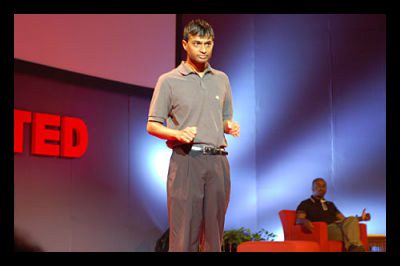
As president of the South African Chamber of Commerce – America, Euvin Naidoo works with leading corporations and governments to strengthen trans-Atlantic economic ties. In his Ted Talk, Euvin Naidoo focused on “Africa: the next chapter”. To separate the rhetoric from the reality and the fact from the fiction; to go to the actual data and statistics that exist about the actual things happening in Africa that make this continent a realistic investment opportunity and an option for all around the world.
He stated that investing in Africa is a broad term. Africa is not a country; it is made up of 53 different countries. And every country in Africa has a unique value proposition. You can win money here, and you can also lose money here.
Starting the talk about an investment opportunity, as a banker, Euvin Naidoo mentioned some macro-factors. The first sign is that Inflation is coming down across Africa while reaching double-digit figures in many other countries; he called it “Z.E.N. cluster”.
Zambia from 2004 to 2006 has moved from 18 percent in inflation to 9 percent; Egypt from 16 percent to about 8.4 percent; Nigeria from 16 percent to 8 percent – all in single digits. More fascinating, you have other countries, like South Africa, Mauritius, Namibia, which are also in single digits. And this is just part of the story.
Then he gave specific examples from some countries to illustrate his research.
Instead of focusing on South Africa’s gold, minerals, and its first infrastructure, Euvin Naidoo mentioned other important aspects. South Africa was recently voted as the top destination for the top 1000 UK companies for offshore call-centers. They have the same language, timeline, et cetera. Other big names that had reached Africa were Bain Capital and KKR, the big companies of private equity. Bain Capital’s acquisition of Edcon, a large retailer, is testimony to the confidence these famous names are beginning to place in the economy in what is going to be a long-term play.
Nigeria is clearly a hot spot. The new report, issued by Goldman Sachs, highlighted that, by 2020, Nigeria is going to be among the top 10 economies in the world. And also, without any sovereign backing, Nigerian companies are raising capital offshore.
In the oil industry, Africa provides 18 percent of the U.S.’s oil supply, while the Middle East offers just 16 percent. So, Africa can be an important strategic partner to America.
Finally, Naidoo concluded with Africa’s important position in the world economy because of its investment potential.
– Caiqing Jin (Kelly)
source: Ted Talk
Photo: WhiteAfrica

A Gift from Madrid to Reduce Poverty
It was challenging to take a diverse group of 400 of the top students in the program from Madrid to reduce poverty in Pakistan, having them brainstorm sustainable solutions for street children in Islamabad in just five days while they did not know much about the country in the first place. Professor Todd Lombardo brought to the table the design thinking concept – which is composed of six stages: understand, observe, synthesize, ideate, prototype, and test – to help the students come up with innovative solutions.
The author of the article, Saad Khan, urges “elite institutions” to get their students to be involved in similar projects and programs. Exposure to extreme poverty not only creates awareness among those who are not directly affected by it, but it allows for an acknowledgment of the costs of capitalism, the lack of business models which are value-based, and extreme disparities in income between the haves and have-nots. Additionally, Khan believes that foreign policies should be tweaked to better address problems of poorer nations, which in turn would help prevent and tackle terrorism.
– Leen Abdallah
Source: The Tribune
Social Enterprise Helping India’s Salt Harvesters
Sabras, a social enterprise organization based in India, is using micro-lending to help the country’s poverty-stricken salt workers gain freedom from predatory lenders and non-cooperative banks.
In the state of Gujarat, where nearly 70% of India’s salt is sourced from, self-employed salt pan workers are subject to harsh physical conditions as well as predatory loans leading to little profit. Temperatures reach harsh highs in summer and lows during winter, causing adverse health effects for workers. Since the workers are self-employed, a majority of them need to borrow money from lenders who fix the price of the salt much lower than it normally would be, cutting profits for the salt pan workers down to nearly nothing, most often just 1% of the market value. Most of the banks in the country are not willing to lend to poor people, leaving the workers without options.
Rajesh Shah, the founder of Sabras, recognized these hardships and created an organization that is not only for the poor but mostly owned and operated by the poor as well, with workers holding nearly 74% of shares in the company. Before there was an alternative lender like Sabras, workers were forced to take out loans with interest rates as high as 48%. Sabras’ interest rates are just 12.5% with the ability to purchase advanced solar pumps that allow workers to increase output over the long run.
Sabras has already made a large impact as nearly 70,000 people are employed in the salt industry in Gujarat. Shah contends that the company’s 400 shareholders have seen a profit increase of 400% within the last two years since they used Sabras loans to purchase the solar pumps.
Looking ahead, Sabras hopes to begin including women in the salt industry’s processes in order to increase profits and improve the quality of life for them as well.
– Christina Kindlon
Source: The Guardian
Euvin Naidoo TED Talk on Investing in Africa
As president of the South African Chamber of Commerce – America, Euvin Naidoo works with leading corporations and governments to strengthen trans-Atlantic economic ties. In his Ted Talk, Euvin Naidoo focused on “Africa: the next chapter”. To separate the rhetoric from the reality and the fact from the fiction; to go to the actual data and statistics that exist about the actual things happening in Africa that make this continent a realistic investment opportunity and an option for all around the world.
He stated that investing in Africa is a broad term. Africa is not a country; it is made up of 53 different countries. And every country in Africa has a unique value proposition. You can win money here, and you can also lose money here.
Starting the talk about an investment opportunity, as a banker, Euvin Naidoo mentioned some macro-factors. The first sign is that Inflation is coming down across Africa while reaching double-digit figures in many other countries; he called it “Z.E.N. cluster”.
Zambia from 2004 to 2006 has moved from 18 percent in inflation to 9 percent; Egypt from 16 percent to about 8.4 percent; Nigeria from 16 percent to 8 percent – all in single digits. More fascinating, you have other countries, like South Africa, Mauritius, Namibia, which are also in single digits. And this is just part of the story.
Then he gave specific examples from some countries to illustrate his research.
Instead of focusing on South Africa’s gold, minerals, and its first infrastructure, Euvin Naidoo mentioned other important aspects. South Africa was recently voted as the top destination for the top 1000 UK companies for offshore call-centers. They have the same language, timeline, et cetera. Other big names that had reached Africa were Bain Capital and KKR, the big companies of private equity. Bain Capital’s acquisition of Edcon, a large retailer, is testimony to the confidence these famous names are beginning to place in the economy in what is going to be a long-term play.
Nigeria is clearly a hot spot. The new report, issued by Goldman Sachs, highlighted that, by 2020, Nigeria is going to be among the top 10 economies in the world. And also, without any sovereign backing, Nigerian companies are raising capital offshore.
In the oil industry, Africa provides 18 percent of the U.S.’s oil supply, while the Middle East offers just 16 percent. So, Africa can be an important strategic partner to America.
Finally, Naidoo concluded with Africa’s important position in the world economy because of its investment potential.
– Caiqing Jin (Kelly)
source: Ted Talk
Photo: WhiteAfrica
US AID and Nepal Partner to Educate on Agriculture
Nepal Economic, Agriculture, and Trade Activity (NEAT), a 32-month program funded by USAID, aims to “promote economic growth, reduce poverty, increase food security, and improve lives” throughout Nepal. As part of the program, USAID and Nepal have partnered up through the Nepal Ministry of Agriculture Development to distribute educational materials on agricultural practices in the hopes of improving the production of agriculture in the country.
Through the funding provided by USAID, more than 263,000 pamphlets were handed out detailing specific agricultural instructions, both written in Nepali and as visuals in order to aid those citizens who are illiterate. The pamphlets detail “critical agriculture practice” on 13 types of crops and 3 species of livestock.
The NEAT program has improved the agricultural education of 67,510 households throughout 20 districts of Nepal with a regular lack of access to proper food sources. Thus far, the project has already allowed area farmers to see an increased income of $8.5 million collectively. These farmers and households have had increased access to markets and are better educated on agricultural practices such as pest and disease control, use of fertilizer, improved seed, and “post-harvest handling.”
The Director of USAID’s Social, Environmental, and Economic Development Office, John Stamm, maintained that USAID is dedicated to creating sustainable development solutions, including the NEAT program – which will allow Nepalese citizens greater resources for continuing to improve their lives long after the program ends in August of 2013.
– Christina Kindlon
Source: USAID
The 100 Richest People In the World Could End Global Poverty
It would cost $30 billion annually to end global poverty. This would mean that billions of people would no longer suffer from malnutrition, food insecurity, unsanitary conditions, preventable disease, and lack of education. A new study by Oxfam shows that the world’s 100 richest people earned $240 billion in 2012, enough to end global poverty four times.
While a majority of businesses and individuals were financially hurt by the economic crisis, the wealthiest have benefited from it. Oxfam reported that “The richest 1 percent has increased its income by 60 percent in the last 20 years with the financial crisis accelerating rather than slowing the process,” thus contributing to the growing gap between the rich and poor of the world.
It can be difficult to fathom how the richest 100 people can earn hundreds of billions of dollars in a year while billions of people can live on less than $1.25 a day. Oxfam’s report, “The Cost of Inequality: How Wealth and Income Extremes Hurt us All,” suggests that having so few people controlling such a large amount of the world’s wealth makes it more difficult to end global poverty. The philanthropic organization urges world leaders to address this alarming financial inequality by ending extreme wealth by 2025.
In order to return to 1990’s inequality levels, Oxfam suggests that world leaders get rid of tax havens and regressive taxes, implement a “global minimum corporation tax rate,” increase wages in proportion to corporate earnings, and “increase investment in free public services.” These extreme inequality gaps are spreading to countries like China, the United Kingdom, South Africa, and the United States. Oxfam states that inequality levels in South Africa are worst now than during the end of apartheid.
Jeremy Hobbs, Executive Director of Oxfam International, is adamant that the study shows the idiocy behind trickle down economics. He says, “We can no longer pretend that the creation of wealth for a few will inevitably benefit the many – too often the reverse is true.” He also stresses how when the wealthy control politics, they will often employ policies that only benefit the rich. World financial leaders are meeting April 3rd to discuss these issues and how to overall improve the global economy.
– Mary Penn
Source: SCMP
Photo: Global Giving
NIU Engineers Without Borders Tackle Mexico and Tanzania
For almost a decade, universities from across the United States have participated in thousands of trips to locations around the world to help improve low-income communities, whether it be through development, medical and health, or social advocacy.
Northern Illinois University’s Engineers Without Borders chapter has been in partnership with two organizations in both Mexico and Nyegina, Tanzania building sustainable and easy-to-manage appliances.
NIU’s EWB is entering its last year in a 5 year contract with Nyegina Secondary School, located in a village about an hour from the Kenya Tanzania border. Here, their first project was to install a solar lighting system to help supply cheap electricity to 6 classrooms and the library.
Their next project is focused on the kitchen. It includes designing a ‘lion stove’ which will use wood more efficiently to lower costs for the school as well as a solar water heater. These three additions to the school are important not only because they utilize a renewable energy source but because they allow the school to keep their expenses down. The less money they have to spend on basic lighting and cooking, the less children will have to pay to attend.
In Mexico, with support and guidance from iCatis (International Centers for Appropriate Technology and Indigenous Sustainability), students have been working to improve the water filtration system in remote villages.
Throughout their experimentation, these young engineers must keep in mind who they are designing these systems for. What works in the developed world cannot be sustained with the limited resources in developing countries. The villagers must be well trained and educated before students leave so that they understand how to repair appliances if they break and make improvements themselves if necessary.
– Deena Dulgerian
Source:NIU Today
Drought: The World’s Costliest Natural Disaster
Drought is the world’s most expensive natural disaster. It causes an estimated loss of between $6 and $8 billion each year. As temperatures increase and erratic weather becomes normal in much of the world, droughts are increasing in frequency and severity in both developed and developing nations. Drought costs cannot be measured with certainty in poor nations, where their impact on those without insurance and who practice subsistence farming is often life-threatening.
The first-ever global conference on drought and drought policy took place this March in Geneva. The meeting exposed the disparity between national drought policies and the implementation of such policies on the ground. Despite recognition that a country cannot be forced to develop or implement disaster relief policies, conference participants issued a declaration urging all nations to do just that. The declaration was accompanied by a 10-step program for recommended policy action. The program, which is based on US drought preparation policies, combines crisis prevention and response, drought resilience, and scientific recommendations.
It includes steps such as:
Natural resource management plays an important role in drought management. Drought-resistant seeds, soil conservation techniques, and food storage facilities can minimize the effects of drought on vulnerable farming communities. But the policies of many countries often do not amount to much relief for their inhabitants. Recent droughts have had a massive impact on people all over the world. Droughts in the Horn of Africa and Sahel have had devastating consequences for food production, food security, and malnutrition in those regions, while droughts in the US have caused global food prices to rise, contributing to social and political unrest.
Since 2011, natural disasters have cost over $100 billion each year. That figure accounts primarily for insured losses in rich countries, and does not cover losses in poor countries, where such measurements are unavailable. Millions of the world’s poor continue to experience hunger on a daily basis as a result of drought and other natural disasters.
According to the International Organization for Migration, drought is the second biggest instigator of migration.
– Kat Henrichs
Sources: IRIN, IRIN
Photo: Follow the Piper
Oil Industry in the Amazon
The recent news that Ecuador will be auctioning off more than three million hectares of land in the Amazon jungle to Chinese oil firms has started many conversations about land management in the world’s largest tropical rain forest. Along with the damaging results that oil wells and oil leaks have on the environment in the Amazon jungle, there are also serious consequences for the local inhabitants.
Much of the Amazonian oil rights are owned by Canadian and Argentine oil companies and there is a long history of evicting local indigenous communities in order to drill for oil. With the coming sale of the Ecuadorian jungle property, an NGO named Amazon Watch claims that seven indigenous groups in the region have protested the sale. The groups risk being displaced from their homes as well as having the local environment be destroyed, which would drastically affect their way of life. Neighboring Peru has sold much of its’ Amazonian land rights to oil companies and their indigenous communities have suffered similar injustices.
Today, groups like the Environmental Monitoring Programme, part of the larger Federation of Native Communities of the Corrientes River, investigate reports of oil spills and fractured oil wells in order to record the environmental damage. This data is used to strengthen the claims and protests of local leaders against the oil practices that are so harmful to the delicate ecosystem. The Environmental Monitoring Program to date has discovered 120 oil leaks and, since 2006, more than 9,000 abandoned wells have been recorded. Many of these unused wells contribute to the harmful pollution of the Corrientes and Amazon rivers.
So, as this sale goes through in the near future it is important that the world request stricter oil industry standards in the Amazon in order to protect the environment and the lives of the peoples who live there.
– Kevin Sullivan
Sources: IPS News, The Guardian
Mosquito Nets Save Lives in Mozambique
Many foreign aid organizations assist developing countries not by sending money, but by providing health and educational equipment for impoverished people. The United States Agency for International Development (USAID) is among the organizations that employ this method. A case in point is that since 2007, USAID has delivered 20 million insecticide-treated mosquito nets to Mozambique.
The impact of these mosquito nets has been invaluable, says Polly Dunford, the interim USAID Director in Mozambique. The nets have decreased the number of malaria cases in the country, most notably in cases of children.
USAID partnered with the President’s Emergency Plan for AIDS Relief (PEPFAR) to fight malaria in Mozambique. PEPFAR uses aid money from USAID to distribute the mosquito nets and insecticide spray, counsel pregnant women about malaria prevention, and produce more effective malaria drugs.
In addition to providing assistance to reduce cases of malaria, USAID has been focusing on helping farmers become more successful. Given Mozambique’s ocean accessibility, it has the potential to become a regional food supplier, says Dunford. USAID has been supporting the agriculture sector through training programs that educate farmers on how to more productively sell their food products.
Mozambique receives about $500 million from USAID annually and a majority of that money goes towards the health sectors, like PEPFAR and other malaria prevention programs. The country has high levels of experienced economic growth, however, many people are still living in poverty. With the help of USAID, the number of impoverished and those dying from malaria in Mozambique will continue to decrease.
– Mary Penn
Source: AllAfrica
Photo: World Vision
One World Futbol Spreading the Love of Soccer
Growing up, many of our toy boxes were full of tennis balls, NERF balls, and soccer balls. As no surprise, even these simple toys are expensive and hard to come by in developing countries such as Darfur and Malawi. But with soccer being the most popular sport in the world, it has come to symbolize a strong sense of community. It is an obsession and passion with children who can barely afford a meal but will scavenge through trash to find anything that could remotely serve as a makeshift soccer ball.
In 2006, Tim Jahnigen was moved by a report on children in Darfur using pieces of trash and rocks as toys. A musical producer and multi-patent holding inventor, he decided to put his connections and passion for soccer to use. With a starting grant of $30,000 from friend and fellow musician Sting, Jahnigen created a prototype for an indestructible soccer ball. Made out of a material called ‘PopFoam’ (think the flexible but tough plastic used for Crocs), these balls can be left outdoors in rough conditions, played on dirt fields, and basically be beaten up and still have a natural bounce to them. These characteristics make them perfect for the environments children play in developing countries.
Within the past two years, One World Futbol has delivered over 200,000 balls. Despite these efforts, Jahnigen is determined to reach millions, if not all 1.3 billion children under the age of 12, through his organization. With financial support from Chevrolet, manufacturing is still continuing but the organization needs much more funding.
OWF is not a non-profit. It functions more or less like TOMS Shoes does (buy-one-donate-one) so about 25% of its soccer balls have been bought through their website and delivered with this business model. However, Jahnigen is much keener on having partner organizations and donors to help with the production costs since online purchases actually cause the price of the balls to go-up.
Ever so optimistically, Jahnigen has already been in talks with creating PopFoam cricket balls, focusing specifically on the South Asian market, where cricket is widely played. With the support of five major cricket organizations for this project, it boosted Jahnigen’s confidence in not only expanding the indestructible balls to cricket but to other sports such as football, volleyball, rugby, and basketball.
With so many intensive organizations around the world, it is always important to remind ourselves how a child’s life can be so easily changed. Soccer brings together the rich and the poor, the hungry and the full, and has the power to break across political boundaries. Supporting ventures such as One World Futbol can have an immediate impact on those worried about donating their money to other causes. Humanitarian aid can take many shapes and forms but the most basic ones, whose goals are simply to bring joy to children, also have the strongest impact.
– Deena Dulgerian
Source: Co.Exist