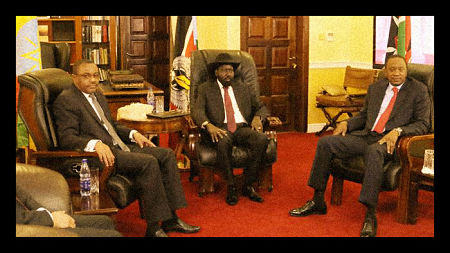
A tragic return to form for South Sudan as a rebellion has sparked in the Capital of Juba, a sad reality after the nation won its independence from Sudan through a 2011 referendum. War and violence has retaken the newly formed nation, as ethnic and political divides have created a dire situation for the nation’s stability.
On December 15, 2013, political infighting began between elites in the government over executive and legislative power. Riek Machar, the former Vice President, was dismissed by President Salva Kiir, igniting sectarian violence.
The President and Vice President were from different ethnic groups, and the political nightmare has put a match to the inevitable break up of civil order.
Ethnic divides, once united under the common goal of gaining control of South Sudan from the Muslim-dominated northern Sudan, has become more visible. South Sudan’s two decade-long battle for autonomy from the north was a common cause for the mostly Christian and Animist southern peoples. The civil war, which ended in 2005, began in 1983 and left the once-united Sudan a contentious war zone. A 2011 referendum backed by the United States helped form the nation.
In any new nation, the political establishment is relatively incapable of dealing with ingrained ethnic power structures. Citizens hold allegiance to their respective ethnic groups, not an executive power, regardless if it is a democratically elected government.
Kiir is from the largest ethnic group in South Sudan, the Dinkas, whereas Machar was from the second-most populous ethnic group, Neuer. Both groups wanted to maintain hegemony over the newly formed nation, and the tense political alignment between these two leaders was overwhelmed by rivalry rather than co-operation.
The dismissal of Vice President Machar was responded with immediate violence in Juba. He was accused of attempting an overthrow, with the military splitting along ethnic lines.
When allegations were made, Kiir feared an eventual overthrow by Machar and allocated much of his resources to retain control of the nation. Power sharing was the only logistical way the nation could have progressed past years of war with its northern neighbor, Sudan. The necessity of powerful figures in each ethnic group to maintain peaceful discourse among their fellow leaders prevents events such as the oncoming civil war in South Sudan.
The notion of fear and distrust among political elites in the nation drives the civil war, which has already led to the deaths of many citizens. Refugees fleeing the nation have met with harsh conditions. 200 South Sudanese refugees perished in the White Nile while fleeing the violence. This is a hard price to pay for a nation whose future seem bright after finally gaining independence, coupled with its vast natural resources that includes oil, a valuable commodity.
The civil unrest poses considerable problems for the new nation, whose infrastructure was badly damaged by a two-decade war with its northern neighbor. Unless their leaders can find a common consensus about how to share power, the nation may never find long-lasting peace.
– Joseph Abay
Sources: New York Times, News Week, BBC, VOA News, Reuters, Sudan Tribune, Washington Post, Washington Post
Photo: DW

#GlobalPOV
Everyone can help end global poverty, even Twitter. #GlobalPOV was created by the Blum Center for Developing Economies at University of California, Berkeley. The Global Poverty Project started by students working with the Blum Center thought of using a hashtag to trend topics surrounding global poverty. The students wanted to get people thinking, reading, and writing about concepts related to global poverty and what causes it as well as how it can be resolved.
Some hashtags are just fact or comments about the world’s poor. Some topics are news headlines about natural disasters and relief efforts across the globe. They include links to charities and organizations that are providing aid to victims of the disaster, and ways everyone can contribute.
#GlobalPOV can follow a post about an article detailing events in other countries related to politics and foreign aid. One tweet talks about social entrepreneurship ending global poverty with a link to Forbes Magazine cover photo of Bono and Bill Gates, two high profile charity donors. Another tweet links a YouTube video that describes how people become dependent on welfare in different societies.
The great thing about Twitter is that using the #GlobalPov phrase in the search bar connects audiences to a wealth of links and information that they can browse on their own time.
The best part of the Global Poverty Project, besides the impact it makes on the lives of poverty victims, is the convenience of spreading the word. One button can share the tweet with potential hundreds of followers. No one has to tediously search through different websites for the information since it is directly accessed via the link.
Richard C. Blum is the founder of the Blum Center at Berkeley. He is also the founder of the American Himalayan Foundation that helps provide food and education to people living in the Himalayas. Mister Bloom serves as a board member today and as the Honorary Consul of Nepal. His dream to help people has touched people all across the world. Starting the Blum Center at Berkeley University was intended as a place to bring together people of all different experiences and backgrounds to help those struggling with poverty.
Brainstorming, education, business, technology, and more are subjects that students working at the Blum Center use to help solve poverty across the globe. Their Global Poverty Project continues to grow with the hashtag #GlobalPOV, which can also be read as Global Point-of-View. This project challenges readers to act against widespread misconception and become educated about the issues facing people today.
Anyone can log onto Twitter.com right now and tweet about global poverty, or search for the hashtag and start reading.
– Kaitlin Sutherby
Photo: AIIA
Sources: Himalayan Foundation, Wall Street Journal
The Problems of Dressing for Success in Kenyan Schools
Global access to education should not always be uniformly approached. Many countries have been successful in reducing school fees since the installment of the UN Millennium Goals, and attendance has skyrocketed. However, the expense of the school uniform is still preventing too many children from the benefits of an education.
Kenya progressively eliminated tuition in 2002, under the leadership of President Mwai Kibaki. Yet the strictly enforced tradition of uniforms is still very much in place. Students in the Sub-Saharan African country are required to dress appropriately, or else risk dismissal at the discretion of their teacher.
Even if a child is not sent away, the lack of a uniform greatly inhibits education and encourages drop out rates. Just like in school, environments anywhere else have the pressure to fit in and the fear of ridicule can be crippling for Kenyan adolescence. Stigmatization and reprimand from teachers and peers are highly demotivational in the classroom, leading to attendance and concentration issues.
These sentiments have been proven by ISC-Africa, and NGO that funds the Child Sponsorship Program and focuses on the distribution of school supplies. Since the program began providing annual school uniforms to sponsored children in rural Kenyan schools, drop out rates decreased almost in half, from 15% to 8.6%.
Uniforms remain an unaffordable luxury, though, for many Kenyan families. The cost could be anywhere between 325 and 550 shillings, or $4.33-$7.33, per outfit. Although their educational purpose is essential, the value of a uniform naturally ranks lower in the household budget than, say, the next meal.
So, if uniforms are so detrimental to the access of education, then why are they still in place? Many parents support them because they encourage good behavior in the classroom and qualify students for reduced fees on public transportation. A more cynical theory speculates that teachers, whose regional assignments are decided based on student test scores, are motivated to exclude the lowest income, and most likely lowest scoring, students.
Cheaper alternatives have been explored such as matching badges or a school color scheme. The fact remains though, that providing education for all is a complicated and multi-faceted issue. The Millennium Goals must take this into account in its approach to reducing global poverty.
– Stefanie Doucette
Sources: World Bank, CESLA
Photo: Rabondo Community Project
Are Needy Children in Nigeria Invisible?
As the most populous country in all of Africa, the Federal Republic of Nigeria is made up of over 250 ethnic groups. The following are the most populous: Fulani and Hausa, 29 percent; Yoruba, 21 percent; Igbo, 18 percent and Ijaw 10 percent. They also have a significant split in religion, with 50 percent of the population being Muslim and 40 percent of the population being Christian.
With the largest population in Africa, Nigeria has 174,507,539 people and is ranked as having the 8th highest amount of people in the world. Of all those people, 76,461,896 are fourteen years of age or younger, meaning 43.8 percent of Nigerians are children. Of that 43.8 percent, about 60 percent lack birth certificates, meaning they are not permitted to use many government facilities that would normally be free with proper proof of citizenship.
Nigeria’s government is trying to reform its petroleum-based economy, but through all the corruption in that sector, it is not focusing as much on the youth in need. On top of that, presidential elections are tarnished by substantial violence and irregularities and the country has been undergoing long-lasting religious and ethnic conflicts, which also takes focus away from the children in need. These children need help; about 1,000,000 children die each year in Nigeria before their fifth birthday (10 percent of the global total.) What they need to save more lives is continuous investment and organized scaling up of essential newborn, maternal, and juvenile health interventions.
In Nigeria, there are numerous state hospitals that are free for children under the age of five, but the only dilemma is that the majority of these children do not have birth certificates. This is a catch-22 because the hospitals admit patients under five for free with proof of age, but these children have never had any way to prove how old they truly are. From there, they have no choice but to go to a private hospital for treatment where they are forced to pay $45 (a trivial amount for a life-saving medication in the United States,) but an unfathomable expense for the people living in this region, especially since most of them live on less than a dollar per day.
The number of children lacking birth certificates in Nigeria is up to about 17,000,000, a number second only to India, which has 71,000,000 unregistered children. According to UNICEF, one out of every three children in Sub-Saharan Africa does not “officially exist,” but does that mean that they do not still need help? The undocumented children in Nigeria are denied education and healthcare and often times have their rights abused. Their parents often times cannot even help them because in these rural areas many are uneducated and are not aware of how important it is to register their children.
The deficiency of birth records in Nigeria also causes an error in the government’s efforts to track demographic information. Without the proper information on how many children need hospitalization or immunization, the government cannot tell how many vaccines it needs from organizations like UNICEF, it cannot tell how many children have already died nor the cause of death.
The good news is UNICEF is trying to convince people to register their children and trying to increase the number of registration centers in Nigeria so the families can have easier access. They plan on having 65 percent to 70 percent of children be registered with official birth certificates within the next few years.
– Kenneth W. Kliesner
Sources: CIA World Factbook, Voice of America ,UNICEF
Photo: The Guardian
India Celebrates 3 Years Polio-Free
This week marked the three-year anniversary of India’s being polio-free. Once viewed as one of the biggest challenges in polio eradication, significant improvements in public health, education and vaccination programs have helped India reach this developmental milestone.
A densely populated country of more than one billion people, India was considered one of the toughest places to tackle the polio endemic. In 2009, India reported 741 polio cases, comprising nearly half of the world’s polio cases. Two years after this peak level, India saw its last reported case of wild polio on January 13, 2011.
To combat this endemic, India has made vast improvements to its infrastructure, which has advanced public health measures beyond polio eradication. These changes allowed India’s poorest and most rural populations access to vaccinations. Innovative approaches were taken, such as targeting families on trains and accessing the vast rural area of India by foot to deliver vaccinations. They are now being used to tackle other diseases through immunization, such as measles.
The polio eradication efforts also used social mobilizers to educate people on the subject, working with religious leaders to reach parents, specifically targeting the importance for children’s health. Today, they are using these education techniques in counseling pregnant women on breastfeeding and providing newborns with necessary immunizations.
A National Immunization Day has been implemented for further awareness and progress. Each day consists of vaccine doses, vaccinators, vaccine carriers, and supervisors and hundreds of thousands of people mobilizing worldwide to eradicate polio completely by 2018. Past cases provide proof that as long as polio exists, it remains a threat everywhere. A success story, India continues to build its own immunization campaign. Giving hope and providing successful measures to eradicate polio to the three remaining polio-endemic countries: Pakistan, Nigeria and Afghanistan.
– Maris Brummel
Sources: Polio Eradication, UNICEF, Polio Eradication
Photo: India Ink
Income Inequality in 2014
The World Economic Forum (WEF) meeting is occurring in Davos, Switzerland and there is one issue that is being presented as one of the largest challenges that has to be faced in the coming years. Income inequality around the world is rising and experts say that it is going to become an explosive issue as time goes on.
Oxfam recently released an article that puts into startling perspective how significant an issue income inequality is becoming. Oxfam found that the 85 richest people on the globe have as much collective wealth as the poorest half of the world. This is a staggering statistic. Oxfam goes on to point out that the richest one percent of the world holds an accrued wealth of $110 trillion dollars, while the 3.5 billion poorest people in the world posses roughly the same amount.
Oxfam’s report also pointed out that in the United States, the wealthiest one percent captured 95 percent of post financial crisis growth since 2009, while the bottom 90 percent have become poorer. The report goes on to point out how the wealthy have taken advantage of their wealth and created tax havens and other political means to ensure their wealth remains unaffected.
The Huffington Post released a report in which it found that the U.S. has the worst income inequality in the world. It cited the tax code as a huge reason for the massive income inequality bracket in the U.S. The report also highlighted Wall Street as a reason for the U.S. having the world largest income inequality range. “The same politicians that have busily been slashing taxes on the wealthy have also been loosening fetters on banking, allowing the financial sector to swell to bloated size and mop up ever-more income while contributing ever-less back to the economy.”
Oxfam’s Executive Director, Winnie Byanyima, issued a statement saying, “Widening inequality is creating a vicious circle where wealth and power are increasingly concentrated in the hands of a few, leaving the rest of us to fight over crumbs from the top table.” She went on to say that with the WEF having income inequality as a hot button issue, the attendees will work personally to make sure that they are not taking advantage of various tax breaks and things of that nature as well.
The WEF is a amazing opportunity for many of the world leading figures to come together and begin to try and sort out many of the issues that plague our society.
– Arthur Fuller
Sources: Business Insider, Huffington Post, Huffington Post, Oxfam
Photo: WTW
Boundless City – Art For Global Justice
Renamed “Boundless City,” Art for Global Justice began when a team of young people decided they could use art to change the world. After a trip to Accra, Ghana, these young people realized that the world is struggling with poverty and civil hardships. They discuss how when traveling to other nations, everyone has cultural differences and perceptions about the nation and its residents.
Economic inequality, political strife and violence often contribute to the complex issue of global poverty and the understanding of the general public. Fielding requests from communities, Boundless City works as a collaborative partner with schools and city programs to educate children from struggling backgrounds.
They discuss the misconceptions created around other nations, religions, cultures and people. Allowing children to draw and express themselves through art helps them develop healthy outlets for their emotions while giving them a common ground with children from all sorts of backgrounds. Planting the seed of understanding and empathy can help prevent conflict and inequality from growing in the future.
Setting up inner city workshops and gallery showings, Boundless City shared its love of art with cities and young residents while teaching them to think of others. Focusing on New York, Ghana, and Guatemala, the newly christened Boundless City teaches communities to express their desire to help and relate to people all over the world.
Using a wordpress blog, students living in foreign nations can post articles about their trips and discoveries abroad. A recent post from a student living South Africa describes how sculptures constructed in busy intersections give people a sense of community.
The whole point of public art is to foster an ideal of brotherhood and belonging to everyone involved. Art can be made by any soul, anywhere, at almost any time. Conflict and war do not decrease art but rather inspire more of it to spread the fight against injustice — and Boundless City, formerly Art for Global Justice, is an important aspect of this message.
Starting Boundless City was a way to show everyone how a simple image can open someone’s mind and change the way they see something, even how the view the world.
Art can express emotion and encourage change in the hearts of its audience. For years, people have been telling the history of life through art. Whether elaborately displayed on church ceilings or drawn crudely in the dark with spray paint, artists send their messages into the world.
It is a universally understood form of communication, like a smile.
– Kaitlin Sutherby
Sources: Art for Global Justice (blog), Start Some Good, Art for Global Justice
Photo: Nathan Midgley
Afghani Asylum
Former member of Afghani Parliament Noorzia Atmar was banned under strict refugee laws from applying for asylum from within Afghanistan’s borders forcing her to flee.
According to The Guardian, the United States embassy did respond to her cry for help, but it was not able to assist her with asylum or a visa unless she applied from another country. Atmar mentions, “I love my country and even though I was under threat in some way I tried to get work, not to be lazy or rely on anyone else.”
More importantly, she stated, “The situation pushed me to leave. No one respects women in our country. It is really difficult to find a space just to live.”
Previously an affluent and powerful politician, Atmar now lives in a single run down room in extreme poverty outside of her original borders. Her current location is not being released for fear of herself and her family she now does not in contact.
Despite her horrendous situation she is still passionate about women’s rights and hopes to begin working again. Like Atmar, the Revolutionary Association of the Women of Afghanistan (RAWA) is working for women as the oldest political/social organization of Afghan women struggling for peace, freedom, democracy and women’s rights in fundamentalism-blighted Afghanistan since 1977, according to its website.
Even though she was lucky enough to escape her situation, Atmar knows there are many other women still suffering. One main issue is the fact that a refugee cannot apply for asylum while in their home country. In a male-dominated Afghanistan, it is extremely difficult for a woman to be able to have the job, money or status to pass rigorous western visa requirements.
RAWA’s work inside of Afghanistan mainly consists of support for female victims of war and other aggressive groups much like Atmar’s situation. The government they are after is one of democratic values that ensure freedom of thought, religion and political expression while protecting women’s rights.
Policy and research manager at Asylum Aid said, “Our overall sense is that the asylum system here is that it’s not sensitive to the needs of women fleeing countries like Afghanistan and doesn’t respond as it should to their cases.” This is part of the motivating cause behind RAWA and the work it is doing to fight for women.
– Lindsey Lerner
Sources: The Guardian, RAWA
Photo: Kompas
South Sudan: A Tragic History & Future
A tragic return to form for South Sudan as a rebellion has sparked in the Capital of Juba, a sad reality after the nation won its independence from Sudan through a 2011 referendum. War and violence has retaken the newly formed nation, as ethnic and political divides have created a dire situation for the nation’s stability.
On December 15, 2013, political infighting began between elites in the government over executive and legislative power. Riek Machar, the former Vice President, was dismissed by President Salva Kiir, igniting sectarian violence.
The President and Vice President were from different ethnic groups, and the political nightmare has put a match to the inevitable break up of civil order.
Ethnic divides, once united under the common goal of gaining control of South Sudan from the Muslim-dominated northern Sudan, has become more visible. South Sudan’s two decade-long battle for autonomy from the north was a common cause for the mostly Christian and Animist southern peoples. The civil war, which ended in 2005, began in 1983 and left the once-united Sudan a contentious war zone. A 2011 referendum backed by the United States helped form the nation.
In any new nation, the political establishment is relatively incapable of dealing with ingrained ethnic power structures. Citizens hold allegiance to their respective ethnic groups, not an executive power, regardless if it is a democratically elected government.
Kiir is from the largest ethnic group in South Sudan, the Dinkas, whereas Machar was from the second-most populous ethnic group, Neuer. Both groups wanted to maintain hegemony over the newly formed nation, and the tense political alignment between these two leaders was overwhelmed by rivalry rather than co-operation.
The dismissal of Vice President Machar was responded with immediate violence in Juba. He was accused of attempting an overthrow, with the military splitting along ethnic lines.
When allegations were made, Kiir feared an eventual overthrow by Machar and allocated much of his resources to retain control of the nation. Power sharing was the only logistical way the nation could have progressed past years of war with its northern neighbor, Sudan. The necessity of powerful figures in each ethnic group to maintain peaceful discourse among their fellow leaders prevents events such as the oncoming civil war in South Sudan.
The notion of fear and distrust among political elites in the nation drives the civil war, which has already led to the deaths of many citizens. Refugees fleeing the nation have met with harsh conditions. 200 South Sudanese refugees perished in the White Nile while fleeing the violence. This is a hard price to pay for a nation whose future seem bright after finally gaining independence, coupled with its vast natural resources that includes oil, a valuable commodity.
The civil unrest poses considerable problems for the new nation, whose infrastructure was badly damaged by a two-decade war with its northern neighbor. Unless their leaders can find a common consensus about how to share power, the nation may never find long-lasting peace.
– Joseph Abay
Sources: New York Times, News Week, BBC, VOA News, Reuters, Sudan Tribune, Washington Post, Washington Post
Photo: DW
6 Reasons to Be Vegetarian or Vegan
Although many people used to eating meat, poultry and dairy products, it is becoming common to exclude animal products from one’s diet. People often mention health benefits, sympathy for the animals or sometimes even weight loss as their primary reasons for going vegetarian/vegan. However, as more and more natural disasters occur, it has become clear there are more pressing reasons for considering the lifestyle change:
1. According to the Worldwatch Institute, more than half of all global greenhouse gas emissions result from animal agriculture.
2. Raising animals for food is “one of the top two or three most significant contributors to the most serious environmental problems, at every scale from local to global,” says a representative from the United Nations.
3. According to a study conducted by the University of Chicago, going vegan has an insanely positive effect on carbon dioxide emissions into the atmosphere, For comparison, switching from a normal car to a Prius reduces said emissions by circa one ton, while going vegan prevents 1.5 tons from entering the atmosphere.
4. A study done in 2008 in Germany found a carnivore is responsible for seven times more greenhouse gas emissions than an herbivore.
5. Military “Meatless Mondays” – an entire army already pledged last year to eat vegetarian one day per week. Norway, belonging to the highly globally aware Scandinavia, is making serious efforts in reducing its carbon footprint. If an entire military can withhold from eating animal products for the sake of the environment – even for just one day – then everyone else should be able to, also.
6. As a bonus, one’s health improves together with the world’s. Numerous studies exist that show the long-term benefits of omitting animal products from one’s diet, including more energy, better skin and an overall stronger body.
Just a few decades ago, making the change would be considered a fuss: not enough resources were available to fully complement an animal-free diet. Today, numerous supplements and alternatives are sold worldwide, easily accessible and with a pleasant taste. Perhaps going vegan right away could be a bit difficult, but at least sampling vegetarianism might be a good start for those concerned with the health of the planet.
– Natalia Isaeva
Sources: PETA, Earth Save, Daily Caller
Photo: Vegan Soapbox
Harnessing Hydropower in Guyana
Guyana is currently developing a plan to harness Amaila Falls’ potent hydropower, power that is capable of producing electricity (165MW to be exact) for the whole of Guyana, reports The Economist.
The project is set to cost around $840 million and was initially headed by Sithe Global of the global investment and advisory firm, the Blackstone Group. In addition, investments from China Development Bank and the Inter-American Development Bank were to take part in harnessing the country’s torrents.
However, a lack of unanimous concession by the Guyanese legislative branch has resulted in Sithe Global’s withdrawal from the project. Primary criticisms by legislators were its lack of transparency—particularly the projects expenditures and the engineering plans.
The deals brokering between the Amaila Falls Hydro Inc. and its power players remained cloak and dagger, arousing skepticism from the project’s critics.
Despite the halt in the project, it was predicted to minimally affect the ecological community. Moreover, the site of the project, located at the intersection of the Amaila and Kuribrong Rivers is 30 km from the nearest community, supposedly to avoid disturbing any local villages in the region.
With the promise of hydroelectricity in 2017, Guyana could possibly reduce its reliance on imported oil although the cost of electricity will remain expensive.
Furthermore, with a shift to hydropower, green house gas emissions (GHG) were projected to decrease by 87%.
It’s realization would have cost the federally funded Guyana Power and Light (GPL) company to pay an estimated $100 million a year to the aforementioned investment groups and companies.
Despite the country’s massive potential for hydroelectricity, the project remains at a standstill. The secrecy of the project propelled its main investors, from remaining with the project. Yet, Guyana’s President Donald Ramotar recently stated that Sithe Global is still very much interested in the project, pending Parliament’s unanimous agreement.
Regardless of legislative decision, the go-ahead for the project remains largely with Sithe Global, who possesses the license to Amaila Falls’ development.
– Miles Abadilla
Sources: Amaila Hydropower, The Economist, Fox News, Kaieteur News
Photo: Wondermodo