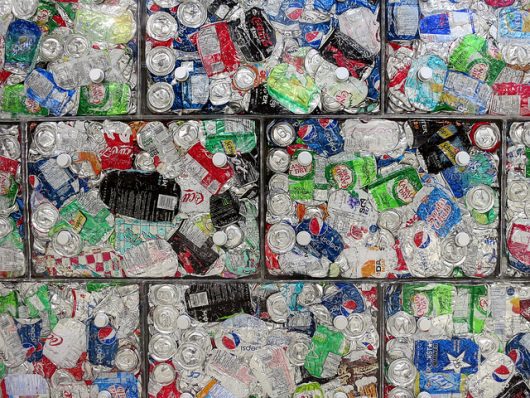
The idea of turning trash into treasure is possible when one considers what waste materials can produce. Recent scientific discoveries involving trash and coal waste could have mixed implications for millions of waste pickers and coal energy consumption in the least developed and developing countries.
Plastic-Eating Enzymes
In 2016, a team of Japanese researchers discovered a solution to purging rubbish from rubbish itself. From a trash dump, they uncovered a combination of enzymes capable of consuming polyethylene terephthalate (PET) — plastic material used to create common consumer items such as drink bottles.
This year, scientists have “improved the enzyme,” says University of Portsmouth, U.K. Professor John McGeehan. While the team originally intended to just examine the atomic structure of the bacterium discovered back in 2016, they accidentally reinvigorated it.
This reinvigoration created a now “mutant enzyme” to degrade PET. The supercharged enzyme can reportedly break down plastic in a matter of days, and the renewed compound can degenerate the integrity of plastic with 20 percent higher efficiency than the original bacteria — Ideonella sakaiensis 201-F6.
While many are interested in applying the discovery to clean up the world’s oceans, this can have undecidedly good or bad implications for waste pickers in Cambodia that earn between $0.98 and $1.23 a day, and the 1.5 million to four million waste pickers in India.
Waste Pickers
Waste pickers often sort and separate recyclable waste, such as consumer plastics with PET, and sell them to scrap dealers, creating a recycling supply chain. In one sample of 150 Indian waste pickers, 94 percent claim it is their only viable source of income with no alternatives.
For a nation that produces 62 million tons of waste per year, India recycles up to 70 percent of all PET bottles. In comparison, the Environmental Protection Agency reported the United States produced 254 million tons of trash in 2013 with recycling rates between 31 and 34 percent.
A mutant microbe actually might seem like a threat to waste pickers who depend on the economic opportunity of trash picking, since the microbe would supposedly dampen their product’s value. Plastic-eating enzymes, however, could aid the notoriously unsafe and inadequate waste management practices that render public health challenges in the least developed countries.
The Journal of Material Cycles and Waste Management cites near absent sanitary landfills exist in the least developed countries where 26 percent of solid waste streams are considered recyclable.
Trash-Eating Bacteria
Mutant trash-eating bacteria could serve as a boon to public health — the United Nations reports an estimate of 1,000 deaths per day for children under the age of five due to unsafe water, insufficient sanitation and lack of hygiene. Children are most vulnerable to diseases such as hepatitis, dysentery and cholera since many play and swim in squalid waters filled with trash and toxins from landfills.
A natural terminating agent, such as a plastic-eating enzyme, provides some hope for an opportunity for unequipped landfills in the least developed countries.
Impact of Building Materials
Researchers at Washington State University are also in the business of turning trash into treasure via building materials.
Funded by the United States Department of Transportation, scientists are en route to creating concrete from coal fly ash — a byproduct from coal electricity generation usually considered waste. Coal fly ash derives from burnt coal residue, a wispy particulate containing unburnt carbon that usually just flies in the air with no practical use.
Scientists were able to enact a chemical bonding method in which atoms and molecules in coal fly ash are manipulated and combined with calcium oxide and sodium silicate, which results in an inorganic polymer more durable than cement. Standard cement creation accounts for 5 percent of global greenhouse gas emissions.
Coal Fly Ash’s Benefits
It is projected that in 2040 the developing world will make up 65 percent of the world’s energy consumption; in addition, the International Energy Agency expects coal energy used for electricity to increase by 33 percent during the same year.
What otherwise would contribute to air pollution through carbon emission or being stowed in a landfill, coal fly ash transformed into concrete could benefit developing countries such as China, India and South Africa. China is the world leader in coal energy consumption with 3.9 billion tons used in 2017; South Africa, in 2012, was first in coal energy used for electricity at 93 percent; and in the same year, China ranked third at 79 percent and India sixth at 68 percent.
In Botswana, Andre Boje, CEO of coal mining company Minergy Limited, states that “developing nations, such as those in Africa are unable to rely on renewable energy sources.” Therefore, there is demand for more coal energy as a safer alternative to firewood and kerosene, the latter on which 620 million Africans still rely and an estimated 1,634 die per day due to indoor air pollution.
Turning Trash Into Treasure
While the continued use of coal energy usage remains a contentious issue in the global community in regard to environmental safety, attaining technology with the potential to enable recycling coal fly ash for concrete poses at least some additional redeeming qualities in coal energy for developing countries.
Be it for waste pickers, children forging a playground from a trash heap or environmental friendliness, recent developments in science and technology radiate gleams of potential for a modified waste picker industry, safer living conditions and a cleaner environment for impoverished global citizens.
– Thomas Benjamin
Photo: Flickr

Improving Access to Water and Sanitation in Zambia
Five years ago, the government of Zambia partnered with The Millennium Challenge Corporation (MCC) in a $355 million push to improve water and sanitation in Zambia. MCC, a U.S. foreign aid agency, has been providing aid and oversight to this Southern African nation since 2012. The expectation was to improve the living conditions of as many as 1.2 million Zambians.
MCC’s investment in Zambia is coming to an end soon, though. With the compact set to expire in November of this year, the government will have to forge its own path to ensure that the progress made since 2013 will continue to be maintained and built upon.
The Need for WASH
Access to proper water, sanitation and hygiene (often referred to together as WASH) is vitally important to the development of any nation. Contaminated water and poor sewage facilities can lead to outbreaks of diseases like cholera and diarrhea, which can be crippling or even fatal. Lack of access to a convenient water supply can also force caregivers (often women) to spend hours each day drawing water from crude wells.
These concerns and others continue to be relevant in Zambia. Cholera outbreaks have spiked in the country this year due to a lack of WASH facilities. According to UNICEF, only 19 percent of rural populations have access to basic sanitation services. In urban areas, the number increases to a still shockingly low 49 percent.
Zambia’s population is growing rapidly. Following the trend of increasing African urbanization, nearly half of Zambians live in cities like the capital of Lusaka. The majority of those urban citizens live in low-income areas, most of which do not have developed sewer systems.
The Impact of MCC
MCC’s compact with the Zambian government was designed to address these problems head-on. The money it provided was put toward several major infrastructure projects, many of which are focused in Lusaka. The key focus has been improvements to the city’s sewers and a new drainage system, which will protect a million citizens from flooding.
In the long run, these investments should improve access to clean water and sanitation in Zambia. Beyond the personal quality of life benefits these improvements provide, they will also protect businesses from the danger of floods and help reduce the time needed to gather water. Reductions in sicknesses like cholera will also benefit both public health and economic productivity.
Safeguarding the Future
While MCC’s compact with the Zambian government is coming to an end, there are signs that its success may be carried forward after November. To begin with, MCC only invests in governments that show a genuine desire to better the lives of their citizens and the ability to properly use funding.
MCC’s goal is always to work in close collaboration with governments in order to ensure that they pass along the know-how to keep improvements running long after they leave. They have done just that in Zambia—training local water and sewage companies how to better manage their operations, consider environmental impacts and educate the public.
The projects started by MCC will not all be finished in November, but government workers and companies in Lusaka and around the country will be better equipped to continue making progress toward improved sanitation in Zambia.
It’s also important to note that Zambia will not be alone in pressing forward. Organizations like Water & Sanitation for the Urban Poor (WSUP), The World Bank and The African Development Bank are all providing funding and expertise for further WASH projects.
Zambia faces many challenges, but the government is taking ambitious steps toward bringing improved WASH standards to the entire country. The government will continue to focus on Lusaka, where they hope to provide city-wide sanitation services by 2035.
– Joshua Henreckson
Photo: Flickr
5 Factors That Lead to Poverty
The issue of global poverty has been around for a long time and it gets more serious every day. Today, individuals are not only suffering from global poverty but also from the contributory factors that lead to poverty.
Approaching the issue with numbers, it can be seen that approximately half of the people in the world today are surviving on nothing more than $2.5 per day. By looking deeper, it can also be seen that more than 1.3 billion people live in extreme poverty, which corresponds to nothing more than $1.25 per day.
In order to take action on the issue of global poverty, one must analyze the issue from all aspects because the existence of poverty has its very own contributory factors. Understanding the factors that lead to poverty may enable the prevention of the issue before its existence in the future.
5 Factors That Lead to Poverty
The process of any country or community falling into poverty is not immediate. There are numerous factors that lead to poverty, and those factors can be used as indicators of what is yet to come in developing countries. It is important to approach the issue of global poverty from several angles to eliminate it sustainably and start working to erase the factors that lead to it. Only then can the issue of global poverty be solved.
– Orçun Doğmazer
Photo: Pixabay
The Past and Future of Poverty Reduction in India
Just this May, India was reported to have stepped down in the ranking of the largest number of poor people in one country when Nigeria took its previous place. India has increasingly been acknowledged for its poverty reduction efforts and results in the last 10 years. According to The World Bank, poverty in India has dropped from 38.9 percent to 21.2 percent in less than a decade since 2004.
However, despite the fact that there has been a lot of success in poverty reduction in India, there are still quite a few challenges ahead. This article will first discuss the driving force for success in the past and future strategies for further improvements.
Lessons from the Past—the Urban v. Rural Lens
Poverty reduction in India has been largely consistent with its patterns of economic growth since the 1980s. In other words, as India’s economy picked up its per capita income growth rate from 1.8 percent to 4.3 percent per year in around three decades, the rate of people climbing out of poverty has increased as well.
Before economic reforms of the 1990s, economic growth in rural areas was especially conducive for poverty reduction in India. Compared to growth in the manufacturing sector, growth in the agricultural and service sectors have shown better outcomes in alleviating poverty overall. Urban growth and manufacturing growth did not necessarily benefit the rural poor and its benefits in the urban population were far from consistent.
After the 1990s reforms, the patterns of poverty reduction shifted significantly. Urban growth came to be the key driver of poverty reduction in both urban and rural areas. The agricultural, service, as well as the manufacturing factors all accelerated poverty decline. Ultimately, urban growth is less favorable than rural growth in terms of distributional effects when trying to decrease poverty.
Uneven Growth
Poverty reduction advances at very different paces in different geographical areas in India. States including Kerala are decreasing poverty at a much faster rate than states like Bihar and Rajasthan. More strikingly, one’s gender, social status, and ethnicity are important factors when it comes to getting rid of poverty. Gaps of economic improvement across such identities are significantly wider.
The economic elites are also taking a larger share of economic advancement. Every year, the top 10 percent get more than half of the national income, which has increased significantly from the 1980s when the number was closer to a third. At the same time, the bottom 50 percent take a mere 15 percent.
To be Addressed
While the rate of extreme poverty has dropped, many are still living in “poverty” in India when factors like education and healthcare are considered. Therefore, stronger and more capable state services are in need in order for people’s living standards to continue to improve.
Specific social groups, including women and scheduled tribes, need to have to better access to participation in the country’s economic growth. As historically disadvantaged groups, their advancement will be beneficial to not only themselves but society at large. Participation among these groups needs to be encoraged and facilitated.
Like many countries in East and Southeast Asia, India is also facing an aging population—the workforce will likely shrink, the demand for elderly care will be overwhelming for the nation’s current welfare services, and there will be increasing concerns for poverty among the elderly.
Seemingly, India’s economy will continue to grow at its current rate. In order for India’s economic growth to have a significant impact on reducing poverty, a restructuring and rethinking of economic distribution need to happen. As some studies have shown, what works in urban areas doesn’t necessarily work in rural areas. The nation still has a lot to do to secure the lives of those who only recently struggled out of poverty and to work to bring the rest of its population out of poverty for good.
– Feng Ye
Photo: Flickr
The Bangladesh Safety Accord: Ensuring a Better Life
Bangladesh’s $28 billion garment industry is massive and accounts for 12 percent of the country’s GDP. The industry has provided paid employment to millions of women who flock to the capital of Dhaka as well as to other centers of production in Bangladesh. But, even as it provides the hope of improved living standards, the Bangladesh garment industry threatens the health, safety and even lives of the people it employs. As such, the Bangladesh Safety Accord aims to protect and ensure a better life for Bangladeshi garment workers.
Working Conditions
Working conditions for Bangladeshis in the garment industry have been terrible for decades ever since the 1980s when foreign investment in Bangladeshi garment production helped to fuel the “fast fashion” revolution in cheap, disposable clothing. Since the 1990s, thousands have been killed and maimed in factory fires and building collapses in the country.
When the Rana Plaza Factory collapsed on April 24th, 2013 and killed 1,134 workers and injured 2,500 more, it came as no surprise to the people working inside these buildings. Indeed, they had tried to warn the factory foremen about the cracks spreading in the walls of the unsafe factories, but were told to go to work or they would lose their jobs.
The 2013 Bangladesh Safety Accord
The Rana Plaza disaster caused a stir in the international community and forced consumers to weigh the moral and ethical costs of buying from their favorite brands — such as H & M, Wal-Mart, Gap, Sears, Primark and numerous others. Less than a month after Rana Plaza, these companies began to sign onto a new way of monitoring global garment supply chains: The Bangladesh Fire and Safety Accord. Some of these companies signed voluntarily, others under intense pressure from consumers and unions outraged by the negligence that led to the collapse.
Signatories of the Accord, a legally binding document, promised to ensure that:
The 2018 Bangladesh Safety Accord
The first Accord expired this year, and a second Accord is now seeking signatories. So far, brands such as H & M, Adidas and Primark have signed onto the accord.
Some retailers are noticeably missing from the new Accord. For example, Ikea, (which is included as part of the 2018 Accord because the textile industry is newly being held up to these standards) has expressed resistance to signing the accord, choosing instead to stick to IWAY, their company-wide code-of-conduct.
Abercrombie & Fitch and Sean Combs’ label Sean John are two other holdouts on the Accord.
These companies insist that corporate social responsibility codes will be sufficient to protect workers in their supply chains. But repeatedly, independent experts have found that only worker-driven corporate responsibility codes have brought real improvements in factory safety standards and other measures of good working conditions: limiting supervisor abuses of workers, beatings, sexual harassment etc.
What’s New in the 2018 Accord
According to the Bangladesh Safety Accord website, the new elements of the 2018 Accord are:
The Good News
The results of the Bangladesh Safety Accord have been momentous. In her book, “We Are All Fast-Food Workers Now” The Global Uprising Against Poverty Wages,” Annelise Orleck, author and History Professor at Dartmouth College, writes that “Before the accord, an average of two hundred workers were dying every year in Bangladesh garment factories. In 2013, the death toll was much higher. In 2016-2017, there were zero deaths.”
Orleck writes that in the four years since the Accord was signed, “1,600 factories were inspected, 100,000 safety improvements were made, and there were 7,000 follow-ups to monitor improvements.”
While wage increases are not guaranteed in the Accord, the agreement is helping workers feel safer about speaking up in a country where the minimum wage is still just 32 cents an hour. It is hopeful that in the next few years, the Accord will continue to be successful, and that workers will no longer risk arrest for joining unions, negotiating better conditions and pay, and resisting sexual violence and sexual harassment in the workplace.
– Evann Orleck-Jetter
Photo: Flickr
Top 10 Facts About Poverty in Georgia
The country of Georgia is on the eastern end of the Black Sea, right in between Turkey and Russia. It is an underexplored nation for some, but it is known for its beautiful scenery as well as its delicious wine. Poverty in Georgia has decreased in recent years, but the country is still affected by economic and social factors that have led to most of its population living below the poverty line. Here are the top 10 facts about poverty in Georgia.
List of Top 10 Facts About Poverty in Georgia
Since 2004, Georgia has made democratic reforms in public service and economic development, according to UNDP. The Georgian government has implemented many ongoing reforms to help with human rights and the election system, which will in return assist with poverty reduction.
– McKenzie Hamby
Photo: Flickr
What Is the Definition of Social Responsibility?
The concept of social responsibility has received increasing emphasis in business practice over recent years. It is a phrase commonly invoked, but just what is the definition of social responsibility?
At its core, being socially responsible means acknowledging accountability for the impact of one’s choices on the larger world. Businesses, in particular, are expected to make the welfare of society a priority when they make decisions, rather than focus exclusively on profit margins. This pertains not only to how companies spend money, but also to the ways in which they earn it.
Examples of socially responsible actions companies can take include:
Definition of Social Responsibility
The definition of social responsibility, as the term is most commonly used, almost always pertains to business. Use of the phrase “corporate social responsibility” is so prevalent in recent years that it is frequently abbreviated to “CSR.” Even when social responsibility is mentioned on its own, a corporate element is often implied. According to a 2011 study by the MIT Sloan Management Review, sustainability has become a permanent component of 70 percent of business agendas. However, the concept of social responsibility need not be alienated from the individual.
The basic tenet of the idea is that those with the ability to affect change have an imperative to use it. For instance, in 2010, billionaires Bill and Melinda Gates and Warren Buffet solicited 40 of the wealthiest Americans for donations to the Giving Pledge campaign, accruing a total of approximately $125 billion. As of September 2013, the list of pledgers has grown to 114. While this is an application of social responsibility on a grand scale, the principle remains the same–individuals recognized their ability to contribute positively to society and seized the opportunity.
The average person may not be considered powerful in the way that Buffet and the Gates are, but every individual does have the power to contribute. Socially responsible actions that ordinary people can take include:
While these contributions may seem minor, they are integral. From the standpoint of social responsibility, every individual plays a role in global events and has an obligation to use whatever influence he or she has.
– Emma Burbage
Sources: The British Assessment Bureau, The Christian Science Monitor, The Giving pledge, Harvard
Kennedy School
Photo: Photobucket
5 Initiatives to Reduce the Child Mortality Rate in Nepal
Reducing the child mortality rate in Nepal has been a top priority for the past several decades. In 1967, there were 285 deaths per 1,000 births that has decreased immensely to only 34 deaths per 1,000 births. The government of Nepal has taken significant steps towards decreasing child mortality in their country.
National Vitamin A Program
In the 1990s, 2 to 8 percent of preschool-aged children had xerophthalmia or an extreme vitamin A deficiency. To combat this, the government of Nepal implemented the National Vitamin A program or NVAP.
This program delivered two rounds of Vitamin A a year to children in priority districts of the country that had a Vitamin A deficiency. From the years 1995 to 2000, this program decreased child mortality by 50 percent.
Chlorhexidine Program
In 2009, the government of Nepal (with USAID) implemented a chlorhexidine program in their country. The government advocated for this program and set it into the daily lives of many throughout the country.
Ever since this decision, the organization has trained healthcare workers and procured chlorhexidine tubes with the help of the Chlorhexidine Working Group. This program is estimated to have saved 9,600 infant lives since it began and will continue to help decrease child mortality in the country.
The Female Community Health Volunteer Program
This program was started in Nepal in the late 1980s to increase the outreach of health practices through volunteer workers. One of the main goals of this program is to decrease the under-5 mortality rate in Nepal.
The Female Community Health Volunteer Program aims to promote the use of certain health practices and educated on preventative health practices. The work done by the volunteers in this program has greatly decreased child mortality rate in Nepal.
Zinc Implementation
In 2005, USAID was requested by the Ministry of Health and Population to help integrate zinc into the government’s diarrhea management program. Their work has contributed to a 16 percent increase in zinc use in the country in only 3 years.
Zinc supplements can reduce the time of persistent diarrhea by around 25 percent. Diarrhea is one of the leading causes of child mortality in Nepal, with 12 percent of children five and younger experiencing the condition. Zinc supplements have decreased child mortality rate in Nepal.
Skilled Birth Attendance
Skilled birth attendance has become more prevalent throughout the country in health facilities and birthing centers; in fact, about 65 percent of deliveries in Nepal are now assisted by SBAs.
Making this care so available to women giving birth has been an incentive for females to go in for check-ups and discuss the possible complications that could occur during delivery. These conversations have not only had a positive effect on decreasing maternal deaths, but they have also decreased child mortality in the country.
Although addressing the child mortality rate in Nepal is still a work in progress, the government has made great strides towards combating such a horrible phenomenon. The implementation of each of these programs has saved many lives in Nepal and will continue to do so.
– Ronni Winter
Photo: Flickr
Scientific Discoveries Could Impact Waste Pickers and Coal Energy Usage
The idea of turning trash into treasure is possible when one considers what waste materials can produce. Recent scientific discoveries involving trash and coal waste could have mixed implications for millions of waste pickers and coal energy consumption in the least developed and developing countries.
Plastic-Eating Enzymes
In 2016, a team of Japanese researchers discovered a solution to purging rubbish from rubbish itself. From a trash dump, they uncovered a combination of enzymes capable of consuming polyethylene terephthalate (PET) — plastic material used to create common consumer items such as drink bottles.
This year, scientists have “improved the enzyme,” says University of Portsmouth, U.K. Professor John McGeehan. While the team originally intended to just examine the atomic structure of the bacterium discovered back in 2016, they accidentally reinvigorated it.
This reinvigoration created a now “mutant enzyme” to degrade PET. The supercharged enzyme can reportedly break down plastic in a matter of days, and the renewed compound can degenerate the integrity of plastic with 20 percent higher efficiency than the original bacteria — Ideonella sakaiensis 201-F6.
While many are interested in applying the discovery to clean up the world’s oceans, this can have undecidedly good or bad implications for waste pickers in Cambodia that earn between $0.98 and $1.23 a day, and the 1.5 million to four million waste pickers in India.
Waste Pickers
Waste pickers often sort and separate recyclable waste, such as consumer plastics with PET, and sell them to scrap dealers, creating a recycling supply chain. In one sample of 150 Indian waste pickers, 94 percent claim it is their only viable source of income with no alternatives.
For a nation that produces 62 million tons of waste per year, India recycles up to 70 percent of all PET bottles. In comparison, the Environmental Protection Agency reported the United States produced 254 million tons of trash in 2013 with recycling rates between 31 and 34 percent.
A mutant microbe actually might seem like a threat to waste pickers who depend on the economic opportunity of trash picking, since the microbe would supposedly dampen their product’s value. Plastic-eating enzymes, however, could aid the notoriously unsafe and inadequate waste management practices that render public health challenges in the least developed countries.
The Journal of Material Cycles and Waste Management cites near absent sanitary landfills exist in the least developed countries where 26 percent of solid waste streams are considered recyclable.
Trash-Eating Bacteria
Mutant trash-eating bacteria could serve as a boon to public health — the United Nations reports an estimate of 1,000 deaths per day for children under the age of five due to unsafe water, insufficient sanitation and lack of hygiene. Children are most vulnerable to diseases such as hepatitis, dysentery and cholera since many play and swim in squalid waters filled with trash and toxins from landfills.
A natural terminating agent, such as a plastic-eating enzyme, provides some hope for an opportunity for unequipped landfills in the least developed countries.
Impact of Building Materials
Researchers at Washington State University are also in the business of turning trash into treasure via building materials.
Funded by the United States Department of Transportation, scientists are en route to creating concrete from coal fly ash — a byproduct from coal electricity generation usually considered waste. Coal fly ash derives from burnt coal residue, a wispy particulate containing unburnt carbon that usually just flies in the air with no practical use.
Scientists were able to enact a chemical bonding method in which atoms and molecules in coal fly ash are manipulated and combined with calcium oxide and sodium silicate, which results in an inorganic polymer more durable than cement. Standard cement creation accounts for 5 percent of global greenhouse gas emissions.
Coal Fly Ash’s Benefits
It is projected that in 2040 the developing world will make up 65 percent of the world’s energy consumption; in addition, the International Energy Agency expects coal energy used for electricity to increase by 33 percent during the same year.
What otherwise would contribute to air pollution through carbon emission or being stowed in a landfill, coal fly ash transformed into concrete could benefit developing countries such as China, India and South Africa. China is the world leader in coal energy consumption with 3.9 billion tons used in 2017; South Africa, in 2012, was first in coal energy used for electricity at 93 percent; and in the same year, China ranked third at 79 percent and India sixth at 68 percent.
In Botswana, Andre Boje, CEO of coal mining company Minergy Limited, states that “developing nations, such as those in Africa are unable to rely on renewable energy sources.” Therefore, there is demand for more coal energy as a safer alternative to firewood and kerosene, the latter on which 620 million Africans still rely and an estimated 1,634 die per day due to indoor air pollution.
Turning Trash Into Treasure
While the continued use of coal energy usage remains a contentious issue in the global community in regard to environmental safety, attaining technology with the potential to enable recycling coal fly ash for concrete poses at least some additional redeeming qualities in coal energy for developing countries.
Be it for waste pickers, children forging a playground from a trash heap or environmental friendliness, recent developments in science and technology radiate gleams of potential for a modified waste picker industry, safer living conditions and a cleaner environment for impoverished global citizens.
– Thomas Benjamin
Photo: Flickr
Bold and Bright: Renewable Energy in Africa
Africa is a goldmine of resources, yet reliable electricity is only available to 30 percent of its population. For many Africans, expensive diesel generators are the only solution to the constant blackouts, costing some countries up to five percent of their GDP.
Increasing Renewable Energy Resources
Without a steady source of electricity, students have a difficult time studying at night, businesses are restricted by the cost of generators, and countries face economic stress. As of 2016, 80 percent of South African energy came from coal, but Africa has developed numerous renewable energy projects as the nation works towards improving accessibility.
The Blue Energy Group-led Nzema Solar Power Station, for example, will raise Ghana’s generating capacity by 6 percent. By its completion, it is expected to supply 20 percent of the government’s energy goal. The Taiba Ndiaye Wind Project in Senegal builds a 158-megawatt wind farm to provide an affordable energy source for the 40 percent of the population still left without electricity.
African countries are aiming to increase their renewable energy usage; Morocco, for instance, hopes to derive 40 percent of its energy from renewable resources. South Africa partnered with 27 renewable energy producers to generate electricity for its people. Accomplishments like these have been made throughout the continent, allowing renewable energy in Africa to slowly gain a foothold.
The International Renewable Energy Agency
The International Renewable Energy Agency (IREA) recorded 61,000 jobs created by the renewable energy sector in 2017 alone. Thousands of Africans are being employed in technology installation, sales and construction.
According to IREA, the renewable energy industry creates more jobs than the coal industry. Solar PV itself “creates more than twice the number of jobs per unit of electricity generation compared with coal or natural gas.” Employment is an important benefit of renewable energy, considering African unemployment rates reach up to 46 percent.
Other Energy Sources in Africa
Yet, coal and natural gas discoveries are still being made. Around 30 percent of the world’s gas and oil discoveries between 2010 and 2014 were made in Sub-Saharan Africa. And while these discoveries do help towards improving energy accessibility, their long-term effects on climate change may be harmful, especially for poorer populations.
Decreased crop yields may cause a 12 percent increase in food prices by 2030, a haunting statistic with Africa’s undernourishment rates being one of the highest in the world.
Decreased water accessibility, increased risk of malaria and diarrhea and increased natural disasters may all arise from climate change. Flooding and desertification are already becoming prevalent in certain parts of southern and west Africa, demonstrating the importance of renewable energy in Africa.
Renewable Energy in Africa
Renewable energy in Africa has high potential, especially with the amount of constant sunlight it receives. A report by GSMA stated that solar energy has a potential of 656,700 TWh.
With this mass of resources, Africa would be able to independently source its energy rather than rely on other countries to do so. New and existing renewable energy projects push Africa in a sustainable direction while encouraging economic development.
Renewable energy also aids the impoverished through increased jobs and improved electricity access. All in all, Africa’s energy movement is a success story in the making.
– Massarath Fatima
Photo: Flickr
Urbanizing from Scratch: Ordos Kangbashi, China’s “Ghost City”
Somewhere along the desert steppe of Inner Mongolia, the skyline of Ordos Kangbashi currently perforates an otherwise flat horizon. The city’s superstructures – lustrous monoliths of urban development following a local mining boom – have stood quietly since its 2004 inception, waiting.
China’s New City Project
It is one of the many new city projects that China has put into motion, but is particularly prolific due to the ambition of its size and architecture. Intended to welcome at least a million inhabitants, Ordos Kangbashi boasts countless high-end facilities and tourist hotspots, but its isolated geography and exorbitant property costs initially left it occupied by only thousands. With whole streets empty for years, the metropolis has done little but repose upon an infertile land, shiny and alien.
So the narrative goes. Despite Ordos Kangbashi commonly being referred to as a modern ghost town in the past, recent reports reveal that the city simply needed time. Ordos Kangbashi currently has a growing full-time population of 153,000, with more than 4,500 businesses in operation.
Economic Diversification
A large portion of the city’s residents are country people encouraged to urbanize in order to diversify China’s economy. The rural villages speckled throughout the Ordos region have historically struggled against sandstorms, limited natural resources and poor infrastructure. With the advent of Ordos Kangbashi, locals have the opportunity to be lifted out of poverty by relocating to the city with the acceptance of a hefty compensation package.
The Ordos government’s goal is to build the tax base to ensure the continued success of ex-farmers. With proper urban education, healthcare and targeted programmes, rural transplants will ideally be able to integrate with city life and become self-sufficient.
Opportunities Near or Far
There are some that do not wish to move to the city. Those that elect to remain in their villages are still able to take advantage of the new opportunities available. The Ordos-based Elion Resource Group, for example, has invested more than $4.4 billion into addressing desertification. They, along with local government forces, mobilize by teaching farmers effective agricultural methods, providing healthy crop seeds and promoting eco-restoration as a means of job creation.
“I couldn’t imagine before that I can earn 6,000 yuan ($900) per month,” said Wu Zhihua, 60, a local farmer. By receiving liquorice seedlings and selling the mature plants at market price, Wu generates extra income while the seedlings help fix drifting sand in the environment.
Barren to Growth
Greening the region benefits far-flung desert dwellers and Ordos Kangbashi residents alike. The number of sandstorm occurrences has fallen from 50 in 1988 to only one in 2016. Approximately 102,000 villagers have already been alleviated from poverty as a direct result, and the city is transforming its barren environment from a detriment into a boon.
Ordos Kangbashi’s skyscrapers have developed a unique symbiosis with the surrounding pastoral terrain. Due to the lack of an existing urban population, city resources have been readily allocated to rural-dwellers instead to the benefit of everyone.
It remains to be seen if this will be a successful model for other prebuilt metropolises, but Ordos Kangbashi currently has expelled its ghosts with a rare mutualism — its heartbeat continuing for the foreseeable future.
– Yumi Wilson
Photo: Flickr