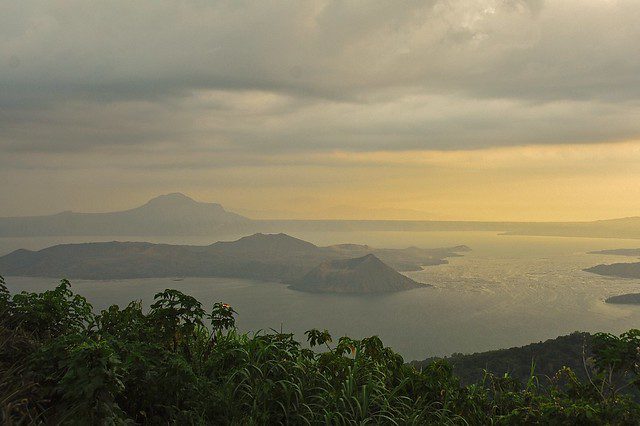
 On January 12, 2020, the Philippines was rocked by a violent, volcanic eruption. Ash and toxic chemicals billowed into the skies above before descending on towns and villages below. Taal Volcano was the source of the blast. It is an active volcano that has caused several devastating eruptions during the last few centuries. It is located just south of Manila, the Philippines’ capital. As a result, more than 400,000 people were left with no choice but to flee their homes. In the sudden panic that ensued, NGOs like CARE International were quick to act and help in any way possible.
The Days Following the Eruption
Even though the initial blast was finished in a matter of hours, the true scale of the disaster was just beginning to bubble to the surface. Huge spikes in seismic activity occur after a volcano erupts, which ultimately means earthquakes. In the first 24 hours after the blast, at least 75 earthquakes hammered the surrounding areas.
The first task that responders did was establish a danger zone, which is an area around the volcano where it is inherently dangerous to be in. In the case of the Taal Volcano, the danger zone covered a 14 kilometer (8.7 miles) radius. This means that almost half a million people needed to be evacuated as quickly as possible.
Rya Ducusin is a communications and knowledge management specialist with CARE International. She has been working for the organization in the Philippines for the last three years. She was delighted to see how quickly citizens came together to help evacuate one another from the danger zone. Civilians began using their own cars and boats to transport their fellow neighbors to safety. It is tragic for any deaths to occur in a disaster like this, but without the efforts of everyday civilians, it is likely that far more people would have perished as a result of the eruption.
Ensuring The Safety Of All IDPs
Ducusin specializes in making sure that every internally displaced person (IDP) feels safe once they arrive at evacuation centers (ECs). She helped conduct a rapid gender assessment (RGA), particularly focusing on women and young girls, who were living in ECs. RGAs are immensely helpful for organizations like CARE International because not everyone has the same needs. The information comes directly from IDPs and paints a better picture of what issues NGOs need to be focusing on. The findings can be used to not only help the current relief efforts but plan for better responses in the future.
Findings From The Rapid Gender Assessment
The RGA helped uncover that some families chose to allow their youngest children to leave the ECs so that their children would not have to experience the conditions of living in a congested space with people they did not know. Children who left were primarily staying with relatives in neighboring cities. However, relatives did not always have the funding or resources necessary to care for the children. By identifying this need through the RGA, CARE International could coordinate getting families outside of the ECs additional support.
Ducusin also helped resolve a need that women and young girls, in particular, were experiencing. All of the tents at the ECs looked similar and were not fitted with locks. This led to people understandably mixing up which tents belonged to who. To provide privacy and decrease confusion, CARE identified tents by marking them with specific symbols or colors. In the future, tents could possibly be designed with some sort of locking mechanism to resolve this issue even further.
While the RGA identified many problems, it also helped identify some positive instances in the ECs. In times of emergencies, people are forced to take on roles that they would not normally undertake. For example, women and men in some ECs would work together to cook meals for everyone. Men typically would not do this in the comfort of their own homes and women reported a feeling of unity when the men would help them with such tasks. Men and women developed a larger appreciation for each others’ skill sets and saw that certain skills did not have to be determined on whether someone was born male or female.
Relief Efforts
Today, Ducusin said that almost all of the 400,000 people who were forced to evacuate have returned home. Unfortunately, some homes were wiped out permanently and certain areas around the volcano will not be safe to return to for years.
The silver lining of any disaster, including the Taal volcano, is the work NGOs like CARE do to make relief efforts as safe and comfortable as possible. Natural disasters like the eruption of the Taal volcano will, unfortunately, continue to reoccur. However, by conducting procedures like RGAs when they do occur, relief organizations can be better prepared to respond to natural disasters in the future.
– Jake Hill
Photo: Flickr

CARE International’s Response to the Taal Volcano Eruption
The Days Following the Eruption
Even though the initial blast was finished in a matter of hours, the true scale of the disaster was just beginning to bubble to the surface. Huge spikes in seismic activity occur after a volcano erupts, which ultimately means earthquakes. In the first 24 hours after the blast, at least 75 earthquakes hammered the surrounding areas.
The first task that responders did was establish a danger zone, which is an area around the volcano where it is inherently dangerous to be in. In the case of the Taal Volcano, the danger zone covered a 14 kilometer (8.7 miles) radius. This means that almost half a million people needed to be evacuated as quickly as possible.
Rya Ducusin is a communications and knowledge management specialist with CARE International. She has been working for the organization in the Philippines for the last three years. She was delighted to see how quickly citizens came together to help evacuate one another from the danger zone. Civilians began using their own cars and boats to transport their fellow neighbors to safety. It is tragic for any deaths to occur in a disaster like this, but without the efforts of everyday civilians, it is likely that far more people would have perished as a result of the eruption.
Ensuring The Safety Of All IDPs
Ducusin specializes in making sure that every internally displaced person (IDP) feels safe once they arrive at evacuation centers (ECs). She helped conduct a rapid gender assessment (RGA), particularly focusing on women and young girls, who were living in ECs. RGAs are immensely helpful for organizations like CARE International because not everyone has the same needs. The information comes directly from IDPs and paints a better picture of what issues NGOs need to be focusing on. The findings can be used to not only help the current relief efforts but plan for better responses in the future.
Findings From The Rapid Gender Assessment
The RGA helped uncover that some families chose to allow their youngest children to leave the ECs so that their children would not have to experience the conditions of living in a congested space with people they did not know. Children who left were primarily staying with relatives in neighboring cities. However, relatives did not always have the funding or resources necessary to care for the children. By identifying this need through the RGA, CARE International could coordinate getting families outside of the ECs additional support.
Ducusin also helped resolve a need that women and young girls, in particular, were experiencing. All of the tents at the ECs looked similar and were not fitted with locks. This led to people understandably mixing up which tents belonged to who. To provide privacy and decrease confusion, CARE identified tents by marking them with specific symbols or colors. In the future, tents could possibly be designed with some sort of locking mechanism to resolve this issue even further.
While the RGA identified many problems, it also helped identify some positive instances in the ECs. In times of emergencies, people are forced to take on roles that they would not normally undertake. For example, women and men in some ECs would work together to cook meals for everyone. Men typically would not do this in the comfort of their own homes and women reported a feeling of unity when the men would help them with such tasks. Men and women developed a larger appreciation for each others’ skill sets and saw that certain skills did not have to be determined on whether someone was born male or female.
Relief Efforts
Today, Ducusin said that almost all of the 400,000 people who were forced to evacuate have returned home. Unfortunately, some homes were wiped out permanently and certain areas around the volcano will not be safe to return to for years.
The silver lining of any disaster, including the Taal volcano, is the work NGOs like CARE do to make relief efforts as safe and comfortable as possible. Natural disasters like the eruption of the Taal volcano will, unfortunately, continue to reoccur. However, by conducting procedures like RGAs when they do occur, relief organizations can be better prepared to respond to natural disasters in the future.
– Jake Hill
Photo: Flickr
10 Facts About Sanitation in Morocco
Morocco has made significant progress in sanitation during the past decade. Although there are still many issues, improvements in water sanitation in Morocco are in the near future. Here are 10 facts about sanitation in Morocco.
10 Facts About Sanitation in Morocco
These 10 facts about sanitation in Morocco show that the water supply is improving and will continue to improve. As technology and new initiatives increase the water supply, more people will gain access to safe drinking water.
– Frank Decapio
Photo: Wikimedia Commons
10 Facts About Sanitation in the DRC
The Democratic Republic of the Congo (DRC), a country located in Central Africa, has been the victim of oppression, colonization and enslavement by European nations dating back to the year 1890. Violence and war continued for decades as a result. The Central African country currently lacks some essential sanitation resources, which has led to the spread of diseases such as cholera within the nation. Part of this is because half of the people of the DRC receive improved drinking water from wells and public standpipes. Here are 10 facts about sanitation in the DRC.
10 Facts About Sanitation in the DRC
The Democratic Republic of the Congo has seen little improvement in water quality and sanitation services. Thankfully, people and organizations are consistently working on improving everyday life for the people of the DRC. Whether it be funding Congolese families to have a functioning toilet in their homes or building a protected well for an entire village, there are several ways these organizations can make an impact
– William Mendez
Photo: Flickr
10 Facts About Sanitation in India
In recent years, India has invested tremendous resources to mitigate its public health pressure, especially with respect to sanitation. The problem of the Ganges catches most eyes, however, uneven distribution of precipitation and demographic density cause issues as well. Due to the lack of appropriate access to clean water and related infrastructures such as toilets, waterborne diseases cost India more in actual societal and economic losses than the average level across the world. Here are 10 facts about sanitation in India.
10 Facts about Sanitation in India
Today in India, diseases from untreated water and unhygienic defecation impact society not only through triggering the public health crisis, but also impacting females and children. Limited drainage systems and a lack of water preservation systems are two issues that could prevent India from fully integrating sanitation into rural areas. Fortunately, the Indian government’s campaigns keep sanitation in India on the top of its to-do list. The imperfections cannot overshadow the progress that India has made in promoting its sanitation.
– Dingnan Zhang
Photo: Flickr
6 Facts about Girls’ Education in Romania
6 Facts About Girls’ Education in Romania
Romania has an impressive literacy rate among both men and women but has seen a dramatic drop in the number of women in the workforce. Most Romanian women are able to receive an education, but Roma girls seem to be subject to a prejudiced struggle. While the number of girls in the workforce is declining, education is increasing and the hope of overall improvement of girls’ education and the consequent life opportunities is bright.
– Amanda Gibson
Photo: Flickr
10 Biggest Problems In The World
There is no better time to focus on the biggest problems in the world. The everlasting tightened world economy, war threats and lingering diseases all ubiquitously affect human lives in every corner of the world. The United Nations (U.N.) has compiled a list of the current 10 biggest problems in the world.
10 Biggest Problems in the World
These 10 biggest problems in the world may bring uncertainty and worry, however, many organizations are planning and implementing initiatives to solve these issues. People can provide support to these organizations either financially or through direct involvement to aid in eliminating these challenges.
– Hung Minh Le
Photo: Pixabay
The Criminalization of Poverty in Rio
Brazil boasts the fourth-highest incarceration rate in the entire world and a lot of these arrests occur in the most urban areas of the country like Rio de Janeiro and Sao Paolo. These cities happen to be centers of diversity and culture, but also areas of extreme wealth disparity. The criminalization of poverty in Rio demonstrates the general poverty-crime cycle, where greater economic disadvantage and higher rates of incarceration lead to each other.
The Case of Rafael Braga Vieria
In 2013, the case of Rafael Braga Vieria became a landmark for the government of Rio’s less-than-neutral approach to making arrests at the time filled with mass demonstrations. Vieria was a homeless street cleaner carrying cleaning supplies. The authorities only arrested Vieria out of the 300,000 protesting that night. He received a five-year sentence on the grounds that he could have used the supplies to make a molotov cocktail.
Article 3 of Brazil’s constitution protects against this sort of discrimination against poverty, but at the same time, there is legislation allowing for drug offenses to receive judgment based on personal circumstances. For example, if the suspect came from a certain background, authorities could legally assume that they intended the drugs for personal use.
Life in Favelas
Usually, the poorer people in the area, living in favelas or poor neighborhoods, receive the worst of this treatment. The residents become targets for drug trafficking as well as scapegoats for the law. Rio de Janeiro’s favelas hold upwards of 1 million that face discrimination from the general public. In reality, violence is not an inherent part of favelas. It is a result of the system that allows them to exist in a state of such neglect. All of this leads to violence within the community and violence on behalf of the state. For instance, the police killed upwards of 600 people in 2015 alone. Around 75 percent of these deaths were black men.
Such high incarceration rates because of the criminalization of poverty in Rio often have other economic effects on the people most affected. Those living in favelas, disproportionately black families, receive evictions from their homes without reason. Between 2009 and 2013, the government forced around 20,000 families out of their homes with no compensation. In addition, many low-income families felt the impact of having one person incarcerated for a long time, especially if the person was the wage-earner of the family. Not only does this criminalization of poverty in Rio make life more difficult in the moment, but it also opens the door for further turning towards crime and violence.
Today
The percentage of people living in poverty is rising after the boom of the 2016 Olympics. Unemployment has risen, as well as the other byproducts of poverty, but many organizations are working to make a difference in Rio. Habitat for Humanity has helped almost 20,000 families find houses outside of these favelas, but people can always do more. Investing in other aid organizations, especially local ones, would be necessary to improve living conditions, thereby decreasing the criminalization of poverty in Rio and Brazil as a whole.
– Anna Sarah Langlois
Photo: Flickr
10 Facts about Life Expectancy in Kuwait
Kuwait does not immediately come to mind when one thinks of poverty. It may seem that statistics like life expectancy point to a high standard of living, but life is different for expatriates and noncitizens who make up the majority of the country’s inhabitants. Here are 10 facts about life expectancy in Kuwait, including a couple that appears a little too good to be true.
10 Facts About Life Expectancy in Kuwait
These 10 facts about life expectancy in Kuwait show that the quality of life is good for the country’s citizens. The still strong oil industry and recent efforts to improve health care infrastructure can only improve the situation. Unfortunately, many noncitizens do not have the rights that are responsible for the long lives that Kuwaiti’s can expect to live. Social and economic equality, not total wealth, are the primary issues facing Kuwait’s less well off today.
– Caleb Carr
Photo: Flickr
10 Facts About Human Trafficking in Russia
Human trafficking is one of the most critical humanitarian issues of the century and virtually operates everywhere in the world. It involves the transport of persons, who are either entirely unwilling or misinformed about their destination, to a new place, usually to engage in forced labor or prostitution. Currently, Russia is facing a human trafficking crisis and yet, it is doing little to prevent this issue and protect those human trafficking already affects. Here are 10 facts about human trafficking in Russia.
10 Facts About Human Trafficking in Russia
Despite the current inaction of the Russian government in response to the human trafficking crisis, pressure from activists within the country and outside of it could help create substantial change. Not only would this assist current victims, but it would make eradicating human trafficking in Russia a real possibility.
– Anna Sarah Langlois
Photo: Flickr
10 Facts about Renewable Energy in Costa Rica
Located in the heart of Central America, Costa Rica is nestled between the Pacific Ocean and the Caribbean. Costa Rica is famous for its thriving wildlife, but what many may not realize is that Costa Rica prides itself as one of the greenest countries in the world. Here are 10 facts about renewable energy in Costa Rica.
10 Facts about Renewable Energy in Costa Rica
Costa Rica is by no means perfect. As the government devotes much of its efforts to environmental sustainability, it takes away from maintaining infrastructure throughout the country. However, it is clear that Costa Rica is doing something right. The majority of the population has access to clean water and electricity, which is due to the enormous production of renewable energy. “Pura Vida” may just be a saying in Costa Rica, but it certainly connects to the country’s commitment to relying on what nature has to offer.
– Emily Young
Photo: Pixabay