10 Facts about Renewable Energy in Costa Rica
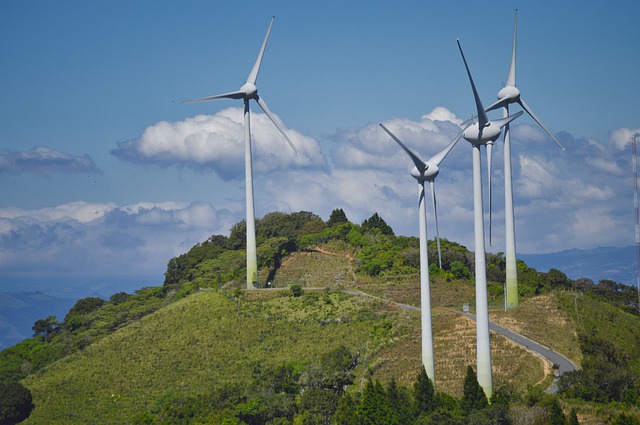
Located in the heart of Central America, Costa Rica is nestled between the Pacific Ocean and the Caribbean. Costa Rica is famous for its thriving wildlife, but what many may not realize is that Costa Rica prides itself as one of the greenest countries in the world. Here are 10 facts about renewable energy in Costa Rica.
10 Facts about Renewable Energy in Costa Rica
- Most of Costa Rica’s energy comes from renewable sources. More than 99 percent of the energy in Costa Rica was generated from renewable sources in 2019. According to the country’s National Center for Energy Control, Costa Rica has been running on more than 98 percent renewable energy since 2014. The majority of this energy, 67.5 percent, comes from hydropower. Additionally, wind power generates 17 percent, geothermal sources make up 13.5 percent and biomass and solar panels comprise 0.84 percent. The remaining 1.16 percent is from backup plants.
- Costa Rica has universal access to electricity. Costa Rica has an estimated population of 5.05 million people. In 2018, at least 79 percent of the population lived in urban areas, and 20 percent lived in rural areas. Both rural and urban populations benefit from renewable energy in Costa Rica, as 100 percent of the households have access to electricity generated from renewable sources.
- Costa Rica lasted 300 consecutive days on renewable energy alone. Costa Rica set the record in 2017 for most consecutive days with renewable energy. The previous record for this feat was in 2015 when Costa Rica lasted 299 consecutive days on pure, clean energy.
- Deforestation has successfully been reversed in Costa Rica. Deforestation is detrimental to both civilization and wildlife. It can make agricultural practices and maintaining food supply difficult as it can lead to climate change, desertification, soil erosion and increased greenhouse gases. Beginning in the 1980s, the government of Costa Rica implemented policies to protect its natural forests. By 2016, the amount of land covered by forest has doubled to more than 50 percent of the country’s total landmass.
- Payments for Environmental Services (PES) program. Costa Rica created the PES program in the 1990s as part of protective policies put in place to combat deforestation. The success of renewable energy in Costa Rica is partially due to the pioneering of this program. Through it, landowners receive direct payments for ecological services when they adopt techniques that do not negatively impact the environment and maintain quality of life. The ecological services that can be provided include clean water, irrigation, energy production, biodiversity and scenic beauty. This allows for landowners, especially farmers, to earn an extra income even during unprofitable seasons.
- Costa Rica is producing so much energy that it can be sold. The Costa Rican Electricity Institute (ICE) began selling its energy surplus to Central America’s Regional Electricity Market in 2015. The electricity helps power Guatemala, Nicaragua, Panama, Honduras and El Salvador. By 2019, Costa Rica has earned more than $180 million in sales of surplus energy.
- Costa Rica has committed to eliminating fossil fuels. In 2018, Costa Rica’s new president, Carlos Alvarado, announced at his inauguration that he plans to ban all fossil fuels and become the world’s first decarbonized country. The plan will begin in 2021 and features ideas that tackle problems in the transportation sector, such as implementing fully electric trains by 2050.
- There’s a roadblock in Costa Rica’s green vision. The transportation sector is one of Costa Rica’s weakest links. Much of the infrastructure, even in cities, is in poor condition. This leads to more people relying on cars than on public transportation. Costa Rica’s State of the Region reports that there are 287 cars per 1,000 people. Fewer than 2 percent of these cars are hybrids or electric cars. This generates a demand for fossil fuels (oil) with gas spending on the rise.
- Additionally, 82 percent of the population has access to clean drinking water. Nearly all households in Costa Rica have access to an improved water source. An improved water source includes piped water in a home or from another source, such as a public tap, wells or rainwater collection. However, this doesn’t mean that all households have water safe for drinking. Even though most of Costa Rica’s renewable energy comes from hydropower, the water supply is not very clean. About 18 percent of Costa Rica’s population lacks access to drinking water due to a shortage of infrastructure and government support. Unfortunately, minority groups make up this 18 percent, including people who are indigenous, impoverished, Afro-descendants and migrant workers.
- People in Costa Rica live healthier, longer lives. In a 2015 study by Bloomberg, Costa Rica was ranked as the healthiest country in Latin America and 24th in the world. Additionally, Costa Rica has one of the highest average life expectancy at 80 years. In fact, according to a study in 2016, Costa Rica’s poor live longer than the poor in the United States. Further, the lack of access to healthcare in the U.S. could be part of the reason why. This could also be due to psychosocial factors. Costa Rica’s unofficial slogan is Pura Vida, meaning “pure life.” Pura Vida is about slowing down and relaxing to enjoy what life has to offer.
Costa Rica is by no means perfect. As the government devotes much of its efforts to environmental sustainability, it takes away from maintaining infrastructure throughout the country. However, it is clear that Costa Rica is doing something right. The majority of the population has access to clean water and electricity, which is due to the enormous production of renewable energy. “Pura Vida” may just be a saying in Costa Rica, but it certainly connects to the country’s commitment to relying on what nature has to offer.
– Emily Young
Photo: Pixabay
