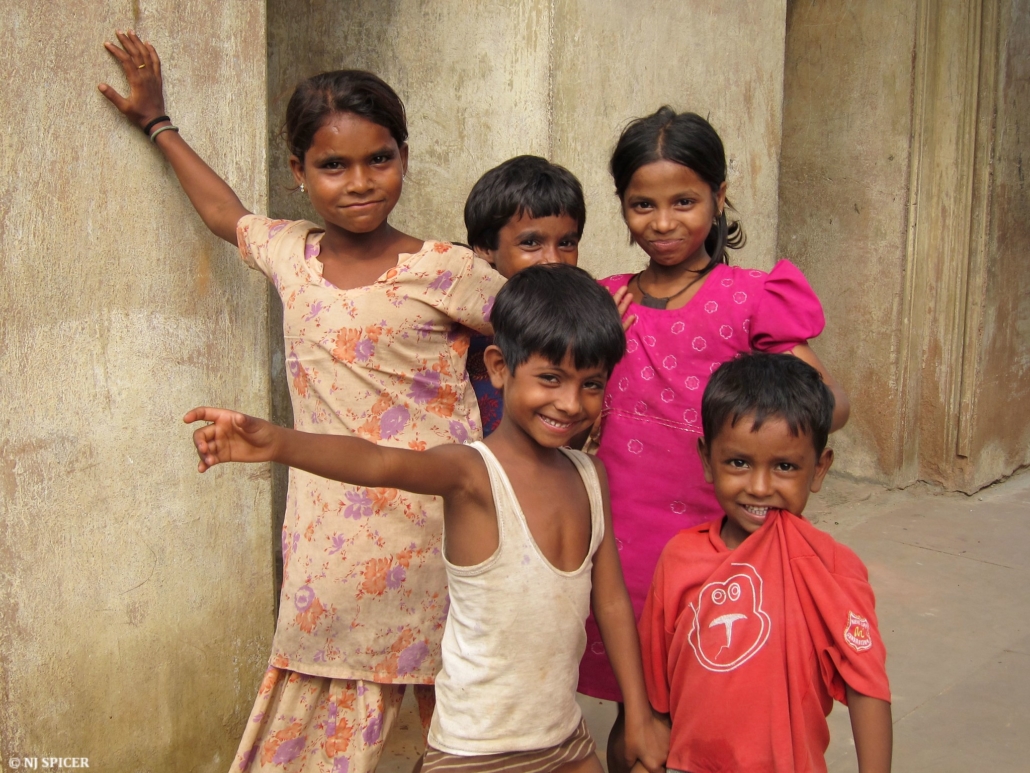
People often say that necessity is the mother of invention. However, communities that require innovations do not always see enough of them. Due to a lack of access to resources, many rural communities suffer an endless cycle of poverty and poor living conditions. Several nonprofit organizations in India are conducting social entrepreneurship journeys for college students as a means of countering the problem that most brilliant, young minds in the country are focusing too much on the big picture rather than on how empowering the poor can build a stronger nation. They are doing this to imprint the minds of the youth and shift their focus to innovation for the sake of uplifting rural communities. Here are examples of three of such journeys.
Jagriti Yatra
A charitable nonprofit organization called Jagriti Sew Sansthan started Jagriti Yatra, which is the largest of its kind in India. It is an extensive, 15-day, roundabout journey across several of the nation’s rural landmarks. The journey spans for about 8,000 kilometers across the length and breadth of India to expose youth to several grassroots problems and inspire them to be the face of innovation.
Yearly, 500 college students who clear a rigorous selection process, undertake this life-changing journey. They have the opportunity to meet several role models and social entrepreneurs who strived against unfavorable societal conditions (like poverty, hunger and lack of educational facilities) to take charge and innovate sustainable business models for their social enterprises.
Bunker Roy from Barefoot College, a voluntary research organization that works on bettering health, educational facilities and skills of the rural population, and Anshu Gupta from Goonj, an innovative nonprofit that focuses on providing clothing as a basic need among other things, are a couple of role models who are working with Jagriti Yatra to inspire the students. They are demonstrating how students can contribute to alleviating poverty and bettering living conditions in rural India.
LEad Prayana
The LEaders Accelerating Development (LEAD) program is a brainchild of Hubbali, Karnataka’s Deshpande Foundation that Mrs. Jaishree Deshpande and Dr. Gururaj “Desh” Deshpande founded. From thousands of applicants, the program selects 120+ college students based on their passion for solving problems and compassion towards the society they live in.
The on-road, 14-day journey includes activities that challenge the students’ innovative abilities and encourages them to partake in mini-projects that have environmental, social and humanitarian value. The students participate in several panel sessions that successful social entrepreneurs conduct like Madhu Chandan of Organic Mandya, a social movement that encouraged the farmers of Mandya, Karnataka to practice organic ways of farming to yield healthier produce.
ShodhYatra
What sets ShodhYatra apart from the rest of social entrepreneurship journeys is its unique mode of transport, which is nothing but human feet. Anil Gupta, a retired IIM professor, founded ShodhYatra. This journey of search spans about 100 kilometers on foot and occurs in various parts of the country. The participants get a chance to view and analyze the shortfalls in rural communities first hand and sometimes also come across innovative solutions that the villagers put into action.
Gupta calls this journey a two-way street rather than a one-sided one, where urban and rural communities exchange knowledge. Being the founder of Honey Bee Network, he propagates that humans can benefit from lateral learning without exploitation of either party, just like how honey bees thrive from collecting honey without impoverishing the flower.
While undertaking such journeys, the participants, who are usually from the urban areas of the country, have no choice but to shed their inhibitions, interact with the locals and understand the human ability to adapt and that, indeed, is the prime reason to innovate. All these journeys primarily work on the concept of social entrepreneurship, which not only focuses on bettering living conditions across the country but also on building sustainable business models while doing so.
– Reshma Beesetty
Photo: Flickr

Improving Health Conditions in Brazil
Over the years, the Brazilian government has improved the provision of health care for citizens. However, challenges have persisted in terms of the quality of care provided. In response, the government and other NGOs have taken various steps to improve health conditions in Brazil. These steps include reaching more impoverished areas, offering affordable HIV/AIDS treatment and providing vaccinations.
Reaching the Favelas
Reaching urban slums, or “favelas,” is crucial to improving health conditions. These areas are stricken with poverty and the people experience harsh living conditions. Poor health often accompanies these conditions, heavily impacting the people in the favelas.
The struggles those individuals face are not new to the Brazilian government or NGOs. One NGO working to improve health conditions in Brazil, specifically among the people living in the favelas, is the Brazilian Institute for Innovations in Social Healthcare, also known as Ibiss. Established in 1989, Ibiss now operates 62 projects with 600 employees. One project is leprosy-awareness because many leprosy cases are concentrated within the favelas.
Ibiss has increased awareness and care by helping favela residents to organize self-treatment programs. This is significant because the course of treatment is lengthy, so many people with leprosy stop treatment, especially in the favelas.
Affordability of HIV/AIDS treatment
Brazil provides one of the best programs to combat HIV/AIDS in the developing world, which has helped to improve health conditions in the nation. One way that HIV/AIDS treatment affordability has improved is through the implementation of legislation increasing access to universal antiretroviral treatments for citizens. Additional legislation has allowed Brazilian companies to produce a generic version of antiretroviral drugs to reduce high associated costs. Statistics from 2018 show these legislative measures are improving health conditions in Brazil, specifically among HIV/AIDS patients. In 2018, roughly 900,000 citizens had HIV and 66% of these people had access to antiretroviral treatment.
Vaccines
In contrast, vaccine coverage in Brazil is declining. Coverage for the first dose of the measles/mumps/rubella vaccine has declined in two regions in Brazil since 2016. In Northeastern Brazil, coverage dropped from 55.8% to 41.9%. Further, in Northern Brazil, coverage dropped from 58.9% to 44.9%.
Vaccination must occur to improve health conditions in Brazil. Thankfully, the Brazilian government recently responded to an outbreak of measles in 2019 by doubling the purchase of MMR (measles/mumps/rubella) vaccines from the previous year. The government purchased 60.2 million MMR vaccines.
Brazil also recently launched a massive campaign to deliver yellow fever vaccinations. The government implemented these vaccines in 77 municipalities within the states of São Paulo, Bahia and Rio de Janeiro. Brazil targeted these specific municipalities because of the increased risk of an outbreak. As a result of this campaign, the government covered 53.6% of people in São Paulo, 55.6% in Rio de Janeiro and 55% in Bahia.
Despite a weaker health system, the Brazilian government is undertaking efforts to improve health conditions in Brazil. From new government legislation to NGO programs, improvements have been made in reaching more impoverished areas, offering affordable HIV/AIDS treatment and providing vaccinations. Moving forward, the development of a robust health system will continue to have a positive impact on the nation.
– Jacob E. Lee
Photo: Flickr
The Status of Poverty in Turkey
With an increased Human Development Index (HDI) of 0.806 from 0.655 in the last decade, Turkey’s overall development has significantly increased, namely with a hike in life expectancy and education. While the execution of specific long-term policies (Development Programme for Women and Conditional Education Assistance) constantly addresses issues such as gender inequality and education, the refugee crisis and the disruption that COVID-19 has caused remain more pressing matters. Nevertheless, as all of these existing and new issues pile up, the initiative to alleviate poverty in Turkey has currently slowed down.
The Long-term Causes of Poverty in Turkey
Turkey’s Measures to Reduce Poverty
The severity of poverty in Turkey has instigated the introduction and implementation of various policies such as the following:
Trust Funds in Addition to FRiT
How COVID-19 Could Affect Turkey’s Ability to Address Poverty
The unexpected spread of COVID-19 has recently strained the world economy, including Turkey’s ability to implement and administer the necessary schemes to alleviate poverty. In fact, the bilateral trade between China and Turkey is as low as 1.1%. Coupled with the loss of tax collection from affected industries (including textiles and garments) and restricted travel abroad, this has led to an increase in national debt and left the private sector enduring heavy losses. Therefore, the government’s ability to address poverty has diminished.
– Mridula Divakar
Photo: Flickr
The Effects of Desertification in Africa
The most vulnerable region is a 3,000-mile stretch of land that includes ten countries in the Sahel region of Africa. The Sahel is the area between the Saharan Desert and the Sudanian Savannah. This region is under constant stress due to frequent droughts and soil erosion. A dense forest can become a field of dust in a matter of years, making mass migrations inevitable. Africans frequently migrate south in search of fertile land.
Desertification in Senegal and Beyond
Desertification affects about 46 percent of Africa. Yet, the process of reversing its effects is slow going, usually taking a decade to see major improvements. Agriculture in Africa tends to result in low productivity, as most of the land is characterized as a semi-desert. Clearing the land of trees also reduces the structure of the soil. Coupled with wind erosion, the topsoil blows away and leaves a desert-like land. The issue is seen in many parts of the world, but it is most prevalent in Africa.
The country that is arguably the most damaged by desertification is Senegal. Migrations in Senegal are common, as wind erosion, deforestation and climate change wreaks havoc on farms and livestock. In 2015, Khalidou Badara, a cattle herder in Senegal, said, “There are almost no more trees, and the grass does not grow anymore, and so each year, we have to go further and further away to find grazing for our cattle.” Those most affected by desertification in Senegal move to Gabon, a country in West Africa, or even to Europe or South America. More than half of Senegalese work in agriculture, and desertification forces those with meager profits to move elsewhere to escape poverty.
The Great Green Wall
One ambitious initiative created to reduce desertification in Africa is the Great Green Wall. Once completed, the Great Green Wall will be the largest living structure on the planet, spanning more than 4,500 miles across the entire Sahel. The idea is that planting trees can combat desertification, create jobs, improve food security and bring migrated populations back home. The initiative began in 2007 and has already planted 12 million trees in Senegal. The wall prevents the Saharan Desert from encroaching on land most affected by desertification in Africa, while simultaneously reducing soil erosion. More than 37 million acres of degraded land in Ethiopia was restored as a result of this initiative.
There are similar results in Burkina Faso, Nigeria and Niger. Only 15 percent of the project is complete, and the Great Green Wall is creating a lasting impact. The Great Green Wall’s goals for 2030 include restoring 247 million acres of destroyed land and creating 10 million jobs in rural areas.
Will Desertification Halt or Slow?
As climate change continues to place a burden on poor farmers in the Sahel region, scientists and initiatives, like the Great Green Wall, continue to restore the region to its original structure. The Great Green Wall is growing every month. Its ambitious goals for 2030 express that their work will not slow in Africa. The greatest impact of these solutions lies in preventing further desertification in Africa so that those in poverty can depend on fertile land for food and sufficient income to escape poverty.
– Lucas Schmidt
Photo: Flickr
Women’s Empowerment Organizations in Sub-Saharan Africa
4 Gender Empowerment Organizations
These women’s empowerment organizations are doing important work in addressing gender inequality and building capabilities. Women’s empowerment is a necessary focus on creating sustainable development and reducing poverty in sub-Saharan Africa and globally.
– Treya Parikh
Photo: Flickr
Hydropower Dams in the Lower Mekong Region
A once thriving area for fishing and agriculture, the Mekong River Delta sports a dramatically different look than it did just a century ago. The river, historically wide and abundant, is characterized by large jigsaw puzzles of cracked earth where water has dried up and emptied villages where fishermen once thrived. The place has recently seen a mass exodus, with a million people resettling from southwestern Vietnam alone in the last decade.
Harmful Effects of Hydropower Dams
The region has long been one of the world’s largest inland fisheries, supporting 60 million Cambodians, Vietnamese, Thai and Laotians. It provides Vietnam with 50 percent of its food and 23 percent of its GDP, and Cambodia with 80 percent of its protein intake and 12 percent of its GDP. However, over the last couple of decades, hydropower dams have emerged along the river, threatening local communities and ecosystems while creating large amounts of renewable energy.
According to a UNESCO report, dams on the upper Mekong have resulted in a 70 percent reduction in sediment in the delta. By 2040, estimates determine that these and future dams will block 97 percent of the sediment that moves down the river. This sediment is critical for both rice production and fish life in the Mekong. The loss has been devastating.
Hydropower Dams are Detrimental to the Environment
Even with the detriment to rice production and fishing in the area, the lower Mekong region may still see more hydropower dams. Several countries have created plans to use the area for power, and not without reason. Estimates have determined that dams in the region should be able to produce 30,000 megawatts of electricity, which would be a massive boost to the power capacity of the lower Mekong.
Dams are also an opportunity for foreign investment and could be a huge boost to the GDP of these countries. In fact, the Mekong River Commission’s initial studies estimated that countries in the region could gain $30 billion from dam development, though more recent studies suggest that the area could lose as much as $7 billion from this construction. Despite this, the Mekong River Commission has advised a postponement on the building of these dams until it can further evaluate the risks, and because of the inequitable effects of building the dams, which would likely benefit urban elites while hurting rural farmers and fishermen.
Are there Positive Effects?
Some argue that the presence of these dams may have positive effects on fishing and rice production in the area due to an increased flow of water during dry seasons as dams release water, combatting the effects of drought. Whether this makes up for the loss of nutrient-rich silt and fish life is debatable. However, farmers have recently resorted to using chemical fertilizers and pesticides, which can be potentially harmful in the long-run, to boost their crop production.
Though it is unclear whether or not countries in the Lower Mekong Region will continue their plans to build hydropower dams, it is certain that farmers and fishermen will continue to suffer as long as the delta is victim to the already present dams in China and the effects of climate change. However, on a lighter note, there has been a recent increase in international aid and development to the Lower Mekong Region, as well as an effort to maintain biodiversity and create sanctuaries for fish and new fish reserves. Hopefully, these countries will manage to balance the poverty-alleviating industrialization that comes with hydropower, and a shift to industrialized agriculture with the interests of rural farmers, fishermen and biodiversity in the region in mind.
– Ronin Berzins
Photo: Flickr
Social Entrepreneurship Journeys in India
People often say that necessity is the mother of invention. However, communities that require innovations do not always see enough of them. Due to a lack of access to resources, many rural communities suffer an endless cycle of poverty and poor living conditions. Several nonprofit organizations in India are conducting social entrepreneurship journeys for college students as a means of countering the problem that most brilliant, young minds in the country are focusing too much on the big picture rather than on how empowering the poor can build a stronger nation. They are doing this to imprint the minds of the youth and shift their focus to innovation for the sake of uplifting rural communities. Here are examples of three of such journeys.
Jagriti Yatra
A charitable nonprofit organization called Jagriti Sew Sansthan started Jagriti Yatra, which is the largest of its kind in India. It is an extensive, 15-day, roundabout journey across several of the nation’s rural landmarks. The journey spans for about 8,000 kilometers across the length and breadth of India to expose youth to several grassroots problems and inspire them to be the face of innovation.
Yearly, 500 college students who clear a rigorous selection process, undertake this life-changing journey. They have the opportunity to meet several role models and social entrepreneurs who strived against unfavorable societal conditions (like poverty, hunger and lack of educational facilities) to take charge and innovate sustainable business models for their social enterprises.
Bunker Roy from Barefoot College, a voluntary research organization that works on bettering health, educational facilities and skills of the rural population, and Anshu Gupta from Goonj, an innovative nonprofit that focuses on providing clothing as a basic need among other things, are a couple of role models who are working with Jagriti Yatra to inspire the students. They are demonstrating how students can contribute to alleviating poverty and bettering living conditions in rural India.
LEad Prayana
The LEaders Accelerating Development (LEAD) program is a brainchild of Hubbali, Karnataka’s Deshpande Foundation that Mrs. Jaishree Deshpande and Dr. Gururaj “Desh” Deshpande founded. From thousands of applicants, the program selects 120+ college students based on their passion for solving problems and compassion towards the society they live in.
The on-road, 14-day journey includes activities that challenge the students’ innovative abilities and encourages them to partake in mini-projects that have environmental, social and humanitarian value. The students participate in several panel sessions that successful social entrepreneurs conduct like Madhu Chandan of Organic Mandya, a social movement that encouraged the farmers of Mandya, Karnataka to practice organic ways of farming to yield healthier produce.
ShodhYatra
What sets ShodhYatra apart from the rest of social entrepreneurship journeys is its unique mode of transport, which is nothing but human feet. Anil Gupta, a retired IIM professor, founded ShodhYatra. This journey of search spans about 100 kilometers on foot and occurs in various parts of the country. The participants get a chance to view and analyze the shortfalls in rural communities first hand and sometimes also come across innovative solutions that the villagers put into action.
Gupta calls this journey a two-way street rather than a one-sided one, where urban and rural communities exchange knowledge. Being the founder of Honey Bee Network, he propagates that humans can benefit from lateral learning without exploitation of either party, just like how honey bees thrive from collecting honey without impoverishing the flower.
While undertaking such journeys, the participants, who are usually from the urban areas of the country, have no choice but to shed their inhibitions, interact with the locals and understand the human ability to adapt and that, indeed, is the prime reason to innovate. All these journeys primarily work on the concept of social entrepreneurship, which not only focuses on bettering living conditions across the country but also on building sustainable business models while doing so.
– Reshma Beesetty
Photo: Flickr
5 Facts About Renewable Energy in Brazil
5 Facts About Renewable Energy in Brazil
Renewable energy in Brazil continues to be an example on the world stage. Through sheer numbers alone, the South American country has proven that investment in sustainable, natural power sources are economically viable and eco-friendly. Almost the entire country is powered by wind, hydroelectric, solar and ethanol sources. This trend is expected to continue as the demand for sustainability grows internationally.
– Asha Swann
Photo: Flickr
10 Facts About Life Expectancy in Slovenia
Slovenia is a small, coastal country in Southeastern Europe and is an average country in the EU by many measures. However, the country’s life expectancy is higher than many of its neighbors, despite commonly held unhealthy habits. Here are 10 facts about life expectancy in Slovenia.
10 Facts About Life Expectancy in Slovenia
These 10 facts about life expectancy in Slovenia show that the country has a number of issues to address in the area of health. However, life expectancy in this country is relatively high. With increased awareness of the mental and physical health challenges the country faces, Slovenia’s life expectancy will likely continue to increase.
– Caleb Carr
Photo: Pixabay
Type 2 Diabetes in Developing Countries
Type 2 diabetes results from the body’s ineffective use of insulin, a hormone that the pancreas makes and allows the body to either convert glucose into energy or store it. Insulin prevents one’s blood sugar from getting too high since it effectively removes glucose from the bloodstream. Diabetes is a major cause of blindness, kidney failure, heart attacks and stroke among other conditions. While there are many risk factors for diabetes, physical inactivity and excess body weight are two of the most significant contributors to type 2 diabetes across the globe. However, there is an increasing prevalence of type 2 diabetes in developing countries where investments in health care are often inadequate.
Diabetes in Developing Countries
Globally, the number of people with diabetes increased from 108 million in 1980 to 433 million people in 2019. Estimates determine that the global prevalence of diabetes is 9.3 percent, and about one in two people with diabetes are undiagnosed. The International Diabetes Federation projects that global prevalence will increase by 25 percent in 2030 and by 51 percent in 2045 if prevention methods and treatment programs remain unchanged.
Type 2 diabetes relates to obesity and overeating. Therefore, people in the past have associated it primarily with high-income countries, but this viewpoint is changing. The prevalence of diabetes in developing countries has been rising rapidly. In 2019, 79 percent of adults with diabetes were living in middle-low income countries.
Risk Factors of Diabetes in Developing Countries
A majority of type 2 diabetes cases are in advanced nations. However, the disease is becoming a serious problem in developing countries. Diabetes prevalence in low-middle-high SDI countries is 1.48, 3.74, and 3.42 percent, respectively. SDI refers to the Sustainable Development Index as an updated version of the human development index and measures the ecological efficiency of human development. Middle SDI countries also have the highest annual rate of increase in prevalence. The prevalence of diabetes in developing countries is growing with westernization and with the urbanization of rural areas. In Pakistan, for example, a recent study found that urban areas have a prevalence rate of 28.3 percent which was just higher than the rate of 25.3 percent in rural areas.
Obesity, a main contributor to the diabetes epidemic, is increasing rapidly in developing countries. This shift also connects with the nutrition transition. The nutrition transition results from changes in agricultural systems. Specifically, there is a decrease in fruit and vegetable consumption. There is also a rise in processed foods such as refined carbohydrates, added sweeteners, edible oils and animal products.
In many Asian populations, the risk of diabetes starts at a lower BMI than for Europeans. Additionally, increased intake of meat, oils, highly saturated ghee (a type of butter used in Asian cooking) and added sugar have also marked diet shifts in Asia. Before urbanization, physical activity counteracted the effects of high fat and sugar diets. Unfortunately, physical activity has also decreased as a result of the shift from agricultural labor to working in manufacturing services.
Preventive Methods
The current trends show that type 2 diabetes in developing countries will likely significantly increase, but these outcomes are preventable through lifestyle and dietary changes. Since treatments such as drugs and insulin are costly and developing countries have limited resources, people must prioritize prevention. It is crucial to raise awareness about the effects of lifestyle shifts on obesity and type 2 diabetes globally. Low-cost innovations include training non-medical health professionals and using mobile devices to spread awareness about type 2 diabetes prevention. In addition to technology, countries should develop solutions using networks of community health workers.
Accredited social health activist (ASHA) workers are an example of this type of intervention in Asia, where 70 percent of the population lives in rural areas with very limited access to health care facilities and skilled health workers. ASHA workers are health educators in their own communities and have the ability to care for patients at home while also providing guidance regarding diet and physical activity. Telemedicine and the use of technology support this system and keep the ASHA workers in touch with medical professionals. This intervention also offers employment to people with some medical knowledge. ASHAs are able to make money by charging low fees for their services and provide for their families.
Making cities more walkable or cyclable through urban planning can increase physical activity while taking some of the prevention weight off of health systems, especially in countries with limited health resources. Making healthy food more affordable through redesigning subsidies needs to be a priority. This is because industrialization makes processed food cheaper and more accessible. These actions require political will and an understanding of the negative implications of the growing diabetes prevalence. Such actions could make a significant difference in decreasing the epidemic globally.
– Maia Cullen
Photo: Pixabay
UNAMA Improving Human Rights in Afghanistan
United Nations Assistance Mission in Afghanistan
In 2019, Afghanistan saw an excessive amount of violence. From the beginning of January through September, there were over 8,000 civilian casualties. The Taliban specifically targeted some of these attacks on women and health care providers.
One organization, The United Nations Assistance Mission in Afghanistan (UNAMA), has devoted itself to eliminating the harsh conditions of typical Afghan life. UNAMA is using its research, reporting, advocacy and engagement to tackle this endeavor.
Specifically, UNAMA aims to protect civilians from armed conflict, defend against the violation of child rights, eliminate violence against women, halt arbitrary detention and prevent torture during detention. So many civilians, women and children, in particular, experience great suffrage as a result of the violence in Afghanistan.
Despite the bleakness of 2019, UNAMA has made progress. Large-scale suicide attacks decreased by 79 percent in 2019 when compared to 2018. Torture in conflict-related detainees decreased by 7 percent as well. Maintaining the mission and engaging in strategic partnerships are key aspects to improving the living conditions of the public and at-risk Afghans. By continuing the impactful research, reporting, advocacy and strategic relationships, UNAMA is improving human rights in Afghanistan.
Human Rights Defenders
For a long while, human rights defenders have been victims of violence and intimidation within Afghanistan. Specifically, in 2019, escalated tensions surrounded human rights workers where there were specific activities of attacks and/or kidnapping. During that escalation in violence, the Taliban announced that there would be an attack on all media outlets responsible for criticizing Taliban fighters. These defenders are vital to aiding the protection of people’s human rights in Afghanistan. In turn, these defenders must also receive protection.
Response to Rising Tensions
In January 2020, at an Amnesty International event, the authorities publicly committed to protecting the defenders of human rights in Afghanistan. Other organizations that support human rights throughout the nation attended the event. All of these groups designed a strategy outlining the actions they should take to protect human rights defenders.
This support launches initiatives that will investigate attacks, respond to incidents and/or threats of attacks, offer relief to human rights defenders and enable human rights defenders to continue work without the fear of retaliation. Helping these human rights defenders is vital to changing the situation of human rights in Afghanistan. If these defenders are unable to safely complete the work, then the human rights of Afghans will never improve.
Currently, human rights in Afghanistan are in need of remarkable improvements. Organizations are aiming to develop response mechanisms and preventative strategies toward improving human rights in Afghanistan. UNAMA is aiming to utilize research, reporting, advocacy, strategic partnerships and the protection of human rights defenders to help the Afghan population.
– Jacob E. Lee
Photo: Wikipedia