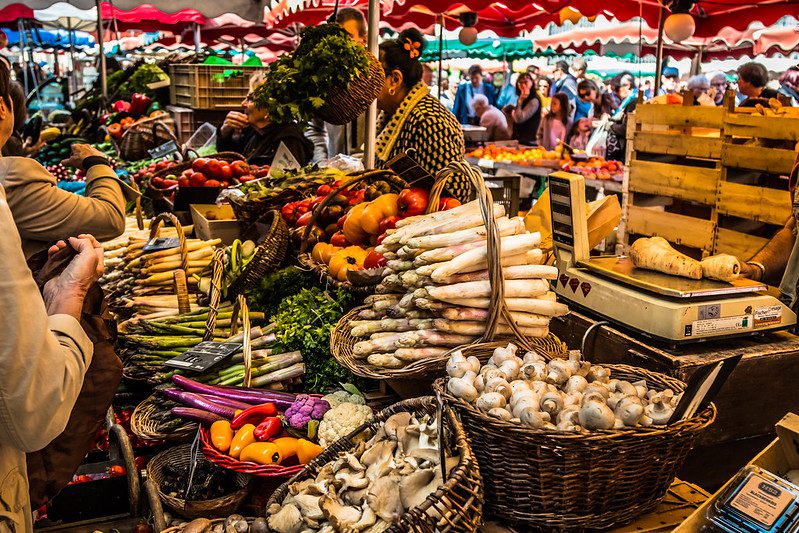
Recently, France has made consistent progress towards eliminating hunger within its borders, throughout the European Union and in developing nations. However, with worsening global health conditions as an added stressor to those who suffer from food insecurity, it is imperative to end hunger in France and around the world.
Who Does Hunger in France Affect?
The majority of France’s most food insecure are the 200,000 plus homeless and those living in the outskirts of Paris.
Globally, one in nine people go hungry every day, and global hunger is increasing. The United Nations Food and Agriculture Organization (FAO) estimates that around 10.7% of the world’s population suffers from chronic undernourishment. Additionally, over 26.4% of the world’s population is food insecure.
The standard of living in France is relatively high due to the country’s inclusive social security systems. Access to basic needs and services such as food, water, health care and education are mostly available to all. However, while many reap the benefits of this system, disenfranchised minorities and essential workers in some parts of France have lost their jobs and access to meals. For example, in the lower-income districts that surround Paris, residents in cities like Clichy-sous-Bois require the generosity of food banks to get by.
Why Does Hunger Persist Today?
In France and on the global scale, poverty, climate change, poor public policy and food waste drastically increase hunger. These factors manifest in several ways. Some communities, like Clichy-sous-Bois, do not have equal access to resources and become stuck in cycles of poverty. Environmental degradation from unsustainable agriculture and increasing natural disasters negatively impacts crop yields, access to and distribution of food. Food waste exacerbates climate change by releasing dangerous levels of methane in landfills. Furthermore, food waste also deprives hungry people of quality food.
Furthermore, estimates determine that by the year 2050, the world will need to produce enough food to feed over 10 billion people. The Ministry of Europe and Foreign Affairs stresses the need to transform the “agricultural and food systems” in France. According to the Ministry, “agriculture must be more sustainable and effective from economic, social and environmental perspectives to ensure food security and the health of individuals.”
The Strategy to End Hunger in France
Luckily, France has stepped up to reform the current food systems and agricultural practices that aggravate hunger and malnutrition locally and internationally. Through the Ministère de L’Europe et des Affaires Étrangères, France wrote the International Strategy for Food Security, Nutrition and Sustainable Agriculture. This strategy works out a five-point plan that France will carry out between 2019 and 2024. This plan tackles the causes of hunger and serves as a leader in ending hunger in Europe and the world.
The five points of the International Strategy for Food Security, Nutrition and Sustainable Agriculture are:
- To Strengthen the Global Governance of Food Security and Nutrition: France wishes to improve the effectiveness and coordination of international actors involved in the global governance of food security and nutrition.
- To Develop Sustainable Agriculture and Food Systems: Agriculture is currently a leading cause of climate change and biodiversity loss. As a result, France wishes to confront these issues by promoting sustainable agricultural practices.
- To Strengthen France’s Action on Nutrition: Multiple factors lead to undernutrition in young children, pregnant and/or breastfeeding women. These include access to quality food, clean water and conditions for good hygiene.
- To Support the Structuring of Sustainable Agri-food Chains to Promote the Creation of Jobs in Rural Areas: Targeted at younger generations and striving to be inclusive of family agriculture, agri-food chains are a good source of employment.
- To Enhance Food Assistance Actions to Improve the Resilience of Vulnerable Populations: The goal is to help struggling populations regain food autonomy in the face of recurring food crises.
More Solutions
In addition to this international plan, more immediate solutions in France aim to combat food waste locally. For example, Guillaume Garot, a member of Parliament in France, authored a food waste bill. This bill requires grocery stores to donate food that they would otherwise throw away. Additionally, this bill is the first of its kind, and the European Union quickly followed suit with similar goals.
The European Food Banks Federation (FEBA) works with the U.N. to use the 88 million tonnes of food that the E.U. wastes annually. A new set of sustainable development goals seek to “ensure sustainable consumption and production patterns” in France. As a result, FEBA transforms unnecessary food waste into vast quantities of food donations for the hungry.
FEBA builds connections with existing food banks and global partners to strengthen the food bank networks in France and across Europe and help mediate the donations. This organization works to alleviate food insecurity by distributing the equivalent of 4.3 million meals every day. That is 781,000 tonnes of food that it delivers to 9.3 million food-insecure people. In France, the Banque Alimentaires annually donates 73,000 tonnes of food products to those in need.
Through persistent actions like the International Strategy for Food Security, Nutrition and Sustainable Agriculture and food bank networks, the process to end hunger in France and worldwide is an ever more attainable goal.
– Rochelle Gluzman
Photo: Flickr

The Fight Against Poverty in Fiji
The island of Fiji is located in the South Pacific Ocean and has a population of more than 895,000. A vibrant native population traverses the tropical climate of Fiji. The economy is dependent on agricultural products and tourism. Farmers cultivate bananas, cocoa, pineapple and taro root to supplement trade between nations, and commercial fishing and sugarcane are similarly important exports. Despite the high amount of trade between bordering islands and nations, 28% of native Fijians live below the national poverty line. Here is some information about poverty in Fiji and efforts to combat it.
Relocation on Limited Land
Many citizens of Fiji make a living in the boat-making or fishing industry; as a result, relocation threatens the livelihood of a small business economy. Rising water levels often force villages to move. Changing weather patterns have caused widening rivers and altered seasons, contributing to the issue. “Where there was rain, there is now sun,” reports a native islander who recently relocated because his village was flooded.
In the next 10 years, an estimated 676 villages will have to move, which will increase the number of unemployed islanders. As unemployment increases, those who live above the poverty line are at risk of falling below the global margin of $1.90 per day. The relocation of one village costs an estimated $445,000.
Education and Health Care
Fiji consists of 100 inhabited islands, a number that is drastically decreasing due to the rising water levels. Implementation of primary health care practices and basic amenity improvements in villages provide locals with clean water and permanent housing. The adoption of these principles by the World Health Organization (WHO) and the United Nations Children’s Fund sought to improve Fiji’s situation between 1970 and 2000. In the past 20 years, though, the flow of central health support from the capital city of Suva into villages has slowed due to a limited number of health professionals.
Previous Health Minister Jona Senilagakali states, “…the government did not schedule workers to go to all communities in all the islands to monitor the project. And health workers were not encouraged to work more with the communities to improve their health standards.” The slow progress of Fiji’s modern health initiative is also a direct impact of “brain drain.” This occurs when educated individuals emigrate for higher-paid positions. Proper education in Fiji is also progressing rather slowly. Though secondary enrollment and literacy rates are high, the university system in Fiji lacks resources and government funding. Improving higher education largely depends on the willingness of the government to provide more aid to the people.
Prospects of Hope
Last year Fiji saw high prospects in the global market of reduced unemployment and the lowest amount of extreme poverty in the country’s history. The percentage of those living below the global poverty line, currently 0.5%, continues to fall as a result of incentives by the United Nations. In 2013, Fiji received honors from the United Nations Food and Agricultural Organization (FAO) for a substantial decline in poverty and hunger among the population.
– Natalie Williams
Photo: Pixabay
Science-Based Targets Initiative Fights Poverty
Setting Science-Based Targets not only benefits the environment through reduced greenhouse gas emissions, but it also benefits each company internally. The initiative conducted a series of polls of company executives to quantify how setting a Science-Based Target benefits their companies. The poll found that 63% of the executives said that Science-Based Targets drive innovation. This is because companies must find greener, more eco-friendly ways to conduct business to reduce greenhouse gas emissions. In addition, 52% of the executives found that establishing Science-Based Targets has improved investor confidence. Many investors choose to assess a company based on its environmental friendliness. Therefore, partnering with the Science-Based Targets initiative gives companies credibility and a good reputation in these terms.
How Will the Science-Based Targets Initiative Mitigate Greenhouse Gas Emissions?
The Science-Based Targets initiative describes three approaches companies can take to reduce greenhouse gas emissions:
No matter the approach, the goal of each method is to reduce a company’s carbon emissions, with the overarching goal of limiting global temperature increase to 1.5 degrees Celsius. Carbon dioxide contributes to the greenhouse effect. The greenhouse effect is the increase in the Earth’s global temperature caused by greenhouse gases (such as carbon dioxide, water vapor and methane) trapping solar radiation in the Earth’s atmosphere. Some solar radiation is reflected back into space, but other radiation is absorbed by greenhouse gases and reradiated back to Earth. In 2018, carbon dioxide accounted for 81% of global greenhouse gas emissions. Reducing carbon emissions reduces the greenhouse effect, preventing Earth’s temperature from sharply increasing.
How Does Mitigating Greenhouse Gas Emissions Help the World’s Poor?
Natural disasters, such as flooding and drought, disproportionately affect the world’s poor. Millions living in poverty are farmers, and weather changes easily affect agriculture. The livelihood of these farmers depends on predictable weather patterns, so natural disasters could be devastating to them. They could also devastate the world’s food supply. If farmers are unable to produce crops at the same rates due to changing weather patterns, food prices could rise. As a result, this could leave the world’s poor at risk of not being able to afford sufficient food.
Climate gentrification has disproportionate impacts on the world’s poor. Climate gentrification is the notion that the wealthy have the means to escape natural disasters, whereas the poor do not. Rising sea levels and increased temperatures may cause many to have to relocate. However, the poor may not have the resources to relocate. This puts them in grave danger and exposes them to the devastation caused by natural disasters.
By reducing carbon emissions in the private sector, the Science-Based Targets initiative hopes to limit the global temperature increase to 1.5 degrees Celsius. These actions could save millions who could be subject to natural disasters. Reducing carbon emissions slows the greenhouse effect, preventing the global temperature from reaching unlivable levels. Mitigating greenhouse gas emissions could prevent the millions already in poverty from being subject to natural disasters. The Science-Based Targets initiative is quickly gaining traction worldwide. One would hope that the private sector continues to do its part to reduce global carbon emissions.
– Harry Yeung
Photo: Flickr
Protecting Quality Education in the Philippines
Officials in the Philippines confirmed in early June 2020 that schools would not reopen until a vaccine against COVID-19 became available. This decision leaves approximately 27 million children to continue their education via the internet. Education officials worry that two months is too short a period to extend a successful distance-learning model, especially when many children lack access to computers or the internet. For younger children, this adjustment in education style arrives at a crucial period in their schooling where they start developing social skills, literacy and numeracy.
Nonetheless, aid organizations are mobilizing in response to the decision that the government of the Philippines made to not reopen schools. These organizations hope to bridge the potential gap in quality and access to quality education in the Philippines during the pandemic.
USAID
The U.S. Agency for International Development (USAID) gave $2.5 million to the government of the Philippines to help support its Basic Education-Learning Continuity Plan. USAID announced on June 18, 2020, that it would be putting forward funding to secure quality education for children in the Philippines until the restoration of face-to-face classroom learning.
In partnership with the Philippines Department of Education (DepEd), USAID will equip educators with effective distance-learning materials and teaching techniques. Additionally, USAID will also direct attention to families and citizens, providing parents with home-learning activities. Media platforms in the Philippines will be working with USAID to publicize advice on the effective continuation of education during the pandemic. USAID will also help DepEd in the development of assessment tools for students so that instructors can monitor and evaluate student literacy levels before the eventual return to school.
Save the Children Philippines
Government-sanctioned aid programs are not the only organizations targeting issues associated with education. International NGOs are also rolling out plans to maintain access to education via their local chapters in the Philippines. Save the Children Philippines recently initiated Project ARAL (Access to Resources for Alternative Learning), which seeks to support families at a high risk of losing learning opportunities with the transition to online-based schooling.
Project ARAL provides materials for at-home educational programs that it caters to students by age group. The plan also uses these programs to offer “psychosocial” support and disseminate information regarding nutrition and health. The project incorporates three stages for the planning and provision of educational aid, assuring support to all beneficiaries throughout transitions in learning. This includes a relief stage (when quarantine and school closures remain in place), a transition stage (when schools stay closed, but quarantine restrictions begin to lift) and a recovery stage (when returning to normal operations).
ChildFund Philippines
ChildFund Philippines, a regional sector of ChildFund International, introduced a CoVLOG-19 for young adults between the ages of 15 and 24. CoVLOG-19 is a video-blog platform for young adults to express themselves and communicate with peers while maintaining distance-learning. The platform focuses specifically on engaging young adults with information regarding COVID-19: slowing the infection rate and avoiding online exploitation and abuse in this large flux of computer use. ChildFund Philippines also hopes to support education in the Philippines by supplying “home-based family activities kits,” or HFAK, which provide activities to support the continued learning of life-skills, social skills and academics in the absence of traditional schooling.
The indefinite closure of schools due to COVID-19 will inevitably continue to pose an enormous hurdle in the provision of quality education in the Philippines. However, projections determine that the materials, programs and plans that these aid organizations implemented will chip away at the challenge to further improve the status of remote learning.
– Alexandra Black
Photo: Flickr
5 Ways Solar-Cookers Help Fight Poverty
How Solar Cookers Work
Solar-cookers are oven-like devices that use mirrored surfaces to concentrate the sun’s thermal energy and heat the cooker’s contents. These devices are easily constructed with low-cost materials and even the most rudimentary model—the box cooker—can cook at a temperature up to 140° Celsius, or 284° Fahrenheit.
How Solar-Cookers Help Break the Cycle of Poverty
Solar-Cookers in Action
The success stories are plenty. In the Iridimi refugee camp in Chad, distribution of solar-cookers by the NGO Solar Cookers International caused an 86% drop in trips outside of camp to collect firewood. This reduced exposure to violence from the Janjaweed militia group. Additionally, food consumption increased as families no longer needed to barter food rations away for firewood. In Oaxaca, Mexico, where households spend as much as 10% income on energy, Solar Household Energy supplied 200 local women with solar cookers in 2016. Today, users report that the cookers have reduced the use of their woodstoves by more than 50% and that they have more free time. Many of the women now organize solar-cooker demonstrations in their homes to promote the benefits of leaving open-fire cooking behind.
– Alexandra Black
Photo: Flickr
Gender Inequality in Somalia During COVID-19
COVID-19 is deepening gender inequality in Somalia, as girls and women are increasingly losing autonomy over their bodies and the ability to plan for families themselves. It is projected that there will be an increase in female genital mutilation (FGM) and childhood marriages. The international community has a responsibility to intervene in Somalia to protect the human rights of girls and women.
Female Genital Mutilation
The COVID-19 lockdown in Somalia has led to a rapid increase in Female Genital Mutilation (FGM). Somali parents have taken advantage of school closures as a result of COVID-19, asking nurses to perform FGM on their daughters now because they have time to stay at home and recover.
Circumcisers are traveling neighborhoods offering to cut girls who are at home, causing a dramatic increase in FGM procedures. Sadia Allin, Plan International’s head of mission in Somalia stated, “the cutters have been knocking on doors, including mine, asking if there are young girls they can cut.”
COVID-19 prevention measures are perpetuating the continuation of FGM and consequently gender inequality in Somalia. In 2020, at least 290,000 girls in Somalia will undergo FGM, according to the United Nations Population Fund (UNFPA). Somalian citizens are unable to raise awareness about the dangers of FGM in their local communities because of the ongoing lockdown.
Child Marriage
Child marriages are also projected to increase as a result of COVID-19. Families are more likely to marry off their daughters during stressful crises to reduce the number of people they must provide for. It is expected that the economic fallout of the pandemic will result in 13 million child marriages by 2030.
The closure of Somalian schools because of COVID-19 could also escalate the number of child marriages. Girls Not Brides chief executive Faith Mwangi-Powell stated, “Schools protect girls. When schools shut, the risks (of marriage) become very heightened.”
Efforts to Stop Gender Inequality
International organizations, such as Girls Not Brides, Plan International and Save the Children, are taking a stance to protect vulnerable women and girls in Somalia.
In April, Girls Not Brides wrote a letter to the African Union, urging the group to take a stance against gender inequality. Girls Not Brides explained ways that the African Union can protect vulnerable communities during COVID-19. These steps include training educators to recognize and prevent violence, protecting social sector spending and adopting distance learning solutions, among many others.
Plan International is demanding that sexual and reproductive health information and services that prevent and respond to harmful practices, such as FGM, should be an integral part of the COVID-19 response. The organization also advocates that girls and young women should be included in the conversation to ensure their voices are heard and their needs are met. Plan International strives to end FGM so that women and girls can make their own decisions regarding their sexual reproductive health and well-being. Its work is extremely important because FGM can cause a variety of short-term and long-term health risks. Girls and women who undergo FGM are likely to experience excessive bleeding, genital tissue swelling and infections.
Save the Children is a humanitarian organization for children around the world. The organization launched the “Save our Education” campaign to promote distance learning and to encourage investment in education systems for the future.
Somali girls who do not return to school will grow more vulnerable to the effects of gender inequality as described above. The World Bank discovered that “each year of secondary education may reduce the likelihood of marrying before the age of 18 by five percentage points or more in many countries.”
Organizations such as Girls Not Brides, Plan International and Save the Children are trailblazers for the eradication of FGM and discontinuation of unwanted pregnancies and child marriages in Somalia during the COVID-19 pandemic. They are paving the way to decrease gender inequality in Somalia.
– Danielle Piccoli
Photo: Flickr
Healthcare Improvements in Kyrgyzstan
Healthcare in Kyrgyzstan
Kyrgyzstan was a Soviet Republic during the Cold War. The country had free and universal healthcare financed by the Soviet Union’s Ministry of Health. Following the dissolution of the Soviet Union in 1991, healthcare within the country of Kyrgyzstan began to decline. The healthcare system’s decline in Kyrgyzstan’s during this period was partly due to the lack of medical necessities. Because of their crumbling healthcare system, Kyrgyzstan needed reforms. Long after their independence from the Soviet Union, they have made these reforms.
The government has recently launched two initiatives to promote healthcare improvements. The first is the Primary Health Care Quality Improvement Program. The purpose of this program is threefold. First, to improve the quality of healthcare services. Secondly, to increase access to and quality of healthcare services. Finally, to establish better governance over the healthcare system to ensure the program is successful. The program is still in its early stages. It was approved in 2019 and will last until 2024.
Kyrgyzstan has ensured better healthcare delivery to its people by partnering with USAID to eradicate tuberculosis (TB) from the country; each year, the country faces roughly 8,000 cases of TB. Of those roughly 8,000 cases, about 1,300 are drug-resistant TB which is much more difficult to treat.
In response, Kyrgyzstan makes use of the USAID Cure Tuberculosis project. The project provides $18.5 million to the country of Kyrgyzstan in order for medical professionals to provide the necessary care for people who have the drug-resistant form of tuberculosis.
With these two programs active, the government hopes to bring about more healthcare improvements in Kyrgyzstan for people in general and for those specifically suffering from drug-resistant tuberculosis.
– Jacob Lee
Photo: Wikimedia
5 Facts About Hunger in Sierra Leone
5 Facts About Hunger in Sierra Leone
Solutions
Many organizations have taken action to address food insecurity and malnutrition in Sierra Leone. In 2018, Action Against Hunger aided 8,000 people with food security programs that reduced malnutrition among children and increased dietary diversity. The WFP, UNICEF and Sierra Leone’s government are distributing nutrient-dense food to young children and mothers to reduce child malnutrition.
The WFP also provides food to children in schools and supports smallholder farmers. In May 2020, the WFP assisted more than 17,000 people by distributing over 47 metric tons of food assistance, transporting 900 metric tons of improved seed rice to smallholder farms, and providing cash payments to more than 1,000 farming households.
The World Bank has provided Sierra Leone’s government with $100 million to deal with economic challenges during the pandemic and reduce poverty. The U.N. is attempting to coordinate a global response to the pandemic that would require $4.7 billion to “protect millions of lives and stem the spread of coronavirus in fragile countries,” including Sierra Leone.
Conclusion
These facts about hunger in Sierra Leone show that this issue is widespread and likely worsening during the COVID-19 pandemic. However, with multiple NGOs and members of the international community working to address this problem with food assistance and aid for farmers, there is hope for improvement; Sierra Leoneans may experience lower rates of hunger and malnutrition in the near future.
– Rachel Powell
Photo: Flickr
Factors Contributing to Widespread Hunger in Africa
Chronic Hunger
Chronic hunger in Africa occurs when the daily energy intake is below what is necessary for a healthy and active life. The word “chronic” implies that it occurs for an extended period of time. While the current state of hunger in Africa may seem bleak, Africa has made progress. Malnutrition has declined by 4% between 2000 and 2014 due to economic growth and smart policies. However, malnutrition still remains a large issue in certain populations.
Hunger in Children
Children are most at risk for hunger in Africa and the hunger crisis particularly impacts them due to the fact that the first 1,000 days of a person’s life are critical in regards to nutrition. When a child does not receive proper food in the first 1,000 days, they can suffer physical and mental developmental delays, disorders, inability to fight disease and high infant mortality rates. Bill Gates noted his experience in African nations where people asked him to guess a child’s age based on their height. Children who Gates thought were 7 or 8 years old were in reality 12 or 13. This is due to the stunting that 28 million children in Africa experience. Malnutrition leads to stunting that not only impacts children’s height but also brain development. Stunted children are more likely to fall behind in school, miss critical reading and math milestones and go on to live a life in poverty.
Multiple Factors
Hunger in Africa is a complex crisis with many root causes. SOS Children’s Villages outlines some key causes of widespread hunger in Africa.
However, the hunger crisis in Africa is not only complex due to its causes, but also because other issues largely interconnect with it and amplify it. For example, climate change creates weather patterns such as droughts that cause food insecurity. Zambia, Zimbabwe and Mozambique are all examples of nations facing successive crop failures and poor harvest due to drought, with Southern Africa experiencing its lowest rainfall since 1981.
A lack of access to clean water and sanitation leads to increased rates of disease that create another obstacle to nutrition. Poor health care infrastructure in Africa amplifies the obstacle of disease to malnutrition. A lack of health care stops children from getting vaccines such as the rotavirus vaccine that would lead to children having fewer bouts of diarrhea. Furthermore, health care can provide individuals with supplements and vitamins to make up for key gaps in their diets, as the nutrition strategy of the Bill and Melinda Gates Foundation shows.
Organizations Working to Aid Africa
The complexity of the hunger crisis makes it incredibly difficult to combat. Fundamentally, Africa needs more research and funding. Bill and Melinda Gates are two people who have done tremendous work in Africa, donating over $600,000 to their Alliance to End Hunger Program. Through his work, Gates recognizes the complexity of hunger and notes that if he had one wish, it would be for the world to better understand malnutrition and how to solve it.
However, the continent is making progress to reduce widespread hunger in Africa. For example, organizations such as the SOS Children’s Villages provide family strengthening programs that give short and long term aid including food, access to medical care, school supplies and support with financial and household management. SOS Children’s Villages also provides emergency relief for the hunger crisis and famine to countries including Somalia, Nigeria, South Sudan, Ethiopia and Malawi. SOS Children’s Villages is currently active in 46 African countries, providing aid to 147 villages that would otherwise be in acute danger of malnutrition or starvation. Programs such as these need to not only continue but also to experience amplification via increased funding and research.
– Lily Jones
Photo: Pixabay
How to End Hunger in France
Recently, France has made consistent progress towards eliminating hunger within its borders, throughout the European Union and in developing nations. However, with worsening global health conditions as an added stressor to those who suffer from food insecurity, it is imperative to end hunger in France and around the world.
Who Does Hunger in France Affect?
The majority of France’s most food insecure are the 200,000 plus homeless and those living in the outskirts of Paris.
Globally, one in nine people go hungry every day, and global hunger is increasing. The United Nations Food and Agriculture Organization (FAO) estimates that around 10.7% of the world’s population suffers from chronic undernourishment. Additionally, over 26.4% of the world’s population is food insecure.
The standard of living in France is relatively high due to the country’s inclusive social security systems. Access to basic needs and services such as food, water, health care and education are mostly available to all. However, while many reap the benefits of this system, disenfranchised minorities and essential workers in some parts of France have lost their jobs and access to meals. For example, in the lower-income districts that surround Paris, residents in cities like Clichy-sous-Bois require the generosity of food banks to get by.
Why Does Hunger Persist Today?
In France and on the global scale, poverty, climate change, poor public policy and food waste drastically increase hunger. These factors manifest in several ways. Some communities, like Clichy-sous-Bois, do not have equal access to resources and become stuck in cycles of poverty. Environmental degradation from unsustainable agriculture and increasing natural disasters negatively impacts crop yields, access to and distribution of food. Food waste exacerbates climate change by releasing dangerous levels of methane in landfills. Furthermore, food waste also deprives hungry people of quality food.
Furthermore, estimates determine that by the year 2050, the world will need to produce enough food to feed over 10 billion people. The Ministry of Europe and Foreign Affairs stresses the need to transform the “agricultural and food systems” in France. According to the Ministry, “agriculture must be more sustainable and effective from economic, social and environmental perspectives to ensure food security and the health of individuals.”
The Strategy to End Hunger in France
Luckily, France has stepped up to reform the current food systems and agricultural practices that aggravate hunger and malnutrition locally and internationally. Through the Ministère de L’Europe et des Affaires Étrangères, France wrote the International Strategy for Food Security, Nutrition and Sustainable Agriculture. This strategy works out a five-point plan that France will carry out between 2019 and 2024. This plan tackles the causes of hunger and serves as a leader in ending hunger in Europe and the world.
The five points of the International Strategy for Food Security, Nutrition and Sustainable Agriculture are:
More Solutions
In addition to this international plan, more immediate solutions in France aim to combat food waste locally. For example, Guillaume Garot, a member of Parliament in France, authored a food waste bill. This bill requires grocery stores to donate food that they would otherwise throw away. Additionally, this bill is the first of its kind, and the European Union quickly followed suit with similar goals.
The European Food Banks Federation (FEBA) works with the U.N. to use the 88 million tonnes of food that the E.U. wastes annually. A new set of sustainable development goals seek to “ensure sustainable consumption and production patterns” in France. As a result, FEBA transforms unnecessary food waste into vast quantities of food donations for the hungry.
FEBA builds connections with existing food banks and global partners to strengthen the food bank networks in France and across Europe and help mediate the donations. This organization works to alleviate food insecurity by distributing the equivalent of 4.3 million meals every day. That is 781,000 tonnes of food that it delivers to 9.3 million food-insecure people. In France, the Banque Alimentaires annually donates 73,000 tonnes of food products to those in need.
Through persistent actions like the International Strategy for Food Security, Nutrition and Sustainable Agriculture and food bank networks, the process to end hunger in France and worldwide is an ever more attainable goal.
– Rochelle Gluzman
Photo: Flickr
2020: Year of the Nurse and Midwife
In honor of the 200th anniversary of the birth of Florence Nightingale, the World Health Organization (WHO) designated 2020 to be the International Year of the Nurse and Midwife. Nightingale was a revered nurse and leader and is a symbol of the power of nursing. The overall goal of the campaign is to elevate the role and allow for others to recognize the importance of the roles filled in the healthcare field by nurses and midwives globally.
The WHO, the International Confederation of Midwives (ICM), International Council of Nurses (ICN), Nursing Now and the United Nations Population Fund (UNFPA) began a year-long effort to celebrate the work of nurses and midwives, showcasing the difficult conditions they often face, and advocate for increased funds in the nursing and midwifery workforce called the Nightingale Challenge.
Nurses are often the first and only point of care in many developing communities. They give lifesaving immunizations and health advice while also looking after older people. Both nurses and midwives care for mothers and children after birth. Although nurses and midwives make up more than half of all healthcare workers around the world, the WHO estimates that there is a shortage of approximately nine million nurses.
The Nightingale Challenge strives to develop the next generation of young nurses, midwives, practitioners and advocates for health. The global goal is to have 20,000 nurses and midwives under the age of 35 participating and benefiting from this in 2020 with at least 1,000 organizations already joining.
The Timeline of the Campaign
June- December 2019: Enrollment
January 2020: Launch
January – December 2020: Delivery
December 2020: Conclusion
Differences Around the World
Nursing is an applied field that varies depending on where it is practiced. Educational preparation is another variance between countries. Australia educates nurses through higher education and entry-level nurses carry a bachelor’s degree. Essential to Australia is universal access to health care with the state and territory running the healthcare system. Japan is a highly modern, yet traditional society that is changing to deal with an aging population. To handle changes, Japan is responding through involvement in policy decisions and service enhancement for the elderly.
The education of nurses is a graduate position, and nursing as a science is still developing. Zimbabwe’s National Health Strategy outlines its health care system. Meanwhile, the Zimbabwe Patient Charter provides the overall framework for the health care delivery system. The system views nurses as critical to the backbone of the primary care approach. Zimbabwe Health Professions Council accredits most nursing programs. However, since access to clinical specialization at the post-baccalaureate level is nonexistent in the country, degree holders are educated in either the United States or the United Kingdom.
Nurses make a difference every day for patients. The Nightingale Challenge encourages and seeks to develop the next generation of nurses and midwives. Given the current pandemic, people now see healthcare workers in a new light and with renewed respect. With the recognition of 2020 as the International Year of the Nurse and Midwife, the Nightingale Challenge and the COVID-19 pandemic, all factors to encourage nursing, the awareness fosters growth in the nursing positions around the world.
– Anna Brewer
Photo: Flickr