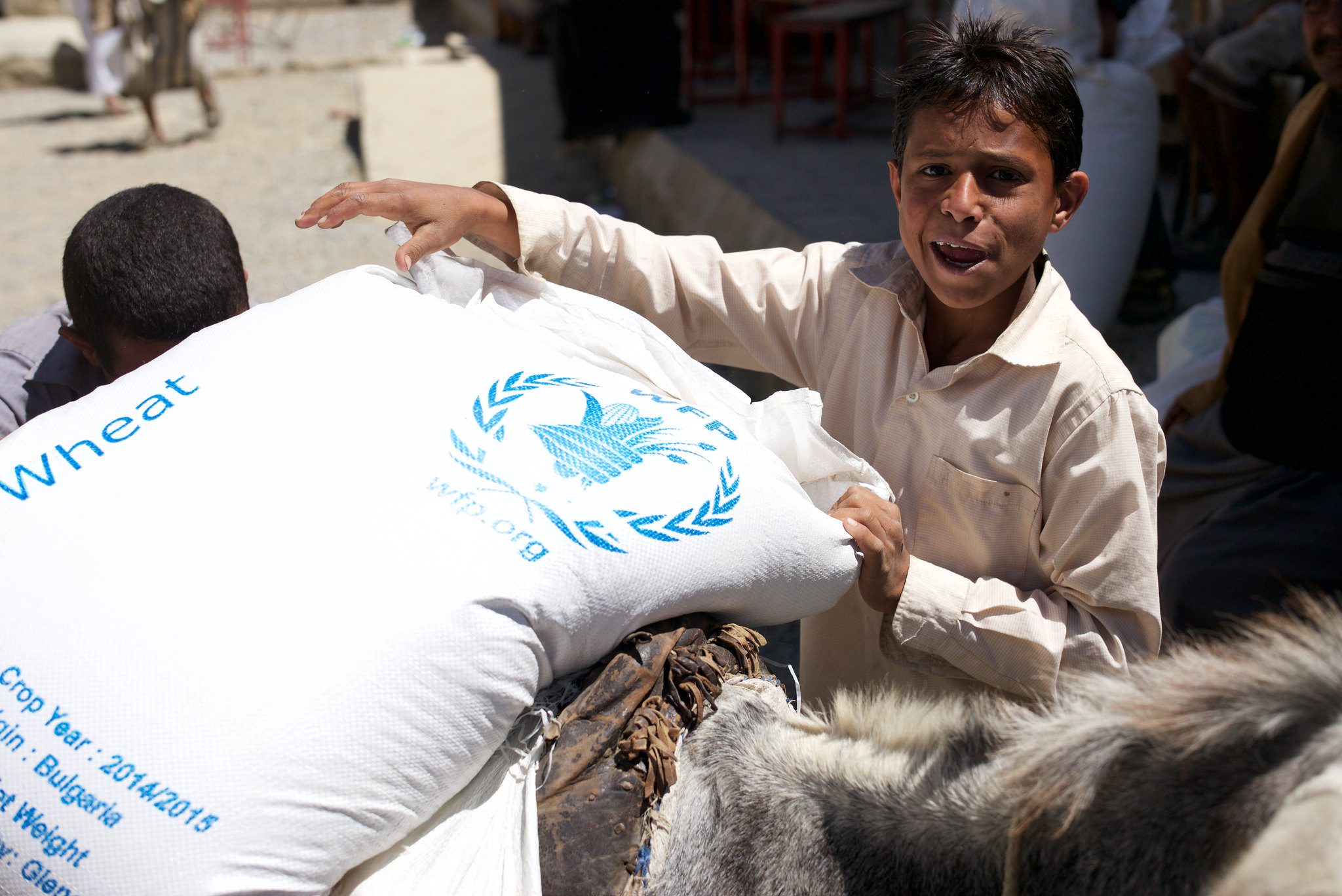
 War and conflict exacerbate existing poverty. According to the World Bank’s 2007 Global Monitoring Report, fragile states, defined as those in civil war or without legitimate authority to make collective decisions, account for one-fourth of global poverty. In low-income countries, poverty rates average 22%, whereas, in states with conflict, the rates skyrocket to 54%. Poverty in Yemen is no exception to this trend. Yet, the world may consider Yemen the example of conflict exacerbating poverty if fighting continues. The 2019 United Nations Development Project (UNDP) report, Assessing the Impact of War in Yemen, estimates that Yemen could rank as the poorest country on Earth by 2030 if the conflict continues. Here is some information about the relationship between conflict and poverty in Yemen.
Yemen’s Civil War
The seeds of Yemen’s conflict began because of the disorganized power transitions that the 2011 Arab Spring prompted. However, 2015 marks the descent into a foreign-backed civil war. Since then, fighting between the Northern rebel Houthis have continued to decimate civilian communities and exacerbate poverty. Iran has backed this fighting, because of Shia religious interests, along with the remaining Yemeni government. Meanwhile, Saudi Arabia and other Sunni-majority countries trying to curtail Iranian influence have also supported it.
The 2019 UNDP report outlines poverty rates in both conflict and no conflict trajectories and shows that without conflict, Yemen’s poverty rate could drop dramatically. Though the country’s poverty rate started rising in 1998 due to poor economic growth, the conflict that began in 2015 increased the depth of poverty by 600% showing the relationship between conflict and poverty in Yemen. The amount of Yemen’s population that now lives in poverty, defined as less than $3.10 a day, hovers around 75%. UNDP projections suggest that 65% of that number could live in extreme poverty by 2022, meaning that they would exist on less than $1.90 a day.
Already struggling with poverty before the conflict, fighting in Yemen compounds the problem by destroying critical infrastructures, like hospitals. On top of that, the pre-2015 economy flatlined. However, the most harmful effect has been on the food supply. As Yemen relies on imports for more than 90% of its food products, the war’s blockades and bombings prevent stable food transportation from ports. Oxfam International reports that two-thirds of Yemen’s population cannot predict where their next meal will come from.
Future Projections
Many say that Yemen suffers the worst humanitarian crisis in the world and such suffering will only increase with continued conflict. For example:
- By 2022, the UNDP report projected that 12.4 million Yemenis could live in poverty and that 15.8 million Yemenis could live in extreme poverty if the conflict persists.
- It also suggested that the depth of poverty could increase to 6,000% by 2030 compared to the rate of poverty in pre-war Yemen.
However, if the conflict ends soon, Yemen would stand 8% closer to the UNDP’s Sustainable Development Goals (SDGs) of no poverty, zero hunger, good health and well-being, quality education and gender equality than it did in 2014. If the conflict ends, the total projected poverty in 2030 would underperform 2014 levels by 3.1 million.
Foreign Aid to Address Poverty
To address poverty in Yemen as well as poverty in other war-torn states, organizations have recently implemented academic findings on the relationship between poverty and conflict.
Borany Penh, founder of the international data science and research firm, Dev-Analytics, and a researcher at the USAID Learning Lab says that “cross contributions from academic fields are beginning to clarify the kinds of solutions to poverty and conflict possible through institutional partnerships.” Penh has argued that fixing the disconnect between academic literature and on the ground efforts would remedy less successful poverty reduction efforts in fragile states. Recent USAID funding acknowledges this point and now incentivizes partnerships among such fields.
For example, to better address poverty in Yemen, USAID currently funds the Yemen Communities Stronger Together (YCST) grant which supports projects and institutions that focus on social cohesion in poverty-reduction efforts. Scholars, organizations and businesses qualify for YCST. This variable grant allows the intersection of academia, nonprofit organizations and businesses to combat poverty while capitalizing on stabilization opportunities. So far, YCST gave out two $30 million awards and plans to report on its impact after the three-year implementation period ends.
On the Ground
In addition to coalition forming efforts like YCST, decreasing poverty in Yemen requires logistic strategies for navigating conflict and fighting poverty. Many nonprofits help via basic aid services, but to do so, they must create solutions to disperse aid while circumventing war zones. The World Food Programme (WFP) found great success in this arena.
Understanding the limitations of transportation in Yemen, WFP attempted to spread food imports as widely and directly as possible. Through the U.N. Humanitarian Air Service and partner organization, Logistics Cluster, food aid reaches four major cities including Aden, Hodeidah, Sana’a and Djibouti, via air and sea routes. Each month 12 million Yemenis now access WFP food rations because of reimagined delivery systems.
However, in areas with viable markets, WFP works to provide cash assistance which, while fighting hunger, also bolsters the economy. The WFP provides food to school children too. Targeting devastated areas of Yemen, the WPF incentivizes education while addressing childhood malnutrition with a school lunch program that provides small meals to 680,000 students. This reflects the new nonprofit focus on sustainable poverty recovery rather than long-term reliance on service distribution.
Many other organizations have devised new ways of bringing aid to Yemen as conflict persists. However, as Penh argues and the institutions highlighted above actualize, linking nascent poverty and conflict studies to field practices is the most hopeful strategy for fighting poverty in Yemen and other fragile states. By ending the conflict which causes such extreme poverty, countries should not face dire projections that place their populations at risk.
– Rory Davis
Photo: Flickr

Conflict and Poverty in Yemen
Yemen’s Civil War
The seeds of Yemen’s conflict began because of the disorganized power transitions that the 2011 Arab Spring prompted. However, 2015 marks the descent into a foreign-backed civil war. Since then, fighting between the Northern rebel Houthis have continued to decimate civilian communities and exacerbate poverty. Iran has backed this fighting, because of Shia religious interests, along with the remaining Yemeni government. Meanwhile, Saudi Arabia and other Sunni-majority countries trying to curtail Iranian influence have also supported it.
The 2019 UNDP report outlines poverty rates in both conflict and no conflict trajectories and shows that without conflict, Yemen’s poverty rate could drop dramatically. Though the country’s poverty rate started rising in 1998 due to poor economic growth, the conflict that began in 2015 increased the depth of poverty by 600% showing the relationship between conflict and poverty in Yemen. The amount of Yemen’s population that now lives in poverty, defined as less than $3.10 a day, hovers around 75%. UNDP projections suggest that 65% of that number could live in extreme poverty by 2022, meaning that they would exist on less than $1.90 a day.
Already struggling with poverty before the conflict, fighting in Yemen compounds the problem by destroying critical infrastructures, like hospitals. On top of that, the pre-2015 economy flatlined. However, the most harmful effect has been on the food supply. As Yemen relies on imports for more than 90% of its food products, the war’s blockades and bombings prevent stable food transportation from ports. Oxfam International reports that two-thirds of Yemen’s population cannot predict where their next meal will come from.
Future Projections
Many say that Yemen suffers the worst humanitarian crisis in the world and such suffering will only increase with continued conflict. For example:
However, if the conflict ends soon, Yemen would stand 8% closer to the UNDP’s Sustainable Development Goals (SDGs) of no poverty, zero hunger, good health and well-being, quality education and gender equality than it did in 2014. If the conflict ends, the total projected poverty in 2030 would underperform 2014 levels by 3.1 million.
Foreign Aid to Address Poverty
To address poverty in Yemen as well as poverty in other war-torn states, organizations have recently implemented academic findings on the relationship between poverty and conflict.
Borany Penh, founder of the international data science and research firm, Dev-Analytics, and a researcher at the USAID Learning Lab says that “cross contributions from academic fields are beginning to clarify the kinds of solutions to poverty and conflict possible through institutional partnerships.” Penh has argued that fixing the disconnect between academic literature and on the ground efforts would remedy less successful poverty reduction efforts in fragile states. Recent USAID funding acknowledges this point and now incentivizes partnerships among such fields.
For example, to better address poverty in Yemen, USAID currently funds the Yemen Communities Stronger Together (YCST) grant which supports projects and institutions that focus on social cohesion in poverty-reduction efforts. Scholars, organizations and businesses qualify for YCST. This variable grant allows the intersection of academia, nonprofit organizations and businesses to combat poverty while capitalizing on stabilization opportunities. So far, YCST gave out two $30 million awards and plans to report on its impact after the three-year implementation period ends.
On the Ground
In addition to coalition forming efforts like YCST, decreasing poverty in Yemen requires logistic strategies for navigating conflict and fighting poverty. Many nonprofits help via basic aid services, but to do so, they must create solutions to disperse aid while circumventing war zones. The World Food Programme (WFP) found great success in this arena.
Understanding the limitations of transportation in Yemen, WFP attempted to spread food imports as widely and directly as possible. Through the U.N. Humanitarian Air Service and partner organization, Logistics Cluster, food aid reaches four major cities including Aden, Hodeidah, Sana’a and Djibouti, via air and sea routes. Each month 12 million Yemenis now access WFP food rations because of reimagined delivery systems.
However, in areas with viable markets, WFP works to provide cash assistance which, while fighting hunger, also bolsters the economy. The WFP provides food to school children too. Targeting devastated areas of Yemen, the WPF incentivizes education while addressing childhood malnutrition with a school lunch program that provides small meals to 680,000 students. This reflects the new nonprofit focus on sustainable poverty recovery rather than long-term reliance on service distribution.
Many other organizations have devised new ways of bringing aid to Yemen as conflict persists. However, as Penh argues and the institutions highlighted above actualize, linking nascent poverty and conflict studies to field practices is the most hopeful strategy for fighting poverty in Yemen and other fragile states. By ending the conflict which causes such extreme poverty, countries should not face dire projections that place their populations at risk.
– Rory Davis
Photo: Flickr
The State of Healthcare in South Africa
While South Africa has come a long way since the pre-Mandela era, many still largely view it as one of the most unequal countries in the world. The history of apartheid in South Africa still plagues many sectors of its government, especially its healthcare system. Glaring racial and wealth disparities among South Africans contribute to unequal access to high-quality healthcare services. Here is some further information about the state of healthcare in South Africa.
Positive Outcomes Post-Apartheid
Two years after Apartheid ended on April 27, 1994, South Africa developed a new Constitution that included a Bill of Rights. A new law under Article 27 stated that every person has an entitlement to healthcare in South Africa, including the right to reproductive care and guaranteed emergency medical treatment. It also states that the government must have measures in place in order to properly carry out these programs.
Since its implementation, life expectancy ages have risen from 54 in 2005 to nearly 63 years as of 2018, along with a continued decrease in the mother-to-child transmission of HIV. While healthcare services and medical treatment have dramatically improved since the 90s, equal accessibility is still a huge problem within the country.
The Public Versus Private Health Sector
While public healthcare is legally available to everyone in South Africa, it comes with an enormous shortage in proper supplies, functioning machinery and high-quality services. Along with this, it includes virtually guaranteed long wait times, hasty appointments and unavailability of skilled doctors. Only five of the 696 public hospitals meet most of the nation’s standards, which include services to contain infectious diseases and to provide prescriptions and medications.
This is not the case within the private health sector. Only 14% of South Africans pay for private health insurance, but more than half of healthcare funds go to that 14%. They have access to 70% of the country’s doctors, whereas the rest of the population utilizing public healthcare have access to far fewer doctors.
Racial Disparities
At first glance, there seems to be a battle between government services and for-profit insurance companies within healthcare in South Africa. However, it is increasingly clear that there is a divide between the historically elite and systemically poor.
In 2018, the World Bank named South Africa as the country with the worst inequality in the world. As of 2015, about 55% of the country’s population lives on less than $5 a day. Meanwhile, the lower-bound poverty line of $1.50 a day includes 47% black Africans, 23% mixed race people and less than 1% white people. The history of apartheid is far from gone because it has created a system with a lack of opportunities for all citizens. While South Africa may have legally outlawed discrimination, many still practice it, and data outlining who has access to high-quality healthcare clearly shows this.
Projects and Initiatives to Improve the State of Healthcare in South Africa
South Africa is trying to completely nationalize its healthcare by 2026 through a National Health Insurance (NHI) proposal. The country first implemented it in 2012 and will carry it out in phases over 14 years. Under the full program, citizens will be able to receive care at clinics and hospitals at no charge, but will also have the option to seek and pay for private care if they desire. If South Africa implements it as planned, it should help to reduce the number of those seeking private insurance and allow for the reallocation of funds to the public sector. In order for this to properly happen, government elites will have to examine how to break down their own history of systemic racism.
The SAME Foundation (the South Africa Medical and Education Foundation) works to provide high-quality medical services to everyone receiving public healthcare. The Khayelitsha Hospital in Cape Town was incredibly under-resourced and over-crowded, particularly in its Emergency Ward and Mental Health Ward, leaving many patients sleeping and getting treatment on the floor.
In 2018, SAME provided the Emergency Ward with 16 new stretcher beds, a ventilator, an x-ray machine, a diagnostic set and an HB tester. Doctors can now provide higher quality care for more patients at any given time. The new equipment gives more accurate results, as well as performs certain tasks that the doctors would otherwise have to do by hand (i.e. continuous CPR versus a ventilator). Within the Mental Health Ward, SAME raised enough money to provide 65 new beds that have rounded edges, are easy to clean and are waterproof and flame retardant. These efforts have created a more positive and safe environment, as well as restored patient dignity.
The overall state of healthcare in South Africa could certainly improve within its public sector, however, the country is actively trying to overcome decades of segregation and current practices of de facto discrimination in order to provide high-quality services for all citizens. With the help of NGOs, and as South Africa continues to implement the new health initiative over the next few years, only time will tell if the goals of the country meet with equality and justice.
– Stephanie Russo
Photo: Flickr
5 Facts About Poverty in Serbia
5 Facts About Poverty in Serbia
Looking Ahead
Economic recovery depends on international developments and the rate of change. It is critical to consider the longterm impacts of these projections on poverty in Serbia’s most vulnerable regions.
The Healthcare System in Jordan
Jordan is an Arab country located in the East Bank of the Jordan River. It has a population of 10 million people. Although one of the smaller countries in the Middle East, many know Jordan for its advanced healthcare system. The international community, along with the World Health Organization, are consistently taking notes from the Jordanian healthcare system in the hopes of applying some of its stronger elements, such as widespread insurance coverage and increased investment, to countries with weaker systems.
Facts About Healthcare in Jordan
The healthcare system in Jordan includes public and private sectors. The public sector provides a majority of Jordan’s 12,081 hospital beds. The private sector contributes to the country primarily through the provision of home healthcare. There is a total of 106 hospitals, public and private, in Jordan. Due to recent shifts in the political climate in the Middle East, Jordan has accepted a high rate of refugees. More refugees, coupled with an increase in the domestic population, has greatly increased the demand for hospitals. To keep up with the growing population and improve the healthcare system in Jordan, lawmakers implemented a national e-health system. This e-health system intends to connect all public and university hospitals, maintain organization and establish easily accessible health records for all.
Primary clinics supply rapid access medical care along with vaccinations, maternity and childcare and quick treatment for chronic conditions. Until recently, healthcare in Jordan lacked a formalized home healthcare system. Without this system, patients needing long-term care must remain in acute care facilities for weeks, even months, at a time. Since the implementation of Jordan’s home healthcare initiative in 2017, the industry has trained 300 health professionals and gained the participation of 28 healthcare facilities, both public and private. The country is currently expanding home healthcare policy while other countries in the Middle East lack a structured home healthcare system, putting Jordan at one of the most modern healthcare systems in the region.
Infant Mortality in Jordan
The infant mortality rate, one of the lowest rates in the region, stands at 13.9% and has steadily declined over the last 10 years. Furthermore, the maternal mortality rate is 62 per 100,000. This rate is much lower than the average of 420 per 100,000 live births in the Eastern Mediterranean region. The consistent betterment of the health conditions of children and infants is in part due to the universal child immunization that the country achieved in 1998. Since then, Jordan has made it a significant priority to improve the conditions of healthcare that it provides to women and children. Unfortunately, this priority does not stand true in most countries surrounding Jordan.
National Health Policy and Organization
Given Jordan’s sectoral organization of the healthcare system, the country has one of the most modern systems in the region. Its high expenditure in healthcare goes toward developing newer methods of treatment and expanding healthcare accessibility sets Jordan apart from other countries. In 2003, the healthcare expenditure comprised about 10.4% of Jordan’s GDP. Each sector has its own independent financial and managerial systems that reflect the regulation and delivery of services. This distribution of regulation allows for the country to target and improve specific elements of its healthcare system.
In the last decade, Jordan has reformed and improved its health information systems and human resources teams. Additionally, Jordan’s government introduced a National Health Insurance system to provide large-scale accessibility to health insurance to a large part of the country’s population. Overall, the net population of insured individuals in the last four years was around 55%. However, in other countries surrounding Jordan like Egypt, healthcare insurance coverage relies heavily on an individual’s financial status and income. As a result, only those who are very well-off receive effective coverage.
Given the recent changes in prioritization of the healthcare system in Jordan, the country has improved its standard of care greatly in the last 10 years. Compared with other Middle Eastern nations, Jordan stands out with its advanced healthcare system. Currently, though, the healthcare assistance that Jordan provides to Syrian refugees begins to decline due to financial burdens on its budget. Therefore, continued support from the U.N. is necessary to sustain refugee healthcare accessibility.
– Taleen Avitsian
Photo: Flickr
Taiwan: from Poor to Prosperous
Foreign Aid
After the war, nations, especially the United States, provided aid for hundreds of millions. From 1950 to 1965, U.S. Aid accounted for roughly 6.5% of Taiwan’s GDP. The stimulus worked: the funds sparked Taiwan’s economy and resulted in self-sustainable and rapid economic growth. The country became part of a group called The Four Asian Tigers, consisting of Singapore, South Korea, Hong Kong and Taiwan. The rapid industrialization of these nations pushed their economic growth rates near 8%, which is an extraordinarily high mark. In Taiwan’s case, this phenomenon became known as the Taiwan Miracle.
Agricultural Economy
When the Japanese occupied Taiwan, they established a tenant farming system. More than 70% of farmers were part of this system, where they labored only to give the majority of their harvest to their landlords. The distribution of land, wealth and power was absurdly unequal.
However, after the war, in 1949, Taiwan’s Provisional Governor, Chen Cheng, advocated for land reform that would allow farmers to own the land they toiled. The revolution took place without bloodshed. Moreover, rice yield went up 46% in just a 4-year span after the reform, from 1.037 million metric tons in 1948 to 1.517 million metric tons in 1952. This increased yield freed up a vast labor source, who left the farms and sought new opportunities.
Investing in People
With little natural resources on the island, Taiwan took to investing in its greatest asset: the people. An indicator called the Human Development Index score is calculated in regards to the standard of living, life expectancy and education of a country. Taiwan’s Human Development Index score of 0.880 ranks them 6th in Asia.
Taiwan’s investments in education led to valuable innovation. In 1987, Taiwan established the world’s first semiconductor foundry, Taiwan Semiconductor Manufacturing Company (TSMC). Today, TSMC is the third-largest producer of semiconductors, right behind South Korea’s Samsung and the United States’ Intel. These chips are found in electrical devices around the world, and, moreover, TSMC provides thousands of high-paying jobs. The current state of the Taiwanese economy sets a definitive difference from the agricultural economy just a few decades ago; prosperity in Taiwan is exponentially greater today than it used to be.
Conclusion
Taiwan’s rapid shift from poor to prosperous, also known as the Taiwan Miracle, demonstrates how foreign aid can greatly influence the development of a nation. Their story is one of rags to riches on a national scale.
Today, prosperity in Taiwan marks the country among the wealthiest in Asia despite its small size. Taiwan has experienced the first-hand benefits of aid; now, Taiwan has become a donor itself. The country works to lessen poverty, increase harvests and assist with medical care across the globe. Perhaps the countries receiving Taiwan’s aid will someday become the next helping hand, and the Taiwan Miracle will live on in the receiving and giving of other developing countries to continue the chain effect of poor to prosperous.
– Jacob Pugmire
Photo: Unsplash
7 Facts about Access to Clean Water in Mexico
Water is fundamental to human survival, yet half of the population of Mexico lacks drinkable water. These seven facts highlight how limited access to clean water in Mexico can intensify poverty.
7 Facts about Access to Clean Water in Mexico
These seven facts concerning water quality in Mexico focus on the importance of having clean drinking water. Access to clean water is necessary in order to maintain good health. The nation is working to fix its outdated infrastructure to bring improvements necessary to solving the water crisis in both urban and rural regions.
– Hannah Nelson
Photo: Pixabay
2 Organizations Fighting for Gender Equality in El Salvador
Concertación de Mujeres Suchitotos
Established in 2008 in relation to the nonprofit organization Mary’s Pence, the Concertación de Mujeres Suchitotos works within the Salvadoran community to fight for gender equality, support women in pursuing financial independence and teach about sexual and reproductive rights. Now with over 300 members and 576 loans given to women in the community to begin their own small businesses, the organization boasts many successful women-owned businesses in agriculture, food service and the clothing industry.
In 2016, the Concertación de Mujeres Suchitotos held an assembly to share their growing knowledge of economic solidarity with other women. Along with members in El Salvador, women from Nicaragua and Honduras attended the event, creating a total of about 120 women. The event allowed attendees to discuss their business strategies with other women in similar business ventures and brainstorm ways to improve. By giving the women a space for discourse, the Concertación de Mujeres Suchitotos further empowered El Salvadoran women to connect with each other.
However, the women in El Salvador are still struggling with violence and freedom. Gangs threatened women who owned businesses, demanding money in exchange for leaving the women and their businesses alone. Teen pregnancy continues to run high, something this organization hopes to combat through open discussions about sexual and reproductive health. Through economic independence and transparent education, the Concertación de Mujeres Suchitotos is fighting for the rights of Salvadoran women.
Salvadoran Institute for the Advancement of Women
This agency was created to uphold the measures in the Domestic Violence Act and National Plan to Prevent and Deal with Domestic Violence, passed by the Salvadoran Secretariat of Social Inclusion in response to the high levels of domestic violence in the country. By recognizing domestic violence as a government issue, women suffering from violence in El Salvador were more likely to speak up and fight for their rights.
Like the Concertación de Mujeres Suchitotos, the agency implements programs to encourage women’s education in business along with protecting those suffering from domestic violence. Although the government recognizes the gender disparity in business and economics, inherent sexism in communities challenges the progress of women in El Salvador. For example, the government can implement a program encouraging women into intellectual work, but the men working there have a preexisting bias of prioritizing and hiring men for such positions.
However, progress is being made. The Salvadoran Institute for the Advancement of Women recently provided over 100 hygiene kits of feminine products and clothes to women who were struggling due to the COVID-19 pandemic. The mission of the agency is to support women in exercising their rights as citizens and bring the country closer to true gender equality; giving women the tools to be hygienic and safe is a start.
Seven in ten women in El Salvador are affected by some form of violence throughout their lives. The Concertación de Mujeres Suchitotos and the Salvadoran Institute for the Advancement of Women are taking a stand against domestic violence, arguing Salvadoran women have a right to live a violence-free life. Although slow, these organizations are seeing progress through their programs and fight tirelessly for gender equality in El Salvador.
– Kiyomi Kishaba
Photo: Wikimedia
8 Facts About Education in Syria
Syria is a Middle Eastern country that has been independent since 1946. Civil unrest and war within the country have been major conflicts that have affected other countries worldwide since 2011. These crises have had many negative effects on the Syrian education system. Here are eight facts about education in Syria.
8 Facts About Education in Syria
Primary Education in Syria is six years in length and is required by law for all children to attend. After this, children have the option – but are not obligated – to attend three years of lower-secondary education. Following this is an examination and for students who pass, the option to attend one of two types of three-year upper-secondary education, followed by another exam. Those who pass receive a Baccalaureate or a Technical Baccalaureate; at least one of these certificates is required to attend a university.
In Syria, despite the legal requirements to send children of both sexes to school, enrollment rates are dropping. Acts of violence, including sexual assault, are used to ensure girls do not attend school. Parents push for their boys to attend school when they can, but that encouragement is not extended to their daughters. More and more often, girls will stay at home until they are married and are then expected to take care of the household and children, fulfilling more traditional gender roles.
With war a constant part of the daily lives of Syrians, violence is affecting the education process. Bombings and shootings have damaged an estimated 40% of school buildings. This makes it difficult for parents to send their children to school when a violent attack could happen at any time.
Many Syrian refugee children are not enrolled in school or any type of education due to a variety of factors, despite attempts to increase their access to education. Some of these factors include language barriers, lack of transportation and child disabilities.
Many children who do not have access to general education are forced into child labor. Some who do have access to education may still be pressured into child labor to help provide for the family. There is also the possibility that they will be forced into child marriages. Child marriage and labor are not uncommon in Syria and are major influences on the declining education rate.
In 2018, the Norwegian Refugee Council’s education program provided for children who did not have access to either education or a safe environment in which to learn. The organization has collaborated with parents and teachers to rebuild schools and re-enroll children who have been unable to attend. The goal is to recapture the education many children had lost raise them back up to appropriate education levels.
The United Nations International Children’s Emergency Fund aims to protect and satisfy the needs of children. Recently, the organization provided over a hundred classrooms and over three-quarters of a million school bags filled with school supplies to children in Syria. This program helped to reach 2.4 million children both in the country and across borders with refugee status.
The Regional Refugee and Resilience Plan is working to increase education access throughout 2020 to both children living in Syria and Syrian refugees. UNICEF will assist in providing educational services, as well as clean water and hygiene for school camps, food assistance and basic needs that are non-food related. This plan aims to reach Syria and the five main regions hosting Syrian refugees: Egypt, Iraq, Jordan, Lebanon and Turkey.
These eight facts about education in Syria show that while there are many factors preventing children from gaining an education, there are just as many aid programs determined to provide children with access to a stable learning environment. These programs help Syrians who reside in the home country as well as Syrian refugees who are fleeing to escape violence.
– Chelsea Wolfe
Photo: Flickr
Water Crisis in Saudi Arabia
The Current Situation and Implications
While the Middle East and North Africa region is no stranger to water scarcity, modern consumption and waste levels have raised the stakes. These issues have disproportionately affected the poor. In some areas, more than half the water used exceeds sustainable levels and 82% of wastewater is not purified for reuse. The Guardian reported that Saudi Arabian per capita water consumption levels are double the world average at 263 liters every day. These levels indicate that the Kingdom is using more than four times the water that renews on average.
The two major sources of water are rapidly disappearing groundwater and the sea. In addition, the groundwater accounts for 98% of natural freshwater. Each accounts for 50% of the water consumed in Saudi Arabia. The Kingdom is the largest country to rely so heavily on desalination. However, it is extremely expensive and causes serious environmental concerns due to carbon emissions. While this issue is not immediate in that Saudis are not currently dying of thirst, it does loom over individuals who live in the region. Water is now the key to survival in the country that oil discovery transformed. Additionally, if the water crisis in Saudi Arabia is not solved, there will be severe humanitarian and geopolitical consequences for the unstable Middle East and the U.S.
Government Efforts
In 2019, Saudi Arabia launched a national program called “Qatrah,” which is Arabic for “droplet.” This program is a part of the Ministry of Environment, Water and Agriculture. It intends to slash water consumption by about 43%, to 150 liters per capita, per day by 2030. Currently, Saudi Arabia is behind only the U.S. and Canada for per capita water consumption. Hence, this water conservation program is a significant endeavor that is badly needed to improve the sustainability of water supply in the Kingdom. Qatrah is meant to encourage change in individual behavior by raising awareness of the issue. In addition, the program rationalizes water sources to best protect natural resources and all aspects of life that depend on water.
Another important aspect of Qatrah is reducing water consumption in the agricultural sector. As previously mentioned, agriculture consumes the vast majority of water in the Kingdom. Because of this, the Ministry that oversees Qatrah has plans to increase the regulation of water in this sector. The Ministry also decreases its overall consumption in order to shift more water toward the urban sector. There is a government-driven campaign to preserve and protect water is invaluable. Movements like this struggle without direction and support from the government of the country in which they operate. Thus, the aggressive plan has helped to successfully bring the water crisis in Saudi Arabia to the national stage.
NGO Efforts and Other Strategies
Suez is an international corporation dedicated to achieving sustainable management of the world’s resources. In Saudi Arabia, Suez has worked in Jeddah to improve access to drinking water. According to Suez, desalination plants supply almost all the water consumed in Jeddah: 98% to be exact. The population continues to grow in the water-scarce city. As a result, Suez has pledged to make drinking water accessible 24/7, repair links in drinking water networks and improve the efficiency of wastewater collection. Moreover, Suez has successfully decreased the amount of time it takes to repair leaks throughout the network. This proves to be an easy and vital way to preserve water.
In this endeavor, Suez has 1,400 local employees who support the delivery of about 830,000 cubic meters of water to people in Jeddah every day. According to CNN, strategies are less expensive or difficult than desalination. In addition, decreasing overall water use includes wastewater treatment, groundwater recharge through capturing rain and stormwater and allocating water differently. These methods combined with practices are already in place. Additionally, it could help fight the water crisis in Saudi Arabia.
The water crisis in Saudi Arabia is not currently claiming the lives of millions. However, it continued the unsustainable water consumption in one of the most water-scarce countries in the world. Like most geopolitical and environmental issues, the poor will suffer the worst in Saudi Arabia if the government does not manage the pending crisis responsibly. Luckily, there has been a concerted government effort, through its Qatrah program. The program slashes water consumption and consumes it more efficiently. This effort has strong support from NGOs like Suez. Suez focuses on other aspects of the crisis to help the Saudi people save what is becoming their most precious resource: water.
– Connor Bradbury
Photo: Flickr
Combating Tuberculosis in the Congo
At the beginning of the 1990s through the early 2000s, the contraction and subsequent testing for HIV increased significantly in Africa. Within this time period, the World Health Organization (WHO) discovered that nearly 85% of Africans were HIV-positive. More recently, HIV numbers in Africa have reduced with a 38% drop in eastern and southern Africa since 2010. While Africa is getting a handle on HIV, tuberculosis is prevalent. It affects the entire African continent, but cases of tuberculosis in the Congo are the most significant.
Tuberculosis hit African nations forcefully, debilitating the economy, altering sociality and increasing mortality rates. In 2016, estimates determined that 417,000 Africans died due to the disease. This number constituted 25% of all tuberculosis cases present in the world at the time. Of the African deaths in 2016, 321 of them occurred in the DRC, which had one of the highest rates of TB in all of Africa during that time.
Although many have worked to combat TB and HIV within the DRC, the country is still suffering from preventable diseases. With internet access alone, individuals may support groups and companies who are already battling tuberculosis in the Congo and globally.
Important Organizations
The Global Fund is a group that has combated drug-resistant TB through “antimicrobial-resistant superbugs.” Over the last 20 years, funding to find a cure for this type of tuberculosis has treated and saved 5 million people. Yet, its founder stated that “with more funding triple that number could have been saved.” He advised all to support The Global Fund by donating to its research on drug-resistant TB and by signing petitions to raise awareness.
Starting in 2011, the Management Sciences for Health (MSH) and USAID funded the Democratic Republic of Congo-Integrated Health Project (DRC – CIH) to educate people about the symptoms of tuberculosis in the Congo. This program also prepared healthcare professionals in ways to quickly identify and treat TB. Because of the efforts of this program, the detection rate for TB has raised from 12% to 86%. This program still needs support today, as funding is low and publicity has been scarce. Raising one’s voice in support of such a cause will only benefit the program and save more lives. Ciza Silva Mukabaha, a supporter of the MSH and the DRC – CIH called this program a “starting point” for change. He stated that, with more support from others, change is inevitable.
How to End Tuberculosis in the Congo
The End Tuberculosis Now Act recently entered Congress. Individuals in the United States can email or call their representatives and advocate to provide U.S.-government aid to combat multidrug-resistant TB and “support the fight to end tuberculosis” everywhere.
People can also aid the situation by staying informed and supporting local groups who are raising funds to combat TB. In 2018, healthcare worker Virginia Benhard started a personal fundraiser to fight tuberculosis in the Congo. She told The Borgen Project that the cause originally attracted her because of her visit to the Congo as a healthcare worker. She realized that community members consuming contaminated milk and meat caused them to contract tuberculosis. Since TB is an airborne illness, those who had tuberculosis would process the meats and then sell them, causing the infection rates to increase dramatically. Virginia “saw a need and responded,” and through local support she was able to raise over $1,000. She donated the proceeds for the building of a milk pasteurization factory in Kinshasa as well as a meat processing factory.
While this disease still rages on, there is much that individuals can do to help. One can sign a petition, donate, speak out for those who cannot speak for themselves and help those who cannot help themselves. Through small and simple acts, tuberculosis in the Congo should decrease.
– Alexis LeBaron
Photo: Flickr