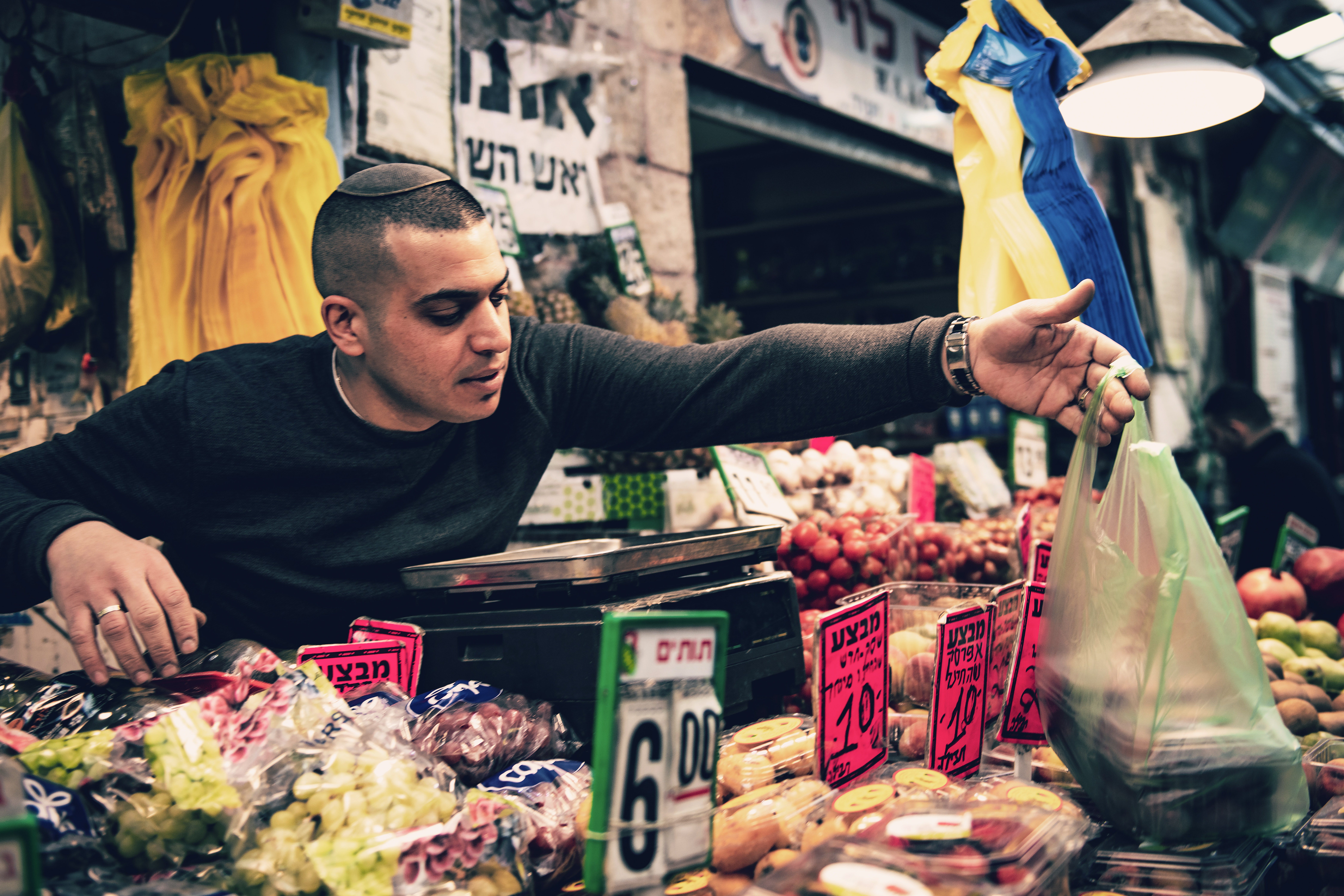
Despite being a high-income country, Israel has one of the highest rates of hunger and poverty in the developed world. Many citizens experience hunger and have relied on NGOs to provide food. They are also asking for the government to take further action, especially during the COVID-19 pandemic.
Israel is a small country located in the Middle East with an estimated population of 8.7 million people. Lebanon, Syria, Jordan and Egypt border it. Established as an independent country in 1948, its gross domestic product (GDP) has grown significantly over time. This has made Israel a high-income country.
Food Insecurity in Israel
Despite Israel having the categorization of a high-income country, about 25% of individuals living in Israel experience food insecurity, and up to 40% are living with extreme hunger. According to the Poverty and Social Gaps Annual Report by the National Insurance Institute of Israel, Israel has one of the highest rates of hunger in the developed world. In particular, food insecurity and poverty tend to disproportionately affect:
- Orthodox Jewish communities
- Arab communities
- Single mothers
- Elderly individuals
- Families
- Children
There is adequate food available in the country as a whole. However, there is a notable discrepancy between income levels and nutritious food available. The risk of hunger in Arab and Orthodox Jewish families attributes to potentially larger families and lower employment levels. For ultra-Orthodox Jews, 50% of men and 73% of women do not have employment. Additionally, more than 800,000 children were living in poverty as of 2016. This has resulted in almost one-third of Israeli children experiencing hunger on a regular basis.
The Response of the Israeli Government
In response to hunger in Israel, nonprofit organizations have taken the large responsibility to provide for people in the country. On the other hand, the response of the Israeli government in regard to this issue has left many dissatisfied.
In an interview with Channel 12 in Israel, Minister Tzachi Hanegbi made controversial remarks. He said people in Israel who claim to struggle with food insecurity are talking “nonsense” and are not actually starving. He has since apologized, stating that he intended to convey that “[his interviewers’] extreme and gross criticism of the government creates fear amongst the public, instead of hope,” and that “the government that I am part of works day and night to put Israel back on the track of a healthy and flourishing economy.” Hanegbi’s initial comments have caused public disbelief and outrage in Israel and around the world.
Response of NGOs
Recently, the COVID-19 pandemic has introduced new economic hardships that further complicate efforts to reduce inequality and provide adequate food. Many expect that a major food crisis will occur as a result of the pandemic. GDP in the country has fallen 1.7% in the first quarter of 2020, while it had previously been rising.
As a result, there has been an increasing reliance on NGOs. Leket Israel, the largest food rescue program in the country, fed over 175,000 people in need before the COVID-19 pandemic. In response to the pandemic and resulting economic situation, it began a new program that delivers food directly to homes. With this program, it sent over 700,000 meals to people, many of whom never needed food assistance before the pandemic.
Other NGOs like Latet and Mazon made significant impacts regarding combating hunger in Israel and providing food to lower-income citizens. Latet is a large NGO that fights food insecurity in Israel and is partnered with 180 other local organizations in the country. It provides monthly assistance to 60,000 families, according to its website.
Policies and Government Efforts
The amount of policies toward the reduction of poverty has increased by 3.4% in 2016 in comparison to the previous year. This demonstrates the importance of continued governmental support.
The Israeli Forum for Sustainable Nutrition has been campaigning for changes toward better nutrition, improved health and environmental sustainability. Some of its projects include creating a data center for public use about nutrition and the environment, counseling municipalities, advancing research and holding the government accountable for advertising misinformation about food and the environment. It holds annual conferences and has had over 60 professional seminars with government officials, policymakers, academic experts and others.
In 2017, there was an increase in the minimum wage. It went from NIS 5,000 per month at the beginning of the year to NIS 5,300 by the end. In addition, in 2016, 80% of households had employment. This has resulted in a reduction in poverty and hunger for elderly individuals, Arab communities and immigrants in Israel. However, since COVID-19, unemployment has again increased within a month from under 4% to nearly 25% in April 2020 and leaving more than 1 million people without jobs. While there is continual progress, the government still relies mostly on NGOs and third-party organizations. Overall, more change must occur to improve the issue of hunger in Israel and support a more balanced world.
– Sydney Bazilian
Photo: Unsplash

Dance Education in Favelas: Uplifting Brazil’s Most Marginalized
Favelas and Poverty
Given their marginalization, progress toward achieving socio-economic mobility and employment is far more difficult for children in favelas relative to children of wealthier neighborhoods. They are at a heightened risk of involvement in crime, such as the extensive drug trafficking occurring within these favelas. Child labor within drug operations is a widespread issue affecting homeless and/or orphaned minors living on the outskirts of Sao Paulo and Rio de Janeiro. Young girls are often swept into the sexual exploitation occurring within the gangs.
In order to combat the injustice and marginalization of the favelas’ youth, civil society groups have recently offered creative endeavors that have proven imperative to restoring hope and sparking change. Dance education in favelas brings Brazil’s impoverished children closer to a sense of purpose and self, by offering an option for physical activity off the streets. In particular, the separate favela dance projects Espaço Aberto and Na Ponta dos Pés have collectively taught thousands of previously disempowered children lessons of resilience and patience in order to progress toward brighter futures.
Espaço Aberto
Opened in 1998, the Rio favela dance school “Espaco Aberto,” meaning “open space,” has the primary mission of spreading joy and inspiring young children and adolescents with the opportunity to dance.
The school mainly teaches ballet, a style typically associated with wealth given its formalities and years of extensive training required to master the art.
The school’s co-founder and dance instructor, Yolanda Demetrio, seeks to unravel and transform disheartening favela stereotypes of indignity and permanent grievance. With professional dance instructors alongside her preaching messages of encouragement and incentive, the past 22 years have seen countless favela residents go on to follow Demetrio’s footsteps— eventually opening their own dance studios and improving their economic circumstances.
However, the school is not meant to lead students to only pursue dance careers, although that may be a feasible result. Rather, Espaco Aberto motivates a historically overlooked population to find the potential within themselves. For example, just two years into dance studies, a young student named Jeferson became inspired by the school’s value of goal-setting. His newfound confidence in his abilities emboldened him to re-enroll in formal school.
Na Ponta Dos Pés
The Na Ponta Dos Pés ballet dance project, translating to “Pointe Break,” is specifically geared towards favela girls in the impoverished Alemao complex located in northern Rio. Professional ballerina Tuany Nascimento began the project in 2012 when she recognized that the daily violence and hardships faced in favelas scar vulnerable children— and particularly girls.
Historically, the more than 60,000 Alemao residents have suffered from the aftermath of poor political decisions, further endangering the community. Prior to 2010, a lack of government authority in the area resulted in the control of drug cartels threatening the security of civilians. Recent years have seen the sudden presence of armed police units with the formal intent to reduce narco-political power, yet it has only contributed to community violence and disorder. As residents are killed by the police and the death toll continues to rise, the violence results in instability. Female victims are disproportionately affected.
Similar to Espaco Aberto, Nascimento also wishes to offer an alternative to those falling victim to, or choosing, a harmful lifestyle.
“People get into crime because they don’t have opportunities, but the ballet project gives them a chance not to fall into the wrong kind of life,” said Nascimento.
The project began in a rented basketball court, safe from outdoor violence. Since then, as more people come to realize the importance of dance education in favelas, the project has received a several thousand-dollar grant to build a proper dance studio. Dance education in favelas inspires girls to imagine their worlds as extending past illegal activity and including endless opportunities. In the vice documentary entitled Ballet and Bullets: Dancing Out of The Favelas, in which Nascimento and her students share their stories, one described her newfound hope and determination.
The student said, “Poor people don’t have a future? No. We’re a lot more than that… Not just because we’re ballet girls. You can do a plié, a grand écart, why can’t you do other things in your life as well?… A black woman can be a businesswoman.”
Overall Impacts of Dance
These two grassroots projects show how dance education can positively impact people living in favelas. Both dance studios emphasize patience, yet inevitable achievement. Newly found confidence in one’s dance capabilities, as in the cases of Jeferson from Espaco Aberto and the student from Na Ponta do Pés, can transform into one’s motivation to achieve improved living conditions through education and hard work.
– Breana Stanski
Photo: Pixabay
7 Facts about Sanitation in Equatorial Guinea
Equatorial Guinea is a country located on the western coast of Central Africa. Corruption in politics has culminated in a small elite group receiving money and success. Around 44% of the population still lives under the poverty line. Here are seven facts about sanitation in Equatorial Guinea.
7 Facts About Sanitation in Equatorial Guinea
Sanitation in Equatorial Guinea has improved tremendously throughout the years even if it seems like the country still has a long way to go. It has not helped that Equatorial Guinea’s government has not always been supportive of sanitation legislation. Thankfully, outside organizations like U.N.-Water and UNICEF are providing aid.
– Bailey Sparks
Photo: Flickr
An Examination of Healthcare in Belgium
Belgium, located in Western Europe, has a population of 11 million people. One of the smaller European countries, Belgium has one of the best healthcare systems in Europe, ranking in the top 10 European countries with the best healthcare for the past several years. Belgium also spends much of its GDP on healthcare, and only 2.4% of the population has reported an unmet need for medical care.
How it Works
All healthcare in Belgium is accessible through health insurance. A government-funded mandatory insurance scheme pays for the system and anyone who lives and works in Belgium has access to the country’s healthcare system. Public healthcare receives financing from both health insurance and social security contributions, which comes out of people’s salaries and goes to the state.
When someone is sick and in need of a doctor, they pay the medical fee after the appointment but receive a reimbursement of most of the money.
Health Status
As of 2019, the average life expectancy in Belgium was around 81 years. Social inequalities in the average life span are greater among men than women. For women, the average life span is 84 years; for men, it is 79 years. About 76% of Belgium residents reported being in either good health or very good health. Meanwhile, records determined that 20% of the population over 14 years old was in bad health.
Though Belgium does have a healthy populace, it is not without problems. As of 2018, 29% of Belgium residents over the age of 14 lived with chronic diseases. This number also increases with age: for example, 44% of the population over 74 years lived with a chronic disease. However, these diseases are preventable with solutions like promoting healthier lifestyles, preserving the environment and facilitating healthcare access. The two most common causes of death in Belgium are cardiovascular diseases and cancer, though both have decreased slightly over the past few years.
Who it Affects
Unfortunately, Belgium faces health inequalities, as upper-class individuals live almost around 20 years more than lower-class individuals. Vulnerable groups like low-income families, individuals with low levels of education, single parents, undocumented immigrants, the under-represented ethnic groups or unemployed individuals suffer from unmet needs, mainly due to financial issues or unawareness.
Though policies like the maximum-billing system and other schemes ensure some free medical help to lower-class individuals, some still have to forgo medical care when they need it, as out-of-pocket spending is fairly high in Belgium. This is especially the case for asylum seekers or undocumented migrants as there is a fear of others reporting them to authorities.
Another group that deserves special attention in healthcare is the elderly residents of Belgium who make up 19% of the total population. Because many of them require long-term care, the need for long-term care is growing at home and in institutions. The level of care that Belgium’s health insurance covers is dependent on the individual’s degree of dependency with daily activities and if they have any disorientation of sorts. In comparison to other countries, Belgium has well-developed nursing home care services and residential facilities, but there is a growing worry about affordability.
The Good News
Belgium is making major improvements. It is working hard to enhance not only its health system as a whole but also to better people’s health. The management of rising numbers of residents with chronic diseases is slowly improving as well. There is time to do even more to improve healthcare in Belgium.
– Katelyn Mendez
Photo: Unsplash
5 Projects Fighting Hunger in Tajikistan
5 Projects Fighting Hunger in Tajikistan
Through various technological and modernization developments, Feed the Future has had a huge success, including secure access to land and water, increased breastfeeding rates and the establishment of a pilot program to prevent and treat moderate acute malnutrition in children. One of the most notable accomplishments was the introduction of seedling technology that helped produce more than 1.5 million seedlings of improved produce, such as cucumbers, tomatoes and sweet peppers.
While hunger is still a very prominent issue throughout Tajikistan, the Tajik government and international organizations’ efforts have brought forth numerous improvements throughout the last 10 years. With continued support, Tajikistan has high hopes for an improved future.
– Heather Law
Photo: Flickr
Improving Healthcare in Malawi
Malawi is a landlocked country in Southern Africa with a population of over 18 million people. It also has one of the worst healthcare systems in the world, ranking at 185 out of 190 countries and having a life expectancy of about 64 years old. While Malawi is gradually improving its system, lowering death rates and increasing its life expectancy, healthcare in Malawi still faces serious issues.
Healthcare Structure
Malawi’s healthcare system has three sectors:
Major Contributions to a Struggling Healthcare System
Several factors contribute to a struggling healthcare system, but there are two major healthcare issues in Malawi to be aware of:
Solutions
While healthcare in Malawi is slowly progressing, poverty is still an issue that makes good healthcare a challenge to attain. Programs to educate future and current healthcare workers, proper resources and suitable facilities all require adequate funding. Fortunately, there are organizations like CHAM that are working towards providing Malawi with better healthcare with health-workers and accessible facilities.
CHAM is the largest NGO and healthcare practitioner trainer in Malawi. It emerged with the hope of bringing affordable and quality healthcare to hard-to-reach and rural areas. CHAM is a network of church-owned health facilities, hospitals and training colleges. It has over 175 healthcare facilities and 12 training hospitals where it has educated 80% of Malawi’s healthcare workforce, provided care for 37% of the Malawi health services and 73% of the health services in rural communities. CHAM’s health facilities also administered projects like family planning, HIV prevention programs and empowerment programs. In the future, the organization hopes to find ways to bring in more income so that it can continue to affordably help Malawi citizens, as well as expand its colleges to accept more healthcare trainees.
Although Malawi is receiving help and steadily improving, more can and needs to occur to help fund and implement effective healthcare in the country.
– Sophie Dan
Photo: Flickr
Poverty, Policy and Pandemic with Johan Swinnen
The Borgen Project has published this article and podcast episode, “Poverty, Policy and Pandemic with Johan Swinnen,” with permission from The World Food Program (WFP) USA. “Hacking Hunger” is the organization’s podcast that features stories of people around the world who are struggling with hunger and thought-provoking conversations with humanitarians who are working to solve it.
When it comes to ending global hunger, policy plays a powerful role. It shapes the operation and strategy of humanitarian organizations and influences their ability to make an impact. Smart policies enable WFP, for example, to reach even more people with the lifesaving support they need.
That’s why organizations like International Food Policy Research Institute – known as IFPRI – are critical to advancing the fight against hunger. IFPRI provides research-based policy solutions to sustainably reduce poverty and end hunger and malnutrition in developing countries. Its solutions have influenced government and NGO policies across the globe.
As COVID-19 threatens to increase rates of global hunger and poverty, IFPRI’s insights are more critical than ever as governments desperately seek to lessen the virus’ economic impact.
On today’s episode of Hacking Hunger, we caught up with Johan Swinnen, IFPRI’s director general, to get the inside scoop on his predictions of the virus’ impacts, challenges and potential effects, and solutions that might protect vulnerable people from it now and in the future.
Click the link below to listen to what Johan Swinnen’s predictions are regarding the pandemic.
World Food Program USA · Episode 47: Poverty, Policy and Pandemic with Johan Swinnen
Photo: Flickr
The Current State of Poverty in Togo
Poverty in Togo is a widespread issue. The nation is one of the world’s top five producers of phosphates, which are widely used in making fertilizers. However, Togo remains poor. Although Togo’s overall economy and GDP have improved in recent years, many worry that the rate of poverty in Togo is not declining fast enough. The disparity is especially notable in Togo’s agricultural sector, in which the majority of Togo’s population has employment. These issues leave many wondering, “What can be done to aid the people of Togo?”
Poverty in Rural Areas
Togo is a presidential republic in West Africa. Formerly known as French Togoland, Togo achieved its independence from France in 1960. A few years later, in 1967, General Gnassingbe Eyadema installed a military rule. After President Gnassingbe’s nearly four-decade-long rule, the military placed Faure Gnassignbe, the son of the former president, into office. Since then, Togo has been moving toward gradual reform of its democratic system. However, the Togolese’s frustration with the slow pace of this reform sometimes results in violent outbursts of political demonstrations.
According to the CIA World Factbook, 55.1% of Togo’s population lived below the poverty line in 2015. Rural poverty is especially concerning as more than half of Togo’s population resides in rural areas. In the World Bank’s estimation, the 2015 rate of poverty was worse for Togo’s rural areas, where 69% of the households lived below the poverty line.
These rural residents, the majority of whom are farmers, make up 65% of the Togolese workforce. Recognizing the vital role that the agricultural sector plays in Togo’s economy, many organizations and experts are focusing on revitalizing Togo’s agricultural sector. According to the Global Agriculture and Food Security Program (GAFSP), a multi-donor trust fund that provides food security in the world’s poorest countries, Togo’s food yields from agriculture have been consistently low.
The Link Between Rural Poverty and Agriculture
The yields of Togo’s major export crops, such as cotton, coffee and cocoa, have been declining for some time. In order to make up for the food deficit, Togo still relies on foreign imports for some basic food items. Upon closer inspection, industry experts stated that some of the barriers to agriculture improvement in rural Togo include:
To address Togo’s rural poverty, GAFSA and the World Bank implemented the Togo Agriculture Sector Support Project (PASA) in 2017. PASA, a $19 million project, aimed to improve Togo’s agricultural output and foster an institutional environment that can encourage agricultural investment. According to GAFSA’s report, PASA brought numerous changes to Togo’s agricultural sector. Under PASA, Togo’s rice yields increased by 30%, farm employment opportunities in rural areas for the youth rose and numerous coffee farms and cocoa farms underwent rehabilitation. PASA rehabilitated 17,174 hectares of coffee farms and 11,578 hectares of cocoa plantations by implementing improved planting materials and improving coffee and cocoa value chains. Reports determined that PASA has helped 877,191 Togolese citizens.
Poverty in Togo has a close relationship with the performance of Togo’s agricultural sector. As the greatest source of employment for Togolese workers, the improvement of Togo’s agricultural sector is paramount to ensure a more stable economic future for Togo. While Togo’s economic potential is becoming a reality through steady improvement, there is still a long road ahead for Togo. The Togolese government and many other international experts recognize the importance of bolstering the country’s economy through the improvement of the agricultural sector. Organizations such as the World Bank and GAFSA are already implementing measures to alleviate poverty in Togo.
Although there are still many improvements that need to occur in agriculture and maintaining political stability, Togo has the ability to lift itself from poverty in the near future.
– YongJin Yi
Photo: Flickr
The Fight for Quality Healthcare in Tanzania
The percentage of Tanzania’s population living on about $1.90 per day remains at 49.1% as of 2017, according to data from The World Bank. President Benjamin W Mkapa commented on the state of poverty in 2004 stating that ‘‘… the poor must be brought from the margins into the mainstream. The process must be inclusive. The weakest economies and communities need special and differentiated help.’’ President Mkapa shared his thoughts on including everyone in the process for universal aid and healthcare in Tanzania, which stretches from the cities to the rural agricultural communities. His words echoed the thousands of people living in extreme poverty where, like most other countries, their healthcare quality is dependent on wealth, status, location and transportation.
Effects of Poor Healthcare in the Poorest Communities
Masuma Mamdani and Maggie Bangser wrote a literary review in 2004 titled Poor People’s Experiences of Health Services in Tanzania, where they discussed the effects of poor quality of healthcare in Tanzania. Sexual and reproductive health was a major focus, especially with the implications it has for poor women in the region. ‘‘Many [poor women] cannot afford transport costs so they sell their food, borrow, use herbs or just wait to die,” a healthcare worker shared from Mpwapwa.
According to Mamdani and Bangser’s literary review, key barriers to the poor in this region include:
The government has written out and implemented a number of policies, but the issue of inaccessible healthcare for the poorest of the population is still prominent. Today, the United States is working in conjunction with the Tanzanian government to address a multitude of healthcare issues with USAID. For example, the strengthening of Tanzania’s own health system is imperative through supplies, more healthcare workers and supporting finances; but these efforts mostly concentrate within major cities and areas of high population density.
History of Healthcare Legislation
Since the East African country of Tanzania gained independence from Britain in 1961, there have been many ups and downs in the fight for healthcare for all citizens. The Arusha Declaration of 1967 moved towards the nationalization of public services, including medical, but ultimately failed due to economic decline. As the population rose and poverty levels increased through the years, especially in rural communities, even the numerous improvements in health services could barely keep up with the demand.
Healthcare in Tanzania today still does not receive enough funding and is nearly inaccessible outside of major cities. The funds directed towards the health sector have declined from 9.6% in 2014 to 7% in 2018, and the investments do not meet the estimated minimum requirement to guarantee basic health services to the population. There are a number of privatized health care options along with four main insurance programs available to the public, but even so, a large number of the population does not have insurance due to the high costs.
To combat this disparity, Tanzania enacted a Health Sector Strategic Plan from 2015-2020 to gain quality improvement in healthcare, provide equitable access to all and to achieve active community partnership. The Tanzanian government had implemented its fourth strategic plan, building on previously stated actions meaning to expand coverage of health insurance and extend quality health services to the poorer regions. For example, one of the core strategic objectives target the improvement of quality health services through ensuring essential services, a quality rating system, providing adequate staffing, performance management systems and more.
Independent Initiatives in Tanzania
Besides the government legislation that is currently in place and making changes, other independent NGO initiatives are making a difference for healthcare in Tanzania as well. An American initiative, Roads To Life, has dedicated itself to building and improving medical facilities in the Nkololo village, along with constructing roads and funding education. This nonprofit serves a primarily agricultural area with a population of 22,000, addressing the need for quality medical services outside of major cities and transport improvements between towns and regions. Roads To Life has also expanded and renewed the Songambele Health Center, which emerged in 1994. It can now treat up to 560 patients and has a new surgical center. After the addition of new operating suites which opened in 2016, there have been 149 surgical procedures. These new technologies and resources are vital to the health of Nkolo community members, who often had to go to the District Hospital for emergency procedures which was an hour away.
The combination of service and community makes all of the difference in healthcare in Tanzania. Influence from these discussed governmental and independent initiatives is still spreading throughout the country and there is still more work for the country to accomplish in terms of sexual and reproductive health. The efforts that Tanzania has put forth towards universal healthcare and providing quality medical services in more locations is a great push in the right direction to fight the effects of poverty in the poorest regions of this country.
– Savannah Gardner
Photo: Flickr
Hunger in Israel: NGO and Government Response
Despite being a high-income country, Israel has one of the highest rates of hunger and poverty in the developed world. Many citizens experience hunger and have relied on NGOs to provide food. They are also asking for the government to take further action, especially during the COVID-19 pandemic.
Israel is a small country located in the Middle East with an estimated population of 8.7 million people. Lebanon, Syria, Jordan and Egypt border it. Established as an independent country in 1948, its gross domestic product (GDP) has grown significantly over time. This has made Israel a high-income country.
Food Insecurity in Israel
Despite Israel having the categorization of a high-income country, about 25% of individuals living in Israel experience food insecurity, and up to 40% are living with extreme hunger. According to the Poverty and Social Gaps Annual Report by the National Insurance Institute of Israel, Israel has one of the highest rates of hunger in the developed world. In particular, food insecurity and poverty tend to disproportionately affect:
There is adequate food available in the country as a whole. However, there is a notable discrepancy between income levels and nutritious food available. The risk of hunger in Arab and Orthodox Jewish families attributes to potentially larger families and lower employment levels. For ultra-Orthodox Jews, 50% of men and 73% of women do not have employment. Additionally, more than 800,000 children were living in poverty as of 2016. This has resulted in almost one-third of Israeli children experiencing hunger on a regular basis.
The Response of the Israeli Government
In response to hunger in Israel, nonprofit organizations have taken the large responsibility to provide for people in the country. On the other hand, the response of the Israeli government in regard to this issue has left many dissatisfied.
In an interview with Channel 12 in Israel, Minister Tzachi Hanegbi made controversial remarks. He said people in Israel who claim to struggle with food insecurity are talking “nonsense” and are not actually starving. He has since apologized, stating that he intended to convey that “[his interviewers’] extreme and gross criticism of the government creates fear amongst the public, instead of hope,” and that “the government that I am part of works day and night to put Israel back on the track of a healthy and flourishing economy.” Hanegbi’s initial comments have caused public disbelief and outrage in Israel and around the world.
Response of NGOs
Recently, the COVID-19 pandemic has introduced new economic hardships that further complicate efforts to reduce inequality and provide adequate food. Many expect that a major food crisis will occur as a result of the pandemic. GDP in the country has fallen 1.7% in the first quarter of 2020, while it had previously been rising.
As a result, there has been an increasing reliance on NGOs. Leket Israel, the largest food rescue program in the country, fed over 175,000 people in need before the COVID-19 pandemic. In response to the pandemic and resulting economic situation, it began a new program that delivers food directly to homes. With this program, it sent over 700,000 meals to people, many of whom never needed food assistance before the pandemic.
Other NGOs like Latet and Mazon made significant impacts regarding combating hunger in Israel and providing food to lower-income citizens. Latet is a large NGO that fights food insecurity in Israel and is partnered with 180 other local organizations in the country. It provides monthly assistance to 60,000 families, according to its website.
Policies and Government Efforts
The amount of policies toward the reduction of poverty has increased by 3.4% in 2016 in comparison to the previous year. This demonstrates the importance of continued governmental support.
The Israeli Forum for Sustainable Nutrition has been campaigning for changes toward better nutrition, improved health and environmental sustainability. Some of its projects include creating a data center for public use about nutrition and the environment, counseling municipalities, advancing research and holding the government accountable for advertising misinformation about food and the environment. It holds annual conferences and has had over 60 professional seminars with government officials, policymakers, academic experts and others.
In 2017, there was an increase in the minimum wage. It went from NIS 5,000 per month at the beginning of the year to NIS 5,300 by the end. In addition, in 2016, 80% of households had employment. This has resulted in a reduction in poverty and hunger for elderly individuals, Arab communities and immigrants in Israel. However, since COVID-19, unemployment has again increased within a month from under 4% to nearly 25% in April 2020 and leaving more than 1 million people without jobs. While there is continual progress, the government still relies mostly on NGOs and third-party organizations. Overall, more change must occur to improve the issue of hunger in Israel and support a more balanced world.
– Sydney Bazilian
Photo: Unsplash
Organizations Improving Healthcare in Somalia
Many challenges come with being one of the poorest countries in the world. In Somalia, a country located on the Horn of Africa, garnering a quality healthcare system for everyone is a major struggle. With a population of over 12 million, the people of Somalia have one of the lowest life expectancies in the world. Grappling through years of civil war and natural disasters, it has been difficult to overcome widespread disease, malnutrition and an overall lack of healthcare resources. Thankfully, organizations have noticed the absence of a healthcare system and many efforts are going towards improving healthcare in Somalia.
United Nations Development Program
According to the United Nations Development Program (UNDP), 58% of Somalis are without healthcare. Recognizing this issue, the UNDP set the goal to have complete universal healthcare in Somalia by 2030. Since the COVID-19 global pandemic, the UNDP has realized how destructive a pandemic can be in all facets of life in a developing nation. In addition to the goals for universal healthcare, it aims to set up structures to strengthen resilience to any future disasters. The UNDP created a blueprint proposing a multi-step initiative to improve healthcare and ensure that it does not leave anyone behind. The program would provide basic healthcare consisting of two tiers of costs and services to choose from. However, the core service will involve the implementation of telemedicine. This will be an immense advancement, considering that most Somalis have to walk miles to get to their nearest healthcare facility.
The UNDP has also been addressing HIV/AIDS issues in the country since 2004. It has implemented investment programs totaling $5.4 million between 2005 and 2009. Its work includes creating knowledge and awareness programs, increasing testing for Somalis and lobbying for HIV/AIDS legislation. The impact of the program’s efforts is notable. As of 2019, there were approximately 11,000 children and adults living with HIV in Somalia in comparison to the approximate 22,810 in 2008.
For immediate attention to the fight against COVID-19, the UNDP is supporting an emergency call center that the Somali government runs. The UNDP contributed by offering transport to volunteers, office equipment and staff. Anyone needing advice on COVID-19 or feeling ill can simply call the center and find assistance from volunteers comprising of medical students, doctors and other health professionals. Additionally, if a patient has severe symptoms or is sick with underlying health conditions, an ambulance can transport them to their local hospital. The center helps roughly 8,000 people a day.
The World Health Organization (WHO)
The World Health Organization (WHO) pledged to assist health authorities in Somalia in increasing the number of healthcare workers and stabilizing primary healthcare services in the country. In September 2019, the organization assisted in launching the plans for universal health coverage (UHC) for the time period of 2019-2023. The WHO understands the importance of improving health systems in the country and hopes to develop powerful health systems to prevent future epidemics. Thus, the UHC initiative aims to give all Somali people improved protection from healthcare emergencies.
The WHO has declared maternal health one of its priorities and advocates for maternal health as a human right. About one in 20 women die during labor due to an overall lack of health resources, which gives Somalia one of the highest maternal mortality rates in the world. The WHO is bolstering investments in the issue, mobilizing health resources and strengthing healthcare systems to decrease maternal mortality rates.
UNICEF
UNICEF is also fighting to improve healthcare in Somalia. One focus has been to develop safe motherhood and child healthcare programs. The organization worked with Somali health authorities to provide the Essential Package of Health Services (EPHS). Predictions determine that these packages will aid 4.2 million Somalis. The EPHS structure is an extensive range of free health services that will help establish a medical standard for the country. The goal is to provide essential medicines, supplies and equipment as well as train and expand human resources. The program includes aid for neonatal and reproductive health, child immunizations and treatment of widespread diseases like HIV.
Somalia has one of the highest child mortality rates in the world. Due to the lack of sanitation, medical resources and vaccinations, one in seven children will not make it past age 5. Since 1990, deaths among children under 5 have reduced by half. Deaths have decreased thanks to the vaccine initiative that UNICEF and WHO launched in 2013. The program consisted of 1.3 million doses of an innovative “five-in-one” vaccine for the prevention of the top fatal childhood illnesses along with a parental awareness campaign.
The Integrated Community Case Management (ICCM) that UNICEF and WHO organized has also improved healthcare systems. This community-based approach brings experienced and supervised health professionals to the area to help decrease the common childhood illnesses contributing to the high child mortality rate. The system plans to continue developing a solid staff of health leaders and administrators to manage future health disasters.
Moving Forward
Some organizations are making great progress in improving healthcare in Somalia. Since the efforts to create an overall healthcare infrastructure, the country has seen improvements in how it controls widespread diseases. In 2004, the average life expectancy was 50, but as of 2018, it was 55. Life expectancy should increase as chronic malnutrition, infant mortality rates and the spread of preventable diseases decrease with improved healthcare systems. Thanks to these resolutions, overall health and wellbeing in Somalia should be on the horizon.
– Tara Hudson
Photo: Pixabay