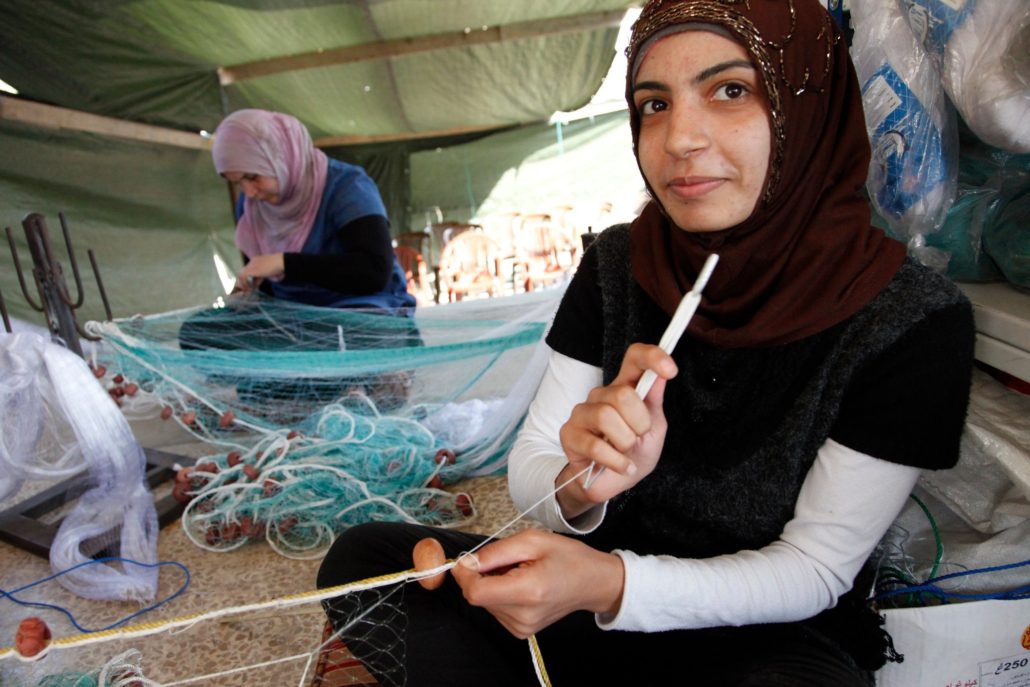
For nearly a decade, the Syrian Civil War has left the Middle Eastern nation desolate, impugned with violence, and, more importantly, divided. However, when it comes to mainstream coverage on the Civil War’s effects, women are not usually in the spotlight, at least until recently. With the Syrian Civil War coming to a close, rebuilding and drafting a new constitution has commenced. This transition period is giving nonprofits and international organizations a unique opportunity to elevate women’s rights in Syria.
Overview
One can define women’s rights as women having the same legal protections and economic opportunities as men, along with an equal footing in the rebuilding process. Essentially women in Syria should have fair access to nonprofit and IGO resources as well as food, water and medicine.
Currently, Syrian women suffer from food insecurity, loss of education, lack access to clean water and medical supplies and gender-based violence at a disproportionately higher rate than men. In fact, in 69% of communities, early and unwanted marriage is a prevalent concern.
Moreover, before and during the war, societal roles of marriage and domestic abuse escalated dramatically. One report noted that “even though the state endowed women with rights to education, employment, etc., society ignored those rights. They saw society as a mechanism that reproduces the privileged position of men through customs and traditions.”
Since marriage is a cultural safeguard against rape and kidnappings, more women entered marriages only to become victims of abuse. Thus it is vital that nonprofits, International organizations and the global community as a whole, emphasize women’s rights in the initial rebuilding phases.
Women Now for Development
While the past decade presented several obstacles for obtaining women’s rights in Syria, local actors, nonprofits and international organizations are paving a solid foundation for the future.
In December 2018, when the U.S. announced its departure from the Syrian Civil War, the international organization Women Now for Development (otherwise known as Women Now) kicked-started a series of humanitarian centers in non-state controlled regions in Syria.
These centers served to provide educational skills and medical assistance to Syrian women, particularly those fleeing violence. Additionally, Women Now’s help centers assisted with:
- Fighting illiteracy, especially among women and young people.
- Empowering women economically through training and providing them with support to create income-generating activities.
- Providing education through classes in technology, communications and foreign languages.
- Supporting women’s access to society and building civic engagement.
- Providing children’s education and protection.
What makes Women Now different from other international organizations is that rather than excluding Syrian Women from the development conversation, it is emphasizing their voices and perspectives. As a result, it is allowing for a more effective and streamlined localization effort.
UN Women
Another instance of international organizations assisting women’s rights is U.N. Women. For the past two years, the group helped women participate in a cash-for-work program that taught the women skills while giving them a stable revenue stream. Additionally, the U.N. Women’s project in Syria created safe-spaces and skill training seminars, allowing women to escape abuse both due to the war and normalized oppression in Syrian society.
Regional analysts predict that with a new wave of protests and emphasis on failed human rights campaigns, Syria will either fail as a state or work within a globalized system to strive for a better future.
The Middle East Women’s Initiative has lead the battel for female representation in the new Syrian government so far, both in the Syrian Democratic Forces’ ability to win influence over the people and in Syrian Women’s international representation. The Initiative noted in a recent index how “Women in the Autonomous Administration and the Syrian Democratic Forces hold senior leadership roles across policy functions and institutions. Ilham Ahmed, the co-chair of the Syrian Democratic Council, acts as the region’s de facto head of state, speaking before the U.S. Congress and meeting U.S. President Donald Trump last year. Further, the SDF operation to liberate Raqqa from ISIS control was led by a woman commander, Rojda Felat.”
Reforms for the Future
In order for Syria to build a foundation that genuinely upholds women’s rights, it needs to introduce and expand on new policies. A highly recommended reform would be to restore compliance to CEDAW laws regarding discrimination against women.
While Syria signed onto CEDAW, an international framework against female discrimination, it conveniently left out several key provisions. In the transition, Syrian government officials must consider re-instating said provisions to grant women a stronger foundation of civil liberties and elevated socio-economic status.
Another critical step is to increase funding for feminist nonprofits. Under the current status quo, feminist nonprofits are quintessential to providing women with protection and critical resources.
“This[assisting women in Syria] was difficult without proper funding. Women Now was only able to compensate staff for their work with a minimum wage due to feminist organizations’ funding, who understood the importance of care to staff working in difficult circumstances. When centers had to shut down, and programs could not be delivered, the remote management team also lost funding for their salaries.”
Finally, both regional and global actors must pursue international diplomatic coordination. As stated previously, military conflict disproportionately impacts women. However, international and regionally based specialized committees are already making progress on de-escalating violence and creating safety mandates. Thus, increased diplomatic coordination should be a primary priority.
While many would call Syria a failed state and lost cause for any form of human rights, past and current reforms are starting to paint a different narrative. Now it is up to the rest of the world to decide whether they are willing to support said vision.
– Juliette Reyes
Photo: Flickr

Domestic Violence in Morocco: The Fight to Protect Women
In Morocco, more than 50% of women have experienced violence. Among these women, only about 28% have sought help from others regarding their abusive environment. There is a new law put in place to criminalize violent actions against women. However, the government still needs to address several issues to protect women effectively from domestic violence in Morocco.
Laws to Protect Women Against Domestic Violence
The new law passed in 2018 outlaws some form of violent actions against partners and allows authorities to step into domestic affairs if it is necessary. This law spreads awareness and provides prevention measures. Abused women can file cases to charge abusive partners or family members. However, the law does not clarify what domestic violence is nor does it explicitly make marital rape a crime. Moreover, the law does not financially support victims or survivors of violence or any shelters for those who need housing after escaping from an abusive environment. The law requires police to be able to help abused women. However, they did not record statements of victims and made them go back to their partners in some cases. The law failed to create a system that checks if the authorities carry out their duties to protect the rights of abused women.
Vulnerable Women and Poverty
Poor women do not have access to education. As a result, they have to be financially dependent on their partners because they cannot find a job. These women tend to receive violence from their partner more passively than those who have jobs. Lack of education and jobs makes women vulnerable to abusive relationships because they feel no power to defend their rights and interests. Because of a lack of access to stable housing after escaping from an abusive situation, women are often forced to return to their abusive partners. Victims file criminal cases against their partners, but most of them drop cases because of the pressure from family or financial reasons. In the interview by UNFPA, Khadija tells her struggle about being financially dependent on her family after getting divorced from the abusive husband. She struggled with finding a job because of a lack of education.
Nongovernmental Organizations Help Abused Women
Several institutions and shelters exist in Morocco to help survivors of domestic violence. The Multi-sectoral Joint Programme is carried out by 13 national groups and more than 50 nongovernmental organizations. It provides legal and economic support for abused women. By 2010, they had 52 counseling centers in Morocco. Additionally, Fais entendre ta voix (Make Your Voice Heard) is a group working to empower women in Morocco. It offers legal help for women to defend themselves.
Effects of COVID-19 on the Victims
The COVID-19 lockdown prohibits individuals from going out without authorization. As a result, abused women cannot seek help. They have no choice but to stay at home where they face abuse. The number of calls to the hotline from abused women is about twice to three times more than before. After the efforts made by advocates, the authority made it possible to file domestic violence cases through phone calls and the Internet. This makes it easier for women who cannot go out to file cases. Poverty also plays a significant role in preventing abused women from seeking help because they do not have access to phones or technology. Therefore, the new tool to file complaints by phone and online help some victims. However, the COVID-19 lockdown still leaves impoverished women vulnerable.
The new law passed in 2018 is a big step to help vulnerable women in Morocco. Financial support and education for women can help to empower women more. Being financially dependent on husbands or partners makes it difficult for women to seek help or escape from an abusive partner. In the survey, more than 60% of men showed the possession of beliefs that women need to endure violence to keep family together. This shows the need to change social beliefs as well.
– Sayaka Ojima
Photo: Pixabay
Rethinking Development in Situations of Fragility, Conflict and Violence
Fragility, conflict and violence (FCV) threaten to crumble hard-won development achievements in developing countries around the world. The World Bank is transitioning to an FCV strategy that can help maintain development progress amidst conflict through prevention, engagement, transitional assistance and mitigation techniques.
Effects of FCV on Development
Situations of FCV have risen significantly in the past 30 years. The number has grown from approximately 40 million forcibly displaced people worldwide in 1990 to more than 79.5 million people at the end of 2019. FCV has devastated countries’ economies and left millions in poverty, while threatening to crumble hard-won development achievements. A World Bank report predicted that in the next decade, two-thirds of the world’s extreme poor will reside in countries that fragility, conflict and violence plague. Economies that fragility and conflict burden often have persisting poverty rates of over 40%, while countries that stabilized in the past decade have dropped their poverty rates by more than half.
About 20% of people living in situations of FCV experience educational, financial and infrastructure losses. Human capital development, a pivotal component of economic growth and poverty reduction also tend to decrease in conflict settings, as the health, education and skills of an entire population get put on hold. Human capital losses from fragility and conflict can decrease lifetime productivity and earnings. As a result, it leaves the youth population at a disadvantage even conflicts end.
The “New” Humanitarian Aid
Aid to situations of fragility, conflict and violence has traditionally focused on humanitarian interventions to save lives and fulfill basic needs, putting development planning aside until the restoration of peace. Although short-term humanitarian aid is crucial, situations of conflict have become increasingly protracted. This dilemma has stretched the operational capacity of U.N. agencies and non-governmental organizations (NGOs), designed to provide short-term humanitarian assistance. However, the need for long-term solutions is crucial. The World Bank has concluded that securing peace is mandatory for extreme poverty eradication, and is rethinking the way it approaches development in settings of FCV as a result. In a five-year strategy, the Bank aims to assist countries before, during and after situations of FCV through four pillars of engagement.
4 Pillars of Engagement
The World Bank’s new strategy is redefining the way to approach development in situations of fragility, conflict and violence. Through prevention, engagement, transitional assistance and mitigation, The World Bank is helping FCV communities prepare for a more peaceful and prosperous future.
– Claire Brenner
Photo: Flickr
Online Platform Helping Refugees Find Answers
In 2015, social entrepreneur Cornelia Röper saw a need for a platform that would help newly settled refugees with questions about employment opportunities, health, education and asylum. Röper’s experience working with a collaborative workshop for refugees in Germany made it clear to her that more work remained to help them. This was how the concept for Wefugees, an online platform helping refugees find answers to their questions, came into being.
Global Displacement Is High
According to the U.N. Refugee Agency, global displacement is higher than ever before. By December 2018, around 70.8 million people had been displaced from their homes. Violence, human rights violations and wars can all cause people to migrate. Though the number of refugees and migrants arriving in Europe has decreased since 2015, 141,472 people arrived in Europe in 2018 alone. The death rate for those trying to reach Europe on the Mediterranean has increased to more than 1,000 people in 2019. Almost 33% of worldwide refugees come from Syria. Another 33% of the global refugee population hails from Afghanistan, South Sudan, Myanmar and Somalia.
Children Seeking Asylum
Children and young people younger than age 18 make up 50% of the worldwide refugee population. Of these children, some 110,000 are separated from their families. In 2018, 27,600 children sought asylum in countries all over the world. As a result of this trend, 3.7 million children are currently not attending school, due to displacement.
Integrating Refugees into Society
The Wefugees platform addresses these issues by helping refugees in Röper’s native Germany become visible and successful at integrating into their new society. The interactive platform offers a safe place where displaced persons can ask specific questions, and volunteers can provide the answers.
Röper has been working full-time on these issues since February 2016. She was then joined by Wefugees co-founder Henriette Schmidt. Röper and Schmidt feel that refugees will be able to integrate into a new, unfamiliar society more effectively if they can solve their problems independently. By helping refugees find answers, Wefugees works to pass along information so that displaced persons can help themselves (with the aid of volunteers). The goal is for refugees to start their new lives on their own. Consequently, this online platform helping refugees relieves the pressure on conventional aid programs as well.
From Visas to Scholarships
The Wefugees platform addresses questions about problems such as obtaining asylum, traveling between countries, establishing residency in various countries and applying for citizenship. Also, this online platform is helping refugees with concerns about visa issues, relocation and the deportation process. Additionally, Wefugees helps refugees find answers to queries about power of attorney, international drivers’ licenses, housing markets, cultural activities and scholarships for students. The information exchange assists in the goal of helping refugees find answers to persistent problems. For instance — finding work, legal advice, healthcare, education and housing.
Changing the Future for Refugees
Word about Wefugees is growing. In 2018, Röper was included in Forbes’ list of “30 under 30 Europe: Social Entrepreneurs.” She has also received the Gates Foundation Changemaker Award. The online platform that Röper started is the world’s largest for refugee topics, with more than 8,000 users per month. More than 20,000 people have used the site, which continues the important work of helping refugees find the answers to improve their lives.
– Sarah Betuel
Photo: Flickr
Efforts to Protect Marine Biodiversity in Mexico
Protected Marine Areas
According to the U.N., Mexico continues to improve its protection of key marine biodiversity areas. The country is currently on track to achieve this critical component in the overall fight for protecting life below water. The Nature Conservancy (TNC) works in partnership with other NGOs and the Mexican government to protect marine biodiversity. TNC’s main concern is the 700-mile long Mesoamerican Reef, the largest barrier reef in the Western Hemisphere. With encouragement from TNC and other NGOs, the Mexican government now designates about 25% of its marine areas as protected areas (MPAs). This includes the Revillagigedo Archipelago National Park, which encompasses 34 million acres and is home to hundreds of aquatic species. MPAs and coral reef conservation are crucial measures for protecting marine biodiversity in Mexico.
Ocean Health Index: Clean Waters Score
Significant challenges remain in maintaining clean waters. Mexico has a score of 64.43 for keeping “chemicals, excessive nutrients (eutrophication), human pathogens and trash” out of its waters. The Mexican organization Villa Duendes has taken a unique approach toward encouraging people to clean up their local waters. They offer free nights in their sustainable domes for anyone who brings five garbage bags of plastic from Mexican beaches/waters. Villa Duendes also operates the Mar Amor Project, which partners with local fishing companies, environmental foundations, governments and communities to collect plastic waste from the ocean and upcycle it for re-use.
Fish Caught from Overexploited Stocks
The SDG report declares this indicator to be in a better position than the clean waters score, but the score is decreasing as of the latest calculation. The most recent estimate finds that almost 35% of fish caught in Mexican waters are from species that are overexploited or collapsed. The ocean conservation organization Oceana criticizes mishandling by Mexico’s National Fisheries Institute and alleges corruption. Oceana warns that sharks, red snapper, bluefin tuna, grouper and octopus are endangered due to continued overfishing. Less marine biodiversity in Mexico could not only cripple aquatic ecosystems but also local economies reliant on fishing.
Fish Caught by Trawling
Trawling is a fishing method in which fishermen drag nets along the seafloor to catch a species of fish en masse. This technique does incredible damage to marine habitats, particularly coral reefs. It also compounds problems related to overfishing by indiscriminately trapping whatever species happens to be in the net’s path. These bycatch (unwanted fish that are inadvertently netted) are often thrown back dead or dying into the ocean. Fortunately, the SDG’s latest estimates put Mexico on track to effectively eliminate trawling, although challenges do remain.
Marine Biodiversity Threats in Imports
This indicator determines whether or not marine biodiversity in Mexico is being harmed by mass importation. Developed nations with the capacity to import a variety of marine goods generally receive poor scores in this category. For example, seafood-loving Japan is one of the worst offenders in the world when it comes to overfishing. Japan’s now depleted fish stocks are nowhere near enough to satisfy the insatiable seafood appetite of its people. Thus, Japan has to import huge quantities of fish, resulting in a low score for marine biodiversity threats embodied in imports. When it comes to imports that threaten marine biodiversity in Mexico, the nation is currently at a level of sustainable development. This indicator is a major boost to Mexico’s SDG 14 score.
The Mexican government recognizes the threat to its oceans and is taking steps in conjunction with NGOs, fisheries and local communities to protect marine life. While Mexico has much work to do, its efforts to protect its oceans and life below water are admirable. Clean waters are one of the areas where Mexico has the most work to do toward achieving SDG 14. However, if the Mexican people can follow the example they set in protecting key marine biodiversity sites, then there is real hope that the country can continue on its path to SDG 14. Organizations like the Nature Conservancy, Villa Duendes and Oceana are among the catalysts striving to protect the oceans and its inhabitants.
– Spencer Jacobs
Photo: Flickr
Innovations in Poverty Eradication in Switzerland
The Central European nation, known as Switzerland, may have a reputation for being a country full of bankers while holding nearly the highest GDP per capita. However, an ignored (and perhaps somewhat surprising) problem about the country is poverty. Though Switzerland has a relatively generous social benefit program, in addition to great schooling — those who do not quite fit the seemingly “well off” stereotype end up struggling. Moreover, for these people, the country’s very high cost of living exacerbates the problem. Innovations in poverty eradication in Switzerland, both public and private, have done solid work to help remedy the complex problem of poverty, to a certain extent.
Swiss Solidarity
One of the private aid organizations, which are currently influential in Switzerland, is “Swiss Solidarity.” This private organization is not only crucial in helping Swiss citizens who fall into poverty, but also citizens of other nations, abroad. One of the key examples of how this innovative, private aid organization operates is through direct monetary assistance to its citizens.
Swiss Solidarity has a program titled, “Severe Weather Assistance Program” that directs funds to disadvantaged individuals within Swiss society affected by severe weather. This fund for natural disasters is vital in creating a strong social safety net that stops people from going into unbridled bankruptcy — if and when disaster strikes.
In addition to their specific programs, Swiss Solidarity partners with many other organizations that attempt to fight poverty and its downstream effects. Swiss Solidarity officially partners with 26 NGOs, including Save the Children Switzerland, SolidarMED, Swiss Red Cross and Nouvelle Planète, among others. This cooperation between organizations helps to maximize the effectiveness of their outreach.
Switzerland’s Successful Programs and Policies
Though Switzerland does not have a generous welfare state, like some other Western European countries and the United States, Switzerland leverages the power of prudent policy decisions to reduce poverty within the country. One of the key policy decisions that Switzerland has implemented is called a “social insurance” program. In Switzerland, every business and citizen pays into this program. The program covers things such as sickness, disability and other tragedies that might put people out of work. Alternatively, in other nations, disability or sickness may plunge people into poverty without much hope for relief.
Another of the key innovations promoting poverty eradication in Switzerland is its brilliant foresight concerning public policy. Switzerland actively tries to write legislation that preemptively addresses the roots of poverty — rather than trying to focus on alleviating at the back end, when millions of lives already experienced despair. Also, Switzerland places a very high priority level on education and makes sure that each child has access to quality education. This, in turn, serves to point them toward a field in which they can work and support themselves.
These are just two examples of how both private and public industries can evolve to help the poor in Switzerland. Specifically, Switzerland’s culture of shared responsibility and relative cosmopolitanism helps private organizations thrive. Moreover, foresight and intelligent planning make public governance work best for all of the people. Both of these factors are innovations in poverty eradication in Switzerland that also help increase overall well-being within the country.
– Zak Schneider
Photo: Wikimedia Commons
Technology Confronts Domestic Abuse in South Africa
Statistics about Domestic Abuse in South Africa
South Africa has the “highest statistics of gender-based violence in the world, including rape and domestic violence.” Domestic violence incidents were scarcely reported before the last three decades because it was considered a private affair to be sorted out among households. However, available data affirms the severity of domestic abuse in South Africa. A 1998 study by the South African Medical Council revealed that 50% out of almost 1,400 men “physically abused their female partners at their homes.”
The World Health Organization found that “60,000 women and children were victims of domestic abuse in South Africa” in 2012. On average, women in South Africa who face abuse are usually unemployed and have an almost non-existent educational background. Moreover, the same study found that the women who were victims of violent relationships were usually from rural areas. The latter piece of information is important because most help-centers or other valuable resources for abuse victims in South Africa are located in urban areas. With Microsoft’s new app, the goal is to disseminate the necessary resources and information regarding abuse to those victims who live outside of South African cities.
Domestic Abuse: The Second Pandemic
As the coronavirus runs rampant across the globe, South Africa faces a second pandemic: a massive increase in domestic violence. Following the country’s lockdown procedure in March, South Africa’s national helpline for victims doubled its usual volume, putting the number of calls from afflicted women and children over 120,000. With fewer places to seek refuge during the lockdown, women and children facing domestic violence are trapped at home. The Jones Safe House is a non-profit shelter group for abuse victims in South Africa. It has been overwhelmed by the increase in abuse cases. Every day they try to make room for another victim who managed to escape from his or her violent residence.
Microsoft’s Hackathon Against Domestic Violence
Microsoft’s Safe@Home hackathon will run from September 22 to October 19. The objective is to create apps that help those who are in abusive relationships or face any form of gender-based violence. The organization will account for South Africa’s gender-based digital divide, which leaves many women with less access to certain technologies. Namely, the hackathon has a list of considerations that developers need to keep in mind:
Also, Microsoft has outlined some possible directions app developers can take, which include assistance, empowerment and recovery. At the end of the hackathon, the top three teams of developers will win monetary prizes. Additionally, Microsoft will grant the first-place team a contract in order to collaborate for the app’s further development.
The coronavirus pandemic has worsened the plight of South African abuse victims, but people have not given up hope. Those facing domestic abuse in South Africa have allies who will be working tirelessly toward virtual solutions. And by the end of the year, one might find an app online that can save thousands of lives. Microsoft’s initiative to develop an app-based solution to domestic violence is a step in the right direction, and their actions will hopefully spur other corporations to get involved.
– Maxwell Karibian
Photo: Flickr
USAID in Indonesia Helps Small Farmers
Agustinus Daka, Indonesian Small Farmer of Vanilla
Agustinus Daka is a hardworking vanilla farmer from a village in the Papua province, the most impoverished region in Indonesia. He exemplifies his dedication to farming the labor-intensive vanilla crop by pollinating each vanilla orchid by hand since the crop has no natural pollinator in Indonesia. Daka is a great example of how USAID In Indonesia helps small farmers. Due to his partnership with USAID, Daka doubled his income over two short years.
This increase in revenue has allowed Daka to afford a better life for his family including access to better living conditions, education and healthcare. However, Daka does not want to stop at improving only the lives of his family. In a province where most farmers are only capable of subsistence farming– growing only enough to provide for their families – Daka’s dream for his village is to “move beyond subsistence.” He has steadily begun to introduce more of his fellow farmers to the partnership program.
Improving Poverty Statistic in Indonesia
Despite successful democratic and economic improvements, approximately 25.1 million people in Indonesia are living in poverty and around 20.6% of the population is at constant risk of falling below the poverty line. Although these numbers may look grim, they are remarkable results of successful poverty reduction across the nation. Over the past two decades, Indonesia has cut its poverty rate by more than half, gradually improving from 23.4% in 1999 to only 9.4% in 2019. In the past five years, Indonesia has seen its economic growth improve at a rate exceeding 5% each year, demonstrating the success of USAID in Indonesia.
Economic Opportunity in Both Indonesia and the U.S.
USAID and the National Cooperative Businesses Association (NCBA) established Cooperative Business International (CBI) Global in 1984. The company based in Ohio links spice farmers all over the world to over 160 partner companies in 40 countries. PT AgriSpice Indonesia is the branch of CBI Global that works with USAID to help more than 15,000 Indonesian farmers facilitate trade with companies across the globe. The company exports about $150 million in spices annually.
More importantly, PT AgriSpice works with farmers to teach valuable techniques for cultivating larger, more sustainable farms. The connection to the global market allows farmers to secure greater profits and provides approximately 400 to 700 new factory jobs with about 90% of them going to women. New job opportunities reduce poverty rates and the economy of Indonesia, making it more attractive to U.S. businesses.
These potential partnerships with U.S. companies are also mutually beneficial. The equipment used in these new factories is imported from the U.S. With more factories and products, more trade occurs between Indonesia and the U.S., requiring more jobs to be created in both countries, and simultaneously stimulating their economies.
Agustinus Daka’s vanilla is now in grocery stores across the U.S. McCormick, the U.S. top spice seller and long time partner of USAID in Indonesia, uses vanilla sourced from Indonesia in its products. It’s a long time, mutually beneficial partnership.
The Measure of Support from USAID in Indonesia
Through the support of USAID programs and partner companies, Indonesia has now grown to be the second-largest producer of vanilla in the world, the world’s number one exporter of nutmeg and the number one exporter of cloves to the U.S. USAID’s intends to continue fostering a healthy business environment for Indonesian producers to access the global market and conduct mutually beneficial trade with the U.S. This USAID-led program in Indonesia is a part of Feed the Future, the U.S. government’s initiative to fight global hunger and promote food security in partner countries across the world.
– Hanna Rowell
Photo: Flickr
Improving Women’s Rights in Syria
For nearly a decade, the Syrian Civil War has left the Middle Eastern nation desolate, impugned with violence, and, more importantly, divided. However, when it comes to mainstream coverage on the Civil War’s effects, women are not usually in the spotlight, at least until recently. With the Syrian Civil War coming to a close, rebuilding and drafting a new constitution has commenced. This transition period is giving nonprofits and international organizations a unique opportunity to elevate women’s rights in Syria.
Overview
One can define women’s rights as women having the same legal protections and economic opportunities as men, along with an equal footing in the rebuilding process. Essentially women in Syria should have fair access to nonprofit and IGO resources as well as food, water and medicine.
Currently, Syrian women suffer from food insecurity, loss of education, lack access to clean water and medical supplies and gender-based violence at a disproportionately higher rate than men. In fact, in 69% of communities, early and unwanted marriage is a prevalent concern.
Moreover, before and during the war, societal roles of marriage and domestic abuse escalated dramatically. One report noted that “even though the state endowed women with rights to education, employment, etc., society ignored those rights. They saw society as a mechanism that reproduces the privileged position of men through customs and traditions.”
Since marriage is a cultural safeguard against rape and kidnappings, more women entered marriages only to become victims of abuse. Thus it is vital that nonprofits, International organizations and the global community as a whole, emphasize women’s rights in the initial rebuilding phases.
Women Now for Development
While the past decade presented several obstacles for obtaining women’s rights in Syria, local actors, nonprofits and international organizations are paving a solid foundation for the future.
In December 2018, when the U.S. announced its departure from the Syrian Civil War, the international organization Women Now for Development (otherwise known as Women Now) kicked-started a series of humanitarian centers in non-state controlled regions in Syria.
These centers served to provide educational skills and medical assistance to Syrian women, particularly those fleeing violence. Additionally, Women Now’s help centers assisted with:
What makes Women Now different from other international organizations is that rather than excluding Syrian Women from the development conversation, it is emphasizing their voices and perspectives. As a result, it is allowing for a more effective and streamlined localization effort.
UN Women
Another instance of international organizations assisting women’s rights is U.N. Women. For the past two years, the group helped women participate in a cash-for-work program that taught the women skills while giving them a stable revenue stream. Additionally, the U.N. Women’s project in Syria created safe-spaces and skill training seminars, allowing women to escape abuse both due to the war and normalized oppression in Syrian society.
Regional analysts predict that with a new wave of protests and emphasis on failed human rights campaigns, Syria will either fail as a state or work within a globalized system to strive for a better future.
The Middle East Women’s Initiative has lead the battel for female representation in the new Syrian government so far, both in the Syrian Democratic Forces’ ability to win influence over the people and in Syrian Women’s international representation. The Initiative noted in a recent index how “Women in the Autonomous Administration and the Syrian Democratic Forces hold senior leadership roles across policy functions and institutions. Ilham Ahmed, the co-chair of the Syrian Democratic Council, acts as the region’s de facto head of state, speaking before the U.S. Congress and meeting U.S. President Donald Trump last year. Further, the SDF operation to liberate Raqqa from ISIS control was led by a woman commander, Rojda Felat.”
Reforms for the Future
In order for Syria to build a foundation that genuinely upholds women’s rights, it needs to introduce and expand on new policies. A highly recommended reform would be to restore compliance to CEDAW laws regarding discrimination against women.
While Syria signed onto CEDAW, an international framework against female discrimination, it conveniently left out several key provisions. In the transition, Syrian government officials must consider re-instating said provisions to grant women a stronger foundation of civil liberties and elevated socio-economic status.
Another critical step is to increase funding for feminist nonprofits. Under the current status quo, feminist nonprofits are quintessential to providing women with protection and critical resources.
“This[assisting women in Syria] was difficult without proper funding. Women Now was only able to compensate staff for their work with a minimum wage due to feminist organizations’ funding, who understood the importance of care to staff working in difficult circumstances. When centers had to shut down, and programs could not be delivered, the remote management team also lost funding for their salaries.”
Finally, both regional and global actors must pursue international diplomatic coordination. As stated previously, military conflict disproportionately impacts women. However, international and regionally based specialized committees are already making progress on de-escalating violence and creating safety mandates. Thus, increased diplomatic coordination should be a primary priority.
While many would call Syria a failed state and lost cause for any form of human rights, past and current reforms are starting to paint a different narrative. Now it is up to the rest of the world to decide whether they are willing to support said vision.
– Juliette Reyes
Photo: Flickr
How Temporary Basic Income Could Relieve COVID-19 Global Poverty
A recent United Nations Development Programme (UNDP) report advises that temporary basic income in 132 of the world’s low and middle-income countries could curb the spread of the new coronavirus and reduce the pandemic’s massive, adverse effects on global poverty.
Those Hardest Hit: Low and Middle-Income Countries
Co-author of the report, Eduardo Ortiz-Juarez, explained in a blog post that low and middle-income countries are more vulnerable to the economic effects of COVID-19 on the workforce. This is due to a few significant reasons, e.g., 80% of workers in low-income countries work in jobs that cannot adjust to accommodating lockdown procedures. Furthermore, 70% work in the informal sector — only 14% of which have access to employment-based, social protection programs. Compounding these vulnerabilities is the existing high level of poverty in low and middle-income countries. All of these variables considered, low and middle-income countries have taken disproportionate losses in the face of the pandemic and will struggle to rebuild.
Temporary Basic Income: A Solution
The solution that the UNDP proposes — temporary basic income: an unconditional emergency aid that is an “urgent, fair and feasible way of stopping people falling into poverty or further impoverishment as a result of the pandemic.” UNICEF reported that direct cash transfers, how temporary basic income would be delivered, are among the most effective poverty-reduction methods. The basic income recommended by the UNDP would affect nearly 2 billion people around the globe, in 132 countries. Most of these nations are in South Asia, sub-Saharan Africa, East Asia and the Pacific. The basic income would eventually cost between $200 and $465 billion per month, which is equivalent to between 0.27% and 0.64% of the collective GDPs of all countries involved. The World Economic Forum explained that the cost of this temporary basic income could theoretically come from these countries’ suspended debt payments, totaling around $3 trillion this year. This, in turn, could pay for up to 16 months of temporary basic income, depending on the distribution system.
Delivering Temporary Basic Income
The UNDP made three recommendations for the delivery of temporary basic income. Moreover, each recommendation depends on country-specific access to data and resources. Adding on to vulnerable individuals’ existing incomes to make sure they exceed a minimum of 70% above the poverty line in their respective country. “Lump-sum transfers” are given to vulnerable individuals totaling half of the average income in the respective country. Uniform “Lump-sum transfers” given to vulnerable individuals in all 132 affected countries that meet a minimum of exceeding the “typical level of the poverty line among upper-middle-income countries.”
Slowing the Spread of COVID-19
Temporary basic income could solve multiple problems at once, but most importantly, it would slow the spread of the new coronavirus by allowing workers the financial flexibility to stay home. While this income program cannot retroactively reverse existing pandemic economic damage — it would slow the rapid increase in global poverty. Increasing income could also affect a wide range of existing issues, worsened by the pandemic. E.g., spending on education, community health and gender inequalities that affect working women.
Model Programs Currently in Practice
UNICEF reported that Spain’s government rolled out a “Basic Income scheme” in June, reaching about 2.5 million vulnerable people. At the time, the country faced a projected 13% decline in GDP due to the pandemic. The basic income program will remain in place in Spain after the pandemic slows as a permanent social protection program. A similar program has also rolled out, in Tuvalu. However, the scope of the UNDP proposed program, would be much larger and thus, more far-reaching.
– Emily Rahhal
Photo: Unsplash
5 Takeaways from the Recover Better Publication
The COVID-19 pandemic has worsened the conditions that the world’s most vulnerable populations continually face. Social distancing and mobility restrictions are changing consumer behavior, disrupting supply chains and straining certain sectors, like tourism. These social and economic challenges are disrupting, and in some places halting, progress toward meeting the United Nations’ Sustainable Development Goals. Through these unprecedented challenges, the U.N. is emphasizing the importance of using the global response to “recover better.”
The U.N. Department of Economic and Social Affairs released a new publication entitled Recover Better: Economic and Social Challenges and Opportunities in late July 2020. The report outlines plans for achieving the Sustainable Development Goals while taking into account the effects of the COVID-19 pandemic. Written by members of the U.N. High-level Advisory Board on Economic and Social Affairs, the Recover Better publication comprises of seven essays, each addressing a different region or sector.
5 Takeaways from the Recover Better Publication
While the Recover Better publication provides specialized insight into distinct areas of concern, it develops the general message that the Sustainable Development Goals can act as guidelines during recovery from the COVID-19 crisis. The principles shared in Recover Better can leverage COVID-19 recovery efforts to inform existing strategies used to promote sustainable global development.
– Sylvie Antal
Photo: Flickr