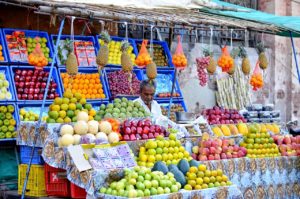
As the global population continues to grow, the demand for food also grows. The solution to this problem is not to produce more food but rather to waste less food. Globally, about one-third of food that people produce for human consumption goes to waste, which is about 1.3 billion tons. This number includes 45% of all fruits and vegetables, 35% of seafood, 30% of cereals, 20% of dairy products and 20% of meat. Unsurprisingly, studies have repeatedly shown that developed countries, on average, waste more food than developing ones. Read on to learn about food waste around the world.
Food Waste Culprits in the Developed World
The United States and Australia are the two countries that produce the most food waste in the world. In 2010, around 133 billion pounds of food went to waste in the U.S., which is $161 billion worth of food. In 2015, the USDA and EPA joined together to set a goal of cutting food waste by 50% by 2050. Despite that goal, the U.S. continues to waste about 30% to 40% of its food supply each year.
Every year in Australia, about 7.3 million tons of food goes to waste. Australia’s food waste per person is around 300 kg. Australia’s food waste costs the country’s economy an estimated $20 billion each year. As a result, the Australian government set a goal to halve its food waste by 2030.
These two countries contribute massive amounts of food waste around the world despite having the wealth to address the issue.
Food Waste Champions in the Developed World
Greece and China are the most efficient countries when it comes to limiting food waste around the world. Columbia, South Korea, the United Kingdom and France are not far behind them in terms of how other developed countries rank. The scale and reach of governmental actions to address the issue separate these countries from the U.S. and Australia in the fight against food waste.
In 2017, the Sustainable Food Movement emerged out of Athens. Greece’s immense success today results from people taking this initiative seriously and enforcing it with fervor. The country went from producing an average amount of food waste to being the most food efficient country in the world. It accomplished this feat in just three years.
Greece sets an example for the rest of the world. It proves other places could implement similar initiatives to diminish food waste around the world.
Food Waste in the Developing World
Affluent countries have the means to significantly lower their food waste. However, developing countries tend to outperform many developed countries in this particular arena. India and Brazil are two examples of developing countries displaying some of the lowest food waste levels in the world. Each year, Brazil produces almost 15 million kg of waste nationally and 71 kg per person.
Meanwhile, India wastes up to 40% of its food each year. India has one of the highest rates of food waste nationally at nearly 68 million kg. Yet, its food waste per person is quite low at 51 kg per year. To note, India’s population is nearly 1.4 billion people, showing that a gap exists between its national and personal food waste statistics.
An important distinction between developed and developing countries is the stage that people are most likely to waste food. In developed countries, the individual consumer level is where most food waste occurs. This is due to the average citizen’s ability to buy more than enough food for their family. In developing countries, the most wasteful stage of food production happens in the earliest stages of distribution. Poor infrastructure and inadequate food storage vessels contribute to the most food waste in these countries. In fact, much of the food is wasted before it ever reaches the consumer.
Food for Thought
The global population is about 7.6 billion, and 925 million of those people are starving. The amount of food wasted globally each year is enough food to feed 3 billion people. In other words, the world has more than enough food to feed the planet, but there is a huge issue of food distribution.
By 2050, estimates have determined that the global population will become around 9 billion. This means that food production will have to increase by 70% to keep up with the world’s current path. That is a near-impossible task to accomplish. It would be more efficient to refocus efforts on limiting food waste overall.
Food waste around the world is an issue that some countries have chosen to tackle with great success while other countries falter. The future of the world population depends on all countries working to decrease food waste.
A Helping Hand
Hands for Hunger, an NGO based in the Bahamas, is making significant progress in the pervasive issue of worldwide food waste. A group of students realized that restaurants and hotels throw an immense amount of unspoiled food away every day. As a result, they set out to change that.
Hands for Hunger focuses on obtaining this typically discarded food and redistributing it to the less fortunate. In addition, it educates the public on the issue itself and solutions. The organization serves around 15,000 meals to Bahamians each week by redistributing restaurant and hotel food to its 17 outreach agencies. It delivers around 4,530 pounds of food to Bahamians in need every week.
Hands for Hunger has rescued over 1 million pounds of fresh food. Through its recovery efforts, the organization is able to donate quality food to those in need. Almost 50% of all food donations in 2017 were high-need items such as dairy, proteins and fresh fruits and vegetables. Hands for Hunger is just one of many NGOs doing fantastic work to decrease food waste around the world. While food waste is a problem, it has an attainable and feasible solution.
– Natalie Tarbox
Photo: Pixabay

Digital Health Apps in Africa Aim to Revolutionize Medical Care
A Pew Research Center survey of 7,052 people across Ghana, Kenya, Nigeria, Senegal, South Africa, Tanzania and Uganda found that an average of two-thirds of respondents own cell phones. Across Africa, people use smartphones less widely than regular mobile phones. For example, 34% of respondents in South Africa own smartphones. Regardless, rising cell phone access offers the potential to improve access to health care for many across the continent.
Healthcare in Africa
Less than 50% of people across Africa can access modern health facilities, and 80% rely on public health facilities. However, public health facilities often experience chronic drug shortages, causing many patients to die from otherwise curable diseases. In 2015 alone, approximately 1.6 million people in Africa died of tuberculosis, malaria or HIV-related illnesses. Proper medication or vaccines can prevent, treat or even cure these diseases.
Many African countries spend less than 10% of their gross domestic product on healthcare. The lack of funding for health care limits the accessibility to adequate health care. There is also a lack of skilled medical personnel throughout the continent, as many trained doctors are drawn to the European and American job markets.
mHealth Benefits and Innovations
Technology is now transforming healthcare in Africa by helping improve healthcare access and quality in remote areas. These digital platforms also simplify the process for doctors and policymakers to access data. In turn, doctors and policymakers can use that data to make better-informed individual and system-wide healthcare decisions.
According to a report by the World Health Organization, digital health apps also have the ability to decrease the financial and physical burden associated with transportation to healthcare facilities, “overcome communication delays” through reliable and real-time data and “increase health workers’ adherence to clinical guidelines.” The four digital health apps below are among the many innovations helping to make healthcare more attainable throughout Africa.
Challenges for mHealth
The cost of cell phones and unreliable cell phone service serve as barriers to digital health in Africa. For these reasons, mHealth is biased toward wealthier groups. In Uganda, for instance, 93% of individuals with secondary education or higher own a mobile phone. Compare this number to the 61% of individuals with lower levels of education and the accessibility gap becomes clear. Gender also plays a role: six of the seven countries surveyed by the Pew Research Center, men are more likely to own a mobile phone than women.
For mHealth to continue expanding and thriving throughout the continent, the Brookings Institution states, “Governments will need to play an active role…through regulation, legal frameworks, and technical training in the health sector.” When access to technology becomes widely available, digital health apps in Africa have the power to make healthcare widely accessible.
– Zoe Engels
Photo: Wikimedia
Fighting Childhood Stunting in Bangladesh
Stunting is the impaired development of children usually due to malnutrition. The People’s Republic of Bangladesh in South East Asia has had one of the highest levels of stunting for children under 5-years-old. It measured at 45% of children under 5 in 2000. A growing national economy has reduced the number of childhood stunting in Bangladesh to 36%. However, this is still a high considering that poor nutrition in the first years of a child’s life can contribute to irreversible damage to health, growth and development.
With the aid of the World Health Organization (WHO), the Bangladesh government’s National Nutrition Council Executive Committee has put forward a Second National Plan of Action for Nutrition targeting improvements in countrywide sustenance. It is the first funded nutrition program of its kind in Bangladesh. Nutrition is an area that requires addressing in the country. As a result, nonprofit organizations including UNICEF, CARE and the World Bank have worked in cooperation with the government’s nutrition program. They developed a collective impact to fight childhood stunting in Bangladesh.
CARE Collective Impact
Nonprofit organization CARE develops disaster response, food and nutrition, health and education for impoverished people globally. The organization’s approach is to link with partners. Together, they execute CARE’s programs as well as support promotions on a national scale. In Bangladesh, CARE has developed the Nutrition at the Center program. It follows the Second National Plan of Action for Nutrition. According to a CARE survey, the program has helped reduce stunting in children less than 2-years-old from 47% to 33%.
UNICEF
Additionally, UNICEF is a nonprofit organization that supports children globally through partnerships. The organization is working in cooperation with the Bangladesh government’s Second National Plan of Action for Nutrition in making a collective impact to fight childhood stunting in Bangladesh. UNICEF has developed research-based programs that reduce stunting within the first 1,000 days of life. This includes counseling on the proper nutrition of pregnant mothers to reduce underweight babies and improve childhood feeding. This highlights the diversity of foods, improves vitamin use and treats infection and severe acute malnutrition (SAM).
The World Bank
Furthermore, the World Bank is a nonprofit organization that invests knowledge and money in developing countries. The organization views investing in Bangladesh’s nutrition as an investment in the future socioeconomic potential of the children. Among children under 5, about 5.5 million are stunted, and out of that number, poorer children bear a disproportionate burden of stunted growth. The World Bank’s plan includes supporting childhood nutrition as well as a conditional cash transfer for 600,000 families.
Bangladesh has made considerable progress but continues to struggle with childhood nutrition. Children born stunted will potentially experience later puberty development and cognitive impairment. This can lead to poor school and later work performance. Stunted women often end up having stunted children, continuing the cycle. Therefore, programs that invest in proper nutrition are vital. The Bangladesh government’s nutrition program seeks to reduce childhood stunting by 25% by 2025. With the collective impact of fighting childhood stunting by nonprofit organizations like CARE, UNICEF and the World Bank, this goal can potentially become a reality.
– Joseph Maria
Photo: Flickr
Food Waste Around the World Examined
As the global population continues to grow, the demand for food also grows. The solution to this problem is not to produce more food but rather to waste less food. Globally, about one-third of food that people produce for human consumption goes to waste, which is about 1.3 billion tons. This number includes 45% of all fruits and vegetables, 35% of seafood, 30% of cereals, 20% of dairy products and 20% of meat. Unsurprisingly, studies have repeatedly shown that developed countries, on average, waste more food than developing ones. Read on to learn about food waste around the world.
Food Waste Culprits in the Developed World
The United States and Australia are the two countries that produce the most food waste in the world. In 2010, around 133 billion pounds of food went to waste in the U.S., which is $161 billion worth of food. In 2015, the USDA and EPA joined together to set a goal of cutting food waste by 50% by 2050. Despite that goal, the U.S. continues to waste about 30% to 40% of its food supply each year.
Every year in Australia, about 7.3 million tons of food goes to waste. Australia’s food waste per person is around 300 kg. Australia’s food waste costs the country’s economy an estimated $20 billion each year. As a result, the Australian government set a goal to halve its food waste by 2030.
These two countries contribute massive amounts of food waste around the world despite having the wealth to address the issue.
Food Waste Champions in the Developed World
Greece and China are the most efficient countries when it comes to limiting food waste around the world. Columbia, South Korea, the United Kingdom and France are not far behind them in terms of how other developed countries rank. The scale and reach of governmental actions to address the issue separate these countries from the U.S. and Australia in the fight against food waste.
In 2017, the Sustainable Food Movement emerged out of Athens. Greece’s immense success today results from people taking this initiative seriously and enforcing it with fervor. The country went from producing an average amount of food waste to being the most food efficient country in the world. It accomplished this feat in just three years.
Greece sets an example for the rest of the world. It proves other places could implement similar initiatives to diminish food waste around the world.
Food Waste in the Developing World
Affluent countries have the means to significantly lower their food waste. However, developing countries tend to outperform many developed countries in this particular arena. India and Brazil are two examples of developing countries displaying some of the lowest food waste levels in the world. Each year, Brazil produces almost 15 million kg of waste nationally and 71 kg per person.
Meanwhile, India wastes up to 40% of its food each year. India has one of the highest rates of food waste nationally at nearly 68 million kg. Yet, its food waste per person is quite low at 51 kg per year. To note, India’s population is nearly 1.4 billion people, showing that a gap exists between its national and personal food waste statistics.
An important distinction between developed and developing countries is the stage that people are most likely to waste food. In developed countries, the individual consumer level is where most food waste occurs. This is due to the average citizen’s ability to buy more than enough food for their family. In developing countries, the most wasteful stage of food production happens in the earliest stages of distribution. Poor infrastructure and inadequate food storage vessels contribute to the most food waste in these countries. In fact, much of the food is wasted before it ever reaches the consumer.
Food for Thought
The global population is about 7.6 billion, and 925 million of those people are starving. The amount of food wasted globally each year is enough food to feed 3 billion people. In other words, the world has more than enough food to feed the planet, but there is a huge issue of food distribution.
By 2050, estimates have determined that the global population will become around 9 billion. This means that food production will have to increase by 70% to keep up with the world’s current path. That is a near-impossible task to accomplish. It would be more efficient to refocus efforts on limiting food waste overall.
Food waste around the world is an issue that some countries have chosen to tackle with great success while other countries falter. The future of the world population depends on all countries working to decrease food waste.
A Helping Hand
Hands for Hunger, an NGO based in the Bahamas, is making significant progress in the pervasive issue of worldwide food waste. A group of students realized that restaurants and hotels throw an immense amount of unspoiled food away every day. As a result, they set out to change that.
Hands for Hunger focuses on obtaining this typically discarded food and redistributing it to the less fortunate. In addition, it educates the public on the issue itself and solutions. The organization serves around 15,000 meals to Bahamians each week by redistributing restaurant and hotel food to its 17 outreach agencies. It delivers around 4,530 pounds of food to Bahamians in need every week.
Hands for Hunger has rescued over 1 million pounds of fresh food. Through its recovery efforts, the organization is able to donate quality food to those in need. Almost 50% of all food donations in 2017 were high-need items such as dairy, proteins and fresh fruits and vegetables. Hands for Hunger is just one of many NGOs doing fantastic work to decrease food waste around the world. While food waste is a problem, it has an attainable and feasible solution.
– Natalie Tarbox
Photo: Pixabay
UPI in India: Changing Banking for Millions
In 2016, the Unified Payments Interface (UPI) system launched in India. Its goal was ambitious: a level playing field for small businesses and impoverished communities through re-imagined banking. In the midst of a global pandemic that has forced a socially distant lifestyle, UPI has never been more important nor more successful.
UPI’s Humble Beginnings
UPI’s primary purpose was to become an online platform that would eliminate bureaucratic and socioeconomic barriers to financial transactions. The goal was to allow anybody, from small Kickstarter businesses to multinational banks, to have the same access to banking capabilities.
UPI creates a standard set of rules for everybody on the platform—all Indian banks have access. Thus, smaller banks have equal opportunities to reach people as big ones. This goal is feasible due to UPI’s innovative techniques. With UPI, the party collecting money from an individual is decoupled from that individual’s bank account. This allows third-party apps such as Google Pay, PhonePe and Amazon Pay to collect and administer transactions without excess burden to the customer.
UPI makes things even more consumer-friendly by eliminating the need to enter long bank account and routing numbers for transfers. A virtual payment address, a simple username akin to an email address, replaces detailed information.
Finally, it is important to note that UPI serves a myriad of functions in the financial world. Simple peer-to-peer monetary transactions are carried out seamlessly. Advanced maneuvers are also handled with ease, including merging banking features from different banks, micro pensions and digital insurance.
UPI’s Growth
Since its launch, UPI has seen tremendous growth in both users and the number of transactions. Its user base is strong—recent numbers indicate over 100 million users. Its goal is to reach 500 million users by 2022. While this seems ambitious, early critics of the program did not expect UPI to gain the traction it has already.
The novel coronavirus impacted UPI both positively and negatively. During the worst of the lockdown, UPI’s transaction count decreased. People staying at home lowered demand for the platform’s services. However, since May 2020, UPI has boomed in both the number of transactions and the amount of money transferred. The number of transactions grew by 12% in July 2020, with 1.49 billion in the month of July 2020. UPI saw 822 million transactions in July 2019, indicating exponential growth during the last year. Similarly, the amount of money transferred in July 2020 was up to 2.9 trillion Indian Rupees, while July 2019 saw only 1.46 trillion Rupees.
As of July 2020, UPI reports services at 164 banks across India. With service 24 hours a day, seven days a week, UPI is lengthening its reach and its impact on the financial marketplace of India.
Looking to the Future
Looking forward, COVID-19 has provided a new opportunity for UPI and digital banking in general. India wants to decrease the amount of physical currency in circulation, and the pandemic has shown many people the virtues of online banking. For example, young adults wary of infecting their older parents have helped an older generation get on UPI and utilize everything it has to offer.
UPI’s recent boom focuses back to the platform’s original goal: creating an even playing field for all people, regardless of background or socioeconomic status. In 10 or 20 years, it would not be surprising to see all banking conducted virtually. Therefore, it is crucial to create a solid infrastructure that eliminates a system of preferential treatment based on wealth. UPI is helping to fight that fight.
– Evan Kuo
Photo: Flickr
Advancements in Police Reform in India
In January 2020, protests over a citizenship law targeting Muslims ravaged India’s streets. The Citizenship Amendment Act uses religion as a gateway to citizenship in India for illegal immigrants. However, not all religions are created equal in the eyes of the Indian Parliament: the bill favors South Asia’s major religions except for Islam, even though Muslims comprise 14.2% of India’s population. The bill created outrage throughout India’s Muslim population, leading the nation’s police to detain protesters and rioters in often forceful ways. Regulations and NGO movements are emerging to help decrease cruelty in India’s police system. Here are three actions advancing police reform in India.
Media Outlets
When the Citizenship Amendment Act protests and riots occurred, media outlets extensively covered these events. Their coverage helped to expose the bill’s injustices as well as police abuse. In an interview with the BBC, one family had a platform to share their son’s tragic story: “My son started running when he saw protests turning violent. He was shot in the stomach by police,” Muhammed Shareef stated. Shareef’s son, Raees, died three days later. The police denied the allegations. If the media had not illuminated Shareef’s story, fewer people would understand the severity of police violence in India. If this extensive media coverage continues, stronger advocacy and international awareness could be achieved.
The Commonwealth Human Rights Initiative
NGOs have also become powerful in encouraging police reform in India. These groups hold significant influence in supporting policy implementation. For example, in 2016, the Commonwealth Human Rights Initiative focused its efforts on improving the relationship between citizens and police in India. NGO initiatives like these are proving effective: since 2016, the violent crime rate with police in India has dropped by 5.88%.
Indian Police Foundation
The IPF’s goal is to act as a primary force in improving the humanity of India’s police system. The organization researches constructive management tools, effective methods of combating police brutality and procedures for hiring responsible police officers.
The Future of Police in India
With robust initiatives like those that media outlets, NGOs and the IPF implement, police reform in India is on the horizon. Despite this progress, there remains a clear need for improvement: a study that the National Campaign Against Torture performed found that 1,731 people died in police custody in 2019, averaging to five deaths per day. Although the extent of their impact is still developing, NGOs are becoming a powerful voice for change. With these three groups advancing police reform in India, there is hope for saving lives and creating constructive police reform.
– Grant Ritchey
Photo: Flickr
Bird-Friendly Coffee Benefits Producers and the Planet
As the market demand for coffee grows in industrializing nations, bird-friendly coffee may offer an eco-friendly solution to an unsustainable industry. The global population consumes approximately 7.5 million tons of coffee each year, and experts expect global coffee consumption to more than double in the next 20 years.
Earth may not have the capacity to keep up with demand. Forests absorb 40% of human fossil fuel emissions, and the destruction of these carbon sinks contributes to a warming climate that diminishes the land suitable for growing coffee and drives coffee plantations into previously intact forests at higher altitudes. This cycle of deforestation and warming perpetuates the loss of the 1.6 billion livelihoods. It also destroys habitats for 80% of terrestrial species supported by forests.
A Possible Future for Coffee Production
Some farmers embrace shade-grown coffee as an environmentally and economically sustainable means of coffee production. Shade-grown coffee production is a method of agroforestry that integrates coffee plantations and forest growth on the same land. Environmental benefits of shade-grown coffee compared to full-sun coffee production include erosion control, better soil health, carbon sequestration and increased bird habitat.
These environmental advantages translate to economic benefits. For example, agroforestry practices reduce nutrient and labor inputs into the soil due to the natural decomposition of leaf matter. Agroforestry also supports bird-friendly coffee production by creating healthy bird habitat. Birds provide free pest control that eliminates or reduces the need for harmful chemical pesticide use. A single bird living on a shaded coffee plantation can protect 23-65 pounds of coffee each year from pests like the Coffee Berry Borer, which inflicts $500 million worth of damage annually to the coffee industry.
Shade-grown coffee plantations typically produce 30% less coffee than full-sun plantations. However, the economic benefits of agroforestry compensate for this loss, saving an average of $2,000 per hectare each year. In fact, a study that researchers conducted at Cornell and Columbia Universities demonstrated that small-scale farmers, including 25 million coffee farmers in developing nations who produce 80% of the world’s coffee, could optimize their profits by converting at least 36% of their plantations to shade-growing practices.
Additionally, shade-grown coffee farmers can benefit by growing tree crops like mangos, passion fruit and guava on their plantations for sale or consumption. In Guatemala and Peru, for example, fruit grown on shaded coffee farms comprises 9-11% of the plantations’ economic value.
Certification Systems
The environmentally-induced economic benefits of practicing bird-friendly coffee production are many. Moreover, consumers are willing to pay a premium for sustainable, shade-grown coffee. A survey of more than 1,300 coffee drinkers in the U.S. interested in the conservation of bird habitat revealed that the average bird watcher is willing to pay an additional $2 per pound of coffee for bird-friendly coffee. A 50 cent premium per pound of shade-grown coffee can optimize profits on small-scale farms at 85% shaded production.
Certifications like the Rainforest Alliance certification, Nespresso’s AAA Sustainable quality certification and the Bird Friendly Coffee certification from the Smithsonian Migratory Bird Center all contribute to shade-grown coffee premiums. With additional support to low-income farmers from certification systems and governments, the transition to shade-grown coffee can help to reduce the growing environmental impacts of coffee production while increasing profits and fair market access for small-scale farmers. These measures will contribute to an economically and environmentally sustainable future. All of this can occur without sacrificing one of the most popular beverages in the world.
– Avery Saklad
Photo: Flickr
Biotech in Kenya: Food is the Future
Kenya is one of the most food-insecure countries in the African region, where 14.5 million people suffer from chronic food insecurity and poor nutrition. One in three Kenyans suffers from illness due to malnutrition. However, food and textiles engineered with biotechnology prove promising for the agricultural industry. These Genetically Modified Organisms (GMOs) bode well for future Kenyan prosperity. Here are some of the factors that support biotech in Kenya.
Food Insecurity and Poverty
Indicators of poverty in Kenya include high rates of infant mortality, tuberculosis and low rates of literacy. Kenya is ranked 55 out of 195 countries on the Global Health Security Index and almost half of the population live in absolute poverty making an average wage of less than $1.90 per day. Though this nation is dependent on agriculture, with 79% of the population relying on food and crop production, farming does not produce an easily livable salary. In contrast, many of the crops produced in Kenya are exported to other countries. Around 72% of consumer products are imported from surrounding areas. Kenya’s poorest demographic has an average of four to six children per household. The country experiences a continued increase in population because of a lack of affordable healthcare and education.
Much of the poverty is due to the corrupt nature of Kenya’s government. A large majority of public officials and officers accept bribes in order to consolidate power. According to Transparency International, Kenya is one of the most corrupt nations in the sovereign world. Public surveys state that 45% of public service users offered bribes (in turn accepted) in the past year. In 2019, 67% of people observed an increase in government corruption, placing Kenya in the top 45 most corrupt countries on Earth.
Upon President Uhuru Kenyatta’s election into office, he proposed a plan to replace the Kenya Vision 2030 goal to eradicate poverty with the Big Four. President Kenyatta plans to ensure food security, affordable housing, manufacturing and affordable healthcare for all through a budget proposal that prioritizes public infrastructure. Kenyatta intends to achieve these goals by 2022. Still, environmental challenges and the COVID-19 pandemic have threatened the food production industry and government capability to prioritize these goals.
New Industries, New Hope
Kenyan farmers are slow to embrace GMOs and biotech due to cancer concerns and suggested links between disease and ingestion of “unnatural products.” However, the Kenyan Ministry of Agriculture’s updated research suggests that there are no significant links between genetically modified crops and cancer. Local biotech research claims the adoption of these processes and materials will aid the eradication of bollworms in cotton plants. They are hopeful for the reduction of hunger in the nation. With the adoption of biotech crop management, Kenya is one of the first East African nations to implement majority transgenic cotton farming.
In 2019, the Ministry of Agriculture approved the use of “Bt Cotton,” a specially engineered breed of cotton that naturally drives away destructive caterpillar breeds without the additional use of pesticides. The Standard defines this type of GMO production stating, “Popularly known as agritech, biotechnology is the practice of using scientific techniques and tools such as genetic engineering to change and improve plant and animal productivity.” Crops like cotton are one of the widest used in the textile industry and compromise more than 21% of Kenya’s export economy. With more than 69% of Kenya’s economy dependent upon the export of tea and cut flowers to bordering nations, reduction of “lost product” due to pests and other factors is necessary to protect these industries and ensure future growth.
GMOs produce the ideal shape and size of crops. They simultaneously maintain the preferred growth rate with the ability to ward off pests and other diseases. With these modifications, farmers can expect higher yields of crops and less water usage due to drought-resistant biotechnologically modified seeds.
Cassava in Kenya
Cassava is one of the main food groups in the coastal regions of Kenya. The population consumes it largely as a calorie-dense and nutrient-rich root. Bt Cassava is undergoing trials to determine the crop’s resistance to brown streak disease and cassava mosaic disease. Professor Miano of the Virca Plus Project asserted that farmers lose up to 70% of crops due to these problems. Bt Cassava awaits approval from the Ministry of Agriculture during the assessment of sustainability and safety. Former trials seem promising as Professor Miano quotes, “…I can confirm that it is good, highly resistant to the diseases and its nutritional composition has not been affected in any way.” If Bt Cassava manufacturing continues such promising results, the strain of food security could become a memory for Kenyans.
Economic Growth
Kenya’s Gross Domestic Product is stagnant at less than 5% due to the COVID-19 pandemic, revealing the lowest economic growth in three years. Slowed tourism and accommodation services are to blame for decreased economic expansion. Nonetheless, biotechnical engineering is one of the most promising innovations for the expanding population. Food often contains vitamins and other nutritional benefits to improve malnourished communities. Crops engineered with biotechnology are increasingly more affordable for Kenyan farmers. With an adoption rate of more than 11%, the previously decaying textile industry is sure to observe a boost soon.
Modified crops will reduce the need for imports. Increased product yields due to biotech in Kenya will save farmers time from mundane tasks like weeding. Without the cost of pesticides, farmers can expect an increase in production and reap the benefits of saved labor. A transition towards biotechnology in food production will make Kenya one of the leading nations in agricultural production. The conversation about biotech in Kenya could result in extreme poverty reduction and a more sustainable, healthy future for the population.
– Natalie Williams
Photo: Pixabay
Hunger in Brunei Darussalam
Located on the northern coast of the Southeast Asian island of Borneo, Brunei Darussalam is a small state with a population of less than half a million people. As an absolute monarchy, the will of the Sultan largely dominates politics and economics in Brunei. Although it is a developing state, impressive strides have occurred in recent years to reduce hunger in Brunei Darussalam and have demonstrated the country’s potential for future success.
The Situation
In 2014, the United Nations reported that for the past few decades, food security in Brunei Darussalam has been stable and undernourishment has been relatively low. However, there are still several areas in need of improvement.
Food and nutrition for pregnant women and children are in need of particular attention. Estimates have determined that nearly 40% of all pregnant women were anemic, and child malnutrition is especially rampant. With stunting in 20% of children and a further 10% of children underweight, hunger in Brunei Darussalam is a serious problem for both children and women.
Much of the country’s issues with food arises from heavy reliance on imports. With forest covering more than 70% of Brunei’s land area, much of it still untouched and agricultural land is scarce, making up only around 3% of the country.
As of 2019, Brunei heavily relied on imported food from over 90 countries around the world, resulting in high food prices and occasional shortages of supplies. In response, Brunei’s Sultan Hassanal Bolkiah has declared food self-sufficiency to be a top priority for his administration.
Solutions
So far, the country has achieved much success. Since the Sultan’s drive for self-sufficiency, Brunei has reached nearly 100% domestic production for certain goods, such as chicken and eggs, and is at 80% domestic production for all seafood products and tropical fruits as of 2020. In doing so, Brunei’s government has managed to increase food supplies and self-dependence in the nation, thereby allowing easier and more affordable access to food for Brunei’s population.
Given the status of rice as a staple food in Brunei, the government has also set out to increase Brunei’s domestic rice production. The government-owned corporation PaddyCo has developed hundreds of hectares for rice farming, which projections have determined will return a 700% increase in rice yields between 2010 and 2025.
Sultan Bolkiah’s government has also set out to tackle the issue of child hunger in Brunei. In 2018, the Program Harapan dan Anak Harapan emerged to provide meal plans to 41 of the most disadvantaged primary schools across the country. By 2019, the program was capable of providing food to nearly 12,000 eligible children. Although statistics indicate that certain groups in Brunei continue to suffer from food insecurity, the country has undoubtedly made recognizable and admirable strides to combat hunger.
By focusing on self-sufficiency and addressing child hunger in Brunei Darussalam, the government and people of Brunei are working to make a difference in the most effective way they can. With continued work, the prospect of Brunei eliminating hunger entirely and ensuring food security for all seems to be a very real possibility.
– Shayaan Subzwari
Photo: Flickr
Viral Hepatitis in India
Current Problems Regarding Viral Hepatitis in India
In India, Hepatitis B infects at least 40 million people, and Hepatitis C infects more than 6 million. As of now, viral hepatitis in India is becoming a serious health concern, especially amongst children. With few vaccinations available, many children aren’t able to prevent this disease. As of now, less than 44% of children are fully vaccinated against hepatitis. In contrast, Nepal and Bangladesh have more than 80% of their children fully scheduled for vaccinations. India has almost seven million children unvaccinated. As a result, this makes them more vulnerable to viruses such as hepatitis.
Only 1.2% of India’s national budget goes toward vaccinations. The lack of government assistance contributes to the overwhelming number of children that remain unvaccinated. Even this budget only goes toward six basic vaccinations, comprising diphtheria, tetanus, pertussis, tuberculosis, polio and measles, meaning that it excludes hepatitis.
Another large contributor to the spread of this disease is poor infrastructure, often found in impoverished areas. Pipelines with water contamination are more likely to spread the virus, especially in urban cities. India has one of the largest water crises due to poor filtration and contaminated pipelines. Only 32% of piped water has been treated because rivers and lakes are more prone to sewage, leading to micro-contaminations. As Hepatitis A and Hepatitis E are waterborne viruses, it remains a priority for the Indian government to treat its contaminated water supply. This is especially vital for people living in impoverished regions. More than 37 million Indians have been infected with waterborne diseases, resulting in more than 10,000 deaths annually.
Promising Solutions for Viral Hepatitis in India
Although viral hepatitis in India is a large health concern, there are countless efforts to mitigate the spread of this deadly disease. For example, the World Health Organization and UNICEF have established the Joint Monitoring Programme for Water Supply and Sanitation. This program led 17 states in India to reach the Millenium Development Goal 7 (MDG). Additionally, the government of India established the National Virus Hepatitis Control Program, which gives access to more testing and treatment. This program focuses on rural areas and hopes to end viral hepatitis by 2030.
Some smaller nonprofit organizations are also working to prevent the spread of hepatitis. For example, Water.org has 34 partnerships in India, including with UNICEF and the World Bank. Additionally, Water.org has been able to provide more than 13 million people with water and sanitation with $599 million from its partnerships. The BridgIT Foundation has similar goals in solving the water crisis in the most affected counties. As of now, it has built wells in 30 villages. In addition, it partners up with the Rural Development Society and the Sri K. Pitchi Reddy Educational & Welfare Society to reach more than 30,000 people who don’t have access to clean water.
The Path Ahead to Reform
Although eradicating viral hepatitis remains a priority in India, reform begins with the basis of the problem. By improving its resources, such as sanitation and vaccination, India will be able to reduce the spread of viral diseases like hepatitis. With the number of government and local efforts, there is a large chance of mitigating viral hepatitis in India in the near future.
– Aishwarya Thiyagarajan
Photo: Flickr
Updates on SDG Goal 1 in the Dominican Republic
Updates on SDG Goal 1 in the Dominican Republic
According to the report to the 2030 Agenda, the annual growth of real GDP in the Dominican Republic has been 5% annually since the 90’s. Additionally, poverty has declined from 40% in 2003 to 25.5%. The government claims that “Per Capita income has increased in the last decade, placing the country as a high middle-income economy.” Extreme poverty in the Dominican Republic is under 6%.
While financial poverty has improved, there is still multidimensional poverty influencing the small nation. Many residents face issues in public services, housing and regressing to poverty. Furthermore, this newfound economic boon is not distributed equally throughout the land. There are still greater amounts of poverty among kids and teenagers in rural areas and the unemployed.
To combat this, the Dominican government has promised to utilize its public policies to deepen its emphasis on universal social security, health care and education services. The government also wishes to address gender equality in the workforce. This would mean tackling the workplace wellbeing of the most vulnerable of the population, including women, children and those who work dangerous jobs. The government has also focused on reducing unemployment, which went down 2.6% between 2014 and 2017. While these numbers are good overall, women, teenagers and those in low-income housing still struggle to find jobs.
SDG Goal 1 Around the World
These updates on SDG Goal 1 in the Dominican Republic make it clear that this country is ahead of many others in terms of meeting this goal. While the SDG initiative has incentivized countries around the world to improve their citizens’ lives, there is still a lot of work to be done. 736 million people around the world still live in poverty, which means 10% of the global population is impoverished.
However, the number of people living in poverty around the world has decreased drastically since 1990. By the end of the decade, the SDG initiative will have hoped to “reduce at least by half the proportion of men, women and children of all ages living in poverty in all its dimensions according to national definitions.” Overall, the program aims to “ensure significant mobilization of resources from a variety of sources, including through enhanced development cooperation, to provide adequate and predictable means for developing countries, in particular, least developed countries, to implement programmes and policies to end poverty in all its dimensions.” It is fair to say that the Dominican Republic is on the right track to fulfill this goal.
– Pedro Vega
Photo: Flickr