• Link to X
  • Link to Facebook
  • Link to Instagram
  • Link to TikTok
  • Link to Youtube
  • About
    • About Us
      • President
      • Board of Directors
      • Board of Advisors
      • Financials
      • Our Methodology
      • Success Tracker
      • Contact
  • Act Now
    • 30 Ways to Help
      • Email Congress
      • Call Congress
      • Volunteer
      • Courses & Certificates
      • Be a Donor
    • Internships
      • In-Office Internships
      • Remote Internships
    • Legislation
      • Politics 101
  • The Blog
  • The Podcast
  • Magazine
  • Donate
  • Click to open the search input field Click to open the search input field Search
  • Menu Menu

Tag Archive for: Poverty In Bolivia

Posts

Global Poverty

Finally Free: Poverty and Inequality in Bolivia

Poverty and Inequality in BoliviaIn 2009, poverty and inequality in Bolivia were some of the highest in South America. Extreme poverty rates were roughly 40 percent and the poorest 10 percent received only 0.5 percent of the total national income.

There was a sharp turnaround between 2004 and 2014, according to the World Bank. Economic growth averaged 4.9 percent annually, moderate poverty rates dropped from 59 to 39 percent, and inequality plummeted. Poverty and inequality in Bolivia began to wane.


Fighting Poverty and Inequality in Bolivia


It was not until 2006, a year after the election of Evo Morales, the country’s first indigenous president, that government commitment to economic growth and poverty reduction began to drastically improve. Morales increased spending on health, education, and poverty reduction programs by 45 percent between 2005 and 2006.

On July 22nd, 2017, President Evo Morales declared Bolivia completely independent from the World Bank and International Monetary Fund. Spurring this independence are the improvements achieved by Morales’s government. Since his election, inflation has run below four percent each year, basic consumption goods have been at a surplus, extreme poverty has fallen to 17 percent and the richest 10 percent of the country, which used to earn 128 times more than the poorest, now only earns about 38 times as much.

What’s more, as Francisco Toro writes, “Bolivia was running budget surpluses every year between 2006 and 2014. This allowed it to draw down the public sector’s debt, which fell from 83 percent of GDP in 2003 to just 26 percent in 2014, even as Bolivia built up its international reserves dramatically, from $1.7 billion in 2005 to $15.1 billion at the end of the boom in 2014.”

Much of this had to do with the burgeoning natural resources in the country. Export revenue, in the decade following the appointment of Morales, grew by six percent contributing to the impressive reduction of poverty an inequality in Bolivia.

Independence from the World Bank and IMF marks a new era for Bolivia. Its unprecedented economic improvements and reduction of poverty and inequality are a victory for the fight against poverty. The question is, will the world follow suit?

– Joseph Dover

Photo: Pixabay

September 13, 2017
https://borgenproject.org/wp-content/uploads/borgen-project-logo.svg 0 0 Borgen Project https://borgenproject.org/wp-content/uploads/borgen-project-logo.svg Borgen Project2017-09-13 01:30:572024-05-28 00:03:05Finally Free: Poverty and Inequality in Bolivia
Global Poverty

Poverty in Bolivia

poverty in bolivia
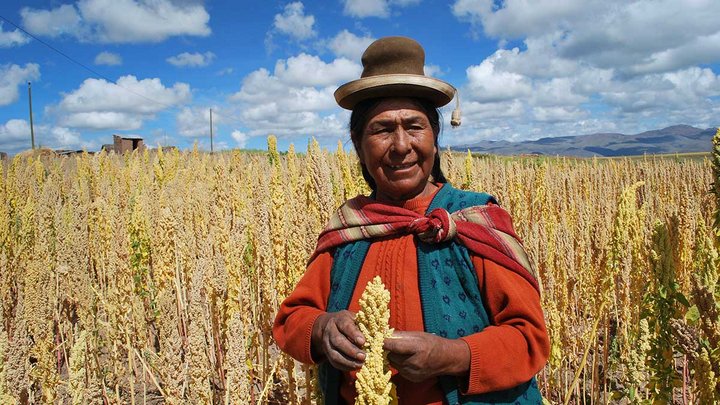
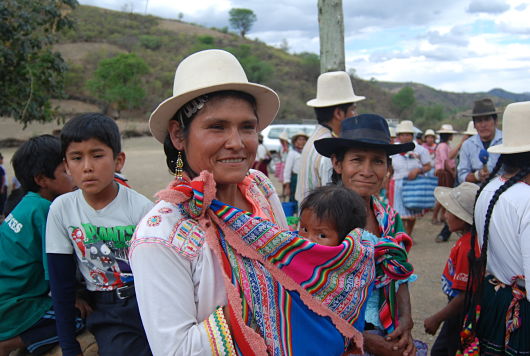
According to UNICEF, poverty in Bolivia is among the worst in South America. Economic growth and opportunities to make a living are most commonly found in urban areas because the more citizens in a setting, the more consumers there are. This makes it difficult however for indigenous farmers, inhabitants of more remote areas with fewer people, to market their products and provide for their families.

For the vast majority of citizens in Bolivia, this proves to be a major issue: 60% of Bolivians live below the poverty line. In rural areas, the numbers are even more dramatic. Three out of every four people living in these areas suffer from poverty. Because of this, Bolivia the poorest country in South America.

One reason for the extreme poverty lies in the geography of Bolivia. Undeveloped roads and infrastructure make up a vast portion of the country, with a majority of the land inhabited by indigenous citizens. This makes it difficult for farmers living in these areas to market their products and travel to sell them, which in turn impacts their families and the communities they live in.

For the farmers of Bolivia, the recent visit by the World Bank’s President to the country represented a unique opportunity. The fact that Jim Yong Kim recognized the need for economic growth and food security was important to the rural citizens of the poorest South American country. A World Bank agreement with the Government of Bolivia plans to promote the Andean marketable products that the indigenous people have to offer. This will get the people of Bolivia involved in national markets, boosting job growth and the economy.

Bolivians are finally being given opportunities to make a living through improved  economic stability and job growth.

– William Norris

Sources: Rural Poverty Portal, The World Bank
Photo: Bioversity International

August 6, 2016
https://borgenproject.org/wp-content/uploads/borgen-project-logo.svg 0 0 Borgen Project https://borgenproject.org/wp-content/uploads/borgen-project-logo.svg Borgen Project2016-08-06 04:25:162024-12-13 17:49:37Poverty in Bolivia
Education, Global Poverty, Nonprofit Organizations and NGOs

Etta Projects Addresses Poverty in Bolivia

etta_projects
Etta Turner was 16 years old when she traveled to Bolivia as an International Rotary exchange student in 2002. Known for her compassion and commitment to social justice, the teen was prepared to provide for the less fortunate and help them change their lives. What was supposed to be a year away from her home and family in the States, however, turned into a lifetime when Turner was tragically killed in a bus accident.

The following year, in 2003, Turner’s friends and family founded Etta Projects, a nonprofit organization dedicated to the life and service of Turner. The organization works with the people of Montero, Bolivia, helping members of the community lead sustainable lives and achieve improved health conditions. Etta Projects supports projects that provide clean water, healthy food, quality education and stable income.

In the western hemisphere, Bolivia is the second poorest country after Haiti, with nearly 70 percent of its population living in poverty. About 23 percent of the population lives on less than $1 a day and 42 percent on less than $2 a day. Furthermore, about 90 percent of Bolivia’s children attend primary school, but only for a year or less: the average literacy rate of a 16-year-old Bolivian is at the third-grade level.

Etta Projects is dedicated to changing these statistics and helping the people of Bolivia. The organization is unique, however, in that it does not simply send money or resources to Bolivia. Rather, it connects with the Bolivian people to understand what they need and teaches them how to personally meet those needs.

To address and eliminate poverty in Bolivia, Etta Projects provides forums in which members of the community can identify their own problems and create plans to solve them. The organization forms strong, fundamental relationships with the communities it helps and the local governments that run them. They use their own resources and the available resources of the community to empower the communities to tackle their problems and issues.

The organization has five main projects: safe water and sanitation, health, nutrition, leadership and U.S. community outreach. Etta Projects is making a lasting difference in many Bolivian lives by listening to community needs, providing resources to meet those needs and leaving the community with valuable skills to lead sustainable lives. Miss Turner’s legacy of compassion and social justice absolutely lives on in the mission of Etta Projects.

– Sarah Sheppard

Sources: Etta 1, Etta 2, Etta 3
Photo: Doctors Without Borders

August 14, 2015
https://borgenproject.org/wp-content/uploads/borgen-project-logo.svg 0 0 Borgen Project https://borgenproject.org/wp-content/uploads/borgen-project-logo.svg Borgen Project2015-08-14 01:30:592024-05-27 09:27:24Etta Projects Addresses Poverty in Bolivia
Global Poverty

Investment Project to Benefit 350,000 in Rural Bolivia

rural_bolivia
Six out of every 10 people in rural Bolivia live below the poverty line. In 2011, the World Bank Group launched its Community Investment in Rural Areas (PICAR) initiative in Bolivia, seeking to broaden impoverished rural access “to basic and productive infrastructure.”

Thus far, the project has maintained an effective track record, financing 612 sub-projects as of April 2015, including water and sanitation, irrigation, infrastructure and livestock protection initiatives. These sub-projects have a 75 percent completion rate, impacting 132,219 rural Bolivian inhabitants. The World Bank estimates that the project will surpass all target numbers, impacting more than 35,000 rural households in the country’s poorest communities.

After a successful start, the World Bank Group has extended an additional $60 million credit on top of the original $40 million loan for PICAR’s implementation. The funding increase is anticipated to facilitate the implementation of poverty reduction and rural development initiatives in 750 new communities, also providing 120 communities with a second round of grants.

By increasing funding, the World Bank Group expects PICAR to positively impact an additional 200,000 rural, primarily indigenous Bolivians, bringing PICAR’s number of beneficiaries to an estimated 350,000.

Along with indigenous groups, rural women are most strongly affected by poverty. Impoverished people face greater levels of food insecurity, limited access to basic services and depressed economic opportunities.

PICAR has been designed to take into account the importance of providing economic opportunities and necessary services to rural women, with 40 percent of sub-projects prioritized and implemented under female directive. The World Bank also reports that at the community level, PICAR has helped to develop 660 female leaders.

“We expect that at least 45 percent of PICAR beneficiaries will be women,” World Bank Resident Representative in Bolivia Nicola Pontara said, “with at least 20 percent being female heads of household, the most vulnerable group among the poor.”

Handing over the reins of agency to those most impacted by poverty is a common theme. PICAR functions by providing communities with financial resources to meet the issues the community members identify with solutions they define based on small projects, completed with local labor and materials.

Through direct transfers of resources to the communities in which the funds will be invested, PICAR seeks to give Bolivia’s most impoverished regions the capital and support to not only participate in, but actually manage their own advancement.

Alberto Rodriguez, World Bank Country Director for Bolivia, Chile, Ecuador, Peru and Venezuela, spoke on this aspect of empowerment: “[Bolivia’s most vulnerable communities] are able to search for collective solutions to their basic and productive needs, lead projects and manage their own resources, enabling them to control their own development.”

Although Bolivia still faces significant challenges — 30 percent of the population lives in poverty — the country has taken strides toward economic growth. With assistance and initiatives like PICAR, substantial poverty reduction promises to continue.

– Emma-Claire LaSaine

Sources: World Bank, UNICEF
Photo: World Bank

August 9, 2015
https://borgenproject.org/wp-content/uploads/borgen-project-logo.svg 0 0 Borgen Project https://borgenproject.org/wp-content/uploads/borgen-project-logo.svg Borgen Project2015-08-09 01:30:432024-05-27 09:27:21Investment Project to Benefit 350,000 in Rural Bolivia
Advocacy, Education, Global Poverty

Top 4 Reasons Education in Bolivia Lags

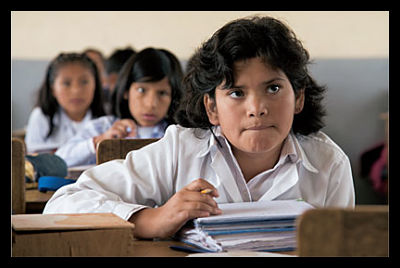
education in boliviaEducation in Bolivia appears to be lacking: one in every seven children in Bolivia does not complete primary school, and the majority of Bolivians never go on to secondary school. In fact, over one million Bolivians over the age of 15 are illiterate. This lack of education contributes to the overall poverty Bolivians face. What factors are contributing to this lack of education? Here are the top four:

    1. Classes are mainly taught in Spanish, but some children learned to speak Quechua and Aymara at home. Many children, especially those from rural areas, cannot understand what is being taught. Being taught a second language in school is also not typical. It is easy to see why kids would become discouraged and decide to drop-out.
    2. Due to widespread poverty and not prioritizing education, schools can be very run-down with little to no proper classroom materials. While there is a lack of resources in Bolivia in general, schools are ranked at the bottom when it comes to addressing the country’s needs.
    3. The poverty in Bolivia also affects the teachers—they often go on strike to protest for higher wages and other related issues. This leaves children without teachers for sometimes days or even weeks at a time.
    4. The primary reason for a child not being in school and the shrinking literacy rate in Bolivia is poverty. Children in urban areas are able to go to school on average for 9.4 years, while those in rural locations only make it on average for 4.2 years. Many children have to work and help support their impoverished family rather than go to school.

Some changes to education in Bolivia have been made, however, with the help of nonprofits. Many organizations have helped provide classrooms and classroom materials in decent condition. One organization, the Foundation for Sustainable Development, helps provide training, tutoring, childcare and workshops to assist Bolivians with their educational needs. When given support and better learning conditions, children typically stay in school and even begin to learn at higher levels than their peers who are not given that support.

If their educational needs are met, they are more likely to succeed. Bolivian children should receive the education they need to thrive.

– Melissa Binns

Sources: Bolivia Bella, Foundation for Sustainable Development
Photo: Netpublikationer

February 26, 2015
https://borgenproject.org/wp-content/uploads/borgen-project-logo.svg 0 0 Borgen Project https://borgenproject.org/wp-content/uploads/borgen-project-logo.svg Borgen Project2015-02-26 12:00:052024-06-05 01:58:22Top 4 Reasons Education in Bolivia Lags
Page 3 of 3123

Get Smarter

  • Global Poverty 101
  • Global Poverty… The Good News
  • Global Poverty & U.S. Jobs
  • Global Poverty and National Security
  • Innovative Solutions to Poverty
  • Global Poverty & Aid FAQ’s
Search Search

Take Action

  • Call Congress
  • Email Congress
  • Donate
  • 30 Ways to Help
  • Volunteer Ops
  • Internships
  • Courses & Certificates
  • The Podcast
Borgen Project

“The Borgen Project is an incredible nonprofit organization that is addressing poverty and hunger and working towards ending them.”

-The Huffington Post

Inside The Borgen Project

  • Contact
  • About
  • Financials
  • President
  • Board of Directors
  • Board of Advisors

International Links

  • UK Email Parliament
  • UK Donate
  • Canada Email Parliament

Get Smarter

  • Global Poverty 101
  • Global Poverty… The Good News
  • Global Poverty & U.S. Jobs
  • Global Poverty and National Security
  • Innovative Solutions to Poverty
  • Global Poverty & Aid FAQ’s

Ways to Help

  • Call Congress
  • Email Congress
  • Donate
  • 30 Ways to Help
  • Volunteer Ops
  • Internships
  • Courses & Certificates
  • The Podcast
Scroll to top Scroll to top Scroll to top