• Link to X
  • Link to Facebook
  • Link to Instagram
  • Link to TikTok
  • Link to Youtube
  • About
    • About Us
      • President
      • Board of Directors
      • Board of Advisors
      • Financials
      • Our Methodology
      • Success Tracker
      • Contact
  • Act Now
    • 30 Ways to Help
      • Email Congress
      • Call Congress
      • Volunteer
      • Courses & Certificates
      • Be a Donor
    • Internships
      • In-Office Internships
      • Remote Internships
    • Legislation
      • Politics 101
  • The Blog
  • The Podcast
  • Magazine
  • Donate
  • Click to open the search input field Click to open the search input field Search
  • Menu Menu

Tag Archive for: Favelas

Posts

Economy, Global Poverty

Gentrification in Rio de Janeiro

gentrification_in_rio_de_janeiro
Many believe that gentrification is a purely American and European phenomenon in which large numbers of college graduates move to cheap, urban areas and open yoga studios, green markets and “hipster” coffee shops. However, gentrification is not only a global occurrence but also an established urban renewal and regeneration strategy in all corners of the world.

The Oxford Dictionaries define “gentrification” as the “renovation or improvement (of a house or district) so that it conforms to middle-class tastes.” Middle-class tastes in American cities like Portland, Seattle or New York City usually relate to the rise of what sociologists term the “creative class”—a group of young people entering the workforce concerned with personal expression and technological advances more than monetary progress. Professor and urban studies theorist Richard Florida found that one-third of Americans belong in the creative class.

“I define the Creative Class to include people in science and engineering, architecture and design, education, arts, music and entertainment whose economic function is to create new ideas, new technology, and new creative content,” said Florida.

Although developing countries have not necessarily experienced as significant a rise of a distinct creative class, middle-class residents of the community as well as significant tourist populations have completely redesigned global cities. Specifically, some poor shantytowns—favelas—in Rio de Janeiro, Brazil have experienced a complete upheaval of population and culture to cater to new, wealthier residents.

“Pacification programs” that officials applied in the past fifteen years, especially those immediately before Rio’s hosting of the 2014 World Cup and leading up to the 2016 Olympics, have done as much harm as good.

Favela residents report that areas that were once slums, full of rampant drug gangs, violence and poverty, are now safe places to live, policed by a permanent security presence. Increased security in favelas has attracted a population with a sense for business and entrepreneurship, which keeps the economic interests growing.

Foreigners have recently entered the housing market in favelas in Rio and are buying property more frequently than locals. As tourists no longer have to pay taxes to drug gangs, many foreign and native residents advertised their property for temporary stay on the Airbnb website during the World Cup and Olympics.

As the value and popularity of the city increases with new construction and business opportunities, property prices have risen dramatically. Houses that cost $2,500 in 2006 cost $75,000 in 2014. As a result, whole socioeconomic groups no longer have the ability to live in the favelas that they once called home. Current residents are also struggling with rent increases and displacement, and are being forced to move to more dangerous favelas.

Ebilene Rodriguez Periera, a 54-year-old resident of a favela in Vidigal, an area in Rio, said that the new hotels and restaurants are being built for foreigners, “not for us.” Veronica Mora, another resident of a favela in Santa Marta, detailed community resistance against rent increases, demolitions and evictions.

“For years, the authorities did nothing when it was so dangerous to live here. Now that the area is finally safe, they want us to move out,” said Mora.

American researcher and former resident of Santa Marta, Charles Heck, finds that pacification programs—essentially government-sponsored gentrification programs—have changed urbanization and urban regeneration policies. Many new urbanization policies now deny current residents basic trash, water and electrical services in what some urban theorist experts call an attempt to force residents out. Gentrification in Rio de Janeiro has resulted in Rio’s strategic plan to provide for a 5% reduction in favelas from 2013 to 2016.

“Post-UPP, urbanization has focused primarily on land titles and new businesses rather than health, sanitation, education and other infrastructure,” said Heck.

The U.N. has critiqued Rio’s implementation of gentrification policies in the past, as an organized governmental effort to include residents of favelas in urban plans is essential to a thriving city. Inclusion of large social and socioeconomic groups encourages citizen participation and increases the viability of solutions to social justice issues in Portland and Rio de Janeiro alike.

– Paulina Menichiello

Sources: Business Insider, NPR, Oxford Dictionary, The Guardian
Photo: Flickr
July 14, 2015
https://borgenproject.org/wp-content/uploads/borgen-project-logo.svg 0 0 Borgen Project https://borgenproject.org/wp-content/uploads/borgen-project-logo.svg Borgen Project2015-07-14 08:45:122020-07-03 10:23:20Gentrification in Rio de Janeiro
Global Poverty

Fixing Favelas: Urban Housing Problems in Brazil

housing_problems_in_Brazil
Brazil’s booming economic growth is now slowing down, and the rose-tinted glasses have come off, as urban housing problems in Brazil worsen. While the country experienced extraordinary economic growth in the past decade, growing 4 percent per year between 2002 and 2008, these rates have fallen to just 1.3 percent over the past 4 years. If anything, this decline should prompt investigation beyond the pristine beaches and sleek high-rises that have given Brazilian urban life a glamorous aura.

Sao Paulo and Rio de Janeiro, the two biggest cities in Brazil, with populations numbering approximately 11 million and 6 million respectively, have, in particular, captivated international travelers with increasing prosperity and abundant cultural amenities. With more perceived opportunities and advantages in urban areas, Brazilians themselves have also flocked to these two metropolises in search of better lives with 80 percent of Brazilians now living in urban areas. While these ascending cities seem to have garnered attention for all the right reasons, they also contain considerable eyesores; ostracized to the outskirts or huddled in the heart of downtown, dense slums, or favelas, stifle Brazilian cities.

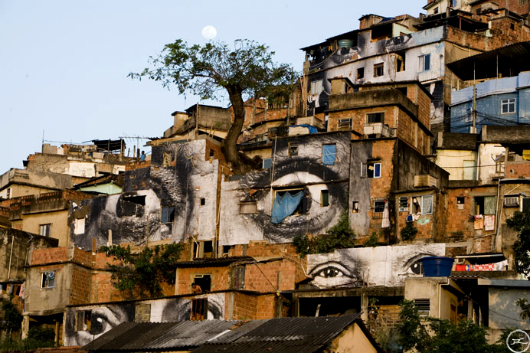
As urban areas have grown, these shantytowns of old tin and cinderblock have come to house millions of impoverished Brazilians in dangerous, crowded and dirty conditions. Though synonymous with Brazil’s urban housing crisis, favelas are nothing new.

They first appeared in Rio de Janeiro around the turn of the 20th century as civil war veterans returned home without government assistance. Turning to the steep hills of Rio de Janeiro’s fame, they sought shelter in makeshift housing, but instead only found more strife in unsafe living conditions. The favelas continued to expand in Brazilian cities as migrant workers settled in Sao Paolo and Rio in search of opportunity and failed to find adequate housing. In Rio, favelas concentrated next to affluent communities and followed the impoverished up the sharp slopes, while in Sao Paolo the favelas formed on the margins of the city. Over the years, a lack of public services and precarious sitting has literally eroded communities as mudslides 1966, 1996 and 2001 wiped away favelas.

Today, favelas have become an unfortunate and noticeable part of Brazilian life, indicative of an overwhelming housing crisis. According to the New York Times, in just the past six years housing prices in Sao Paolo have “increased by 208 percent and the cost of rent has increased by 97.5 percent in the metro area.” The price of a 970 square foot apartment in Sao Paolo is 16 times the average annual wage while nearly a third of the city lives in slum-like conditions. Overall, Brazil has a housing deficit of 7 million units and 20 percent of its total population lives in inadequate housing.

Those who have resigned to these slums must essentially live without infrastructure. Most favelas lack effective sewage systems, access to potable water and waste management systems. The communities have become so densely built up, that modern roads and utilities are nearly impossible to install. As areas with little government regulation, favelas also serve as ideal crime havens. Drug dealings and gang violence plague these secluded streets and have proven notoriously hard to snuff out. In the late 90s, the homicide rate in the Diadema favela of Sao Paulo averaged one murder per day.

Obviously, confronting the issue of the favela has become a daunting task. The Brazilians learned early that the most effective strategy was, ironically, to leave them standing. In the 1980s, after years of demolition, the Brazilian government realized that slum upgrading was more humane and cost-efficient than rebuilding them.

In order to transform favelas into safer, and more hygienic communities, the city officials of Sao Paolo and Rio de Janeiro have employed a surprising set of methods. Despite their squatter’s status, government plans have attempted to provide favela residents with titles to their homes. Not only does this provide the impoverished with dignity, but it also allows the cities greater regulation of the favelas. Along with increased property rights come building safety codes, taxes and public services and utilities that can benefit the community.

These programs have also empowered the communities to assist in the improvement efforts themselves. In Rio de Janeiro’s neighborhood of Providencia Hill, garbage and litter have become pressing issues due to narrow streets that restrict waste management vehicles. A new program has incentivized local trash collection by allowing residents to exchange one bag of trash for a gallon of milk. Not only does this clean up the community, it also provides the residents with better nourishment.

Community engagement also extends to crime prevention. In Sao Paolo, the city government has attempted to attack crime in some of its most dangerous favelas by instituting another form of an exchange program. This time, however, it involves toys. In exchange for toy guns, the program would provide children with comic books in an effort to diminish gun culture and in turn to encourage parents to relinquish their actual firearms. Over the course of three years, 27,000 toy guns have been exchanged along with 1,600 guns in just the first six months of the program.

By employing creative and engaging strategies, government officials from Brazil’s two largest cities have begun to change Brazil’s poor urban housing conditions one comic book at a time. While perhaps eyesores, the favelas have become deeply entrenched communities that are better off upgraded than demolished. Sao Paolo and Rio de Janeiro hold the hopes of millions of Brazilians within their limits. But the question remains: can they house them?

– Andrew Logan

Sources: Cal Poly, The Economist The Lincoln Institute of Land Policy, The New York Times University College London, UN The World Bank
Photo: Wooster Collective

July 2, 2015
https://borgenproject.org/wp-content/uploads/borgen-project-logo.svg 0 0 Borgen Project https://borgenproject.org/wp-content/uploads/borgen-project-logo.svg Borgen Project2015-07-02 15:19:432024-12-13 17:51:41Fixing Favelas: Urban Housing Problems in Brazil
Global Poverty

Favelas and the World Cup

June 12, 2014 marks one of the most exhilarating international competitions that spreads to millions of homes across the world. This year, the FIFA World Cup is taking place in Brazil. As a country that lives and breathes soccer, it makes a fitting choice. However, as the tournament draws nearer, more pressure and focus is being put on Brazil’s ability to step up to expectations.

In the midst of excited anticipation, Brazil has been faced with many threatening obstacles including strikes by police as well as government workers, causing fear that Brazil may not be ready in time. On the other side of the glorious soccer stadiums that will be filled with thousands of international visitors, lies the sprawling hills of favelas outside of Rio de Janeiro.

A favela is the Portuguese term for slum, and just outside of the bustling city center lies miles of low socioeconomic life, a juxtaposed sight to the nearby city. The contrast of life is extreme. As charter jets fly in holding national teams from participating countries, drug gangs still rule the favelas, not far from where foreign tourists will be staying.

Brazil has been making efforts to keep the areas under a state of control, implementing pacification programs. This effort may come too little too late, with CNN acknowledging “Rio’s favelas were neglected by authorities, considered no-go zones even by police” for many years, so the actions that began in 2008 when Brazil was announced host for the World Cup and 2016 Summer Olympics were necessary long before action was taken.

Since the beginning of the pacification program, only 176 of about 600 favelas are monitored with any consistency, leaving much unknown to neighboring cities and tourists. While the program has helped decrease the number of violent crimes and murders in Brazil since 2008, 6,000 people are killed a year, turning Brazil into basically an active war zone.

The city of Rio lacks a sense of calm as the government scurries about trying to finish stadiums on time while maintaining a professional international appearance. As the World Cup begins, tourists swarm into the country and will send the government into high alert to maintain safety for such a high number of visitors who may be lacking understanding the severity of the situations in the favelas.

Due to the around the clock media focus on the World Cup, the reports are sure to fly in should anything go awry. The world is watching Brazil as it stands on unstable footing.

— Elena Lopez

Sources: Truth-Out, CNN, The Guardian 1, The Guardian 2, Real Truth
Photo: For the love of the beautiful game

June 20, 2014
https://borgenproject.org/wp-content/uploads/borgen-project-logo.svg 0 0 Borgen Project https://borgenproject.org/wp-content/uploads/borgen-project-logo.svg Borgen Project2014-06-20 10:06:312024-05-26 23:46:47Favelas and the World Cup
Extreme Poverty, Food & Hunger, Gender Equality, Hunger

Carolina Maria de Jesus: Life in Favelas

The book begins: “July 15, 1955. The birthday of my daughter Vera Eunice. I wanted to buy a pair of shoes for her, but the price of food keeps us from realizing our desires. Actually we are slaves to the cost of living.”

Carolina Maria de Jesus’s diaries were edited into a book called “Room of Garbage” (1960), which quickly became one of the most successful books in Brazilian publishing history. In Sao Paulo, 10,000 copies of the book sold out in the first three days and it has since been translated into 13 different languages, becoming an international bestseller. Despite her success, within a few years she would return to living in the favelas and would later die in poverty.

Carolina was born in 1914 to a single mother in Minas Gerais. After attending primary school for two years, she was forced to drop out. She wrote her diary entries while living in the favelas (slums) of Sao Paulo with her three illegitimate children.

After World War II, the number of favelas exploded in major cities such as Rio de Janeiro and Sao Paulo due to mass migrations. Favelas were located on the unwanted lands left behind by urban development, often in the hills surrounding the cities.

A self-confident woman, Carolina refused to conform to social standards. She never married, and she expressed herself aggressively with sometimes racist views. Her diary entries describe her struggle to rise above poverty, living as one of the “discarded” and marginalized.

She collected paper, bottles and cans for coins, held various odds and ends jobs and scavenged in garbage bins for food to feed her children. Her stories, poems and diary entries deal with themes of poverty, loneliness, hopelessness and death. She writes of the racial injustice and discrimination heaped onto the poor and the blacks in the favelas.

She writes about political events and politicians with their empty promises to the urban poor, arguing, “Brazil needs to be led by a person who has known hunger. Hunger is also a teacher. Who has gone hungry learns to think of the future and of the children.” Many readers and critics were surprised that an uneducated black woman from the slums could eloquently write about politics, racism and gender discrimination.

In 1958, Audalio Dantas, a reporter for Diario da Noite, heard Carolina yell at a group of men on a playground, “If you continue mistreating these children, I’m going to put all of your names in my book!” Dantas convinced her to show him her writings and took them to his editor.

Although her book would reach international acclaim, many Brazilians criticized and ostracized her for her refusal to conform to social norms. Today, most Brazilians do not acknowledge her impact, only recognizing her as that “slum dweller who cracked up.” Why is Carolina Maria de Jesus important if her country refuses to remember her?

Her stories humanize poverty and hunger, bringing attention to the human lives behind facts and figures. She describes the pain of hearing her children ask for more food because they are still hungry. She writes about watching restaurants spill acid in the trashcans to prevent looting by the poor. In the favela, she had the “impression she was a useless object destined to be forever in a garbage dump.”

A quick search on the Internet can show you numbers and statistics about the millions of people living below the poverty line in the world, but Carolina’s words showed people “the meaning and the feeling of hunger, degradation and want.” To overcome global poverty and move forward with understanding and empathy, Carolina’s stories and the countless stories of others must not be forgotten.

– Sarah Yan

Sources: Latin American Studies, The Life and Death of Carolina Maria de Jesus, Notable 20th Century Latin American Women
Photo: Omenelick 2 Ato

May 14, 2014
https://borgenproject.org/wp-content/uploads/borgen-project-logo.svg 0 0 Borgen Project https://borgenproject.org/wp-content/uploads/borgen-project-logo.svg Borgen Project2014-05-14 04:00:032024-05-26 23:35:46Carolina Maria de Jesus: Life in Favelas
Developing Countries, Development, Water

Brazil Pledges Development for Favelas

rio-de-janeiro-development
The Rousseff administration in Brazil has announced that its next step in its Growth Acceleration Programme (PAC) will be to allocate more than $1.2 billion for improving three favelas in Rio de Janeiro. The announcement comes three years before Rio de Janeiro is set to host the 2016 Olympic Games. Next year Brazil also will host the football World Cup.

PAC was launched in 2007 by the previous administration, that of President Lula da Silva, and focused on six initiatives to improve infrastructure, sanitation, and social development. Within three years, positive results were reported. Brazilian finance minister Guido Mantega called the effects of PAC on Brazilian growth “a great success.”

PAC 2, President Rousseff’s continuation of the program, has since been implemented. A June report from the Brazilian government announced major highlights by sector, including more than 3 million electricity connections, 540 water supply improvement projects in urban areas, and more than 7 million km of highways in progress throughout the country.

The Rio favelas that will receive the aid are Rocinha, Jacarezinho, and the Lins complex. Rocinha is the biggest slum in Brazil with a population of over 70,000, and it is also among the most developed favelas in Brazil. Many favelas are not as developed, suffering from lack of proper sewage and water facilities, as well as a high crime rate.

– Naomi Doraisamy
Source: BBC News, World Bank
Photo: iWall Screen

June 28, 2013
https://borgenproject.org/wp-content/uploads/borgen-project-logo.svg 0 0 Borgen Project https://borgenproject.org/wp-content/uploads/borgen-project-logo.svg Borgen Project2013-06-28 05:06:032024-12-13 17:49:26Brazil Pledges Development for Favelas
Page 2 of 212

Get Smarter

  • Global Poverty 101
  • Global Poverty… The Good News
  • Global Poverty & U.S. Jobs
  • Global Poverty and National Security
  • Innovative Solutions to Poverty
  • Global Poverty & Aid FAQ’s
Search Search

Take Action

  • Call Congress
  • Email Congress
  • Donate
  • 30 Ways to Help
  • Volunteer Ops
  • Internships
  • Courses & Certificates
  • The Podcast
Borgen Project

“The Borgen Project is an incredible nonprofit organization that is addressing poverty and hunger and working towards ending them.”

-The Huffington Post

Inside The Borgen Project

  • Contact
  • About
  • Financials
  • President
  • Board of Directors
  • Board of Advisors

International Links

  • UK Email Parliament
  • UK Donate
  • Canada Email Parliament

Get Smarter

  • Global Poverty 101
  • Global Poverty… The Good News
  • Global Poverty & U.S. Jobs
  • Global Poverty and National Security
  • Innovative Solutions to Poverty
  • Global Poverty & Aid FAQ’s

Ways to Help

  • Call Congress
  • Email Congress
  • Donate
  • 30 Ways to Help
  • Volunteer Ops
  • Internships
  • Courses & Certificates
  • The Podcast
Scroll to top Scroll to top Scroll to top