Posts

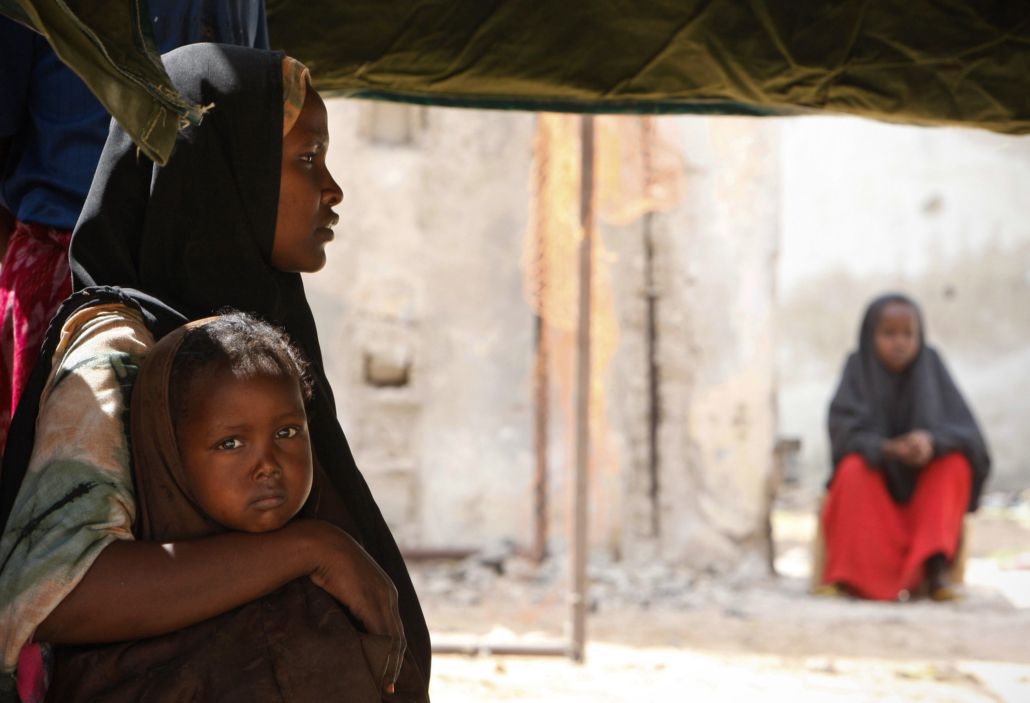
Charities Operating in SomaliaWhen addressing women in Somalia, one should focus on the work occurring on the ground. The civil war — coupled with famines, droughts and floods — has left urgent matters on the back burner. Now, as the country is steadily finding its footing, the focal point is shifting towards more local and individual concerns that affect the society as a unit. There are a good handful of nonprofit organizations and charities operating in Somalia that center their work around women’s issues. Here are five women-focused charities operating in Somalia.

1. Action for Women and Children Concern (AWCC)

Action for Women and Children Centre is a nonprofit non-governmental and non-political grassroots organization that works specifically for women and children. Its motive is to empower women by providing and aiding in receiving basic education, primary health care, water hygiene and sanitation and the promotion of human rights.

This NGO is active in Somalia and has been since February 2017. It is youth-serving and youth-led. Its main strategy is to advance women’s rights and leadership and build and support local communities by encouraging human rights, justice, safety and security. 

Action for Women and Children Concern works across 100 countries with 80% of staff working within the communities they serve. It has been able to work directly and make a substantial difference within Somalia.

2. Somali Women’s Studies Centre (SWSC)

Somali Women’s Studies Centre is another non-governmental nonprofit organization that originated in Somalia in the year 2000. The organization follows the idea that through empowerment and assistance, women can get the support they need, which will in turn allow them to make positive alterations that will ultimately improve and strengthen their community. 

SWDC works to better the lives and conditions that women live in. It does this by first focusing on vulnerable groups of women. The SWDC carries out this mission by heightening the capacity of women to lobby and advocate for concerned parties, and finally promoting reconciliation and peace building. 

3. CARE

CARE is a charity that was established in Canada in 1946, but it was in the mid-1970s that the organization began to work on an international scale. The work in Somalia began in 1981. Its programs have covered water and sanitation, civil society and media development, primary school education, teacher training, adult literacy and vocational training, and much more. 

CARE also works specifically for women. On its website, it describes its mission as aiming to reduce the impact of emergencies on vulnerable communities, especially women and children. In 2022, CARE was able to reach 2,214,383 directly and 2,811,318 with 53% of the number being women and young girls.

4. Somali Women’s Development Centre (SWDC)

Somali Women’s Development Centre is an NGO that began in 2011. It aims to uplift and motivate Somali women to support Somali women in advocating for their rights. SWSC also does a lot of research and documents the problems that Somali women and girls face daily. 

The SWSC are based in Somalia, but they also have offices in Nairobi Kenya for the Somali women that live there. 

5. Women’s Peace and Humanitarian Fund (WPHF)

The Women’s Peace and Humanitarian Fund first came to work in Somalia during the 2012 presidential election. Their primary focus is women. The WPHF recognizes that women in Somalia have always suffered disproportionality at the hands of Clan fights and extremist groups. With child-bride marriages and female genital mutilation, FGM women have had an unfair beginning to adult life. 

These women-focused charities operating in Somalia are doing substantial work to support and provide for the women that they cater to. The work that is done is reaching women and girls and is allowing them a new chance and opportunity to grow. 

– Sumaya Ali
Photo: Flickr
NGOs in LaosSince its creation out of the remnants of French Indochina, Laos has been at the forefront of conflict. Although poverty is declining in Laos, with the poverty rate dropping to 18% in 2019 from 25% in 2013, the Lao people are still in desperate need. Some NGOs are improving conditions on the ground in Laos.

5 NGOs Fighting Poverty in Laos

  1. CARE – In Laos, CARE collaborates with civil society to create policies and strategies to combat gender-based violence, enhancing the ability of women and ethnic minority farmers to anticipate better and respond to risks and opportunities due to climatic shocks. The organization also works to improve food and nutrition security among rural households and produces sustainable agricultural outcomes at the village and household levels.
  2. Oxfam – Since Oxfam began operations in Laos at the end of the 1980s, its partnerships have substantially changed. Their objective is to assist Laos in becoming an open, just society where vulnerable women and men can participate in its development and exercise their rights to sustainable development. Since the opening up of civil society, Oxfam has supported its partner groups more in their efforts to increase citizen involvement in decisions that impact their lives. To provide disadvantaged populations with a means of subsistence, Oxfam collaborates with Lao government organizations and local authorities.
  3. UNICEF – The UNICEF Health and Nutrition program works at the national and sub-national levels to ensure that high-impact child survival interventions are reflected in national policies and budgets and reach all children and their families, especially the most vulnerable and disadvantaged. UNICEF assists the Lao Government of Lao PDR in ensuring that all children have access to effective, secure and long-lasting immunization services. The elimination of measles, maternal and neonatal tetanus and sustaining the polio-free status are all national goals supported by UNICEF. Additionally, UNICEF works with the Ministry of Health of Lao PDR to improve health systems to deliver high-impact child survival and development interventions in communities and facilities. These interventions include postnatal newborn care, early initiation and exclusive breastfeeding, immunization and providing ORS/zinc to treat diarrhea.
  4. World Bank – The World Bank formed the Poverty Reduction Fund (PRF) in 2002. It intends to provide access to local services and infrastructure while giving the villages more control over project planning and execution. Since the PRF’s creation, the World Bank has contributed to broadening the range of sponsored initiatives benefiting 1.2 million people to date. Overall, the project emphasizes livelihood projects, market accessibility and the production and consumption of various wholesome meals, especially for expectant mothers and small children. 
  5. World Education – Through projects in education, disability inclusion, economic development, mine action and health in Laos, World Education has been committed to empowering and transforming communities, families and individuals since 1992. World Education creates these programs to enhance self-reliance. Families in rural villages now have better means of subsistence, earnings and financial stability, and they can push for the Lao government to develop social protection policies. They have managed savings and credit unions, given start-up grants, held financial literacy training, assisted the rural poor in starting micro businesses and efficiently used financial services through various projects.

These five NGOs in Laos are significantly impacting the fight against poverty. Through their diverse approaches, they are addressing various dimensions of this complex issue and improving the lives of countless individuals.

– Jake Marks
Photo: Flickr

Williams is Promoting Educational RightsVenus Ebony Starr Williams, like her sister Serena Williams, is a professional tennis player. Growing up in a poverty-stricken community, Williams struggled to achieve success. As a former No.1 tennis player, Williams has won several grand slams, including two at the U.S. Open and five at Wimbledon. As the first Black woman tennis player to become No. 1 in the modern era, Williams has left a legacy for women globally. Not only has she paved the way for women’s tennis, but Williams is also promoting educational rights for women globally.

Humanitarian Work

According to UNESCO, around 244 million children in Africa between the ages of 6 and 18 are out of school. The Human Rights Watch estimates that more than 49 million women in Sub-Saharan Africa are out of primary and secondary schooling, undermining their opportunities and limiting their rights. Early marriages are a factor in the lack of women’s education in Africa. In Sub-Saharan Africa, 40% of girls below the age of 18 are married, preventing them from receiving a proper education.

In response, Williams is promoting educational rights for women by partnering with CARE, an international humanitarian organization fighting global poverty. The aim of the partnership is to raise awareness and encourage girls’ education in developing regions by supporting programs in Kenya and Malawi. According to UNESCO, 74% of the Malawi population lives in poverty, and education for girls often ends in primary school. Williams is promoting educational rights by contributing $25,000 to assist CARE in launching a vocational training program based in Malawi. The vocational training program has been able to reach out to 50 women in Malawi.

Educational Support in Latin America

According to the Pew Research Center, 33% of Latinos ages 18 to 24 are enrolled in school, compared to an average of 42%. The lack of education that Latinos receive is evident in the socio-economic challenges that they face. Latino families are 1.5 times more likely to live below the poverty line compared to white families.

Alongside supporting the education of African girls, Williams is promoting educational rights for Latinas. She has constantly supported the Eva Longoria Foundation, an organization that helps “Latinas build better futures for themselves and their families through education and entrepreneurship.”

The Eva Longoria Foundation

The Eva Longoria Foundation works by launching programs that are culturally relevant in order to enhance the learning and productivity of Latinas. According to the Eva Longoria Foundation, 17% of U.S. women are Latina, yet only 2% of them are in the STEM (science, technology, engineering and math) workforce. The Eva Longoria Foundation launched the STEM Program, which encourages young Latinas’ love for math and science at a young age through projects like coding and robotics. Through Williams’ support of the organization, the Eva Longoria Foundation has been successful in teaching STEM skills to more than 2,000 young Latina women.

– Yana Gupta 
Photo: Flickr

Gender-Based Violence in Politics
According to the World Bank, nearly one in three women has endured gender-based violence (GBV). While intimate partner violence is one of the more common forms of GBV, sometimes GBV can occur in the public sphere because of a woman’s level of political involvement. Here are some things to know about gender-based violence in politics.

What is Gender-Based Violence?

Gender-based violence or GBV is sexual, physical, mental [or] economic harm inflicted [upon women and girls] in public or in private.” For a long time, violence against women was accepted and normalized in society. It wasn’t until 1992 that gender-based violence was legally considered by the U.N. to be a violation of women’s human rights.

GBV in Politics

The right to vote and the right to hold office are civic duties that everyone should have the opportunity to utilize. Yet, in many countries, women are receiving backlash for being heavily involved in democratic processes. Whether it be running for office or voting, the number of women who are politically engaged has recently increased. Due to the very public nature of politics, however, many women who live in places that aim to suppress women’s rights have been in danger of being harmed and sometimes even killed for their political engagement. 

In What Countries Do Women in Politics Experience the Highest Rates of Gbv?

Women in politics are said to experience violence at higher rates in the countries of Mexico, China, India and Afghanistan. There have been several instances reported in these countries of gender-based violence being inflicted upon women who are politically engaged. For example, in May 2021, a Mexican woman who was running for local deputy was shot at while holding a rally. A similar scenario took place in Afghanistan in January 2021 when two Afghan women who were judges in Afghanistan’s Supreme Court were shot and killed. 

Looking Ahead

Many organizations are working to eliminate the violence that not only women working in politics but all women must endure. For example, CARE has been working towards its mission of “sav[ing] lives, defeat[ing] poverty, achiev[ing] social justice, and fight[ing] for women and girls” since 1945. CARE is specifically addressing the issue of GBV by aiding survivors mentally, emotionally, physically, financially and legally. Additionally, CARE integrates ways to combat GBV across all of its initiatives. By recognizing GBV as a complex and widespread issue, CARE aims to fight it in all of the many places in which it appears. Thus far, their initiatives have reached millions of people, with 2.4 million survivors of GBV receiving help and 92 GBV initiatives being implemented in 34 countries.

CARE is not the only organization working towards fighting back against gender-based violence. The Foundation for Civic Education and Social Empowerment (FOCESE) has similar goals. FOCESE is an organization based in Malawi whose mission is to help vulnerable communities, specifically young women and girls, and advocate for “gender-equitable social norms, attitudes, and behavioral change at both community and individual levels.” Additionally, FOCESE claims to “work tirelessly to prevent violence against women and girls.” In addition to their desire to combat GBV, FOCESE is also encouraging young girls to become more politically engaged. 

The Youth for Inclusion, Participation, and Empowerment (YIPE) in Local Governance is a project aimed at increasing the amount of women’s representation and involvement in local government. This project, coupled with the organization’s constant desire to combat GBV, is a step in the right direction. Hopefully between organizations such as CARE and FOCESE, gender-based violence in politics — and elsewhere — will not only decrease but, eventually, come to an end.

– Nicole Alexander
Photo: Flickr

Financial Opportunities for Women 
The country of Sierra Leone
suffered from the onslaught of an 11-year civil war from 1991 to 2002 that resulted in displacement, thousands of deaths and sexual violence. Since then, the country has continued to experience hardships, with many living in extreme poverty. Adding to this, Sierra Leone’s citizens continuously face the effects of multidimensional poverty due to the absence of strong financial and education systems. Rural areas, specifically, endure the harshest impacts of poverty, most notably because of the lack of resources found in these neighborhoods. The COVID-19 pandemic worsened the extent of poverty in Sierra Leone, but the rural areas ultimately garnered the most difficult consequences, including the closing of locally-owned businesses and a reduction of incomes and salaries. As the pandemic ravaged the nation, the Solar Harnessed Entrepreneurs (SHE) Project came to fruition as a saving grace. The project allies with the most vulnerable and expands financial opportunities for women. 

The Intentions of the SHE Project 

The SHE Project secures and provides women with renewable energy-powered sources to operate their businesses. Prior to the installation of the project, many businesses located in the rural areas of Sierra Leone did not own or utilize this technology, and thus, they often suffered at the whims of debt crises, virus outbreaks and the global pandemic. Items such as a solar-powered freezer, for instance, allow businesswomen to expand the products they can sell and reach larger markets. 

CARE, an international NGO, created the SHE Project in 2022. Now, the multidimensional organization receives further aid from The Rockefeller Foundation and the Global Energy Alliance for People and Planet (GEAPP). Since its implementation, the SHE Project has worked to aid 8,000 women in Sierra Leone by providing them with the resources to transform their businesses into green organizations that employ renewable energy and technology. This transformation increases financial opportunities for women because it enables growth and consistency in ways that business owners could not guarantee beforehand. 

Why Women? 

The SHE Project supports the financial development of female-owned businesses. Female empowerment serves as one of its main goals, especially because women often complete dangerous and time-consuming tasks, like collecting fuel, that exacerbate the climate crisis and harm their health. 

In this sense, the SHE Project also boasts the humanitarian goal of restructuring the traditional, harmful manner in which women receive an income. With support from renewable energy sources, women can have greater control over their financial assets, and they can rely less on the dangerous tasks of assembling fuel, for example. 

When orchestrating the SHE Project, CARE took its development a step further in its attempts to empower women. By working with microfinance institutions to combat the fact that female-owned businesses generally receive little to no income, CARE provided women with low-interest loans. In addition to the use of solar-powered resources, women also received training sessions regarding financial development and a newfound ability to expand their businesses to new markets. The series of steps taken by CARE and other organizations incentivizes financial opportunities for women. 

Especially notable to this project is the fact that CARE also seeks to target the persistence of patriarchal values. By organizing “household dialogues,” trained professionals spoke with fathers and husbands to discuss the importance of female empowerment. 

Inspiring Stories

The SHE Project is a successful initiative that continues to find, educate and employ women with the tools to expand their businesses and succeed as financially independent income earners.

While most women in Sierra Leone did not have access to the tools to increase market access or maintain their businesses during hardships, the SHE Project has revolutionized this, increasing financial opportunities for women and increasing equality. 

Marie Squire of Ghangbatoke has experienced an increase in sales due to the freezer that the SHE Project provided her with. In fact, the freezer, instrumental for keeping cold drinks–the base of her business–fresh, has allowed her to keep her family afloat. 

Similarly, Mariama Fortune honored the imported freezer as the origin of her success. As a single mother who had difficulties beginning her fried cassava business, Mariama always wanted to provide for her children. Now that she has the freezer to help her business and supply food for her family, she believes she can focus on the future, including the prospect of educating her children. 

The Future 

Given the success of the SHE Project, which targets changing weather patterns, female empowerment and financial success, the Sierra Leonean government has recognized the importance of supporting this initiative. Bukai Bindi Hindowa, the Deputy Minister of Gender and Children’s Affairs expresses an enthusiastic outlook for the continuation of the project, ultimately marking the reduction of poverty and the development of a stabilized female workforce. As the government invests time, effort and resources in the SHE Project, which bolsters financial opportunities for women, Sierra Leone can continue to see the reduction of barriers that limit forward growth. 

– Maddy Grieco
Photo: Flickr

Being Poor in CubaDuring Fidel Castro’s leadership, which lasted from 1959 through 2008, citizens experienced the reality of being poor in Cuba. Despite improved health care and education in the country, as shown by the United Nations Educational Scientific and Cultural Organization’s (UNESCO) recognition of near-universal nationwide literacy, the Cuban economy and people still suffered under Castro’s rule. Meanwhile, the U.S. imposed an embargo on Cuba in 1962, following Castro’s ascension to power and this presented further hardships for Cuban exporters.
The embargo served to prevent the spread of communist ideology by isolating Cuba and restricting communication with the outside world. In an April 1960 memo, U.S. Deputy Assistant Secretary Lester D. Mallory wrote, “Every possible means should be undertaken promptly to weaken the economic life of Cuba.” The embargo is still active in 2023, with many pressuring President Biden to put an end to the repressive blockade in order to improve the quality of life for those living the reality of being poor in Cuba.

3 Facts About Being Poor in Cuba

  1. Food Scarcity. During the COVID-19 pandemic, Cuba faced a food crisis, particularly due to a combination of diminished food imports and tightened U.S. sanctions. Meanwhile, with an inflation rate of 42% in 2023, Cubans are struggling to put food on their tables. The current food shortage and scarcity issues mean that Cubans have few affordable food options. Even the most basic food items like eggs, milk, bread and toilet paper are becoming increasingly hard to find in local supermarkets.
  2. Employment Problems. For a country with a struggling economy, Cuba has a notably low unemployment rate compared to countries with a similar economic standing. Cuba has no minimum national wage, and in 2022, a report by the Cuban Observatory for Human Rights (OCDH) revealed that more than 72% of Cubans are living below the poverty line. In the same report, 30% of Cubans surveyed claimed to have full-time work, leaving the remaining 70% in precarious and unstable working conditions and heavily reliant on a small proportion of the population for financial support. With such a high number of Cubans working full-time and living in poverty, there is significant pressure on the employed to find additional ways to make ends meet.
  3. Health and Education. Even with the harsh reality of poverty in Cuba, Cubans enjoy free access to health and education. Because primary-level education is compulsory for all Cuban children, the country has a near-nationwide literacy rate. Moreover, preventative care stands as the priority of the Cuban health care system. Cuba also comes in first place in the world’s leaderboard for the number of doctors per 1,000 people at 8.4 in 2018, giving the country an exceptional reputation for an abundance of medical personnel.

CARE’s Work in Cuba

As a British charity operating internationally, CARE works to solve global poverty and eradicate all problems of inequality with a particular focus on women and girls. In 1959, CARE began working in Cuba to provide food security for those with little to no means. In 2019, CARE began making efforts to enable Cuban farmers to develop climate resiliency in the face of changing weather patterns as a means of strengthening food security. CARE also ran programs to improve quality of life, ensure access to clean water and implement sustainable agricultural methods in vulnerable communities. In terms of upholding the right to food, nutrition and water, CARE has run nine programs in Cuba. In 2022, programs of this nature benefited more than 5,500 people.

Looking Ahead

Due to its complicated history and ongoing political difficulties, a large fraction of the Cuban population lives below the poverty line. Also, the U.S. embargo currently makes it challenging for U.S.-based charities to provide aid to Cuba. This leaves the responsibility of providing aid to Cuba to countries and organizations outside the U.S. Despite these struggles, Cuba’s health and education services help to raise the quality of life in the nation.

– Genevieve Lewis
Photo: Flickr

Human Rights in Bosnia and Herzegovina
Bosnia and Herzegovina is a country located on the southern peninsula of Europe. Having gained its independence in 1992 following a war with Yugoslavia, Bosnia and Herzegovina is a relatively young country. The 1992-1995 war brought forth conflict between Bosniak, Croatian and Serbian individuals who wished to gain control of the territory. Thirty years later, tension continues to be prominent, challenging human rights in Bosnia and Herzegovina.

War

In March 1992, Bosnia and Herzegovina declared its independence from Yugoslavia. Bosnian Serb minority disagreed with the sovereignty of Bosnia and Herzegovina which led to conflict between ethnic and religious affinities and ultimately led to war as the country abandoned Yugoslavia. The war for independence ultimately caused great disagreement between Croats, Serbs and Bosniaks. During the war, the Bosnian Serb military campaign launched ethnic cleansing operations in an attempt to eliminate the number of Bosniak civilians. The war concluded in 1995 with an estimated 100,000 casualties.

The Borgen Project spoke with Velemir Jankovic, an individual born and raised in Bosnia and Herzegovina before the 1992 war and now lives in the U.S. Velemir describes that war’s impact on his village resulted in “his house being destroyed and him losing everything but hope.” Like Velemir, many refugees sought to escape the casualties of war. With physical destruction and political tension, many citizens still find themselves struggling to settle. While many suffered monetary loss, such as Velemir’s home, others lost family members, leading to great resentment among those the violence of war impacted. These differences have impacted the Bosnian population for the last 30 years.

Unemployment

In 2020, the unemployment rate in Bosnia and Herzegovina stood at 27%. Corruption and slow economic development contribute to low job availability in the area. Not to mention, ethnic conflicts enabled a divide in the country. Prejudice against certain ethnicities continues to be prominent after the war, therefore making it difficult for individuals to work harmoniously alongside one another.

There has been a progressive decrease in the unemployment rate in recent years. In 2014, 57% of Bosnia and Herzegovina’s youth were unemployed. That number has decreased to 14.9% in 2021.

While the country is still figuring out a strong economic structure, financial aid funds infrastructure and facilities for citizens. What may be contributing to the improvement of unemployment is the 2021 Instrument for Pre-accession Assistance (IPA), a €73 million investment for regional development, social protection, as well as employment and public transportation. One can see IPA’s impact on the labor market through the development of wage settings as well as the establishment of unions.

Poverty and the Economy

While unemployment is one of the leading factors in the stagnation of the economy, Bosnia and Herzegovina has not seen an impact on the poverty levels. The poverty rate has steadily remained at 15% between the years 2008 and 2020, according to the World Bank.

While aid enables the country to survive financially, the economy in Bosnia and Herzegovina is depleting. The COVID-19 pandemic caused a significant decrease in consumption in 2020, therefore slipping Bosnia and Herzegovina into “its worst recession in 25 years.”

Not to mention, inflation has increased by 16.7% in 2022. These circumstances create a difficult economic environment for citizens. With low employment rates and high consumer costs, it is very difficult for Bosnians to overcome the poverty rate.

Human Rights

Aside from low infrastructure in the economy, abuse of human rights in Bosnia and Herzegovina continues to occur three decades after the turmoil of the 1992 war. In 2021, there were significant reports of torture or inhumane treatment of civilians by law enforcement. Abuse of power by police also harms individuals such as journalists. It is common for journalists to face violent threats to erase content, prohibiting them from their right to press.

There has also been an increase in gender-based discrimination, in which women are targeted violently and mistreated in the workplace. The tension between ethnic groups continues to be present as well, with Bosnians often planning anti-refugee platforms, using hostility and threats to harm migrant communities, according to the U.S. Department of State.

Organizations Working to Improve the Situation

CARE, a nonprofit that began helping marginalized groups in the area in 1993, has been able to provide aid to many citizens in Bosnia and Herzegovina. It focuses on integrating minority group members into society through supporting local programs such as the Young Men’s Initiative II (YMI II), which it founded in 2006.

The YMI II ultimately joins young men in Bosnia and Herzegovina, teaching them the importance of gender equality. The goal of the program is to educate the younger generation on the importance of unity in efforts to make an impact on the years of tension and discrimination in Bosnia and Herzegovina.

There is an evident issue of human rights in Bosnia and Herzegovina following the 1992 war. Its independence from Yugoslavia enabled prejudice and discrimination among differing ethnicities. Through foreign aid and a steady increase in the employment rate, there is hope that this struggling country improves its social welfare.

– Micaela Carrillo
Photo: Flickr

Programs in Afghanistan
Three NGOs resumed programs in Afghanistan after an order from Taliban authorities on December 24, 2022, prevented women from working in non-governmental organizations (NGOs). Organizations like Save the Children, the International Rescue Committee (IRC) and CARE have now restarted work across the country.

The order for both foreign and local NGOs to suspend female staff came after the Taliban claimed that female aid workers were not adhering to the strict dress code currently enforced in Afghanistan. As Taliban rules dictate that men must not deliver assistance to women, the ban has made it extremely difficult for NGOs to work, as they can only effectively support half the population. As a result, most NGOs have now suspended operations in Afghanistan.

Humanitarian Programs Resume

However, three weeks after the Taliban announced the orders, Save the Children, the IRC and CARE resumed their health and nutrition services after receiving assurances from the Ministry of Public Health that it would be safe for their female staff to return to work. Save the Children has also confirmed that it is restarting some education programs, while the IRC is working with provincial authorities to discuss the possibility of female staff returning to work in other sectors.

This week, the U.N.’s Under-Secretary-General for Humanitarian Affairs, Martin Griffiths, also confirmed that Taliban ministers were in the process of drawing up new guidelines to allow some humanitarian organizations to employ Afghani women. Mr. Griffiths told the BBC that he thought the Taliban were “listening” and had received “encouraging responses” after numerous meetings with Taliban leaders to discuss the ban on female NGO workers.

Restrictions on Women’s Rights and the Humanitarian Crisis

The Taliban’s ban on female NGO workers is just one of the numerous restrictions placed on women in the country since they came into power in 2021. Driven by an oppressive and patriarchal interpretation of Islam, the Jihadist group has undone much of the previous efforts to liberalize the country in years before their takeover. Women in Afghanistan are currently subject to strict dress codes, unable to attend schools or universities and cannot enter certain public spaces such as gyms or parks.

Women are witnessing the loss of their liberties and autonomy amid an unprecedented humanitarian emergency. With 18.9 million people experiencing food insecurity, an extraordinary amount of people are set to suffer from malnutrition, starvation and preventable diseases this year. In light of this, the need for NGOs to provide aid and address inequalities is more prevalent than ever.

NGOs Helping

As NGOs resume programs in Afghanistan, services from Save the Children, the IRC and CARE in Afghanistan will hopefully provide some relief during this humanitarian crisis. Since the Taliban’s takeover of Afghanistan, Save the Children has provided more than 3.3 million people (1.8 million of those being children) with nutritional, educational and mental health services, as well as essential aid such as blankets, materials to build shelters and hygiene products.

The IRC has also provided aid to thousands of villages across nine provinces in Afghanistan. It is currently supporting more than 100 health centers, helping locals with community development projects and improving access to education, particularly in rural areas. The organization is also leading the fight to protect and empower women and girls in the country by providing them with education opportunities, giving advice on women’s health and teaching them advocacy skills in its Afghan Women and Girls Program.

CARE runs three programs in Afghanistan. Its Resilience Program works to protect women’s social and political rights and seeks to promote female engagement in business, for instance through agricultural production. Its Education Program also provides children with access to education through a community-based approach, whilst its Health Equity and Rights Program provides health care to vulnerable adults and children.

While some of these services are still under suspension due to the ban, the resumption of programs in Afghanistan in the health and nutrition sector is bringing some hope and optimism to a struggling country. With continuing negotiations between the U.N. and the Taliban to try and reverse the decrees restricting women’s rights, it is vital that people continue to support NGOs in the hope that more humanitarian sectors will start to open up for women to work in.

– Priya Thakkar
Photo: Flickr

Elderly Poverty in UkraineAmid the destruction that Russian troops have wreaked on Ukraine lies a forgotten demographic that has been forced to bear the brunt of Russian aggression: the elderly. As Russia continues to target healthcare facilities, apartment complexes and power plants, access to food, shelter and electricity is now elusive. Poverty among the elderly is more pernicious than it has ever been. Today, senior citizens represent one-third of all Ukrainians in need of dire assistance: 91% of elderly Ukrainians require aid to get food and are suffering from extreme cold while 75% need basic hygiene items and 34% need urgent medication for chronic illness.

A Legacy of Poverty

Elderly poverty in Ukraine is not a novel issue. Although Ukrainian citizens aged 65 and over represent 17% of the nation’s population, their plight has been largely overlooked. The collapse of the Soviet Union left in its wake a pension system that hinged on contributions from the steadily declining working class, which condemns 80% of pensioners to live below the poverty line as Ukraine’s population dropped every year.

The inaccessibility of essential services, pharmacies, hospitals and grocery stores as a direct result of the war has only exacerbated the struggle of the elders who have already been denied access to these basic necessities. Disabilities and chronic illness obstruct them from evacuating to safety, and for many the fear of burdening their families has compelled them to remain in a war zone with little to no companionship or support network as their loved ones flee the country.

Organizations Aiding Ukrainian Elders

Global initiatives are rising to the challenge. HelpAge International is a network of organizations that advocate for senior citizens around the world. The network has continued to support elderly Ukrainians in eastern Ukraine since the dawn of the war in Donbas in 2014, supplying almost 5,000 older community members with peer-to-peer support, assistive devices, hygiene kids and home-based care.

In partnership with People in Need, CARE is a global organization with a commitment to “fight global poverty and world hunger by working alongside women and girls”. The partnership resulted in the founding of the Ukraine Crisis Fund which aims to provide at least four million vulnerable civilians affected by the Russo-Ukrainian War with emergency assistance. This includes food, water and hygiene supplies, as well as cash support and psychosocial aid. The U.N. Refugee Agency (UNHCR) is helping elders recover shelter by helping to mend homes shelled by Russian airstrikes. Finally, the Armed Forces of Ukraine are working tirelessly to protect elderly citizens and all of Ukraine’s people. Their official fundraising account proves an effective way to improve Ukraine’s defense capability even from overseas.

Although war continues to rage, not all hope is lost. According to information services company Candid, which tracks funding data in real time, more than $1.3 billion has been donated to Ukraine through non-profits. Though it will take years for life to return to normal and even more years for elderly poverty in Ukraine to be remedied, the aid of the international community demonstrates that such change is indeed possible.

A Look Ahead

While recent airstrikes in Dnipro and Mykolaiv suggest that the humanitarian crisis in Ukraine is far from over, new defense systems supplied by Canada, the United States and the United Kingdom have already boosted Ukraine’s ability to disrupt Russian missiles. Thanks to the new developments, the elderly can be better taken care of as their homeland becomes better fortified. Though poverty among the elderly continues to plague Ukraine, recent improvements to Ukraine’s national security as well as the work of NGOs and nonprofits make a future where this issue is no longer a death sentence.

– Stefania Bielkina
Photo: Flickr

Health Care in LiberiaLiberia has had a long relationship with poverty, with 50.9% of the population living below the national poverty line in 2016. This figure was predicted to increase in 2021 by The World Bank. Due to the heavy burden of poverty, many children deal with malnutrition. The civil war in Liberia during the 1990s, as well as the Ebola outbreak in 2014, have had significant impacts on overall life, including health care in Liberia.

Malnutrition

Widespread poverty in Liberia has had far-reaching impacts on citizens’ lives. Apart from an inadequate health care infrastructure in Liberia, poverty also directly impacts the health of citizens in the form of malnutrition. The effects of malnutrition are far-reaching, especially for children. An estimated 32% of children younger than the age of 5 suffer stunting due to malnutrition.

Malnutrition also increases the risk of death and infections. Additionally, malnutrition can negatively affect a child’s brain function. The struggle stems from more than just a lack of food, but a lack of funds to afford foods with the proper nutrients. As of 2017, 69% of children under the age of 5 in Liberia are anemic.

Malnutrition has an adverse effect on economic efficiency, human capital and national development, according to USAID. Furthermore, the lack of resources such as clean water and proper sanitation increases the risk of stunting.

Partners in Rebuilding Health Care

The interconnectedness of the world means quick patterns of disease spread, which can lead to global health crises, as with the COVID-19 pandemic. However, impoverished countries, such as Liberia, have fragile health systems that are not well-equipped to properly manage such disease outbreaks.

Partners in Health (PIH) came to the country’s aid back in 2014 when the Ebola outbreak posed a massive threat to West Africans. Partners in Health continued to aid health care in Liberia, by strengthening the pre-existing health care facilities and infrastructure.

The organization’s aid has contributed to positive health impacts in Liberia. For instance, people dying from tuberculosis decreased from 15% to 0% after PIH support began in 2014. Also, mental health patients in Partners in Health supported facilities went up 30%. The organization has also helped train communities on health-promoting practices and provided training to health care professionals as well.

The world is more interconnected than ever, which means that countries are more able to help one another and collaborate to combat global poverty.

– Kelsey Jensen
Photo: Flickr