• Link to X
  • Link to Facebook
  • Link to Instagram
  • Link to TikTok
  • Link to Youtube
  • About
    • About Us
      • President
      • Board of Directors
      • Board of Advisors
      • Financials
      • Our Methodology
      • Success Tracker
      • Contact
  • Act Now
    • 30 Ways to Help
      • Email Congress
      • Call Congress
      • Volunteer
      • Courses & Certificates
      • Be a Donor
    • Internships
      • In-Office Internships
      • Remote Internships
    • Legislation
      • Politics 101
  • The Blog
  • The Podcast
  • Magazine
  • Donate
  • Click to open the search input field Click to open the search input field Search
  • Menu Menu

Archive for category: Water Crisis

Global Poverty, Water Crisis, Water Quality, Water Sanitation

COVID-19 Affects Zimbabwe and Its Water Supply

COVID-19 affects Zimbabwe
Zimbabwe once had an effective water system. However, a lack of proper infrastructure and government action means a lack of safe water. Water and waste disposal systems suffer ineffective planning, especially in Zimbabwe’s capital Harare. Further, COVID-19 affects Zimbabwe broadly as well as having an impact on its already fragile water supply.

The Issues in Harare

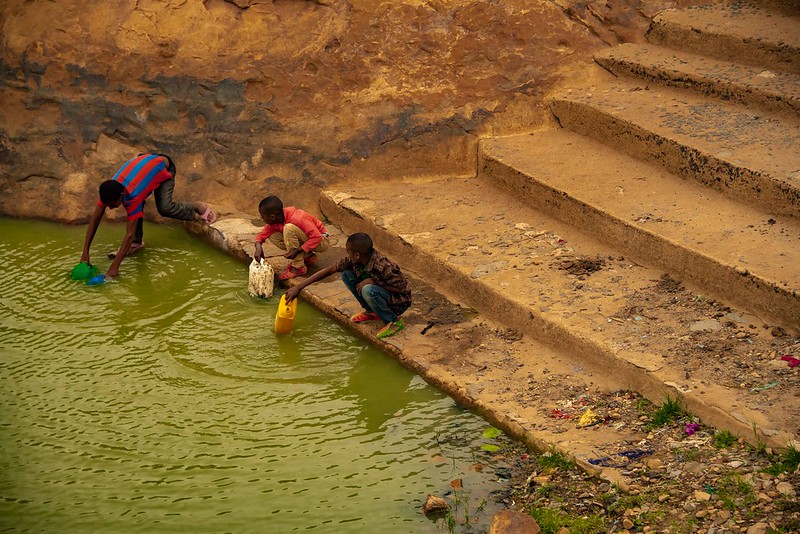
To survive, residents in Harare must dig wells to create a water source. However, the well water is not safe to drink. The sewage system in Harare is another health issue for residents. Young children play in sewage and often fall ill from the lack of sanitation.

Additionally, further issues plague Harare. The Human Rights Watch interviewed a Harare resident named Bonnie who explained that she does not have water to bathe and clean her three children, including one in diapers. The video also featured an interview with a woman called Abigail. She mentioned that the water smells, and she must use a purification tablet before bathing or drinking. Abigail says the government’s negligence has caused these issues within the community.

More than half of Harare’s 4.5 million population could only access running water once a week. This was according to the city’s mayor, Herbert Gomba, back in 2019. Thus, residents must turn to other solutions, such as waiting in long lines at communal wells, streams or boreholes. The water received from these places may not even be safe to drink.

Drought is the cause of the shortage of water in Zimbabwe. In Harare, one-half of the population’s reservoirs are empty because there is no rain. The remaining water, 45% to 60%, is often lost and inaccessible to the population due to leakage or theft.

The Pandemic

As the novel coronavirus plagues the globe, the disease is contributing great distress to Zimbabwe. COVID-19 affects Zimbabwe mainly through its water supply, which hurts the citizens of Harare and the surrounding population.

In Harare, citizens go without water for days. They must wait until water trucks arrive in the city. Once the water is finally available, COVID-19 changes how citizens can access it. Citizens gather in large numbers to wait in line, which makes the concept of social distancing nearly impossible. Then, they push and shove to receive water. Additionally, COVID-19 affects Zimbabwe because many individuals do not wear or cannot access masks.

Organizations like Doctors Without Borders encourage social distancing. Yet, it is not a long-term or time-friendly solution, as they are not sure that it will keep people safe. Furthermore, the people in Harare are desperate for food and water. They may sacrifice their health to be first in line to receive water for themselves and their families.

Dewa Mavhinga, the South Africa director at Human Rights Watch, explains that COVID-19 affects Zimbabwe differently because of their pre-existing lack of water. It takes a toll on the spread of the virus and other infectious diseases, such as typhoid and cholera. Water is necessary for handwashing and hygiene, which can combat the spread of coronavirus. Without an uninterrupted supply of water, residents will struggle to stay safe and healthy.

Aid

Supporters abroad can help aid the people of Zimbabwe by urging U.S. congressional leaders to make the COVID-19 crisis in Zimbabwe a current political and human rights focus. With U.S. backing, the Zimbabwean government can ensure there are water points throughout the country. This will prevent overcrowding and the spread of COVID-19.

Another way to aid Zimbabwe’s public health system is to show support to organizations, such as Doctors Without Borders and Save the Children. These organizations are providing emergency relief and recovery programs for people in Zimbabwe. They are doing everything they can to combat how COVID-19 affects Zimbabwe by implementing humanitarian relief efforts.

– Caitlin Calfo
Photo: Flickr
October 11, 2020
https://borgenproject.org/wp-content/uploads/borgen-project-logo.svg 0 0 Kim Thelwell https://borgenproject.org/wp-content/uploads/borgen-project-logo.svg Kim Thelwell2020-10-11 12:18:452024-12-13 18:02:15COVID-19 Affects Zimbabwe and Its Water Supply
Global Poverty, Human Rights, Water, Water Crisis

The Rise of International Water Politics

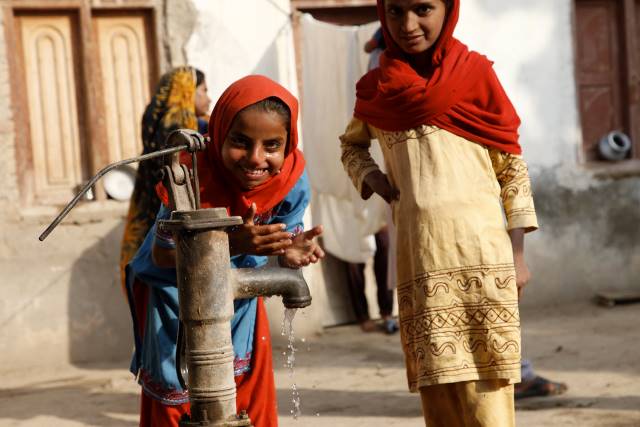
water politicsWater scarcity and unequal water access are two pressing problems facing the global community. The political response to this crisis has created the field of water politics. In order to address this crisis, the global community must consider water as a human right and prioritize implementing sustainable solutions for the future.
The Problem

Water is one of humans’ basic needs. However, every continent has regions experiencing the effects of water scarcity. With experts predicting that one in five people will live in areas with unsatisfactory resources to meet water needs by 2025, this is an urgent issue.

Although water is a renewable resource, restored by snowmelt and rainfall, human practices are depleting the world’s water supply. Diverting water for agriculture, households and industry has become so taxing that some of the largest rivers run dry before reaching the ocean. Human activity can also pollute water sources to such an extent that they cannot support aquatic life or be used as drinking water.

Water Scarcity and Conflict

Water Politics Limited, a geopolitical risk advisory and consulting firm, found that water scarcity could lead to conflict or political instability in many countries. Sources including the Euphrates, Tigris, Jordan, Nile, Danube and Okavango rivers as well as the Tibetan watershed and resources will become insufficient to support the surrounding areas. These sources currently provide water to dozens of countries across Europe, the Middle East, Asia and Africa.

Water scarcity will therefore affect communities across the globe. Importantly, it may spark conflict over remaining water resources, within a nation or even between nations. Anya Groner at The Atlantic points to evidence of past conflicts that have revolved around water. These include the riots in Cape Town, South Africa, in 2012, which responded to inequality in the distribution of water resources.

The Pacific Institute put together a timeline of water conflicts from the earliest records until 2019. Causes of these conflicts include territorial disputes, drought, inequities and municipal water cuts. The severity of conflict may range from protests and theft to more violent killings and bombings. This makes it clear that decreases in water access may lead to political or violent conflict if the world does not take action to ensure sustainable, equitable water access for all.

Water Politics: Managing the Resource

Countries facing water scarcity have the difficult task of allocating a limited resource. To ensure that everyone can access water, these countries must take many different steps. Cape Town, South Africa, is an apt case study. In 2018, a combination of a dry climate, a three-year drought, and high water usage all put the city within 90 days of running out of water. The severity of this crisis required the whole region to pull together to decrease their water usage.

To avoid turning off the taps, the government restricted residents to 50 liters of water a day. Violators faced large fines for overusing water. Further, the government banned wasteful activities like refilling swimming pools and washing cars. Residents also took to social media to share tips about saving water. Specifically, the “if it’s yellow, let it mellow” campaign emerged to encourage everyone to resist flushing when applicable.

Social media, however, was not just useful as a tool to disseminate information and motivate residents to conserve water. Perhaps more importantly, it also drew the global community’s attention to the state of the world’s water resources and the consequences of water scarcity. The Environmental Protection Agency has also used social media to inform the public about the value of safe drinking water. The agency aims to get users to create their own water conservation campaigns to implement into their communities.

Technology and Water Politics

However, awareness about this issue cannot solve it on its own. Innovators around the globe have engineered new ways to collect freshwater and provide clean water to communities worldwide. These solutions may be as simple as rain barrels used during monsoon season in Vietnam, or as complex as a nylon net hoisted into low clouds to collect condensation in island nations. Technologies like desalinization and iodine tablets have also helped transform water sources into safe drinking water.

Additionally, Water Politics Limited is conducting research on how to maximize water access through political action. It is investigating water transport and pipeline initiatives, exporting water, worldwide water rights and public participation in water conservation.

Moving Forward

As nations move forward with water politics initiatives, we must pay attention to regions most at risk of experiencing severe water scarcity. Places like sub-Saharan Africa with dry climates have already been plunged into prolonged droughts, facing political conflict as a result. Thankfully, public awareness campaigns, technological innovations and governmental cooperation can ensure that everyone has a right to safe drinking water.

– Ellie Williams
Photo: Flickr

October 7, 2020
https://borgenproject.org/wp-content/uploads/borgen-project-logo.svg 0 0 Kim Thelwell https://borgenproject.org/wp-content/uploads/borgen-project-logo.svg Kim Thelwell2020-10-07 07:30:062020-10-03 09:03:28The Rise of International Water Politics
Developing Countries, Global Poverty, Health, Water Crisis

Paani Project Improves Water Access in Pakistan

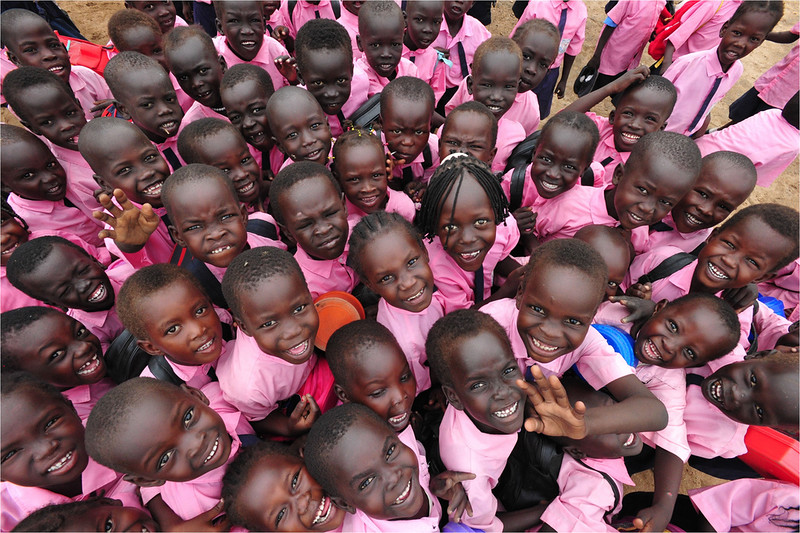
Water Access in PakistanJust a few months after assuming office in 2018, Pakistan’s Prime Minister Imran Khan issued a dire declaration to his nation, pronouncing the water crisis to be the most pressing problem facing Pakistan today. Soon after, one team of Pakistani-American college students decided to launch the Paani Project to address the issue. Since then, the group has made astounding strides toward improving water access in Pakistan.
The Water Crisis in Pakistan

The Paani Project is addressing one of the most acute water crises in the world today. With a population of 212 million, poor water management, climate change and intensive agriculture, access to clean water can be scarce. An estimated 40% of deaths in the country are linked to unclean water.

Pakistan also has a shocking disparity in water access between its urban and rural areas. With up to 70% of rural regions having no access to clean water, millions in Pakistan’s more remote areas face a severe risk to their health and livelihoods.

Origins of the Paani Project

In order to combat this critical issue, four University of Michigan students decided to launch the Paani Project. The mission began on a local scale. For three months, on their way to class and around campus, the students would sell doughnuts, slowly collecting enough funds to build their first well in a rural region of Pakistan’s southeastern province of Sindh.

Since funding their first well, the team has put hours of effort, collaboration and organization into the project, creating a fully functioning nonprofit that has seen widespread success.

The Paani Project Impact

With over 850 wells built across rural areas as of 2020 and more than $300,000 donated, the Paani group has made an undeniable impact in improving water access in Pakistan. Their work has spread from Sindh to Khyber Pakhtunkhwa and Balochistan, serving rural needs across the country.

In addition to building wells, the project has also diversified its mission by leading a number of different humanitarian efforts around the country. In Azad Kashmir, Paani led a winter coat drive and in Karachi, the group operated a dental clinic to provide care for those that would not have access otherwise.

The organization has also provided relief from the COVID-19 pandemic by providing food to thousands of workers in Khyber Pakhtunkhwa and Sindh who rely on daily wages to support their families.

Other Initiatives

Paani also believes that education is an important step in combatting poverty and increasing water access in Pakistan. With every well that has been built, Paani has held “hygiene education seminars” to teach community members about proper sanitation practices and how to maintain the well. The group has also helped develop education curriculums in Sindh, through which they hope to increase knowledge about the water crisis and proper hygiene practices.

Although Pakistan’s water crisis is one that continues to make headlines and threatens the lifestyles of millions of people across the country, work by organizations such as Paani has helped to turn the tide. With tens of thousands of people directly reaping the benefits of Paani’s wells, the group’s contributions are sure to be much more than just a drop in the bucket in the fight for universal water access in Pakistan.

– Shayaan Subzwari
Photo: Flickr

September 29, 2020
https://borgenproject.org/wp-content/uploads/borgen-project-logo.svg 0 0 Kim Thelwell https://borgenproject.org/wp-content/uploads/borgen-project-logo.svg Kim Thelwell2020-09-29 04:57:262024-05-30 07:52:57Paani Project Improves Water Access in Pakistan
Global Poverty, Water Crisis

Internal Conflict and Water Insecurity in South Sudan

water insecurity in south sudan
South Sudan has been in a civil war since December 2013. As a result, millions uproot themselves and thousands die. Essential resources are scarce, particularly for the most vulnerable people. Specifically, water insecurity in South Sudan is a major crisis within the country. Moreover, this water insecurity permeates both the lack of drinking water and essential water for sanitation.

The South Sudanese Conflict

South Sudan’s people are currently engaged in a civil war between the government (led by President Salva Kiir) and the opposition rebels — led by former Vice President Riek Machar. The country splits along ethnic lines, which primarily determine where support lies. That is to say, the president is supported by the Dinka and the former vice president’s opposition forces, supported by the Nuer.

The conflict results in major displacement, creating internally displaced persons (IDPs) and casualties throughout the country. Due to this displacement, regular access to living resources and basic services, such as healthcare and education, have been greatly diminished. Of the displaced persons, it is estimated that 40% are adults and 60% are children.

A consequence of the conflict: 7.2 million people require humanitarian assistance. Furthermore, 3.7 million people displaced — 383,000 people have died and 1.8 million children are unable to attend school.

Does the Conflict Affect Access to Resources like Water?

In short, yes. The continued violence and inability to secure stable conditions with access to utilities like clean water and sanitation have caused a major water insecurity crisis in South Sudan. The water crisis specifically presents major issues for civilian populations, including a lack of water for infectious disease prevention.

USAID outlines the extent of limited access to water in South Sudan, as a result of the conflict. The organization estimates that only about 34% of people in rural areas have access to water. Given that 84% of the nation lives in rural areas, this statistic quite alarming. Additionally, 90% of those living in poverty reside in rural areas with the aforementioned, limited (or lack of) access to water. This affects vulnerable populations like IDPs, women and children. Furthermore, it hinders their ability to ensure basic health needs like hydration and prevention of infectious diseases like cholera, hepatitis E and Guinea worm disease (GWD).

Weaponizing Water

Infrastructure specifically used for water access systems has been a major resource that the warring parties target in attempts to harm the opposition forces, both military and civilian. To destroy their enemies’ access to water is to debilitate their ability to recover. Equally important, targeting water sources puts severe pressure on the civilians whom an adversary protects. Women in South Sudan particularly feel the effects of this strategy as it can take days to get to a safe source of drinking water. Women are the primary “water fetchers,” but the journey to water sources leaves them extremely vulnerable to death by starvation or thirst (during these on-foot trips). Worse still is the fact that women traveling into rural areas amid the country’s conflict puts them at risk of being killed or assaulted.

Water Insecurity, Nutrition and Disease Prevention

South Sudan’s resource security crises reveal how internal conflicts within countries do not just affect the warring parties or military; they affect civilians, infrastructure and public health alike. Water insecurity in South Sudan, especially, is one of the many resource insecurity crises that should remain a priority of USAID. The crisis shares an intimate connection to nutrition and disease prevention; addressing it will likely have multiple benefits for the citizens of South Sudan.

– Kiahna Stephens
Photo: Flickr

September 23, 2020
https://borgenproject.org/wp-content/uploads/borgen-project-logo.svg 0 0 Kim Thelwell https://borgenproject.org/wp-content/uploads/borgen-project-logo.svg Kim Thelwell2020-09-23 11:04:452024-05-29 23:23:20Internal Conflict and Water Insecurity in South Sudan
COVID-19, Food & Hunger, Food Insecurity, Food Security, Global Poverty, Water Crisis

Innovation and Food? Ask the UAE

Food Security and Innovation ProgramAs the world encounters one issue after another, food insecurity increases in countries with inadequate resources or less-than sufficient agriculture systems. With the pandemic at the helm and climate change an ongoing phenomenon, to survive these stressful times, innovative strategies are necessary. In this advanced society, new ways are necessary to process, distribute and reshape food production. Connections between food security and innovation seem far-fetched, but the United Arab Emirates/UAE’s food security and innovation program has found state-of-the-art techniques that relieve their people of this struggle.
Key Constraints Facing Food Security

The UAE aims to rank in the top 10 in the Global Food Security Index by 2021, and number one by 2051. In this arid region, however, traditional farming is next to impossible from limited water for irrigation and an unequal ratio between people and the UAE’s production. Due to these hardships, the country is reliant on its imports. For a food-dependent country, when disaster hits, food systems are unstable.

While there are several reasons for poor food production in the UAE, the scarcity of water contributes heavily. Most of the water in the country is recycle and reused, but this process can only occur for a given amount of time. Given that traditional agriculture utilizes a significant amount of water, UAE’s food security and innovation program is the answer. . To combat the issue of their unstable food system, the UAE has set up the FoodTech Challenge. This global competition seeks out innovative solutions for the country to address food production and distribution.

Vertical Farming: An Innovative Farming Technique

In response to the FoodTech Challenge, the company Smart Acres has provided a technique that utilizes vertical farming to support the UAE’s food security and innovation program. Vertical farming consists of vertically stacked plants, providing more produce per square area, resembling green walls as displayed in shopping centers. Smart Acres used South Korean vertical farming technology to decrease water usage and monitor temperature and nutrients. Regarding the UAE’s water issue, vertical farms save over 90% of the water in comparison to conventional farming methods. The constant flow of water across the plants provides the necessary nutrients for all the plants to grow. This high-tech design allows the company to produce clean crops without any chemicals and negligible interference.

Although the farm has not been implemented yet, this form of food production is expected to produce 12 cycles of crops annually; the farm will expand from Abu Dhabi to the rest of the country gradually. By using vertical farming, this technique expects to produce approximately 8,000 kilograms of lettuce and other leafy greens per cycle. In addition to the increased number of crops, the variety is also expected to increase and include items, such as strawberries, arugula, potatoes, etc.

Aquaculture Farming: Decreasing the Dependence of Imports

On average, the UAE consumes 220,000 tons of fish annually. However, imported food is 90% of the UAE’s diet, suggesting that advancements in the country’s aquaculture would be beneficial. To aid the seafood industry in the UAE, the Sheikh Khalifa Marine Research Center has taken the responsibility to use advanced technology to harvest marine organisms. The center utilizes photo-bioreactors to generate food for juvenile fish.

In addition to manufacturing primary live food for marine organisms, UAE’s food security and innovation program also include water recycling technologies, where water is cycled through fish tanks to reduce water consumption. To make aquaculture a more efficient and sustainable system in the country, the center is establishing a disease diagnostic laboratory, which will reduce the number of disease-related deaths associated with marine life.

While many countries face tumultuous times currently, UAE’s food security and innovation program seems to be a ticket out of poverty. Through the FoodTech Challenge, the country has found multiple viable options to strengthen its food system. With water scarcity, a large problem regarding food production, both vertical and aquaculture farming, has found a way to recycle the limited water and attend to other problems the UAE faces, such as dependence on imports from other countries. The challenge is open to the entire country, increasing the country’s opportunity in establishing a sustainable system. Through these systems, the UAE’s food security and innovation program is well on its way to stabilizing its food security and achieving its goal as a titleholder in the Global Food Security Index.

– Aditi Prasad
Photo: Flickr

September 16, 2020
https://borgenproject.org/wp-content/uploads/borgen-project-logo.svg 0 0 Kim Thelwell https://borgenproject.org/wp-content/uploads/borgen-project-logo.svg Kim Thelwell2020-09-16 06:34:482020-09-16 06:34:48Innovation and Food? Ask the UAE
Global Poverty, Water, Water Crisis

Water Insecurity in Kosovo & COVID-19

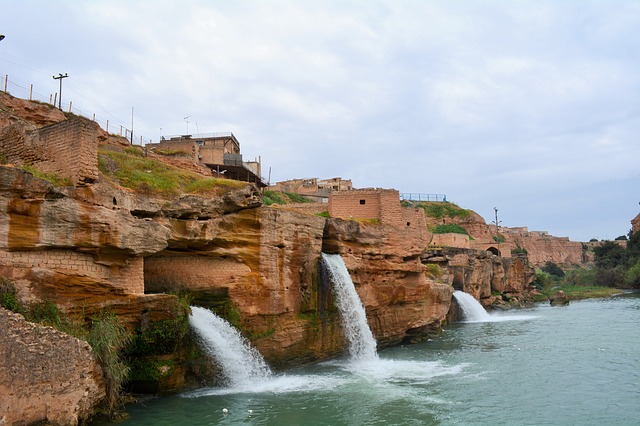
Water Insecurity in KosovoThe World Bank has secured aid for Kosovo to help the country’s water security efforts during the COVID-19 pandemic. On June 10, 2020, the World Bank approved a budget of $27.4 million to invest in aid to address water insecurity in Kosovo. The new “Kosovo Fostering and Leveraging Opportunities for Water Security Program,” implemented nationwide, will reach struggling regions within the country, such as Morava e Binces — the driest area of all.
COVID-19 and Water Security

In a statement from the World Bank, the manager for Kosovo, Marco Mantovanelli, stated that addressing Kosovo’s water crisis is even more important during the COVID-19 pandemic. Access (or lack thereof) to clean water for drinking and sanitation has a direct impact on the COVID-19 crisis. The World Bank representative described clean water as an “essential barrier to preventing virus spread and protecting human health from COVID-19 and similar diseases.”

The World Resources Institute (WRI) reports that hand washing is one of the primary combatants against a disease like COVID-19. Additionally, both water management and security impact the spread of a disease like COVID-19. Without proper storage, water shortages occur and people have limited access to water for sanitation. Water management (pollution control and distribution) directly impacts the quality and quantity of water accessible  to the population. WRI reports that improving both domestic and industrial water waste treatments improves water quality and helps improve issues related to water use for sanitation and health.

Water in Kosovo

Kosovo’s water crisis is only worsened by the virus as the crisis existed before the COVID-19 pandemic. The issues of water pollution are rooted in Kosovo even from when it was a province in the former Yugoslavia. It was the most polluted province then and now, a majority of the Kosovo municipalities have no form of treatment plants for wastewater. Additionally, the World Bank reports that Kosovo has the lowest water storage level in the region — as well as high pollution levels.

The new water security plan will address some key issues in water security. These issues include management of resources, water storage, addressing natural disasters and their impacts, dam safety, updating equipment and facilities and general emergency preparedness.

The Impact on Struggling Regions in Kosovo

While the entire country will benefit from the plan, the strategy will specifically benefit the driest region in Kosovo — Morava e Binces. Morava e Binces has had significant problems with water access for its civilian population. The region has suffered greatly with water access interruptions. Some of these interruptions last hundreds of days. However, with the implementation of the new plan, the World Bank estimates 190,000 people will be positively impacted in the Morava e Binces region alone.

The World Bank’s approved aid will begin work on installing new and updated equipment, replan the water storage processes, and make additional renovations to dam maintenance and safety. This aid program is an essential step in ending water insecurity in Kosovo. While the COVID-19 pandemic has complicated an already existing, water security problem within Kosovo, government initiatives are a good, forward step.

– Kiahna Stephens
Photo: Pixabay

September 11, 2020
https://borgenproject.org/wp-content/uploads/borgen-project-logo.svg 0 0 Kim Thelwell https://borgenproject.org/wp-content/uploads/borgen-project-logo.svg Kim Thelwell2020-09-11 00:58:172020-09-11 00:58:17Water Insecurity in Kosovo & COVID-19
Global Poverty, Water Crisis

The Water Crisis in Iran

Water Crisis in Iran
The Islamic Republic of Iran (Iran) has had conflicts with the U.S. since the Islamic revolution in 1979 and the people of Iran have suffered in many ways since then. Hardships as a result of both international sanctions and domestic government actions have affected Iranians. The Shah of Iran sparked the current water crisis by nationalizing the country’s water resources, before the revolution. However, the new Islamic Republic ignored the warnings of Iranian environmental experts and accelerated dam and well building. This, in turn, effectively caused the disappearance of about 85% of groundwater sources. Today, Iranians are at the precipice of a water crisis that government mismanagement, a population boom and climate change all brought on. Without a drastic change in government policies, some posit that around 70% (i.e., about 56 million Iranians) may have to flee to more developed countries if the water crisis in Iran is not adequately addressed within the next 20–30 years.

The Nationalization of Water

Before its nationalization, water in Iran was a sustainable resource, with 34 million Iranians relying on millennia-old, natural underground canals for their drinking water. This preserved aquifers in the country, maintaining renewable water resources at 135 billion cubic meters. However, now with a widespread population of more than 80 million and government-supported infrastructure contributing to rapid water consumption — renewable resources are less than 80 billion cubic meters. This problem has contributed to conflicts in the region, with water shortages and poor-quality, drinking water as driving forces behind large-scale, violent protests. Here, many poor, frustrated Iranians are the first to see the effects of the water crisis.

The Iranian government has accelerated the depletion of water resources in the hopes of expanding agricultural and infrastructure projects in pursuit of self-sufficiency. The agriculture sector claims more than 90% of the country’s water supply, leaving only a small percentage for Iranian citizens. The regime awarded huge, dam-building contracts to companies connected to those in power and encouraged farmers to grow crops (no matter their level of water consumption). Government-supported dams blocked large rivers throughout the nation and prevented aquifers from replenishing. This, in turn, forced farmers and other individuals to drill deeper wells into the depleting groundwater resources. As a result, the number of wells in existence since the revolution has multiplied by more than 13 times.  Around half of the wells are illegal and produce far beyond what is sustainable, according to the deputy agriculture minister. The situation has created a negative feedback loop of government-mandated, harmful infrastructure projects and unsustainable water consumption — producing the current water crisis in Iran.

Environmental Challenges

Environmental issues have exacerbated the water crisis in Iran. Drought has struck the region as a whole, but especially Iran, with 2017 being its driest year in nearly seven decades. Declining rainfall, higher temperatures, desertification and extreme weather all place added pressure on Iran’s water supply. Further, the intense burning of fossil fuels has contributed to an overall decline in biodiversity and increased water pollution — putting what little remaining water at risk.

Taking Action

A proposed solution includes increasing the use of water desalination, especially in the Capsian sea. This proposal is extremely expensive and could also cause undue harm to already low sea levels and territorial disputes. Within Iran, there are examples of individuals who have bravely stood up against the regime and advocated for more sustainable policies. Saeed Pourali writes in the Tehran Times that the current band-aid solutions in Iran will not be nearly enough. Pourali claims that the regime must listen to experts and environmentalists. Further, Pourali claims that Iranian individuals must also take it upon themselves to lower their water usage. Victoria Jamali, an assistant professor at the University of Tehran, founded Iran’s leading environmental organization — the Women’s Society Against Environmental Pollution. Since the early 2000s, Jamali has worked to bring comprehensive legal reform to Iran, to protect water and other natural resources. Taking after U.S.-styled environmental law, Jamali now teaches young Iranian activists and environmentalists to stand up for this important cause, despite the Iranian regime’s reluctance to create and enforce environmental legislation.

The Need for Reform

Corrupt management of resources and a close-minded approach to economic development has led to the severe depletion of Iran’s water supply over the past four decades. Although, it is a popular belief that the Shah started Iran down this path himself, even before 1979. Today, the water crisis in Iran is especially poignant. A massive population boom and civil unrest against the corrupt regime brings this issue to both the national and international stages. The consumption rate has proven itself to be extremely unsustainable, which is why individuals like Saeed Pourali and Victoria Jamali have been so active in trying to bring about real change. The ultimate goal is to protect Iran’s environment and natural resources. Reform will be expensive for Iran, especially under strict, international sanctions. However, reform is necessary to combat the water crisis in Iran and protect those impoverished Iranians who will suffer the most.

– Connor Bradbury
Photo: Pixabay

September 10, 2020
https://borgenproject.org/wp-content/uploads/borgen-project-logo.svg 0 0 Kim Thelwell https://borgenproject.org/wp-content/uploads/borgen-project-logo.svg Kim Thelwell2020-09-10 07:12:322024-05-29 23:22:58The Water Crisis in Iran
Global Poverty, Water, Water Crisis

NGO Fights Water Shortage in Peru

water shortage in Peru
While Peruvian infrastructure continues to improve, unequal access to safe drinking water remains a prominent issue affecting up to 5 million citizens — or a staggering 15% of the country’s population. The government recognizes that to properly tackle the pressing issue of water security, the crisis of water shortage in Peru must be addressed. This matter is particularly important in the capital, Lima, one of the world’s largest desert cities where 1.5 million citizens lack running water. Moreover, the city only receives nine millimeters of rain a year.

Peru’s Water Crisis

The government has made the goal to reach and offer all marginalized urban hotspots in need of water, such as Lima, public drinking services by 2021. Significant strides have been made since 2016 under both the Kuczynski and Vizcarra administrations. However, with 9% of its foreign investment now allocated to water and sanitation, the government also recognizes that public-private partnerships are key toward making significant strides to increase water supply. International sustainability NGO, The Nature Conservancy, has played a major role in combating the water shortage in Peru through its innovative water projects.

The Nature Conservancy

Amunas, water systems utilized in pre-Incan times, maximized the total amount of rainfall that could be used as drinking water. Given the increasingly challenging circumstances concerning Lima’s water supply, ranging from urbanization to climate change — in 2019, The Nature Conservancy decided to bring back this means of hydric regulation. The end-goal with this initiative is to alleviate the city’s distressing, water situation. Alongside the Caterpillar Foundation, NGO members are essentially building canals that funnel rain (during floods) into mountains — rather than have the rain undergo the natural processes of evaporation. Water will gradually surface in springs —an imperative for water distribution during Lima’s dry seasons. This effectively addresses the water shortage in Peru.

The amunas recovery project is taking place in the upper Rimac River Watershed, arguably Lima’s most important water supply. Given an increased amount of water within the soil, it has already resulted in the recuperation of 25 hectares of natural grasslands. Farmers located throughout the greater Lima area have therefore benefited greatly from this endeavor.

NGO and Government Partnership

As part of a new water utility effort in Lima called “Aquafondo,” The Nature Conservancy is working in conjunction with the Peruvian government to plan and develop an efficient tariff structure, funding infrastructure projects. The conservancy projects that, by 2025, $25 million will be directed toward critical hydrological services — addressing key issues such as the region’s adaptation to climate change. In addition to Aquafondo, the conservancy is organizing water funds in the Peruvian cities Piura and Cusco, both of which are also located in desert-like areas.

A Pivotal Role Going Forward

While the water shortage in Peru remains a security crisis that can impact the economic and personal development of millions of citizens — environmental organizations such as The Nature Conservancy play a pivotal role. These organizations ensure water access for marginalized populations who have a great need for it. The Nature Conservancy’s international efforts, ranging from improved infrastructure throughout Latin America to restoring wetlands in India, symbolize a greater effort toward water justice among powerful non-state parties.

– Breana Stanski
Photo: Flickr

September 3, 2020
https://borgenproject.org/wp-content/uploads/borgen-project-logo.svg 0 0 Kim Thelwell https://borgenproject.org/wp-content/uploads/borgen-project-logo.svg Kim Thelwell2020-09-03 06:52:052024-12-13 18:02:10NGO Fights Water Shortage in Peru
Global Poverty, Water Crisis

Peru’s Water Crisis: The Nature Conservancy

Peru's water crisis
While Peruvian infrastructure continues to improve, unequal access to safe drinking water remains a prominent issue. Peru’s water crisis affects up to 5 million citizens—15% of the country’s population. The government recognizes that to properly tackle this pressing issue, the country’s water scarcity crisis must be addressed. This matter is particularly important in the country’s capital, Lima. Lima is one of the world’s largest desert cities, and only receives nine millimeters of rain a year. Nearly 1.5 million citizens of the Greater Lima area lack running water.

The government has developed a goal to offer public drinking services to all such marginalized urban hotspots in need of water by 2021. Significant strides have been made since 2016 under the Kuczynski and Vizcarra administrations. However, with 9% of foreign investment now allocated to water and sanitation, the government also sees that public-private partnerships are key to increasing water supply. The Nature Conservancy, an international sustainability NGO,  has played a major role in combating the water shortage in Peru through innovative projects.

Reviving the Amuna Systems

There are increasing challenges to Peru’s water crisis—and therefore Lima’s water supply—that range from urbanization to climate change. In 2019, The Nature Conservancy revived a pre-Incan method of hydric regulation called “amunas” to alleviate the city’s distressing situation. Amunas are water systems that capture rainfall for use as potable drinking water.

Alongside the Caterpillar Foundation, NGO members are building canals that funnel flood rains into mountains rather than leave it to undergo natural processes of evaporation. Water will then gradually surface in springs, which is imperative for water distribution during Lima’s dry seasons.

The amunas recovery project is centered in the upper Rimac River Watershed, arguably Lima’s most important water supply. The increased amount of water in the soil has already resulted in the recuperation of 25 hectares of natural grasslands. Farmers located throughout the greater Lima area have benefited greatly from this endeavor.

Government Partnership

The Nature Conservancy is working in conjunction with the Peruvian government to develop an efficient tariff structure for funding infrastructure projects. This new water utility effort in Lima is called “Aquafondo.” The Nature Conservancy projects that by 2025, $25 million will be directed toward critical hydrological services. These changes address key issues, including as the region’s adaptation to climate change. In addition to Aquafondo, The Nature Conservancy is organizing water funds in the Peruvian cities of Piura and Cusco, both of which are also located in desert-like areas.

Conclusion

Peru’s water crisis remains a security issue that could impact the economic and personal development of millions of citizens. Environmental organizations such as The Nature Conservancy play a pivotal role in ensuring improved water access for marginalized populations. The Nature Conservancy’s international efforts, ranging from improved infrastructure throughout Latin America to restoring wetlands in India, symbolize a greater effort toward water justice among powerful non-state parties.

– Breana Stanski
Photo: Flickr

September 2, 2020
https://borgenproject.org/wp-content/uploads/borgen-project-logo.svg 0 0 Kim Thelwell https://borgenproject.org/wp-content/uploads/borgen-project-logo.svg Kim Thelwell2020-09-02 12:03:022024-12-13 18:02:10Peru’s Water Crisis: The Nature Conservancy
Developing Countries, Global Poverty, Health, Water Crisis

3 Organizations Combating Liberia’s Water Crisis

Liberia's Water Crisis
Insufficient access to clean water sources is one of the primary issues that developing countries are facing today, particularly in Africa. Without clean drinking water, people in these countries turn to unsafe secondary sources which can spread disease and promote unhealthy living conditions. Particularly during COVID-19, access to reliable drinking water has become more critical than ever. Liberia’s water crisis is an example of why safe water sources are so important.

Causes of Water Insecurity in Liberia

Situated on the coast of West Africa between the Ivory Coast and Sierra Leone, Liberia is a relatively small country with a population of just over 5 million people. It is Africa’s oldest republic, declaring its independence and drafting a constitution that it modeled on that of the United States in 1847. It is a tropical country with ample water sources, but several wars and disasters are to blame for the country’s lack of water purification systems and a limited ability to transport those resources.

Two brutal civil wars, first from 1989-1997 and again from 1999-2003, severely damaged Liberia’s infrastructure and nearly destroyed its economy. The country experienced a subsequent period of economic growth but lost much of its progress during the West African Ebola outbreak of 2014-2015. This outbreak caused the death of over 4,800 Liberians, causing the country to struggle in rebuilding its economy and infrastructure ever since. Liberia now relies heavily on international organizations and foreign aid, especially in securing potable water.

Combating the water crisis in Liberia is an undoubtedly daunting task. For example, 3.7 million Liberians— or eight in 10 people—do not have access to a functioning toilet. This deficiency forces citizens to relieve themselves outside in groundwater sources, which quickly become contaminated and allow for faster disease transmission. Ebola spread throughout the country as rapidly as it did because of the scarcity of clean toilets, which fostered diseases such as diarrhea. Diarrhea is the second leading cause of death in children in Liberia, with over 700 children under the age of 5 dying each year due to the disease.

In addition to damaging people’s health, Liberia’s water crisis reaches into other aspects of society such as education. Many children remain at home to help around the house, particularly with water retrieval, instead of attending school. For those who do go to school, the shortage of proper toilet facilities in classrooms can result in disease spread and has contributed to the country’s ever-increasing dropout rate. While the water crisis is widespread and threatens to grow with the rise of COVID-19, several organizations are collaborating with the Liberian government to rebuild the country’s infrastructure and provide clean water to those who need it most. Here are three organizations providing clean water in Liberia.

3 Organizations Providing Clean Water in Liberia

  1. UNICEF: The United Nations Children’s Fund (UNICEF) is the most prominent organization combating Liberia’s water crisis. UNICEF has been working with the Liberian government to construct water, sanitation and hygiene (WASH) systems in rural areas with extremely limited access to clean water, as well as schools and hospitals. These low-cost, high-quality centers are key to increasing nationwide hygiene and personal health. As of 2017, nearly 65% of all Liberian WASH systems were functioning properly and serving the country’s citizens, up from just 53% in 2011.
  2. Charity: Water: Charity: Water is a nonprofit organization focused on the global water crisis as a whole, and has an operation in Liberia. In Liberia, Charity: Water is working to restore an aging water-transporting infrastructure that has either experienced destruction or simply not received repair since the last civil war. In addition, the program educates communities on maintaining personal hygiene and teaches locals how to keep these water projects operational.
  3. Face Africa: Face Africa is another nonprofit organization that aims to bring clean and safe drinking water to developing countries, but with a tighter regional focus on Sub-Saharan Africa. Since the start of its mission in Liberia, the organization has completed 50 WASH projects in the country’s rural areas and brought clean drinking water to over 25,000 people. Similar to Charity: Water, Face Africa focuses on ensuring that pre-existing water projects in Liberia are functioning properly and serving their communities. Additionally, the organization is building its own WASH projects in the country.

While combating Liberia’s water crisis is no easy feat, UNICEF, Charity: Water and Face Africa are all doing their part to help end the issue. As Liberia’s economy grows and its ability to rebuild its failing infrastructure strengthens, the country will better able to fight off future water crises.

– Alexander Poran
Photo: Flickr

September 1, 2020
https://borgenproject.org/wp-content/uploads/borgen-project-logo.svg 0 0 Kim Thelwell https://borgenproject.org/wp-content/uploads/borgen-project-logo.svg Kim Thelwell2020-09-01 09:27:382024-05-29 22:30:063 Organizations Combating Liberia’s Water Crisis
Page 10 of 11«‹891011›

Get Smarter

  • Global Poverty 101
  • Global Poverty… The Good News
  • Global Poverty & U.S. Jobs
  • Global Poverty and National Security
  • Innovative Solutions to Poverty
  • Global Poverty & Aid FAQ’s
Search Search

Take Action

  • Call Congress
  • Email Congress
  • Donate
  • 30 Ways to Help
  • Volunteer Ops
  • Internships
  • Courses & Certificates
  • The Podcast
Borgen Project

“The Borgen Project is an incredible nonprofit organization that is addressing poverty and hunger and working towards ending them.”

-The Huffington Post

Inside The Borgen Project

  • Contact
  • About
  • Financials
  • President
  • Board of Directors
  • Board of Advisors

International Links

  • UK Email Parliament
  • UK Donate
  • Canada Email Parliament

Get Smarter

  • Global Poverty 101
  • Global Poverty… The Good News
  • Global Poverty & U.S. Jobs
  • Global Poverty and National Security
  • Innovative Solutions to Poverty
  • Global Poverty & Aid FAQ’s

Ways to Help

  • Call Congress
  • Email Congress
  • Donate
  • 30 Ways to Help
  • Volunteer Ops
  • Internships
  • Courses & Certificates
  • The Podcast
Scroll to top Scroll to top Scroll to top