• Link to X
  • Link to Facebook
  • Link to Instagram
  • Link to TikTok
  • Link to Youtube
  • About
    • About Us
      • President
      • Board of Directors
      • Board of Advisors
      • Financials
      • Our Methodology
      • Success Tracker
      • Contact
  • Act Now
    • 30 Ways to Help
      • Email Congress
      • Call Congress
      • Volunteer
      • Courses & Certificates
      • Be a Donor
    • Internships
      • In-Office Internships
      • Remote Internships
    • Legislation
      • Politics 101
  • The Blog
  • The Podcast
  • Magazine
  • Donate
  • Click to open the search input field Click to open the search input field Search
  • Menu Menu

Archive for category: Homelessness

Global Poverty, Homelessness

Cyclone Harold’s Effect on Homelessness in Vanuatu

Homelessness in Vanuatu
Cyclone Harold tore through Vanuatu in early April 2020 and brought torrential rain, flash flooding and destructive wind up to 145 miles per hour. The storm devastated Espiritu Santo and Pentecost Island, bringing about significant impacts to the rest of the country’s northern and central islands. The cyclone wiped out trees and crops, flooded cities and towns, knocked out power, disrupted communications and destroyed countless homes and businesses. World Vision Vanuatu stated that 160,000 people, which is more than half of the country’s population, became homeless. In some villages, including one on Pentecost Islands, the cyclone destroyed all the homes.

General Relief Efforts

Addressing homelessness in Vanuatu after Cyclone Harold has been challenging due to COVID-19. While the country is one of the few places in the world without any cases, a single outbreak could put the island’s population and healthcare system in jeopardy. Therefore, the country halted international travel, forbade foreign relief workers from on-the-ground efforts and required the decontamination of all aid equipment. As a result, many communities did not see immediate relief.

The Santo Sunset Environment Network and Edenhope Foundation established a coconut weaving program to help rebuild after Cyclone Harold. The program employs people from the island of Tanna in the southern part of Vanuatu. The Tanna weavers held workshops with residents of the affected communities and taught them how to build with coconut fronds, rope and bamboo. Although islanders typically use Natangura palms to construct homes, Harold destroyed most of them, so residents had to adapt. While builders constructed most of the new buildings for communal purposes, they are looking to build private homes and cyclone-resistant buildings as well.

Down Under Rally, an Australian boating tour agency, started Project Nakamal, another local effort to address homelessness in Vanuatu. Down Under Rally also operates in New Caledonia and Vanuatu. Its priority is to rebuild the Nakamal structure, a building that locals use for ceremonial and community purposes. These buildings are at the heart of each community and serve as an important facet of Vanuatu society. The boating tour agency teamed up with Port of Call Yacht Services to provide materials for rebuilding. The organization has now exceeded its original fundraising goal of  $10,000 Australian dollars, about $6,948 in USD.

Larger organizations like World Vision Vanuatu set a goal to reach 3,000 households in Sanma Province, which includes the islands of Espiritu Santo and Malo. These organizations collaborated with World Vision’s Asia Pacific regional office and Vanuatu Women’s Centre to raise money for shelter, water purification and hygiene kits to support people with disabilities.

Through the help of U.N. Women, the Vanuatu Women’s Centre was able to make mobile counseling visits to various areas that the storm affected and help homeless women as well as their families. The organization reports that many women were concerned about their children and avoiding domestic violence. While various women called in need of food, water and shelter, others reached out to alleviate violence and sexual abuse.

Future of Relief

Despite the fact that Vanuatu’s carbon footprint is small, it is at the forefront of dealing with challenging weather. According to a study from Griffith University, the University of Queensland and the University of the Sunshine Coast, stronger and more frequent tropical cyclones threaten the island chain due. Rising sea levels also threaten the country, which would only exacerbate homelessness in Vanuatu. The study found that community-centered initiatives were most successful in addressing these issues. These local programs were scientific but complemented traditional beliefs.

It is important to expand and further implement the Sendai Framework for Disaster Risk Reduction. The document received signatures at the U.N. General Assembly in 2015 and set specific goals for disaster mitigation through 2030. The agreement seeks to reduce global disaster mortality, the number of people who disasters affect, economic losses and infrastructure damage. It seeks to increase warning system availability, international cooperation to developing countries and the number of countries that have both national and local mitigation strategies.

– Bryan Boggiano
Photo: Flickr

July 29, 2020
https://borgenproject.org/wp-content/uploads/borgen-project-logo.svg 0 0 Kim Thelwell https://borgenproject.org/wp-content/uploads/borgen-project-logo.svg Kim Thelwell2020-07-29 14:18:242024-05-29 23:18:52Cyclone Harold’s Effect on Homelessness in Vanuatu
Global Poverty, Homelessness, Refugees, Refugees and Displaced Persons

Homelessness in Libya: How War Leads to Displacement

Homelessness in Libya
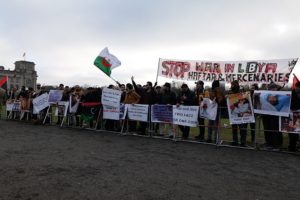
Libya is home to historical Greek ruins, the Sahara desert and valuable oil reserves. However, it also currently suffers from a state of instability. The country has experienced division due to a civil war between Libya’s Government of National Accord (GNA) and Khalifa Haftar’s militias in the east. Militant groups who gained power amid the lack of government control, including al-Qaeda and Ansar al-Sharia, have exacerbated this conflict. This fractured leadership has left civilians suffering from a struggling economy and the continual violence plaguing the region. Libyans must flee their homes to avoid imminent danger, often with nowhere to go. As a result, homelessness in Libya is a growing problem that requires attention and resources.

The Growing Homelessness Problem

War often leaves people displaced or lacking basic necessities, and the Libyan war is no exception. The threat of shellings and uncontrolled violence has left around 120,000 people homeless in and around Tripoli, the nation’s capital. Many have no choice but to sleep on the streets, under trees or with whatever materials are available. Others find makeshift shelters such as public gardens, tents or converted buildings to offer slightly more protection. Old hotels, abandoned factories and schoolhouses become temporary homes for those who have nowhere else to turn.

With so many severely in need of shelter and resources, Libya turned to the Government of National Accord (GNA) for help. In response, the GNA dedicated about $85.7 million to help displaced civilians. However, homelessness in Libya persists and calls for further solutions.

The Plight of Refugees

As violence escalates, some Libyans search for better lives in different countries. Many have tried to escape to Europe, Niger or anywhere that offers more peace and stability. Unfortunately, due to Libya’s proximity to Europe, even refugees fleeing other countries must first travel through Libya. This pathway to Europe is so heavily trafficked that some estimate there are over “645,000 migrants, refugees and asylum seekers in Libya.” Only a percentage of people successfully make this journey, leaving many stranded and homeless.

Detention facilities under the GNA are holding refugees who are unable to leave the country. According to the U.N., detention centers have been holding about 3,200 people as of February, 2020. The centers pose new problems. They are overcrowded, unsanitary and lacking ventilation and lighting. They also severely lack the resources necessary to feed those experiencing detainment there. One GNA employee told The New Humanitarian that each day the center allots residents only “one piece of bread” and a “plain pasta dish for every six people.”

Organizations such as Refugees International urge the E.U. to put pressure on Libya to improve conditions. For example, it asks that the GNA discontinues the detention of refugees in closed facilities and instead employs the use of open facilities. When detention centers are open facilities, they are subject to international standards and must grant access to NGOs wanting to help.

As homelessness in Libya increases due to war, organizations are working to ensure that people seeking refuge no longer have to endure inhuman conditions in detention centers.

NGOs Answering the Call

In addition to Refugees International, NGOs such as the U.N. Refugee Agency (UNHCR) are working to address the current crisis in Libya. The UNHCR recognizes the needs of refugees and displaced people. In order to improve the lives of this demographic, the UNHCR provides a number of services:

  1. The UNHCR funds public services such as hospitals and schools. This improves the quality of life and creates an opportunity for growth in the community.
  2. It provides displaced people with shelter, money and resources to ensure that they receive some aid.
  3. The UNHCR fights to end detention centers, advocating instead for more humane alternatives like programs for child care and family tracing.
  4. It works to resettle and reunite families. The goal of resettling is to create a sustainable, safe and healthy life for families displaced due to war.

Looking Forward

For the first time in years, there is some hopeful news out of Libya. In June 2020, the GNA pushed Haftar out of the west and out of Tripoli. This may be an opportunity for international intervention and support in the form of increased security or economic aid. Libya may finally be able to imagine an end to its turmoil and look toward rebuilding. This should also grant hope for a solution to homelessness in Libya. Economic improvement and rebuilding could allow citizens to return to their homes and their lives so that they too can try to rebuild.

– Abigail Gray
Photo: Wikimedia Commons

July 28, 2020
https://borgenproject.org/wp-content/uploads/borgen-project-logo.svg 0 0 Kim Thelwell https://borgenproject.org/wp-content/uploads/borgen-project-logo.svg Kim Thelwell2020-07-28 14:23:352024-05-29 23:18:44Homelessness in Libya: How War Leads to Displacement
Global Poverty, Homelessness

5 Facts About Homelessness in Turkey

Homelessness in Turkey

Similarly to the rest of the developed world, there are several factors that contribute to homelessness in Turkey. These factors include price inflation, unemployment, limited housing, unsafe home-life, mental illness, addiction, migration and undocumented citizen status. While many statistics remain unknown, here are five facts about homelessness in Turkey that are staggering.

5 Facts about Homelessness in Turkey

  1. The total number of homeless is unknown: Since it is not considered a social issue by much of the population, there are fewer social services and limited resources allocated for the homeless. This directly impacts the current problem by hindering accurate record-keeping and regular head counts. According to government guidelines, when a citizen becomes homeless, they are supposed to register as such at the appropriate office. However, the submission rate of their paperwork is very low. Despite the lack of data, the roughly estimated number of homeless people is more than 150,000.
  2. Economic crisis: In 2019, Turkey fell into another recession due to strained relations and disputes with other countries, including the United States. Currently, the unemployment rate is more than 13%. The economic state has a devastating effect on the nation’s unemployment rate and financial fluidity, which contribute directly to rising homelessness numbers. Turkish leaders have been drafting plans to climb out of their recession. However, the COVID-19 pandemic will not only delay their efforts but perhaps call for a complete revision of the plans.
  3. The streets of Istanbul are highly dangerous for the homeless: The majority of the homeless population is found in urban areas, with a high population density residing in Istanbul. Within the city limits, many homeless lack any type of shelter and are forced to fend for themselves on the streets. They claim people riddle the streets with crime and conflict, making them fear sleeping during the night or even daytime. As a result, they lose essential sleep because sleep requires that they let their guard down, which can be a grave mistake. Homeless people spend most of their time defending what little they have from thieves as well as keeping themselves safe from bodily harm.
  4. Exposure to the elements: Turkey is known for its harsh weather conditions and frequent natural disasters. In the winter, officials make mass housing efforts when the temperatures become unsurvivable, but they can rarely harbor everyone. The shelter conditions usually involve tight living quarters, and there is no security keeping guard over the occupants. When a natural disaster strikes, such as a flood or earthquake, the homeless have nowhere to seek shelter for protection or necessities such as food and clean water. The disasters can lead to property loss, bodily harm or even death. Preparation for a natural disaster is nearly impossible due to limited access to new reports and weather warnings.
  5. Government intervention is underwhelming: In the past, the government has been criticized for neglecting to respond and take appropriate action to relieve the persistent homelessness problem. However, due to the COVID-19 pandemic, the Turkish government launched emergency efforts in a campaign called the Accommodation for the Homeless Project. It aims to provide temporary housing for the homeless to limit the spread of disease. This project is important because an assumed 20% of Turkey’s homeless population has a pre-existing lung condition, an illness that puts them at a significantly higher risk of developing a life-threatening complication from the disease.

Compelled by the startling facts of homelessness in Turkey, one organization has channeled its faith into compassion to break through the social stigma surrounding the homeless and help. Since 2017, The Good Deeds Association has helped the homeless with their personal needs by donating clothes, providing showers, making laundry available and even giving haircuts. They believe their efforts will not only make a difference in their quality of health but also help them in pursuits to better their life, such as successfully finding a job. They hope to inspire people through their actions to get involved and do their part for their community as well.

– Samantha Decker
Photo: Flickr

July 28, 2020
https://borgenproject.org/wp-content/uploads/borgen-project-logo.svg 0 0 Lynsey Alexander https://borgenproject.org/wp-content/uploads/borgen-project-logo.svg Lynsey Alexander2020-07-28 14:05:552020-07-28 14:05:555 Facts About Homelessness in Turkey
Global Poverty, Homelessness

Homelessness in Mali

Homelessness in Mali
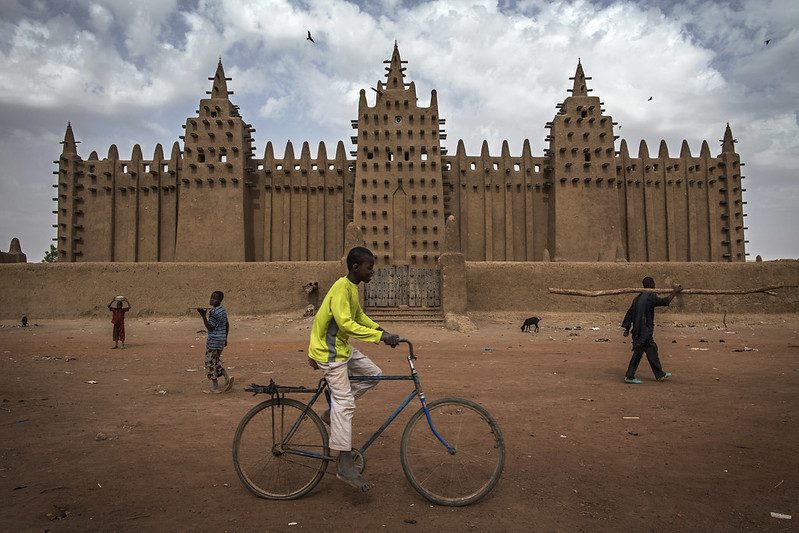
Mali is a large, central country in the Sahel region of Western Africa. As of 2017, 42.7% of the population lived below the poverty line. In the first half of 2020 alone, humanitarian assistance became a necessity for more than 4.3 million people in Mali. Persistence of violence, food insecurity, drought and high poverty levels have not only deteriorated the quality of life for many Malians throughout the last decade, but have also actively aggravated the level of homelessness in Mali. According to the United Nations Development Program, approximately 80% of the population of Mali does not have access to adequate housing.

Violence and Instability

Violence and instability play a large role in worsening homelessness in Mali. The nation experienced a rise in homelessness in correlation with the violence of the 2012 crisis. At this time, multiple Islamic groups rose up in rebellion against the government. Despite the negotiation of a peace agreement in 2015, rampant violence and conflict continue today between unidentified armed groups throughout the country. The initial outbreak of violence left as many as 230,000 people displaced from their homes; eight years later, this violence continues to internally displace massive amounts of people. As of March 2020, 124,000 Malians were homeless. According to the Internal Displacement Monitoring Centre, the total number of displaced persons in Mali due to violence and conflict is 208,000 as of December 2019.

Child Homelessness

The census on homeless children reported that Mali’s capital, Bamako, has nearly 4,400 homeless children. However, unofficial estimates put that number closer to 6,000. On top of that, around 200,000 children nationally exist in “difficult living circumstances.” Many of these homeless children are considered “street children,” commonly sent out to beg and retrieve money for gangs to which they belong or for adults exploiting them. These children tend to either come from large families or be orphans, and both live in public urban spaces.

Natural Disasters

Homelessness in Mali is also aggravated by natural disasters, particularly flooding. The Internal Displacement Monitoring Centre found that 6,300 total people became displaced due to natural disasters in 2019, the large majority of which was flooding. Floods displaced as many as 19,000 Malians in 2018, and more recently, 4,600 in August of 2019 alone. The floods of August 2019 destroyed as many as 845 homes.

Looking Forward

While homelessness in Mali remains a complex issue, some organizations are coming together to start combating homelessness however possible. Domestically-based NGO Association Malidéni was founded in 2009 with the intention of helping street children out of homelessness. The organization now also provides aid to homeless adults, individuals suffering from substance abuse, prisoners and victims of sexual exploitation with community-building soccer programs. With efforts such as these, the elimination of homelessness in Mali seems achievable.

– Alexandra Black
Photo: Flickr

July 28, 2020
https://borgenproject.org/wp-content/uploads/borgen-project-logo.svg 0 0 Kim Thelwell https://borgenproject.org/wp-content/uploads/borgen-project-logo.svg Kim Thelwell2020-07-28 12:47:362024-05-29 23:22:12Homelessness in Mali
Global Poverty, Homeless, Homelessness

Homelessness In Belarus: Citizens Are Taking Action

Homelessness in BelarusBelarus, known as Europe’s last dictatorship, is a former member of the Soviet Union. It is a relatively poor nation, ranking 136th in GDP growth rate and 94th in GDP per capita. The U.N. classifies Belarus as an “economy in transition.” This classification is for countries that have been transitioning from a centrally planned, Soviet-style economy to a market economy since the 1990s. That change has not been easy, as the millennium began with Belarus’ poverty rate hovering at 60%. Despite the nation’s massive reduction in poverty — to less than 1% in 2013 — homelessness in Belarus continues to persist.

Belarus Guarantees the Right to Housing in its Constitution

Ratified in 1973, Belarus’ constitution guarantees housing as a human right: “In the absence of basic shelter and housing for a large group of people, the State is obliged to make every effort and use all available resources to meet the minimum obligations for the realization of the right to housing.” 

The constitution states that homelessness should not exist. The national government must put policies in place to address homelessness in Belarus and to combat the discrimination and persecution homeless individuals face. In reality, however, the housing supply is low, forcing many vulnerable individuals into homelessness. The current government mostly ignores the homeless issue and has not addressed it by increasing the availability of adequate, affordable housing. 

Lack of Data on Homelessness in Belarus

Accurate, up-to-date information and a systematic approach to data collection are vital in addressing homelessness. Belarus does not have a singular standardized method utilized throughout the nation. Each district and city government has their own way of collecting data, which leads to conflicting information.

In 2014, Minsk, the capital, officially registered 65 homeless individuals, but the national government counted 500. In 2013, the ministry of labor and social protection reported approximately 4,000 cases of homelessness throughout the entire country, but five years earlier, the 2009 census counted 587. These varying statistics plant seeds of doubt in future counts.

The real number of homeless people in Belarus could be higher than any previous count. In 2015, Minsk counted 320 homeless individuals. These 320 people were all registered at the city’s shelters, but 1,600 people had recently “inquired” about shelter registration. Without one standardized approach, this statistical unreliability will continue, and the true scope of the problem will remain unknown.

The National Government Takes Little Action

While the constitution states that homelessness in Belarus should not exist, the government takes little action. The lack of reliable statistics on the issue is a prime example of this. The national government relies on temporary shelters, located in a handful of cities, mainly Minsk, to house the homeless. The city governments are responsible for these shelters, complicating matters.

For example, Gomel announced in 2011 that a homeless shelter would be completed in 2016, but this never happened, and no other alternatives have since been proposed. Also, Minsk once had 11 operational temporary shelters. There are now three presently accepting homeless individuals in a city of almost 2 million people.

The actions the national government does take on homelessness include taxing those suffering from it. In 2015, the Belarusian parliament signed Presidential Decree number 3 into law. This bill, also known as the “freeloaders tax,” fines individuals that have been unemployed for six months. Belarusian President Alexander Lukashenko argued that the legislation disciplines the “work-shy.” Such a bill affects those that are chronically homeless, who have not been working for many years.

Everyday Citizens Are Volunteering to Combat Homelessness in Belarus

Private citizens have decided to take matters into their own hands. Dr. Karina Radchenko has been providing the homeless population of Minsk with free healthcare since 2019. Her work has recently gained international media attention due to the COVID-19 pandemic. Radchenko was spurred into action because many homeless Belarusians do not have proper identification, meaning treatment for diseases such as COVID-19 or AIDS is not free.

The volunteer doctor has tested more than 200 homeless people for HIV. Radchenko’s mission has since grown. Her group, now known as Street Medicine, consists of 20 volunteers. They go to the Minsk city center twice a week, helping any that ask. Neither the Belarusian government nor the Minsk government offers Street Medicine any financial assistance, forcing the group to rely solely on donations.

Conclusion

The present homeless policy in Belarus will result in the problem continuing. The true scope of homelessness in Belarus is unknown. No standardized approach to counting these individuals has been created under Lukashenko’s government. Instead, a tax has been levied against the chronically homeless. This all occurs under a constitution that guarantees adequate housing to all its citizens. Belarusian citizens like Dr. Karina Radchenko are taking matters into their own hands and pushing for the necessary changes — changes that will have to occur if life for Belarus’ most vulnerable citizens is to improve.

– Marcus Lawniczak
 Photo: Flickr

July 28, 2020
https://borgenproject.org/wp-content/uploads/borgen-project-logo.svg 0 0 Jennifer Philipp https://borgenproject.org/wp-content/uploads/borgen-project-logo.svg Jennifer Philipp2020-07-28 11:09:162024-05-29 23:18:46Homelessness In Belarus: Citizens Are Taking Action
Global Poverty, Homeless, Homelessness

The State of Homelessness in Lesotho

Lesotho is a parliamentary constitutional monarchy in southern Africa. Formerly known as Basutoland, the country was renamed the Kingdom of Lesotho in 1966, after gaining independence from the U.K. Following a period of political instability and turmoil, Lesotho is now at relative peace, and its level of homelessness is low. Even still, homelessness and housing are issues that Lesotho’s government must address.

Effects of Rapid Urbanization

As in many developing countries, homelessness in Lesotho reflects one downside of urbanization and development. Lesotho went through a period of rapid economic growth in the last two decades. From $775 million in 2002, Lesotho’s GDP rose to $2.739 billion in 2018. Lesotho’s population has increased rapidly, as well, growing to more than 2 million in 2018 compared to 837,270 in 1960. Lesotho’s economic growth seems largely a result of its economic ties with South Africa. However, Lesotho’s poverty rate still stands at 49.7%.

Following Lesotho’s economic development, rapid urbanization has contributed to homelessness. According to the World Bank, the urban population in Lesotho rose from 3.512% in 1960 to 28.153% in 2018. This increase means that urban development in Lesotho has proceeded uncontrolled, overcrowded and unplanned.

Shortage of Infrastructure and Housing

According to UN-Habitat, recording Lesotho’s urbanization rate is a challenge. This is partly because different agencies within Lesotho’s government disagree on what constitutes an urban area. The Department of Lands, Surveys and Physical Planning, which is responsible for town and regional planning, defines an urban area as any area that has legal proclamation. On the other hand, the Bureau of Statistics defines an urban area as any administrative district headquarters or other settlement of rapid growth where people engage in non-agricultural activities. Such inconsistencies seem to contribute to unplanned urban expansion in Lesotho, which leads to insufficient infrastructures for water, sanitation, energy resources, transportation and social amenities.

A shortage of formal housing also contributes to homelessness in Lesotho. The Lesotho Housing and Land Development Corporation (LHLDC), a major state-owned developer, is mainly responsible for supplying homes in Lesotho. While LHLDC delivered an estimated 76% of formal housing in Maseru, Lesotho’s capital, U.N.-Habitat notes that LHLDC has not supplied adequate rental housing for low-income residents. In its report on Lesotho’s urban housing, UN-Habitat points out that the housing market in Maseru is saturated with expensive two-bedroom houses. The LHLDC tried to reduce prices by lowering construction standards. However, the organization’s high building costs, along with rising land prices in Maseru, limit LHLDC’s ability to help Lesotho’s homeless.

Help for the Homeless

There are certain organizations working to alleviate homelessness in Lesotho. Habitat for Humanity launched a vulnerable groups housing program in 2001, servicing seven of the country’s ten districts. Primarily, Habitat for Humanity helps build two-room homes to house orphans, the elderly and persons with disabilities. In addition to building homes, the organization educates and trains prospective homeowners on inheritance rights and legal rights, to protect against property grabbing. Meanwhile, AVANI Lesotho Group, a hotel in Maseru, commemorated World Homeless Day in 2016 by providing food for homeless children.

Homelessness in Lesotho is defined by unplanned rapid urbanization and a lack of affordable housing for low-income residents. By addressing the country’s homelessness problem, organizations like Habitat for Humanity and AVANI Lesotho Group are creating hope for a better future for the citizens of Lesotho.

– YongJin Yi
Photo: Flickr

July 27, 2020
https://borgenproject.org/wp-content/uploads/borgen-project-logo.svg 0 0 Kim Thelwell https://borgenproject.org/wp-content/uploads/borgen-project-logo.svg Kim Thelwell2020-07-27 13:30:452024-05-27 09:28:03The State of Homelessness in Lesotho
Homelessness

How Homelessness in Albania from the 2019 Earthquake Affects COVID-19 Prevention

Homelessness in Albania
In the early hours of November 26, 2019, a 6.4 magnitude earthquake rattled Tirana, the capital city of Albania. Moments later, a second powerful earthquake hit near the coastal city of Durres with strong aftershocks continuing for weeks. Buildings collapsed on people sleeping in bed, who were unable to wake in time to seek safety. As soon as it was safe, rescue crews began to search for survivors in the rubble. In addition to taking lives, this destructive earthquake also caused homelessness in Albania to skyrocket.

The disaster left 51 people dead and more than 900 people hospitalized with injuries. The earthquake was the largest Albania has seen in 30 years and caused significant damage to apartment buildings and houses. With a shortage of recovery funding and complications caused by the COVID-19 pandemic, many people are facing homelessness in Albania for the first time. These citizens are living in dire need of foreign aid to help them rebuild their homes and communities.

Mass Housing Lost in the Earthquake

Homelessness in Albania remains a significant issue nine months after the earthquake and strong aftershocks rocked the country in late 2019. Albania has one of the lowest GDPs in Europe and is located on the coast of the Adriatic Sea and the Ionian Sea, bordering on Montenegro, Kosovo, North Macedonia and Greece. The districts near the epicenter, Tirana, Durres and Lezhë, suffered the greatest damage with 32,000 Albanians losing their homes, and nearly 5,080 buildings destroyed or slated for demolition after an assessment deemed them uninhabitable. Another 83,745 buildings were severely damaged.

Immediately after the earthquake, camps were set up to shelter homeless Albanians who slept in tents and temporary shelters created by the Albanian Red Cross (ARC) with the support of aid groups like the International Federation of Red Cross and Red Crescent Societies (IFRC) and other U.N. agencies. The damages from the earthquake have affected around 10% of Albania’s 2.9 million citizens, and the poverty rate increased by 2.3% with around 220,000 people impacted by the loss of buildings and infrastructure.

Falling Short on Funding for the Homeless

Despite a worldwide outpouring of support for the small European nation, homelessness in Albania caused by the earthquake remains a major issue. According to a situation report published by the International Federation of Red Cross and Red Crescent Societies in June 2020, the funding necessary to help Albanians recover from the earthquake is over five million U.S. dollars, but currently, the humanitarian organizations have raised just three million from a range of foreign aid donors. The American Red Cross and U.S. private donors gave close to $21,000 for relief efforts, and the U.S. Embassy in Albania states that it contributed to funding via on-the-ground technical support and through USAID funds provided to UNICEF.

Initially, families were accommodated in shelters and hotels, but for those who wished to stay near their destroyed homes, particularly in more rural areas, many began living in tent camps. As Albania headed into winter, the ARC focused on providing materials for these homeless earthquake victims to stay warm and survive the winter in tents and shelters with sleeping bags, blankets and kitchen kits. Later, the plan was to shift focus to creating permanent housing for them. However, as of June, some 17,000 people remain in temporary housing and shelters. A large group of people in Durres protested on May 26, marking six months after the earthquake, and asked authorities for clarity on the timeline of the reconstruction process. Their lives remain on hold as they wait for permanent housing and aid.

Housing Issues Compounded by COVID-19 Crisis

Albanians who lost their homes in the disaster faced a second crisis when the COVID-19 pandemic hit the country in March 2020, compounding their already difficult circumstances. In early March, Albania confirmed the first cases of COVID-19 in the country, and as a result, aid efforts were interrupted as airports closed and movement was temporarily halted. Funding to help the issue of homelessness in Albania has been redirected to fight the spread of the novel coronavirus, further complicating things for the thousands of people struggling to rebuild their lives after the earthquake.

To date, Albania has more than 6,000 confirmed cases of COVID-19 and still lacks adequate testing infrastructure but has reopened borders, leaving those most vulnerable in the population, namely the homeless, at greater risk. Quarantine rules ask people to stay in their homes, but for those in Albania living in temporary housing and tents, this critical safety measure can be difficult. While USAID has committed to investing $2.4 million for the COVID-19 crisis, it is integral that the issue of homelessness in Albania caused by the earthquake receives equal attention and financial support to stop the spread of the virus and help victims recover from the damage of the earthquake.

– Diana Bauza
Photo: Wikimedia

July 25, 2020
https://borgenproject.org/wp-content/uploads/borgen-project-logo.svg 0 0 Kim Thelwell https://borgenproject.org/wp-content/uploads/borgen-project-logo.svg Kim Thelwell2020-07-25 07:30:152024-05-29 23:23:25How Homelessness in Albania from the 2019 Earthquake Affects COVID-19 Prevention
Global Poverty, Homelessness

Homelessness in Croatia

Homelessness in Croatia
Croatia has become a massive tourist destination in recent years. Whether visitors are in search of relaxing beaches, national parks or Games of Thrones filming locations, the small Balkan nation offers a myriad of attractions. In the midst of a mass exodus of tourists due to the COVID-19 outbreak though, a 5.3-magnitude earthquake struck the country in March and damaged thousands of buildings, injured dozens and killed one person. Immediately following the disaster, the government drafted a vague plan for reconstruction. Josip Atalic, an associate professor at Zagreb’s Faculty of Civil Engineering, anticipates it will take years for the affected infrastructure to be completely repaired.

Thousands of buildings, from schools and hospitals to apartments and homes, have been deemed unusable. Unfortunately, Croatia doesn’t have the resources to handle more displaced persons. Here are four facts about homelessness in Croatia.

4 Facts About Homelessness in Croatia:

  1. “Croatia ranks among the most vulnerable countries of the European Union in terms of poverty rates,” according to the nation’s Ministry of Demographics, Family, Youth and Social Policy. Between 2010 and 2017, the number of citizens receiving unemployment benefits decreased from almost 80,000 to about 35,000. Yet, the rate of people at risk of poverty has consistently hovered around 20% since 2013. Poverty, unemployment and homelessness intersect at different points. With so much of the population at risk of poverty, the risk of homelessness grows all the more.

  2. The official number of homeless people in Croatia depends on a very particular definition of homelessness. As a result, the statistic is lower than it might be if other organizations were to calculate the quantity. European Typology of Homelessness and Housing Exclusion, or ETHOS, has six categories that encompass varying degrees of homelessness. These degrees range from people living in public spaces to temporary residence due to a lack of personal housing accommodations. The Ministry of Demography, Family, Youth and Social Policy found only 364 homeless persons in Croatia in 2018. This number is quantified by the definition in the Social Welfare Act of 2013, which determines a homeless person as one “who has no place to live, resides in a public or other place not intended for housing and has no means to settle the need for housing.” The government only counts most extreme cases of homelessness, in which a person is without a roof over his or her head. The total does not include the number of individuals who are without permanent residences and occupy beds in shelters, refuge accommodations, healthcare institutions or penal institutions. If the ministry were to include all ETHOS categories, there could be up to 10,000 homeless people in Croatia.

  3. Croatia has 14 homeless shelters in the entire country, with enough space to house 383 people. About a fourth of the nation’s population lives around Zagreb; as a result, most of Croatia’s homeless occupy the nation’s capital. There is only one shelter in Zagreb, and just recently it nearly closed as its lease with the city government came to an end. Without adequate resources to combat homelessness in Croatia, those afflicted have fewer chances to escape it.

  4. Aside from these aforementioned statistics, there is little research on poverty and homelessness in Croatia. In the last few decades, however, a number of organizations dedicated to homeless and vulnerable populations—Pragma, Caritas and the Croatian Anti-Poverty Network, to name a few—have materialized in Croatia. Most of these organizations are connected to the Croatian Network for Homelessness. Just a few years ago, a formerly homeless man began giving “anti-tours” of Zagreb; this was done in partnership with a social impact agency and the humanitarian association Fajter. He educates tour groups on the existence of homelessness in Zagreb, which is hardly noticeable due to strict vagrancy laws.

In the wake of two disasters that have impaired the infrastructure and the health of Croatia, it’s unclear how the country’s homeless population is faring. Nonetheless, between anti-tours and the growing number of aiding organizations, homelessness in Croatia is becoming more central to humanitarian efforts. Hopefully, in a few years, further research about the country’s vulnerable populations will be conducted. This would make more information available, and thus lead to more effective policies needed to address homelessness in Croatia.

– Mary Wilkie
Photo: Wikimedia Commons

July 24, 2020
https://borgenproject.org/wp-content/uploads/borgen-project-logo.svg 0 0 Kim Thelwell https://borgenproject.org/wp-content/uploads/borgen-project-logo.svg Kim Thelwell2020-07-24 01:30:522024-05-29 23:18:41Homelessness in Croatia
Global Poverty, Homelessness

Quick Facts about Homelessness in Kenya

Kenya, a country bordering Somalia and Ethiopia, has faced increasing obstacles combatting homelessness. With over 2 million citizens fighting homelessness in Kenya, the problem is only worsening. However, newly implemented organizations are seeing rapid improvements through their aid those in need.

The Problem in Numbers

It is estimated that in the near future, the homeless population will rise by over 200,000 people. Of the 2 million Kenyans without proper shelter, over 50% comprise of children. Most of these children spend their lives on the streets, struggling to make ends meet.

It’s important to know that only 2% of the formally constructed houses target lower-income families. This leaves over a million citizens in Kenya without the opportunity to find a home. Adding to the problem, 68% of Kenyans are without land documentation or tenure security which hurts their ability to find a home and house their families.

Leading Causes

A variety of factors have led to the rise in the homeless population. A primary factor is the commercial interests of businesses and other groups, which have displaced hundreds of thousands of Kenyans. Under these severe land shortages, Kenyans must cram themselves in slums, as the cost of land continues to increase. As a result, certain groups may resort to violence as a means of garnering more land. Some communities have reported sightings of Tharaka herders, who often fight others for land. River Naka, a place filled with farmers, was raided by these herders and left hundreds homeless.

Recently, despite the spread of COVID-19, more than 7,000 people from land in Nairobi slums were evicted, forcing them into homelessness. The government believed these individuals were living on “public land” and acted accordingly.

Consequences

Various issues have stemmed from the severe homelessness problem in Kenya. Kenyans who are homeless often only have one meal a day. Malnutrition commonly occurs among homeless youth because of this food shortage. Another problem is the increase in theft as adults and children forced to live on the streets steal money and food to feed themselves. Due to police intervention, thousands of homeless Kenyans face severe consequences in jail.

Another major problem stemming from homelessness in Kenya is HIV/AIDS. With no access to proper medical treatment, the homeless community in Kenya are frequently exposed to the deadly virus.

The Road to Change

There are an estimated 250 organizations in Kenya that look to help combat homelessness in Kenya. One of the more prominent organizations is Habitat for Humanity which provides for the needs of Kenya’s slums. Habitat for Humanity hired numerous volunteers to build affordable housing for low-income families battling homelessness. They promote the idea of homeownership to low-income Kenyans in order to help them find stable housing and therefore escape poverty.

Another successful organization is Kenya Children of Hope, which seeks to rescue homeless children from the streets. In one month alone, Kenya Children of Hope has saved over 300 children, placing them under safe care.

Looking to the Future

Even with hundreds of organizations pitching in to help combat homelessness in Kenya, governmental intervention is key to make more serious progress. The consistent evictions along with the land restrictions increase the prevalence of homelessness.

For Kenya’s government to reach a future with a reduced homeless population, they must act in an empathetic manner in cases of land distribution. They must also prioritize the well being of their citizens in the COVID-19 pandemic. If the numerous organizations looking to end the homelessness in Kenya were to receive substantial aid from the government, hundreds of thousands of Kenyans would greatly benefit.

– Aditya Padmaraj
Photo: Flickr

July 23, 2020
https://borgenproject.org/wp-content/uploads/borgen-project-logo.svg 0 0 Lynsey Alexander https://borgenproject.org/wp-content/uploads/borgen-project-logo.svg Lynsey Alexander2020-07-23 16:00:442024-05-29 23:18:07Quick Facts about Homelessness in Kenya
Global Poverty, Homelessness

What You Need to Know About Homelessness in Taiwan

homelessness in taiwanHomelessness is a pervasive problem in all parts of the world, even in places that seem as technologically advanced as Taiwan. While Taiwan has made headlines for its fast-growing economy, its government has been stringent with social safety nets, providing little help or resources to their homeless population. The fact that homelessness in Taiwan is a problem at all is surprising. Taiwan has one of the lowest poverty rates in the world and a high rate of homeownership; almost 85% of households in Taiwan own their homes.

Even still, Taiwan does have a homeless problem, especially in the capital city of Taipei. While there are homeless shelters, most of them are privately funded and have long waiting lists to get in. But the major problem facing homeless people in Taiwan isn’t access to housing, it’s access to stable employment. With this in mind, local groups within Taipei have been creating innovative strategies to help the homeless within the city, which contains the majority of Taiwan’s homeless population. Here are some important facts about homelessness in Taiwan, as well as the creative solutions being proposed to help the homeless get off of the streets.

Demographics

The homeless are often under-counted. While almost 9,300 people were reported as homeless in 2017 (almost double the number reported in 2013) this statistic may not be completely accurate. As long as a person’s family has some form of housing, they would not be considered homeless even if they are currently sleeping on the streets. Without accurate data, the government and other organizations can not properly address the problem of homelessness in Taiwan.

Taiwan’s homeless tend to be elderly, male, blue-collar workers. The exporting of production-line jobs to China, combined with Taiwan’s increased housing prices, has caused many factory workers to lose their jobs and become homeless. The majority of the workforce was men over 50, who are now the majority of the homeless in Taiwan. While the average age of homeless people in Taiwan is 55, they usually have only received an elementary school education, making it hard for them to find employment.

Causes

Low birth rates contribute to homelessness in Taiwan. Wages are stagnant while prices increase, making it harder for people to afford to have children in Taiwan. This decrease in birth rates has led to an older population, which in turn leads to elderly people getting abandoned due to the lack of resources within a family.

There is a stereotype against the homeless. A common opinion among society in Taiwan is that homeless people are “naturally inclined” to become homeless, whether that be because they like to roam the streets or they simply dislike working. However, a 2013 study showed that 90% of homeless people were on the streets due to circumstances out of their control; long-term unemployment was cited as the number one reason for homelessness in Taiwan. In “Living Conditions of the Homeless in Taipei,” Shu-rong Li showed that almost 50% of people were homeless due to an inability to pay rent. Not only that, but landlords were more likely to deny renting to single men ages 55-65 because of concerns about their economic statuses.

There is not enough government housing in Taiwan. Only 3% of the total housing stock in Taiwan is publicly-funded government housing. Because of this, it can take up to seven years to get into public housing, whereas private housing is almost immediate. Private housing (outside of major cities) is the popular choice of homeless people who need a place to live.

Solutions

There are already groups working on the ground in Taipei to end homelessness in Taiwan. Their solutions usually center around helping the homeless get back into the workforce. The Homeless Taiwan Association provides just these opportunities: in the organization’s Hidden Taipei tours, they train and employ homeless people to give tours of the city. In its first year in 2015, the Hidden Taipei tours attracted almost 2,000 customers and received many favorable reviews.

Not only does the Homeless Taiwan Association employ homeless people, but the organization also works to provide shelter, social service, counseling, and legal aid to those on the streets. They say that the way forward to end homelessness in Taiwan is by helping the homeless become self-sufficient, changing the stigma around homelessness and enhancing the public understanding of poverty.

– Hannah Daniel
Photo: Pixabay

July 23, 2020
https://borgenproject.org/wp-content/uploads/borgen-project-logo.svg 0 0 Kim Thelwell https://borgenproject.org/wp-content/uploads/borgen-project-logo.svg Kim Thelwell2020-07-23 04:30:582024-05-29 23:17:56What You Need to Know About Homelessness in Taiwan
Page 16 of 20«‹1415161718›»

Get Smarter

  • Global Poverty 101
  • Global Poverty… The Good News
  • Global Poverty & U.S. Jobs
  • Global Poverty and National Security
  • Innovative Solutions to Poverty
  • Global Poverty & Aid FAQ’s
Search Search

Take Action

  • Call Congress
  • Email Congress
  • Donate
  • 30 Ways to Help
  • Volunteer Ops
  • Internships
  • Courses & Certificates
  • The Podcast
Borgen Project

“The Borgen Project is an incredible nonprofit organization that is addressing poverty and hunger and working towards ending them.”

-The Huffington Post

Inside The Borgen Project

  • Contact
  • About
  • Financials
  • President
  • Board of Directors
  • Board of Advisors

International Links

  • UK Email Parliament
  • UK Donate
  • Canada Email Parliament

Get Smarter

  • Global Poverty 101
  • Global Poverty… The Good News
  • Global Poverty & U.S. Jobs
  • Global Poverty and National Security
  • Innovative Solutions to Poverty
  • Global Poverty & Aid FAQ’s

Ways to Help

  • Call Congress
  • Email Congress
  • Donate
  • 30 Ways to Help
  • Volunteer Ops
  • Internships
  • Courses & Certificates
  • The Podcast
Scroll to top Scroll to top Scroll to top