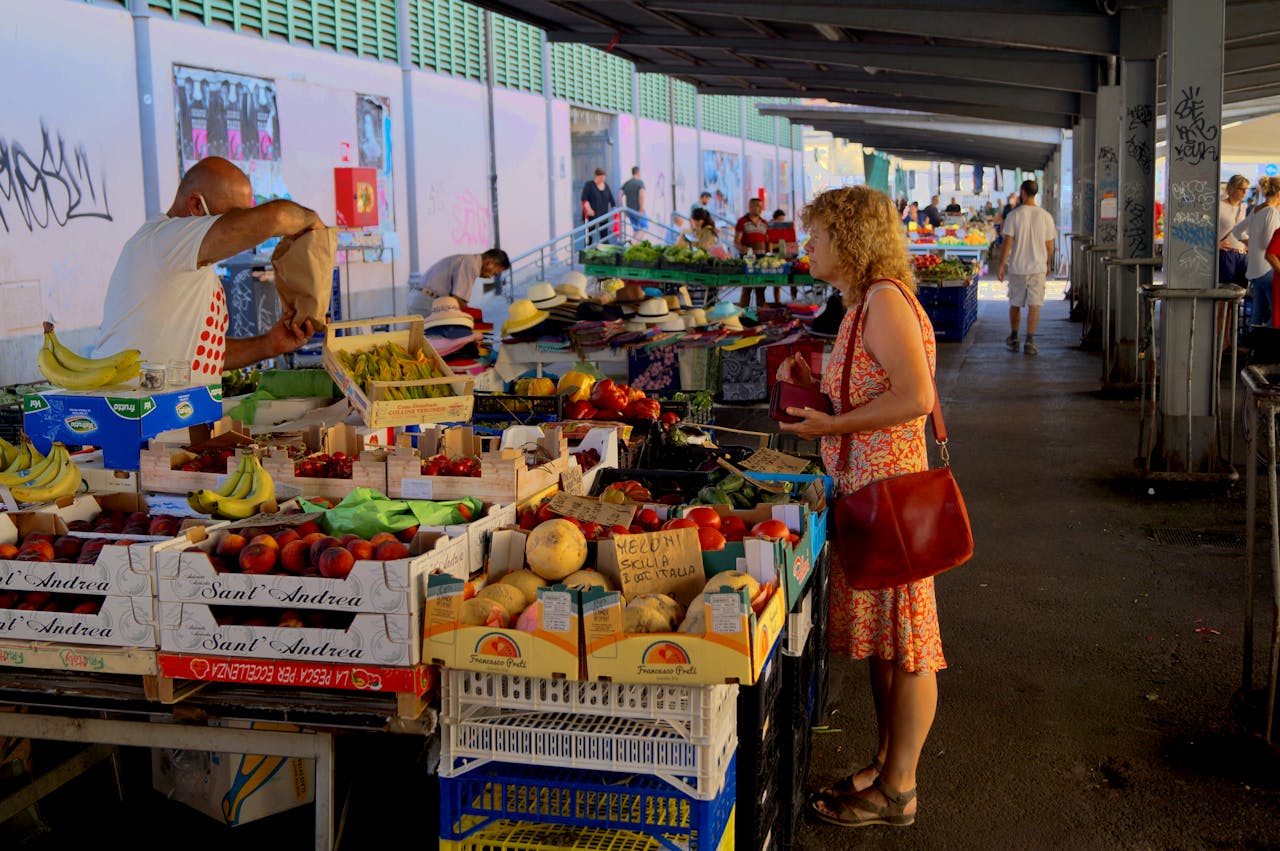
 Currently, the food system in Italy is failing many of its citizens. This will come as a surprise to many due to the nation being almost synonymous with good food and a lifestyle that is centered around it. Due to many factors, such as the COVID-19 pandemic and the recent aggressive position of Russia’s shocking supply chains, the weakness of food systems in Italy has been exposed, as those at risk of food poverty or food insecurity stand at 22.3% of the population. It is an alarming statistic for a world leader in many metrics.
The Fuzzy Approach
Various factors, including food insecurity, contribute to the lack of prosperity and poverty worldwide. Addressing poverty is inexplicably complex due to this multitude of factors. While focusing on a specific aspect, such as food poverty, might suggest a more straightforward solution, this view overlooks the broader, interconnected challenges and could be misguided. In addressing this complexity, the fuzzy approach attempts to more accurately analyze food systems and capture the existence of food poverty through an expenditure side metric.
Advocates of this innovative approach suggest that it offers more excellent results and insights than traditional binary set theory. The study utilizes data from an Italian Household Budget Survey of 2021, highlighting how current initiatives could be improved in creating stronger food systems in Italy to combat food poverty and insecurity.
Global Alliance Against Hunger and Poverty
In November 2024, Italy voluntarily joined the Global Alliance Against Hunger and Poverty. The Alliance hopes to eradicate hunger and poverty by supporting and reinforcing national political efforts to provide secure food to citizens, ameliorating global food systems. The Alliance has two “High-level Objectives,” seeking to sustain political drive by spurring collective agency between existing and emerging organizations and initiatives. It also wishes to improve mobilization and coherence between domestic and international efforts.
By committing to the Alliance, Italy has taken a crucial step to addressing food insecurity within its borders. Formally, Italy recognizes and acknowledges the growing prevalence of people facing food insecurity because of continuous structural poverty and inequality. In doing so, Italy also commits to the Alliance’s processes to address this issue, such as large-scale unified approaches transcending international, regional, national and local geographies.
Regarding domestic policy, Italy will, to the best of its abilities, “implement, improve and/or scale up” a range of policy initiatives, programs and instruments from the Alliance’s policy basket.
Domestic Policies
The following policies were already in place before Italy joined the Alliance. However, they will now be upgraded for a more significant impact. One newly initiated program is the Social Card, Dedicata a te (“Dedicated to You“). Initially implemented on July 18, 2023, the program was further strengthened in September 2024, reflecting Italy’s continued commitment to alleviating poverty within the country.
The budget for the program has risen, which, according to Fisco e Tasse, will result in an increase of families receiving the social card, from 1.2 million in 2023 to 1.33 million this year. The increased budget will also mean an increase in the median value of the card from $478.69 to $521.45 per month (+8.9%).
In 2023, 96% of the social card’s funds were spent on food products, with the remaining 4% on public transport. While the card is available for use other than alleviating food insecurity, the Italian public prioritizes its use for food. Globally, many are facing food insecurity, even in a “food-centric” country like Italy; it is inspiring to see policy initiatives such as the “Dedicated to You” even greater; it is not alone.
Coffee Fund
Another key tenant to the Alliance’s process is the value of policy cooperation and support. This is most clearly highlighted through the Apulia Food Systems Initiative (AFSI) 2024, launched in June by leaders of the G7. The key deliverable in this instance is the communication and support between member countries to enhance each member’s ability to alleviate food poverty.
Italy, through the AFSI, has announced a private-public fund for coffee. The Global Private-Public Coffee Fund seeks to support initiatives that strengthen coffee’s supply chain and minimize the industry’s shocks due to climate instability. To do so, the fund wishes to coordinate between existing efforts, thus sharing knowledge and resources and investing in research, technology development and infrastructure.
It further seeks to protect smaller businesses that make up the majority of the producing industry through “equitable value distribution” throughout the entire chain of supply.
Hope for the Future
While it may seem troubling that a rich, developed and food-centric country such as Italy is struggling to alleviate food poverty, significant progress is being made through various initiatives and programs. The Fuzzy analysis provides an in-depth understanding of food insecurity at a national and sub-national level. A greater understanding of the patterns of food poverty will aid initiatives seeking to improve food systems in Italy and abroad, such as the Global Alliance Against Hunger and Poverty.
The increased communication, awareness and mobilization that resulted from AFSI and its umbrella organizations and initiatives highlight the positives of the human spirit and our willingness to provide all with just and fair access to food.
– Laughlin Moeller
Laughlin is based in London, UK and focuses on Global Health for The Borgen Project.
Photo: Pexels

 Kauai, known as Hawaii’s “Garden Isle” for its breathtaking landscapes and lush greenery, faces a challenge not