Organizations Fighting Cuba’s Food Shortages
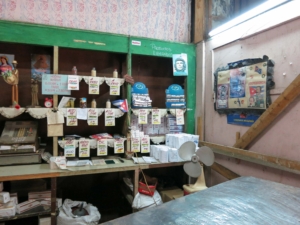 Cubans are now struggling more than ever to put food on the table, with 12.8% of the population failing to consume their daily calorie intake in 2023 and 37.8% categorized as “food insecure.” Only 15% of the population has the economic means to justify eating three meals a day. This was in the context of great economic turmoil last year, with a 30% inflation rate, a 2% fall in gross domestic product (GDP) and limited foreign currency making it almost impossible for the government to import products. This presented a grave problem, given that, at that moment, the subsidized food packages provided by the government consisted almost entirely of imports. Cuba’s food shortages remain the main concern among the population, ranking higher than topics such as energy blackouts and wages.
How Has the Cuban Government Responded?
The Cuban government rationing system of basic foodstuff has been in operation since the early ’60s to protect against U.S. sanctions. However, due to recent struggles to import food products, rations have been reduced, with bread allocation reducing 25% to just 60 grams. The authorities also proposed further price controls on some essential products to keep prices low.
However, it was warned that this would worsen food shortages, with businesses threatening to stop trading under the new rules. Thus, Cuba was forced to ask the United Nations World Food Program (WFP) for help, as the government could not distribute flour and subsidized milk to children younger than 7.
WFP
Using food programs to foster peace and stability, the WFP is one of the main organizations fighting Cuba’s food shortages through school feeding schemes, agricultural support and disaster responses. These initiatives have had a massive scope, with the organization having helped more than “760,000 people with direct assistance and indirectly benefited 30,700 people with assets, capacity and services as well as 910,000 people through national policies and [programs].”
The WFP has achieved this through short-term solutions like food distribution and by emphasizing supporting Cuba in providing such services by itself. It worked on sustainable, locally led projects alongside farmers, linking them with school feeding schemes. Additionally, the WFP facilitated the “distribution of rice, grains, vegetable oil, micronutrient powders, blended fortified foods and milk to support authorities’ pursuit of the Sustainable Development Goal (SDG 2).”
Oxfam
Oxfam launched its “No More Blockade” campaign, arguing that this is key to fighting Cuba’s food shortages and political factors. The organization called on the Biden administration to recommit to normalizing relations between the U.S. and Cuba. It encouraged the Cuban government to adhere to its constitutional commitment to rights and freedoms and diversify its economy.
Oxfam also calls on the international community to advocate for more cooperation within Latin America and for the European Union to influence the U.S. government.
Care International
Having worked in Cuba since the late ’90s, supporting victims of food insecurity, CARE has carried out invaluable projects in Cuba, focusing on ensuring gender equality. In 2019, CARE International supported “farmers facing the effects of climate [instability] to restore lands and crops, oversaw quality of life and safe water programs in vulnerable communities and worked on sustainable agriculture.” Recently, CARE International, alongside local actors, provided aid and shelter during the energy blackouts.
Barnabas Aid and Give2Cuba
Give2Cuba and Barnabas Aid and are two more organizations fighting Cuba’s food shortages by providing aid. Barnabas Aid uses Christian church networks to distribute food products to the vulnerable, with its “food.gives” projects delivering containers of dried and dehydrated food products to the island.
Similarly, Give2Cuba, set up by Cuban Americans in 2010, provides food, medicine and cash and facilitates larger companies’ contribution to alleviating food scarcity in Cuba. Give2Cuba Houston carries out humanitarian relief trips, which “provides direct help to families, as well as work with trusted community leaders (such as clergy) to identify and reach the elderly and other vulnerable people.”
In 2023, the group raised $3000 for a feeding program in Matanzas, providing meals for 15 older adults. The organization hopes to fundraise $10,000 in 2025 to allow another 30 pensioners to be fed. Like Barnabas Aid, Give2Cuba has also coordinated a quick response to the blackouts and Storm Oscar, with teams sent to Cuba in the aftermath.
Final Note
The work of these international organizations fighting Cuba’s food shortages has been widespread and overwhelmingly positive. The focus of institutions like the WFP and Oxfam on long-term solutions so that Cuba can become self-sufficient by improving its agricultural productivity and building infrastructure is very important.
Although short-term aid and solutions are necessary and alleviate suffering, it is a focus on the future and dealing with these issues from the root that may bring Cuba closer to ending its fight against hunger and food insecurity. A combination of different approaches, alongside a more comprehensive governmental approach, will hopefully ease this food insecurity issue.
– Ciara Howard
Ciara is based in Brighton, UK and focuses on Good News and Global Health for The Borgen Project.
Photo: Wikimedia Commons
