Foreign Investment in Rwanda is Reshaping Kigali
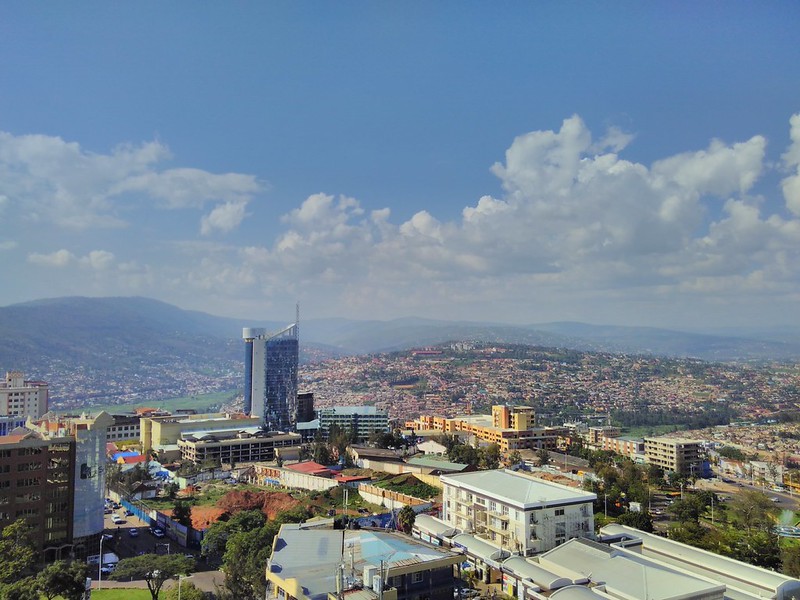 Kigali is becoming one of Africa’s leading locations for international investors, development organizations, nonprofits and foreign investment in Rwanda. Rwanda’s economy grew at 7.8% in the first half of 2025, and the country ranks among Africa’s four least corrupt nations. These numbers and the government-driven strategy show how Kigali is becoming not only a business hub but a model for development and growth across the country and internationally.
Why Foreign Investment in Rwanda Is on the Rise
Rwanda’s appeal to foreign investors has a lot to do with the stable environment. The Rwanda Development Board operates a One Stop Centre where businesses can register in a few hours, and the country allows 100% foreign ownership across the most important sectors. Rwanda is the only nation in East Africa to have concluded a Bilateral Investment Treaty with the United States, which entered into force in 2025. Meanwhile, the government’s Vision 2050 plan targets upper-middle-income status by 2035 and high-income status by 2050, goals that require sustained annual GDP growth.
Rwanda’s membership in the East African Community, the African Continental Free Trade Area and the Common Market for Eastern and Southern Africa (COMESA) gives businesses operating in Kigali access to a combined market of more than 1.4 billion consumers.
Development Organizations on the Ground
Kigali’s stability and infrastructure have drawn major international bodies beyond the private sector. The United Nations Development Programme’s (UNDP) current country program for Rwanda, running from 2025 to 2029, positions Kigali as a central node for innovation-driven development work. Key platforms and organizations include Timbuktoo, Youth Connekt and the Accelerator Lab, all of which focus on digital entrepreneurship, green jobs and youth economic empowerment.
The scale of ambition is significant. The UNDP’s program targets equipping 20,000 young Rwandans with employability skills by 2029. These programs operate against a backdrop of real need: youth unemployment stands at 20.5% for Rwandans aged 16 to 30, and approximately 78% of the population is under 35. The government’s National Strategy for Transformation 2025-2029 explicitly targets the creation of 1.25 million productive jobs with a focus on women, youth and climate-resilient sectors.
Growth That Must Reach the Poorest
The most important question surrounding Kigali’s rise is whether its economic momentum is reaching those who need it most. Rwanda’s Human Development Index grew by 119% between 1990 and 2018, the highest rate globally over that period. But as of 2017, 38.2% of Rwandans still lived below the poverty line, with 16% in extreme poverty, and 54.8% of the rural population experiencing multidimensional poverty.
The World Bank’s Country Economic Memorandum on Rwanda directly addresses this tension, emphasizing that pathways to sustainable growth must be inclusive, particularly for agriculture-dependent rural communities and women, who remain disproportionately excluded from the formal economy. Rwanda’s national frameworks acknowledge this gap: the National Strategy for Transformation 2025-2029 explicitly targets pro-poor growth, gender equality and equitable access to services as core pillars alongside economic transformation.
Looking Ahead
What makes Kigali distinctive is the combination of elements it has assembled: political stability, low corruption, investment reform and a government that has embedded poverty reduction targets directly into its long-term economic vision. Whether this model delivers for Rwanda’s poorest communities over the next decade will depend on execution, particularly whether programs like the UNDP’s youth employment initiatives translate into lasting livelihoods beyond Kigali’s city limits. As a framework for what development-oriented economic growth can look like, Kigali continues to draw international attention.
– Gia Sen
Gia is based in Mansfield, MA, USA and focuses on Business and Politics for The Borgen Project.
Photo: Flickr
