• Link to X
  • Link to Facebook
  • Link to Instagram
  • Link to TikTok
  • Link to Youtube
  • About
    • About Us
      • President
      • Board of Directors
      • Board of Advisors
      • Financials
      • Our Methodology
      • Success Tracker
      • Contact
  • Act Now
    • 30 Ways to Help
      • Email Congress
      • Call Congress
      • Volunteer
      • Courses & Certificates
      • Be a Donor
    • Internships
      • In-Office Internships
      • Remote Internships
    • Legislation
      • Politics 101
  • The Blog
  • The Podcast
  • Magazine
  • Donate
  • Click to open the search input field Click to open the search input field Search
  • Menu Menu

Archive for category: Education

Information and stories on education.

Children, Development, Education, Global Poverty, Health

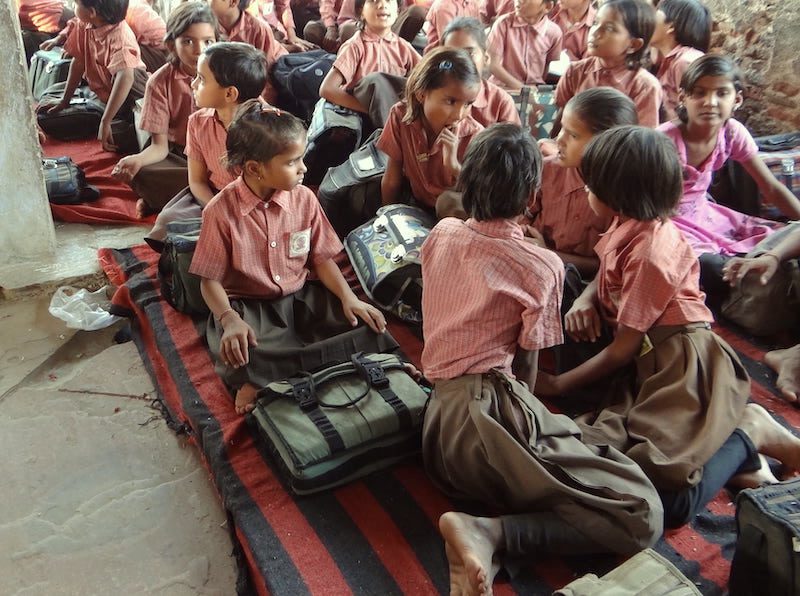
Cambodia’s School Feeding Program Tackles Undernourishment

Cambodia’s School Feeding Program
In Cambodia, 15% of the population suffers from undernourishment and 32% of children younger than 5 experience stunting. Children are not consuming enough food and the food that they do consume does not have the nutrients necessary for healthy development. Considering these dire statistics, as early as 1999, the World Food Programme (WFP) committed to helping the Cambodian government provide school meals for children. Although combating undernourishment is a daunting task, Cambodia’s school feeding program has expanded over the years and is continuing to make a profound impact on Cambodian communities.

Food Production and Intense Weather: Food Security Challenges

One of the factors contributing to high undernourishment rates in Cambodia is limited production and efficiency in the agricultural sector. According to the United States Agency for International Development (USAID), “nearly 80% of Cambodians live in rural areas and 65% rely on agriculture, fisheries and forestry for their livelihoods.” At the same time, a fifth of the Cambodian population suffers from food deprivation. Although Cambodia has a large agriculture industry, the nation is not able to meet the needs of its people.

Challenges within agricultural production affect crop yields, and therefore, also affect the capacity to increase people’s access to food. In Cambodia, crop plots are small, leading to limited agricultural output. Additionally, many areas with rainfall-dependant crops do not receive consistent rainfall and these same areas are unable to produce during the dry season. Also, a growing number of rural Cambodians do not have access to cropland. These factors pose challenges to Cambodian farmers and agricultural production expansion.

Compounding issues of food insecurity and poverty further, Cambodia regularly experiences natural disasters. Monsoons are common, and on the opposite end of the spectrum, some areas experience severe droughts. The loss of land and the reduction in shared resources as a result of natural disasters harshly impact food-insecure Cambodians already in vulnerable positions.

Investing in Children and Communities Through Food

In 1999, the WFP began to support government-backed school meal programs, helping to implement these programs across 908 Cambodian schools. Pre-primary and primary schools provide meals, which is particularly important because children younger than 5 are especially vulnerable to the impacts of malnutrition.

In 2014, the WFP and the Cambodian government reached one of their goals for school meal programming, a “home-grown school meals model.” The model calls for schools to locally purchase ingredients for meals, which increases demand for and develops the local agriculture industry while spurring job growth. At first, a couple of schools tested the home-grown school meals model, and now, more than 200 schools implement the model.

The Benefits of School Meals

Cambodia’s school feeding program is an important source of food for Cambodian children, providing them with the nutrients necessary for healthy development. Before Cambodia’s school feeding program, some children were unable to eat during the school day because they did not have enough money to buy food at school. The implementation and growth of the school meal program mark an important investment in Cambodian children, especially as the Cambodian government works with the WFP in the transition to run the home-grown school feeding program on its own.

In Cambodia, school meals benefit children’s health and improve their engagement in school. An added and possibly unforeseen benefit of Cambodia’s school feeding program is that parent engagement with schools and teachers has increased. Through the program, parents have become more knowledgeable about nutrition, to the benefit of themselves and their children. Furthermore, parents are eager to get involved in the program. Parents, even the most impoverished ones, donate ingredients and money and volunteer when the program requires extra help. Parents even helped to build a kitchen in one of the participating schools.

Turning the Tide

Although Cambodia has high levels of undernourishment and challenges to its agricultural sector, the government is working hard to turn the tide. The school feeding program’s promising results and growth thus far exemplify how far Cambodia has come in tackling undernourishment and hunger, illustrating the far-reaching impacts of school meal programs. With continued efforts, Cambodia will begin to see reductions in its undernourishment statistics, especially among the youth, as Cambodia’s school feeding program continues to develop and benefit Cambodian children and communities.

– Anna Ryu
Photo: Unsplash

November 8, 2021
https://borgenproject.org/wp-content/uploads/borgen-project-logo.svg 0 0 Jennifer Philipp https://borgenproject.org/wp-content/uploads/borgen-project-logo.svg Jennifer Philipp2021-11-08 01:30:122021-11-05 07:32:27Cambodia’s School Feeding Program Tackles Undernourishment
Development, Education, Global Poverty, Health

CAR Addresses Gender Inequality and HIV 

Gender Inequality and HIV
Gender Inequality and HIV is a significant issue in the Central African Republic (CAR). In fact, it is still the primary cause of death in the nation, with nearly 5,000 people dying from HIV/AIDS in 2020. More than 50% of the nearly 110,000 people living with HIV in CAR are not receiving treatment for it. Furthermore, gender inequality within the CAR HIV/AIDS response is ever-present. However, CAR, with the support of organizations like Doctors Without Borders and UNAIDS, is working to make health services for HIV/AIDS more accessible and create a setting where women can get the help that they need, tackling both gender inequality and HIV.

Gender Inequality and HIV in the Central African Republic

Statistics from the year 2020 indicate that 88,000 adults and children are living with HIV in CAR. Of the total number of people living with HIV in CAR, women aged 15 and older account for approximately 51,000 cases. Meanwhile, 1,200 women aged 15 and older have died from HIV.

The aforementioned statistics align with the social and economic conditions present in CAR. MICS-6 survey data from 2021 indicates that 23.6% of females between 15 and 49 years of age entered into a marriage or union before reaching the age of 15. On top of this, CAR gender-based violence information management system records also reveal 72 instances of rape and 340 instances of gender-based violence during the month of January 2021.

Female genital mutilation is also a common practice in the region, with 21% of CAR women undergoing this traditional yet harmful procedure. Deputy Special Representative of the United Nations Secretary-General in the Central African Republic Denise Brown attributes this violence against women to a combination of “protracted insecurity, violence and humanitarian crises compounded with toxic masculinities and negative social norms.”

The CAR Government Takes Action

The CAR government has conducted an assessment of gender dimensions and HIV response. The results of the assessment reveal that the female members of the population do not receive the full benefit of HIV program advances. The assessment also shows that HIV was prevalent among 15% of female sex workers. Meanwhile, less than a quarter of pregnant mothers obtain “access to prevention of mother-to-child HIV transmission services.”

Acting on these figures, the Central African Republic government has put together an intervention plan for 2021-2023 to assist marginalized women. The plan includes “biomedical and behavioral interventions to promote gender-transformative education and sensitization” to alleviate “barriers to access to HIV services by women, girls and key populations.” In addition, various strategies of care will “promote access to health, social and psychosocial services for women,” with a focus on reducing mother-to-child transmission of HIV. Furthermore, monitoring will allow for accountability regarding gender equality and HIV progress.

Médecins Sans Frontières (MSF) Assists

The CAR government is not alone in its efforts. Other organizations such as Médecins Sans Frontières, also known as Doctors Without Borders, have also stepped up efforts to help improve access to HIV services in the CAR region. Beginning in 2019 in the capital city of Bangui, this help comes in the form of MSF teams “providing free medical care and psychological support for patients” infected with advanced HIV and tuberculosis complications. The treatment serves as specialized care in an area where HIV prevalence is double the national average. Furthermore, MSF has set up community anti-retroviral (ARV) groups in various areas where designated community representatives can supply ARV drug refills. This endeavor eliminates the burden of transport expenditure on already impoverished people and “time spent in medical consultations.”

Besides providing care, MSF also helps patients care for themselves through self-management. Peer support receives encouragement. This has led to advocacy among community members. The close of 2020 has seen the establishment of “276 community ARV groups in CAR, representing some 2,300 patients.” With the efforts of the government and organizations such as MSF, CAR can make progress in both the realms of gender inequality and HIV.

– Jared Faircloth
Photo: Flickr

November 7, 2021
https://borgenproject.org/wp-content/uploads/borgen-project-logo.svg 0 0 Lynsey Alexander https://borgenproject.org/wp-content/uploads/borgen-project-logo.svg Lynsey Alexander2021-11-07 07:30:562021-11-05 06:36:46CAR Addresses Gender Inequality and HIV 
Development, Education, Global Poverty

Addressing Poverty Reduction in Costa Rica

Poverty Reduction in Costa Rica
The recent COVID-19 pandemic greatly impacted the economic stability of Central America’s wealthiest country and caused a resurgence in poverty. As a result, poverty reduction in Costa Rica has become an important goal for the country. Many know Costa Rica for its lush rainforests and beaches, universal healthcare system and environmental activism. However, since the pandemic began, thousands of small businesses have shut down due to low demand. The decreased income levels led many families to live below the poverty line. According to UNICEF, one in three children under 18 years of age in Costa Rica now lives in poverty. Poverty reduction in Costa Rica is necessary to create a healthier population throughout the country.

Economic Reform

While Costa Rica displayed steady economic growth in the past three decades, the recent pandemic impacted that trajectory. The current goals of economic reform in the country are to address fiscal imbalances while decreasing income inequality and distribution. According to President Alvarado Quesada, Costa Rica plans to accomplish this by strengthening social assistance programs. These social assistance programs aim to promote greater formalization and support female labor force participation. The International Monetary Fund (IMF) is also aiding in economic recovery through a $1.7 billion arrangement. These assets will aid the country in improving public funding for subsidies to individuals the pandemic has heavily affected.

The government is seeking to continue decreasing income inequality through educating more children and adults, which could create long-term growth. Currently, the literacy rate in Costa Rica is high at 97.9%, but there is still a large gap in income inequality. In 2019, Costa Rica’s richest individuals held approximately 53.7% of the country’s income. The country will reduce poverty and income inequality by creating infrastructural reforms to streamline regulations and complete trade commitments, foreign direct investment and natural resources preservation. Increasing opportunities for females within the labor market is also vital to improving income inequality. In 2019, females made up 40.5% of the total labor workforce. This can improve through social assistance programs aimed at hiring females for jobs.

Tourism’s Effect on Poverty

In 2019, Costa Rica’s tourist industry represented 8.5% of gross domestic product and employed 9% of the population. However, in 2021, Costa Rica’s government estimates that the industry will only be worth approximately 3.5% of GDP and will decrease by approximately 100,000 jobs. In 2020, poverty in Costa Rica reached 26.2% of families, the highest level in 30 years due to the impact of the COVID-19 pandemic. About 45% of the working-age population is in a condition of informal employment. In other words, they perform jobs without being registered or contributing to taxes and social security. Many of these informal positions relied on tourism such as the restaurant, hotel and excursions industries. With a lack of job security, individuals with these informal jobs were the first people that layoffs impacted.

COVID-19 Vaccines

Moving past the COVID-19 pandemic is necessary to restore the livelihoods of many Costa Rican people in poverty. To do this, the country is focusing on vaccinating low-income individuals. Earlier in 2021, rather than creating stringent lockdowns, the Costa Rican government imposed restrictions on vehicle mobility and limited business hours and capacity. The country also requires COVID-19 vaccinations for people to enter most commercial centers and participate in many public activities. Fortunately, the latest vaccination rates show 82% of all Costa Ricans ages 12 and older have received at least one COVID-19 vaccine dose.  Travelers to Costa Rica must show proof of vaccination or a negative COVID-19 test in order to enter the country. These requirements can lead to a rapid return to tourism levels which will aid the country in returning to economic stability.

Moving Forward

With continued adherence to precautionary COVID-19 safety measures, individuals in Costa Rica can greatly protect public health. Meanwhile, the new social assistant programs promise to greatly assist in bringing about poverty reduction in Costa Rica.

– Robert Moncayo
Photo: Flickr

November 7, 2021
https://borgenproject.org/wp-content/uploads/borgen-project-logo.svg 0 0 Jennifer Philipp https://borgenproject.org/wp-content/uploads/borgen-project-logo.svg Jennifer Philipp2021-11-07 01:30:222021-11-04 21:34:49Addressing Poverty Reduction in Costa Rica
COVID-19, Development, Education, Global Poverty

The Predicted 6% Increase in Uzbekistan’s Economy

Uzbekistan’s Economy
Uzbekistan, a landlocked country in Central Asia and one of the few countries in the world to avoid a severe economic downturn in the fiscal year 2020, received a financial projection from the World Bank indicating that Uzbekistan’s economy should improve about 6% in total in the fiscal year 2021. Here is some information about the country’s economy including what contributes to its growth.

Uzbekistan’s Economic Foundation

Uzbekistan’s economy is heavily reliant on agriculture. About 27% of the population works in agriculture, a sector that accounts for 28% of the nation’s gross domestic product. The most exported crop is cotton, which is a water-intensive crop. Most of Uzbekistan’s farming land requires heavy irrigation through the country’s “system of pumps and canals.” Uzbekistan, on average, produces more than 700,000 tons of cotton per year. In 2020, this brought in $78.87 million to Uzbekistan’s economy. Other agricultural products include livestock or seedlings. Altogether, Uzbekistan earned $15 billion from the exportation of goods alone.

What Changed in 2020?

Despite the difficulties involved in trade due to the COVID-19 pandemic, Uzbekistan’s agricultural sector remained steady and robust. The impact of the pandemic on unemployment was minimal and poverty has already begun reverting to its pre-pandemic levels. At the beginning of 2020, the unemployment rate was about 9% increasing to 11% by the end of the year. Since then, the poverty rate has re-stabilized at about 9.8% for the first three quarters of 2021. Experts expect this upward trend to continue during 2021.

In 2020, one of the reasons the agricultural sector was not as harshly affected as it was in other nations is because Uzbekistan began efforts to update farming technologies and develop a primarily agricultural export-oriented market to further the agricultural sector’s contributions to the nation’s GDP. In August 2021, a plan was approved to transform the agricultural sector in partnership with the United States Agency for International Development (USAID).

The developmental plans will expand resources available for those working in agriculture and expand job accessibility in Uzbekistan. In turn, with the expanded job accessibility and resource expansion, the poverty rate in Uzbekistan has a significant chance of decreasing further. As agriculture remained a stable sector for business in 2019 and 2020, Uzbekistan’s government saw the opportunity for expansion and reorganization. This plays a significant role in the expected increase in Uzbekistan’s GDP.

Uzbekistan and the World Bank

The World Bank has partnered with Uzbekistan for decades. It tracks Uzbekistan’s overall poverty rate, economic growth and more. Uzbekistan’s partnership with the World Bank involves “providing technical advice on how to improve the country’s economic and financial management” with a focus on “private sector growth, agricultural competitiveness and modernization and improved public service delivery.” One of the aims also includes transitioning to “a market-based agriculture system.” This goal is also the primary aim of the Uzbekistan-USAID agricultural transformation strategy outlined for 2020-2030.

Throughout this partnership, the World Bank and Uzbekistan have developed policies to do away with child labor but expand job opportunities. Positively, Uzbekistan noted significant increases in the nation’s GDP since the partnership began.

In October 2021, the World Bank Vice President Anna Bjerde met with Uzbekistan’s president to discuss the partnership between the organization and the country and see how the World Bank can help Uzbekistan fulfill its goal of expanding into the market-based agriculture system. The system can help farmers operate more business ventures and expand their markets without many restrictions, leading to more job opportunities.

The Potential of a New Market

Much of the projected economic growth stems from the change in agriculture marketing in Uzbekistan. The country’s income from cotton exports and trade decreased to about $3 million in 2020, even though, in 2019, this amount was about five times higher. Despite this staggering drop, Uzbekistan’s economy remained fairly untouched.

Uzbekistan’s economy hardly shrank, which means a better chance for significant improvement this fiscal year. Furthermore, the increasing rate of vaccinations globally and the opening of markets for trade increase the potential for Uzbekistan’s economy to re-expand fully and continue expanding.

Positive projections for Uzbekistan’s economy provide confidence to Uzbekistan and will attract foreign investors. The positive projection increasing four points from the previous projection, as well as the expansion of the free agriculture-market system, potential job opportunities and the chance for more foreign investments, all point toward a positive 2021 for Uzbekistan and its economy.

– Clara Mulvihill
Photo: Flickr

October 31, 2021
https://borgenproject.org/wp-content/uploads/borgen-project-logo.svg 0 0 Jennifer Philipp https://borgenproject.org/wp-content/uploads/borgen-project-logo.svg Jennifer Philipp2021-10-31 07:30:142024-05-30 22:25:20The Predicted 6% Increase in Uzbekistan’s Economy
Development, Education, Global Poverty, Health

Foreign Aid and The Impacts of COVID-19 in Guyana

Impacts of COVID-19 in Guyana
Guyana, the only English-speaking country in South America, shares borders with Suriname, Venezuela and Brazil. According to 2021 data from the World Population Review, Guyana is the 17th most impoverished nation on the continent. Guyana’s economy relies mostly on its natural resources and has seen great improvements since the discovery of petroleum and gas reservoirs in 2015. However, the COVID-19 pandemic has affected the country socially and economically. Fortunately, foreign aid is contributing to Guyana’s recovery and the safeguarding of its population during COVID-19 in Guyana. Here is some information about the impacts of COVID-19 in Guyana including measures to help the country deal with the pandemic.

The Impacts of COVID-19 in Guyana

Similar to the rest of the world, Guyana has not been exempt from the impacts of COVID-19. By September 19, 2021, Guyana reported a total of 29,553 COVID-19 cases and 725 deaths.

In 2020, the United Nations Development Programme (UNDP) assessed the socioeconomic impacts of the COVID-19 pandemic in Guyana and found alarming results. Telephone survey results indicate that about 10% of respondents cannot access healthcare, mostly because health centers are not equipped with the necessary medical supplies and limited healthcare facilities lead to overcrowding.

Furthermore, almost 60% of respondents reported concerns of not having adequate food during COVID-19 and “22% have skipped meals since the pandemic” began. Spending more than 60% of their income on food supplies is the reality of 18% of respondents. Income cuts affect 20% of respondents, with businesses closing down or “reduced work” accounting for 70% of these income losses. People who have had to dip into their savings due to financial difficulties make up 52% of the respondents and roughly 70% of “households indicated a need for priority assistance, including cash, food and hygiene products.” The financial impacts of COVID-19 impact women-headed households the most as 76% required financial help.

Foreign Aid Counts

In 2021, Guyana has received three shipments of COVID-19 vaccines from the COVAX Facility — a partnership between “global [nonprofits] and leaders in vaccine development and distribution,” totaling 100,800 doses. France has also donated 19,200 extra doses to Guyana. These numbers together represent approximately 23% of all doses administered up until September 2021 when the same percentage of people had been fully vaccinated and 44% had at least started the vaccination protocol.

In June 2021, the World Bank approved $6 million in financial aid for the Guyana COVID-19 Emergency Response Project. This aid is not only for the purchase of vaccines but also for awareness-raising efforts and overall improvements in the country’s health system.

Finally, the United States has been one of the major allies improving Guyana’s situation, donating $1.3 million to aid Guyana’s COVID-19 response. The global superpower also benefits from helping Guyana stabilize socially and economically since the two countries have strong bilateral economic relations; the nations rely heavily on each other for imports and exports of goods, for example. In August 2021, the U.S. also shipped 146,250 cost-free Pfizer vaccine doses to the country. Guyana’s Ministry of Health stated that it has enough doses to immunize all Guyanese adults thanks to its foreign “friends.” Widespread vaccination is essential in fighting the global pandemic and reducing social-economic instability.

Looking Ahead

Guyana’s economy has been growing exponentially since the discovery of oil and gas reserves on its coast. However, the pandemic has impacted the well-being of a great part of the population with widespread job losses, income cuts and difficulties accessing healthcare, among other challenges. Foreign aid plays an essential role in Guyana’s path to recovery, mostly by accelerating immunization and promoting the improvement of the country’s health system. The United States is one of Guyana’s main donors and partners, benefiting directly from Guyana’s upturn.

– Iasmine Oliveira
Photo: Flickr

October 31, 2021
https://borgenproject.org/wp-content/uploads/borgen-project-logo.svg 0 0 Lynsey Alexander https://borgenproject.org/wp-content/uploads/borgen-project-logo.svg Lynsey Alexander2021-10-31 01:30:502021-10-28 08:09:56Foreign Aid and The Impacts of COVID-19 in Guyana
Child Poverty, COVID-19, Education, Global Poverty

Child Poverty in the Gambia

Child Poverty in The Gambia
Child poverty in the Gambia is a rampant issue throughout the country. While the smallest country in West Africa, the Gambia’s rising poverty and food insecurity cause significant concern for children’s future safety and health. Despite the attempts to encourage positive change, 48% of the 2.1 million people living in the Gambia live in poverty, and 10.3% of the children suffer from acute malnutrition, with a more significant number being food insecure.

COVID-19 and Poverty

Globally, COVID-19 has struck economies and the healthcare systems of every nation, regardless of size or wealth. Though COVID-19 indiscriminately targeted the world’s populations, the healthcare system’s integrity and economic power were essential in protecting and supporting a nation’s citizens. In August 2020, households with insufficient food intake rose to 22% from 20% in July 2020, with the World Food Programme (WFP) attributing those changes to the pandemic. COVID-19 has more than doubled the quarterly increase of acute malnutrition at 5.6%, impacting approximately 58,177 children.

On top of increasing food insecurity, COVID-19 causes an increase in child poverty in the Gambia as employment decreases and the nation’s food supply decreases. The combining factors in the past two years add to the previous instability in the Gambia that included high rates of poverty and malnutrition.

Child Labor and Abuse

In the Gambia, child labor is a common occurrence, and even child prostitution remains a significant issue within the country. According to the U.S. Department of Labor and the United Nations, minors’ commercial exploitation and trafficking in the Gambia contributes to the illegal sex tourism business. This form of labor is illegal while enforcement and allegations fail to eliminate the reoccurring allegations. Without a robust justice system and significant improvement in entrepreneurship in the Gambia, illegal and horrifying child abuse will likely continue with minimal justice for the victims.

Besides the concerning presence of child prostitution, children ages 5 to 14 are working at a rate of 22.6%, and children attending school while working are at 21.7%. Typical fields of child labor are farming, mining, scavenging or street begging. While the child labor forms are nowhere near the complete list of potential labor fields, the necessity and use of children in the positions reflect the high rates of child poverty in the Gambia.

Education and Poverty

As with any nation, there is a direct association between poverty and education, especially with commonplace child labor. Although there have been slight improvements in education, such as 78% enrollment in primary schools, retention remains a significant issue for Gambian children. Of the 65.5% of students that complete primary school education, only 45.8% enter a lower secondary school and only 29.2% reach an upper secondary school education. The primary concern is approximately 20% of school-age children never enter the education system, reflecting a significant piece of the population unable to reach full economic potential.

Education is an essential aspect of youth in many emerging economies, as it allows individuals to enter specific and unique aspects of the global market. Without education, it can be challenging to improve socioeconomic status or advance development within one’s country. The combined rates of child education and child labor reflect the loss in economic potential and the inability to decrease poverty in the Gambia internally. Child poverty in the Gambia will continue without increasing the assistance to build up the education system and enforce ratified child labor laws. The factors of food insecurity, child poverty and weak systems to combat social issues contribute to the estimation that Gambian children only reach 40% of their full potential.

Looking Ahead

In an attempt to reduce child poverty in the Gambia, NGOs are providing supplies and monetary support to ensure safety, health and education. Child Aid Gambia is one organization that is supporting children, with multiple programs, including Bakoteh Rubbish Dump or Feeding Programmes. The Bakoteh Rubbish Dump spans over one kilometer in each direction and sits in the district of the busy township Serekunda. This dump is one of the largest and most toxic in the Gambia and Child Aid Gambia found children between 4 years old and older scavenging for metal and scraps to sell in the location. The Bakoteh Rubbish Dump Program works to reintegrate the children scavenging the dump back into local schools to ensure their education.

With the high rates of food scarcity, the Feeding Programmes assist the poorest communities by providing high-quality food for families and those suffering from malnutrition, especially with shorter rainy seasons in recent years causing massive drought. The care packages act as lifelines for communities experiencing drought or economic losses stagnating development. Without organizations such as Child Aid Gambia, there would be higher food insecurity and poverty levels throughout the nation. To end child poverty in the Gambia, NGOs and government organizations need to increase support for systemic change for education and ground-level support for food-insecure and impoverished children.

– Mikey Redding
Photo: Flickr

October 30, 2021
https://borgenproject.org/wp-content/uploads/borgen-project-logo.svg 0 0 Lynsey Alexander https://borgenproject.org/wp-content/uploads/borgen-project-logo.svg Lynsey Alexander2021-10-30 07:30:242021-10-27 16:34:07Child Poverty in the Gambia
Development, Education, Global Poverty, Health

How Lab-Grown Coffee Can Help Fight Poverty

Lab-Grown Coffee
New advancements in agricultural technology are making it possible to produce sustainable coffee that can be grown in any location. Scientists in Finland have recently created lab-grown coffee. According to the VTT Technical Research Centre of Finland, scientists employed cellular agriculture to produce coffee cells. The end result was coffee with an aroma and taste similar to regular coffee, marking the very first batch of coffee produced in Finland. The cold climate in Finland is unsuitable for coffee-growing, but cellular agriculture has made it possible to produce coffee in any location regardless of the climate of the area. Cellular agriculture has the potential to increase food production and solve many of the world’s problems.

The Global Coffee Industry

The coffee industry uses more water than people might expect. According to the United States Geological Survey, the world needs “about 120 billion cubic meters of water” annually to produce coffee. This means that of all of the water used for crop production, about 2% exclusively goes toward producing coffee. In a world where droughts are becoming more severe and environmental challenges are evident, it is necessary to develop innovative solutions that bring to the forefront the possibility of producing more crops while also using less water.

Cellular agriculture can make it possible for more people to produce coffee. People can earn significant incomes working in the coffee industry, allowing impoverished people the opportunity to rise out of poverty with a livelihood and an income. However, the coffee industry has some limitations. According to Business Wire, the global coffee market was worth about $102.02 billion in 2020 alone. However, right now, the only nations that can produce large amounts of coffee are countries that possess ideal areas and conditions for thriving coffee crops. Currently, “Brazil and Vietnam account for the highest production of coffee, in terms of volume, owing to suitable coffee growing conditions.”

The Benefits of Cellular Agriculture

If cellular agriculture becomes mainstream, any nation will be able to produce coffee and more people will be able to earn an income by working in the coffee industry. By implementing cellular agriculture to produce coffee, concerns about growing coffee trees fall away and coffee industry workers can focus on less taxing types of work within the coffee industry.

When cellular agriculture becomes more mainstream, potential coffee growers will not have to worry about adequate land access for crops and a suitable climate to produce coffee. Lab-grown coffee is exempt from problems like droughts, diseases and transportation issues prevalent in the conventional coffee industry. Lab-grown coffee also does not contribute to problems like deforestation and water shortages as it does not require land and excessive water use. In an interview with the New Atlas, VTT Research Institute scientist Dr. Heiko Rischer said that “These solutions have a lower water footprint and less transport is needed due to local production. There isn’t any seasonal dependency or the need for pesticides either.”

Looking Ahead

Lab-grown coffee is just one example of efficient crop production through the help of cellular agriculture. Cellular agriculture is still a relatively new concept, but it is capable of solving many of the world’s economic and environmental problems. Cellular agriculture can make it possible to sustainably provide food for more people while reducing harm to the environment. Unsustainable food-producing practices keep people in poverty, but cellular agriculture can help end many causes of poverty while ensuring a sustainable solution to global food insecurity.

– Frank Decapio
Photo: Flickr

October 30, 2021
https://borgenproject.org/wp-content/uploads/borgen-project-logo.svg 0 0 Lynsey Alexander https://borgenproject.org/wp-content/uploads/borgen-project-logo.svg Lynsey Alexander2021-10-30 01:30:272021-10-27 15:33:22How Lab-Grown Coffee Can Help Fight Poverty
Development, Education, Global Poverty, Health

Penal Reform International in Rwanda

Penal Reform International in Rwanda
In response to the 1994 genocide, Rwanda incarcerated up to 125,000 Rwandans (most of them Hutus) in facilities meant to hold 12,000 prisoners. Since the prison system could not sustain such a high number of inmates, it reestablished the traditional Gacaca courts for the sake of efficiency. However, the Gacaca Courts fell under international scrutiny for their failure to provide fair trials for the accused; the poor conditions at detention centers; and the election of poorly trained community judges, which held heavy prejudice against the accused. Penal Reform International, a nonprofit organization that works toward prison reform on the global stage, attempted to help Rwandan courts and prisons develop a more humanitarian legal process with respect for the tenets of international law. Below is information on Penal Reform International in Rwanda and how it has positively affected the country’s civil courts.

What is Penal Reform International?

Established in 1989 as an international nongovernmental organization, Penal Reform International’s mission is “to [reduce] the use of imprisonment around the world, through promoting alternatives to imprisonment, and to developing and promoting the implementation of international human rights standards on criminal justice and prison conditions.” It also uses paralegals – legal advisors – for those who have experienced incarceration and are awaiting trial with the goal of educating them on their rights within the country’s legal system.

Penal Reform International’s paralegals receive training in “international human rights instruments; National criminal law and procedure (including the Constitution and the Penal Code); The judiciary and the court systems; Prison conditions, systems and infrastructure; Health and safety awareness.” In cases such as Rwanda, having expertise on legal rights amid overcrowded prisons is valuable and extremely beneficial to prison reform as well as for the implementation of prison standards in accordance with international law.

Reforming Rwanda’s Courts and Prisons Through Education

Penal Reform International’s mission revolves around using paralegals, which, thus far, have “[organized] and conducted awareness sessions for over 3,000 detainees awaiting trial,” specifically targeting groups that are vulnerable to the spread of diseases within these prisons and informing them of their rights within Rwanda’s legal system. Penal Reform International in Rwanda has also “distributed 7,300 booklets on the rights of detainees in all Rwandan prisons,” which, in effect, not only educates the inmates of their rights but also advocates for more humanitarian methods within the Gacaca courts. As such, both the inmates and the judges in office are now more aware of the legal standards that international law demands.

The organization’s use of legal education as an instrument for court reform has been beneficial as it has reduced “unlawful and pre-trial detention,” and allowed for better-informed pleas, quicker file management and the overall improvement of communication from actors within the criminal justice system. As a result of Penal Reform International’s mission, the Rwandan courts have been able to lawfully issue court summons for 1,055 citizens using proper adjudicating techniques, obtain 1,100 court judgments for the purpose of constructing an able defense for appealing inmates and successfully lodge 455 appeals.

Stopping Overincarceration

Overcrowded prisons violate numerous human rights laws, confining inmates to dangerous living conditions which are unsanitary, leading to diseases and starvation. Nevertheless, Penal Reform International has helped release many Rwandans from these conditions. In just a year, from October 2009-2010, it assisted in “the permanent release of 625 detainees” along with deriving 168 provisional releases. In 2010, due to organizations like Penal Reform International, Rwanda’s prison population decreased to 43,400, a significant change from its earlier population of 125,000 inmates. Penal Reform International accomplished all of this by improving prisoners’ abilities to represent themselves in court and educating them on their rights. Ultimately, through this work, Penal Reform International’s mission has helped solve many of the problems stemming from over-incarceration in Rwanda.

Due to organizations like Penal Reform International in Rwanda, the absence of humanitarian legal values in underdeveloped countries has evolved to a system that is international judicial bodies both accept and praise. As Penal Reform International’s mission continues to thrive, so will underdeveloped countries around the globe.

– Jacob Crosley
Photo: Flickr

October 29, 2021
https://borgenproject.org/wp-content/uploads/borgen-project-logo.svg 0 0 Lynsey Alexander https://borgenproject.org/wp-content/uploads/borgen-project-logo.svg Lynsey Alexander2021-10-29 07:30:472021-10-27 14:07:20Penal Reform International in Rwanda
Development, Education, Global Poverty, Health, Women's Empowerment, Women's Rights

Aiding Women in Afghanistan

Aiding Women in Afghanistan
Afghanistan has been experiencing challenges economically, socially and politically. While these situations are affecting its citizens and the world, children and women are the most vulnerable members of the community, leading to many being impoverished, but there are ways that people/organizations are aiding women in Afghanistan.

About the Situation

Uncertainty has been governing Afghanistan since the outbreak of the crisis. Many escalations in violence have occurred since the impositions of new authorities. Over half a million of the population have demanded humanitarian assistance.

After 40 years of social crisis, poverty, several natural disasters and the outbreak of COVID-19 and the Taliban rule have increased poverty rates drastically. Both factors are a deadly combination for people in Afghanistan. About “50% of those in need in Afghanistan are women and girls.” Summing up, the outbreak of COVID-19 has pushed thousands of people to poverty, especially women and girls, affecting global poverty rates.

Women and girls are the most vulnerable group in society. The International Rescue Committee (IRC) is highly worried about how women and girls will overcome the situation in  Afghanistan. As a fundamental human right, women’s rights must receive respect. By consequence, all services must undergo proper delivery, ensuring all women and girls have access to health services, to freely work and go to school.

The Concerns of the International Community

The international community is aware that as the crisis escalates, women living in poverty in Afghanistan increase too. Levels of domestic violence, abuse and exploitation are dramatically increasing as global poverty rates are tremendously increasing. Elinor Raikes, IRC vice president and head of program delivery states, “We know that during times of crisis, violence against women and girls increases. With uncertainty mounting throughout Afghanistan, the IRC is concerned that we could see an increase in violence against women as well as an increase in child marriage.”

The international community is heavily working on reducing global poverty on reducing poverty in Afghanistan. It is essential for world leaders to drive an international plan and work on the solution. Since August 2021, the international humanitarian response plan for Afghanistan has received only 38% of its necessary funding. According to data “the shortfall could mean that 1.2 million children will lose specialized protection services, making them more vulnerable to violence, recruitment, child labor, early and forced marriages, and sexual exploitation.”

Challenges for Women in Afghanistan

Data has demonstrated that women are the most vulnerable group in society. Since the outbreak of the crisis, “1.4 million women, many of them survivors of violence, will be left without safe places to receive comprehensive support.”

Several attacks have been taking place in small villages and schools. As a result, many girls will lack access to education. According to the report published by UNICEF, “An estimated 3.7 million children are out-of-school in Afghanistan. 60% of them are girls.” Undoubtedly, girls are the ones suffering the major consequences of the crisis in Afghanistan, impacting global poverty.

The challenge of women in Afghanistan is a significant topic across the world today. The Taliban is constantly oppressing women and limiting women’s rights. Thus, gender equality which had been progressing in the country has suddenly diminished as the new authorities are pushing back all the effort done. As mentioned above, many girls are not going to school and women have been limited the rights they had. As a consequence, women in Afghanistan fall into poverty as they cannot access a job.

How Some are Aiding Women in Afghanistan

The World Bank has highlighted a few of the national programs established in Afghanistan to help women and mobilize social groups. Women Economic Empowerment Rural Development Project (WEE-RDP) is the most popular national approach in Afghanistan. As the World Bank reported, “These groups help their members access financial services and start small businesses. During the COVID-19 pandemic, self-help groups have also provided critical support for health and livelihoods.”

In conclusion, the Taliban’s rule is becoming a major concern for the world. Undoubtedly, national and international approaches have undergone implementation with the purpose of aiding women in Afghanistan and reducing poverty.

– Cristina Alvarez
Photo: Flickr

October 29, 2021
https://borgenproject.org/wp-content/uploads/borgen-project-logo.svg 0 0 Lynsey Alexander https://borgenproject.org/wp-content/uploads/borgen-project-logo.svg Lynsey Alexander2021-10-29 07:30:362021-10-27 14:46:45Aiding Women in Afghanistan
Children, Development, Education, Global Poverty, Health

The Effects of COVID-19 in Somalia

Effects of COVID-19 in Somalia
In November 2019, flooding that caused more than 500,000 people to lose their homes hit Somalia. These floods also created the perfect conditions for the largest locust invasion in 25 years. The destruction of crops by locusts led to widespread hunger in Somalia. Then, in April 2020, the media’s attention turned away from locust invasions as the onset of the COVID-19 pandemic posed a far greater threat. With several compounded issues, the effects of COVID-19 in Somalia are harsh.

Healthcare in Somalia

According to the Global Health Security (GHS) Index, “Somalia ranks 194th out of 195” countries in terms of its health system capabilities. The GHS Index is “the first comprehensive” evaluation of the health security capabilities of “the 195 countries that make up the States Parties to the International Health Regulations.” The creators of the GHS Index, namely the John Hopkins Center for Health Security, the Nuclear Threat Initiative and The Economist Intelligence Unit, believe that the index will improve the international ability to handle “infectious disease outbreaks that can lead to international epidemics and pandemics.”

In numbers, Somalia employs only two healthcare workers per 100,000 citizens although the international standard is 25 healthcare workers per 100,000 people. For a nation of more than 15 million citizens, Somalia’s healthcare resources are minimal, with only 15 intensive care unit beds. As such, Somalia ranks “among the least prepared countries in the world to detect and report epidemics.”

Inadequate Testing and Reporting

Due to poor healthcare surveillance and reporting and as well as inadequate testing, it is difficult to gauge the full effects of COVID-19 in Somalia. As of May 2021, the country of 15 million people only administered 156,000 COVID-19 tests. Somalia’s Ministry of Health has officially reported more than 14,000 cases and more than 720 deaths as of May 2021. However, Mohamed Mohamud Ali Fuje, chief medical adviser of Somalia’s COVID-19 National Task Force tells The New Humanitarian that “the actual death toll is higher than the figures reported” because the country lacks documentation and adequate healthcare coverage.

In the predominantly Muslim nation of Somalia, most ill Somalians receive care within the confines of their homes. When a sickness leads to a fatality, the burial usually occurs “according to Islamic tradition within 24 hours.” These factors make tracing and reporting difficult. A United Nations healthcare worker employed in Kismayo, Somalia, told The New Humanitarian that even if a person with COVID-19 complications is able to get to a hospital, “there’s almost a zero chance of surviving” due to inadequate hospital equipment and a shortage of supplies and oxygen.

Vaccine Donations

The Federal Government of Somalia has worked together with the World Health Organization (WHO) to gather vaccines for Somalis ever since a safe and effective COVID-19 vaccine became available. About 12 months after Somalia’s first confirmed COVID-19 case, vaccine donations started coming in.

On March 15, 2021, Somalia received its first donation of 300,000 AstraZeneca vaccines from the COVAX Facility. Another delivery of 108,000 AstraZeneca vaccines arrived in Somalia on August 8, 2021, a donation from the Government of France through COVAX. Soon after, the United States gave 302,400 Johnson & Johnson vaccines to Somalia via COVAX. China also supported Somalia with a donation of 200,000 Sinopharm vaccines. As of September 12, 2021, Somalia administered 83% of the donated vaccines. Still, Somalia’s full vaccination rate stands at only 0.77% of the population at this point.

The Progress

Aside from vaccine donations, Somalia is also receiving aid from the Ministry of Health and Human Services along with WHO and the United Nations Children’s Fund (UNICEF) to lessen the effects of COVID-19 in Somalia. In order to advance Somalia’s vaccine campaign, the organizations employed a number of strategies. In both Somaliland and Banadir, “special outreach teams of vaccinations” went to different areas. Trained community health workers educated Somalis on COVID-19 prevention measures and the advantages of receiving a COVID-19 vaccination. Health workers were also on the lookout for people with COVID-19 in order to provide them with sufficient aid and support.

Although Somalia faces “a triple threat” of flooding, an infestation of locusts and a global health pandemic, organizations and donors commit to assisting the nation. With continued support, the nation can successfully overcome the effects of COVID-19 in Somalia.

– Trystin Baker
Photo: Flickr

October 29, 2021
https://borgenproject.org/wp-content/uploads/borgen-project-logo.svg 0 0 Lynsey Alexander https://borgenproject.org/wp-content/uploads/borgen-project-logo.svg Lynsey Alexander2021-10-29 01:30:032021-10-27 13:53:03The Effects of COVID-19 in Somalia
Page 65 of 241«‹6364656667›»

Get Smarter

  • Global Poverty 101
  • Global Poverty… The Good News
  • Global Poverty & U.S. Jobs
  • Global Poverty and National Security
  • Innovative Solutions to Poverty
  • Global Poverty & Aid FAQ’s
Search Search

Take Action

  • Call Congress
  • Email Congress
  • Donate
  • 30 Ways to Help
  • Volunteer Ops
  • Internships
  • Courses & Certificates
  • The Podcast
Borgen Project

“The Borgen Project is an incredible nonprofit organization that is addressing poverty and hunger and working towards ending them.”

-The Huffington Post

Inside The Borgen Project

  • Contact
  • About
  • Financials
  • President
  • Board of Directors
  • Board of Advisors

International Links

  • UK Email Parliament
  • UK Donate
  • Canada Email Parliament

Get Smarter

  • Global Poverty 101
  • Global Poverty… The Good News
  • Global Poverty & U.S. Jobs
  • Global Poverty and National Security
  • Innovative Solutions to Poverty
  • Global Poverty & Aid FAQ’s

Ways to Help

  • Call Congress
  • Email Congress
  • Donate
  • 30 Ways to Help
  • Volunteer Ops
  • Internships
  • Courses & Certificates
  • The Podcast
Scroll to top Scroll to top Scroll to top