• Link to X
  • Link to Facebook
  • Link to Instagram
  • Link to TikTok
  • Link to Youtube
  • About
    • About Us
      • President
      • Board of Directors
      • Board of Advisors
      • Financials
      • Our Methodology
      • Success Tracker
      • Contact
  • Act Now
    • 30 Ways to Help
      • Email Congress
      • Call Congress
      • Volunteer
      • Courses & Certificates
      • Be a Donor
    • Internships
      • In-Office Internships
      • Remote Internships
    • Legislation
      • Politics 101
  • The Blog
  • The Podcast
  • Magazine
  • Donate
  • Click to open the search input field Click to open the search input field Search
  • Menu Menu

Archive for category: COVID-19

COVID-19, Global Poverty

COVID-19 Vaccination in Dominica

COVID-19 Vaccination in Dominica
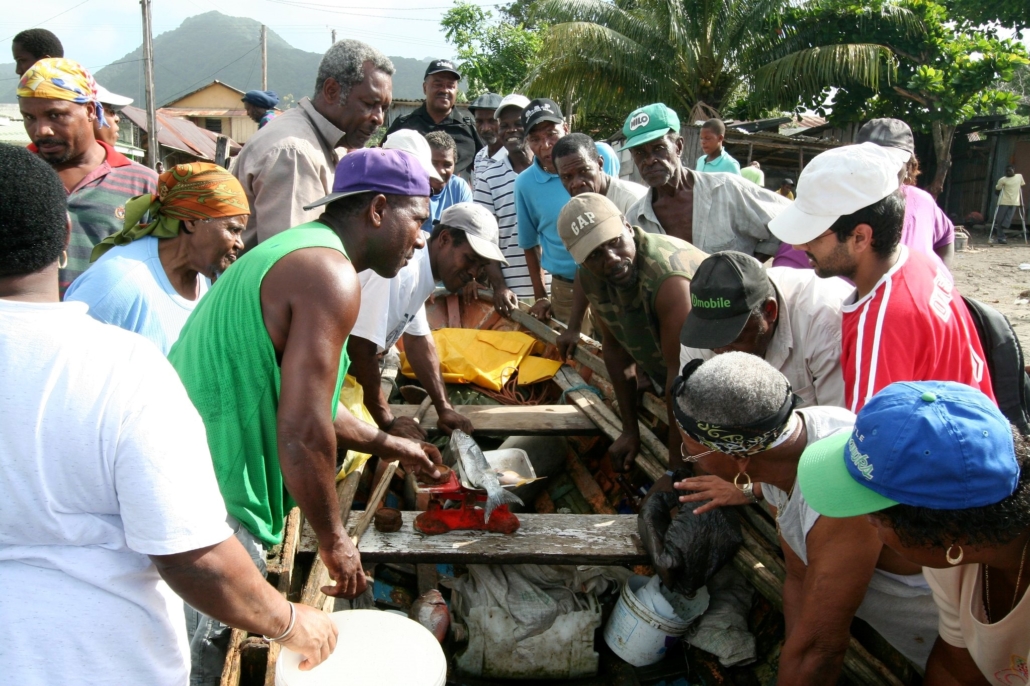
In the Caribbean island nation of Dominica, many people are now receiving COVID-19 vaccinations. Through the combined efforts of several world organizations, including the World Health Organization (WHO), the Coalition for Epidemic Preparedness Innovations and the Pan American Health Organization (PAHO), Dominica has received a steady supply of vaccines to help combat COVID-19.

Vaccines from COVAX

As of July 2021, the island of Dominica had seen 194 coronavirus cases and no deaths since the outbreak back in March 2020. As of April 2021, Dominica has received 28,800 doses of the vaccine through the COVAX Mechanism, which it will distribute throughout the country. Dominica is one of the 10 countries in the Americas that have received doses of COVID-19 vaccinations at no cost through COVAX.

“We will continue to work with the country to support vaccination along with the entire package of known public health and social measures that we know can help stop the spread of [COVID-19], protect health services and save lives,” said Dr. Yitades Gebre of the PAHO and WHO in an interview with those organizations.

Campaign for COVID-19 Vaccination in Dominica

As of early July 2021, Dominica has administered nearly 40,000 doses to its population. More than 20,000 people, or around 29% of the population, have received at least one shot, and nearly 20,000 more have received both doses of the vaccine. However, even though the COVID-19 vaccination in Dominica is underway, it will still take some time. Recently, the government has been able to give about 25 doses per day and it is on track to have another 10% of the population fully vaccinated in the next 585 days.

People are still contracting the virus as vaccination levels increase, but the U.S. has deemed Dominica a low-risk country. However, the Dominican government has declared that travelers must submit a negative COVID-19 test 24-72 hours before entering the island. People traveling from Dominica must also submit another negative test before reentering the United States, and the Centers for Disease Control advises that they self-quarantine for seven days upon their arrival.

With the majority of Dominicans still not fully vaccinated, the country’s basic COVID-19 prevention tactics are still in full effect. All residents must continue to socially distance themselves from one another, wear masks at all times in public areas, keep up personal hygiene and self-quarantine if they have contracted the virus or been in contact with someone who has. However, the Dominican government and organizations like the U.N. and PAHO remain hopeful that the pandemic will be under control soon enough on the island.

Economic Support for Pandemic Recovery

Not only have WHO and PAHO helped more Dominican citizens receive COVID-19 vaccination in Dominica, but the World Bank Group has also offered support to help Dominica recover from the pandemic. It has given the Dominican government $25 million in COVID-19 relief to help lay the foundation for long-term economic recovery. As of 2009, Dominica’s poverty rate was about 30%. Funding from the World Bank Group will improve the island’s economy by helping restore stability and jobs as the government works to combat the coronavirus.

– Demetrous Nobles
Photo: Flickr

July 21, 2021
https://borgenproject.org/wp-content/uploads/borgen-project-logo.svg 0 0 Jennifer Philipp https://borgenproject.org/wp-content/uploads/borgen-project-logo.svg Jennifer Philipp2021-07-21 12:52:162024-05-30 22:23:57COVID-19 Vaccination in Dominica
COVID-19, Global Poverty

COVID-19 Vaccinations in Serbia

COVID-19 Vaccinations in SerbiaSerbia, a country located in Europe, has seen success when it comes to COVID-19 vaccine statistics, approvals and productions. The Serbian government is providing incentives to encourage citizens to get vaccinated with the aim of increasing vaccination rates. The rate of COVID-19 vaccinations in Serbia indicates a positive upturn in Serbia’s fight against the virus.
Vaccine Statistics in Serbia

Serbia’s COVID-19 vaccination campaign has been successful so far as more than 38% of Serbians are fully vaccinated against COVID-19 as of July 5, 2021. So far, the government has administered more than five million doses of COVID-19 vaccinations in Serbia. According to the latest COVID-19 statistics from Reuters, Serbia is experiencing roughly 114 new daily infections, equating to 11 positive COVID-19 tests per 100,000 people tested. During the last officially reported week, Serbia reached a daily average of more than 10,000 administered COVID-19 vaccinations.

Pfizer Vaccine Approval for Children

Serbia’s medical agency now allows children between the ages of 12 and 15 to receive the Pfizer vaccine. The Medicines and Medical Devices Agency of Serbia approved this after carefully considering the research of many clinical trials conducted in other nations. Serbian government health official, Mirsad Djerlek, says children with underlying health conditions are a priority as they are more vulnerable to contracting COVID-19.

Vaccine Incentives

Serbia’s initial intention was to have half of the population vaccinated by the end of June 2021. Data indicates that Serbia did not reach this goal, but nevertheless, Serbia is still reaching a significant number of people with its vaccination campaign.

To encourage citizens to get vaccinated, President Aleksandar Vucic promised that citizens who got vaccinated before the end of May 2021 would receive a cash incentive of $30. Vucic’s expectation was to have three million people vaccinated by the end of May 2021. Serbia has made vaccination sites more accessible with locations in shopping malls. To further boost vaccination rates, Serbia announced that it would also be offering vouchers to those who get vaccinated.

Partnering with Russia

Serbia has partnered with Russia to ramp up Russia’s Sputnik V vaccine manufacturing. In June 2021, Serbia’s Institute of Virology, Vaccines and Sera “Torlak” in Belgrade began production. President Vucic and Russian President Vladimir Putin came to this agreement while acknowledging the importance of collaborative efforts in fighting the global COVID-19 pandemic.

Vaccine Successes

When it comes to COVID-19 vaccinations in Serbia, the country has seen success so far. Serbia is getting close to vaccinating half of its population. More categories of the population are now eligible for the Pfizer vaccine and Serbians are receiving incentives to encourage vaccinations. Serbia is also giving a helping hand to other countries by providing vaccine donations to several countries. In May 2021, Serbia donated 100,000 vaccines to the Czech Republic, among other donations. As a production site for Russia’s Sputnik V COVID-19 vaccine, Serbia is certainly playing a significant role in combating the COVID-19 pandemic.

– Chloe Moody
Photo: Flickr

July 19, 2021
https://borgenproject.org/wp-content/uploads/borgen-project-logo.svg 0 0 Kim Thelwell https://borgenproject.org/wp-content/uploads/borgen-project-logo.svg Kim Thelwell2021-07-19 07:30:262024-05-30 22:23:51COVID-19 Vaccinations in Serbia
COVID-19, Poverty

COVID-19’s Impact on Poverty in Myanmar

COVID-19’s Impact on Poverty in Myanmar
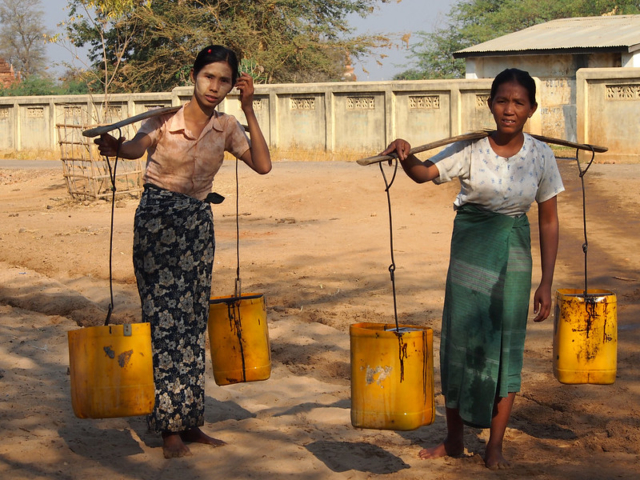
In 2017, Myanmar’s poverty rate was approximately 24.8%. By December 2020, the second wave of COVID-19 was estimated to bring the poverty rate to almost 50%. COVID-19’s impact on poverty in Myanmar has been devastating but aid aims to remedy the situation.

A Breakdown of COVID-19 in Myanmar

Myanmar’s first confirmed COVID-19 case was in late March 2020. In the weeks leading up to the first positive case, Myanmar’s government outlined its plan for curbing the virus’s spread. On April 6, 2020, Myanmar’s government initiated lockdowns and ordered schools and businesses to commence remote operations.

The daily numbers and seven-day average of COVID-19 cases in Myanmar increased in September 2020 when restrictions first eased. The seven-day average rose from three to 300 by mid-September 2020 and peaked in October 2020 with a seven-day average of more than 15,000. November 2020 witnessed a steady decline. Myanmar’s COVID-19 seven-day average has remained at fewer than 100 cases since mid-February 2021.

Recently, COVID-19 cases in Myanmar have been increasing again. Many world doctors and health officials question the validity of the reported numbers since the military seized power on February 1, 2021. The military imprisoned doctors who opposed it and COVID-19 testing slowed as a result. COVID-19 case numbers in Myanmar are potentially higher than officially reported.

Myanmar’s Response to COVID-19

In early June 2021, Myanmar reached a recorded 144,000+ COVID-19 cases and upwards of 3,000 deaths. Myanmar’s economy halted and COVID-19’s impact on poverty in Myanmar, requiring the government and the people to strategize in order to encourage economic flow.

Economically, Myanmar’s government endeavored to stimulate halted areas of the economy. Service sectors and tourism contributed significantly less to the Myanmar economy. However, information and technology services expanded and the agricultural areas of Myanmar stayed stable.

To improve the Myanmar economy, the government drafted a plan costing $2 billion. The government received its funding from international partners. The funding goes toward stimulus packages, investments in infrastructure and improving public services such as healthcare.

Immediate Economic Impact of COVID-19 in Myanmar

The progress Myanmar has made over the past decade in decreasing its poverty rate halted and even reversed. COVID-19’s impact on poverty in Myanmar demanded that its government make significant investments that will benefit many workforces, but tourism, for example, cannot improve without open borders. Tourism became an intriguing industry for work in Myanmar in 1995. It now represents 3% of the employment force but displayed signs of expansion until the COVID-19 pandemic hit. The year 2015 was a peak year for tourism in Myanmar. An estimated 2.5 million tourists spent 773 million kyats or $469,000. Until 2019, tourism accounted for 55% of the gross domestic product (GDP). The tourism industry hopes for an employment boom when Myanmar’s borders fully reopen.

Moving Forward

AstraZeneca is the only vaccine in Myanmar. The first shipments to Myanmar arrived in January 2021. As of June 2021, Myanmar has distributed three million vaccines. Fears of the AstraZeneca vaccine and its side effects spread after reports of blood clotting post-injection. Britain halted usage of the vaccine until further research could solidify its effectiveness but Myanmar did not.

Myanmar’s vaccination progress had two major distribution advancements between March and May 2021. Myanmar prioritized vaccinating healthcare workers. The distribution then expanded to include more categories of workers. It could take six months before another 10% of the population will have both vaccinations. Currently, only 3.1% of Myanmar’s population is at full vaccination status. Help from international allies will be necessary to make notable progress in vaccination distribution. The U.S. has a large supply of vaccines from all its distributors and intends to distribute vaccines internationally. Myanmar is working to raise funds to obtain more vaccines.

Aid Within Myanmar

For several decades, Myanmar’s poverty rate garnered the attention of many non-government organizations hoping to help. One such organization is World Vision International (WVI),  an organization based in England that typically works directly to support children. Recently, it dedicated the majority of its efforts to feeding and helping children affected by the COVID-19 pandemic in Myanmar.

In Myanmar, the organization works with local businesses to offer food and shelter to children. During the pandemic, WVI expanded its efforts to ensure child poverty levels do not rise even further. WVI has worked in Myanmar for decades. The organization recognized COVID-19’s impact on poverty in Myanmar and advocates on behalf of the people to the Myanmar government. WVI secured masks, gloves, sanitizer and cleaning stations throughout Myanmar.

Looking Ahead

WVI maintained money flow as much as it could in areas that lack of work devastated. It also delivered food to hard-to-reach areas of Myanmar. Other organizations followed WVI’s example when COVID-19’s impact on poverty in Myanmar peaked and negatively affected life for many in the country. With the combined efforts, the poverty level, which rose in 2020, stabilized. It is an arduous road to recovery for Myanmar. Myanmar should be able to reduce the impact of the virus on its poverty levels with assistance from allies and committed organizations.

– Clara Mulvihill
Photo: Flickr

July 16, 2021
https://borgenproject.org/wp-content/uploads/borgen-project-logo.svg 0 0 Jennifer Philipp https://borgenproject.org/wp-content/uploads/borgen-project-logo.svg Jennifer Philipp2021-07-16 01:30:022024-06-04 01:18:01COVID-19’s Impact on Poverty in Myanmar
COVID-19, Global Poverty

How Pope Francis Spent 2021 Working to Help Reduce Poverty

Help Reduce Poverty
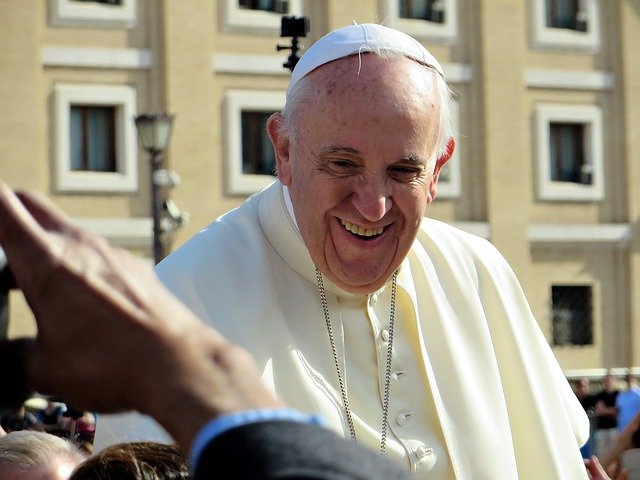
In light of the global pandemic, Pope Francis has kept busy advocating for poverty reduction around the world. Francis spent the year 2021 mending relationships between the Catholic Church and the Middle East and offering support to healthcare workers. Here are some of the most important things the Pope did in 2021 to help reduce poverty.

Advocation to Reduce the Debt of Impoverished Nations

Pope Francis delivered a statement in April 2021 at a meeting that the World Bank Group and International Monetary Fund (IMF) hosted. Mostly, he discussed how impoverished nations should receive a greater share in decision-making for the international market. He also pushed for debt relief and reduction for nations struggling during the pandemic. “The pandemic, however, has reminded us once again that no one is saved alone,” Francis wrote.

He also stated that “a spirit of global solidarity also demands at the least a significant reduction in the debt burden of the poorest nations, which has been exacerbated by the pandemic. Relieving the burden of debt of so many countries and communities today is a profoundly human gesture that can help people to develop, to have access to vaccines, health, education and jobs.” The Pope’s statement highlighted the “ecological debt” all nations owe to the environment. He also remarked that ecological degradation and biodiversity loss are manmade issues. He asserted that the issue could come to a resolution if impoverished nations, generally the ones environmental challenges most affect, can put their finances toward combating it.

Francis Became the First Pope to Visit Iraq

With the events of 9/11 and the Israeli-Palestinian conflict long exacerbating Islamophobia, Pope Francis’s arrival in Iraq marked a new beginning for Catholic-Muslim relations. Nostra Aetate, which Pope Paul VI issued in 1965, decreed that the Catholic Church must examine its relationships with non-Christian religions. The declaration contains a section dedicated to Islam, which urges mutual understanding in the name of peace and freedom. Pope Francis attempts to follow Nostra Aetate and continues to extend respect for the Islamic religion. He desires to mend the relationship between the two faiths.

While in Iraq, Francis met with Ayatollah Ali Al-Sistani, the leader of Iraq’s Shiites, twice nominated for the Nobel Peace Prize. The Pope also met with Daesh’s terror survivors and called for peace between Christians and Muslims. Pope Francis urged that Christians and Muslims let go of their past and work toward rebuilding Iraq.

Pope Francis has Continued to Donate Around the World

Throughout the pandemic, the Pope continued his charity work for healthcare workers and affected families. During his trip to Iraq, Francis donated $250,000 to families in Baghdad. Francis also extended support to a women’s healthcare center in India. In May 2021, Francis donated 20,000 euros to the Shanti Ashram women’s health and social center in Coimbatore, India, which supports around 50,000 women and children. The center had hosted an international online conference with a goal of raising 60,000 euros, but it fell short. Pope Francis donated 20,000 euros to make up the difference.

Pope Francis did not just donate financially, he also supplied several medical facilities with medical equipment. The Apostolic Nuncio in Colombia confirmed that the Pope sent PPE and four respirators to the San Francisco de Asis Hospital and the Santiago Clinic. The pandemic hit their area particularly hard. The Pope donated respirators to eight other countries as well, including Bolivia, Syria and South Africa.

Moving Forward to Help Reduce Poverty

Pope Francis has shown that generosity always comes first, especially in a global pandemic when poverty is on the rise. Under his leadership, the Catholic Church will continue to promote charity work and peace in the Middle East and help reduce poverty.

– Camdyn Knox
Photo: Pixabay

July 15, 2021
https://borgenproject.org/wp-content/uploads/borgen-project-logo.svg 0 0 Kim Thelwell https://borgenproject.org/wp-content/uploads/borgen-project-logo.svg Kim Thelwell2021-07-15 13:29:512021-07-29 08:59:34How Pope Francis Spent 2021 Working to Help Reduce Poverty
COVID-19, Foreign Aid, Global Poverty

5 Facts About the UAE’s Foreign Aid

The UAE’s Foreign AidMany know the United Arab Emirates (UAE) as one of the richest countries in the world, thanks to its abundant reserves of oil and natural gas. One of its most popular cities, Dubai, is home to some of the world’s most extravagant and expensive buildings, while artificial islands shaped like palm trees dot its coast. Putting its riches to a good cause, the UAE’s foreign aid program is remarkably well-funded and successful.
5 Facts About the UAE’s Foreign Aid

  1. The UAE’s foreign aid program is one of the largest in the world. In 1970, the U.N. first agreed on its percentage target for official development aid (ODA): 0.7% of gross national income (GNI). Since 1970, growing numbers of developed countries have officially committed to this target. However, most fail to meet it each year. For example, the United States, while the biggest donor in terms of dollar amount, only donated 0.17% of its GNI in 2020, making it one of the lowest contributors in terms of the U.N. ODA agreement. In contrast, since 2013, the UAE has remained one of the highest-ranking ODA donors and has consistently surpassed the 0.7% of GNI target. In 2018, the UAE devoted 0.93% of its GNI to foreign aid.
  2. The UAE’s foreign aid program was private until 2009. Surprisingly, the UAE’s very public devotion to foreign aid only began around a decade ago when it began to submit detailed foreign aid data to the Organization for Economic Co-operation and Development (OECD). Since then, the UAE’s Ministry of Foreign Affairs, along with the president and prime minister, have been very vocal and open about foreign aid. This openness has led some to suspect that the UAE intends to improve its global image through its interest in foreign aid.
  3. Most of the UAE’s foreign aid goes to other Middle Eastern and Arab countries. While the UAE has sent foreign aid to hundreds of nations in total, the majority of its foreign aid goes to nearby countries. The UAE makes significant donations to developmental projects and humanitarian aid in countries experiencing violence and natural disasters. In 2015, the majority of the UAE’s humanitarian aid went to refugees in Syria, Yemen and Iraq. These countries, along with Egypt, Jordan, Afghanistan and Pakistan, are consistent recipients of UAE aid. In 2019, UAE foreign aid dropped below the 0.7% of GNI target for the first time since 2012. The preliminary data for 2020 shows foreign aid accounting for 0.48% of the UAE’s GNI. These lower levels of aid may be due to the UAE’s need to devote resources to the fight against COVID-19 within its own borders. The vast majority of the UAE’s aid in 2020 went toward COVID-19 related medical and food aid. In total, 47 countries around the world received COVID-19 aid from the UAE in 2020.
  4. The UAE’s foreign aid likely has some political motivation. After 2013, the UAE’s foreign aid portfolio became less diverse and more focused on a small selection of countries. The UAE claims that its aid “has only humanitarian objectives.” However, there are often clear correlations between the UAE’s political interests and its top aid recipients. For example, in 2013, the UAE’s foreign aid to Egypt massively increased. The country likely increased it in order to support the military coup in Egypt at the time. Additionally, despite Yemen’s pressing need for aid, it did not receive significant aid from the UAE until 2015.
  5. The UAE’s foreign aid officially goes toward “reducing poverty and improving quality of life.” Despite the UAE’s somewhat political motivations, its foreign aid program is both impactful and extensive. Among its top goals for foreign aid, the UAE lists “humanitarian assistance, elimination of poverty, support for children, transportation, infrastructure, government support and empowerment of women.” Much of the country’s foreign aid goes to development projects aimed at long-lasting infrastructure improvements in countries such as Egypt and Afghanistan. It also goes toward aiding refugees in Syria and Yemen or to sub-Saharan Africa and Asia. The UAE hosts several large charity aid programs such as the Emirates Airlines Foundation, which has supported various humanitarian aid projects in 18 countries for nearly two decades. One of these projects include the Emirates Friendship Hospital Ship, a mobile hospital currently located in Bangladesh. The vessel provides mobile medical assistance to those in need.

Looking Ahead

Given its clear commitment to increasing levels of valuable foreign aid, the UAE continues as one of the world leaders in aid. Wealthier countries of the world need to follow suit and contribute more to helping struggling nations around the world.

– Anneke Taylor
Photo: Flickr

July 15, 2021
https://borgenproject.org/wp-content/uploads/borgen-project-logo.svg 0 0 Jennifer Philipp https://borgenproject.org/wp-content/uploads/borgen-project-logo.svg Jennifer Philipp2021-07-15 07:30:312024-06-07 05:08:135 Facts About the UAE’s Foreign Aid
COVID-19, Global Poverty

The Bosnia and Herzegovina Vaccine Rollout

Bosnia and Herzegovina Vaccine Rollout
The impact of COVID-19 on poverty in Bosnia and Herzegovina has been quite profound. The country has been experiencing a severe recession, the worst in 25 years. Due to government borrowing in an effort to ease the strains stemming from the crisis, the national debt has soared. As a result, the Bosnia and Herzegovina vaccine rollout has been slow because its government has been unable to afford vaccines.

However, due to Russia, China and Europe providing donations, the country has received a large number of vaccines. On top of this, overseas organizations such as the United Nations High Commissioner for Refugees (UNHCR) have been continuing to advocate for Bosnia and Herzegovina’s most vulnerable citizens.

The Lack of Purchase

In stark contrast to neighboring Serbia’s successful vaccine rollout, Bosnia and Herzegovina has not bought a single vaccine. Due to a disorganized government and the impact of a steep recession, the country has been relying on donations. The impact of COVID-19 on poverty in Bosnia and Herzegovina has prevented the nation from organizing a rollout of its own, thus endangering its citizens.

Pilgrimage to Serbia

Because of the slow vaccine rollout in Bosnia and Herzegovina, many Bosnians have migrated to neighboring Serbia, which has had an exponentially more successful vaccine rollout, to receive their vaccine. This is particularly striking because of the tensions between the two countries. The Serbian President Aleksandar Vučić is well-known for downplaying the Srebrenica genocide, which took place in 1995. This was during the Yugoslavian wars of independence and took the lives of many Bosnian Muslims.

Donations are Keeping the Country Afloat

Because of the impact of COVID-19 on poverty in Bosnia-Herzegovina, the country has been relying on large donations from countries that are further into their vaccine rollout than Bosnia and Herzegovina. After initial donations from Russia and China, the E.U. provided vaccines to Bosnia and Herzegovina. This also included Albania, North Macedonia, Kosovo, Montenegro and Serbia, with 651,000 doses of BioNTech-Pfizer vaccine in April 2021. In June 2021, Austria committed to donating 1 million doses of mainly AstraZeneca vaccine to the Western Bulkan bloc.

The UNHCR Advocate for the Vaccination of Asylum Seekers

While the Bosnian government is reluctant to vaccinate its population of refugees and asylum seekers, the United Nations High Commissioner for Refugees (UNHCR) continues to advocate for the vaccination of those within the country without international protection. Previous successes have been seen in Serbia where the UNHCR has managed to vaccinate a large number of refugees, with 53 having their vaccine on the first day of operations.

The Future

Despite the crushing impact that the recession has had on the vaccine rollout, with international collaboration the future is looking brighter for the population of Bosnia and Herzegovina. With organizations such as UNHCR advocating for the nation’s most vulnerable, few will slip through the cracks in the vaccine initiative.

– Augustus Bambridge-Sutton
Photo: Flickr

July 15, 2021
https://borgenproject.org/wp-content/uploads/borgen-project-logo.svg 0 0 Jennifer Philipp https://borgenproject.org/wp-content/uploads/borgen-project-logo.svg Jennifer Philipp2021-07-15 04:56:142021-07-29 12:15:25The Bosnia and Herzegovina Vaccine Rollout
COVID-19, Global Poverty

The Impact of COVID-19 on Poverty in the Palestinian Territories

The Impact of COVID-19 on Poverty in the Palestinian Territories
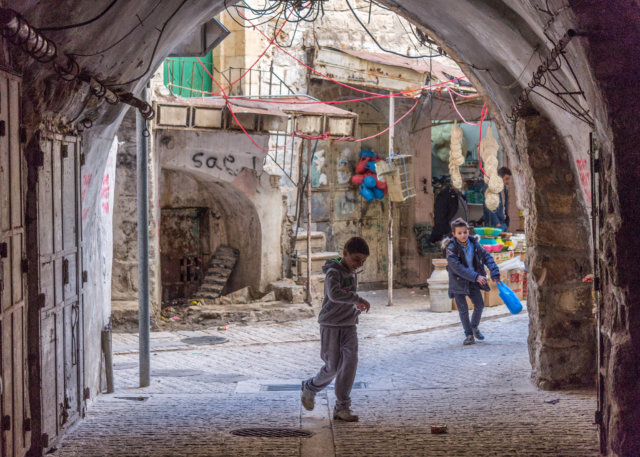
The impact of COVID-19 on poverty in the Palestinian territories has been extensive. COVID-19 devastated the previously struggling economies of the West Bank and Gaza Strip. In the last quarter of 2019, the Gaza Strip had a 43% unemployment rate while the West Bank had a 14% unemployment rate. Moreover, the recent conflict between Hamas and Israel, lasting from May 10, 2021, to May 21, 2021, further disrupted the Palestinian economy.

COVID-19 in the West Bank and Gaza Strip

In March 2020, the Palestinian Authority (PA) identified the first cases of coronavirus in the Palestinian territories. Surges in cases since August 2020 have resulted in intermittent lockdowns and stressed an already burdened Palestinian healthcare system. The Palestinian healthcare system’s already limited capacity and dearth of specialized medical care workers means the Palestinian territories have an insufficient ability to handle large influxes of COVID-19 patients. Also, Israeli-implemented movement restrictions between the Palestinian territories and Israel have constrained Palestinian efforts to combat COVID-19 by delaying the Palestinian territories’ acquisition of necessary medical equipment.

As of June 2, 2021, the vaccination campaign across the Palestinian territories has vaccinated 344,260 Palestinians in the West Bank and Gaza Strip or 7% of the population. Thus far, COVAX has heavily supported the Palestinian vaccination effort and aims to vaccinate 20% of the Palestinian population.

State of the Palestinian Economy

Coronavirus-induced social distancing and lockdown measures have further weakened the fragile Palestinian economy. Even before COVID-19, political instability, periods of violence and Israeli restrictions on human and material movement in and out of the Gaza Strip were already causing a state of humanitarian emergency in the Gaza Strip. In the West Bank, the PA’s suspension of coordination with Israel between May 2020 and November 2020 intensified the impact of COVID-19 on poverty. The suspension led Israel to suspend tax transfers to the PA, which account for the majority of the PA’s budget.

Due to the health and socioeconomic crisis, the Gaza Strip’s unemployment rate jumped to 49% by the end of 2020. Likewise, the pandemic has caused wages to decline by 50% or more in nearly 40% of West Bank households. In the West Bank, the pandemic and tax revenue crisis caused the PA, the territory’s largest employer, to cut its staff’s pay in half.

The pandemic also intensified Gazan food insecurity. The United Nations Relief and Works Agency for Palestine Refugees in the Near East (UNRWA) reported that “food expenditure declined in 40% of surveyed households in Gaza once lockdowns went into effect.” As of early 2021, 68% of Gazans were food insecure.

Altogether, the impact of COVID-19 on poverty in the Palestinian territories has been drastic as experts project the pandemic will push many households below the poverty line. Specifically, estimates indicated the proportion of Gazan households living in poverty would jump from 53% in 2019 to 64% by the end of 2020 and the proportion of West Bank households living in poverty would rise from 14% to 30% in the same period.

Israel-Hamas Conflict

The May 2021 conflict between Israel and Hamas worsened already dire living conditions in the Gaza Strip and may increase COVID-19 cases in the territory. The conflict damaged 57 Gazan educational facilities and 29 Gazan health facilities. Moreover, the conflict damaged the Gaza Strip’s water, sanitation and hygiene infrastructure, which serves 1.2 million people.

When the conflict caused the number of Gazan internally displaced persons to temporarily spike to 77,000, the United Nations Children’s Fund (UNICEF) raised concern that the displacement may spread COVID-19. Following the conflict, positive cases in the Gaza Strip increased and now account for 84% of all COVID-19 cases in the Palestinian territories.

Renewal of US Aid to the Palestinian Territories

The impact of COVID-19 on poverty in the Palestinian territories has been stark. However, the Biden administration recently ended a nearly three-year U.S. hiatus on aid to Palestinians. On April 7, 2021, Secretary of State Antony Blinken announced an aid pledge promising $275 million. The pledge dedicates $150 million to fund UNRWA, which serves nearly six million Palestinians across the Middle East.

The Biden administration earmarked another $15 million to aid the Palestinian response to COVID-19 and provide food assistance. Furthermore, the aid plan will provide the U.S. Agency for International Development (USAID) with $75 million to fund economic and development assistance projects and $10 million to fund peace-building programs. USAID will use more than half of the $75 million to improve access to water and sanitation and upgrade Palestinian infrastructure.

During Secretary Blinken’s visit to Ramallah, he announced another $112 million of aid to Palestinians. Specifically, the U.S. will provide another $32 million to fund UNRWA. The pledge will also provide another $75 million in economic and development assistance to Palestinians in the West Bank and the Gaza Strip and $5.5 million in immediate assistance to the Gaza Strip. During the visit, Secretary Blinken also outlined the United States’s goal to procure 1.5 million COVID-19 vaccines for Palestinians.

Future Outlook

While the U.S. only recently announced its Palestinian territories aid plan, the pledge will contribute to combating COVID-19 and provides a hopeful outlook for reversing the impact of COVID-19 on poverty in the Palestinian territories. Additionally, international efforts to procure vaccines and support COVAX have the potential to increase Palestinian access to COVID-19 vaccinations.

– Zachary Fesen
Photo: Flickr

July 14, 2021
https://borgenproject.org/wp-content/uploads/borgen-project-logo.svg 0 0 Jennifer Philipp https://borgenproject.org/wp-content/uploads/borgen-project-logo.svg Jennifer Philipp2021-07-14 07:30:422021-07-14 00:31:47The Impact of COVID-19 on Poverty in the Palestinian Territories
COVID-19, Global Poverty

COVID-19 Vaccinations in San Marino

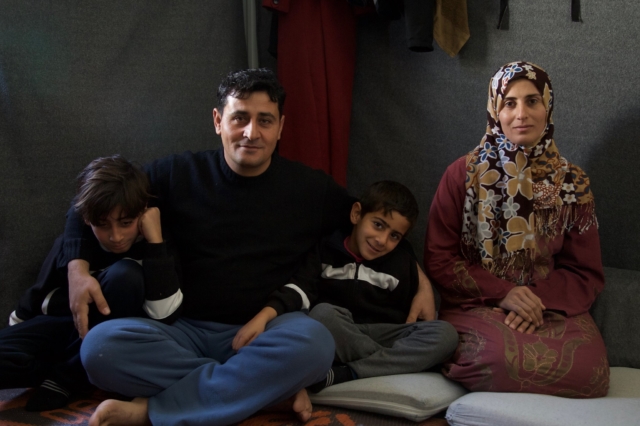
COVID-19 Vaccination in San MarinoSan Marino is a small Southern European state surrounded by Italy. Despite having a small population of just 33,000 people and a mountainside location, the country is surprisingly one of the wealthiest in the world based on GDP per capita. San Marino acquires most of its wealth from tourism and the sale of local goods. However, the effects of the COVID-19 pandemic nearly destroyed the country’s tourism industry. The campaign for COVID-19 vaccinations in San Marino will allow the economy to recover as industries begin to reopen, igniting economic activity.
The Impact of COVID-19

In terms of the poverty rate in San Marino, minimal data exists. But, like the rest of the world, San Marino’s economy has also experienced adverse impacts from the COVID-19 pandemic. During the pandemic, tourism rates decreased due to stay-at-home orders and travel restrictions. Before the pandemic, the small country averaged around two million tourists in 2019, a clear indication of the significant economic role of the tourism sector. With regard to COVID-19 rates, San Marino has confirmed 5,092 cases and 90 deaths. The campaign for COVID-19 vaccinations in San Marino has been successful due to small population numbers and a steady supply of vaccines.

COVID-19 Vaccinations in San Marino

All of San Marino’s people have either been partially or completely vaccinated against COVID-19. The country administered mostly Sputnik V vaccines after signing a deal with Russia. Starting May 17, 2021, San Marino is offering a COVID-19 vaccine holiday package to boost tourism with an incentive. The holiday package allows non-residents access to vaccines in San Marino by booking accommodation for a certain duration at one of 19 hotels.

“The initiative is open only to those coming from countries that Italy has opened up to for tourism.” Two separately administered Sputnik V doses are available at a cost of €50. To receive the second dose of the vaccine, tourists must return to the country and stay in a hotel for at least three days. This way, San Marino makes up for its loss of tourism revenue while helping to eradicate the virus with vaccines.

The Road to Recovery

More than 66% of the population has been fully vaccinated through the campaign for COVID-19 vaccinations in San Marino. With no patients hospitalized for COVID-19, the country is effectively controlling its COVID-19 infections. With an adequate vaccine supply to cover its population, San Marino has found an innovative way to put the vaccine surplus to good use while boosting the tourism industry. The COVID-19 vaccination holiday package in San Marino is a unique solution to ignite economic recovery in the country. The offer has caught the attention of tourists who trust in the efficacy of the Sputnik V vaccine. Through innovative solutions, San Marino is finding creative  ways to recover from the COVID-19 pandemic

– Matt Orth
Photo: Flickr

July 12, 2021
https://borgenproject.org/wp-content/uploads/borgen-project-logo.svg 0 0 Jennifer Philipp https://borgenproject.org/wp-content/uploads/borgen-project-logo.svg Jennifer Philipp2021-07-12 07:30:592021-07-12 03:35:36COVID-19 Vaccinations in San Marino
COVID-19, Developing Countries, Global Poverty

The Impact of COVID-19 on Poverty in South Sudan

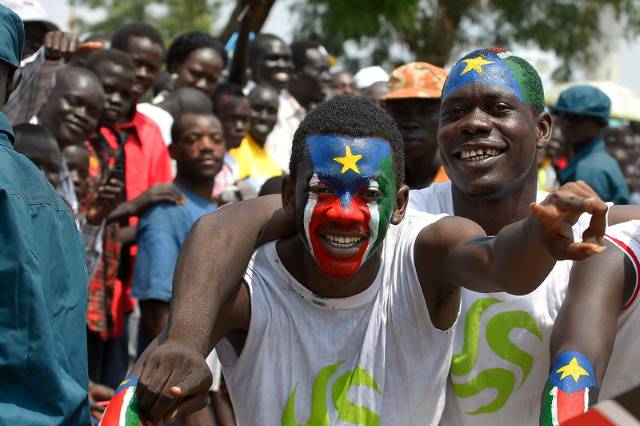
The Impact of COVID-19 on poverty in South SudanAs the world’s youngest country, South Sudan faces many obstacles to economic and political stability. Continued conflict, natural disasters and COVID-19 further exacerbate the developing nation’s economic strife in the aftermath of years of civil war. Outside of foreign aid, South Sudan’s economy heavily relies on two main sources: oil production and agriculture. Both these sources experienced the impact of the COVID-19 pandemic, negatively affecting economic growth and livelihoods in the country. The impact of COVID-19 on poverty in South Sudan calls for the support of foreign aid in order for the country to successfully recover.
South Sudan’s Oil Industry

South Sudan is one of the most oil-reliant countries in the world. More than 90% of its revenue and more than 70% of its GDP stems from its abundant oil fields. Since gaining its independence, South Sudan produces nearly three-quarters of former Sudan’s entire oil output, equating to almost 500,000 barrels per day. However, the volatile oil industry is experiencing a lower demand and a decline in prices due to the pandemic. Regarding the global oil demand, “containment measures and economic disruptions related to the COVID-19 outbreak have led to a slowdown in production and mobility worldwide, producing a significant drop in global demand for oil.”

COVID-19’s Effects on Agriculture and Food Security

The agricultural sector accounts for 15% of GDP in South Sudan and employs roughly 80% of South Sudan’s population. With more than 80% of the population residing in rural areas, agriculture, livestock farming and fishing make up the livelihoods of many households.

A devastating combination of flooding, drought, locust swarms and the pandemic created high levels of food insecurity in South Sudan. More than 6 million people are facing crisis-level food insecurity and roughly 1.4 million children under 5 may suffer from acute malnourishment in 2021.

The IMF Assists

In response to the worsening humanitarian crisis, the world continues to reaffirm its commitment to eliminating poverty in South Sudan. The International Monetary Fund (IMF) approved a disbursement of  $174.2 million in March 2021 for emergency assistance to South Sudan in the wake of COVID-19. The assistance aims to provide economic relief due to the collective impact of plummeting oil prices, floods and the pandemic in general. According to the IMF, the funding will “finance South Sudan’s urgent balance of payments needs and provide critical fiscal space to maintain poverty-reducing and growth-enhancing spending.”

World Bank Projects in South Sudan

On June 8, 2021, the World Bank announced two new projects equating to $116 million to curb poverty in South Sudan by committing to “strengthen the capacity of farmers, improve agricultural production and restore livelihoods and food security.” The first project, the South Sudan Resilient Agricultural Livelihoods Project (RALP), amounts to $62.5 million and commits to training farmers to better manage their businesses, utilize new agricultural technology and implement climate-smart practices to improve agricultural output. The project will also assist farmers with “tools, machinery and seeds required to improve productivity.”

The second grant of $53.7 million supports the Emergency Locust Response Project (ELRP). The grant will fund South Sudan’s response to desert locusts. The project will provide income opportunities to vulnerable people to assist them in producing more food and improve their economic situation. The project also encourages “the restoration of pasture and farming systems” in the region.

The Road Ahead

The World Bank expects levels of poverty in South Sudan to remain high for the time being due to food insecurity and the lack of access to essential goods and services. The impact of COVID-19 on poverty in South Sudan is harsh. Data as of April 2021 indicates that 82% of the population lives below the poverty line. However, the recent aid to South Sudan gives the country’s oil industry and agricultural production an opportunity to recover to pre-pandemic levels. The government’s priorities lie in addressing the lingering conflict and stabilizing its economy amid an economic, humanitarian and public health crisis. With continued aid and support, South Sudan can successfully recover and achieve stability.

– Gene Kang
Photo: Flickr

July 11, 2021
https://borgenproject.org/wp-content/uploads/borgen-project-logo.svg 0 0 Jennifer Philipp https://borgenproject.org/wp-content/uploads/borgen-project-logo.svg Jennifer Philipp2021-07-11 01:30:182021-07-09 06:45:21The Impact of COVID-19 on Poverty in South Sudan
COVID-19, Global Poverty

The Impact of COVID-19 on Poverty in Syria

Impact of COVID-19 on Poverty in Syria
The impact of COVID-19 on poverty in Syria and other war-torn nations has been severe. Some countries have cut foreign aid to Syria amid the pandemic, which will greatly affect Syrians already living in dire circumstances. Other countries and organizations have increased aid, recognizing that now more than ever, foreign aid is urgently needed in Syria.

The Crisis in Syria in Numbers

During the pandemic, many Syrians have lost sources of income. A drastic rise in food prices and a drop in the value of the Syrian pound are further exacerbating the country’s humanitarian crisis. In 2020:

  • About 4.5 million people became food insecure, bringing the total to about 12.4 million food-insecure people, nearly 60% of the population.
  • Food prices in Syria increased by 236%.
  • The poverty rate increased to a staggering 90%.
  • Roughly 24 million people require humanitarian aid to survive.

Decreased Foreign Aid

Global economic struggles have led to cuts in foreign aid budgets across the globe. At a March 2021 Brussels donor conference, the U.N. asked countries to pledge $10 billion to alleviate the effects of the Syrian civil war, which the pandemic has further aggravated. The international community only pledged $6.4 billion in aid to Syria. A clear example of the impacts of reduced aid is apparent in the humanitarian relief efforts of the World Food Programme. The organization had to reduce food apportionments to Syrians by 30% in order “to stretch existing funding.”

Adding to aid concerns, the United Kingdom, normally a world leader in foreign aid, plans to donate almost 50% less in 2021 than it did in 2020. The cut has been met with much domestic and international backlash. However, other countries have dramatically increased aid. Germany’s 2021 pledge is its largest in four years, promising more than $2 billion worth of aid to Syria.

Organizations Aiding Syria

Funded by national governments and private donors, various organizations are working to alleviate the effects of COVID-19 on poverty in Syria. The World Food Programme (WFP), which provides food to nearly five million of Syria’s most vulnerable people every month, won the Nobel Peace Prize for its efforts in 2020.

The World Health Organization (WHO) and UNICEF have started coordination and planning for the vaccines promised through COVAX to cover the priority 20% of the Syrian population. Boosting the low vaccination rate in Syria will undoubtedly help alleviate the impact of COVID-19 on poverty in Syria.

The Syria Cross-border Humanitarian Fund (SCHF) is also essential in coordinating aid. Since the U.N. created it in 2014, the SCHF has worked to increase the quality of humanitarian assistance in the country. It assigns funds to the NGOs and aid agencies best suited to meet shifting needs so that funding has the greatest reach and is utilized most effectively for the most significant impact.

The SCHF has already laid out its first “standard allocation” strategy for 2021, dividing the money among efforts that will improve living conditions, provide life-saving humanitarian assistance and foster long-term resilience by creating livelihood opportunities. Its “reserve allocation” sets aside funds to address unforeseen challenges that may arise.

The Road Ahead

The COVID-19 pandemic has exacerbated poverty and food insecurity in Syria. Due to the global economic crisis caused by COVID-19, there will likely be more gaps in humanitarian relief funding. Wealthier countries need to step in to assist more vulnerable countries during their greatest time of need. While organizations commit to helping Syrians most in need, support from the international community will ensure a stronger and more comprehensive response.

– Hope Browne
Photo: Flickr

July 10, 2021
https://borgenproject.org/wp-content/uploads/borgen-project-logo.svg 0 0 Jennifer Philipp https://borgenproject.org/wp-content/uploads/borgen-project-logo.svg Jennifer Philipp2021-07-10 07:30:522021-07-12 05:57:17The Impact of COVID-19 on Poverty in Syria
Page 10 of 25«‹89101112›»

Get Smarter

  • Global Poverty 101
  • Global Poverty… The Good News
  • Global Poverty & U.S. Jobs
  • Global Poverty and National Security
  • Innovative Solutions to Poverty
  • Global Poverty & Aid FAQ’s
Search Search

Take Action

  • Call Congress
  • Email Congress
  • Donate
  • 30 Ways to Help
  • Volunteer Ops
  • Internships
  • Courses & Certificates
  • The Podcast
Borgen Project

“The Borgen Project is an incredible nonprofit organization that is addressing poverty and hunger and working towards ending them.”

-The Huffington Post

Inside The Borgen Project

  • Contact
  • About
  • Financials
  • President
  • Board of Directors
  • Board of Advisors

International Links

  • UK Email Parliament
  • UK Donate
  • Canada Email Parliament

Get Smarter

  • Global Poverty 101
  • Global Poverty… The Good News
  • Global Poverty & U.S. Jobs
  • Global Poverty and National Security
  • Innovative Solutions to Poverty
  • Global Poverty & Aid FAQ’s

Ways to Help

  • Call Congress
  • Email Congress
  • Donate
  • 30 Ways to Help
  • Volunteer Ops
  • Internships
  • Courses & Certificates
  • The Podcast
Scroll to top Scroll to top Scroll to top