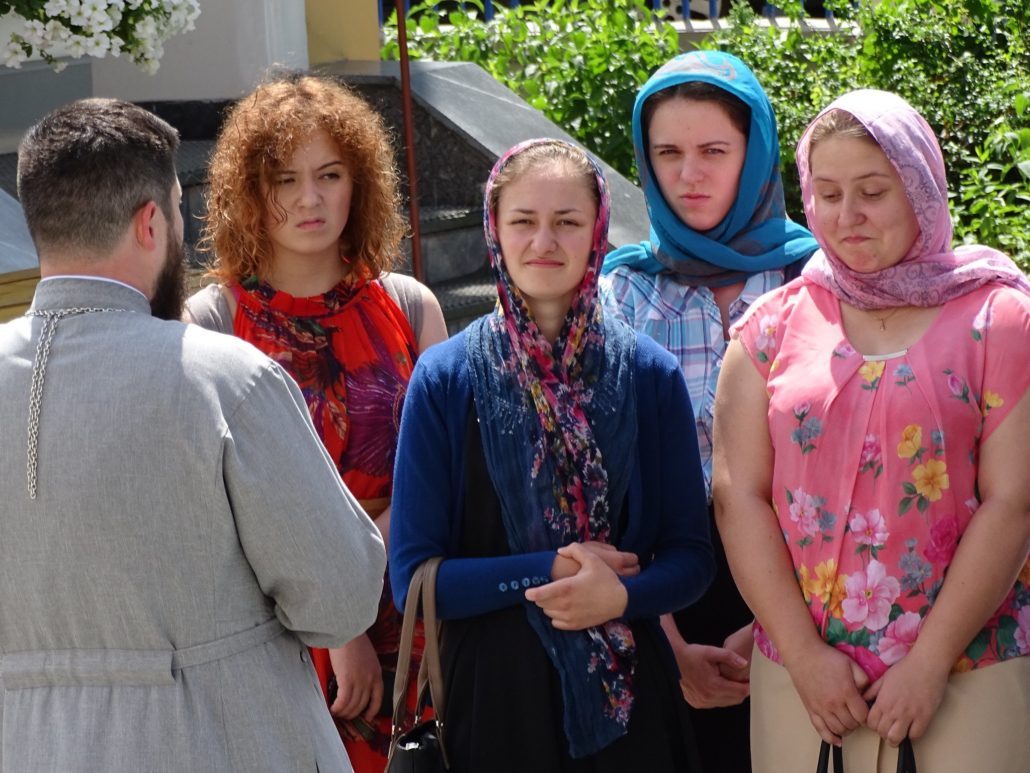
Belarus is a landlocked Eastern European country that Russia, Ukraine, Poland, Lithuania and Latvia border. Women’s rights in Belarus have a complicated role in society. As of July 2020, Belarus reported a population of 9.4 million, over half of which were females. The 2017 estimated median age for Belarusian women is 43.1, with most falling into the 25-54 age range. The average life expectancy for Belarusian women is 74 years old.
Belarusian law has protected women since the late 16th century, and Belarus continues to celebrate its contributions to society each year on March 8 on International Women’s Day. The nation has signed onto all international documents of gender equality and has been a party to the UN Convention on Elimination of All Forms of Discrimination against Women since 1981.
Yet gender roles in Belarus remain staunchly traditional, largely due to the country’s historically patriarchal culture. This article will provide an overview of women’s rights in Belarus, including their history, current state and areas for improvement.
History of Women’s Movements
Belarus has a rich history of women’s activism. Activists have been fighting for women’s rights in Belarus for over a century. The first women’s advocacy group, the United Belarusian Women’s Committee, formed at the beginning of the 20th century, promoting national revival via the advancement of women’s rights. Several organizations followed its lead, eventually leading to the first women’s political party, Nadzieja, in 1994.
The 1990s were the peak of the women’s movement, however. Though the Belarusian women’s network, an organization connecting women’s rights groups, formed in 2007, it has achieved minimal success; this is largely due to the movement’s struggle to find commonality in their goals and methods of advocacy. As of 2017, women’s organizations compose less than 1.5% of all NGOs in Belarus.
A Different Kind of Movement
The women’s movement is largely non-feminist. Though Belarusian women’s groups are largely unsuccessful due to their disorganization, it is important to note that these organizations generally do not focus on the advancement of women’s social and political rights. Belarusians instead emphasize women’s unique role as mothers, housekeepers and wives; they seek to protect and honor women in these traditional roles. As a result, most of these organizations have the prevention of violence against women as a top priority.
Tacciana Karatkievič, Belarus’s first female presidential candidate, is emblematic of these cultural values. Even as a public political figure, she adopted a ‘motherly’ persona rather than promoting gender equality.
In Business and Politics
Women remain underrepresented in business and politics. A significant wage gap remains between the sexes. In 2016, the average salary of Belarusian women was 25% lower than men, and women only occupied 23% of high academic positions. In the 2017 rating of the best business people in Belarus, only seven out of 200 were women. Women are similarly a minority in politics, where, although about 30% of parliament members are female, there are little to no female chairpersons, administrators and deputies. This underrepresentation has consequences: according to an Internet survey of 1,519 women, 90% face discrimination at the workplace. Very few organizations are working to rectify these issues, however.
Women led the 2020 protests. Belarus made international headlines in 2020 for its massive protests against the contested reelection of President Alexander Lukashenko, which many believe was rigged. Women have a leading role in the movement, speaking out against Lukashenko’s past comments about women, which many consider sexist. These activists, distinctive in white dresses at rallies and demonstrations, also have voiced frustration about the constant harassment Belarusian women are subject to.
The Road Ahead
NGOs are fighting for change. Although fragmented, numerous NGOs exist that are advocating for women’s rights in Belarus. For example, the United Nations Development Project (UNDP) Belarus works to create new jobs in sustainable development and green energy specifically for women so that they are equally represented in the workforce. TUNDP Belarus earned the UNDP Equality Bronze Seal in 2015 for its successful strides toward greater gender equality. One successful UNDP initiative is its establishment of a system for collecting sex-disaggregated data to monitor and reduce HIV prevalence.
The Karat Coalition for Gender Equality began in February 2014 and has been working to have Belarusian law explicitly ensure women’s human rights. Karat has laid the groundwork for more comprehensive laws protecting women. It is currently working on a Belarusian draft law on gender equality, which it has received positive feedback on from the Belarusian government. This is a promising step that indicates greater equality in the law in the near future.
The Center for the Promotion of Women’s Rights—Her Rights is another Belarusian NGO that provides free and confidential help for women who experience gender-based violence and discrimination, especially domestic violence. The group helps at least 20 women each month escape unsafe homes and work environments.
The results of Belarus’s current social unrest are yet to emerge. But there is reason to believe that women’s rights in Belarus may finally begin to become a priority. The successful ventures of small, citizen-led groups indicate that the fight for Belarusian gender equality, though slow-moving, is leading to societal change.
– Abby Tarwater
Photo: Flickr

Women’s Rights in Djibouti and What the US is Doing to Help
Generally speaking, many inequalities exist between men and women in Djibouti. Men make up the vast majority of the national workforce. Women have a very low proportion of representation in government compared to men. Historically, the state permitted many forms of unjust treatment for women. In recent years, the Djiboutian government has made many strides in improving the lives of women through legislation, the ratification of international treaties and the cooperation with foreign governmental agencies. In spite of these improvements, quite a bit of work remains in order to assure women’s rights in Djibouti.
Women in the Workforce
Djibouti’s constitution, ratified in 1992, states that all people are equal under the law regardless of sex, language, origin, race or religion. Nevertheless, large gaps exist between men and women which is particularly evident within the workforce. Only 19% of women are employed, compared to 81% of men. According to the Labor Code and Penal Code, all people are protected from discrimination when seeking employment. It is illegal for employers to take into account one’s gender when hiring and is punishable by imprisonment and fines. Furthermore, employers are required to pay men and women equally for equal work. In spite of these legal protections, labor restrictions still exist for women. For example, women are restricted from working a job that is considered above their strength. This frequently excludes women from jobs that include any manual labor. Thereby, it contributes to 19% employment rate.
Domestic Issues
When it comes to domestic issues, obstacles stand in the way of women having equality within the family. For example, men can request a divorce without the burden of evidence. However, for a woman, she must surrender any financial rights and sometimes even pay her spouse damages. Furthermore, the high illiteracy rate of women in Djibouti (61%) causes women to have minimal access to justice, information regarding their rights and legal assistance. In terms of domestic violence, the penal code only criminalizes violence generally. However, it does not provide specific legal protections from domestic violence. Rape is a violent act and punishable under the law. In spite of this, marital rape remains taboo and is rarely prosecuted.
Gender-based Violence
Gender-based violence (GBV) is another women’s rights issue in Djibouti. The Djibouti federal government has taken many administrative and legal actions to outlaw gender-based violence and reduce its occurrence. The Ministry of Women and Family collaborates with the National Union of Djiboutian Women (UNFD) to combat gender-based violence. This collaboration advocates for better legal protections for women and also provides counseling services to victims of GBV.
One of the greatest obstacles for women in terms of GBV is female genital mutilation and cutting (FGM/C). Many legal instruments are in place that aims at eliminating FGM/C such as Article 333 of the Penal Code and the establishment of the National Committee for the Abandonment of FGM/C. However, FGM/C is still a common practice. As of 2015, an estimated 71% of women and girls were victims of FGM/C. In order to respond to the continued practice of FGM/C, the Ministry of Women and Family released the National Strategy for the Total Abandonment of FGM/C 2018-2022. This plan aims to use radio, television, door-to-door campaigns, school curriculum and high-profile publicity strategies to effectively and quickly eliminate the practice.
How the U.S. Is Helping Djiboutian Women
USAID, through a grant to the United Nations Development Programme (UNDP), began a two and a half year program entitled “Women’s Empowerment and Community Strengthening.” This plan aims at empowering impoverished women in suburban and rural areas through skills-strengthening strategies.
This program has three primary goals: to improve the capacities of the Ministry of Women and Family, to bolster women’s income-generating skills and to promote new women’s cooperatives. A relatively small-scale operation, the program plans to provide about 850 women with the skills to engage in small-scale economic activities. Some of the program’s successes include the donation of raw materials and equipment to women creating handicrafts. It also includes providing literacy courses to women in national languages and supporting artisan fairs where women can showcase their crafts.
This program through USAID is certainly a step in the right direction in improving women’s rights in Djibouti and the ability to earn income. However, a larger-scale program would do even more to help. In light of the efforts of the Ministry of Women and Family and the more recent structural and legal protections, the future looks hopeful for Djiboutian women.
– Alanna Jaffee
Photo: Flickr
Improving Women’s Rights in Belarus
Belarus is a landlocked Eastern European country that Russia, Ukraine, Poland, Lithuania and Latvia border. Women’s rights in Belarus have a complicated role in society. As of July 2020, Belarus reported a population of 9.4 million, over half of which were females. The 2017 estimated median age for Belarusian women is 43.1, with most falling into the 25-54 age range. The average life expectancy for Belarusian women is 74 years old.
Belarusian law has protected women since the late 16th century, and Belarus continues to celebrate its contributions to society each year on March 8 on International Women’s Day. The nation has signed onto all international documents of gender equality and has been a party to the UN Convention on Elimination of All Forms of Discrimination against Women since 1981.
Yet gender roles in Belarus remain staunchly traditional, largely due to the country’s historically patriarchal culture. This article will provide an overview of women’s rights in Belarus, including their history, current state and areas for improvement.
History of Women’s Movements
Belarus has a rich history of women’s activism. Activists have been fighting for women’s rights in Belarus for over a century. The first women’s advocacy group, the United Belarusian Women’s Committee, formed at the beginning of the 20th century, promoting national revival via the advancement of women’s rights. Several organizations followed its lead, eventually leading to the first women’s political party, Nadzieja, in 1994.
The 1990s were the peak of the women’s movement, however. Though the Belarusian women’s network, an organization connecting women’s rights groups, formed in 2007, it has achieved minimal success; this is largely due to the movement’s struggle to find commonality in their goals and methods of advocacy. As of 2017, women’s organizations compose less than 1.5% of all NGOs in Belarus.
A Different Kind of Movement
The women’s movement is largely non-feminist. Though Belarusian women’s groups are largely unsuccessful due to their disorganization, it is important to note that these organizations generally do not focus on the advancement of women’s social and political rights. Belarusians instead emphasize women’s unique role as mothers, housekeepers and wives; they seek to protect and honor women in these traditional roles. As a result, most of these organizations have the prevention of violence against women as a top priority.
Tacciana Karatkievič, Belarus’s first female presidential candidate, is emblematic of these cultural values. Even as a public political figure, she adopted a ‘motherly’ persona rather than promoting gender equality.
In Business and Politics
Women remain underrepresented in business and politics. A significant wage gap remains between the sexes. In 2016, the average salary of Belarusian women was 25% lower than men, and women only occupied 23% of high academic positions. In the 2017 rating of the best business people in Belarus, only seven out of 200 were women. Women are similarly a minority in politics, where, although about 30% of parliament members are female, there are little to no female chairpersons, administrators and deputies. This underrepresentation has consequences: according to an Internet survey of 1,519 women, 90% face discrimination at the workplace. Very few organizations are working to rectify these issues, however.
Women led the 2020 protests. Belarus made international headlines in 2020 for its massive protests against the contested reelection of President Alexander Lukashenko, which many believe was rigged. Women have a leading role in the movement, speaking out against Lukashenko’s past comments about women, which many consider sexist. These activists, distinctive in white dresses at rallies and demonstrations, also have voiced frustration about the constant harassment Belarusian women are subject to.
The Road Ahead
NGOs are fighting for change. Although fragmented, numerous NGOs exist that are advocating for women’s rights in Belarus. For example, the United Nations Development Project (UNDP) Belarus works to create new jobs in sustainable development and green energy specifically for women so that they are equally represented in the workforce. TUNDP Belarus earned the UNDP Equality Bronze Seal in 2015 for its successful strides toward greater gender equality. One successful UNDP initiative is its establishment of a system for collecting sex-disaggregated data to monitor and reduce HIV prevalence.
The Karat Coalition for Gender Equality began in February 2014 and has been working to have Belarusian law explicitly ensure women’s human rights. Karat has laid the groundwork for more comprehensive laws protecting women. It is currently working on a Belarusian draft law on gender equality, which it has received positive feedback on from the Belarusian government. This is a promising step that indicates greater equality in the law in the near future.
The Center for the Promotion of Women’s Rights—Her Rights is another Belarusian NGO that provides free and confidential help for women who experience gender-based violence and discrimination, especially domestic violence. The group helps at least 20 women each month escape unsafe homes and work environments.
The results of Belarus’s current social unrest are yet to emerge. But there is reason to believe that women’s rights in Belarus may finally begin to become a priority. The successful ventures of small, citizen-led groups indicate that the fight for Belarusian gender equality, though slow-moving, is leading to societal change.
– Abby Tarwater
Photo: Flickr
Creating Economic Gender Parity in Egypt
Private Sector Partnership
Therefore, one of the main goals of this program is to bridge the gap between the private and public sectors. The diversity of businesses brought in will provide the necessary local insight and planning to make this project successful. The IFC will be partnering with an Egyptian business association to create this platform for working women and their peers that raises awareness and shares knowledge, as well as improves women’s access to jobs.
From the private sector, four CEOs that have influence over a large spectrum of businesses will lead the Accelerator. Representatives from the private sector include the Commercial International Bank (CIB), Qala’a Holdings, Travco Group International and Delta Investment Holdings. From the public sphere, the program will be led by the Ministry of International Cooperation and the National Commission for Women (NCW).
Egypt is the first country in the African and Middle Eastern region to launch a program that collaborates between the public and private sectors to take action on economic gender parity. As the title “Closing The Gender Gap Accelerator” suggests, the program focuses on four objectives to accelerate gender parity in the workforce in Egypt.
Targeting Obstacles
These objectives are: preparing women for the working world post-COVID-19 pandemic, closing gender gaps in salary, getting more women to participate in Egypt’s workforce and advancing women in the workforce to take part in more leadership and management positions. This program is a three-year initiative that came about as a solution to the serious threats posed to women’s engagement in Egypt’s economy during and after the COVID-19 pandemic. The program plans to help make businesses more resilient and inclusive, especially during a crisis.
According to the Ministry of International Cooperation, “The Accelerator is designed to identify key economic gender gaps, develop public and private-sector interventions for narrowing these gaps and commit relevant stakeholders from both sectors to a three-year action plan.”
A recent study showed that Egypt’s gross domestic product (GDP) could jump 32% if the gender gap in the labor market narrowed. Currently, the gender wage gap stands at 22% with women being paid less for the same work as men. With this commitment from both sectors of the country’s economy, it is hopeful that not only will Egypt’s GDP be raised, but there will be great strides taken towards economic gender parity in African and Middle Eastern regions.
– Giulia Silver
Photo: Flickr
COVID-19 in Africa: What the Numbers Don’t Reveal
On a world map of the distribution of COVID-19 cases, the situation looks pretty optimistic for Africa. While parts of Europe, Asia and the United States have a dark color, indicating relatively high infection rates, most African countries are light in comparison. This has created uncertainty over whether the impact of COVID-19 in Africa is as severe as other continents.
Lack of Testing
A closer look at the areas boasting lighter colors reveals that the situation in Africa is just as obscure as the faded shades that color its countries. In Africa, dark colors indicating high infection rates only mark cities and urban locations—often the only places where testing is available.
Although insufficient testing has been a problem for countries all over the world, testing numbers are strikingly low in Africa. The U.S. completes 249 tests per 100,000 people per day. In contrast, Nigeria, Africa’s most populous country, only executes one test per 100,000 people daily. While 6.92% of tests come back positive in the United States, 15.85% are positive in Nigeria. Importantly, Nigeria is one of the best African countries for testing: it carried out 80% of the total number of tests in Africa.
As a continent housing 1.2 billion individuals of the world’s population, Africa is struggling to quantify the impact of COVID-19 without additional testing. To improve these circumstances, the African CDC has set a goal of increasing testing by 1% per month. Realizing the impossibility of reliable testing, countries like Uganda have managed to slow the virus’ spread by imposing strict lockdown measures. As a result, the percentage of positive cases in Uganda was only 0.78% as of Sept. 1, 2020.
A Young Population
COVID-19 in Africa has had a lower fatality rate than any other continent. In fact, many speculate that fatality rates may even be lower than reported. Immunologists in Malawi found that 12% of asymptomatic healthcare workers had the virus at some point. The researchers compared their data with other countries and estimated that death rates were eight times lower than expected.
The most likely reason for the low fatality rate in Africa is its young population. Only 3% of Africans are above 65, compared with 6% in South Asia and 17% in Europe. Researchers are investigating other explanations such as possible immunity to certain variations of the SARS-CoV-2 virus and higher vitamin D levels due to greater sunlight exposure.
Weak Healthcare Systems
Despite these factors, the impact of COVID-19 in Africa is likely high. Under-reporting and under-equipped hospitals unprepared to handle surges in cases may contribute to unreliable figures. In South Sudan, there were only four ventilators and 24 ICU beds for a population of 12 million. Accounting for 23% of the world’s diseases and only 1% of global public health expenditure, Africa’s healthcare system was already strained.
Healthcare workers are at the highest risk of infection in every country. In Africa, the shortage of masks and other equipment increases the infection rate among healthcare workers even further. Africa also has the lowest physician-to-patient ratio in the world. As it can take weeks to recover from COVID-19, the infection and subsequent recovery times for healthcare workers imply that fewer are available to work. Thus, COVID-19 in Africa further exacerbates its healthcare shortage.
Additionally, individuals who are at-risk or uninsured can rarely afford life-saving treatment in Africa. For example, a drug called remdesivir showed promising results in treating COVID-19. However, the cost of treatment with remdesivir is $3120. While this is a manageable price for insurance-covered Americans, it is not affordable for the majority of Africans. Poverty therefore has the potential to increase the severity of COVID-19 in Africa.
Economic and Psychological Factors
Strict lockdowns have helped some nations control the spread of COVID-19 in Africa, but at a heavy price. A general lack of technology means that, following widespread school shutdowns, students have stopped learning. Many adults have also lost their jobs. More than 3 million South Africans have become unemployed due to the lockdown.
Furthermore, the lockdowns have also resulted in much higher rates of domestic violence, abuse and child marriage. Many such cases are unreported, meaning that the real scope of the problem is probably larger. Mental health services for victims or those struggling through the pandemic are also often unavailable. In Kenya, the United Nations has appealed for $4 million to support those affected by gender-based violence.
The slow spread of COVID-19 in Africa has allowed the continent and its leaders to prepare. Importantly, its young population will lessen the severity of the virus’ impact. Although these circumstances provide reasons to be hopeful, there is no doubt that Africa’s economy and future will suffer from the virus. This potential highlights the need for foreign assistance not only in controlling COVID-19 in Africa but in the continent’s recovery for years to come.
– Beti Sharew
Photo: Flickr
Addressing Healthcare Worker Emigration
Why Is Healthcare Worker Emigration a Problem?
When healthcare workers emigrate, they leave hospitals in developing countries without enough skilled workers. Lower-income countries are likely to carry a greater amount of the global disease burden while having an extremely low healthcare staff to patient ratio. For example, sub-Saharan Africa only has 3% of all healthcare workers worldwide, while it carries 25% of the global disease burden. In many African countries with severe healthcare worker emigration, like Lesotho and Uganda, hospitals become overcrowded. Furthermore, hospitals cannot provide proper treatment for everyone due to the lack of skilled workers.
This directly affects the quality of care patients receive in countries with high healthcare worker emigration. Newborn, child and maternal health outcomes are worse when there are worker shortages. When fewer workers are available, fewer people receive healthcare services and the quality of care worsens for populations in need.
Why Do Healthcare Workers Emigrate?
The emigration of doctors, nurses, and other skilled healthcare workers from developing countries occurs for a number of reasons. The opportunity for higher wages elsewhere is often the most important factor in the decision to emigrate. Additionally, healthcare workers may migrate to higher-income nations to find political stability and achieve a better quality of life. The rate of highly skilled worker emigration, which has been on the rise since it was declared a major public health issue in the 1940s, has left fragile healthcare systems with a diminished workforce.
Moreover, the United States and the United Kingdom, two of the countries receiving the greatest numbers of healthcare worker immigrants, actively recruit healthcare workers from developing countries. These recruitment programs aim to combat the U.S. and U.K.’s own shortages of healthcare workers. Whether or not these programs factor into workers’ migration, both the U.S. and the U.K. are among the top five countries to which 90% of migrating physicians relocate.
Mitigating Healthcare Worker Emigration
The World Health Organization suggests that offering financial incentives, training and team-based opportunities can contribute to job satisfaction. This may motivate healthcare workers to remain in the healthcare system of their home country. Some developing countries have implemented these strategies to incentivize healthcare professionals to remain in their home countries.
For example, Malawi faced an extreme shortage of healthcare workers in the early 2000s. Following policy implementation addressing healthcare worker emigration, the nation has seen a decrease in the emigration rate. Malawi’s government launched the Emergency Human Resources Program (EHRP) in 2004. This program promoted worker retention through a 52% salary increase, additional training and the recruitment of volunteer nursing tutors and doctors.
In only five years after the EHRP began, the proportion of healthcare workers to patients grew by 66% while emigration declined. Malawi expanded upon this program in 2011 with the Health Sector Strategic Plan. Following this plan, the number of nurses in Malawi grew from 4,500 in 2010 to 10,000 in 2015. Though the nation still faces some worker shortages, it hopes to continue to address this with further policy changes.
Trinidad is another a country that has mitigated the challenges faced by the emigration of healthcare workers. Trinidadian doctors who train in another country now get government scholarships to pay for their training. However, these scholarships rest on the condition that they return home to practice medicine for at least five years. Such a financial incentive creates a stronger foundation for healthcare professionals to practice in their home country.
A Turn Toward Collaboration
A recent study determined that the collaboration of nurses, doctors and midwives significantly decreased mortality for mothers and children in low-income countries. As developing countries work toward generating strategies to manage the emigration of healthcare workers, a team-based approach can improve the quality of healthcare. When there are shortages of certain kinds of health professionals in remote areas, family health teams composed of workers in varying health disciplines can collaborate to provide care.
Improving working conditions and providing both financial and non-financial incentives to healthcare professionals in developing countries not only benefits workers and the patients, but the nation’s healthcare infrastructure as a whole. An increase in the number of skilled healthcare workers in developing countries gives people there the opportunity for a better life.
– Ilana Issula
Photo: Flickr
3 Crises Affecting Hunger in Lebanon
The 2020 Beirut Explosion
On August 4, 2020, an explosion devastated the port of Beirut, Lebanon. Without a functioning port, this had a serious impact on the country, which imported 65% to 80% of its food. Such dependence on imports was a threat to food security before the disaster, and the impact was thus exacerbated by the destruction of the port.
Internal Displacement
The escalating regional conflict in fall 2024 has seen one million displaced civilians in southern Lebanon (a fifth of the population) as of the end of September, with 900,000 fleeing in that last week.
Refugees
UNHCR, the United Nations Refugee Agency, reports that the 1.5 million Syrian refugees in Lebanon, plus 11,238 refugees from other countries, make Lebanon host to “the largest number of refugees per capita and per square kilometer in the world.” Access to food and the practice of skipping meals are just two of the many challenges faced by both the Lebanese population and refugees. Over half of the Lebanese live below the poverty line, while 90% of Syrian refugees struggle to meet their basic needs.
Hunger Crisis
Another way to look at the situation is suggested by ANERA, American Near East Refugee Aid, a 56-year-old NGO providing humanitarian and development aid in the Middle East. ANERA sees the current food security crisis in Lebanon as being created by the perfect storm of economic collapse, political instability and continuing regional conflict, including the current war with Israel.
The recent hostilities in southern Lebanon are reported to have impacted the earnings of 72% of farmers, with crop and livestock losses resulting from the extensive destruction of farmland. This, of course, severely restricts access to food. ANERA reports that 37% of the population in the south is experiencing severe food insecurity.
Northern Lebanon, typically less affected by these conflicts, is nevertheless also food insecure, especially as displaced southern families move north. ANERA notes that the World Food Programme reports up to a third of northern households facing food access challenges, and UNICEF suggests a quarter of Lebanese children are experiencing malnutrition and over 40% of children under five are at risk of malnutrition in some areas of the country.
Humanitarian Crisis
In July 2024, The World Food Programme’s External Situation Report for Lebanon, indicated a tripling of poverty over the last decade, affecting 44% of Lebanon’s population. Also reported was a March 2024 IPC analysis projecting an increase in the number of food insecure in Lebanon to as many as 1.26 million people by September 2024.
IPC, the Integrated Food Security Phase Classification, is a global partnership to determine the severity and magnitude of acute malnutrition and chronic and acute food insecurity to assist decision-makers in improving food security.
At the same time, humanitarian aid is needed. In October, OSCHA (U.N. Office for the Coordination of Humanitarian Affairs) issued a Flash Appeal for Lebanon for October – December 2024 for humanitarian assistance. This was described as “fully complementary to, and supportive of, the Lebanon Response Plan (LRP) 2024,” co-led with the Lebanese Government. (By mid-year, the LRP had received just 25% of its appeal for $2.72 billion.) The U.N. and NGO partner responses include meal distribution; bread, water and food parcels; emergency nutrition rations and micronutrient supplements; and child malnutrition screening.
Long-Term Impact
As IPC points out, current crises and their impact on food security and agricultural livelihoods, if not addressed, will eventually have a long-term effect on the health and education levels of “an entire generation” of vulnerable populations. This in turn may lead to an increased financial burden on the host countries and populations. So the “flash” and continuing appeals for external assistance are critical.
– Staff Reports
Photo: Flickr
Updated: October 26, 2024
5 Facts About The International Day of Peace
The International Day of Peace has been occurring every year in September since 1981 and celebrates the building of a peaceful and sustainable world. Countries across the globe gather within communities to both reflect on past achievements and come up with what further progress they can accomplish. Here are five important facts about this International Day.
5 Facts About The International Day of Peace
It is important to keep in mind that the main components that led the world to establish the International Day of Peace are ones to hold on to. Especially during a global pandemic, the power of coming together is so much greater than simply just standing back and waiting for the good to arrive. People have the means to help out the underdogs and this day is a reminder to do just that.
– Natalie Whitmeyer
Photo: Flickr
Video Advocacy in Africa: WITNESS
Platforms like WITNESS extend human rights advocacy toward the field of technology. WITNESS uses film footage to publicize global crimes against humanity. Also, impoverished communities reach a large audience through film resources that help contextualize and disseminate eyewitness documentation.
The Borgen Project spoke with Adebayo Okeowo, WITNESS Africa Program Manager and human rights lawyer, to gain insight on WITNESS’s involvement in Africa. In 2017, internet access in sub-Saharan Africa increased to 25%, providing approximately 25% of the population with access to online, human rights resources.
A Digitized Form of Advocacy
Video advocacy is film footage used to publicize humanitarian issues that require international attention. WITNESS provides resources on video production and curation, allowing documented forms of injustice to reach a wider audience. Once issues of injustice receive global attention, influential policymakers and human rights lawyers are more likely to intervene.
According to The World Bank, “eight of the ten most unequal countries in the world, when looking at the Gini coefficient, are in sub-Saharan Africa.” Socioeconomic conditions such as income inequality, government corruption and inequitable tax systems lead to high levels of disparity in impoverished African nations. As inequality rises in Africa, remote villages face an increased likelihood of war and violence. Here, video advocacy in Africa holds great potential for change. WITNESS helps reduce inequality by assisting in the publication and preservation of videos that expose injustices.
Capturing Global Attention
Although internet access has risen in sub-Saharan Africa, remote communities face challenges in bringing global awareness to humanitarian issues. For instance, inadequate IT infrastructure and poor Wi-Fi connection can lead to a decline in internet access. This, in turn, decreases the number of users who document and publicize acts of injustice. This presents a challenge for video advocacy in Africa. Furthermore, rural African communities lack global attention, to begin with. This, in turn, makes it difficult for humanitarian crises to gain traction in the media.
Okeowo stated that when the 2015 Baga massacre occurred in the same week as the Charlie Hebdo attack in Paris, hashtags like #JeSuisCharlie trended on Twitter while the mass killing of approximately 2,000 Nigerians failed to reach global news. Okeowo told The Borgen Project that “we must double our efforts in prioritizing interventions in every corner where there is injustice, but more especially in the forgotten places.”
Justice for Child Soldiers in the Democratic Republic of the Congo (DRC)
In 2012, WITNESS partnered with AJEDI-Ka, a local nonprofit in the eastern Democratic Republic of Congo (DRC). The aim was to assist in the conviction of militia leader Thomas Lubanga Dyilo. WITNESS and AJEDI-Ka presented two films comprising video documentation of Lubanga recruiting child soldiers to the International Criminal Court (ICC). As a result, the ICC sentenced Lubanga to 14 years in prison for the war crime of enlisting child soldiers under the age of 15.
The video documentation, ranging back to 2003, initiated an ICC investigation by providing general information on Lubanga’s war crimes. WITNESS, AJEDI-Ka and the ICC protected the human rights of potential child soldiers by holding Lubanga accountable for breaking international law. The 2012 ICC verdict and the 2014 upheld conviction signaled a warning to future militia leaders planning to recruit children for military purposes.
Okeowo told The Borgen Project that film publication “is not so much about how many eyes see the video, but that the right set of eyes see the video.” WITNESS is one of the leading organizations using video documentation to bring justice to impoverished areas, representing approximately 135 countries globally.
– Madeline Zuzevich
Photo: Wikimedia Commons
Microsoft’s Global Skills Initiative
Digital Skills
Microsoft believes these newfound digital skills will give people the ability to take on jobs where digital skills are necessary in order to be successful. The initiative targets those who have lost jobs due to the pandemic, as well as minorities, women and others affected by poverty.
Recent statistics predict that over 250 million people globally may be unemployed by the end of 2020 due to COVID-19. Microsoft found that in the U.S. alone, in May 2020, women had an unemployment rate of 14.4% compared to men who were at 12%. Additionally, Latinx populations had unemployment rates of 16.7%, which is much higher than other groups. These statistics indicate why the initiative particularly targets populations such as women and minorities.
By learning digital skills, those who are at an economic disadvantage will be able to take on jobs in the digital age and improve their economic status. Those who attain these newfound skills might even be able to teach others and distribute their knowledge to uplift an entire community.
Three-step Process
The three partnered companies have come up with a three-step process that they hope will encourage economic growth in communities across the globe. The first part relates to the Linkedin Economic Graph. The Economic Graph is a digital representation of the global economy based on more than 690 million professionals, 50 million companies, 11 million job listings, 36,000 defined skills and 90,000 schools. In short, it is data that shows available jobs and their required skills as well as global hiring rates. These insights will help create economic opportunities for the global workforce.
The second part consists of free tools, programs and content that people will be provided with, in order to learn the skills necessary for job applications. This initiative will give people free access to content from LinkedIn Learning, Microsoft Learn and the GitHub Learning Lab.
Thirdly, low-cost certifications and other cost-free job-seeking tools will be available to help people pursue new jobs with their newly developed skills.
Along with this digital skills initiative, Microsoft will be backing $20 million worth of cash grants that will be distributed across the globe to different nonprofit organizations. These grants will help nonprofits to combat the effects of the pandemic and allow the nonprofits to further extend reach in order to help more people.
Microsoft believes that global shutdowns and social distancing have accelerated the path to digitalization in all fields and economies. The company knows that digital tools are now necessary regardless of the field of work and will continue to be relevant far after the pandemic has passed. Microsoft’s global skills initiative may help the world’s economic recovery and may possibly uplift the entire globe during the COVID-19 pandemic.
– George Hashemi
Photo: Flickr
5 Countries With the Most Generous and Principled Foreign Aid Policies
5 Countries Foreign Aid Policies
Striding Forward
These five countries’ foreign aid policies are impressive examples of how developed nations can make valuable contributions to global well-being. Hopefully, more undeveloped countries continue to benefit from foreign aid policies of more developed nations. Likewise, it is important these developed countries continue their efforts to achieve the U.N. goals, for theirs and the world’s greater benefit.
– Camryn Anthony
Photo: Pixabay