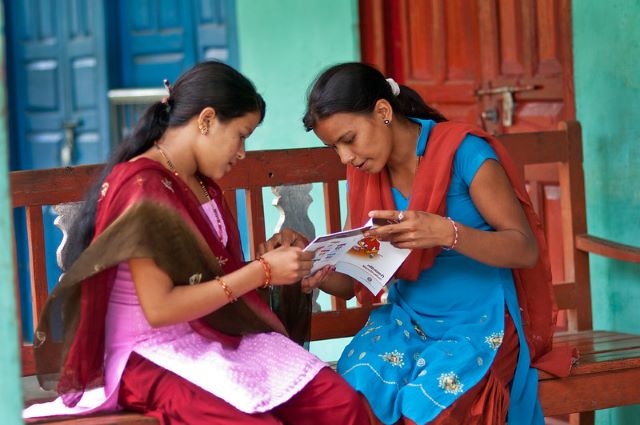
 Chhaupadi, a form of menstrual taboo, plagues the country of Nepal. Although it is a social taboo in Hindi tradition, the practice of chhaupadi is often practiced in the far-western region of Nepal and in Himalayan regions. This is because the event of menstruation, although a normal and healthy bodily function for females, is considered a form of sin and impurity. Although menstrual taboo exists in other regions of Nepal and in other South Asian countries, it is most prevalent in the Himalayan regions. Here, it is called chhaupadi, “Chhau” meaning menstruation and “padi” referring to women.
What is Chhaupadi?
Chhaupadi occurs during the female menstruation cycle. While women and girls are menstruating, they are considered impure, intouchable, and even perhaps, harbingers of bad fortune. During the menstruation cycle, any object a woman touches is deemed impure, including livestock, water resources and plants. It is believed that if touched, these objects need to be purified in some way. As a result, in regions where Chhaupadi is practiced, women are banished from their homes. During this exile, women and girls are often sent to a “chhau” shed, which is essentially a livestock shed, and the menstruating female will remain there for about four days. Girls who are experiencing menstruation for the first time may need to stay in the “chhau” for up to 14 days. Unfortunately, girls who may experience difficulties or health issues while menstruating must wait until their cycle ends before seeking medical care, which can worsen possible health problems and symptoms.
Even if women are not directly practicing menstrual exile, a 2018 study by sociologist Saruna Ghimire at Miami University found that 100% of girls are restricted by menstrual taboos during their cycles. These women are not allowed to touch food, touch the water tap or participate in normal family activities. The menstrual taboo restricts the resources available, limiting the autonomy of women and possibly damaging their self-image. Additionally, the Ghimire study found that 72% of females are subjected to menstrual exile due to Chhapuadi.
The Dangers of Menstrual Exile
Not only is the stigma associated with menstruation a problem within these communities but the actual practice of Chhaupadi poses many health risks for the women and girls involved. For instance, the temporary shelters used during Chhaupadi are unhygienic, which increases the risk of health complications such as urinary tract infections, diarrhea, dehydration and hypothermia. Additionally, women and girls living in these sheds are subject to the dangers of snake bites and other animal attacks.
Each year, at least one woman or girl dies during menstrual exile. These cases often go unnoticed by the media, leaving the beliefs of community members unchanged. Moreover, the isolation that comes with Chhaupadi poses dangerous consequences to the mental health of these females. Oftentimes, these women and girls will feel abandoned, insecure, guilty and embarrassed.
Law Prohibiting Chhapuadi
In 2017, the Nepali Government enacted a new law that prohibits Chhapuadi. Any family member that forces a female to practice Chhaupadi can be punished with a jail sentence of three months or fined 3,000 rupees, which translates to about $30. Although the Nepal Supreme Court previously banned Chhapuadi in 2005, the practice has been difficult to disintegrate as it is deeply rooted in traditional beliefs. Besides the legislative component, local police are given the task of destroying Chhapuadi shelters. At the same time, some activists argue that Chhapuadi, although rooted in the patriarchal aspects of Nepali culture, will be difficult to stop as many women choose to practice it. Yet, with the new law, women who choose to practice Chhapuadi are required to do so in a safer way, by isolating themselves from their families in a separate area or room and not a shed.
The Road Ahead
Although Chhaupadi stems from Hindu scripture, the practice is one that has existed for centuries. Thus, the actual practice of menstrual exile may not stop right away. Luckily, the Nepalese Government has made strides in reducing Chhaupadi through the law and police action, and if Chhaupadi is practiced by choice, it will be done in a much safer way.
– Caitlin Calfo
Photo: Flickr

Period Poverty in China and Current Campaigns
The monthly cost of purchasing menstrual sanitary products is not a small amount for females worldwide. “Period Poverty” refers to the inability to afford pads, tampons or liners to manage menstrual bleeding. A campaign in China is working on addressing period poverty for girls and women in the nation. However, period poverty still remains a women’s rights issue globally.
The General Problem
The International Federation of Gynecology and Obstetrics (FIGO) reported that around 10% of young women around the world are now unable to afford period products. FIGO also found that, during menstruation, 12% of women have to improvise with alternatives that are potentially ineffective and unsafe. According to UNICEF, more than 500 million females lack a proper place to change their menstrual products during their periods. Period poverty causes long-term health impacts for girls and women. Period poverty also affects time management, the chances of receiving education and engaging in employment. All of these factors influence a woman’s lifelong development and well-being.
Period Poverty in China
The situation of period poverty in China is not much different. Many women and young girls, especially in rural areas, cannot afford feminine hygiene products. Instead of sanitary pads, impoverished women have to use toilet paper or old cloth. Any available yet unsafe materials on hand — even bark for some women in extreme poverty — are utilized to manage menstruation. Unfortunately, the lack of basic menstrual knowledge and the common menstruation taboo in China only worsen the situation. It is difficult to practice optimal hygiene when managing menstruation without the necessary products or facilities. As a result, many girls in rural China skip classes or even leave school once they start menstruating.
Campaign for a Lower Tampon Tax
In recent years, the Chinese public is growing more aware of period poverty in China, calling for more affordable sanitary products. Additionally, the public advocates for more humanitarian public health policies that take women’s biological needs into account. As of 2020, the Chinese government regulates a 13% sales tax on feminine sanitary products. That is 4% higher than the 9% tax for essential daily necessities such as grain and water.
Many other countries, including India and Malaysia, have either exempted or reduced the tax on sanitary products. These nations do so for the sake of gender equality. In response to period poverty in China, a couple of online campaigns emerged in the nation over the past few years.
The Stand by Her Project
Some philanthropists and social organizations have jumped to the cause of addressing period poverty. They have stood up first to help the low-income women in underdeveloped regions. So far, the Stand by Her initiative is one of the most well-known and large-scale projects that deal with period poverty in China.
Liang Yu Stacey, a 24-year-old Chinese feminist and activist, initiated the “Reassurance for Sisters Fighting the Virus” online campaign in early 2020. She aimed to raise money to provide feminine sanitary products for the health care workers fighting against COVID-19. The project then extended to a broader scale and evolved into Stand by Her.
Stand by Her is a grassroots movement that coordinates donation, procurement and distribution of menstrual products to girls and women across China. In addition, the project also hands out brochures and holds lectures in middle schools to normalize menstruation and sex education. In the first phase of 2020-2021, the team plans to help more than 6,000 girls from 33 schools across China. Within three days of opening the donation portals, Stand by Her raised 368,700 RMB ($54,500 USD).
The online conversations, campaigns and donations display some positive signals in the area of menstruation. The taboo associated with menstruation is gradually dissolving. However, reducing the tax on women’s menstrual products would be a significant win for women’s rights in China.
– Jingyan Zhang
Photo: Flickr
3 NGOs Dedicated to Ending Child Poverty in Mongolia
According to the World Bank, “two in five poor people in Mongolia are children under the age of 15.” However, many organizations are working to combat the effects of child poverty in Mongolia. Among the different NGOs making direct efforts to help children in Mongolia, three are making significant strides in changing the lives of as many vulnerable young people as possible. Below are the three NGOs tackling child poverty in Mongolia.
3 NGOs Dedicated to Ending Child Poverty in Mongolia
Looking Ahead
The Lotus Children’s Centre, Flourishing Future Mongolia and Asral are working every day to protect the lives of children and their families. With the assistance of the NGOs, children in Mongolia are able to stay with their families. By directly helping these families, the NGOs are changing lives in a positive way.
– Hakyung Kim
Photo: Pixabay
Working Together to Reduce Poverty in Nunavut
Poverty for Indigenous People
Overall, 25% of Inuit children live below the poverty line. As of 2010, 56% of the Inuit population was classified as food insecure, compared to the 14.7% that represents the Canadian average. This is not only due to the loss of historical lands and resources, but cultural heritage, traditional government and the impositions of colonization on traditional lifestyles and social structures. However, in recent years, local communities as well as government forces have worked to form innovative policy and poverty reduction techniques. This not only is creating important change in many communities but comes with a local catch-phrase: the Inuit principle, “Piliriqatigiingniq“, referring to people working together well, motivated by shared values, goals,and philosophies.
Canada’s First Poverty Reduction Strategy
In 2016, the government of Canada instated a poverty reduction strategy, aimed to reduce Canada’s poverty rate by 50% by 2030. Importantly, this policy outlines initiatives that specifically reflect First Nations, Inuit and Métis perspectives on poverty and decision making. The priorities outlined included support for improved national housing, indigenous childcare and early learning as well as cooperation with local leaders.
Canada Child Benefit
The Canada Child Benefit works to reduce childhood poverty by helping financially support families that are experiencing poverty. Due to the marked success of the program, the number of children living in poverty decreased by 278,000 in just two years. Because Nunavut’s child poverty rate of 31.2% is well above the Canadian average of 18.6%, The Canada Child benefit directly impacts many Inuit, Métis and First Nation families.
Canada’s First National Housing Strategy
Over the course of 10 years, this initiative will invest $40 billion to fix broken housing, provide affordable housing and significantly reduce homelessness for Canadians in need. Additionally, the National Housing Strategy will be equitable with investments, ensuring 33% of the budget goes towards housing for First Nation, Inuit and Métis peoples as well as programs for women and children. This type of investment is the first of its kind for Canada and promises real change for many. https://www.oecd.org/els/family/child-well-being/Bussiere.pd
The Makimaniq Plans
The Makimaniq Plan 2 expresses a shared approach, “Piliriqatigiingniq”, to overcome the challenges faced by native people. This includes more adaptation to Inuit ways and better collaboration with the government among other ways people can work together to reduce poverty. This also covers strengthening local economies, increased access and amplification of community voices and a greater emphasis and investment in health and well-being. These are all problems that have significantly affected native people for generations and need to be addressed in order to create real change. Through increased community and government teamwork, there is a tangible method and drive to change conditions for people living in poverty in Nunavut. This is an important step for the Inuit people, as Nunavut is the only territory in Canada with a poverty reduction strategy that specifically targets Inuit interests.
Working Together
For the issue of poverty in Nunavut, “Piliriqatigiingniq” is more than just working together to achieve a common goal. It means growing as a country and as people and working to develop within communities, the lasting bonds of respect and teamwork to foster a better present and more equitable future. Due to changes already implemented, thousands of people’s standards of living have increased in the region.
– Noelle Nelson
Photo: Flickr
7 Facts About Poverty in the Philippines
7 Facts About Poverty in the Philippines
Data indicates that 16.6% of the population of the Philippines, or about 17.6 million people, live under the poverty line. Those who reside in rural areas have a much higher chance of experiencing poverty, with nearly one-third of those under the poverty line working as farmers.
The Philippines is exposed to more natural disasters than any other nation in the world. These disasters, which include typhoons, earthquakes and cyclones, cause horrific devastation and contribute heavily to the high poverty rate in this country. Other causes of poverty in the Philippines include low job creation, low economic growth and high levels of population growth.
For every 1,000 babies born in the Philippines, 28 die before they turn 5 years old. Many of these children die of pneumonia. The Philippines is one of the 15 countries that make up over 75% of the pneumonia deaths globally. A lower socioeconomic status, which often leads to limited access to vaccinations and healthcare options, contributes to this high rate of pneumonia.
As of 2019, an estimated 64% of Filipino households struggle with food insecurity, and two in every 10 children under the age of 5 are underweight. The high rates of natural disasters and large numbers of people living in rural areas contribute to this hunger problem and make food inaccessible for many in the Philippines.
The COVID-19 crisis has affected all aspects of life in the Philippines but especially food access. A study done in May of 2020 showed that 4.2 million families reported struggling with involuntary hunger, doubling since December 2019. This is likely due to the economic devastation and financial issues that many countries around the world have struggled with since the pandemic.
The Filipino Government has launched its Philippines Development Plan in an effort to combat poverty and hunger and ramp up job creation in the country. This plan was initiated in 2011 and updated in 2017 and has reported remarkable success in job creation, education and poverty reduction.
Various Filipino NGOs as well as some from outside of the country, have worked to combat poverty in the Philippines. A group called Zero Extreme Poverty PH 2030 (ZEP) has led the charge, dedicating itself to eliminating poverty in the nation by 2030 by enacting positive change in eight areas: education, environment, health, housing and shelter, livelihoods, peace and human security and social justice. In 2018, ZEP created a coalition of various NGOs from both the Philippines and around the world, with the goal of helping those living under the poverty line in the country.
Poverty Progress in the Philippines
While the Philippines still struggles with extreme poverty, especially in rural areas, progress is being made to combat the issues that this country is facing. These seven facts about poverty in the Philippines illuminate both the strides that are being made and the further steps that must be taken to improve the lives of Filipino people struggling with poverty and hunger.
– Daryn Lenahan
Photo: Flickr
Aberdeenshire Addresses Child Poverty Problems
On September 8, 2020, Aberdeenshire City Council addressed their growing child poverty problem and created a plan of action.
About Aberdeenshire
Aberdeenshire sits on the northeast coast of Scotland, with a population of 458,000. Known for being the home of Marischal College, the city is located approximately 120 miles north of the nation’s capital, Edinburgh. Aberdeenshire is Europe’s oil capital, supplying most of its population with work in the oil and gas sectors. Aberdeenshire is also called Aberdeen, due to its city being part of the historic country. However, Aberdeen holds a different independent council area that is within Aberdeenshire’s council.
Child Poverty in Aberdeenshire
In February 2020, the Aberdeenshire council announced that approximately 8,000 children were living in poverty. This rising number directly correlates to the rising number of COVID-19 cases in the city and around the world. Aberdeenshire Council’s communities committee announced the citizens’ universal credit claims have risen to 75% since the pandemic started. This issue is not unfamiliar to this region, as more than 4 million children live in poverty in the United Kingdom alone.
Due to the closing of many businesses, there has also been a reduction in job availability and employment opportunities because of the limited number of vacant positions. Since the beginning of the pandemic, unemployment in Aberdeenshire has increased from 12.9% to 14%. The lack of job opportunities and the number of credit scores rising all contribute to Aberdeenshire’s citizens being unable to afford the increasingly higher costs of living.
Unaffordable living is a leading cause of child poverty. Instability in their housing often causes children to move schools and thus inhibit their continuous education. Children with unstable living conditions are far more likely not to finish their education and therefore have no way to escape poverty. In 2016, an Urban Wire Institution research project found that increasing household stability could reduce child poverty by almost 21%. The Aberdeenshire City Council addressed these numbers in a meeting on February 11th.
During the meeting, the Committee also mentioned that child poverty numbers were much higher in Aberdeenshire than in soundings cities. There are around 1,239 children living in poverty in Kincardine and Mearns since the virus, which is a vast difference from Aberdeenshire. Evidence suggests that these numbers are not getting any smaller. Scotland’s Poverty and Inequality Commission and Children’s Commissioner warned that child poverty rates could potentially “rocket.”
Action by the Council
The vast differences in child poverty encouraged councillors to take action to reduce the Aberdeenshire child poverty problem. On September 8, the council made the first concrete steps to create a child poverty reduction plan. In addition, the elected members decided to focus on the root cause of child poverty to address the problem on a more fundamental level. This plan creates and finds affordable living situations for Aberdeenshire citizens, therefore attempting to solve the issue of childhood instability and in turn promote an education that enables children to escape poverty. The city plans on combatting child poverty by helping its citizens make the most of their income and build people’s capabilities. While this could be difficult due to the ongoing pandemic, Aberdeenshire plans to boost employability and promote better choices for its residents.
Anne Stirling, Aberdeenshire Committee Chairwoman, said she’s happy to finally create programs that will “help people to maximize their income and get the support they require in terms of retraining.”
– Mackenzie Reese
Photo: Flickr
Drinkwell Systems: Purifying Drinking Water for Water-Scarce Communities
How Does Drinkwell Work
Drinkwell is a system that is able to purify water at an impressive rate with a lower waste rate than reverse osmosis. The Drinkwell system purifies water by using the patented HIX-Nano technology, which only wastes 1% of the water put into the system in comparison to 40-60% of input water. The company operates in three stages. These stages consist of design, build and operation and maintenance.
In the design phase, the company tests raw water samples and uses its cloud-based database to paint a clearer picture of where water quality is the poorest and access to drinking water is the lowest. During the building phase, the Dhaka Water Supply and Sewerage Authority builds sheds while Drinkwell makes and installs the ATM and treatment system. Finally, in the operation and maintenance phase, the local water authorities maintain the systems through the usage of mobile applications. Through these applications, the water authorities are able to report issues that may arise in their systems while keeping an eye on finances.
Drinkwell’s Current Initiatives
Currently, the company focuses on serving communities in Bangladesh and India. Bangladesh is currently facing a water and sanitation crisis. In a nation with 165 million people, 5 million citizens do not have a reliable source of safe drinking water. The great waterways, such as the Ganges, Meghna and Brahmaputra rivers, all begin within the borders of other countries.
Bangladesh is left with only 7% of the land that makes up these large watersheds, which leaves the nation’s people with very little control over how much water they can access from these sources. Paired with rising salinity levels in the water and arsenic contamination in the groundwater, Bangladesh’s residents are suffering from a severe lack of access to clean water.
In India, less than 50% of the 1.353 billion population faces water insecurity. Similar to Bangladesh, India’s water is often contaminated by chemicals like fluoride and arsenic. This contaminated water is found in nearly 1.96 million households. In addition to concerns surrounding contaminated drinking water, India also struggles with a quickly declining groundwater source. This is in part due to increased drilling over the last few decades. In a region with a high number of people who do not have access to safe water, assistance from Drinkwell is critical to helping people gain access to these essential services.
Looking Ahead
After winning the H20 Urban Water Challenge, the company partnered with the Chittagong Water Supply and Sewerage Authority. This partnership led to the implementation of four water ATMs in Bangladesh. With these water ATMs, Drinkwell’s systems could provide clean drinking water to 5,100 people. Drinkwell systems currently has plans to install an additional 96 water filtration systems and ATMs in Bangladesh’s second-largest city in 2020 and 2021. In total, the company has rolled out water ATMs in more than 230 locations across India and Bangladesh. In addition to providing people with access to clean drinking water, Drinkwell is responsible for the creation of 340 jobs for locals.
In a relatively short span of time, Drinkwell systems can serve up to 2,000 households in water insecure areas of India and Bangladesh while creating jobs for people living in these water-scarce areas. Advancements in water supply technology such as Drinkwell are an important step in solving water insecurity worldwide.
– Maddi Miller
Photo: Flickr
How Urban Farming Can Help Reduce Poverty
The United Nations reports that over 2.5 billion people live in urban areas today and the rate of urbanization is only accelerating. By 2025, it is estimated that 3.5 billion people will live in urban areas, nearly half of the world’s population. People’s way of life is changing and the way people access their food also needs to adapt, which is where urban farming comes in. Urban farming can help reduce poverty in addition to an array of other benefits.
Challenges of Urbanization
Historically, moving to a city has been associated with increased opportunity and wealth, driven by more and better jobs and the promise of upward momentum and a better life. Today, the reality of urbanization is much different. Urbanization in low-income countries is growing exponentially and marked by poverty, unemployment and food insecurity. Many people move to the city from rural areas to escape over-population, violence, disease and hunger. As a direct result of this, about one billion people live in urban slums without access to sanitization, clean water or enough food or work. To survive, many people have resorted to growing their own food wherever they can. This is known as urban agriculture or urban farming and in many places, it is becoming the front line of food production.
What is Urban Farming?
Urban farming is a local food system of growing plants and raising livestock in and around cities, as opposed to traditional rural areas. Today, 800 million people around the world rely on urban agriculture for access to fresh, healthy foods. Urban agriculture is versatile, allowing for different crops to be grown. This provides urban communities with direct access and control over nutritious and locally-produced food, which creates jobs and boosts the local economy. Urban farming is also good for the environment and positively impacts household food security. All of these factors result in poverty reduction, which helps quickly developing urban areas.
Financial Incentives
Urban agriculture requires workers to harvest, care for, sell and maintain crops and animals. This has a huge impact on families struggling to find employment by creating jobs and supporting livelihoods. Additionally, it makes fresh food cheaper, allowing people in low-income areas access to affordable produce. Urban farming can help reduce poverty because when more people have jobs and are able to buy, it fuels the economy, creating even more opportunities. The Food and Agriculture Organization of the United Nations (FAO) sees how important urban agriculture is in poverty reduction efforts and has helped over 20 city governments implement multidisciplinary actions to optimize policies, financial incentives and training programs to low-income farmers in order to “improve horticultural production systems.”
Environmental Benefits
Cities, especially highly populated ones, face many environmental challenges. These may include lack of greenspace, heat capture, pollution, lack of biodiversity and poor air quality. Urban farming can reduce the negative effects of these concerns. By decreasing carbon dioxide in the air, providing environments for different species to thrive and decreasing the environmentally costly process of importing food from other places, urban agriculture is environmentally beneficial.
Success Stories
Across the world, urban farming is helping people and seeing success in many communities. RotterZwam, located in Rotterdam, Netherlands, is a “circular system” mushroom farming operation that uses coffee grounds used by local businesses to fertilize the plants. The facility itself is solar-powered and delivers products with electric cars. Another organization based out of London, England, uses the same circular system method. Called GrowUp Urban Farms, the farm grows crops and farms fish simultaneously by utilizing their symbiotic relationship. Both farms are good for the environment and jobs and are also booming local businesses.
Overall, urban farming can help reduce poverty in a number of important ways. It improves local economies by stimulating commerce and creating jobs, helps the environment and provides healthy, affordable food to local communities.
– Noelle Nelson
Photo: Flickr
Menstrual Taboo in Nepal: What is Chhaupadi?
What is Chhaupadi?
Chhaupadi occurs during the female menstruation cycle. While women and girls are menstruating, they are considered impure, intouchable, and even perhaps, harbingers of bad fortune. During the menstruation cycle, any object a woman touches is deemed impure, including livestock, water resources and plants. It is believed that if touched, these objects need to be purified in some way. As a result, in regions where Chhaupadi is practiced, women are banished from their homes. During this exile, women and girls are often sent to a “chhau” shed, which is essentially a livestock shed, and the menstruating female will remain there for about four days. Girls who are experiencing menstruation for the first time may need to stay in the “chhau” for up to 14 days. Unfortunately, girls who may experience difficulties or health issues while menstruating must wait until their cycle ends before seeking medical care, which can worsen possible health problems and symptoms.
Even if women are not directly practicing menstrual exile, a 2018 study by sociologist Saruna Ghimire at Miami University found that 100% of girls are restricted by menstrual taboos during their cycles. These women are not allowed to touch food, touch the water tap or participate in normal family activities. The menstrual taboo restricts the resources available, limiting the autonomy of women and possibly damaging their self-image. Additionally, the Ghimire study found that 72% of females are subjected to menstrual exile due to Chhapuadi.
The Dangers of Menstrual Exile
Not only is the stigma associated with menstruation a problem within these communities but the actual practice of Chhaupadi poses many health risks for the women and girls involved. For instance, the temporary shelters used during Chhaupadi are unhygienic, which increases the risk of health complications such as urinary tract infections, diarrhea, dehydration and hypothermia. Additionally, women and girls living in these sheds are subject to the dangers of snake bites and other animal attacks.
Each year, at least one woman or girl dies during menstrual exile. These cases often go unnoticed by the media, leaving the beliefs of community members unchanged. Moreover, the isolation that comes with Chhaupadi poses dangerous consequences to the mental health of these females. Oftentimes, these women and girls will feel abandoned, insecure, guilty and embarrassed.
Law Prohibiting Chhapuadi
In 2017, the Nepali Government enacted a new law that prohibits Chhapuadi. Any family member that forces a female to practice Chhaupadi can be punished with a jail sentence of three months or fined 3,000 rupees, which translates to about $30. Although the Nepal Supreme Court previously banned Chhapuadi in 2005, the practice has been difficult to disintegrate as it is deeply rooted in traditional beliefs. Besides the legislative component, local police are given the task of destroying Chhapuadi shelters. At the same time, some activists argue that Chhapuadi, although rooted in the patriarchal aspects of Nepali culture, will be difficult to stop as many women choose to practice it. Yet, with the new law, women who choose to practice Chhapuadi are required to do so in a safer way, by isolating themselves from their families in a separate area or room and not a shed.
The Road Ahead
Although Chhaupadi stems from Hindu scripture, the practice is one that has existed for centuries. Thus, the actual practice of menstrual exile may not stop right away. Luckily, the Nepalese Government has made strides in reducing Chhaupadi through the law and police action, and if Chhaupadi is practiced by choice, it will be done in a much safer way.
– Caitlin Calfo
Photo: Flickr
Boko Haram and Mental Health in Northern Nigeria
Mental Health in Northern Nigeria
The treatment of mental illness and the ability to treat different disorders varies from country to country. In Nigeria, three of every 10 people suffer from mental illness. Constant disruptive violence weighs heavily on the psyche and with northern Nigeria becoming known as “Boko Haram’s Den” it is not surprising that a single facility cannot handle the number of people in need. Out of every 100,000 people, 17 of them commit suicide in Nigeria, ranking the country seventh in Africa for suicide.
The NEEM Foundation
Founded in 2017, the NEEM Foundation’s primary focus is to pave the road for mental health in Nigeria to improve, with free treatments primarily centering on victims of Boko Haram.
NEEM’s plan of action has been to send counselors and psychiatrists out on small motorized bikes to aid families affected by the terrorist group. These volunteers are also sent to families and individuals who escaped the group after being forced to join. The people that are lucky enough to escape from forced involvement submerge back into society without mental health check-ins or assessments, making them a possible danger to themselves or others. Mental health in Nigeria as a whole is not given enough funding to offer these services, despite the severity.
Last year alone, NEEM and its team of experts were able to provide care for 7,000 patients. Its work is primarily focused on children suffering from trauma due to the terrorist group, by setting up group therapy sessions for children and youth to attend. To boost available counselors, NEEM founded a nine-month training program in Maiduguri where college graduates of science or lay counselors are trained to become child psychologists. Adding more trained counselors and psychologists furthers NEEM’s reach and ability to give the mental healthcare needed by victims in Nigeria.
Moving Help Online
In total, the country of Nigeria only has eight mental health facilities, leaving a lot of ground to be covered by nonprofits like NEEM. The organization Mentally Aware Nigeria Initiative (MANI) is using WhatsApp and Twitter in order to reach as many Nigerians in crises as possible and provide free mental health first aid.
Mental health in northern Nigeria is a problem that grows with its population of victims and refugees. By using free social media platforms in lieu of physical counseling, organizations are able to extend their reach to those in need.
– Amanda Rogers
Photo: Flickr
Ekal Vidyalaya Focuses on Education and Indian Children
Ekal Vidyalaya: Mission and History
Ekal Vidyalaya’s mission is to raise up schools and rural communities with “basic education, digital literacy, skill development, health awareness and rural entrepreneurship” in unison with farming maximization efforts that are taught. These wide-ranging, self-identified aspects of the organization’s mission reflect some of the initial issues that Ekal Vidyalaya, even before it was known as such, identified. Dr. Rakesh Kumar Popli and Dr. Rajneesh Arora, among others who were analytically evaluating regions in India in order to determine areas of concern, partnered with other leading scientists and activists of the time in order to raise awareness towards educational discrepancies and other health and social issues. Over time, education and Indian children became focal points of an effort that became known as Ekal Vidyalaya and refining steps brought the ancillary and primary systems of aid into reality.
Ekal Vidyalaya’s Methodology and Goals
In order to make progress on its significant goals, Ekal Vidyalaya relies on donations, volunteerism and community outreach. The name itself is a direct reference to the impact structure: one-teacher schools are essentially called Ekal Vidyalayas and they are the way that the nonprofit integrates itself into towns and villages in order to raise literacy and improve conditions. Once the school is established and working well, the organization then adds health services and skill development to bring economic opportunities for the villagers.
COVID-19 Considerations
Adapting to the COVID-19 pandemic is a continuous battle for the organization, particularly for its grassroots-based donation effort. Despite this, Ekal has been able to leverage its structure to transition training centers into mask making centers and provide over a reported 2.3 million people with food supplies using volunteers and other community organizations. Early October saw a global Ekal conference wholly online, where goals for the next five years were outlined. Various elements of the organization, from youth divisions to board members, committed to increasing not only education efforts but practical village-to-village communication and economic growth. Bringing together education and Indian children remains a core pillar of the estimated budget, and technological revolutions in the forms of roaming mobile centers and tablets prove Ekal’s commitment to continued adaptability. As challenges present themselves, Ekal Vidyalaya strives to preserve its mission and still improve upon it, which will be a necessary factor for change in the years still to come.
– Alan Mathew
Photo: Flickr