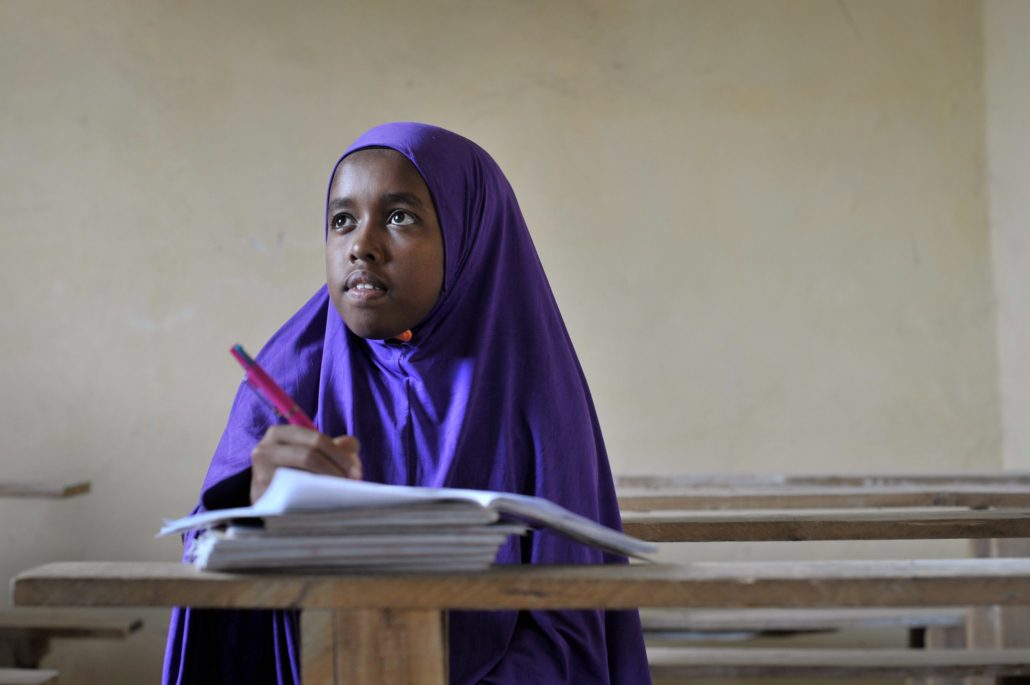
Puberty is a difficult time of life for many adolescent girls worldwide. During puberty, girls may face numerous challenges such as abuse, sexual harassment, unplanned pregnancy and early marriage, all of which pose a threat to their health and psychological well-being. When girls lack the knowledge and tools to navigate puberty safely, these challenges become even more difficult. For girls in Africa, this time can be particularly challenging. However, ZanaAfrica Foundation is an NGO in Kenya helping to provide girls with health education as well as menstrual supplies to help them navigate their periods and stay in school.
Menstruation Myths
Misconceptions about menstruation are common in many communities around the world. In these areas, many consider being female and having a period as shameful and suspicious. A girl’s first period is often a miserable time because of stigma in the local society. At least 50% of adolescent girls in Ethiopia do not receive any information about menstruation before their first periods. The belief is that when girls begin menstruating, they are no longer virgins. At times, some parents punish girls because they believe their periods began as a result of their daughters having sex. The Asembo in Kenya believe that a daughter who is menstruating should not sleep in her mother’s home because the young person is unclean. Myths such as this can make girls in Africa feel unaccepted by their mothers and their communities.
In East Africa, 80% of all girls have no access to health education or sanitary pads. Meanwhile, in Kenya, two out of three girls are unable to access menstrual products regularly. Many girls use homemade cloths or rags, but these solutions can lead to infection, and often they are not very effective. Due to shame and fear, many girls do not attend school when menstruating. In seventh grade, the proportion of girls dropping out of school is 7.1% in comparison to boys at 6.8%. In eighth grade, the dropout gap widens by 0.7%.
Obtaining an education is key to avoiding the grind of poverty, so the girls can get jobs upon graduation. Missing school because of menstruation leads to girls not graduating, thereby consigning girls in Africa to a lifetime of lower-paying work or worse, no paying work. A 2015 study in Kenya revealed that one out of 10 girls engaged in transactional sex in order to obtain menstrual pads.
ZanaAfrica
ZanaAfrica is a nonprofit based in Kenya that focuses on girls’ education and healthcare. The organization works to disseminate information and menstrual products, to keep young women from dropping out of school and thereby avoid eventual poverty. ZanaAfrica’s research shows that healthcare information and menstrual pads win back 75% of learning days at school.
ZanaAfrica leads a global advocacy effort to break the taboo around menstrual periods. Deeply engrained taboos, as well as the lack of communal rites-of-passage that once supported girls during adolescence, leave girls to navigate puberty on their own. Young girls can enter situations in which they receive pressure to have sex or another person touches them inappropriately, but they do not realize that they have the right to say no. As a result, 20% of Kenyan girls ages 15-19 are pregnant, 60% quit before finishing high school and 66% of new HIV infections are in adolescent girls in Africa.
The Publication, “Nia Teen”
To help counter the rising tide of unwanted pregnancy, disease and leaving school, which creates a vicious cycle of poverty, ZanaAfrica publishes a health magazine called “Nia Teen.” Its goal is to improve the health and agency of girls living in the worst informational and economic poverty. The organization has also created a 24-session facilitated health education curriculum.
“Nia Teen” draws from a database of more than 10,000 questions from 1,000 girls. Each issue intends to create behavior change as well as knowledge retention. The publication gives guidance, affirmation and information about menstrual health and puberty. It also celebrates real girls’ accomplishments and features their heroes. A comic in the magazine demonstrates healthy decision-making and comes with a discussion guide. ZanaAfrica believes that when girls receive honest answers to their questions, they gain the confidence to realize their potential and affirmation of their voices. When girls learn about reproductive health, they are better able to make decisions and are more likely to make positive choices for their future.
ZanaAfrica’s Impact
Over the past four years, ZanaAfrica has worked with partners across Kenya to provide over 10,000 girls per year with cotton underwear and sanitary pads, as well as reproductive health education. Since 2013, it has impacted nearly 50,000 girls with the tools they need to thrive. In 2015, ZanaAfrica received a $2.9 million four-year research grant from the Bill & Melinda Gates Foundation to test the impact of its health education interventions and menstrual pads on health, safety and education for girls in Africa.
COVID-19’s Impact on Girls in Kenya
With Kenyan schools closed until 2021 due to COVID-19, millions of girls are dealing with challenges that the pandemic has worsened. Girls who are not in school are at increased risk for anxiety, depression, pregnancy, sexual violence and ongoing trauma. Support for groups like ZanaAfrica is more crucial than ever since COVID-19 has made it even more difficult for girls in Africa to stay safe.
– Sarah Betuel
Photo: Flickr

Improving Mental Health in Iraq
Suicide rates in Iraq are on the rise in 2020, primarily among members of communities struggling to find employment, resources, political peace and aid during the ravage of the COVID-19 pandemic. The Yazidi people, a Kurdish religious minority group, are facing an unprecedented rise in suicide rates as they relive the trauma that the 2014 ISIS raids caused in their hometowns. Here is some information about mental health in Iraq including the relationship between suicide rates, mental health and COVID-19 among the Yazidi people of Iraq.
Who are the Yazidi People?
Yazidi refers to a member of a small, monotheistic, semi-ancient religion based in Northern Iraq, Northern Syria and some parts of Turkey. The Yazidi people have been the target of various religious persecutions since their beginnings, most recently in the 2014 raids by the Islamic State of Iraq and Syria (ISIS.) They tend to live in isolation as they observe a strict philosophy on religious purity, thus driving them away from contact with members outside of their religious community.
Why is Suicide Prevalent in the Yazidi Community?
The majority of suicides among the Yazidi people result from poor living conditions in Internal Displacement Camps in the northern corner of Iraq. Still, the living conditions alone are not to blame. The combination of psychological trauma from ISIS captivity and limited access to basic psychological services, due to the stigma around mental health in Iraq, has unfortunately led many Yazidi people, primarily women, to search for suicide as an answer to their suffering.
How is COVID-19 Impacting Suicide Rates?
With unemployment, depression, isolationism and abuse at all-time highs during the pandemic, people across the world are leaning to harmful actions, such as suicide, as a form of relief.
Dr. Mark Reger, Chief of Psychology Services at the VA Puget Sound Health Care System in Seattle, states that the pandemic, along with civil unrest and economic struggles, produces a “perfect storm” for suicide risk. Among Yazidi people specifically, though, COVID-19 is causing many to relive the nightmares that the ISIS invasions caused. For many, the isolation and fear caused by either the loss of jobs or by social distancing remind them of the sleepless nights they spent in fear of kidnapping, murder or rape by members of ISIS in the 2014 attacks.
The lack of services to treat mental health in Iraq may have influenced suicide risk among the Yazidi people. There are currently only 80 active psychologists in Iraq and Iraqi Kurdistan, while 70% of Iraqi citizens who self-report mental distress have suicidal thoughts. Despite this data being about a decade old, one can surmise that mental health in Iraq worsened over the last decade although researchers have had a difficult time updating statistics due to political restrictions.
Solutions
The following organizations are positively impacting mental health in Iraq and Yazidi communities through raising awareness, providing treatment traditionally unavailable to the community and offering financial assistance for intervention.
Attention to mental health in Iraq is necessary considering the country’s recent challenges and the COVID-19 pandemic. Hopefully, through continued support, mental health among Yazidi communities will improve.
– Johnnie Walton
Photo: Flickr
ZanaAfrica is Helping Girls in Africa Stay in School
Puberty is a difficult time of life for many adolescent girls worldwide. During puberty, girls may face numerous challenges such as abuse, sexual harassment, unplanned pregnancy and early marriage, all of which pose a threat to their health and psychological well-being. When girls lack the knowledge and tools to navigate puberty safely, these challenges become even more difficult. For girls in Africa, this time can be particularly challenging. However, ZanaAfrica Foundation is an NGO in Kenya helping to provide girls with health education as well as menstrual supplies to help them navigate their periods and stay in school.
Menstruation Myths
Misconceptions about menstruation are common in many communities around the world. In these areas, many consider being female and having a period as shameful and suspicious. A girl’s first period is often a miserable time because of stigma in the local society. At least 50% of adolescent girls in Ethiopia do not receive any information about menstruation before their first periods. The belief is that when girls begin menstruating, they are no longer virgins. At times, some parents punish girls because they believe their periods began as a result of their daughters having sex. The Asembo in Kenya believe that a daughter who is menstruating should not sleep in her mother’s home because the young person is unclean. Myths such as this can make girls in Africa feel unaccepted by their mothers and their communities.
In East Africa, 80% of all girls have no access to health education or sanitary pads. Meanwhile, in Kenya, two out of three girls are unable to access menstrual products regularly. Many girls use homemade cloths or rags, but these solutions can lead to infection, and often they are not very effective. Due to shame and fear, many girls do not attend school when menstruating. In seventh grade, the proportion of girls dropping out of school is 7.1% in comparison to boys at 6.8%. In eighth grade, the dropout gap widens by 0.7%.
Obtaining an education is key to avoiding the grind of poverty, so the girls can get jobs upon graduation. Missing school because of menstruation leads to girls not graduating, thereby consigning girls in Africa to a lifetime of lower-paying work or worse, no paying work. A 2015 study in Kenya revealed that one out of 10 girls engaged in transactional sex in order to obtain menstrual pads.
ZanaAfrica
ZanaAfrica is a nonprofit based in Kenya that focuses on girls’ education and healthcare. The organization works to disseminate information and menstrual products, to keep young women from dropping out of school and thereby avoid eventual poverty. ZanaAfrica’s research shows that healthcare information and menstrual pads win back 75% of learning days at school.
ZanaAfrica leads a global advocacy effort to break the taboo around menstrual periods. Deeply engrained taboos, as well as the lack of communal rites-of-passage that once supported girls during adolescence, leave girls to navigate puberty on their own. Young girls can enter situations in which they receive pressure to have sex or another person touches them inappropriately, but they do not realize that they have the right to say no. As a result, 20% of Kenyan girls ages 15-19 are pregnant, 60% quit before finishing high school and 66% of new HIV infections are in adolescent girls in Africa.
The Publication, “Nia Teen”
To help counter the rising tide of unwanted pregnancy, disease and leaving school, which creates a vicious cycle of poverty, ZanaAfrica publishes a health magazine called “Nia Teen.” Its goal is to improve the health and agency of girls living in the worst informational and economic poverty. The organization has also created a 24-session facilitated health education curriculum.
“Nia Teen” draws from a database of more than 10,000 questions from 1,000 girls. Each issue intends to create behavior change as well as knowledge retention. The publication gives guidance, affirmation and information about menstrual health and puberty. It also celebrates real girls’ accomplishments and features their heroes. A comic in the magazine demonstrates healthy decision-making and comes with a discussion guide. ZanaAfrica believes that when girls receive honest answers to their questions, they gain the confidence to realize their potential and affirmation of their voices. When girls learn about reproductive health, they are better able to make decisions and are more likely to make positive choices for their future.
ZanaAfrica’s Impact
Over the past four years, ZanaAfrica has worked with partners across Kenya to provide over 10,000 girls per year with cotton underwear and sanitary pads, as well as reproductive health education. Since 2013, it has impacted nearly 50,000 girls with the tools they need to thrive. In 2015, ZanaAfrica received a $2.9 million four-year research grant from the Bill & Melinda Gates Foundation to test the impact of its health education interventions and menstrual pads on health, safety and education for girls in Africa.
COVID-19’s Impact on Girls in Kenya
With Kenyan schools closed until 2021 due to COVID-19, millions of girls are dealing with challenges that the pandemic has worsened. Girls who are not in school are at increased risk for anxiety, depression, pregnancy, sexual violence and ongoing trauma. Support for groups like ZanaAfrica is more crucial than ever since COVID-19 has made it even more difficult for girls in Africa to stay safe.
– Sarah Betuel
Photo: Flickr
Introduction to Women’s Rights in Papua New Guinea
Women’s Rights in Papua New Guinea
Although the Papua New Guinea Constitution technically renders men and women equal, the traditional customs of the country and the patriarchal values that come with the vastly rural community make it difficult for this to actually implement itself within the country. Women’s rights in Papua New Guinea are shunted on a legislative and social level. In fact, not a single woman in Papua New Guinea is a member of Parliament. Moreover, women are not given the opportunity to be in positions of power due to a lack of access to education. In Papua New Guinea, only 18% of girls are enrolled in secondary school.
Gender-Based Violence in Papua New Guinea
Women in Papua New Guinea are subject to male domination and violence. It is estimated that Papua New Guinea has one of the highest rates of gender violence in the world, for a country that is not a conflict zone. Moreover, the ruralness of Papua New Guinea leads to a lack of infrastructure and community programs to deter violence and provide sanctuary to women and girls who have experienced domestic violence. Women are often forced to return to their abusers due to the lack of these types of systems.
In 2015, Doctors Without Borders completed its Return to Abuser report in Papua New Guinea. Of the patients treated, 94% were female, with the most common form of violence being at the hands of domestic partners. From 2007 to 2015, Doctors Without Borders treated nearly 28,000 survivors of family and sexual violence in Papua New Guinea. Doctors Without Borders shared that this abuse cycle continues because women and children lack the proper resources to leave their abusers, as many of them are dependant on the abuser and the abuse happens at home.
Intimate Partner Violence
In a United Nations multi-country study about Asia and the Pacific, researchers discovered alarming statistics about the pervasiveness of intimate partner violence. In Papua New Guinea, 80% of male participants self-reported perpetrating physical and/or sexual violence against their partner in their lifetime. Additionally, 83% of male participants also reported having committed emotionally abusive acts against their female partners in their lifetime. Sexual violence in Papua New Guinea is an epidemic too. In the same study, 62% of males also reported that they had perpetrated some form of rape against a woman or girl in their lifetime.
Pro Bono Australia
Despite these statistics, women in Papua New Guinea are supported by female-focused programs, such as Pro Bono Australia. Pro Bono Australia is working to aid women in Papua New Guinea to learn more about business and communication. Up to 85% of women in Papua New Guinea make their livelihoods off of the informal economy, through selling goods and services at markets. Through Pro Bono Australia, more than 600 market and street traders in Papua New Guinea who are mostly women, are members of the provincial vendors association. Through this association, vendors educate themselves about the Papua New Guinea market and the Constitution. Moreover, they now can communicate with governmental leaders and local leaders about the status of the informal economy. From this communication, these women have also been able to communicate with their leaders about other issues within their communities. As a result of this program, the provincial vendors association has begun to petition the government for better sanitation, safe spaces, better shelter and reliable water.
The Future for Women in Papua New Guinea
The communication between a coalition of mostly females and the governmental structure of Papua New Guinea will give voices to those who have been voiceless, bring attention to the status of women within society and hopefully make strides towards resolving issues such as gender-based violence and women’s rights in general. As a result of this measure, there is hope that women’s rights in Papua New Guinea will continue to improve and that the resources for gender-based violence will expand.
– Caitlin Calfo
Photo: Flickr
Prioritizing Women’s Rights in The Gambia
The Gambia, a country half the size of New Jersey and located in West Africa, is home to 1 million women. The country has a secular constitution and its legal system uses English common law and some aspects of Sharia Law. Under this legal system, women rarely own property. Moreover, they frequently face obstacles in education access and their prenatal/postpartum care is poor, resulting in high maternal mortality rates. Here is some information about women’s rights in The Gambia and efforts to improve them.
Injustices Gambian Women Face
In terms of education access and financial freedom, women’s rights in The Gambia are not equitable. Only 47% of Gambian women are literate in comparison to 64% of men, so most women are at a disadvantage from the start. Additionally, 26% of Gambian girls marry before they turn 18, which allows minimal time to gain pre-marriage financial independence. In 2009, 80% of women worked in the agriculture sector, but only 30% received cash earnings in comparison to 43% of men. Under the customary practice, instead of owning the land they cultivate, women borrow it from their husbands. The women who own property cannot receive more than one-third of the estate, as Sharia Law permits. This is a challenge because most banks will not grant credit unless the applicant owns land which puts women in a difficult situation.
Level The Law Campaign
In 2018, Gambian Attorney General and Minister of Justice, Abubacarr Tambadou, attended the Global Citizen Festival in New York to share The Gambia’s commitment to the Level The Law Campaign. Two years prior, Global Citizen started the campaign to outlaw discrimination against females and gender-based violence by 2030. In response to more than 10,000 Global Citizen tweets, Tambadou renewed the commitment to protecting women’s rights in The Gambia, which vows to repeal all laws that promote gender-based violence, prevent equal political participation and hinder reproductive health.
A statement by Tambadou said that UNICEF organized training for Gambian Law Enforcement Agencies on legislation about child marriage. Also, to demonstrate The Gambia’s commitment to include women in justice systems, half of the appointees to the superior Courts of The Gambia are women. Additionally, four of the seven Court of Appeal judges are women, with a woman serving as president. Finally, Gambia is drafting a new Constitution that ensures more gender-responsive legislation.
New Laws for an Equitable Future
Social justice mobility did not start there. The Women’s Act, passed in 2010, protects women’s rights under the Constitution, which includes human rights protection, the right to health, protection against discrimination, marriage consent and special measures supporting women (the government and private institutions must work towards gender equality). It also ensures that girls who are married or have children can stay in school, protecting them from getting expelled. In 2015, the National Assembly amended the Act to include the prohibition of Female Genital Mutilation (FGM). However, the Act does not regulate certain rights for Muslim women such as child custody, widow inheritance and divorce. These remain subject to Sharia Law.
The Sexual Offenses Act, passed in 2013, amends the procedure of rape trial and other sexual offenses. Meanwhile, the Domestic Violence Act, passed in the same year, protects domestic violence survivors.
Before these laws passed, sexual harassment and Female Genital Mutilation were legal. FGM is a common practice in The Gambia that results in devastating physical and psychological consequences. Fortunately, it is on the decline, although about 75% of women aged 15-49 and 50% of girls under age 15 have undergone it. Although the Women’s Act outlaws discrimination in reproductive health services, women still lack access to vital reproductive resources.
There is a long road ahead to gender equity. Luckily, with more female representation in the public sphere, women’s rights in The Gambia are on the rise. Gambian women bring a new perspective to the table, one that serves in their best interest.
– Rebecca Pomerantz
Photo: Flickr
BetterTogether Challenge Offers Hope to Venezuelans
The Collapse of the Venezuelan economy
Despite having one of the largest oil reserves in the world, the Venezuelan government’s mismanagement of its resources and economy led to a cataclysmic collapse. When measured by income, 96% of Venezuelans live in poverty and the average citizen lives off a paltry 72 cents a day. The 2019-2020 National Survey of Living Conditions found that 65% of Venezuelans live in multidimensional poverty, an increase of 13% from the previous year. Multidimensional poverty incorporates measurements such as access to health care and education, in addition to income.
A Mass Exodus of Venezuelans
The abject poverty Venezuelans have experienced has led to mass emigration to neighboring countries. Colombia and Peru collectively have had over two million Venezuelan immigrants. The integration of Venezuelans and their culture has been abrasive in countries such as Peru, where negative attitudes persist toward Venezuelans.
The displacement of millions of Venezuelans has disrupted a highly educated generation. A whole 57% of Venezuelans living in Peru have received higher education and roughly 25% have university degrees.
While negative views of Venezuelan immigration have limited the number of incoming Venezuelans, neighboring countries would be wise to recognize the inherent value possessed by the Venezuelan people. The displaced Venezuelans carry massive potential, which if properly harnessed, can have a substantial impact on local economies and innovation. Furthermore, the integration of Venezuelans into the labor markets of their host communities would provide additional cash flow that could boost local economies.
BetterTogether Challenge Empowers Venezuelan Innovation
As a strong and steady champion against poverty, USAID has partnered with the InterAmerican Development Bank to create the BetterTogether Challenge to support Venezuelans. The goal of the challenge is to fund innovative solutions from Venezuelans to support their resilience, test solutions to be integrated and promote communication between Venezuelans and their new communities. In August 2020, the BetterTogether Challenge Award winners in South American countries were collectively awarded $2.97 million.
The BetterTogether Challenge awardees are focused on increasing social cohesion, fighting xenophobia, empowering women, improving employment opportunities and improving access to health care, education and food. These solutions are crucial to rebuilding Venezuela and reducing poverty in their communities.
International Rescue Committee in Colombia
One of the most impactful organizations chosen for funding was the International Rescue Committee (IRC) in Colombia. Nearly 1.5 million Venezuelans have found refuge in Colombia, with roughly 35,000 crossing into Colombia daily to purchase supplies. The IRC supports Venezuelans in Colombia by providing safety, access to healthcare and economic assistance while protecting the women and children that may be disproportionately vulnerable. A key initiative launched by the IRC is the Families Make A Difference Program, which provides essential management and support to children who have been harmed and educates families to prevent harm.
Supporting organizations such as the IRC are vital for fortifying Venezuelan resilience and providing people with life-changing resources during times of need. Furthermore, initiatives like the BetterTogether Challenge empower Venezuelans while addressing poverty.
– Adrian Rufo
Photo: Flickr
Oxfam: Fighting Global Poverty with Books
Oxfam: Alleviating Global Poverty
Oxfam provides support to people worldwide who suffer from disasters and poverty and works to build lasting solutions to these problems. Through “challenging the powerful,” Oxfam aims to hold those in power accountable for their actions in order to promote sustainable change. Oxfam challenges those in power by allowing disadvantaged groups’ voices to be heard, pressuring policy change and starting discussions with those in power to advocate for those in poverty. Throughout the organization’s 70 years of existence, Oxfam has changed lives on a global scale.
The number of global citizens living in poverty increased to 803 million people in 2020, according to the Pew Research Center. The organization believes that the global community can alleviate global poverty by confronting the injustices in the world. In doing this, Oxfam provides a voice for those who often go unheard in their daily lives.
While working in 90 countries, Oxfam alone has changed the lives of tens of millions of people worldwide. Oxfam used many different strategies, such as supporting NGOs on the ground aiding communities in need, donating funds and resources to humanitarian organizations and pursuing legal action for those in need. But, perhaps the most interesting is fighting global poverty with books.
The Oxfam Bookstore: Fighting Poverty With Books
A popular place for local bookstores to emerge is Great Britain. Walking through Oxford, near the pub C.S. Lewis frequented, is an Oxfam bookstore. The books within the bookstore come from donations to Oxfam and Oxfam disperses these books to the organization’s many locations. In selling these books to raise money, Oxfam is able to further fund its multi-faceted poverty-fighting agenda.
In these bookstores, it is easy to find books from all genres. A typical store features books from popular young adult fiction to antiquated books that are no longer in circulation. When a large bookseller hears about Oxfam and wants to contribute to the cause, it is quite common to find newly printed copies on Oxfam’s bookstore shelves as well.
In the event that there is no Oxfam bookstore location nearby, it is now possible to shop the bookstores’ selection online. To promote the organization’s values, it is essential for Oxfam to collect as many books as possible to boost sales. When looking online, it is easy to find the genres and the site even highlights a section to promote antiquarian, signed and valuable books.
To be more specific, volunteers run both Oxfam thrift stores and book shops around the world. The funds the bookstores raise are then dispersed to their various home bases. Through these bookstores’ contributions and by providing an accessible platform for people to donate and contribute to valuable causes, Oxfam furthers the global fight against poverty.
Fighting Poverty One Book at a Time
For book lovers who want to change the world, Oxfam bookstores are a great way to help out those in need while finding the newest story to delve into. From just a quick search, first edition novels such as “Ross Poldark,” “Will Grayson” and “The Screwtape Letters” can be found in these volunteer-led bookstores. Prices vary depending on the quality and rarity of these works, but it is clear that fighting global poverty with books is a great way to benefit both those in need and one’s own book cravings.
By fighting global poverty with books, Oxfam encourages widespread education that can be available to everyone, without having to explicitly say it. Contributing to the fight against global poverty can occur through the simple transaction of purchasing a book from a small shop.
– Natalie Belford
Photo: Pexels
Combating Child Marriage in Niger
High Birth Rate and A Young Population
Niger has the second-highest birth rate globally, which is caused by a high infant mortality rate. According to the United Nations Children Fund (UNICEF), the current infant mortality rate is 80.4 per 1,000 live births. Malnutritionment plays a vital role in children’s health and the lack of proper food and clean water contributes to the mortality rate.
According to the United Nations Human Development Index, Niger is ranked the lowest at 189 out of 189 countries. More than 50% of the Niger population are under the age of 15, and approximately 89% of young girls marry prior to reaching the age of 18. Less than 30% of those children receive an education, which is an even more prevalent issue among girls. One of the main reasons children aren’t attending school is the extreme poverty within the country.
When a child is sick or suffering from starvation, they become malnourished, which makes them incapable of attending school, and the more often it happens, the less likely they are of going back to school. Combatting child marriage in Niger is seemingly difficult due to the extreme poverty and it makes human development, especially for children and women, extremely challenging to achieve.
A Lack of Independence With a Lack of Education
Niger has the second-highest birth rate globally, which is caused by a high infant mortality rate. According to the United Nations Children Fund (UNICEF), the current infant mortality rate is 80.4 per 1,000 live births. Malnutritionment plays a vital role in children’s health and the lack of proper food and clean water contributes to the mortality rate.
According to UNICEF, married women become dependent on their husbands because their sense of independence is taken away. However, women are, more often than not, engaging in marriage during their teenage years before they are even fully mature, which would explain why their sense of independence is stricken away so early on.
Education plays an important role in child marriages in the country of Niger because the lack of knowledge makes a woman more vulnerable to risky decisions. According to UNICEF, “The link between education and the prevalence of child marriage is particularly evident in Niger: 81% of women aged 20-24 with no education and 63% with only primary education were married or in union at age 18.” The lack of children attending school is a primary reason for combatting child marriage in Niger.
Unstable Government
Niger lacks the ability to properly control and patrol its borders, making it more unprotected and defenseless to possible terrorism and criminals. The government lacks accountability in this area, making it the perfect hideaway for terrorists and drug traffickers. The more unstable the government is, the more vulnerable, yet welcoming it is to child marriages.
Although child marriage became illegal by law in 1999, it is still prevalent today and is plummeting young girls’ social and economic standing. However, with the continuous help from the organization Forum for African Women Educationalists (FAWE), child marriages in Niger and all African countries will soon come to an end. Five female ministers in the education field created the organization in 1992 and are working toward combatting child marriage in Niger. According to FAWE, the goal is to strengthen young girls’ minds in multiple countries in Africa by increasing access to education and ensuring the caliber is up to par for them to benefit from its resources.
FAWE has expanded over the years by remaining in close contact with 34 national chapters to ensure female education grows substantially and it “relates to long-term economic development and its centrality and urgency in education sector planning.” With FAWE’s progression, among other organizations, and the government of Niger taking accountability for flawed areas within the system, young girls in Niger and in other African countries will become more educated and free of potential threats to their personal growth.
– Montana Moore
Photo: Flickr
Agriculture: TechnoServe is Alleviating Poverty
Training Skills for Farmers
Kenya, Haiti and Zambia are some of the many developing countries rich in natural resources that are in high consumer demand, such as mangos and cashews. The support and training skills implemented by TechnoServe work to profit on the supply and demand. These natural resources could provide significant economic growth if farmers are given the skills to create a profitable business. Technoserve has partnered with nearly 4,000 businesses and upwards of 300,000 farmers each year.
TechnoServe’s mission is to implement training methods that these regions lack, such as skills in management training, finance and secure markets that are needed to create profitable enterprises. The implementation of training skills and knowledge allows individuals and communities to continue to carry the skills for a lifetime.
TechnoServe has made a lasting impact for millions of individuals and in 2019 it was rated the number one nonprofit fighting poverty by ImpactMatters.
Focusing on Women’s Empowerment
The annual report from 2019 reveals an increase in entrepreneurship for farmers and women, highlighting specific countries, and more specifically, women’s impact. In 2019, 38% of beneficiaries were women or women-owned businesses. Overall, 317,493 individuals and companies, as a result of Technoserve’s help, display increased profitability and financial benefits of $200,579.
In developing countries, women face gender barriers that are disproportionally more likely to affect them. Women’s economic empowerment is vital for alleviating poverty and creating employment opportunities. Investing specifically in women’s economic opportunities, such as access to training, knowledge and resources, could impact farm production up to 30%, allowing for increased employment opportunities. Studies estimate that this change could impact the global GPD by 26%, or $28 trillion.
Women in Business (WIN)
Working closely with businesses and organizations, Technoserve is alleviating poverty by proactively working to create social equity within communities. Breaking the barrier of gender inequality to empower women-run institutions through funding and support, improves the quality of life and financial status. For instance, Technoserves five year program designed for women, called Women in Business (WIN), focuses on female entrepreneurs in Mozambique. Similar training is also provided for men through Technoserve, to create complete gender balance.
“More than three-quarters of economically active Mozambicans are involved in small and informal businesses, 60% of whom are women.” Despite most business owners being women, their businesses are less likely to employ as many people and are relatively smaller than their male counterparts. Highlighting gender barriers, women face higher demands at home due to families and are not likely to receive the same networks, information and opportunity. The WIN program utilizes a market systems approach to produce partnerships with private sector companies, associates and service providers, to create an inclusive market for women. WIN is able to provide these women resources through the partnership established with the Swedish International Development Cooperation Agency (Sida). Sida assists TechnoServe’s initiative through funding, providing resources such as creating employment opportunities, equipment, financial services and products needed.
Overall, TechnoServe is alleviating poverty with initiatives in the agricultural industry and acknowledges the important role of women in this endeavor.
– Allison Lloyd
Photo: Flickr
Comprehensive Sexuality Education for HIV
Comprehensive Sexuality Education (CSE)
In the 2016-2021 Strategy of UNAIDS, one of the eight sub-strategies includes “quality comprehensive sexuality education accessed by all adolescents and young people.” Many other organizations believe comprehensive sexual education is essential for young people to protect themselves from HIV and other sexually transmitted infections.
Comprehensive Sexuality Education (CSE) is a curriculum-based program taught in school or out of school and over several years. The purpose of CSE is to “provide age-appropriate information about human rights, human sexuality, gender equality, puberty, relationships and sexuality and reproductive health.”
Digital Sexual Education
In places where there are ineffective or insufficient schools, digital sexuality education may be a substitute. Over 70% of 15 to 24-year-olds are online so sexuality education and information are increasingly being delivered through a digital format. Although millions have access to online sexuality education, research is limited regarding its impact. Although digital education is effective in reaching large groups of young people, some fear that cyberbullying and unsafe online research could hinder the success of online tools.
CSE Initiatives
The HIV epidemic impacts many regions, but sub-Saharan Africa remains the most affected. With support from the United Nations, the Southern African Development Community (SADC) and the East African Community (EAC) joined together to provide sexual education in the region. In 20 Eastern and Southern African countries, adolescents can access comprehensive sexuality education.
In support of comprehensive sex education, UNESCO alongside five other organizations published the International Technical Guidance on Sexuality Education. The document outlines key topics for curriculums specific to different regions.
In 2002, The UNAIDS Inter-Agency Task Team (IATT) on Education and School Health was created to improve HIV education. The IATT aims to increase leadership support and resource allocation for HIV and health education. IATT members believe that education is essential for successful HIV programs.
The Impact of CSE
CSE provides more than information. It aims to help young people establish positive values regarding their sexual health through discussions about relationships, gender roles and sexual abuse.
In a study focused on measuring the impact of curriculum-based sex and HIV education programs on adolescents or young adults between 9 and 24 years old, 65% of the programs had a significantly positive impact on behavior.
With more focus on education as a tool for prevention, it is hopeful that the global HIV epidemic will be positively impacted.
– Rachel Durling
Photo: Flickr
A Promise to Prioritize Teachers in Nigeria
Unrest in the North Affects Schools
The northeastern Nigerian states of Borno, Yobe and Adamawa, have been victims of significant violence from the Boko Haram insurgency, a terrorist group whose name translates to ‘Western Education is Forbidden.’ Currently, 800 schools in this region are closed and 500 more have been destroyed due to conflict. Furthermore, less than 50% of girls in the north are in school due to cultural practices and attitudes discouraging girls from receiving an education.
The Link Between Poverty, Population & Education
The lack of education in Nigeria has deep effects on the nation’s present condition and future direction. There is a close correlation between girls receiving less education and fertility rates soaring. In 2018, Nigeria’s total fertility rate was 5.4 children per woman. This rate is far higher than the global average of 2.5 and above the sub-Saharan African average of 4.7. Consequently, Nigeria is one of the most rapidly growing countries in the world, with a population of about 200 million people and an average age of 18. Furthermore, the population is projected to double to more than 400 million by 2050.
Although Nigeria is Africa’s biggest exporter of oil, its economy’s growth rate has stagnated since oil prices collapsed five years ago. In developing countries, when population growth overtakes economic growth, resources become scarce and the people suffer. Nigeria’s population growth rate of 2.6% is outpacing its economic growth rate of 2%, thus further perpetuating the already widespread poverty. In 2019, 82 million Nigerians lived below the poverty line.
A Commitment to Education in Nigeria
While past Nigerian leadership has failed to emphasize education or recognize it as a means to reduce poverty and provide opportunity, President Muhammadu Buhari has signaled a commitment to establishing education as the backbone of society and prioritize teachers in Nigeria. In order to strengthen education in Nigeria, the government has committed to guaranteeing employment for students graduating with a Bachelor’s of Education. President Buhari underlined the need to incentivize students to become teachers by providing fiscal stability to the profession. He believes that this will attract a higher quality and quantity of teachers, which will in turn improve the system as a whole.
Additionally, these graduates will receive a university stipend and a special teacher’s salary. The retirement age and duration of service will both be extended by five years as well. The effects of Nigeria’s new commitment to prioritize teachers in Nigeria and education remain to be seen but certainly is a step in the right direction for the country to progress out of poverty.
– Adrian Rufo
Photo: Flickr