Introduction to Women’s Rights in Papua New Guinea
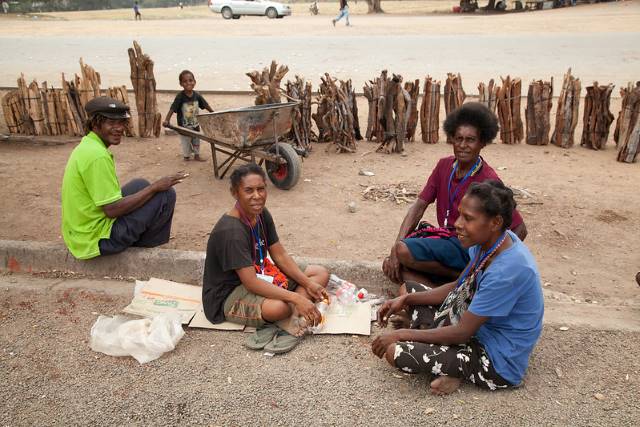 Although Papua New Guinea is a resource-rich area, almost 40% of its population lives in poverty. For women, Papua New Guinea is a dangerous place to live as the country is plagued by gendered violence and inequality and women’s rights are unprotected.
Women’s Rights in Papua New Guinea
Although the Papua New Guinea Constitution technically renders men and women equal, the traditional customs of the country and the patriarchal values that come with the vastly rural community make it difficult for this to actually implement itself within the country. Women’s rights in Papua New Guinea are shunted on a legislative and social level. In fact, not a single woman in Papua New Guinea is a member of Parliament. Moreover, women are not given the opportunity to be in positions of power due to a lack of access to education. In Papua New Guinea, only 18% of girls are enrolled in secondary school.
Gender-Based Violence in Papua New Guinea
Women in Papua New Guinea are subject to male domination and violence. It is estimated that Papua New Guinea has one of the highest rates of gender violence in the world, for a country that is not a conflict zone. Moreover, the ruralness of Papua New Guinea leads to a lack of infrastructure and community programs to deter violence and provide sanctuary to women and girls who have experienced domestic violence. Women are often forced to return to their abusers due to the lack of these types of systems.
In 2015, Doctors Without Borders completed its Return to Abuser report in Papua New Guinea. Of the patients treated, 94% were female, with the most common form of violence being at the hands of domestic partners. From 2007 to 2015, Doctors Without Borders treated nearly 28,000 survivors of family and sexual violence in Papua New Guinea. Doctors Without Borders shared that this abuse cycle continues because women and children lack the proper resources to leave their abusers, as many of them are dependant on the abuser and the abuse happens at home.
Intimate Partner Violence
In a United Nations multi-country study about Asia and the Pacific, researchers discovered alarming statistics about the pervasiveness of intimate partner violence. In Papua New Guinea, 80% of male participants self-reported perpetrating physical and/or sexual violence against their partner in their lifetime. Additionally, 83% of male participants also reported having committed emotionally abusive acts against their female partners in their lifetime. Sexual violence in Papua New Guinea is an epidemic too. In the same study, 62% of males also reported that they had perpetrated some form of rape against a woman or girl in their lifetime.
Pro Bono Australia
Despite these statistics, women in Papua New Guinea are supported by female-focused programs, such as Pro Bono Australia. Pro Bono Australia is working to aid women in Papua New Guinea to learn more about business and communication. Up to 85% of women in Papua New Guinea make their livelihoods off of the informal economy, through selling goods and services at markets. Through Pro Bono Australia, more than 600 market and street traders in Papua New Guinea who are mostly women, are members of the provincial vendors association. Through this association, vendors educate themselves about the Papua New Guinea market and the Constitution. Moreover, they now can communicate with governmental leaders and local leaders about the status of the informal economy. From this communication, these women have also been able to communicate with their leaders about other issues within their communities. As a result of this program, the provincial vendors association has begun to petition the government for better sanitation, safe spaces, better shelter and reliable water.
The Future for Women in Papua New Guinea
The communication between a coalition of mostly females and the governmental structure of Papua New Guinea will give voices to those who have been voiceless, bring attention to the status of women within society and hopefully make strides towards resolving issues such as gender-based violence and women’s rights in general. As a result of this measure, there is hope that women’s rights in Papua New Guinea will continue to improve and that the resources for gender-based violence will expand.
– Caitlin Calfo
Photo: Flickr
