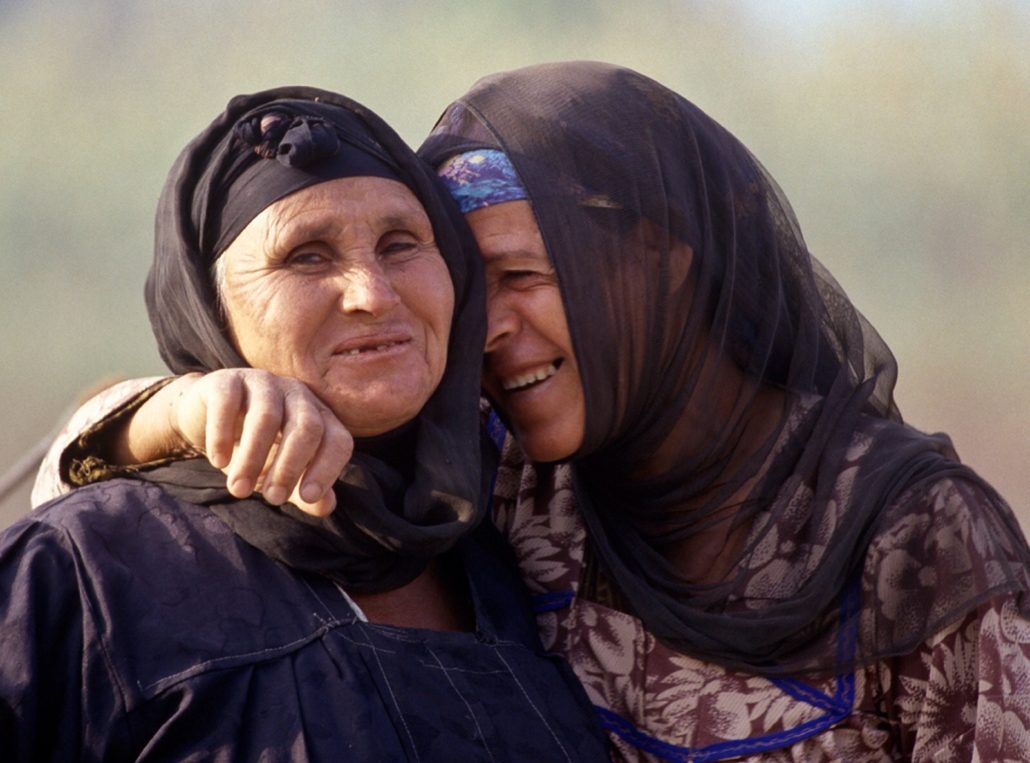
Currently governed under Islamic Law as Egypt’s amended Constitution states, religion plays a major role within legislative policies. It has been a debate for several years as to whether the decline in women’s protection in Egypt is due to religious laws or the current socioeconomic environment. In order to approach the complexities of modern-day Egyptian society and women’s rights in Egypt, one must first understand the history of Islamic Law. Known for existing as more of an all-encompassing religion, Islam not only provides theological practices but also a way of living.
Islamic Law
Article 40 and 46 of Egypt’s present constitution explicitly states, “All citizens are equal before the law. They have equal public rights and duties without discrimination between them due to race, ethnic origin, language, religion or creed.” The second article of this same constitution declares “Islam is the religion of the state and Arabic is its official language. The principles of Islamic Sharia is the principal source of legislation.”
Many women in Egypt (and other predominantly Islamic regions) are facing a dilemma concerning their religious and basic freedoms. Because Egypt incorporates Islam even within legal policies, it somewhat discourages other religions. This is why the second-largest religious community is Christianity, comprising approximately only 5% of the Egyptian population.
Women’s religious and basic human rights greatly differ from men’s rights and social roles. An example of this may include the regulations in regards to a woman’s attire. The hijab as well as other head and body coverings was initially symbolic of modesty within the Islamic religion. Moreover, although the Qur’an very clearly addresses men alongside women when proclaiming rules of “guarding their modesty,” men do not have to participate in the wearing of head/face coverings.
As of recently, though, the practice of adopting body and face veils into a woman’s everyday appearance has evolved into more of a preliminary societal standard. Because scripture claims that women exposing themselves to any man unrelated to them (besides children) is a sinful act, women experience pressure to adorn these religious coverings in public just to prevent shame, which only further enforces this oppression.
Socioeconomic Factors
This brings up the debate attempting to answer whether the lack of basic human rights for women is due to the Islamic nature of Egyptian society, or society itself? Women are hesitant to go into public without these coverings because of societal and religious pressures, but the act of preserving their modesty exists now as somewhat of a precautionary measure, as well.
In several impoverished countries or regions of extreme poverty, the economy is the primary factor in societal normalities. Women’s rights in Egypt undergo frequent testing, especially in areas of extreme poverty within the country. Because of scarce job opportunities and the dilapidated financial state of certain areas, women frequently endure mistreatment. They often cannot challenge their social or religious roles or financially provide for themselves. Their husbands, neighbors and, in some cases, their relatives, use this to their advantage which results in the very common sexual harassment of women.
Because of the different roles of Egyptian men and women, the deterioration of women’s rights in Egypt and sexual harassment of women has been a prominent issue since at least the ‘80s (this was the beginning of the selective documentation of sexual harassment cases in Egypt). Although the Qur’an prophesizes the equality of men and women under God, others in Egypt sometimes see women as lesser than. In this case, the argument that socioeconomic factors are separate from religious practices and laws is valid.
Moreover, the United Nations conducted a census in 2013 revealing that an estimated 99.3% of women could encounter sexual harassment in Egypt. Meanwhile, another study concluded that about 86% of women reported that bystanders frequently ignore the aggression.
This demonstrates the frequency in which these dangerous acts happen in public. It is seemingly a social norm for women to not only have to uphold traditional religious roles but also to face arbitrary sexual aggression in public.
Solutions
As of 2014, however, Egypt is now addressing this violent aggression towards women. For the first time in Egyptian history, sexual harassers are undergoing prosecution and courts are holding them accountable. Egypt still requires more improvement, but more and more women are beginning to make others aware of this issue, even globally. The current economic state of Egypt is also developing. With an extreme poverty rate of 32% in 2018 and one of approximately 29% in 2020, Egypt is continuing to see a decline in extreme poverty.
The societal and religious pressures persist, but Egypt is generating more discourse to help bring more attention to the issue of women’s rights in Egypt. Moreover, the debate over religion is increasing along with the dismantling of unjust socioeconomic systems.
– Caroline Kratz
Photo: Flickr

Struggles of Refugees: Books Raising Awareness
Kiss the Dust
Published in 1994, this historical fiction book by Elizabeth Laird takes place in 1991. Tara is a 12-year-old Kurdish girl living in Iraq during a time when conflict was high between Saddam Hussein and the Iraqi Kurds. After her father’s involvement with the Kurdish resistance movement, Tara and her family are forced to flee to Britain, where her whole world changes completely. Though “Kiss the Dust” is more about Tara and her family’s struggles as refugees living in London, there is also a lot of focus on the Kurdish resistance movement in 1991 and the trauma that many experienced because of it. There is also an emphasis on overall trauma from war-ridden areas, something that has lasting effects on refugees.
The Red Pencil
“The Red Pencil” was written by Andrea Davis Pinkney and published in 2014. Inspired by a true story, it revolves around 12-year-old Amina living in Darfur, Sudan, in 2003. She nearly loses everything when her village is attacked, and after, she and her family are forced to find a refugee camp on foot. This book describes the struggles of her journey to the refugee camp in Kamal as well as her struggles while living in the camp. Due to the trauma, Amina stops speaking. Eventually, one of the relief workers gives her a red pencil which she uses to begin her journey of recovery. While describing Amina’s journey, the book also highlights Sudan and its prolonged conflicts and wars, showing how many Sudanese people have been forced to flee their homes throughout the years, making Amina and her family only one of many Sudanese refugees.
The Bone Sparrow
Written by Zana Fraillons and published in 2016, “The Bone Sparrow” follows a young boy named Subhi who was born in an immigration detention center in Australia. His mother and sister were part of the flood of Rohingya refugees who escaped their homeland due to the genocide of their people. Because he spent his entire life behind fences, Subhi struggles to curb his curiosity about the outside world. His only access is through his mother’s stories and his imagination. Eventually, he meets a girl on the other side of the fence who contributes to his journey of freedom, imagination and knowledge about the world. Through Subhi’s struggles, the author illustrates the refugee struggle of not having a place to truly call home. The story also shines a light on the Rohingya genocide and the number of refugees created as a result, a conflict still going on today.
In the Sea There Are Crocodiles
Enaiatollah Akbari was 10 years old when his mother sent him to Pakistan from Afghanistan, to protect him from the Taliban, portraying the many years the Taliban have been creating conflict in areas around Pakistan and Afghanistan. Published in 2010, the novel by Fabio Gada revolves around Akbari’s five-year journey as he travels through Iran, Turkey and Greece, eventually ending up in Italy at the age of 15. Throughout his journey, he encounters many hardships. This story highlights a refugee’s journey of loss and rebuilding.
The Good Braider
Published in 2012 by Terry Farish, this book is about a Sudanese family escaping war in their homeland and eventually ending up in Portland, Maine, a place with a lot of other Sudanese immigrants. The community of Sudanese refugees in the United States portrayed in this book shows the impact of the current and previous conflicts in South Sudan. The main character, Viola, struggles to balance the differences between her Sudanese heritage and the culture of the United States. By portraying Viola’s struggles within a Sudanese immigrant community, this book highlights the communal struggles of refugees and immigrants living in the United States.
The Unique Struggles of Refugees
Though the characters are fictional, all of these stories are based on real-life events that forced thousands of people to flee their homes. From war to genocide, each book highlights a unique yet similar set of events that the characters experience, based on their history, setting and context. These different perspectives not only allow people to empathize with victims of history but also bring more of an understanding about the lives of refugees and encourage more humanitarian efforts to address this global issue.
– Maryam Tori
Photo: Flickr
Mobile Technology: Viamo’s Services Improve Lives
The 3-2-1 Service
This toll-free service offers educational content and interactive training through interactive voice response (IVR). IVR is an automated system that communicates with the listener through prerecorded or synthetic speech, thus removing the need for literacy. Furthermore, Viamo translates all content into local languages so it can reach the largest number of people.
Many of the partner projects that Viamo undertakes end up on the 3-2-1 Service once completed. For example, Viamo’s partnership with the International Maize and Wheat Improvement Center (CIMMYT) to create Link It, a mobile service meant to connect farmers to markets in Nepal, saw the finished product integrated into the 3-2-1 Service platform.
Another example comes from Mozambique, where Viamo partnered with a coalition of groups including Chemonics and USAID to create a storm warning system. This system has been a part of Mozambique’s 3-2-1 Service since its creation in 2016.
Besides these, Viamo’s services through 3-2-1 include audio dramas, news and children’s educational programs.
The diversity of the 3-2-1 Service has garnered it more users than Facebook in some countries, with thousands of people utilizing it at any point in the day.
Wanji Games
With the help of Viamo, Peripheral Vision International established Wanji Games. These edutainment games feature branching path narratives, where listeners role play scenarios ranging from navigating gender-based violence (GBV) to managing money. By exploring a scenario’s different endings, the player can gain a deeper understanding of the subject matter to apply it to their lives. Since these are accessible via the 3-2-1 Service, these games are free to play.
Engagement Campaigns
Viamo helps its partner organizations transmit information to the general population through its comprehensive mass messaging system combining IVR, chatbots, SMS, mobile apps and social media. For example, in the past, Viamo had remotely trained Rwandan healthcare workers on mental health using IVR.
Surveys, Polls and Call Centers
Viamo’s relationship with network operators grants it the benefit of having access to customers’ demographic information. As such, Viamo can distribute surveys and polls to achieve a sample representative of the general population. Furthermore, since network operators disclose a customer’s geographical location to Viamo, it can map the results.
Due to the conflict in South Sudan, the government has prohibited journalists from reporting in the country. To bypass this issue, Viamo and Forced Out created a phone survey to measure the displaced population in South Sudan. The survey found that the war had displaced more than 40% of the nation’s population. This provided the international community with statistics to properly gauge the scope of the refugee crisis.
Viamo also has a variety of call centers integrated into the 3-2-1 Service. One instance of this is Legal Aid Forum Rwanda. Victims can call the call center to get legal advice and possibly get connected to a lawyer who could represent them for free.
Viamo’s Reach and Future Impact
Viamo’s services have reached more than 10 million people. With plans to expand into new areas, such as Latin America, Viamo will continue to have an impact in the foreseeable future.
– Riley Behlke
Photo: Flickr
Human Trafficking in Mozambique
The Situation
Human trafficking involves the movement of victims across borders and forced labor–particularly child labor. Without parental support to protect them, orphaned children frequently live in constant fear of exploitation. According to UNICEF, the orphan population in Mozambique numbers roughly 2 million children, and another 700,000 children live fearing abandonment due to a variety of causes. Even in light of its substantial progress, Mozambican society consists of historically rooted gender roles. Thus, orphaned girls live with the highest levels of instability, vulnerable to forced marriages or transactional sex at young ages. Most of the young victims of human trafficking in Mozambique work in agriculture, mining or forced domestic work. Traffickers lure children from rural areas with promises of education and employment enticing families to send children away with hope in the opportunities available in urban life.
The U.S. Department of State recognizes Mozambique as a “source, transit, and destination” for trafficked victims with the city of Maputo linked to rings reaching South Africa. In addition to the orphaned population, individuals with albinism identify as the most threatened population.
Improving Education Standards
One government strategy involves developing new education standards, which requires a transformation of national infrastructure and policy. From 2014-2015, around 46.1% of the population lived in extreme poverty, an improvement from 2003 with 58.6% impoverished. Yet after two major tropical cyclones in 2019, UNFP reported that the economic situation had worsened considerably. Furthermore, the lack of economic security often results in the utilization of child labor to increase profits. While the solution to this issue is multifaceted, the nation is developing new ways to address it.
As the World Bank noted, Mozambique has begun a results-based approach to finance improvements with the intention of enhancing education and health through workforce development and the extension of education. Ideally, this will incentivize cities to implement these new educational strategies to send their children to school and equip them for the future. By providing Mozambican children with education and encouraging them to recognize that they are capable of more, they will have the ability to evade the common lures of human traffickers. When children attend school, they are less likely to feel forced into accepting any form of employment for survival and thus become less vulnerable targets for human trafficking rings.
Child Labor
In 2019, the U.S. Department of Labor stated that 22.5% of Mozambique’s population between the ages of 5 to 14 are working, while only 69.5% of children within this age group attend school. Of this 69.5%, only 52% complete their education. While the government has enacted policies such as the Prohibition of Child Trafficking in the most recent Penal Code that Mozambique enacted in June 2020 to push back against the predatory nature of human trafficking, the country has consistently struggled to adapt the infrastructure necessary to enforce these policies. The lack of manpower in the justice system limits its effectiveness and leaves a gap in Mozambique’s ability to prevent further trafficking.
Improving Female Education
Expanding education for women is one promising method of inclusion that has the potential to increase literacy. The disparity between the opportunities that men and women receive often leaves women vulnerable and void of choices regarding the direction of their lives. As many in Mozambique still consider child marriage a socially accepted practice, Girls often marry between the ages of 15 and 18, and after marriage, education is no longer an option. To encourage more consistent female enrollment in schools, the government must address child marriages and protect the rights of women to pursue academic careers. According to UNESCO, educating women builds lasting change because they can invest the money they earn into their children and prepare them for a more prosperous future.
– Katherine Lucht
Photo: Unsplash
The Role of CBI in Poverty Eradication in Dominica
In a significant step towards poverty eradication, the Caribbean country of Dominica is using the funds it garnered through a program called Citizenship by Investment (CBI) in order to become the world’s first climate-resilient nation. This effort would both prepare the island for the future while addressing poverty in the present. Dominica’s poverty rate is 39%, higher than that of neighboring countries, due in large part to its economy’s reliance on banana exports, an industry that extreme weather events increasingly impact. In the wake of Hurricane Maria in 2017, the government committed to the construction of affordable, weather-resistant housing that strengthens the social safety net, the expansion of its health care infrastructure and the support of its jobs program, all with CBI funding. Here are seven facts about CBI and poverty eradication in Dominica.
7 Facts About CBI and Poverty Eradication in Dominica
Looking Ahead
The rise in GDP is an indicator of the country’s economic upside, but one will soon be able to see whether it will correlate with the eradication of poverty in Dominica. The country is still rebuilding and the people are still getting back on their feet. If poverty rates do tick down over the coming years, then the investment of CBI funds into community-based, climate-resilient infrastructure and jobs could serve as a blueprint for other developing countries as they work to lift their people from poverty while investing in their future.
– Greg Fortier
Photo: Flickr
Examining Human Trafficking in South Sudan
The Republic of South Sudan is a nation that has continuously dealt with longstanding conflict and instability. As a result, conflict-related, sexually violent crimes throughout the country have had an unwavering presence while human trafficking in South Sudan is also prevalent. The United Nations Mission in South Sudan (UNMISS) documented 224 cases of sexual violence affecting 133 women, 19 men, 66 girls and six boys in 2019. Past violent incidents in the country, taking place between 2014 and 2018, affected 55 women and 26 girls, according to the Conflict-Related Sexual Violence Report of the United Nations Secretary-General.
The Republic of South Sudan has yet to make significant progress in eliminating the human trafficking problem that threatens the country. This has caused the nation to remain in the Tier 3 category according to the United States Department of State’s Trafficking in Persons report for 2020. Countries that fall within the Tier 3 category risk possible restrictions and the loss of U.S. assistance. The following are five facts about human trafficking in South Sudan that can help motivate action, as well as raise awareness of the threats and dangers that so many throughout the country experience.
5 Facts About Human Trafficking in South Sudan
Looking Ahead
Despite persistent challenges, progress in combating the human trafficking problem in the Republic of South Sudan occurred in 2019. With support from the United Nations Mission in South Sudan, over 700 officers of the South Sudan People’s Defence Forces, as well as 150 SPLA-IO/RM (the pro-Riek Machar Sudan People’s Liberation Army in Opposition) officers, received training focused on legal frameworks prohibiting the use of sexual violence. The SPLA-IO/RM also issued four command orders, with one of these orders instructing its commanders to form committees to investigate cases of sexual violence.
UNMISS continues to work with local commanders to encourage the release and referral of abducted women and children to appropriate support structures. Political advocacy is persistent and ongoing to secure the release of all female and child trafficking victims and reduce human trafficking in South Sudan.
– Elisabeth Petry
Photo: Flickr
Examining Women’s Rights in Egypt
Currently governed under Islamic Law as Egypt’s amended Constitution states, religion plays a major role within legislative policies. It has been a debate for several years as to whether the decline in women’s protection in Egypt is due to religious laws or the current socioeconomic environment. In order to approach the complexities of modern-day Egyptian society and women’s rights in Egypt, one must first understand the history of Islamic Law. Known for existing as more of an all-encompassing religion, Islam not only provides theological practices but also a way of living.
Islamic Law
Article 40 and 46 of Egypt’s present constitution explicitly states, “All citizens are equal before the law. They have equal public rights and duties without discrimination between them due to race, ethnic origin, language, religion or creed.” The second article of this same constitution declares “Islam is the religion of the state and Arabic is its official language. The principles of Islamic Sharia is the principal source of legislation.”
Many women in Egypt (and other predominantly Islamic regions) are facing a dilemma concerning their religious and basic freedoms. Because Egypt incorporates Islam even within legal policies, it somewhat discourages other religions. This is why the second-largest religious community is Christianity, comprising approximately only 5% of the Egyptian population.
Women’s religious and basic human rights greatly differ from men’s rights and social roles. An example of this may include the regulations in regards to a woman’s attire. The hijab as well as other head and body coverings was initially symbolic of modesty within the Islamic religion. Moreover, although the Qur’an very clearly addresses men alongside women when proclaiming rules of “guarding their modesty,” men do not have to participate in the wearing of head/face coverings.
As of recently, though, the practice of adopting body and face veils into a woman’s everyday appearance has evolved into more of a preliminary societal standard. Because scripture claims that women exposing themselves to any man unrelated to them (besides children) is a sinful act, women experience pressure to adorn these religious coverings in public just to prevent shame, which only further enforces this oppression.
Socioeconomic Factors
This brings up the debate attempting to answer whether the lack of basic human rights for women is due to the Islamic nature of Egyptian society, or society itself? Women are hesitant to go into public without these coverings because of societal and religious pressures, but the act of preserving their modesty exists now as somewhat of a precautionary measure, as well.
In several impoverished countries or regions of extreme poverty, the economy is the primary factor in societal normalities. Women’s rights in Egypt undergo frequent testing, especially in areas of extreme poverty within the country. Because of scarce job opportunities and the dilapidated financial state of certain areas, women frequently endure mistreatment. They often cannot challenge their social or religious roles or financially provide for themselves. Their husbands, neighbors and, in some cases, their relatives, use this to their advantage which results in the very common sexual harassment of women.
Because of the different roles of Egyptian men and women, the deterioration of women’s rights in Egypt and sexual harassment of women has been a prominent issue since at least the ‘80s (this was the beginning of the selective documentation of sexual harassment cases in Egypt). Although the Qur’an prophesizes the equality of men and women under God, others in Egypt sometimes see women as lesser than. In this case, the argument that socioeconomic factors are separate from religious practices and laws is valid.
Moreover, the United Nations conducted a census in 2013 revealing that an estimated 99.3% of women could encounter sexual harassment in Egypt. Meanwhile, another study concluded that about 86% of women reported that bystanders frequently ignore the aggression.
This demonstrates the frequency in which these dangerous acts happen in public. It is seemingly a social norm for women to not only have to uphold traditional religious roles but also to face arbitrary sexual aggression in public.
Solutions
As of 2014, however, Egypt is now addressing this violent aggression towards women. For the first time in Egyptian history, sexual harassers are undergoing prosecution and courts are holding them accountable. Egypt still requires more improvement, but more and more women are beginning to make others aware of this issue, even globally. The current economic state of Egypt is also developing. With an extreme poverty rate of 32% in 2018 and one of approximately 29% in 2020, Egypt is continuing to see a decline in extreme poverty.
The societal and religious pressures persist, but Egypt is generating more discourse to help bring more attention to the issue of women’s rights in Egypt. Moreover, the debate over religion is increasing along with the dismantling of unjust socioeconomic systems.
– Caroline Kratz
Photo: Flickr
Red Voz Pro and Mental Health In Mexico
The progress of psychology, medical intervention and social work is making mental health and illness awareness a necessary part of daily life. In Mexico, estimates have determined that 17% of the population has at least one mental disorder, with the expectation that one in four people could suffer from an ailment once during their lifetime. According to Plan Seguro, a health insurance provider, the financial and economic costs of mental illnesses in developing countries is equal to 4% of a country’s GDP. Red Voz Pro Salud Mental (VPSM), a nonprofit organization in Mexico, is doing its part to better serve the community and bring understanding and resources to those struggling with mental health disorders. Gabriela Cámara, psychologist and honorary president of Red Voz Pro, addresses the issues surrounding mental health in Mexico through education and the establishment of vital rehabilitation programs and facilities.
Combating Stigmas Around Mental Health
Red Voz Pro Salud Mental is a nonprofit network of organizations providing services for those suffering from mental illnesses in Mexico, as well as their families and professionals in the field. These resources range from establishing support groups and publicizing vital information on social media to providing psychoeducation of clients and promoting laws to the federal government. It also teaches the National Alliance of Mental Health’s Family to Family course and VPSM’s Land Ahoy course for patients. In an interview with The Borgen Project, Cámara contended that the most urgent challenge facing VPSM is “combating the stigma” that comes with mental illness. According to Doctor Medina Mora’s study at the National Alliance on Mental Illness, Mexico ranked second in the world in the level of stigma associated with mental health services. As a result, outreach is a crucial tool in Red Voz’s belt.
The biggest misconception regarding mental health in Mexico is the belief “that one gets better with cleansing or esoteric methods, or that it is the fault of the mother or family or the patient themselves.” This mythmaking, blame-casting idea affects a patient’s ability to get treatment, find employment and social interaction opportunities or disclose their concerns with family and friends. Red Voz Pro’s solution is one of publicity and support.
The Key is Education
Cámara insists that “through support groups, messages on social media and psychoeducation,” Mexico can overcome the stigma of mental illness. By eradicating stigma, the country can turn its focus to fostering a communal understanding of mental health and thus develop a greater ability to help those afflicted. Mental disorders among young people are almost twice as high in Mexico than in the U.S. and Canada. This likely mirrors poverty’s relationship with mental illness. Cámara points out, “lower-income increases the chance of family violence, stress, post-traumatic stress disorder, depression and suicide,” all of which one can combat with education.
Depression will be the second leading cause of disability in the world in the decade ahead and the first in developing countries, such as Mexico. The number of people experiencing mental health illnesses only continues to increase, putting the onus on learning how to recognize, accept, investigate and nurture the thoughts and feelings that one may associate with malaise. While education might appear the trite and oversimplified solution to mental health in Mexico, Cámera asserts it is the way forward.
Institutional Organizations Help Support Mental Health
VPSM focuses on “uniting similar civil organizations with government programs, crisis hotlines, and rehabilitation facilities” as a means to serve its population. The need for comprehensive health coverage is a problem that Mexico, and other nations, face. “Approximately 40% of the population has no insurance,” says Cámara, leaving integral treatments underdeveloped and underfunded. Mexico is waiting to see if the current administration is willing to tackle these issues. Number six of Red Voz’s 13 “Objectives at the National Level” is to work with the federal health system to detect and prevent issues that arise from unidentified mental health problems. By giving an increased voice to nonprofit health services such as VPSM, the federal government can receive support from a caseload and transparency point of view.
Moreover, institutional restructuring and cooperation is a process that Cámara maintains is vital to help citizens get through these hardships. “Institutions must have programs of relapse prevention, support for families, people working to decrease suicide, etc.” Without these social nets, human beings lack adequate understanding of what they are going through and thus make struggle and despair an obvious pathway. VPSM aims to be there for Mexicans looking to steer back toward the road of recovery and community.
Red Voz Pro Salud Mental is consolidating an alliance between mental health networks in Mexico by promoting psychoeducation to improve the quality of life of those struggling with mental disorders. In a world where systems feel impervious to mental health, particularly in Mexico, this nonprofit stands out by valuing human-to-human management, supporting other civil organizations and understanding mental health disorders.
– Spencer Daniels
Photo: Flickr
9 Facts About Poverty in Samoa
Samoa, a small island country in the Pacific, struggles with economic issues like rising unemployment, an imbalance between rural and urban communities and vulnerability to natural disasters. Here are nine facts about poverty in Samoa.
9 Facts About Poverty in Samoa
These nine facts about poverty in Samoa illuminate how poverty has impacted the livelihoods of its citizens. However, through the work of humanitarian organizations in the country, Samoa can address poverty and create a more economically and socially empowered population.
– Philip Tang
Photo: Flickr
The Remarkable People of Zambia
Silumesii Maboshe – Co-founder of Bongohive
In 2011, Maboshe and his partners founded Bongohive with the objective to elevate the Zambian tech sphere to the next level. The organization functions as an incubator for tech startups throughout Africa but Maboshe has kept his focus on leveraging Bongohive’s operations to advocate and develop the ideas that serve to benefit Zambia in a capacity that goes beyond just the economic. “If I have one professional goal, it is the answer to this question. How can software and innovation change Zambia for the better?” Many of the 1300+ tech products that Bongohive has helped develop function to this end, one example being an app that allows constituents to comment on proposed changes in legislation. Beyond the development of products, the organization serves also as an open platform for techies seeking general advice and hosts dozens of events annually that pertain to technology and business within Zambian society. Maboshe understands that if Zambia is to realize a brighter future it must include a thriving tech culture. The invaluable role Bongohive is playing to that end cannot be overstated.
Christopher Malambo – Sanitation Activist
It is an issue that most are too uncomfortable to actively advocate for, but the fact is that approximately 90% of child deaths are attributed to poor sanitation and the spread of disease that is a result thereof. Additionally, the World Bank reports an annual monetary loss to the African continent of $5.5 billion as a result of poor sanitation. Malambo’s efforts directly combat these staggering statistics. The focus of his activism is toward the decreasing but still prevalent number of communities in Zambia that still practice open defecation. His first objective when entering a new village is education because many of the typical residents lack even a basic understanding of the importance of good sanitation and the adverse effects of a lack thereof. After demonstrating the danger inherent in open defecation, he then organizes and assists in the digging of latrines. Malambo’s unwavering selflessness and commitment to service in the name of saving lives represents the very best of what makes the people of Zambia truly remarkable.
Dorothy Phiri – Founder of Mercy Ministries
In 1996, Phiri founded Mercy Ministries in response to a higher calling. Today the organization works to provide education through the Chifundo Community School, which was the first project started by the Phiri’s. The organization especially focuses on orphans, disabled children and other vulnerable children who are unable to have their needs met by government-funded schooling. Additionally, Phiri provides a means for children of financially struggling families to attend school. Though Zambia does provide free schooling to all its residents, many families still struggle to fund basic schooling needs such as books and uniforms. In a region where the demands of maintaining a livelihood are prioritized over education, Phiri’s commitment to the people of Zambia aims to change the status quo.
These individuals and their stories are but a microcosm of the exceptionalism that defines the people of Zambia. With the efforts of Zambia’s exceptional people, the narrative of the entire region can begin to change for the better.
– Christian Montemayor
Photo: Flickr
AI-Run Vertical Farming in Agriculture
Vertical Farming
Through the current transitions made toward maximizing agricultural use of AI, farming today has already begun employing drones and smart robots to remove weeds or spread herbicides efficiently. Greenfield Robotics had already released different functional fleets active in certain farms. Now, Plenty utilizes similar technologies with robots harvesting and organizing plants in the vertical farming stations. Fundamentals such as water, temperature and light are systematically calculated and regulated through smart systems that prioritize a greater, faster and better crop turnout.
Benefits of AI-Run Vertical Farming
Through artificial intelligence, farmers are now able to adopt a more eco-friendly methodology. Robots and machine learning promote certain technologies such as tracking soil composition, moisture content, crop humidity and optimal crop temperatures. Despite the previous vertical farming history and cost-benefit analysis, modern-day AI-run vertical farming allows certain resources to be recycled, controlled and reused. This can be seen in AI-run water filtration systems that catch evaporated water from the farms or indoor energy renewal systems.
Alleviating Agricultural Issues
These innovations alleviate many issues that arise in agriculture and distribution. The most notable feat is the space that vertical farming saves in comparison to traditional farmland regions. Plenty’s vertical farm covers two acres and yields similar, if not better, harvest and product quality to that of a 750-acre flat farm. Plenty’s website expresses its greatest feat yet: “Imagine a 1,500-acre farm. Now imagine that fitting inside your favorite grocery store, growing up to 350 times more.”
Plenty also points out the freedom AI-run vertical farming brings to agriculture today. By being independent and self-sufficient with consistent sunlight, recycled water and a controlled environment, farming is no longer restricted to natural inconsistencies. Climate change and weather patterns do not determine the outcome of the produce, due to this new ability to control the necessary components to production. In light of COVID-19 and wildfires that breakdown supply chains, this factor prevents unprecedented shutdowns of essential services in agriculture.
AI-run vertical farming allows farms to exist within metropolitan sectors instead of weather-dependent regions. By having a closer source, distribution is more efficient leading to less CO2 emissions and dependency on preservatives. This method also allows cost reduction, since transportation, product cost and labor are reduced, which allows impoverished communities access to better produce.
The Future of AI-Run Vertical Farming
All things considered, this new innovative alternative brings a cleaner and more sustainable future for agriculture, whether it be in produce quality or carbon footprint. With Plenty’s ongoing environmental adjustments and technological updates, the organization continues to expand its service, with a $400 million investment capital from Softbank, Amazon CEO, Jeff Bezos and former Google chairman, Eric Schmidt. Plenty has also partnered with Albertsons to supply 430 stores in California.
– Linda Chong
Photo: Flickr