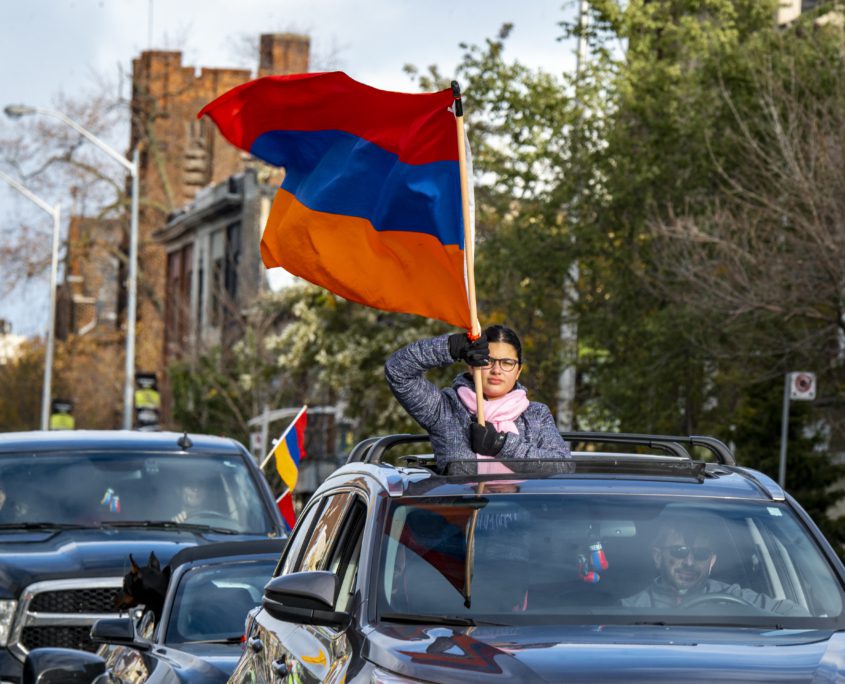
In the mountainous region between Armenia and Azerbaijan, a conflict has caused many to endure death, injury and poverty. The tension between the two nations has escalated to war, known as the Nagorno-Karabakh War, or the Artsakh War. Many Armenians have fled their homes searching for safety, but still have little or no means to protect themselves. Therefore, Non-Governmental Organizations (NGOs) and activists are coming to help and raise awareness.
The Artsakh War
For centuries, the mountainous region of Nagorno-Karabakh has caused tension between Armenians and Azerbaijanis. Artsakh is an important place for the two countries because of religious and strategic reasons. The Soviet Union drew out the borders of Armenia and Azerbaijan. In the late 1980s, the two nations first started the war. Armenians in Artsakh voted to be a part of Armenia, but Azerbaijan refused to accept the results. After 20,000 deaths, Armenians declared victory claiming the region; it called it The Republic of Artsakh. However, the United Nations member states do not recognize the Republic of Artsakh’s sovereign status, and thus, it remains part of Azerbaijan. Nonetheless, ethnic Armenians still claim autonomy, and for the most part, the two countries have been peaceful since the end of the War in 1994.
A New Outbreak
On September 27, 2020, violence erupted again in the region. Azerbaijan began with air and ground attacks on the Nagorno-Karabakh Line of Contact, the border that separated Armenian and Azerbaijani militaries. Consequently, thousands died, got injured or had to flee in search of safety. The Azerbaijani military made advances into Artsakh, eventually seizing Shusha, the second biggest city of Artsakh. Furthermore, the Azerbaijani control of Shusha made Armenian Prime Minister Nikol Pashinyan quickly agree to a cease-fire agreement with Azerbaijan.
Fears existed that the Azerbaijan military would take over Stepanakert, Artsakh’s capital. The fighting nations drafted the agreement for a ceasefire with Russian oversight to ensure Armenia and Azerbaijan end the Artsakh War, and on November 10, 2020, it was officially over. Azerbaijan still holds full control of Artsakh, and Russia is deploying peacekeepers to ensure a non-violent zone. Many saw the resolution as a victory for Azerbaijan and a defeat for Armenia.
Displaced Armenians
Of the more than 140,000 people that live in the Nagorno-Karabakh region, half experienced displacement because of the Artsakh War. Furthermore, women and children disproportionately had to flee for safety. Around 90% of women and children had to flee their homes and are now in dire need of assistance and help.
Mary Paronyan is an Armenian-American journalist. In an interview with The Borgen Project, she described how her community felt once they heard about the outbreak of violence in their homeland. “I do not wish to see history repeat itself; no Armenian does. The Armenian Genocide was happening all over again in front of our eyes. Seeing clips of Armenians getting beheaded, skinned to death and have their eyes pulled out affected our mental health. We all united as one big patriotic family. Not just me, but every Armenian outside of Armenia has a strong connection to our ancestral land.”
Paronyan, like many of her community, organized, protested and volunteered to raise awareness about the atrocities of the Artsakh War. Moreover, many NGOs immediately mobilized to help those in need.
3 Organizations Helping Armenians
The first NGO that stepped in to help those in need during this challenging time was OneArmenia. The organization supports many projects to elevate Armenian lives, such as employing women of the Artsakh region, helping wounded soldiers and providing nutrition to children who experienced the war. About 388 women have benefited from employment opportunities, 500 children now receive emergency food assistance and 300 veterans will soon get free quality rehabilitation care. Furthermore, OneArmenia has raised nearly $6 million to help fund projects that will positively impact Armenians.
Kooyrigs is another organization on the frontlines providing aid to those the war negatively impacted. Kooyrigs currently runs a grassroots campaign called Looys, or “light,” where it delivers food, medicine and clothing. Moreover, Kooyrigs is also partnering with YES Armenia to provide educational resources for the displaced population.
An NGO providing educational and leadership opportunities to Armenians is the Higher Road Initiative. As soon as the Artsakh War broke out, The Higher Road Initiative began to mobilize help and successfully provided aid to many families. Its Holiday Backpacks project for Artsakh provided over 4,000 backpacks to children who the war displaced. The backpacks contained school supplies, personal care items and clothing.
A Humanitarian Crisis with Hope
Since The Republic of Artsakh does not have international recognition as a nation, others cannot consider its people refugees. Thus, receiving aid and recognition from intergovernmental organizations like the U.N. is difficult. Nonetheless, it is positive that the Armenian Government has tried to make it easier for displaced Artsakh Armenians to integrate. Moreover, NGOs and civilians have taken a more active role to ensure that families are safe and receive proper assistance.
Paronyan states, “we grew during this war. We turned into one big family. Even though some of us didn’t know each other, we would cry for the loss of one another’s family member because we viewed it as our own. We can help one another by spreading kindness. That’s truly all that is needed. Kind actions will bring kindness forth to those who spread it. Life is extremely short.”
– Andy Calderon Lanza
Photo: Flickr

Examining Universal Basic Income in Kenya
Imagine if one received free money from the government every month, directly into their bank account with no one asking any questions. It may sound too good to be true, yet that is the main premise behind universal basic income or UBI. Universal basic income in Kenya is going a long way toward fighting the results of the COVID-19 pandemic.
What is Universal Basic Income?
With UBI programs, governments, organizations or private funders deposit direct cash payments to citizens monthly. These deposits occur regardless of status or circumstance with no strings attached. This means no interest and no expectation to recipients to repay the money. UBI programs intend to supplement or even entirely replace other financial social programs and help those struggling financially. The goal of this financial aid is to prevent vulnerable groups from falling deeper into poverty. In addition, it works toward alleviating national poverty on a wider scale.
The idea of universal basic income has long been under debate with skeptics insisting that providing free money to the impoverished would only lower the incentive to work, bankrupt any government who would give it an honest try and fail to address the root causes of poverty. While these criticisms are well grounded, UBI has nonetheless collected a growing base of supporters. Early supporters of a UBI program date back to the Enlightenment, including political activist and philosopher Thomas Paine and French general and emperor Napoleon Bonaparte. In more recent years, supporters have included Silicon Valley giants Bill Gates and Jeff Bezos and South African billionaire Elon Musk. Others range from author Milton Friedman to Pope Francis.
UBI in Practice Globally
Perhaps surprisingly, countries all over the world have experimented with UBI programs. What may come as an even bigger shock is that it has been in use in the United States for the last four decades. Since 1982, Alaska has implemented the Alaska Permanent Fund, an investment fund that disperses a dividend of anywhere from $1,000 to $2,000 to every Alaskan resident including children. The results have virtually eliminated extreme poverty in the state. Extreme poverty refers to those living on $2 or less a day.
Outside of North America, UBI programs have undergone implementation in every continent except Antarctica, from Brazil to Japan with a varying degrees of success. This highlights the widespread capabilities and applications that are possible with basic income systems. However, 2020 introduced a new variable to the theory of UBI. How would a basic income system affect communities dealing with the adverse health and economic effects of a global pandemic?
UBI and COVID-19
The longest-running and most ambitious attempt at a universal basic income system is currently underway in Kenya. Since 2016, nonprofit GiveDirectly has been sending direct cash payments to more than 14,000 households in the Siaya and Bomet Counties of Kenya. The mission is to continue the program through 2028. In doing so, it will collect decades worth of data on the effects of UBI on poverty-stricken communities.
However, the unprecedented arrival of COVID-19 has brought disastrous effects to Kenya’s economy and will likely send millions into poverty. The unpredictable addition of a global pandemic has enabled researchers to examine the effects of an established universal basic income infrastructure. This situation provides invaluable insight into how a basic income system might help vulnerable communities cope with a large-scale crisis.
Based in the Siaya and Bomet Counties of Kenya the program split the recipients of cash payments into four groups. These groups included long-term, short-term, lump sum and a control group. For long-term recipients, every adult for the duration of the 12-year program is to receive $0.75 per day. This amount sufficiently covers food expenses and basic health and schooling needs.
The short-term recipients received the same amount for basic needs, $0.75 per day, for two years. The third group received a lump sum that amounted to a one-time payment of $500. Finally, the control group did not receive any payments at all. This allowed an honest comparison amongst villagers to evaluate the significance that UBI payments had on individuals who received payments.
The Results
Those receiving universal basic income in Kenya experienced better food security and were less likely to report experiencing hunger in the past 30 days. This resulted in a widespread improvement in overall rates of hunger. Hunger rates fell from 68% to 57%, with the strongest improvements coming from the long-term group of recipients.
Looking at general health including mental health, UBI recipients showed promising results. Results indicated that payments reduced the probability that an individual would seek medical treatment. Furthermore, households were around six percentage points less likely to report that a household member was ill. Research also suggests that payments reduced hospital utilization, which helped preserve hospital capacity. Having the peace of mind that at least one stream of income would remain steady certainly played a factor in improving the well-being of Kenyan’s facing economic uncertainty.
Universal basic income payments helped individuals stay resilient through the devastating effects of COVID-19. Nevertheless, basic income is still far from a silver bullet for fighting poverty. In Kenya, UBI was not effective at completely protecting recipients from economic hardship, and by nature, a UBI program will expose individuals to economic volatility and cannot guarantee complete financial protection.
However, payments allowed individuals a crucial advantage in holding on to basic needs such as food and healthcare in comparison to those without any basic income payments. This demonstrates that putting the infrastructure in place for universal basic income in Kenya can provide much-needed relief and security to citizens when they need it most.
– Andrew Eckas
Photo: Flickr
5 NGOs Working to Bring Power to Africa
In the digital age, access to the Internet has become a barrier to entry for much of society. Nowhere is this lack of access more prevalent than in Africa. Roughly two out of three Africans lack access to electricity, let alone the Internet. To address this staggering disparity in privilege in an age that the widespread use of electricity characterizes, several NGOs are working to bring power to Africa through a combination of innovative technology and locally-led distribution campaigns.
The Honnold Foundation
Founded by renowned rock climber Alex Honnold, The Honnold Foundation aims to promote equitable access to power worldwide. While the organization does work both domestically and abroad, many of its projects in Africa have focused on the distribution of solar lanterns and pay-as-you-go energy programs. These programs provide power to remote, off-grid communities. Through generous grants The Honnold Foundation has awarded to organizations such as The Solar Energy Foundation and SolarAid, the Honnold Foundation has provided clean, renewable energy sources to 12.3 million people. This has not only lit up a large swath of Africa but also eliminated the need for expensive and environmentally-harmful alternatives such as kerosene lamps. Additionally, the Foundation has provided solar power to 165 Ethiopian schools and 35 health centers, as well as more than 2,000 households.
Sustainable Energy for All
Sustainable Energy for All, or SEforAll, is an independent international organization. In partnership with the United Nations, it works to promote access to sustainable energy across the world. In Africa, SeforAll’s “Electricity for All in Africa” program is using a top-down strategy to alleviate regional energy poverty. SEforAll’s focus is threefold: first, it advocates for policy reform centered on the promotion of sustainable energy access for all, in conjunction with meeting sustainable development goals. The organization also utilizes a neutral platform to promote investment in sustainable energy in Africa. In addition, it accelerates the market for private sustainable energy companies and facilitates communication between companies and the public sector. In Africa, 44 countries have joined SEforAll’s initiative, with drastic long-term improvement expected in nearly all of them as more companies buy into the clean energy industry and countries adopt policy reforms.
Africa ICT Right
Many organizations are pushing valuable initiatives to bring electricity to remote and impoverished African communities. However, NGOs tackling the disparity in Internet access are less common. Africa ICT Right (AIR), is a nonprofit addressing the lack of Information and Communication Technology – or ICT – in Ghana. Some of AIR’s programs include projects to equip schools with computer labs and STEM teachers, programs to offer technological tools and learning opportunities to high school girls and innovative technological reforms in rural medical centers to reduce infant and maternal mortality. Above all, AIR based its mission on the following idea: not only does it benefit less affluent communities to have access to these technological tools, but it also allows the inclusion of diverse voices from areas such as Ghana.
Power for All
Power for All is an NGO that has dedicated itself to bringing power to Africans in rural areas through decentralized renewable energy sources. Rather than prioritizing one form of renewable energy, Power for All strives to promote a combination of different strategies to tackle increasing overall energy efficiency and availability. In addition to this goal, Power for All lobbies governments to reduce taxes on renewable energy sources. Furthermore, it incentivizes investors and banks to earmark funds specifically for the promotion of sustainable power sources.
ACRA
The Milan-based NGO ACRA is also spreading the benefits of electricity throughout several African countries through a variety of sustainable solutions, including the construction of small hydroelectric plants in rural areas. Organizations in Tanzania applied this strategy to a high degree of success. Plants turned over to local leadership and paired with education initiatives in the locales they power. What is particularly remarkable about ACRA’s programs is that it tailors them to the region in which they implement them. For example, ACRA’s hydropower programs in Tanzania work well in that region. However, in Senegal, ACRA has seen an even greater potential for the installation of solar panels to power remote communities.
The Push to Bring Power to Africa
The actions and goals of these NGOs point to a greater global appreciation for the value of integrating Africa. The work of these organizations will likely prove invaluable in bringing power to Africa. By incorporating Africans into the global economy, they better global communication networks with new and diverse perspectives.
– Kieran Hadley
Photo: Flickr
Organizations Helping the Victims of the Artsakh War
In the mountainous region between Armenia and Azerbaijan, a conflict has caused many to endure death, injury and poverty. The tension between the two nations has escalated to war, known as the Nagorno-Karabakh War, or the Artsakh War. Many Armenians have fled their homes searching for safety, but still have little or no means to protect themselves. Therefore, Non-Governmental Organizations (NGOs) and activists are coming to help and raise awareness.
The Artsakh War
For centuries, the mountainous region of Nagorno-Karabakh has caused tension between Armenians and Azerbaijanis. Artsakh is an important place for the two countries because of religious and strategic reasons. The Soviet Union drew out the borders of Armenia and Azerbaijan. In the late 1980s, the two nations first started the war. Armenians in Artsakh voted to be a part of Armenia, but Azerbaijan refused to accept the results. After 20,000 deaths, Armenians declared victory claiming the region; it called it The Republic of Artsakh. However, the United Nations member states do not recognize the Republic of Artsakh’s sovereign status, and thus, it remains part of Azerbaijan. Nonetheless, ethnic Armenians still claim autonomy, and for the most part, the two countries have been peaceful since the end of the War in 1994.
A New Outbreak
On September 27, 2020, violence erupted again in the region. Azerbaijan began with air and ground attacks on the Nagorno-Karabakh Line of Contact, the border that separated Armenian and Azerbaijani militaries. Consequently, thousands died, got injured or had to flee in search of safety. The Azerbaijani military made advances into Artsakh, eventually seizing Shusha, the second biggest city of Artsakh. Furthermore, the Azerbaijani control of Shusha made Armenian Prime Minister Nikol Pashinyan quickly agree to a cease-fire agreement with Azerbaijan.
Fears existed that the Azerbaijan military would take over Stepanakert, Artsakh’s capital. The fighting nations drafted the agreement for a ceasefire with Russian oversight to ensure Armenia and Azerbaijan end the Artsakh War, and on November 10, 2020, it was officially over. Azerbaijan still holds full control of Artsakh, and Russia is deploying peacekeepers to ensure a non-violent zone. Many saw the resolution as a victory for Azerbaijan and a defeat for Armenia.
Displaced Armenians
Of the more than 140,000 people that live in the Nagorno-Karabakh region, half experienced displacement because of the Artsakh War. Furthermore, women and children disproportionately had to flee for safety. Around 90% of women and children had to flee their homes and are now in dire need of assistance and help.
Mary Paronyan is an Armenian-American journalist. In an interview with The Borgen Project, she described how her community felt once they heard about the outbreak of violence in their homeland. “I do not wish to see history repeat itself; no Armenian does. The Armenian Genocide was happening all over again in front of our eyes. Seeing clips of Armenians getting beheaded, skinned to death and have their eyes pulled out affected our mental health. We all united as one big patriotic family. Not just me, but every Armenian outside of Armenia has a strong connection to our ancestral land.”
Paronyan, like many of her community, organized, protested and volunteered to raise awareness about the atrocities of the Artsakh War. Moreover, many NGOs immediately mobilized to help those in need.
3 Organizations Helping Armenians
The first NGO that stepped in to help those in need during this challenging time was OneArmenia. The organization supports many projects to elevate Armenian lives, such as employing women of the Artsakh region, helping wounded soldiers and providing nutrition to children who experienced the war. About 388 women have benefited from employment opportunities, 500 children now receive emergency food assistance and 300 veterans will soon get free quality rehabilitation care. Furthermore, OneArmenia has raised nearly $6 million to help fund projects that will positively impact Armenians.
Kooyrigs is another organization on the frontlines providing aid to those the war negatively impacted. Kooyrigs currently runs a grassroots campaign called Looys, or “light,” where it delivers food, medicine and clothing. Moreover, Kooyrigs is also partnering with YES Armenia to provide educational resources for the displaced population.
An NGO providing educational and leadership opportunities to Armenians is the Higher Road Initiative. As soon as the Artsakh War broke out, The Higher Road Initiative began to mobilize help and successfully provided aid to many families. Its Holiday Backpacks project for Artsakh provided over 4,000 backpacks to children who the war displaced. The backpacks contained school supplies, personal care items and clothing.
A Humanitarian Crisis with Hope
Since The Republic of Artsakh does not have international recognition as a nation, others cannot consider its people refugees. Thus, receiving aid and recognition from intergovernmental organizations like the U.N. is difficult. Nonetheless, it is positive that the Armenian Government has tried to make it easier for displaced Artsakh Armenians to integrate. Moreover, NGOs and civilians have taken a more active role to ensure that families are safe and receive proper assistance.
Paronyan states, “we grew during this war. We turned into one big family. Even though some of us didn’t know each other, we would cry for the loss of one another’s family member because we viewed it as our own. We can help one another by spreading kindness. That’s truly all that is needed. Kind actions will bring kindness forth to those who spread it. Life is extremely short.”
– Andy Calderon Lanza
Photo: Flickr
Green Shoot Foundation’s FASE Program
Reason for Action
The Philippines and Cambodia both heavily depend on the success of annual harvests to improve the economy. About 40% of Filipino citizens work in the agricultural industry. This industry contributes to around 20% of the GDP and 70% of total output in the Philippines. On the other hand, 22% of Cambodia’s agricultural work contributes to the GDP.
Although the agriculture industry is large, both countries face many difficulties. The Philippines lacks programs to ensure food security, connections to industries and efficient harvesting technologies. Furthermore, natural disasters such as typhoons and droughts damage agricultural facilities, supply markets and harm farmers themselves. Flooding also severely affects Cambodia. A massive flood cost around $355 million in damage to agriculture in Cambodia. Thus, the FASE program emerged to combat these harmful effects.
FASE in the Philippines
The Green Shoots Foundation collaborated with Gawad Kalinga to establish the FASE program in Southeast Asia. Gawad Kalinga is a nonprofit that aims to end international poverty in the Philippines. It works to provide education and employment opportunities to all citizens. Additionally, it has reached over 3,000 communities and fed over 100,000 students in schools through various programs. This organization has taken great steps in stabilizing the country’s workforce and economy.
The FASE program sends volunteers from the United States and England to the Philippines to provide training sessions. Volunteers teach people business and micro-financing information. Additionally, the FASE program provides platforms to inspire citizens to become entrepreneurs and support agricultural farmers.
Furthermore, incorporating a university on a farm allows farmers to obtain an education and promote their business. This program has supported over 1 million people and created over 300 jobs. Additionally, over 80,000 children attend school and 60 social enterprises have undergone establishment.
FASE in Cambodia
The Green Shoots Foundation has made a difference in Cambodia as well. The FASE program helped build the Agri-Tech Centre in North West Cambodia. Additionally, it focuses on environmental sustainability, training young children and preparing them for a future in the agricultural business.
Community-based Integrated Development is an NGO that works with the Green Shoots Foundation in Cambodia. Both organizations introduced the FASE program in Oddar Meanchey, a province in Cambodia. Furthermore, it provides training to improve agricultural opportunities and GDP. The Agri-Tech Centre has aided in establishing six sustainable enterprises as well.
In addition, the FASE program collaborates with the Agriculture Skills in Public Schools Project. The organizations discuss the most efficient farming styles to implement in the youth curriculum. Additionally, it creates irrigation systems and ponds to improve water accessibility and provide farmers with a suitable work environment. Children continue to learn farming skills to help improve the agricultural sector in Cambodia.
The Green Shoots Foundation and the Agriculture and Social Entrepreneurship program help advance agricultural sectors in the Philippines and Cambodia. Through support from the international community, the Foundation works to train and inspire citizens to become entrepreneurs. The Green Shoots Foundation continues to work to reduce international poverty and expand its influence in more countries.
– Sylvia Boguniecki
Photo: With Permission from Green Shoots Foundation
Tackling Child Marriage in Zimbabwe
According to UNICEF, child marriage is “any formal marriage or informal union between a child under the age of 18 and an adult or another child.” Although rates of child marriage have declined, the practice remains widespread. Unfortunately, child marriage impacts approximately one in five girls today. According to UNICEF, about 12 million child marriages occur each year. Consequently, more than 120 million girls may marry before they turn 18 years old by 2030. Child marriage in Zimbabwe is especially prevalent.
How it Impacts Children
Child marriage is a human rights violation. Additionally, it restricts girls from achieving their potential in education, social bonding, friendship, simple maturation and the right to choose a life partner.
Moreover, girls who marry young face great health risks. Dr. Nawal M. Nour, an Obstetrician/Gynecologist at Brigham and Women’s Hospital explains “child marriage is driven by poverty and has many effects on girls’ health: increased risk for sexually transmitted diseases, cervical cancer, malaria, death during childbirth and obstetric fistulas.” Many nations such as Zimbabwe are working to implement policies and programs to educate and ban the practice of child marriage.
Solutions
Zimbabwe banned marriage for children under 16 years old in 2016. As a result, the practice is on a steady decrease. However, child marriage continues to persist in most impoverished areas in the country.
Many low-income families choose to marry off their child due to a lack of income to support their basic necessities such as food and clothes. According to Girls Not Brides, many marriages result in some type of transactional agreement. Oftentimes, the husband gives the family money in exchange for their daughter. Unfortunately, many families use this money to survive.
Many organizations exist that are trying to prevent child marriage by creating safety nets that protect vulnerable families from the economic factors that predicate child marriage. Furthermore, young women are fighting against child marriage in Zimbabwe. In particular, one 17-year-old martial arts fan is showing girls that they have a fighting chance.
Vulnerable Underaged People’s Auditorium Initiative
Natsiraishe Maritsa started a taekwondo program called the Vulnerable Underaged People’s Auditorium Initiative to fight child marriage in Zimbabwe. Despite her limited resources, Maritsa was able to carve out a community of young fighters in the face of an oppressive system.
Young children gather at Maritsa’s home to practice taekwondo. She leads her people in drills and teaches them how to stretch kick and punch. After each class, they discuss the dangers of child marriage in Zimbabwe. Many cases of child marriage result in marital rape. However, Maritsa’s group sessions provide girls with a safe place to heal and reach catharsis. According to the Associated Press, she hopes to “increase the confidence of both the married and single girls through the martial arts lessons and the discussions that follow.”
Child marriage in Zimbabwe is a problem that continues to hurt communities in impoverished areas. Fortunately, many people are working to prevent these circumstances. The future for children in low-income households is steadily improving in Zimbabwe.
– Matthew Hayden
Photo: Flickr
Canadian Food Banks: Providing Meals During COVID-19
Food Insecurity in Canada
The 2019 Food Insecurity Policy Research report states that in 2018 one in eight households was food insecure. Moreover, in 2018, 4.4 million people ranged between marginal food insecurity (with roughly 1.5 million people), moderate food insecurity (with roughly two million people) and severe food insecurity (with roughly 500,000 thousand people) in those tiers.
Within the provinces, Nunavut reported the worst level of food insecurity at 57%, and the Northwest territories at 27%. The rest of the provinces, such as Yukon, faired a bit better at 16.9%, with the Quebec province being the lowest at only 11.8%. Additionally, 84% of those who reported food insecurity live in either Ontario, Alberta, Quebec or British Columbia.
Compared to reports in 2015-2016, food insecurity in the province of Nunavut rose roughly by 6% between 2017-2018 from 51% to 57%. In the Northwest Territories food insecurity rose by 7% from 20% to 27%, Yukon remained the same, British Columbia remained the same at 12% and Quebec went down 1% from 12% to 11%.
Food Banks’ Donations
In 2020, donations rose by approximately 5% in food banks across Canada, and they received over 24 billion pounds of food. It went up more than a million dollars compared to 2019, with a total of $24 million in food donations. In 2019, food banks received a total of $64 million of donations of all varieties, which was an overall decline from $54 million in total donations in 2020.
These statistics indicate 2019 was a drastically more prosperous year. However, 2020 saw an outflow of $56 million back to the people through other donated goods, money to other food banks and money donated overall back to the community. In contrast, 2019 only saw a $9 million return to the community.
In 2020, food banks had a higher return of goods back to the public than monetary donations, with over a $2 million difference. The demand is so high it begs the question of what is being done to help support food banks and Canadians in need.
Alternative Solutions for the Hungry
Canadians who may need to use food banks fall into several categories: people lacking the skills necessary for labor jobs within the Canadian market, the loss of well-paying blue-collar jobs, pensions not covering the basics, and inadequate programs to help those in serious need. Various reports have shown the several ways in which the Canadian government can better help those who are at risk of going hungry.
One way to address hunger insecurity is to increase investments in federal housing. Creating housing such as social housing that is controlled by the government results in capped rental prices, allowing vulnerable populations to pay rent each month at an affordable level. Addressing the higher levels of food security in the northern regions is another important goal. The Canadian Government should focus on areas such as Nunavut that have the highest rates of food insecurity.
Canada Child Benefit
Another way to provide more effective support to low-income families with children is to replace the current range of federal child benefits with a strengthened Canada Child Benefit. The Canada Child Benefit provides financial support to eligible families that have children under the age of 18. While the benefit does support households to a degree, it has not been seen as nearly enough. Moreover, the more funding given to families in need, the less likely they are to be food insufficient.
Thanks to the work of the Canadian food banks, thousands of people can enjoy hot meals. However, a sustainable solution to food insecurity must also include other solutions and government programs to eradicate hunger in Canada.
– Claire Olmstead
Photo: Flickr
Tegla Loroupe: Kenya’s Champion for Peace Through Sport
The Tegla Loroupe Peace Foundation
Loroupe says that she grew up surrounded by conflict. All around her, she saw violence at the hands of warring tribes in Kenya, Sudan, Uganda and Ethiopia. In these regions, many tribes depend upon livestock farming to stay afloat. However, resources like food and water can be scarce. This leads to violence among the tribes and what people know as rustling: the stealing of cattle. Many tribes resort to the use of force as they otherwise risk falling into severe poverty.
In 2003, Loroupe founded the Tegla Loroupe Peace Foundation (TLPF). She wanted an end to the conflict between the tribes and sought peace through sports. Loroupe based the foundation on three pillars: peacebuilding, education and supporting refugee athletes.
Tegla Loroupe Peace Race
A hallmark of the TLPF is the Tegla Loroupe Peace Race, a 10-kilometer run that hosts runners from warring tribes. They put their weapons down to compete in this race and build stronger relations with the goal of ultimately preventing further violence.
Loroupe says that the Peace Race had strong effects within just a few years. Deaths from fighting between tribes drastically reduced and people have reached a better understanding of one another. Further, many warriors surrendered their weapons for the sake of peace.
In an interview with The Borgen Project, professional soccer player, Lucky Mkosana of Zimbabwe, agreed that “sports definitely contribute a significant amount to world peace.” He highlighted how athletic competition creates positive exposure to other cultures and fosters “an environment where people can learn” about those from outside groups.
Growing up in Zimbabwe, Mkosana understands well that children having outlets like sports can open them up to opportunities. He is a founder of the BYS Academy, a soccer school for vulnerable youth in his hometown of Plumtree, Zimbabwe.
The Importance of Education
Another arm of the TLPF is the Tegla Loroupe Education and Peace School (TLE&PC). Here, children receive the opportunity to learn after experiencing displacement due to conflict. The school also acts as an orphanage for its students, giving them a safe place to call home.
As of early 2020, the school had 460 students and Loroupe hopes to eventually increase enrollment to 1,000 students. Recognizing the importance of a good education, Loroupe wants to ensure that all students have access to a good learning environment. Mkosana said that “talent is spread evenly but resources are not.” Loroupe’s academy makes an effort to provide resources to all.
Loroupe also says that improved access to learning can help reduce violence. Education creates opportunity, and without one, people do what they feel they must do in order to survive. With schooling, this need not be the case. People can create livelihoods for themselves and live without violence.
Heading the Refugee Olympic Team
More recently, Loroupe once again became the leader of the Refugee Olympic Team for the Tokyo Olympics. The Refugee Olympic Team first appeared in the 2016 Rio Olympics, which Loroupe also led.
Loroupe had experience working with refugee athletes at the TLPF so she was a clear choice to head the refugee team at the Olympics. The 2016 team comprised of 10 athletes, who Loroupe says, “reminded the world of the sufferings and perseverance of millions of refugees around the world.”
It was also important for refugees to see that these athletes were able to find success. There was hope for them and they can achieve their dreams just as the members of the Refugee Olympic Team had.
Looking Forward
Loroupe’s promotion of peace through sport through the Tegla Loroupe Peace Foundation has changed much in Kenya since its inception. Warriors are laying down their arms and children are obtaining educational opportunities. The story of the TLPF is a developing one, but from what it has accomplished so far, peace in Kenya is extending further than ever before.
– Evan Driscoll
Photo: Wikimedia Commons
Virtual Learning for Colombia’s Indigenous People
COVID-19’s Impact on Colombia’s Indigenous People
In Colombia, the economic toll of the pandemic has hit the indigenous people of Colombia especially hard. Across Colombia, an estimated 1.5 million indigenous people account for 3.4% of the total population, according to the International Work Group for Indigenous Affairs (IWGIA).
The largest indigenous group in Colombia, the Wayuu people, live predominantly in the region of La Guajira in northern Colombia along the border of Venezuela.
The pandemic has been so detrimental to the indigenous people of Colombia because it has shut down the tourism sector and 90% of people in La Guajira work in informal sectors like tourism. At the same time, remote work or school is nearly impossible as only 10% of people have access to the internet.
Fundación El Origen: Virtual Learning
Fundación El Origen is trying to break the cycle of poverty by making virtual learning an option for all students and by focusing on other educational challenges faced by indigenous and rural youth living in La Guajira. Spanish is the official language in Colombia, however, estimates have determined that people speak 70 different indigenous languages in the country. This presents a challenge to indigenous students who may have grown up speaking a native language and then have to attend classes that teachers teach in Spanish.
To even the playing field for indigenous students, especially during the pandemic, Fundación El Origen has supplied students with tablets that offer instruction in their indigenous wayuunaiki languages. Roughly 260 children from the Wayuu tribe of La Guajira received tablets.
The tablets use a virtual learning program called O-Lab. This program teaches students in Spanish and in their native language. Moreover, it works without an internet connection.
“They have to adapt to an education system that was not made for them,” said Tania Rosas, executive director of Fundación El Origen, in an interview with The Borgen Project.
In Colombia, more than 100,000 kids dropped out of school during 2020, largely because of the financial hardships of the pandemic, Rosas said. The problem is daunting and organizations like Fundación el Origen can only help a small portion of students in need. So far, Fundación el Origen has brought online learning to 2,000 children and hopes to reach even more children in 2021.
Access to virtual learning is the latest education barrier but education is not a new fight for the indigenous people of Colombia or Fundación el Origen.
The Importance of Education for the Indigenous
“We have been fighting for many years to have the rights to our lands and have the right to access quality education for our communities,” Rosas said. Rosas sees education as the best way for Colombia’s indigenous people to have a voice in government and for an entire community to leave poverty.
“If we give them access to education programs to help them understand those problems and create solutions, we are eventually ensuring access to sustainable development in their communities,” she said. “We think that education is the best way to empower them and give them the tools to ensure sustainable development.”
– Laney Pope
Photo: Flickr
Tackling Postpartum Depression in Jordan
Social Media As A Promising Tool for Public Health
Agencies and relief programs have struggled to identify and develop effective intervention programs for risk factors associated with mental illness. Social media is increasingly used in Jordan, and its influence continues to rise. According to a Pew Research Center study on social media use in developing countries, 8 out of 10 Jordanian adults report using social networking sites- meaning that of the 8 people who use the internet, 94% are active on social media. These rates are higher than among even adults in the US, where only 69% use social networks.
One of the most predominant risk factors for PPD among Jordanian mothers is the lack of social support due to stigma. Social media is uniquely poised to provide social support and reduce feelings of isolation in post-partum mothers. This presents a key opportunity to alleviate the prevalence of postpartum depression in Jordan.
With the large presence of social media in Jordan, pursuing social media for mental health surveillance, research and prevention can be very efficacious. Recent innovative research has revealed social networking sites as a promising tool for public health. Using networking platforms and monitoring posts, postpartum changes and behaviors of mothers have been identified. Other noted uses include dimensions of emotion, social engagement, social network and linguistics patterns.
Observing and engaging mothers’ presence on social media presents an opportunity to use social media to identify women at risk of postpartum depression, which is significantly underreported among many populations. A survey study has shown that the adoption of social media sites can help postpartum women in developing countries to feel more secure and confident while seeking advice and information related to mental health struggles. Additionally, a California State University study revealed the positive impact on individuals that experience postpartum depression, finding that most participants reported social media offered emotional, informative and validating support.
Supporting Through Social Media
On the ground, organizations are making strides to relieve the prevalence of PPD in Jordan through social media. Via online platforms, Jordanian mothers can open up about their experiences. Mariella Suleiman is part of Postpartum Support International (PSI) – Jordan, an organization that provides resources, education and advocacy for research and legislation to support perinatal mental health. Recently, she spoke with the Borgen Project. She said, “Sometimes they [women] just don’t know what’s going on. Understanding what is happening [expiriencing PPD symptoms] and that that can be normal, is already a big relief.”d
PSI Jordan’s social media accounts are an easily accessible and effective way to distribute information. These accounts provide reliable services. Additionally, they offer a sense of support for mothers who may be fearful of opening up to close family or friends. Along with a team of volunteers and a local psychologist, Mariella leads support groups. There, they provide new mothers with a safe, non-judgemental space for them to open up about their mental health struggles. As PSI-Coordinator of Jordan, she started a Facebook and Instagram page and posts awareness videos. Moreover, she collaborates with local “mom bloggers” and celebrities to raise awareness of PPD and connect with mothers.
Mariella discussed the stigma surrounding maternal mental illness and postpartum depression in Jordan and the challenges of finding support with little existing access to therapy. This highlights the importance of support groups and facilitating dialogue for women to open up without fear of discrimination.
During COVID-19, feelings of loneliness and isolation are at their peak for mothers struggling with PPD and anxiety. However, PSI Jordan continues to shine a light on this issue and support these mothers via online video platforms. Mothers can attend every Saturday, and they discuss topics related to mental health and parenting while supporting each other. They continue to receive very positive feedback from the women involved. Mariella and PSI Jordan gave women the ability to organize themselves into a network that educates women about leaning on, supporting and empowering themselves and each other.
Looking Forward
When describing the positive impact of support groups, Mariella stated, “Just knowing that there are other moms there and then just listening to each other- it makes a big difference.” Social networking sites such as Facebook and Instagram can complement the work of organizations. By using online community support groups to connect, mothers experiencing PPD can provide each other with support systems. Providing access to support groups through social media is a key approach that can help struggling mothers around the world.
– Samantha Johnson
Photo: Flickr
The Smile Foundation: Improving Education in India
Education in India
The National Sample Survey Organization’s 2017-2018 survey showed that roughly 30 million children aged 6-17 were not attending school. UNICEF reports that approximately 20 million children between the ages of 3 and 6 do not attend preschool. Between 2011 and 2018, literacy rates in India increased by 5.07%. However, in 2018, the female literacy rate in India was 70.3%, compared to the male literacy rate of 84.7%.
Access, availability and quality of education in India are some of the most prevalent barriers to combating poverty for vulnerable women and children in underserved communities. The exclusion of children from educational opportunities based on caste, socio-religious identification, gender and ability, facilitates even more marginalization and poverty for disadvantaged groups.
The Smile Foundation
Education in India, especially among rural communities, is a strong determinant for ensuring a chance of economic security and female employment. Thanks to the diligent work of the Smile Foundation, a nonprofit organization empowering change through education and awareness, disadvantaged women, youth and children have an opportunity to escape poverty and achieve economic security.
Santanu Mishra, the co-founder and executive trustee of Smile Foundation, refers to education as, “the great equalizer that opens new gateways and opportunities to improve the standard of life.” Mishra explains that poverty is a multifaceted state that can derive from a lack of quality educational attainment, in addition to the absence of certain knowledge, assets and opportunities. Acquiring an education in India can improve individual well-being while interrupting the generational and cyclical nature of poverty. “I believe that education is the key that can transform the story of an individual from trying to survive to thriving in life,” says Mishra.
Vision and Approach
The Smile Foundation came about in 2002 with the aim of making a positive contribution to society. Today, the organization serves more than 2,000 villages and slums in 25 states of India through welfare projects promoting education, healthcare, income and women’s empowerment.
The Smile Foundation believes that “Civic Driven Change” which upholds public responsibility to increase community-based engagement, is pivotal to achieve transformation. The organization has collaborated with local and international groups, institutions and public figures to bear global awareness and response. In 2010, the Smile Foundation produced, “I Am Kalam,” the first film created by a development organization, which premiered at the 63rd Cannes Film Festival, winning 17 national and international awards. The film addresses the issue and importance of child education as a tool to rise out of poverty.
Utilizing a “lifecycle approach,” the Smile Foundation aims to improve welfare by empowering children and families through meaningful education, healthcare and social skills. The Smile Foundation employs “Social Venture Philanthropy” — a concept which means connecting social investment plans to charitable giving by focusing on reach, sustainability, a culture of leadership and clear accountability. The organization’s Outreach model reaches rural regions, enabling deeper insight into obstacles of project implementation.
Mission Education
The Smile Foundation developed Mission Education (ME), a national program providing quality healthcare and education in India to over 232,000 underserved children since 2002. The ME program guarantees unbiased access to education through a four-step approach. This involves a focus on students, a focus on teachers, prioritizing an effective learning environment and community and stakeholder engagements.
“Education of girls also gets priority, with 51% of total beneficiaries being girls. This is done by bringing about an attitudinal change in the parents’ outlook toward education,” says Mishra. In 2019, 87% of qualified students who graduated from ME centers entered traditional schools and almost every ME teacher possessed sufficient academic training.
Going Forward
Amid COVID-19 challenges, the Smile Foundation has implemented personalized, virtual education plans to guarantee disadvantaged students an adequate opportunity to succeed. The Smile Foundation also utilizes socio-behavioral guidance and capacity-building opportunities for teachers to prepare students to become active members of society.
“I often say that our vision at Smile should be that one day we should not exist,” says Mishra. Mishra explains that the Smile Foundation intends to mobilize community-based action, sensitize global responses and perpetuate government accountability to achieve sustainable change and eventually become a bygone organization.
Improving Education in India
The Indian government has taken strides toward improving the education system but further measures are crucial to combat the pandemic-induced likelihood of increased out-of-school children rates. Mishra suggests that the government should prioritize family-based social and economic assistance to encourage parents to send their children back to school. Mishra believes that a synergistic approach works best. This involves support from NGOs, advantageous stakeholders, community programs and components of an effective learning environment. In combination, this produces the greatest results for providing children an equal opportunity to thrive in life and rise out of poverty.
– Violet Chazkel
Photo: Flickr