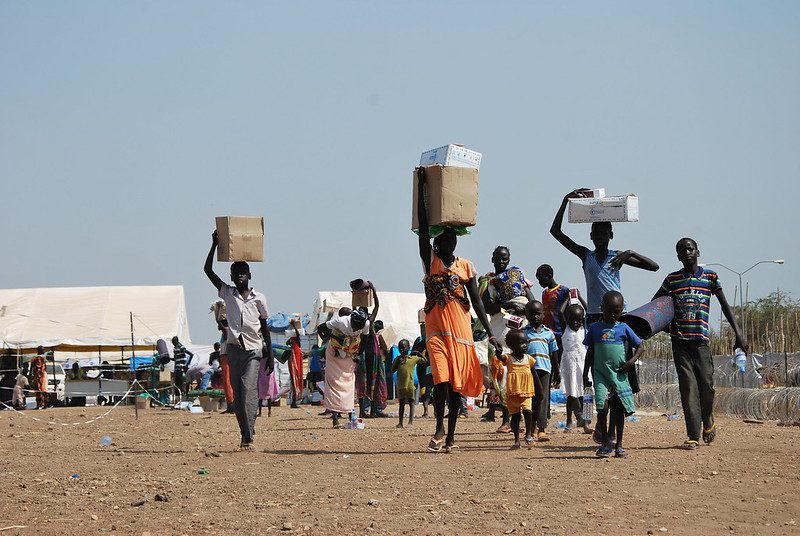
The term “Arab Spring” characterized a series of upheavals across the Middle East and North African regions (MENA) in which a surge of citizens defied their authoritarian governments. It all started in Tunisia in 2010 when a man set himself on fire in a demonstration against police corruption. Sudan joined the anti-oppression movement in an effort to eradicate oppression and poverty in Sudan soon after. Now, a decade and a new government later, the country finds itself in an ideal position to begin seriously addressing poverty in Sudan.
A Tragic History
For many years, the Sudanese have suffered the brutal dictatorship of an authoritarian regime. In 2003, Sudan People’s Liberation Army (SPLA) and the Justice and Equality Movement (JEM) took up arms against their government in Darfur. These groups launched attacks against government facilities and army facilities in an attempt to obtain more financial and democratic power for the citizens. The subsequent conflict became known as the Darfur Genocide.
Both Sudan’s government, headed by President Omar al-Bashir, and the movements that opposed it were non-Arab. This conflict led to the deaths of around 15,000 people and the uprooting of millions of citizens. Bashir created a country dichotomized into Arabs and Africans, as opposed to a country that acted as a home for all Sudanese people. These conditions laid the foundation for the Bashir administration’s oppression of the Sudanese people. In 2011, the stage was set for the Arab Spring in Sudan. As a result of these protests, violence erupted. Throughout, Bashir retained his presidency.
Economic Challenges
Poverty in Sudan and socioeconomic woes increased following July 2011, when South Sudan gained independence from Sudan after Africa’s longest-running civil war. Considering most oil fields prospered in the south of the country, the most significant price Sudan paid was the loss of oil profits. As a result, Sudan’s inflation went rampant, provoking major upset among the Sudanese. The younger generations found it exceptionally challenging to find a job. Instead of addressing these issues, Sudan used most of its resources for military purposes. Additionally, a drought worsened Sudan’s already restrictive agricultural policies.
The failure of the industrial labor market caused unemployment and poverty to spread. The absence of economic opportunity prompted Bashir to eradicate nearly all civil society organizations. As a result, human rights and labor units shut down. Conjointly, due to Bashir’s Islamic leadership, women experienced extreme restraints. Indeed, Sudanese people experienced their basic rights stripped from them and those they loved, leaving them with exceptionally limited freedom.
Poverty in Sudan prevailed when bread, a basic food, became unaffordable. Violence and economic struggles contributed greatly to the oppression of the Sudanese people. However, the loss of affordable access to the most basic aspect of life, food, triggered the people to rise up and demand change.
New National Solidarity
One catalyst driving the protests was the desegregation of the different factions of Sudan. New national solidarity arose in recent years with the hope of ending Bashir’s rule. It was no longer Arabs verse the Africans. One example illustrating this was the chants throughout the northern and southern parts of Sudan beginning in late 2018. Multi-ethnic protestors chanted “we are all Darfur” while Darfur’s protestors chanted “we are all Khartoum,” demonstrating solidarity across the different religions and ethnicities of Sudan.
As the protests gained momentum, many more joined in hopes of replacing the regime with a government that could recover some of the economic loss. Public opposition groups played a key role in even the poorest communities. This ensured that everyone’s voices were on display despite their economic status. Women also took to the streets to protest the mistreatment they had experienced over the years, proving that all segments of Sudanese society engaged and committed themselves to the revolution.
A Successful Revolution
Sudanese citizens again requested Bashir to resign, but he refused. The government reacted violently, murdering a number of protestors. This only served to further outrage and inspire demonstrators around the country. Finally, the opposition assembled peacefully outside Sudan’s military headquarters in Khartoum, the capital, demanding Bashir’s resignation.
Critically, the revolution attained military assistance despite the military being a fundamental pillar of Bashir’s rule. In the face of the massive scale of the uprisings, the military began wavering in its support of Bashir. Leaders eventually determined that self-preservation was the only choice, and the military deposed the dictator.
Sudan Today
Despite the success in overthrowing Bashir, poverty in Sudan remains a major issue. Some 36% of the population lives below the poverty line. Poverty in Sudan exacerbates other issues, resulting in approximately 1 million children experiencing global acute malnutrition.
Due to its perseverance, Sudan is experiencing rebuilding. Many organizations are addressing poverty in Sudan. The United Nations Children’s Fund (UNICEF) is assisting in the establishment of early childcare programs in Darfur, Sudan. Additionally, the organization is going through an appeal process to raise $211 million to assist in humanitarian efforts. Some of the targeted recipients include 7.4 million children and 2.5 million internally displaced persons. Another organization committed to aiding the next generation of Sudan is Save the Children. In 2020, it helped 374,000 children by addressing poverty in Sudan through nourishment, education, protection and crisis aid. Doctors Without Borders also aims to improve the severely-lacking health care in Sudan.
A Brighter Future
The Sudanese have always fought for human rights and against tyranny. They triumphed due to their tenacity, finally ending a dictatorship that lasted for 30 years. Now, with support from its international allies, Sudan is undeniably on its road to alleviating the effects of poverty.
– Tiffany Lewallyn
Photo: Flickr

About the Philippines’ Vaccination Drive
From November 29 to December 1, 2021, the Philippines vaccinated 7.6 million people in three days. This was part of a mass vaccination campaign called “Bayanihan, Bakunahan.” The intense Philippines vaccination drive exceeded expectations by about 200,000 vaccines. A second wave of the “Bayanihan Bakunahan” campaign ran later in December.
According to Our World in Data, the Philippines lags behind the global average for the vaccinated population. However, the Philippines vaccination drive shows a stark improvement from the beginning of the year. At that time, vaccines were scarcely available. The government hopes to have 77 million fully vaccinated. Filipinos by the end of the first quarter of 2022. Here are some facts about the Philippine’s mass vaccination program.
The Philippine’s Mass Vaccination Program
Lagging Vaccination During Philippines Vaccination Drive
Vaccination rates in the Philippines still lag behind the rest of the world. The pandemic pushed millions of Filipinos into poverty. The Philippines Statistics Authority reported 3.9 million more people living in poverty since 2018. Some blame the pandemic lockdowns. These reduced economic demands and therefore jobs. However, as a result of the Philippines vaccination drive, cases have been dropping so the government has been able to ease restrictions. While the Omicron variant may disrupt this progress, Philippine President Rodrigo Duterte has encouraged vaccination as the best protection against illness and death from COVID-19.
Expanding Vaccination Access
One next step for the Philippines is to expand vaccination across all population groups. Another step is to begin providing booster shots to the fully vaccinated. On December 22, the Philippines approved the Pfizer vaccine to vaccinate children aged 5-11. The government also recently shortened the interval between the second and third doses, which will allow people to receive a booster dose after three months.
The Philippines vaccination drive has increased interest in vaccination. This interest has kept many temporary vaccination sites opened during the drive stay open. With President Duterte’s adamant pleas for Filipinos to get vaccinated, similar vaccination drives will likely take place again and inch the country closer to herd immunity.
– Emma Tkacz
Photo: Flickr
How Women are Becoming Entrepreneurs in Liberia
Women who live in rural areas of sub-Saharan Africa are more likely than their male counterparts to suffer from poverty. These women are unable to achieve their full potential due to inequalities. Because of this and a lack of resources, women have no other choice but to live in poverty. Structural poverty affects women in sub-Saharan Africa. This poverty stems from the economic, social and political background of the country. In 2018, Liberia ranked 155th out of 162 countries on the Gender Inequality Index. Despite these challenges, many women are turning into entrepreneurs in Liberia through the help of the Bangladesh Rural Advancement Committee (BRAC).
The Situation
In rural areas of Liberia, women make up 60% of the population and stand as the backbones of the community. Despite continuous contributions to their families and the economy, women’s hard work rarely benefits them. Their work continuously goes unnoticed and bears no reward in the areas they live in. Agriculture and forestry are the foundations of Liberia’s economy. Women make up more than half of the agricultural workers. With no time for education, they end up vulnerable to the possibility of poverty. Household chores, caretaking and tasks such as fetching water, fuel and fodder take up the time of women.
How BRAC Helps Women Become Entrepreneurs in Liberia
With a mission to help, Sir Fazle Hasan Abed founded a nonprofit organization, the Bangladesh Rural Advancement Committee (BRAC), in 1972 to empower people in poverty. Its mission is to empower people and communities in situations of poverty, illiteracy, disease and social injustice. This humanitarian movement has had an impact on Liberian women. About 750 women in Liberia received training to help them overcome poverty as part of BRAC’s Ultra-Poor Graduation Program.
With a focus on women, the approach successfully aided 750 Liberian women in becoming microentrepreneurs. The graduation approach of the program provides “consumption support” at the beginning of the program until students can afford food, a safe place to store their savings, training according to their aspirations and asset transfer. Lastly, the students go through technical and life skills training.
Improvement is Possible
As of 2021, 90% of the Liberian households participating in the BRAC program have multiple sources of income, savings have increased by $9.14, average loan size jumped from $17.10 to $57.14 and the average nutritious meal consumed has grown as well. The improvements are all results of the power of women and the well-deserved push the program gave them. The once poverty-stricken women that lived on less than $1 a day are now entrepreneurs in Liberia with their own businesses. Other women run farms and breed livestock for a living. All it took was a helping hand.
The Importance of BRAC in Liberia
The purpose of BRAC programs is to reduce poverty — these initiatives serve as stepping stones for the betterment of Liberia. The effect of BRAC programs spans 12 Liberian counties and serves several other countries around the world.
BRAC programs alone have ensured that 23.9% of participants have access to adequate amounts of food and increased monthly income by 36.8% after two years. Aside from improving food security, BRAC also provides employment opportunities. Out of 494 BRAC staff members, 94% of them are Liberians and 30% of the management team are women. Organizations like BRAC are useful in providing education, jobs, empowerment and livelihoods to the community. Although BRAC Liberia only began in 2008, it is continuing its mission to reduce poverty in Liberia.
– Destiny Jackson
Photo: Flickr
Electricity Shortages in Tajikistan
Seasonal electricity shortages in Tajikistan are a common occurrence. This winter will be no different, as the government has drafted a plan for winter electricity rationing and the rural parts of the country have undergone electricity rationing since October 2021. These areas only have power from 6:00 a.m. to 8:00 a.m. and 6:00 p.m. to 11:00 p.m. This means during normal operating hours, businesses and public facilities are without electricity.
According to Radio Liberty, hospitals are not exempt from rationing either. Hospitals have to rely on diesel-powered generators due to not having access to electricity. However, not every hospital in Tajikistan has or can afford such generators, leaving staff and patients in the dark and medical equipment inoperable. Depending on the severity of the shortage, even facilities in the country’s capital, Dushanbe, could experience a loss of electricity, as it has in the past.
The Reason for Electricity Shortages in Tajikistan
The simplest explanation for why Tajikistan undergoes seasonal electricity shortages is the country does not have a great enough supply of energy to meet demand all year round. A major reason for this gap in supply and demand is Tajikistan relies heavily on hydroelectricity.
Hydropower is the country’s largest energy source. In 2019, Tajikistan had a hydropower supply of 69,012 terajoules, compared to its coal supply of 50,377 TJ. Its oil supply was 44,533 TJ and its natural gas supply of 8,122 TJ.
The problem is hydroelectricity accounts for 98% of Tajikistan’s electricity consumption, according to the Access to Green Finance Project. However, it is also a form of energy that fluctuates based on factors like a river’s volume or freezing. The volume of Tajikistan’s rivers like the river Vakhsh continues to decrease yearly in tandem with a decrease in rainfall. Energy demand rises in the colder months. Therefore, the country finds itself without enough electricity.
Sometimes, the electricity shortages end up not lasting for the winter, but for the entire year. Substituting hydroelectricity with different energy sources is difficult because the country needs to use coal and imported oil for purposes other than electricity. Moreover, Tajikistan exports a significant portion of its energy to countries like Afghanistan, according to the Access to Green Finance Project.
Solutions to Electricity Shortages in Tajikistan
The Rogun hydropower plant became partially operational in 2018. According to Radio Liberty, many people in Tajikistan believed the electricity shortages would end with this. Since the rationing will almost certainly continue into 2022, the plant becoming partially operational was evidently not enough to meet the country’s needs. However, hope exists that the shortages will come to an end.
After the Rogun plant has become fully operational, it will have an electricity production capacity of 3,600 megawatts. For reference, Hoover Dam’s capacity is 2,080 MW. This means Tajikistan should not only have enough electricity to consistently meet its needs, but it might also be able to export more energy to other countries. This would be greatly beneficial to the developing nation’s economy. Regardless, the Rogun plant is a much-needed development in Tajikistan’s energy sector since the old Soviet plants are becoming less economical.
For Now, Electricity Shortages in Tajikistan Continue
Enduring electricity rationing, the prices of coal, natural gas and firewood are high. The people of Tajikistan will experience immense hardship this winter. It will be up to the government and NGOs to support them through difficult times.
However, once the Rogun plant is fully operational, Tajikistan’s electricity shortages may be a thing of the past. People could have consistent access to electricity all year, every year.
– Nate Ritchie
Photo: Flickr
Reducing Hunger Rates in Madagascar
As the “fourth-largest island” globally, Madagascar holds a distinctive ecosystem. However, the country struggles with skyrocketing poverty rates and widespread hunger. Political instability and frequent natural disasters contribute to these circumstances. According to USAID, more than “a third of households lack adequate food at any given time of the year.” The World Food Programme’s (WFP) assessment on Madagascar indicates that about 1.3 million citizens face food insecurity in the nation. Considering these statistics, WFP calls on the international community to support the nation, stressing the importance of aid in times of crisis. Understanding the challenges that Madagascar and its people face, many international organizations are taking the lead to reduce hunger rates in Madagascar.
The Realities of Food Insecurity on the Ground
According to ABC News in November 2021, WFP warns that due to a four-year-long drought, “more than 1.1 million people” in the southern region of Madagascar require emergency food aid. Currently, about 700,000 are receiving food assistance. However, more aid is necessary to cover the needs of all people and reduce hunger rates in Madagascar.
According to Alice Rahmoun, WFP’s communications officer in Madagascar, due to the droughts and other extreme weather conditions, “harvests fail constantly, so people don’t have anything to harvest and anything to renew their food stocks.” Amnesty International indicates that more than 90% of people in the southern region of Madagascar endure poverty. As such, organizations are working tirelessly to prevent a famine crisis in Madagascar. However, there is an increasing need for more resources to reduce hunger rates in Madagascar.
In addition to droughts affecting crop production, sandstorms and pest infestations exacerbate the situation, making it difficult for farmers to farm or plant any food. With many people looking to cactus leaves and tubers as food sources and others digging for drinking water from the dry Mandrare River, the country is facing a crisis that justifies WFP’s concern of a potential famine.
Liafara, a Malagasy mother of five, told ABC News that children in the village cannot go to school because their hunger impedes their ability to focus. She explains further that her family has sold their possessions to acquire money for food, going as far as selling the front door to the house in a desperate attempt to provide food.
Hope on the Horizon
Despite facing extreme hunger in Madagascar, Loharano, a community leader in the village Tsimanananda, refuses to give up. The 43-year-old woman told BBC News that, with the lessons of a previous drought beginning in 2013 and the assistance of a local organization called the Agro-ecological Centre of the South (CTAS), she no longer fears hunger. CTAS teaches villagers about “drought-resistant crops and techniques to revitalize the soil” in order to improve food security.
Loharano, who now boasts a plot of land with diverse thriving crops, now imparts this information to other villagers, conducting small informal classes. Loharano has shared her produce with hungry neighbors and is thankful that her village is not facing the food crisis that many others face. CTAS has brought this work to 14 other villages in Southern Madagascar, benefiting as many as 10,000 households. However, the organization’s influence is finite and Loharano’s success highlights the need for more organizations like CTAS to step up and help their local communities.
Calls for International Support
Issa Sanogo, the U.N. humanitarian coordinator in Madagascar, stresses that “the world cannot look away” as “people in Madagascar need our support now and into the future.” Currently, the U.N. and its partner agencies seek about $231 million to fund humanitarian aid initiatives in Madagascar until May 2022. The U.N. has garnered about $120 million worth of funding so far. With the support of the international community, the U.N. can reach its target funding goal and prevent famine in Madagascar. Sanogo is calling “on the international community to show solidarity with the communities” in Southern Madagascar “and to put forward the funding that is needed to both prevent a humanitarian catastrophe today and enable people to become more resilient tomorrow.”
– Tri Truong
Photo: Unsplash
Developing Solar Power in Zambia
Zambia is a landlocked country in southern Africa that receives between “2,000 to 3,000 hours of sunshine per year.” The country benefits greatly from its location along the Zambezi and Kafue Rivers and has become highly dependent on hydropower, with hydroelectric dams providing more than 85% of its total energy in 2021. Unfortunately, recent droughts have led to prolonged blackouts and an increase in energy poverty across the country. To help combat this issue, the government is investing in a new source of renewable energy: solar power. Solar power in Zambia has the potential to transform the country’s economy along with the lives of citizens.
Energy Poverty in Zambia
The U.N. defines energy poverty as a lack of “access to affordable, reliable, sustainable and modern energy.” According to USAID, approximately 69% of Zambia’s 17.35 million citizens suffer from energy poverty. Energy poverty is an even larger issue for people living in rural areas — USAID estimates that 96% of rural citizens do not have access to electricity in 2021.
Energy poverty has significant negative impacts on individual homes, affecting education, health and even political participation. However, widespread energy poverty also affects the economy as a whole as it is nearly impossible for businesses to operate without power. Furthermore, a lack of power in the home presents a barrier for remote work and remote education. Implementing solar power in Zambia could be the solution.
When droughts began to cause extensive blackouts, ZESCO, the leading state-owned power company in Zambia, had “to raise tariffs by as much as 200%” in 2019 to afford the cost of importing power from South Africa. While this short-term solution prevented total economic collapse, the Zambian government quickly came to the realization that a more reliable source of renewable energy is necessary. The development of solar power in Zambia has the potential to sustainably lift millions out of energy poverty, improving the lives of individual citizens and jumpstarting Zambia’s economy as a whole.
The Transition From Hydropower
The Kariba Dam is one of Zambia’s largest hydroelectric constructions. When droughts hit in 2019, water levels at the dam “plunged to their lowest level since 1996,” causing nationwide blackouts. This prompted the development of solar power in Zambia as sunlight in Africa is a much more dependable source of energy than water. Furthermore, while the energy from large-scale hydroelectric dams is very centralized, smaller solar power grids can serve as decentralized sources, allowing for power to reach isolated rural communities.
In March 2019, President Edgar Chagwa Lungu introduced the Bangweulu Scaling Solar Plant to Zambia, a 54-megawatt power plant projected to lift 30,000 private homes and “several businesses” out of energy poverty. Following the inflated energy tariffs that power outages caused in 2019, the Scaling Solar Program was able to lower tariffs to $0.06 cents per kilowatt-hour, a much more affordable price for Zambians suffering from energy poverty.
By 2030, the government of Zambia hopes to increase its electricity generation to 6,000 megawatts. A single 54-megawatt solar power plant saves Zambia nearly $140 million in capital over 25 years, serving as a game-changer for the country’s economy. The expansion of solar power in Zambia will alleviate pressure on local water sources and allow for the rejuvenation of hydroelectric power plants. The Scaling Solar Program’s innovative projects put Zambia in an optimal position to capitalize on solar technology and improve the well-being of all citizens.
Looking Ahead
The continued development of solar power in Zambia is a pivotal way for the country to address energy poverty, especially in rural areas. Not only will this innovation revitalize Zambia’s economy but it will also improve health and education on an individual level. Overall, Zambia is in a prime position to reduce poverty and enhance the quality of life for all citizens through the power of the sun.
– Hannah Gage
Photo: Flickr
Government Repeals India’s Detrimental Farming Laws
Farming in India
India’s farming industry employs one of the largest agricultural workforces in the world and stands as one of India’s greatest providers of economic income. Rice alone earns the nation $8.82 billion, as reported at the end of the fiscal year 2020. According to World Bank data, “agriculture, forestry and fishing” contribute 18.3% to India’s overall GDP.
Small-scale farmers are vulnerable to “many production risks like drought, floods [and crop failure].” In addition, these small-scale farmers’ incomes are also vulnerable to market risks, such as “poor price realization” and an “absence of market.”
From July 2018 to July 2019, Indian farmers’ average income per month was ₹10,218 or approximately $135. This amount monthly means farmers can earn around $1,600 annually, with a margin for error to account for the received income in trades. This figure is the total of all earnings plus expenses.
India’s extreme poverty rate stands at about 7%, however, certain states, usually rural areas, face disproportionately high rates of poverty. For example, in Bihar, one of the most agriculture-dense states, poverty rates are the highest. Estimates indicate that 770 million Indian citizens are impoverished and live in rural areas where the farming laws had the most impact.
Impacts of India’s Detrimental Farming Laws
Modi’s intention was for the laws to allow farmers, specifically those working the smaller farms, to increase earnings by taking away government regulations and allowing easier access to business dealings with private businesses. The government wanted farms to increase dealings with private companies because most private businesses can pay higher rates and the government was willing to guarantee minimum prices. It may not have been the government’s intention, but the Indian government’s three new laws minimized profits for India’s farms in significant ways.
The three bills seem relatively straightforward but do not promise any immediate assistance or an apparent increase in income for farmers. One of the major changes promised was the ability for farmers to sell their products to any private organization. However, the laws did not enforce or extend the Minimum Sales Price (MSP) to those industries.
Before the changes, the MSP was guaranteed for many products from which the farmers often made their highest income. The MSP was the assured price for farmers when selling specific types of products directly to the government. Without the extension of the MSP, the power went to the private businesses. Still, the privatized businesses could buy the products for less than the products’ worth, dramatically undercutting the farmers’ income.
The major secondary change put more power into the hands of the consumers and buyers than into the hands of the farmers. This change left the farmers unable to alter contracts or expand on their average income from the private companies. The government did not repeal the MSP but limited how much it would buy from the small farms to encourage outside sales. At the very least, the farmers demanded a promise of the MSP. Without the MSP, the farmers knew they would lose significant income.
The Road Ahead
Now that the Indian government has chosen to repeal India’s detrimental farming laws, farmers are jubilant. The laws’ repeal passed through both Upper and Lower Parliament, and in doing so, has guaranteed the farmers the freedom to, at the very least, earn the MSPs.
Repealing the laws will have future implications for farmers and their demands of the government. During the year of protests, the farmers learned the extent of their political powers. The farmers account for more than 50% of the workforce and are one of the largest voting blocs in India. After their victory through protest, India’s farmers have become aware of their power and admit their plans to continue protests to place MSPs on other farming products.
India’s farming laws, including those repealed, do not include MSPs for products such as rice or wheat, which are the small farms’ most common and significant creators of income. MSPs on rice and wheat, and hopefully all produce, can significantly increase the average farm income, potentially lifting many farmers and farming communities out of poverty. The power is now back in the hands of Indian farmers and farmers are determined to make the most of it.
– Clara Mulvihill
Photo: PixaHive
Violence Against Women in Cameroon
As the COVID-19 pandemic continues to make headlines, several other global challenges have come to light as a result. Like with many widespread concerns, crises often intensify the reality of serious issues. This is true regarding violence against women in Cameroon. While violence against women in Cameroon has attracted more attention since the beginning of the pandemic, its existence far precedes COVID-19. However, it is important to recognize that the implications of the current global pandemic worsen the intensity of gender-based violence.
Growing Violence Over Time
Data from 2012 reveals that 51% of women in Cameroon faced some sort of physical or sexual violence in their lifetime. According to a 2019 research paper on gender equality in Cameroon, “56.4% of women in [a] union” face some form of violence. Furthermore, discrimination against women in Cameroon extends beyond gender-based violence. For example, 51.5% of women in Cameroon live below the poverty line in comparison to 39% of the general population. Moreover, 80% of women who live below the poverty line endure underemployment. Although COVID-19 is not a root cause of violence against women in Cameroon, it raises awareness regarding the severity of the matter. This growing global recognition draws attention to efforts addressing gender-based violence in the country and beyond.
WACameroon
Women in Action Against Gender Based Violence (WACameroon) began in 2005 as an organization centered around advancing human rights. WACameroon’s main focus is to advocate for a society in which everybody respects and upholds the rights of all. This includes improving the lives of impoverished women and other marginalized groups in Cameroon. WACameroon’s main objectives are:
WACameroon’s efforts have seen success. The organization was able to improve girls’ access to education and female school completion rates while mobilizing “men as partners in the struggle for gender equality.” In addition, WACameroon helped facilitate “access to productive resources [for impoverished women].” With regard to gender-based violence, in particular, WACameroon “empowers perpetrators of [gender-based violence] to become advocates of gender equality.” The organization also empowers women with the confidence and assertiveness to enforce their rights. In 2010, the organization gained international recognition: International Service U.K. presented WACameroon with an International Human Rights award for its work in empowering people in Cameroon.
Opportunity Moving Forward
Violence against women in Cameroon brings more than just physical harm. The lasting effects of gendered violence bring along psychological challenges that can last a lifetime. While addressing these problems requires considerable time and effort, increased support from global organizations is an essential first step in demonstrating that individuals are not alone in their struggles. With the work of organizations like WACameroon, there is a growing awareness of the urgency for resources and aid in addressing violence against women in Cameroon.
– Chloé D’Hers
Photo: Flickr
Tikkun Olam Makers Aids Minority Communities
According to the World Health Organization (WHO), 15% of people worldwide, roughly 1 billion, live with a disability. An estimated 80% of those living with disabilities reside in developing countries where lack of accessibility serves as a barrier for getting through everyday life. Moreover, these physical obstacles can lead to both social and cultural hardships. Luckily, Tikkun Olam Makers (TOM) is attempting to provide aid to disabled and low-income people.
Multidimensional Disabilities
While having a disability in itself can pose a challenge to individuals, there are other adversities as well. In developing countries, 90% of children with disabilities are not in school. In addition, women with disabilities often experience much higher rates of violence and abuse than women without impediments.
A 2004 study focused on girls and women with disabilities in India and showed that almost all had experienced physical abuse in their homes. Furthermore, 25% had experienced rape and 6% had undergone sterilization against their will. The fact that a mere 45 countries, primarily developed ones, have anti-discrimination and disability-specific laws has only made this reality worse. However, growing global movements have set out to change this status quo directed at the needs of minority communities.
Bringing New Technology to Age-Old Challenges
Tikkun Olam Makers (TOM) is a global movement based out of Israel dedicated to seeking affordable solutions for individuals living with disabilities in lower-income communities. TOM recognizes the power of technology and views it as a tool to help all people achieve access to affordable solutions for their disabilities. Tikkun Olam Makers has instituted 605 projects and delivered more than 213,000 products since its start in 2014. Tikkun Olam Makers addresses the needs of minority communities through a multi-step process:
Tikkun Olam Makers Captures Global Attention
TOM’s work has reached thousands of people in need. In November 2021, the organization took part in its first Global Innovation Challenge in Dubai. The organization presented its disability solutions alongside 50 others from more than 15 countries. Three teams from Tikkun Olam Makers received grand prizes for their innovations. One of these included the Talker Mount, a mechanism for individuals with cerebral palsy to communicate independently via a tablet. In addition, one other group from TOM also received an honorable mention.
As another year approaches, Tikkun Olam Makers intends to continue creating solutions for those with disabilities. Through support from people across the globe and strong investments in a better future, Tikkun Olam Makers is paving the way for such inventions to become normalized necessities.
– Chloé D’Hers
Photo: Flickr
The Arab Spring: Addressing Poverty in Sudan
The term “Arab Spring” characterized a series of upheavals across the Middle East and North African regions (MENA) in which a surge of citizens defied their authoritarian governments. It all started in Tunisia in 2010 when a man set himself on fire in a demonstration against police corruption. Sudan joined the anti-oppression movement in an effort to eradicate oppression and poverty in Sudan soon after. Now, a decade and a new government later, the country finds itself in an ideal position to begin seriously addressing poverty in Sudan.
A Tragic History
For many years, the Sudanese have suffered the brutal dictatorship of an authoritarian regime. In 2003, Sudan People’s Liberation Army (SPLA) and the Justice and Equality Movement (JEM) took up arms against their government in Darfur. These groups launched attacks against government facilities and army facilities in an attempt to obtain more financial and democratic power for the citizens. The subsequent conflict became known as the Darfur Genocide.
Both Sudan’s government, headed by President Omar al-Bashir, and the movements that opposed it were non-Arab. This conflict led to the deaths of around 15,000 people and the uprooting of millions of citizens. Bashir created a country dichotomized into Arabs and Africans, as opposed to a country that acted as a home for all Sudanese people. These conditions laid the foundation for the Bashir administration’s oppression of the Sudanese people. In 2011, the stage was set for the Arab Spring in Sudan. As a result of these protests, violence erupted. Throughout, Bashir retained his presidency.
Economic Challenges
Poverty in Sudan and socioeconomic woes increased following July 2011, when South Sudan gained independence from Sudan after Africa’s longest-running civil war. Considering most oil fields prospered in the south of the country, the most significant price Sudan paid was the loss of oil profits. As a result, Sudan’s inflation went rampant, provoking major upset among the Sudanese. The younger generations found it exceptionally challenging to find a job. Instead of addressing these issues, Sudan used most of its resources for military purposes. Additionally, a drought worsened Sudan’s already restrictive agricultural policies.
The failure of the industrial labor market caused unemployment and poverty to spread. The absence of economic opportunity prompted Bashir to eradicate nearly all civil society organizations. As a result, human rights and labor units shut down. Conjointly, due to Bashir’s Islamic leadership, women experienced extreme restraints. Indeed, Sudanese people experienced their basic rights stripped from them and those they loved, leaving them with exceptionally limited freedom.
Poverty in Sudan prevailed when bread, a basic food, became unaffordable. Violence and economic struggles contributed greatly to the oppression of the Sudanese people. However, the loss of affordable access to the most basic aspect of life, food, triggered the people to rise up and demand change.
New National Solidarity
One catalyst driving the protests was the desegregation of the different factions of Sudan. New national solidarity arose in recent years with the hope of ending Bashir’s rule. It was no longer Arabs verse the Africans. One example illustrating this was the chants throughout the northern and southern parts of Sudan beginning in late 2018. Multi-ethnic protestors chanted “we are all Darfur” while Darfur’s protestors chanted “we are all Khartoum,” demonstrating solidarity across the different religions and ethnicities of Sudan.
As the protests gained momentum, many more joined in hopes of replacing the regime with a government that could recover some of the economic loss. Public opposition groups played a key role in even the poorest communities. This ensured that everyone’s voices were on display despite their economic status. Women also took to the streets to protest the mistreatment they had experienced over the years, proving that all segments of Sudanese society engaged and committed themselves to the revolution.
A Successful Revolution
Sudanese citizens again requested Bashir to resign, but he refused. The government reacted violently, murdering a number of protestors. This only served to further outrage and inspire demonstrators around the country. Finally, the opposition assembled peacefully outside Sudan’s military headquarters in Khartoum, the capital, demanding Bashir’s resignation.
Critically, the revolution attained military assistance despite the military being a fundamental pillar of Bashir’s rule. In the face of the massive scale of the uprisings, the military began wavering in its support of Bashir. Leaders eventually determined that self-preservation was the only choice, and the military deposed the dictator.
Sudan Today
Despite the success in overthrowing Bashir, poverty in Sudan remains a major issue. Some 36% of the population lives below the poverty line. Poverty in Sudan exacerbates other issues, resulting in approximately 1 million children experiencing global acute malnutrition.
Due to its perseverance, Sudan is experiencing rebuilding. Many organizations are addressing poverty in Sudan. The United Nations Children’s Fund (UNICEF) is assisting in the establishment of early childcare programs in Darfur, Sudan. Additionally, the organization is going through an appeal process to raise $211 million to assist in humanitarian efforts. Some of the targeted recipients include 7.4 million children and 2.5 million internally displaced persons. Another organization committed to aiding the next generation of Sudan is Save the Children. In 2020, it helped 374,000 children by addressing poverty in Sudan through nourishment, education, protection and crisis aid. Doctors Without Borders also aims to improve the severely-lacking health care in Sudan.
A Brighter Future
The Sudanese have always fought for human rights and against tyranny. They triumphed due to their tenacity, finally ending a dictatorship that lasted for 30 years. Now, with support from its international allies, Sudan is undeniably on its road to alleviating the effects of poverty.
– Tiffany Lewallyn
Photo: Flickr
How HIV/AIDS in Africa Contributes to Violent Conflict
The HIV/AIDS epidemic remains a significant public health problem in southern Africa. In the last decade, infections have drastically dropped while awareness of HIV status and availability of treatment has increased. This progress aligns with the UNAIDS 90-90-90 goal. Meeting this goal means that at least 90% of people with HIV are aware of their status, 90% are receiving antiretroviral drug treatments and 90% are virally suppressed. Viral suppression means that the virus will not negatively affect a person and that that person will not be able to transmit it to another person. Some of the most HIV-afflicted countries in Africa have met and even exceeded the 90-90-90 goals. Eswatini has the highest HIV prevalence in the world today at 26.8%. It has reached 95% in all categories and is on its way to reducing new infections.
HIV/AIDS and Conflicts
Despite recent progress, international aid has been focusing on HIV/AIDS less and less, especially as the COVID-19 pandemic has become a more imminent global threat. Sub-Saharan Africa still has the highest rates of HIV/AIDS in the world. It is also one of the most conflict-ridden regions in the world.
HIV/AIDS has a history of destabilizing political and social institutions in countries and leaving them vulnerable to violent conflict. The International Crisis Group estimated that one in seven civil servants, including government employees, teachers and the armed forces in South Africa were HIV-positive in 1998.
How Does HIV/AIDS Affect Civil Servants in Africa?
Civil Servants
The impact of HIV/AIDS on civil servants in Africa has been immense. The disease affects vulnerable populations such as gay men, sex workers and young women disproportionately. However, it has also affected those who work as civil servants. Civil servants are integral to the functioning of governments. Without them, countries are vulnerable to conflict and violence. Furthermore, HIV/AIDS prolongs conflict in countries already experiencing it.
While there are many other causes of violent conflict, the breakdown of political and social institutions fueled by HIV/AIDS only exacerbates conflict. War can also be a vector for the further spread of the disease. According to UNHCR, both consensual and non-consensual sexual encounters happen more often during the conflict. Rape has been a weapon of war in conflicts in Rwanda, the Democratic Republic of Congo (DRC) and Liberia in recent years and has likely contributed to the spread of HIV.
Solutions
Combating HIV and AIDS is a very important step in stabilizing economic, political and social structures across Africa. USAID programs like PEPFAR have had a significant role in combating HIV and AIDS. PEPFAR has invested nearly $100 billion in the global AIDS response in various ways. Most notably, it has provided 18.96 million people with much-needed antiretroviral treatment.
PEPFAR also aids in prevention care. For example, it has supported more than 27 million voluntary medical male circumcisions as well as testing services for 63.4 million people. In 2012, there was a government campaign in Zimbabwe to promote circumcision, in which at least 10 members of parliament participated.
These campaigns and USAID programs have had tangible results. In 2013, a study by the South African National Defense Forces showed an 8.5% HIV prevalence rate among its soldiers, much lower than the 19% prevalence in the general population. Given the successes in decreasing HIV/AIDS infections across Africa, perhaps economic, political and social stability is to follow.
– Emma Tkacz
Photo: Flickr