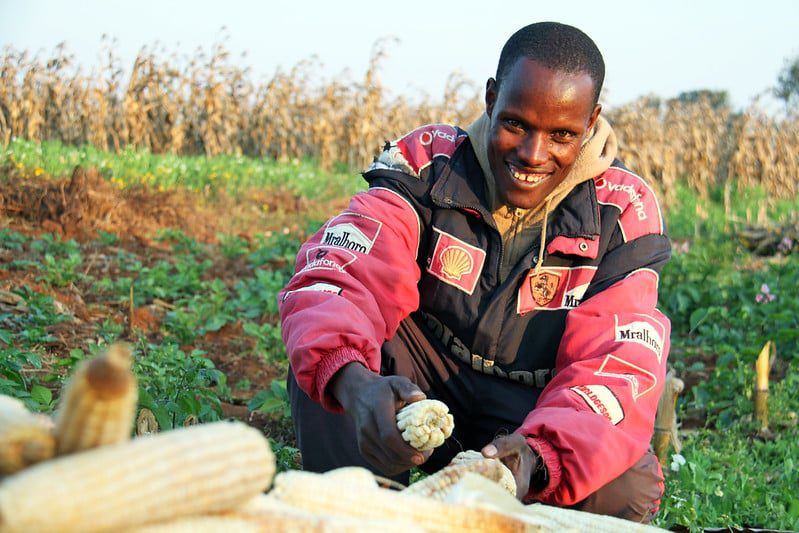
According to the World Bank, investment in agriculture is one of the most vital steps toward lifting entire populations out of poverty. Not only is the industry a hugely significant employer in many developing countries in Africa, but it also produces the vast quantities of food needed to combat food insecurity.
Adapting to climate-related environmental changes often requires finding innovative solutions, and the rapid expansion of agriculture technology in Africa offers some exciting prospects. Here are three countries that are using promising new tech to achieve this goal.
Seed-Bulking in Zambia
Zambia is a landlocked, largely rural country in southern Africa, and its agricultural sector makes up roughly 20% of its GDP. As in many African countries, Zambian farmers are large producers of cassava, a woody shrub whose root is an excellent source of carbohydrates. However, they were struggling to produce strong crop yields due to a lack of access to high-quality planting materials. The African Development Bank’s program, Technologies for African Agricultural Transformation (TAAT), had an idea to help solve this problem: seed-bulking.
Seed-bulking is a method whereby farmers keep some seeds from their target crop to grow in a controlled environment. This helps to increase seed production, which means that farmers can then grow more crops and increase their yield.
Fifty-eight seed-bulking farms opened across Zambia in 2020 as part of TAAT’s initiative. It projected that this would allow farmers to produce 43,500 tons of cassava root, which, once processed, would be capable of feeding more than 3.6 million people.
More recently in 2022, the African Development Fund approved a loan of $14.4 million, some of which will be used to provide seeds and fertilizer to Zambian farmers. Alongside the innovative practice of seed-bulking, this could see Zambia vastly improve its yields across all crops, including cassava, and help avoid food shortages resulting from high demand for exports from neighboring countries.
NIR Spectroscopy in Ethiopia
In Ethiopia, where agricultural products make up a whopping 80% of exports, rain is a crucial component of agricultural practices. Unfortunately, droughts have ravaged the country for several years in a row, depleting the soil of its nutrient content and making it harder to successfully grow crops.
Figuring out how nutrient-rich soil is can occur through trial and error, but in such pressing conditions, time and resources cannot afford to go to waste using this method. This is where near-infrared reflectance spectroscopy (or NIRS) comes in.
NIRS works by analyzing the amount of light that a material absorbs, which can indicate how much of a certain substance is within that material. This method can help judge the quality of soil based on what nutrients it contains, without requiring the use of environmentally hazardous chemicals.
Understanding the technology behind NIRS devices can be daunting for a layman, but using one is surprisingly easy, even for someone with no background in the sciences. According to AZoM, many models are portable, inexpensive and can provide reasonably accurate results in under a minute.
Despite all the positives, the use of NIRS devices has remained somewhat low as of 2021 – a paper published in the Agronomy Journal suggested that this is partly due to a lack of education about how important the nutrient content of crops truly is.
The use of NIRS devices has the potential to result in better-quality crops, for both people and livestock. Coupled with a public awareness campaign and investment in more NIRS devices, Ethiopian farmers could see more successful crop yields, enhancing their ability to feed their animals and themselves.
Smart Irrigation Systems in Nigeria
In the west African country of Nigeria, 36% of the labor force is employed in the agricultural sector. However, in 2020, a PwC report cited “outdated methods of agriculture” as a critical issue in the Nigerian agricultural industry.
There is definitely room for improvement – investment in modern agriculture technology in Africa as a whole would vastly improve efficiency and allow agricultural workers to produce larger yields. One such technique is irrigation, which is the process of supplying water to crops through channels in the ground; this way, farmers do not have to rely on rainfall to keep their crops growing. As of 2014, only 1% of Nigeria’s farmland was irrigated, according to the Malabo Montpellier Panel.
More recently, though, thanks to an initiative from the International Water Management Institute in partnership with the African Development Bank (ADB), 4,000 wheat farmers in Nigeria received training in effective irrigation technologies, as well as receiving “modern pressurized water conveyance-distribution system[s],” which ensure that less water is wasted during the irrigation process. Smart irrigation is not just environmentally sustainable – it reduces the number of time farmers need to be out in the field and provides improved water distribution to increase crop yields.
According to Further Africa, in August 2022, the Nigerian government approved an investment worth $24 billion for smart irrigation infrastructure. It should significantly reduce water consumption on farms and improve the ability of Nigerian farmers to produce large quantities of crops, a crucial factor in combatting hunger and lessening Nigeria’s reliance on food imports.
Looking Ahead
When it comes to agriculture technology in Africa, the sector is always evolving. Investment in new and efficient techniques and technologies is crucial, not only for adapting to the rapidly changing climates on the African continent but also for combatting the famine that occurs with these changes.
– Abbi Powell
Photo: Flickr

Reduce Poverty With Microfinance: UNRWA Helps Palestinian Refugees
In order to implement its programs to help Palestine refugees in the Middle East, the United Nations created the United Nations Refugee and Works Agency for Palestine Refugees (UNRWA) in 1949. UNRWA is working to help and protect all registered Palestine refugees in the area. The major part of the budget of UNRWA is coming from the U.N. Member States through voluntary contributions. UNRWA is a very unique agency as it is the first time that an organization has dedicated itself to helping a specific group of refugees for such a long time.
UNRWA is especially in charge to fight against poverty among the Palestine refugees. According to the numbers of the World Bank, more than 20% of the population of Palestinian territories are living below the poverty line of $5.50 a day.
For instance, in Lebanon, 70% of the active population of Palestine refugees living in the country did not have employment in 2019. Furthermore, the Palestine workers in Lebanon were the first victims of the crisis in Lebanon that occurred in 2019, as the Palestine workers were the first ones who experienced expulsion or a reduction of 50% of their wages.
Among the various tools that UNRWA uses to counter poverty among Palestine refugees and within the Palestinian territories, it utilizes its own Department focused on microfinance.
Microfinance, a Tool to Counter Poverty
According to the Cambridge Dictionary, Microfinance can be defined as “the activity or business of providing financial service to poor people or new businesses in poor countries.” As a matter of fact, microfinance services help organizations to support on a financial level poor people. Microfinance includes several financial tools such as loans and subsidies. With such financial resources, those poor people can improve their income as well as their livelihood. Indeed, they are using them for instance to create their own companies and cover their debts and so to have a new start in their life. This would only but allowing them to emerge from poverty to a more stable economic situation and ensure their financial sustainability.
When it comes to UNRWA, it established its own Microfinance Programme in 1991 in the city of Gaza to provide financial assistance to Palestine refugees but also to the poor and marginalized people among the locals. Then, the UNRWA Microfinance Programme was extended to the West Bank in 1994 and to Syria and Jordan in 2003 to help even more Palestine refugees and to reduce poverty with microfinance.
Microfinance is another tool that UNRWA uses to reach its goal entitled “A Decent Standard of Living.” This goal’s objective is to eliminate extreme poverty among Palestine refugees and marginalized groups in the Middle East and also to grant them new opportunities to develop their economic resources.
Microfinance, a Modern Financing Tool to Help Palestinian Refugees
The UNRWA Microfinance Programme developed many loans for Palestinian refugees and marginalized groups in the Middle East throughout the years. The goal was to reduce poverty with microfinance. Currently, the Programme has gathered nine different loans to help those in poverty implement small businesses and micro-enterprises or help families cover the education fees of their children.
About four of the nine loans focus on helping companies to grow and to create jobs. One of them is the microenterprise credit in order to help small businesses, less than five workers, which do not have access to credit. Another loan is the microenterprise credit plus, which aims to help small business to grow and develop. For small-scale companies with more than five workers, it is possible to ask for small-scale enterprise lending. The last loan within this category is targeting the owners of small-business by offering them some tips on how to develop their companies through small and medium enterprise business training, with donor grants paying for all costs.
Then, two of the nine loans are supporting the entrepreneurs by helping them with the creation and development of their startups. The Mubdarati – Youth Startup Loan is helping men and women between 18 and 30 to create their own businesses. The Start-Your-Business Loan Product provides funds to start-ups that people aged more than 30 years established.
The three remaining loans aim to help low-income families in covering costs for items like health care and education. The women’s household credit is supporting women in their daily life, helping them to establish activities that would generate income for them, which would help them increase household assets. As housing is an important right, UNRWA created the housing loan product to help poor families access property in 2006.
The last of the nine loans is the consumer loan product, which aims to help families pay for their children’s education or for health expenses.
The UNRWA’s Microfinance Programme’s Accomplishments
Since its creation in 1991, the UNRWA’s Microfinance Programme has granted more than 475,000 loans with a combined value of $531.41 million. Women have received 41% of this money and 28% has gone to youth since 1991.
Through those loans, the UNRWA is deeply involved in building a better economic situation for Palestine refugees in the Middle East and helping reduce poverty and unemployment with microfinance.
– Evan Da Costa Marques
Photo: Flickr
Indonesia’s Economy Prospers Despite Being Dubbed ‘Fragile’
Indonesia’s economy was a part of the “fragile five” emerging economies according to U.S. investment bank Morgan Stanley in 2013. Experts considered it to be the most vulnerable to any jumps in U.S. interest rates. However, Indonesia has remained surprisingly stable a decade later as U.S. interest rates have risen rapidly and a global energy, food and climate crisis are happening. With a booming economy and a stable political arena, Indonesia’s currency is currently performing the best in Asia. In addition, the country’s stock market is hitting record highs. As other countries in the region struggle to keep afloat, Indonesia prospers due to unique circumstances.
Indonesia’s Economy in 2022
The southeast Asian country, with a population of around 276 million, is extremely resource-rich. It has undergone impressive economic growth ever since the 1990s Asian financial crisis. According to the World Bank, Indonesia is not just the largest economy in the South-East Asian region but is also the 10th largest economy globally in terms of purchasing power parity. Since 1999, Indonesia has cut poverty rates by more than half to about 10% prior to COVID-19.
The COVID-19 pandemic caused a slight halt in the progress of Indonesia’s economy. For example, poverty rates rose from 9.2% in September 2019 to 9.7% in September 2021. Estimates indicated that the GDP growth of the country was 5.1% in 2022 as Indonesia recovers from COVID-19’s impact. One of the most significant impacts the pandemic had was on children’s learning capabilities. The pandemic resulted in the closing down of schools and could result in the stunting rate of the country increasing.
However, as of September 2022, Indonesia sees unprecedented growth and stability. The country has one of the lowest inflation rates in the world at 4.7% in August 2022, and the country’s GDP has expanded to 5.4%, much more than the amount that was estimated. With exports also increasing to 30.2%, the highest they have been on record, Indonesia’s economy stands in stark contrast to other countries in the region that have struggled with COVID-19’s impact.
Reasons for Indonesia’s Prosperity
One can credit the success of Indonesia’s economy to multiple factors:
Concerns for the Future
While Indonesia’s economy has remained stable, there are some concerns for the coming years. While the economy’s stability is not causing concern, the political factors are. Widodo’s lack of a clear candidate combined with the recent drop in his popularity due to cuts in fuel subsidies has raised concerns. Moreover, the country’s main commodity exports like coal are still a huge driving force behind the economy. Additionally, future commodity prices should drop. Many also predict an increase in inflation by October.
Despite such concerns, Indonesia has shown to be invulnerable to shocks like the COVID-19 pandemic and continues to outperform other countries in the region.
– Umaima Munir
Photo: Unsplash
5 Artists Who Use Their Platform To Speak Out Against Poverty
Today’s celebrities have a massive influence on a vast range of people. They are able to sway many people to support specific causes. Major artists around the world are using their platforms to speak out against poverty. Here are five celebrities aiming to alleviate global poverty.
5 Celebrities Aiming to Alleviate Global Poverty
Looking Ahead
The celebrities above are just a few voices in the sea of many that can speak out against global poverty. It is important to emphasize that one does not have to be a celebrity to influence people to take action against poverty; every voice matters.
– Madison Stivala
Photo: Flickr
The Impact of COVID-19 on Poverty in Australia
While the rest of the world became vulnerable to poverty during the COVID-19 pandemic, Australia showed a remarkable immunity to the pandemic’s effects on poverty. In fact, in 2020, Australia managed to reduce poverty by 50% and “significantly reduce income inequality.” As such, this Oceania country became a model for other countries. However, after 2020, Australia began to abandon the measures it implemented to protect people from poverty, worsening the impact of COVID-19 on poverty in Australia.
Initial Impact of COVID-19 on Poverty in Australia
Typically, poverty increases during a recession. However, this was not the case in Australia during the Alpha wave of the pandemic. A recent report released by the UNSW Sydney and ACOSS Poverty and Inequality Partnership in March 2022 highlights how Australia decreased poverty from March 2020 to December 2020.
Despite unemployment rates increasing from 5.1% to 17% and the gross domestic product (GDP) shrinking by 7% during the June quarter of 2020, the “average incomes of the lowest 80% of households” expanded from March 2020 to December 2020. More specifically, the average income of the lowest 20% income population increased by 8% and the middle 20% saw an average income increase of 11%.
In 2019, about 3 million people lived in poverty in Australia, but in June 2020, poverty affected 2.6 million people, which is about 50% less than Australia expected.
This is largely due to the Coronavirus Supplement, which is an additional top-up payment for people on welfare. It supplemented the JobSeeker Payment, which began in March 2020 as a government-issued support to help employers retain employees.
Because of the coupled efforts of the Coronavirus Supplement and the JobSeeker Payment, 9.9% of the population stood below the line of poverty in June 2020 compared to the 22.7% expected poverty percentage without further income support.
Poverty among people on JobSeeker Payment support also reduced sharply, dropping from 76% in 2019 to 15% in 2020.
How the Impact of COVID-19 on Poverty in Australia Reversed
During the Delta wave of the pandemic in 2021, Australia imposed lockdowns and “the effective unemployment rate” (individuals working no hours and people who exited the workforce) increased to 9%. This is because, by April 2021, Australia had eliminated both the Coronavirus Supplement and JobKeeper Payment. It introduced the COVID Disaster Payment in September 2021, but this support had a more narrow target — “80[%] of those on the lowest income support payment were excluded,” says UNSW Sydney. Subsequently, poverty rates increased by roughly 20% and income inequality rose along with it.
In September 2021, only 17% of “people under the lockdown on the lowest income support payments” received the COVID-19 Disaster Payment, which most likely left the remaining people, 765,000, in poverty. When Australia phased out the COVID-19 Disaster Payment, around 1.6 million people were on “lowest income support payments” — roughly “25% more than before the pandemic” in 2019.
The Government and Poverty
Australia’s response to the COVID-19 pandemic shows that the government can end poverty. As Dr. Cassandra Goldie said in an article by UNSW Sydney, poverty and income inequality grow because of government policies, but when governments introduce effective social policies, like the Coranavirus Supplement, poverty can also greatly reduce. By spending on essentials and sending out vital help, the government was able to keep people in jobs, softening the impact of COVID-19 on poverty in Australia. Thus, Australia’s unique situation during the pandemic reveals the power the government holds in exacerbating or ending poverty.
– Samyukta Gaddam
Photo: Unsplash
Infinited Fiber Ending the Cycle of Fashion Waste and Poverty
Infinited Fiber is a Finnish start-up company developing new clothing from old materials. The impact of waste management for textiles is more than $1 billion annually, and garment workers globally receive, at best, mediocre pay. Infinited Fiber strives to create longer-lasting clothes to reduce textile waste while paying garment workers appropriate salaries. Longer-lasting clothes will be more cost-effective for the individual and help with the more significant issues of fashion waste management and poverty, including the ever-rising costs in the clothing market.
Poverty in the Fashion Industry
Fashion waste and poverty are significant problems in the fashion industry that Infinited Fiber is tackling. Garment workers are incredibly subject to poverty while working in the fashion industry. There is an overwhelming wage gap between garment workers and their company’s CEOs. The Industry We Want, an organization fighting for fair wages for garment workers, found significant wage gaps between the workers’ earnings and what they should be earning. Globally, garment workers earn only about 55% of the wages they need to have a living wage.
Devastating Fashion Waste and “Fast Fashion”
“Fast fashion” is cheap, easy-to-produce fashion that often goes to waste quickly. Fast fashion is a sector of the fashion market that employs exceptionally cheap labor. This form of fashion marketing took over the global-fashion market when large-name brands like Zara and Forever 21 began expanding business operations. Fast fashion proved to be a profitable market, causing fashion industry markets to see substantial increases in generated income. Despite the promising outlook of fast fashion, due to the quick turnaround in products, the industry will likely see decreases of up to $52 billion in profits due to waste management and textile losses. Management for textile waste costs up to $100 billion annually.
One of the methods for waste management that will also cut costs globally for waste management is transforming the clothing production process. There are calls to improve recycling methods for textiles, beginning with policymakers. Textile recycling is an expanding market for investment in the fashion industry. As of 2021, the textile recycling industry had a value of $4.5 billion in 2021, with expectations for fast economic growth. Thankfully, textile recycling also reduces the costs of dealing with textile waste management. While textile waste costs continue to mount and landfills fill up rapidly, textile recycling benefits all involved by taking the wasted textiles, cleaning them and repurposing them workers create a new product. The repurposed textiles save money in landfill and textile waste management and create new job opportunities as textile recycling grows in popularity. Infinite Fiber’s goal is to end the cycle of fashion waste and poverty through textile recycling.
Infinited Fiber’s Goal to Ending the Cycle of Fashion Poverty
The company’s founder and CEO, Petri Alava, hopes the clothing the company produces will be low-cost for the consumer, long-lasting and reduce textile waste. The company creates “circular fibers” by taking old materials, cleaning them and breaking them down to a polymeric level. The process requires fewer chemicals and leaves less waste than the typical processes of fast fashion.
Infinite Fiber is partnering with large-name brands, such as H&M and Inditex. Inditex is Zara’s parent company and is known not to pay its garment workers a fair wage. As the company is expanding and creating its partnerships, Infinite Fiber is receiving significant investment opportunities that are proving beneficial to the company, and its workers, while spreading its influence of eliminating fashion waste and poverty.
Infinite Fiber recently signed a new deal to develop a partnership with Patagonia, a U.S.-based clothing retailer with operations worldwide. One of the keys to operating with Patagonia is that Patagonia implements safety precautions that many garment factories do not. Patagonia also pays its garment workers fair wages. The connections Infinited Fiber makes with companies like Patagonia prove its commitment to a “Fair Trade” life with improved wages and social and economic improvement is on the horizon globally.
Infinite Fiber’s work creating new textiles is becoming a global operation, presenting job opportunities everywhere the company reaches. In Brazil, Infinite fiber’s work to erase fashion waste and poverty involves taking wood pulp and turning it into new textiles. The company’s goal is to slash fashion waste and poverty that result from waste. Infinite Fiber is dedicated to improving the quality of the fashion industry, which comes with living wages for all workers, minimal waste, and job opportunities worldwide.
– Clara Mulvihill
Photo: Flickr
Economic Improvement in Asia: Improving Digital Skills for Millions of Women
Technological expansion facilitated a globalized community that improved industry and revolutionized society. There are, however, inconsistencies with the level of technological innovation that each country receives. Further inequalities in the field of technology exacerbate issues such as poverty and advancements in education and medicine. Many organizations make goals to advance the utilization of technology and work on economic improvement in Asia.
The Asia Foundation
One prominent organization that provides an inclusive environment for addressing issues related to gender equality, the environment and economic improvement in Asia is the Asia Foundation. The Asia Foundation began making an impact in the world in 1954 when several members from different sectors of society including leaders of corporations, university presidents and writers united to develop the unique organization.
The international nonprofit works primarily in the Asia-Pacific region through its 18 offices as well as its Washington, D.C. office and its headquarters in San Francisco, California. In 2021, the programs of the Asia Foundation provided direct support valued at $82.7 million.
The Upskilling Initiative
On September 9, 2022, the Asia Foundation announced its partnership with the U.S. Department of Commerce and the U.S. Office of the Trade Representative to begin the Indo-Pacific Economic Framework (IPEF) Upskilling Initiative. Participants include Brunei, India, Indonesia and the Philippines among others. The IPEF is a program that began in May 2022. The program hopes to facilitate economic improvement in Asia to become more connected, resilient, environmentally friendly and fair. The Upskilling Initiative is one way in which the program begins economic improvement in Asia through the implementation of digital skills training for women and girls.
The intention of the project is to expand the middle class by allowing women and girls the opportunities that promote this goal. The initiative is beneficial primarily because it includes partnerships between nonprofit organizations such as the Asia Foundation, governments such as the United States of America and U.S.-based companies such as Amazon, Apple and Microsoft. These private businesses will arrange digital skills improvement opportunities in IPEF countries through 2032. Concrete skills include training in innovative areas like artificial intelligence, cyber-security, business development and digital literacy and content creation.
Digital Literacy and the Economy
Increasingly, the ability to utilize technological resources relates to the improvement of the economy, which is why many organizations throughout Asia emphasize digital skills improvement as one step in economic improvement in Asia. According to the United Nations International Children’s Emergency Fund (UNICEF), digital literacy falls for those populations that are rural or those in the population minority, and digital literacy is lower for least developed countries in Asia.
Many young people in Asian countries state that digital literacy assists in skills development and education. Examples of the shortcomings of the lack of digitalization include the fact that 61% of South Asians do not use the internet despite installed infrastructure. Likewise, inequalities exist. For example, while Singapore experiences a high level of digital inclusiveness, more than 150 million people throughout South-East Asia are not able to use certain types of technologies. South-East Asia receives a ranking of fifth out of seven regions around the world for digital inclusiveness due to low scores on affordability and digital literacy.
The COVID-19 pandemic accelerated the rate at which the world uses technology to facilitate interactions among various communities. Economic growth in Asia and Southeast Asia is improving significantly with digitization with countries such as the Philippines and Malaysia leading the increase in e-commerce retail. The process reveals new opportunities, especially for the younger generation.
With continued input from partnerships such as the Asia Foundation and the U.S. Department of Commerce, countries in Asia will continue on the journey to improve the lives of the Asian population, especially women and young girls, to become a key player in the world economy.
– Kaylee Messick
Photo: Pexels
Agriculture Technology in Africa
According to the World Bank, investment in agriculture is one of the most vital steps toward lifting entire populations out of poverty. Not only is the industry a hugely significant employer in many developing countries in Africa, but it also produces the vast quantities of food needed to combat food insecurity.
Adapting to climate-related environmental changes often requires finding innovative solutions, and the rapid expansion of agriculture technology in Africa offers some exciting prospects. Here are three countries that are using promising new tech to achieve this goal.
Seed-Bulking in Zambia
Zambia is a landlocked, largely rural country in southern Africa, and its agricultural sector makes up roughly 20% of its GDP. As in many African countries, Zambian farmers are large producers of cassava, a woody shrub whose root is an excellent source of carbohydrates. However, they were struggling to produce strong crop yields due to a lack of access to high-quality planting materials. The African Development Bank’s program, Technologies for African Agricultural Transformation (TAAT), had an idea to help solve this problem: seed-bulking.
Seed-bulking is a method whereby farmers keep some seeds from their target crop to grow in a controlled environment. This helps to increase seed production, which means that farmers can then grow more crops and increase their yield.
Fifty-eight seed-bulking farms opened across Zambia in 2020 as part of TAAT’s initiative. It projected that this would allow farmers to produce 43,500 tons of cassava root, which, once processed, would be capable of feeding more than 3.6 million people.
More recently in 2022, the African Development Fund approved a loan of $14.4 million, some of which will be used to provide seeds and fertilizer to Zambian farmers. Alongside the innovative practice of seed-bulking, this could see Zambia vastly improve its yields across all crops, including cassava, and help avoid food shortages resulting from high demand for exports from neighboring countries.
NIR Spectroscopy in Ethiopia
In Ethiopia, where agricultural products make up a whopping 80% of exports, rain is a crucial component of agricultural practices. Unfortunately, droughts have ravaged the country for several years in a row, depleting the soil of its nutrient content and making it harder to successfully grow crops.
Figuring out how nutrient-rich soil is can occur through trial and error, but in such pressing conditions, time and resources cannot afford to go to waste using this method. This is where near-infrared reflectance spectroscopy (or NIRS) comes in.
NIRS works by analyzing the amount of light that a material absorbs, which can indicate how much of a certain substance is within that material. This method can help judge the quality of soil based on what nutrients it contains, without requiring the use of environmentally hazardous chemicals.
Understanding the technology behind NIRS devices can be daunting for a layman, but using one is surprisingly easy, even for someone with no background in the sciences. According to AZoM, many models are portable, inexpensive and can provide reasonably accurate results in under a minute.
Despite all the positives, the use of NIRS devices has remained somewhat low as of 2021 – a paper published in the Agronomy Journal suggested that this is partly due to a lack of education about how important the nutrient content of crops truly is.
The use of NIRS devices has the potential to result in better-quality crops, for both people and livestock. Coupled with a public awareness campaign and investment in more NIRS devices, Ethiopian farmers could see more successful crop yields, enhancing their ability to feed their animals and themselves.
Smart Irrigation Systems in Nigeria
In the west African country of Nigeria, 36% of the labor force is employed in the agricultural sector. However, in 2020, a PwC report cited “outdated methods of agriculture” as a critical issue in the Nigerian agricultural industry.
There is definitely room for improvement – investment in modern agriculture technology in Africa as a whole would vastly improve efficiency and allow agricultural workers to produce larger yields. One such technique is irrigation, which is the process of supplying water to crops through channels in the ground; this way, farmers do not have to rely on rainfall to keep their crops growing. As of 2014, only 1% of Nigeria’s farmland was irrigated, according to the Malabo Montpellier Panel.
More recently, though, thanks to an initiative from the International Water Management Institute in partnership with the African Development Bank (ADB), 4,000 wheat farmers in Nigeria received training in effective irrigation technologies, as well as receiving “modern pressurized water conveyance-distribution system[s],” which ensure that less water is wasted during the irrigation process. Smart irrigation is not just environmentally sustainable – it reduces the number of time farmers need to be out in the field and provides improved water distribution to increase crop yields.
According to Further Africa, in August 2022, the Nigerian government approved an investment worth $24 billion for smart irrigation infrastructure. It should significantly reduce water consumption on farms and improve the ability of Nigerian farmers to produce large quantities of crops, a crucial factor in combatting hunger and lessening Nigeria’s reliance on food imports.
Looking Ahead
When it comes to agriculture technology in Africa, the sector is always evolving. Investment in new and efficient techniques and technologies is crucial, not only for adapting to the rapidly changing climates on the African continent but also for combatting the famine that occurs with these changes.
– Abbi Powell
Photo: Flickr
5 Local Startups in Kenya that are Improving Living Conditions
Startups in Kenya are notable contributors to its economy, making up 30% of the national value. Home to more than 200 startups, Kenya is a regional leader in terms of a successful startup ecosystem, which is improving the lives of Kenyans by bringing modern and sustainable solutions to society’s biggest day-to-day issues. According to a 2022 report by StartupBlink, Kenya is amongst the top five startup ecosystems in the Middle East and Africa region and is third in Africa.
Startups in Kenya Increasing Capital
Kenyan startups broke their own records in the amount of funding raised yearly since 2019. In 2021, Kenyan startups had $291 million worth of investments in total. A major portion of investments goes to startups operating in financial tech, agriculture and energy industries.
With more than 30% of the population having access to the internet compared to 17% in 2017, Kenyans are able to reap more of the benefits tech startup companies bring. Government support to local tech startups began with the project of Konza Technopolis, a hub for tech companies just outside of Nairobi.
The idea for one of the first startups in Kenya emerged in response to the problem of insufficient systems set up for money transfers. For Kenyans working in the city to send money to their relatives in the countryside, the logistics of money transfers have always been complicated. Startups such as M-Pesa helped facilitate money transfers through mobile phones, eliminating the reality of a commute from the city to the countryside.
M-Pesa
M-Pesa allows Kenyans to use their mobile phones to keep and transfer money, without the need for the internet. Mobile numbers act as account numbers and transactions only need a SIM card to go through, making it more accessible to the communities without internet access. Essentially, M-Pesa’s goal is to achieve financial inclusion in Kenyan society.
Although M-Pesa came to life through the joint partnership of two well-established communication companies, the idea of M-Pesa emerged both from the companies and the Kenyan people to respond to a long-lasting problem that has occurred for a long time.
M-Pesa is currently available and used in 10 countries with 50 million active users in Africa. Analysts estimate the company’s value to be around $3 billion.
M-KOPA
With six global offices and more than 1,000 employees, M-KOPA came alive in 2010 with the dream of improving living conditions for Kenyans by making goods and services easier to attain. The company’s 2021 impact report shows that less than half the adults in Kenya have access to bank accounts, limiting Kenyans’ participation in the formal economy.
With limited access to financial institutions and tools, establishing a credit score becomes a challenge. M-KOPA provides a pay-as-you-go financial model for the ownership of tech products ranging from phones to solar energy home products like TVs and refrigerators. The enterprise further loans cash and an insurance plan called Hospicash.
The startup currently has 20 million customers in its network and has helped 75% of customers earn additional income by making pay-as-you-go devices available for their use to further support their enterprises. Besides finance-tech startups, retail and e-commerce startups in Kenya play a significant role as well, in improving livelihoods by facilitating the integration of sellers into the market.
Twiga Foods
The startup set off by facilitating the selling of bananas from farmers to retailers. The goal of the company is to lay out a durable and modern solution to the insufficient and inefficient supply chain in Kenya. By signing up for the software as a vendor, Kenyans can easily bring together their good with retailers with the facilitation of Twiga Foods startup. A solution as such brings food security to the people and real financial profit to the sellers struggling to safely put their goods on the market. Generating $50 million in income in 2021, Twiga is a great asset to the Kenyan economy.
Lory Systems
Launched in 2016, Lori Systems is an app providing logistics services and controlling haulage across markets. In Africa, more than 70% of a product’s cost is due to logistics, compared to 6% in a country like the U.S. Lori Systems aims to lower the cost of logistics which automatically lowers the cost of the product, making it easier to attain. Lori Systems operates in six countries in Africa and specializes in the transport of goods such as bulk grains, fertilizers, containers steel and bitumen.
Apollo Agriculture
Apollo Agriculture is an agro-tech company that assists small-scale farmers in maximizing their profits. Apollo combines all of a farmer’s requirements, including guidance, insurance, market access and finance for farm inputs in order to provide them with the services they need to grow their businesses and maximize crop productivity.
The startup uses satellite data imagery of farms and machine learning to run the process of determining a farmer’s credit score. Apollo Agriculture is rather new to Kenya’s startup ecosystem, as the company originated in 2016. About 30% of Kenya’s Gross Domestic Product (GDP) comes from agriculture, making agriculture a notable asset for the Kenyan economy. The creation of startups such as Apollo Agriculture is a big first step in improving livelihoods from the roots. Startups in Kenya raised more money in the first half of 2022 than they did in 2021, coming close to $1 billion, leaving a promising impression for the rest of the year and the future.
– Selin Oztuncman
Photo: Unsplash
Pneumonia Worsens Child Death in Honduras
Child death in Honduras is becoming a significant problem as a combination of factors is creating a crisis of poverty in the country. With the Central American country already being one of the poorest in Latin America as well as having the second-highest poverty rate in the LAC according to the World Bank data in 2020, the children of the country experience the brunt of this poverty. The most significant impact this rising poverty rate has had is pneumonia which has grown due to malnutrition, lack of safe water and sanitation and health care.
Poverty in Honduras: An Overview
Rising Cases of Pneumonia
The worsening poverty rates and resulting poor nutrition have resulted in an increase in child mortality rates in Honduras. One of the leading causes of child death in Honduras is pneumonia, which according to UNICEF is 16% of deaths of children under 5 years of age in 2019. The cause of the rising cases of pneumonia is the amount of malnutrition rising in the population due to the poverty crisis. With malnutrition comes a lack of safe drinking water, lack of sanitation and poor healthcare systems. Some parts of the country, such as the south region, are mountainous areas where finding safe drinking water is difficult and jobs are lacking.
These levels could rise as famine will likely hit the dry corridor of Honduras as well as Guatemala, El Salvador and Costa Rica. In an interview with The Guardian, Ramón Turcios, the southern regional director for the Ministry of Agriculture, places the blame for this rising poverty on the government’s lack of response to the droughts. Although The Guardian reported that the World Food Programme (WFP) is providing supplementary nutrition to children in the Vado Ancho region, many doctors and healthcare providers are concerned about the future. “I’m scared that, as a result of the drought, the situation will get worse and there will be more cases of pneumonia, especially in children under five,” said a doctor at a local health center in an interview with The Guardian.
Hope For the Future
While the future looks bleak, there is hope that Honduras might be able to tackle this crisis and help millions of children. The World Bank currently has 11 projects in Honduras that it has committed $814 million. These commitments aim to address sanitation, health care and food security. The World Bank has pledged $70 million to specifically provide water to the Dry Corridor. It is also working on a new Country Partnership Framework with Honduras as of April 2022. Honduras also partnered with UNDP in 2019 to tackle child malnutrition specifically. Although there are fears for the future, many international organizations are working with Honduras to abate the number of pneumonia cases and reduce child death in Honduras.
– Umaima Munir
Photo: Flickr
The Milaan Foundation Educates and Empowers Girls in India
According to the World Bank, the latest official estimates from 2011 indicated that almost 22% of India’s population lived below the national poverty line. The demographic most vulnerable to poverty is the 120 million adolescent girls in India who are more likely to discontinue their education at a young age and face child marriages. The Milaan Foundation in India recognizes these hardships and helps young girls secure their futures in education and outside of child marriages.
Issues Young Indian Girls Face
Women suffer discrimination and gender-based violence at notable rates in India. According to the National Crime Records Bureau of India, “every hour, at least two women are sexually assaulted and every six hours, a young married woman is beaten to death, burnt or driven to suicide.”
The results of this discrimination have led to deteriorating mental health, high poverty rates and isolation. These gender-based issues start at a young age and are costly for a young girl’s education. According to UNICEF, about 43% of Indian girls have discontinued their secondary education early due to an array of reasons, with child marriage having a significant influence.
India has a significant number of child brides, with about 1.5 million Indian girls committing to marry before the age of 18. Of these girls, 7% are under the age of 15. These child brides lack the maturity and development to handle marital duties, yet their parents see no alternatives, often because marrying off daughters eases the economic burden on the family.
While child marriages appear to be the route toward security and stability, many girls end up enduring early pregnancies. Nearly 14% of adolescent Indian girls in both rural and urban areas have begun childbearing. These pregnant girls’ lives and health are at risk because young mothers are more susceptible to maternal mortality and complications during childbirth.
The Milaan Foundation in India
The Milaan Foundation in India originated in 2007 to aid impoverished girls between the ages of 12-18 regardless of religion, color or caste system. The organization prides itself on having a diverse team with 60% of its board members and 90% of its team members being women from all walks of life.
Partnering with more than 40 organizations and donors, the organization focuses on four goals: continuation of secondary education for girls, prevention of child marriages, prevention of gender-based violence and adolescent health. Overall, the Foundation has impacted more than 40,000 adolescents in four different Indian states.
The Milaan Foundation and Education
The Milaan Foundation consistently encourages girls to continue their secondary education through its Swarachna School. The school is purposely placed in the Sitapur district as 84% of the district’s population lives in poverty. The school currently educates 350 children, all with a passing rate of 100% in 12th-grade board examination classes. The 12th-grade board examinations, also known as the SSC, are crucial for students in India looking to reach higher education and apply to universities.
The Milaan Foundation’s Girl Icon Program
The largest program funded by the Milaan Foundation is its Girl Icon Program. Founded in 2015, the Girl Icon Program is a girl-led leadership program that encourages Indian girls to speak out, spread awareness of gender-based issues, diversify their skillsets and become independent. Indian girls who pass through the program are called Girl Icons with duties to inspire and evoke change.
For example, Kushboo Rasheed, a 2015 Girl Icon, went out into her neighborhood and coaxed parents who doubted the value of education to send their children to school. In the end, she recruited 20 kids to attend school and also tutored these children in her spare time to ensure that they did not fall behind. Rasheed shows the program’s domino effect: Girl Icons learn, they thrive, then, they recruit more Girl Icons who do the same.
So far, the program has implemented 953 social action projects and impacted more than 10,000 adolescent girls, 375 of whom have become Girl Icons. In 2021, all of the Girl Icons continued their secondary education and 80% looked to pursue higher education. As a result, 95% of girls delayed early marriage due to educational ambitions.
The Milaan Foundation and the Pandemic
Due to the coronavirus pandemic, 10 million Indian girls dropped out of secondary school. Despite the pandemic, The Milaan Foundation in India continued its Girl Icon Program, moving its classroom online from January 2021 to March 2021. The Girl Icon Program Virtual Leadership Training proved to be a great success as it reached 5,000 adolescent girls and awarded 201 education scholarships to its girl leaders to support their upcoming projects.
Outside of the Girl Icon Program, the Milaan Foundation has also provided medical resources across India. As the second deadly wave of the pandemic hit India in January 2021, the Milaan Foundation delivered more than 26,000 medicine kits and 39,000 medical consumables to those in need.
Future Visions
By 2030, the Milaan Foundation hopes to impact more than 10 million Indian girls and raise a new generation of girl leaders who leave the world better than they found it. The Foundation also plans on continuing to recruit more children for its Swarachna School and aims to host another Girl Icon Leadership Summit in late 2022.
– Blanly Rodriguez
Photo: Flickr