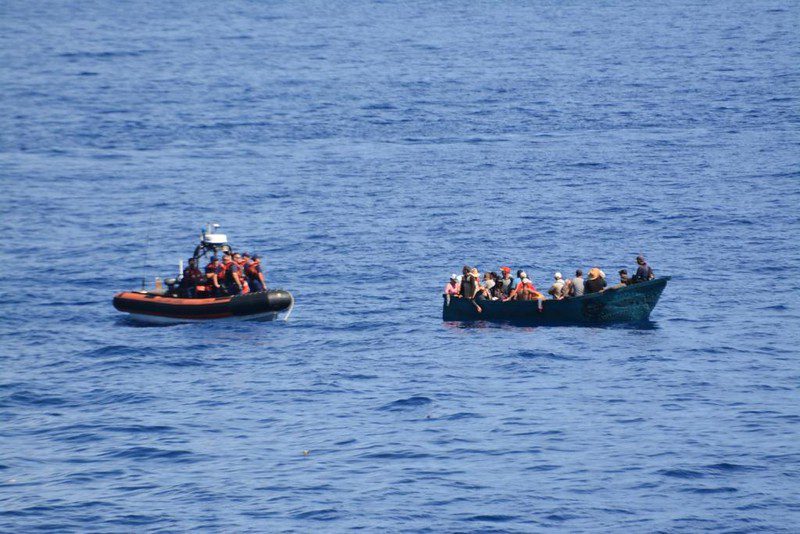
In March 2023, the U.K. government set out to implement its new solution to the challenge of small boat
Channel crossings, a route that at least 45,755 migrants used to gain entry into the country in 2022 alone. The new
Illegal Migration Bill could see asylum seekers who arrive in the U.K. through this route removed from the country, potentially impacting the legal and practical support available to victims of human trafficking in the country.
Human Trafficking and Migration in the U.K.
Human trafficking is a form of modern slavery that involves the exploitation of individuals through the use of force, fraud or coercion to entrap victims into manual labor or sex work. Traffickers use various
forms of violence and manipulation to entrap victims. And often, victims from vulnerable backgrounds fall for enticing promises only to find themselves facing the threat of violence once the charade is over.
As things stand, accurately quantifying rates of human trafficking is a challenge, but police records, reports and legal evidence all point to a
year-on-year increase in cases of human trafficking in the U.K. In fact, estimates suggest that human trafficking was responsible for the majority of the 130,000 victims of
modern slavery identified in the U.K. in 2022. In 2018, 6,993 potential victims of human trafficking, originating from 130 different countries, were identified in the U.K.
Migration and human trafficking are closely linked. And sadly, migrants are especially vulnerable to human trafficking for reasons including poverty, marginalization, language barriers and conflict. Traffickers actively prey upon vulnerable individuals, seeking out signs of economic, political and psychological hardship, as well as a lack of social support.
The Importance of Legislation
The vulnerability of migrants to human trafficking can be entrenched or alleviated by legislation. For instance, restrictive immigration laws that limit the legal movement of people into a country can force migrants to seek entry routes with higher levels of risk, including relying on smugglers and traffickers. The U.K.’s new Illegal Migration bill is an example of such legislation.
The Illegal Migration Bill stipulates stopping any migrant entering the U.K. on small boats across the English Channel from having their claim considered, constituting an effective ban on migration. Practically, this would extend to all victims of human trafficking who entered through this route. Between 2018 and 2022, 7% of migrants entering the U.K. on small boats claimed to be victims of trafficking and modern slavery.
So far, leading human trafficking organizations in the U.K. have raised concerns that the government’s plan would “needlessly block victims of trafficking and slavery from accessing safety and recovery.” Under the new legislation, victims of human trafficking who enter the U.K. through this route would be disqualified from the
National Referral Mechanism, which is the only national framework in place for identifying and supporting potential victims of human trafficking.
Alongside reducing protection and support for victims, stricter immigration laws may increase the profitability of human trafficking. A reduction in legal routes through which to enter the U.K. would likely drive people to rely on traffickers. Furthermore, the illegality of all small boat Channel crossings would tighten the hold that traffickers have over their victims as they can exploit migrants’ fear of criminalization and deportation. By denying any migrants who enter in small boats the right to identify as victims of crime, this bill could increase the hold that
traffickers have over victims and trap countless victims in unsafe, exploitative situations.
The Pushback
Anti-Slavery International is an organization working to combat detrimental legislation in the U.K. In 2009, it established the
Anti-Trafficking Monitoring Group (ATMG), a coalition of organizations that exists to monitor the state of the U.K.’s implementation of European anti-trafficking legislation. Since its establishment, the ATMG has successfully influenced legislation such as the Modern Slavery Act, supported the introduction of an Anti-Slavery Commissioner, supported the reversal of a decision to cut down the financial support given to victims of trafficking and ensured that survivors have long-term support from the government. Even more, by amplifying the voices of victims and survivors, the ATMG has made a significant impact in the U.K. and has ensured that legislation such as the Illegal Migration Bill cannot leave all victims ignored and unrepresented.
Reducing Human Trafficking in the U.K.
Aside from a focus on the legislature, there is already a solid foundation of support for potential victims and survivors of human trafficking in the U.K.
The Medaille Trust, a leading organization in the fight against human trafficking, takes a holistic approach that aims to reduce trafficking, encompassing prevention, protection and prosecution.
Prevention
The Medaille Trust emphasizes the importance of raising awareness about the risks and signs of human trafficking. Furthermore, one of its main goals is to support socioeconomic development among impoverished communities. By addressing the root causes of vulnerability to trafficking, such as poverty, the Medaille Trust empowers individuals to withstand and protect themselves against the efforts of human traffickers.
Protection
The Medaille Trust provides
comprehensive support to victims and survivors of human trafficking through the provision of legal, therapeutic and financial support. Through collaboration with law enforcement agencies, the organization improves arrest rates and offers accommodation for those rescued. In the longer term, the Medaille Trust provides supported accommodation and a specialized
‘moving on’ program that focuses on the resilience and well-being of predominantly female survivors.
Prosecution
The Medaille Trust actively contributes to the
prosecution of traffickers. The organization provides U.K. law enforcement agencies with monthly intelligence summaries about human trafficking, facilitates annual conferences for sharing best practices and works alongside survivors who are providing evidence to improve their chances of successful convictions. Through the work of advocacy organizations like the Medaille Trust, the U.K. has seen an increase in convictions for traffickers, a vital step toward
combatting human trafficking in the U.K.
Looking Ahead
Overall, legislation plays a crucial role in determining the level of protection and support afforded to victims of human trafficking. And the proposed Illegal Migration bill presented by the British government creates risks for victims of human trafficking in the U.K. as it threatens to strip all migrants entering in small boats of their right to claim support as victims of crime and exploitation. Despite these challenges, a diverse range of international and domestic organizations advocate intently for this vulnerable group, offering support to both survivors and potential victims. Moreover, organizations such as the Medaille Trust actively foster collaboration within the U.K., creating a united front against human trafficking and mitigating the increased risks presented by legislation such as the Illegal Migration Bill.
– Polly Walton
Photo: Flickr

Peru’s Indigenous Economy: Entrepreneurship is on the Rise
Supporting Indigenous Businesses
Businesses in Peru’s indigenous economy mainly focus on agriculture, tourism and the selling of cosmetics and handicrafts like jewelry, ceramics, textiles, etc. In recent years, the Peruvian government has increased its efforts to put indigenous businesses in the spotlight. This is significant since native-owned businesses tend to be overshadowed by non-indigenous ones. For instance, in 2022 the government hosted a training program in partnership with the Australian Embassy called “Growing Indigenous Businesses Through Trade.” It was funded by Australia’s Department of Foreign Affairs and Trade, in partnership with Treasury and the National Indigenous Australians Agency. The program covered topics such as exports, identifying markets, intellectual property rights, innovative business models and business pitches.
Funding Women-Led Entrepreneurship
In November 2022, the Ministry of Agrarian Development and Irrigation financed 15 different female-led organizations as a part of the “Rural and Indigenous Women Entrepreneurship Strategy” (RIWES). The money spent on each organization ranged from £12,844 to £31,467, and it came from the Rural and Indigenous Women Entrepreneurship Fund, which has been approved to continue on for 2023. A few of the winning organizations include Santa Rosa Moquegache Japo Women’s Association for Dairy Produce, Native Community Palma Real’s Association of Female Artisans and the Esperanza del Bosque Cooperative. These organizations are able to boost Peru’s Indigenous Economy by providing sustainable business opportunities for producers to increase their income.
NGOs Supporting Entrepreneurs
Besides the funding of entrepreneurship, the RIWES will develop programs on business plans, technical assistance and agricultural technology management. It is estimated that 4,700 rural and indigenous female entrepreneurs will benefit from the RIWES’s continuation in 2023. Several NGOs support indigenous entrepreneurship as well. Additionally, Awamaki partnered with eight women-led, Andean artisan cooperatives to help them launch their products successfully in the global market. They offer these cooperatives training on quality control, product development, financial management and business leadership.
Peruvian NGO AIDER stresses the importance of entrepreneurship for Peru’s indigenous economy, stating that it leads to social inclusion, economic security and quality improvement. Besides, indigenous leadership can help ensure the preservation of the environment’s natural resources and sustainable development. Many communities such as Callería, Roya, Junín Pablo, Buenos Aires, Nuevo Loreto and Pueblo Nuevo have officially committed to environment-friendly practices and obtained certification from the Forest Stewardship Council. Finally, the International Fund for Agricultural Development (IFAD) is an organization focused on improving the economic conditions of small-scale producers located in Peru’s northern and southern highlands region. With a total of 12 projects and an investment of 244.36 million dollars, the IFAD is estimated to have a reach of over 180,000 Peruvian households.
What’s Next?
The sustained expansion of indigenous businesses could translate into a major source of economic progress for Peru’s indigenous communities. Also, the fact that both national and international organizations, from governments to non-profits, are working to provide the necessary resources to help indigenous entrepreneurship grow suggests hope for more positive things to come.
– Luciana Mena
Photo: Pixabay
Child Poverty in Papua New Guinea: Health care and Education
Education
Only 35% of students complete primary school due to factors such as poor teacher training, low enrollment levels as well as the long and dangerous journeys many children have to embark on to get to school. A 2010 report found that the PNG government was failing to educate around 2 million elementary and primary school-aged children. This also carries into adulthood, with an estimated half of the population unable to read or write.
Improving Education
Health Care
The lack of access to basic health care impacts child poverty in PNG. Infant mortality rates and childhood malnutrition have been the highest in that region of Asia. Statistics have revealed that nearly half of children between 6 to 59 months suffer from stunting and 16% of children under the age of 5 are too thin for their height.
Improving Health Care
PNG’s neighboring country, Australia, has played an important role in supporting the health care systems. Also, with the help of World Vision International, Australia is helping to address child health care issues in PNG through a variety of routes. One solution the country has implemented is to increase education on nutrition and encourage more healthy eating driven by locally available ingredients. Through investments in health care, around 28,628 people in PNG have been provided with access to essential medical treatments.
Looking Ahead
Despite the challenges that children in PNG face, efforts are underway to improve their education and health care conditions. Initiatives supported by Australia and organizations like World Vision International are helping to raise education levels, remove barriers to school attendance and provide better teacher training. Additionally, investments in health care are addressing child health issues, increasing access to essential medical treatments and promoting nutrition education. These endeavors offer hope for the alleviation of child poverty in Papua New Guinea.
Photo: Flickr
Understanding and Addressing the Gender Wage Gap in Egypt
Consequences and Economic Impact on the Egyptian Economy
Social context influences labor market competition. In Egypt, women’s limited mobility, childcare responsibilities and masculine work environments hinder their job prospects and contribute to lower pay. The gender wage gap in Egypt has significant consequences on society and the economy. The wage gap exposes discriminatory practices in employment and wages, where women face disadvantages compared to men in earning income.
Furthermore, the World Bank (2021) reported that if female participation in the workforce increased, Egypt’s GDP could potentially grow by 34%. This demonstrates the untapped potential of women’s economic contributions. Women’s active involvement in the financial sector, particularly in executive and board positions, enhances the resilience and stability of the country. According to the World Bank, achieving Egypt’s Vision 2030 requires addressing the underrepresentation of women, especially at senior leadership levels.
Possible Solutions from a Governmental Aspect
The Egyptian National Council for Women (NCW) operates as an independent women’s machinery. The President of the Republic of Egypt affiliates the council, which ensures equal treatment of Egyptian women in political, economic, social and cultural aspects. Additionally, the NCW actively plans for women’s advancement. The NCW actively addresses the gender wage gap and promotes gender equality in the labor market. Furthermore, the NCW introduces Egypt’s Vision 2030, aligning it with the Sustainable Development Strategy to construct a fair and equal society.
In its report to the United Nations, the NCW outlined several measures, including the establishment of a gender-sensitive budgeting system and the development of an action plan to increase women’s representation in decision-making positions. Through entrepreneurship programs, the NCW economically empowered Egyptian women. In April 2022, the Shakia Governate program trained 136,000 women in project management, planning, marketing and entrepreneurship concepts, thereby facilitating networking and providing access to valuable services.
The NCW’s efforts to promote women’s empowerment in Egypt yielded visible progress. From 2015 to 2019, the unemployment rate for females decreased from 12.8% to 7.9%. Additionally, Egypt joined the Equal Pay International Coalition (EPIC) in 2018, committing to take action to close the gender pay gap by implementing policies, sharing knowledge and mobilizing resources.
Efforts from NGOs and International Organizations
Several international and non-governmental organizations have partnered with Egypt to address the gender wage gap and promote women’s economic empowerment. The United States Agency for International Development (USAID) has been working with the Egyptian government to strengthen women’s participation in the economy by supporting policies and programs that promote gender equality, such as microfinance initiatives and vocational training for women.
USAID empowers women to close the gender wage gap in Egypt by supporting their entrepreneurial ventures. Through initiatives like the Women Entrepreneurs Network and Tiye Angels, 600 successful women-led businesses have emerged since 2017. Additionally, USAID’s Business Development Service Centers have strengthened 650 women-owned micro-enterprises. The Association for Women’s Total Advancement and Development (ATWAD) is another organization working to empower Egyptian women economically. ATWAD provides training, advocacy and capacity building for women to improve their access to resources and opportunities.
Lastly, ABAAD, a regional NGO, aims to achieve gender equality in the Middle East and North Africa region. ABAAD works in Egypt to promote equal opportunities for women in the labor market and to eliminate gender-based violence, which is a significant barrier to women’s economic participation.
Looking Ahead
Efforts to address the gender wage gap and promote women’s economic empowerment in Egypt are gaining momentum. Initiatives led by the Egyptian National Council for Women, along with collaborations with international organizations like USAID and ABAAD, are making a difference. Progress has been seen in reducing female unemployment rates and increasing women’s representation in decision-making positions. With continued commitment and support, Egypt is on the path towards achieving greater gender equality, unlocking the untapped potential of women and fostering a fair and inclusive society.
– Tanya Hamad
Photo: Flickr
Stronger Women, Stronger Nations Program Empowers Women Survivors
Recovering from the destruction and horror of war remains an inconceivably difficult task for survivors worldwide. For women especially, getting back on their feet in an already disadvantaged world can seem impossible. Women for Women International is a nonprofit supporting women survivors of war by providing them access to connections, resources and educational programs. Its Stronger Women, Stronger Nations program specifically works to not only aid recovery but also advance women’s place in society in developing countries where many conflicts occur.
Women for Women International
Since its founding in 1993, Women for Women International has helped more than 500,000 women recover from war and reach self-sufficiency. Zainab Salbi was only 23 years old when she founded the organization, eventually distributing more than $100 million in aid during her time as the CEO. Foreign Policy Magazine has since named her one of the 100 Leading Global Thinkers.
However, she is not doing her work alone. Women for Women International has representatives working in affected countries across the globe, including the Democratic Republic of Congo (DRC), Afghanistan, Germany, Iraq, the United Kingdom, Kosovo, Bosnia and Herzegovina, South Sudan, Rwanda and Nigeria. Each country director distributes funds and facilitates necessary workshops to help survivors support themselves. Much of this work occurs through the nonprofit’s educational program, Stronger Women, Stronger Nations.
Stronger Women, Stronger Nations
Women for Women International is a self-described “learning organization” that goes “beyond charity to innovation.” As such, representatives for Stronger Women, Stronger Nations facilitate courses customized to every country’s specific social and economic profile. Throughout the year-long program, survivors are provided with a monthly stipend of $10, relevant vocational training, financial education and lifelong connections that leave them feeling stronger than ever.
The program begins with placement into a class of 24 fellow female survivors. Each class includes five social empowerment modules (Women’s Solidarity, Value of Women’s Work, Health and Wellness, Gender Equality, Rights and Decision Making and Women Influencing Decisions in their Community). A social empowerment trainer from Women for Women International leads it. The first month focuses on social networking and numeracy training, both in the local language and English. The next two months give the women time to reflect on their war-inflicted trauma as they begin to consider the value of women’s work. By the fourth month of the program, the women are learning to set and pursue financial goals. The fifth month begins a module on health and wellness, educating the women on hygiene, sanitation and local concerns like malaria. After that, they learn vocational skills of their choosing like tailoring and poultry-keeping.
The rest of the program continues this vocational education while additionally sparking discussion on gender equality, domestic abuse, motherhood and societal change. Women also learn business skills like budgeting, bookkeeping and organizational leadership. By the time their Stronger Women, Stronger Nations class concludes, they are fully equipped to start a business, impart change in their community and create more opportunities for their families.
Lasting Impact
This innovative program continues to catch the attention of international corporate partners including Bloomberg Philanthropies, Slip®, Hyatt Hotels, Charlotte Tilbury and Jimmy Choo. Aside from donating to the Stronger Women, Stronger Nations program, several companies have expanded their reach even further. In 2012, Hyatt created jobs for 50 program members in Iraq by having them sew laundry bags for its boutique Andaz Hotels. Cosmetics brand Charlotte Tilbury donated $2 from every sale of its Hot Lips collection in 2016. It later pledged $1 million alongside the release of the Hot Lips 2 collection in 2019. Jimmy Choo has sponsored 50 women from programs in Iraq, Rwanda and the Democratic Republic of Congo.
The effects of war remain long after a conflict resolves. Women for Women International believes that women survivors of war experience the most negative impacts, given the compounding societal factors that come with being a woman. Through its Stronger Women, Stronger Nations program, the nonprofit not only helps female survivors recover from the trauma of war but ensures that they become stronger mothers, entrepreneurs and community leaders.
– Rachel Rebecca Smith
Photo: Flickr
Human Trafficking in the U.K.
Human Trafficking and Migration in the U.K.
The Importance of Legislation
The Pushback
Reducing Human Trafficking in the U.K.
Prevention
Protection
Prosecution
Looking Ahead
– Polly Walton
Photo: Flickr
Sustainable Solutions for Energy Poverty in Uganda
Energy Sources in Uganda
In Uganda, most households use charcoal or firewood for cooking. Unfortunately, this practice is not only inefficient but also causes air pollution, which is bad for the environment and the health of people. According to the World Health Organization, indoor air pollution from solid fuels is responsible for about 3.2 million deaths globally each year, many of whom are children. Moreover, deforestation is a significant environmental issue in Uganda, as forests cover only about 12% of the country’s land area.
Moses recognized that agricultural waste, such as maize cobs and sugarcane bagasse, could be transformed into clean and efficient cooking fuel. He started Eco-Fuel Africa in 2010 with the goal of promoting a circular economy that would create value from waste while reducing environmental degradation and improving livelihoods.
Utilizing Agricultural Waste
Eco-Fuel Africa’s process involves collecting agricultural waste from farms and markets, transporting it to the company’s processing facility and transforming it into briquettes through a carbonization process. The briquettes are then sold to households, institutions and businesses as an alternative to charcoal and firewood. The fuel burns longer and hotter than traditional fuels. It produces less smoke, reducing indoor air pollution and respiratory diseases and creating a sustainable solution for energy poverty in Uganda.
EFA has helped disadvantaged women in Africa become micro-retailers of eco-friendly charcoal. Its approach involves visiting villages, identifying these marginalized women and providing them with training. EFA also constructs basic kiosks for each of them to use as retail shops for selling green charcoal within their local communities. To date, EFA has established hundreds of female retailers in Uganda, each earning a minimum of $152 monthly from selling eco-friendly charcoal.
Looking Ahead
Eco-Fuel Africa’s impact has been significant. The company has displaced thousands 0f tons of charcoal and firewood, reduced deforestation and improved the health and livelihoods of thousands of households. Moses’ innovative approach to waste management and sustainable energy has inspired other entrepreneurs and organizations to adopt similar models in Uganda and beyond.
Sanga Moses and Eco-Fuel Africa’s work exemplifies how social entrepreneurship can address pressing environmental and social challenges while promoting sustainable development and economic empowerment.
– Nino Basaria
Photo: Flickr
Poverty in Rural Eastern Asia
Poverty in Rural Eastern Asia
Improving the Socioeconomic Impacts in Mongolia
Asian Development Bank (ADB) donated $73 million toward easing Mongolia’s socioeconomic impacts from COVID-19. It also provided a $30 million loan to improve livestock production in central Mongolia. These donations have been effective in strengthening food security and traceability for communities.
Agricultural Development Projects in the Philippines
Since 1978 the International Fund for Agricultural Development (IFAD) has donated $243.7 million to fund 15 agricultural development projects in the Philippines, directly benefiting 1,742,000 households and enabling poverty-ridden rural communities to improve their income and food security as well as education and health care. IFAD also supported technology operations to improve soil and water management through the use of micro-catchment techniques that will support local fishermen.
The Baan Mankong Program in Thailand
The Baan Mankong program was one of many that transformed Thailand’s poverty rates. The program focused on improving housing, communication between citizens and the government and improving drainage systems. With $191 million, it supported 320 cities/districts, many of whom reside in the city.
Looking Ahead
Despite negative outlooks on rural poverty in Eastern Asia, its rapid economic progress has been notable, lifting millions out of poverty. Between 2008 to 2018, GDP per capita grew at a rate of 6.7% each year, beating the global rate of 1.5%.
Organizations like ADB have contributed massively throughout COVID-19 and afterward to continue to improve rural communities through better health care, sustainable equipment, improved technology and food security. East Asia has contributed to the global reduction of extreme poverty with countries such as China, Thailand and Malaysia securing poverty rates below 1%. However, with many people still not economically stable in Eastern Asian countries, there appears to be room for more progress.
– Joshua Rogers
Photo: Flickr
Addressing the Syrian Refugee Crisis
More than 10 years of conflict in the Middle Eastern country of Syria has led to the world’s largest refugee crisis. Since the onset of the crisis in March 2011, more than 14 million Syrians have had to flee their home country in hopes of finding refuge elsewhere, according to the U.N. Refugee Agency. Addressing the Syrian refugee crisis is a priority for Syria’s neighboring countries and humanitarian organizations.
Tension at the Border
Syria has approximately a 100-mile-long coastline on the Mediterranean Sea and is bordered to the north by Turkey, to the east by Iraq, to the south by Jordan and Israel and to the west by Lebanon. Militias, smuggling, the return of refugees and Syria’s 11-year war are the primary issues that the nation’s neighbors, like Jordan, are hoping to resolve for the safety of the region. Jordan has welcomed around 675,000 Syrian refugees since the conflict began but lacks the resources to adequately accommodate this high number of people.
In 2021, the Jordanian government opened a crucial border crossing and now hopes to strike a deal with Syria to declare a general amnesty that will allow Syrian refugees to return to their homeland and live in security and dignity. This will benefit surrounding countries that are struggling to care for refugees and face economic setbacks due to the ongoing war in Syria.
Important Statistics
According to the World Bank, Syria’s GDP decreased by more than half between 2010 and 2020 due to destruction in Damascus, forced relocation, casualties and economic strain — a situation that the COVID-19 pandemic has only exacerbated.
On the other hand, Jordan’s economy is recovering from the impacts of the pandemic, with its real GDP growing by 2.2% in 2021. However, labor force participation, especially among women, is among the lowest in the world and the recent inflation problem has harshly hit already impoverished households.
According to the U.N. Refugee Agency, roughly 92% of refugees who have sought refuge in neighboring countries reside in both urban and rural settings while only about 5% live in refugee camps. However, the U.N. Refugee Agency states that “living outside refugee camps does not necessarily mean success or stability” as “more than 70% of Syrian refugees are living in poverty, with limited access to basic services, education or job opportunities and few prospects of returning home.” These statistics serve as an important reminder that efforts to combat the Syrian refugee crisis are crucial for the Middle East.
Assisting Syrian Refugees
Established in 2011 by two Syrian Americans, Syria Relief and Development (SRD) is a nonprofit organization that offers humanitarian relief to Syrians who have been affected by hunger, injury, poverty, violence and mass displacement. The instability in Syria has prompted an urgent need for resources to meet shelter, food and medical needs. SRD is based in the U.S. but also has offices in Amman, Jordan, and Gaziantep, Turkey. From 2018 until 2023, SRD has provided more than $50 million worth of humanitarian aid to more than 3.3 million Syrians.
The U.N. Refugee Agency, noting that the crisis in Syria has now reached year 13 and the earthquakes occurring in February 2023 have exacerbated the crisis, is providing relief to Syrians in need. By the end of March 2023, the U.N. Refugee Agency had provided “core relief items,” such as sleeping bags, thermal blankets and solar lamps, to 168,000 Syrians affected by the recent earthquakes. Furthermore, under the Agency’s usual winterization initiative, more than 560,000 Syrians received “winter core relief items” from November 2022 to March 2023. During this period, about 17,700 Syrian refugees and asylum-seekers received cash-based assistance to make it through the harsh winter.
With continued support from Syria’s neighbors as well as organizations like the SRD and the U.N. Refugee Agency, there could be visible regional economic and social shifts in the near future and the Syrian refugee crisis may see relief.
– Stella Tirone
Photo: Flickr
Deforestation in Bolivia: How is it affecting the people?
Deforestation in Bolivia, along with soil erosion, biodiversity loss and changing weather patterns, also affects indigenous communities whose livelihoods depend on forests. Deforestation in the Amazon region makes it more susceptible to flooding than other regions.
Overconsumption Of Natural Resources and Machine-Based Agriculture
Excessive use of natural resources negatively impacts natural resources’ regeneration ability in Bolivia, causing deforestation. People use many resources at unsustainable rates while failing to work out corresponding resource replacement plans. This has caused the loss of vast forest areas, leaving the land barren and unable to support animal or plant life.
To increase efficiency and productivity, Bolivian farmers depend on machinery and technology. With heavy machinery, farmers can quickly cultivate and harvest crops on a large scale. The downside, however, is that it can cause soil erosion. This method has also contributed to soil degradation and water pollution due to its excessive use of chemicals. Additionally, it contributes to greenhouse gas emissions.
Cattle Ranching and Forest Fires
Bolivia is also heavily dependent on cattle ranching for its deforestation problems. It is necessary to clear large parts of forests to graze cattle, which destroys habitat. Additionally, producing cattle feed can result in the pollution of waterways and soil degradation due to pesticides and fertilizers.
Another major factor contributing to Bolivia’s deforestation is forest fires. Small-scale production of soya, timber and cattle is causing forest areas to become agricultural. Every year from 1990 until 2005, farmers cut down 270,000 hectares of forest, according to an Oxfam report. Between 2001 and 2021, fires accounted for 24% of tree cover loss in Bolivia, according to Global Forest Watch’s study.
What Are The Effects On The Bolivian People?
Bolivia suffers from floods caused by deforestation, which affects the country’s agricultural production, predominantly indigenous populations. As a result of high food prices and limited availability, the people in this country experience food insecurity.
There is a disproportionate impact on Bolivian women due to this. Lacking alternative income sources, women are more vulnerable to poverty due to the loss of agriculture and subsistence farming. Meanwhile, men migrate to the city in order to work in industrial settings.
Glacial retreat reduces water sources from mountain rivers and lakes, leading to water shortages, according to an Oxfam report. Additionally, Bolivians face more frequent extreme weather events, leading to increased natural disasters. Finally, rising temperatures create more suitable conditions for mosquito-borne diseases to spread.
Ongoing Efforts
To combat deforestation in Bolivia, the Rainforest Trust has raised over $2.3 million in partnership with Fundación Natura Bolivia. The organizations’ trained and equipped local partners, who manage the public and private nature reserves, aim to conserve nearly 2 million acres of rainforest in the lowlands.
Similarly, as part of the Bolivian Andes Conservation Project, Nature and Culture has partnered with Fundación Natura Bolivia and some local authorities to save around 300,000 acres of land. By protecting and preserving the ground, the project helps to ensure that the local communities have access to clean and safe water sources and provides a safe and secure habitat for endangered species. Additionally, this project will help preserve the local people’s traditional cultures and knowledge by protecting the land important to their way of life.
Asociación Armonia and Faunagua teamed up with Global Forest Generation and Peruvian NGO ECOAN to form Acción Andina. In addition to protecting and restoring forests under glaciers and protected areas, Acción Andina plans to restore a half million acres of Polylepis forest.
Looking Ahead
Bolivia’s forest preservation efforts include various policies and programs that have gone into effect. These include sustainable forest management practices, reforestation initiatives and land-use planning. NGOs and other organizations are also working to raise awareness about forests’ importance and protection. In Bolivia, many initiatives are already underway to prevent deforestation, and there is hope that Bolivia will be able to turn things around.
– Simran Raghav
Photo: Flickr
Countries Near the Indian Ocean Are Preparing for Cyclone Season
U.N. Early Warning for All Action Plan Prepares Countries for Cyclone Season
Climate change is starting to impact the intensity of the damage that tropical hazardous weather causes. With rising sea levels and an increase in precipitation rates, there is extreme flooding in affected areas. In Mozambique, Cyclone Freddy contributed double the expected monthly rainfall in just a few days. The World Meteorological Organization advises the U.N. Early Warnings for All action plan, which includes a Global Multi-Hazard Alert System to strengthen and broaden the coverage of alerts and warnings. Due to increasingly affordable Information and Communication Technologies, countries can prepare for cyclone season by analyzing climate trends and raising awareness towards the Common Alerting Protocol approach. This allows emergency messages to spread instantly throughout various media and public alerting systems. The plan currently has $3.1 billion in investments as of the U.N. 2022 Climate Change Conference.
Case Study: Bangladesh
The World Bank, to help prepare Bangladesh for cyclone season, has helped sponsor and build 1,000 shelters, which serve as schools when not used during cyclones, and 550 km of paved roads for better access to different areas of the country. The floors of the shelters are built to support thousands of people and livestock. Additionally, the concrete walls surrounding the shelters serve to keep safe anyone who needs asylum. Solar panels also provide ample electricity for the shelters, and rainwater is a prominent resource.
Situated in the Bay of Bengal, Bangladesh is a hotspot for cyclones and other hazardous tropical weather. The Cycle Preparedness Program is an early warning system, boasting 76,000 volunteers trained and ready for disaster prevention. Over half of the volunteers are women. In November 2021, Bangladesh initiated a Climate Prosperity Plan to strengthen its preparation for cyclone seasons. It promises to grow the economy and create jobs to alleviate some of the country’s poverty.
Looking Ahead
Despite the devastating impact of Tropical Cyclone Freddy in the Southern Indian Ocean, there is hope on the horizon for vulnerable communities facing similar threats. The U.N. Early Warnings for All action plan, supported by the World Meteorological Organization, is empowering countries to better prepare for cyclone seasons through advanced technology and global coordination. Bangladesh, a country frequently affected by cyclones, serves as a successful case study with its Cycle Preparedness Program and Climate Prosperity Plan, showcasing the effectiveness of long-term investments in adaptation and community mobilization. By implementing similar strategies, nations can potentially enhance their resilience and protect lives in the face of natural disasters.
– Olivia Maillet
Photo: Flickr