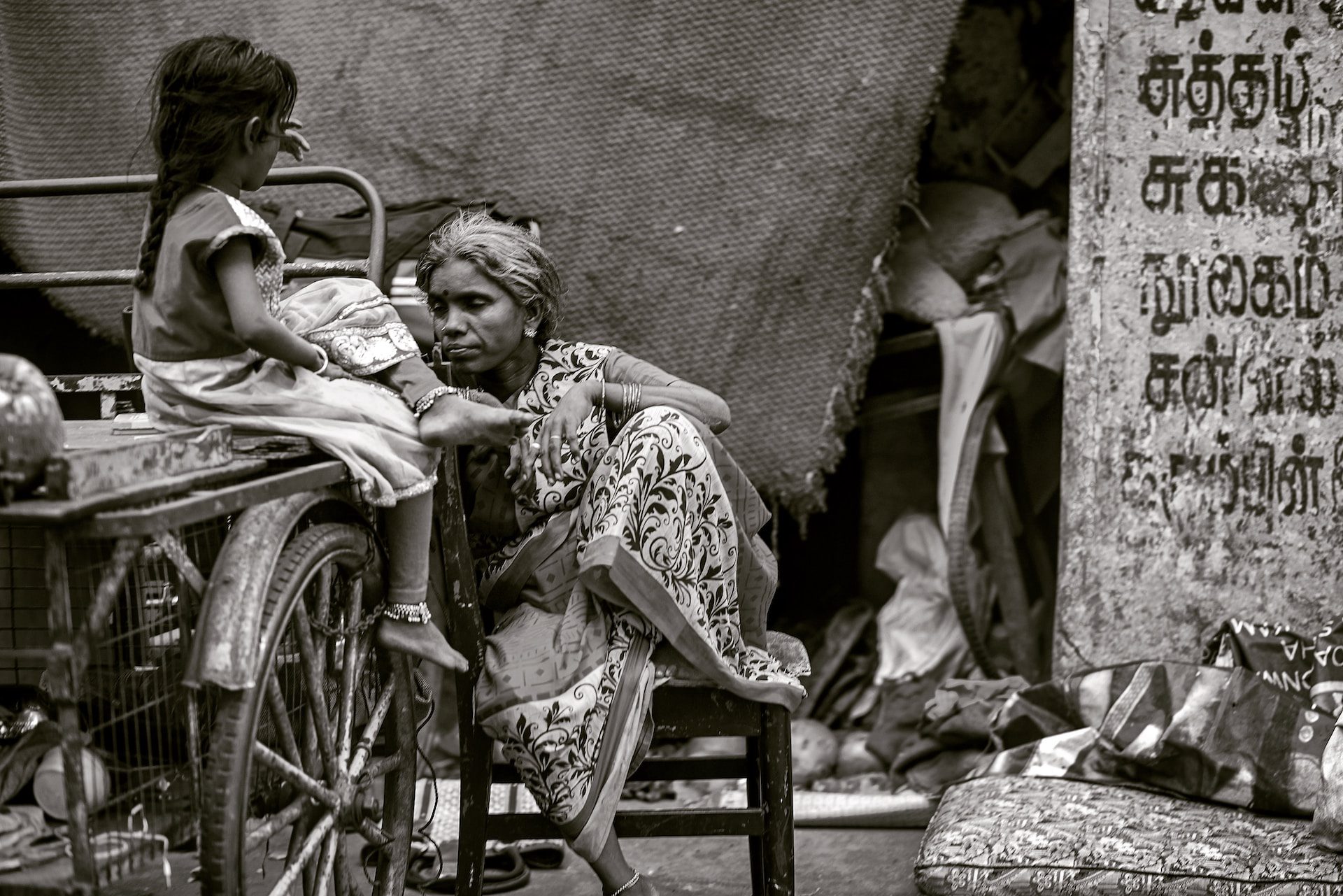
 The economy of India is one of the fastest growing in the world yet the country experiences severe inequality as the wealthiest 10% in India own 77% of the wealth in the country while poverty is common for a significant portion of the population. For people who experience being poor in India, access to basic services is a struggle and meeting basic needs is difficult as many do not earn a decent income. The Government of India has not released official poverty estimates since 2011 but several other indicators show the extent of poverty in India.
Causes of Poverty in India
Poverty in India is a multi-dimensional issue. According to a study by the West Bengal State University (WBSU) in 2018, some of the main reasons for poverty in India are overpopulation, unemployment, “poor agricultural infrastructure,” illiteracy and lack of quality education, lack of skilled labor, “unequal distribution of assets,” gender inequality and corruption.
According to the WBSU, the population in India has outgrown the growing economy, which means the nation cannot economically keep up with the growing number of people. Poor agricultural infrastructure also adds to the high number of people being poor in India according to the WBSU. Due to old and outdated farming practices, the agricultural sector of India is at a deficit.
Lack of quality education and illiteracy also plague the poor in India and only exacerbate the issue. Due to poverty, disadvantaged families prioritize earning an income over child education and push children into child labor instead of enrolling them in school. This lack of education traps children in lower-paying, unskilled jobs, thereby continuing the cycle of poverty.
The lack of skilled labor in India also adds to the issue of poverty in the nation. While there is a large labor force in India ready to work, most workers are unskilled. This prevents India from reaching its full economic potential and putting more people to work in skilled sectors.
Corruption also stands as a barrier to poverty reduction. The WBSU stated in its report that the government attempts to alleviate poverty through government spending, but “allegedly only 30-35% actually reaches the beneficiaries” as a result of the corruption sweeping the nation.
Clean Water Access in India
Being poor in India takes shape in many ways, such as a lack of access to clean water. With 128 million people in India in need of clean water, the World Bank estimates that 21% of communicable diseases in India stem from unclean water.
Impoverished families, typically in remote areas, often travel hours to collect water for their families instead of engaging in more productive activities such as education and income-generating endeavors. This water is often unsafe and contains bacteria that can lead to fatal water-borne diseases such as cholera and dysentery. Water-borne diseases force a household to spend their limited finances on health care, which plunges the family deeper into poverty.
Hunger and Malnutrition in India
In the 2022 Global Hunger Index, India places 107th out of the 121 nations that were assessed. India has a score of 29.1, and this equates to a serious level of hunger. Poverty also manifests itself as malnutrition. The nation is home to the highest population of malnourished people in the world — 14.37% of the population or 194.4 million people, according to Feeding India. India is also home to about a third of the world’s malnourished children.
The government of India’s National Family Health Survey 5 (NFHS 5) indicates that about 36% of children under the age of 5 in India experience stunting due to malnourishment. Stunting has significant long-term impacts on individuals and countries as a whole, including impaired cognitive ability and educational performance, low wages, weak immunity and lost productivity.
Taking Action
A government relief program called the Pradhan Mantri Garib Kalyan Yojana aimed to help impoverished people in India. The program began in March 2020 to respond to the financial impacts of the COVID-19 pandemic. Some of the benefits included 800 million poor people receiving five kilograms of wheat or rice and a kilogram of pulses a month for three months. Additionally, 30 million low-income senior citizens, widows and disabled people received 1,000 Indian rupees.
Working in India for 50 years, Save the Children is committed to safeguarding the rights of children in India. The organization’s work in India is responsible for nourishing 85,000 children, lifting 86,000 children out of poverty and educating 210,000 children.
Looking Ahead
With immense poverty and living conditions that prove challenging, India is in need of significant support to spur lasting change. Organizations, like Save the Children, are working tirelessly to ensure that children have access to education, nutrition and a brighter future. Through these collective efforts, there is hope for a more equitable and prosperous India.
– David Keenan
Photo: Unsplash

How to Help Sri Lanka
Prithipura Communities
Established in 1964, Prithipura Communities is an NGO in Sri Lanka originally focused on aiding disabled children. Over the years, its scope has expanded to support children and families affected by the country’s social, political and economic challenges. Presently, Prithipura is actively involved in the “Cost of Living Crisis Appeal” project, accepting donations to provide food, education and health care services to those in need. The organization also offers opportunities for volunteering, providing assistance with visas for those willing to contribute on-site. Additionally, corporations such as The Emirates Airline and Maze have formed partnerships with Prithipura Communities, contributing to efforts.
UNDP Sri Lanka
The development program of the U.N. (UNDP) Sri Lanka has launched a crowdfunding platform called “Rebuild Sri Lanka” with the aim of reconstructing the country’s infrastructure. Through this initiative, individuals can donate and support the health care and food sectors. Furthermore, the UNDP provides farmers with seeds and farming equipment to enhance the agricultural supply chain. The campaign has garnered support from various corporate institutions such as Hema Holdings PLC, Dilmah Ceylon Tea Company, Brandix Apparel Limited, Citi Foundation and Amana Bank. UNDP Sri Lanka also offers career opportunities and regular updates for those interested in contributing to the cause.
UNICEF Sri Lanka
With nearly half of Sri Lanka’s children requiring humanitarian assistance, UNICEF plays a vital role in child care and positive impact. Through its Sri Lanka branch, it provides opportunities for individuals worldwide to support the country. Donations made through the organization’s website directly contribute to helping children in Sri Lanka thrive and reach their full potential. Additionally, people can sign petitions, volunteer and spread awareness through social media. UNICEF’s current mission aims to raise $25 million to assist 1.7 million children in the country.
Looking Ahead
Sri Lanka’s multidimensional poverty crisis demands urgent attention and international support. Organizations like UNICEF, the U.N. and Prithipura Communities are exemplary leaders in driving positive change. Other avenues for support include Give2Asia, WFP and Red Cross Sri Lanka, which offer accessible projects and initiatives online. By offering guidance and opportunities to help Sri Lanka, these organizations foster unity, compassion and progress on a global scale.
– Sebastián Garcés
Photo: Flickr
How a High-school Student is Removing Toxic Dyes from Wastewater
According to the U.N. “The average person is buying 60% more clothing than 15 years ago, while each item is kept for only half as long.” Due to this increasing wardrobe turnover rate through the years, more textiles continue to end up as waste.
Toxic Dyes in the Water
Around 3,000 liters of water is necessary to create just one cotton shirt and 10,000 liters to create one kilogram of cotton. According to Textile Exchange, cotton “…accounted for just under a quarter (22%) of all global fiber production in 2021.” With the textile industry growing at a 4% compounded annual rate, these numbers could grow hand in hand with the industry, generating more toxic wastewater and having a negative impact on communities struggling with water insecurity around the world.
The textile industry uses large amounts of water throughout the production process that becomes wastewater by the end of the cycle due to the number of toxic dyes used, according to Textile Exchange. The main polluting dyes are azo dyes. Though there are different types of dyes, azo dyes make up 50% of the synthetic dyes produced in the world. Science Direct studies prove that some azo dyes are “…directly carcinogenic to the liver and bladder after feeding.” When ingested, or released into the environment, azo dyes are hazardous and life-threatening. Hence, removing toxic dyes from wastewater is a key step to making an impact on the environment and on society.
Impact on Poverty
Every year the fashion industry uses 93 billion cubic meters of water. And with the expected growth rate of the industry and lack of regulations, it could rise. Major textile players operate in countries where land, labor and raw materials are cheaper such as Bangladesh, India or Pakistan. These countries have higher poverty rates and are the main victims of wastewater pollution. And though this boosts economic development and decreases unemployment, many communities are getting the other side of the coin; pollution, death, disease and even downside effects on agriculture, fishing and livestock. According to CNN, “European Union, China, Japan, India and Vietnam have all banned their use and import,” taking the first step towards a sustainable fashion revolution.
Emily Kim and Her Solution
According to the World Bank, “Around 20 % of wastewater worldwide comes from fabric dyeing and treatment.” When high school student Emily Kim noticed this, she decided to base her Regeneron Science Talent Search environmental science project on finding a solution. Emily decided to study two common yet differently behaving azo dyes, MO1 (Mordant Orange 1) and RB5 (Reactive Black 5). “Rather than finding just one treatment that targets a specific kind of dye removal, it’s much more important to have a general treatment that can universally be used in order to treat a wide range of azo dyes,” explained Emily in her project. A general treatment will be more accessible and effective when treating wastewater than a specific treatment that only tackles a specific dye.
Emily began experimenting with activated carbon and realized that the adsorptive properties of the AC removed 99% of the MO1 molecules easily but only 22% of the RB5 molecules. She continued experimenting with the activated carbon and its photocatalytic properties until finding out that when she added ultraviolet light she was able to remove 92% of the RB5 without affecting the removal results for MO1. Her method appears to be effective, accessible and available for textile industries worldwide.
Making a Change
Innovative ideas like Kim’s could have an impact on poverty around the world, reducing the water insecurity and pollution that many communities from underdeveloped countries have to live through. Some countries have already taken the initiative to ban certain types of azo dyes to keep water pollution to a minimum. Following Emily’s example and solution, removing toxic dyes from wastewater could be done in an affordable and effective way to save the environment and the vast number of people that depend on it to get the basic living necessities.
– Sebastián Garcés
Photo: Flickr
Shortage of Health Care workers in Developing countries
The Importance of Health Care Workers
Health care workers are essential to maintaining not only individual well-being but also the nation’s economy. Without them, countries are vulnerable to childhood undernutrition, transmissible diseases, maternal death and other ailments. Unfortunately, low-income and middle-income countries face a shortage of health care workers, exacerbating an already fragile economy.
International recruitment of medical personnel from poor to rich countries is a major contributor to this shortage, leaving the health care system in developing countries severely understaffed. Some foreign policies were changed to promote an influx of health care workers such as extending visas or work authorization for workers without official qualifications.
The COVID-19 pandemic has caused massive burnout among health care workers, with approximately 50% of the field experiencing symptoms. Burnout leads to emotional exhaustion and poor professional effectiveness, leaving sufferers unable to perform their job or quit the industry entirely. This chronic problem is particularly acute in lower-middle-income countries where health care systems are understaffed and challenging community health issues persist.
Where are Health Care Workers Needed?
The WHO identified 55 countries with critical health workforce shortages based on data from the health workforce support and safeguards list. Among those listed, 67% are from the African region followed by the Western Pacific region with 15%. The list gained eight additional countries since the first publication in 2020. While it may seem like the situation is getting worse, there are initiatives currently underway to bring solutions.
Looking Forward
After the WHO’s 75th World Health Assembly, the organization released the Working for Health 2022-2030 Action Plan. This plan is committed to investing in the education, safety, skills and employment of care workers. The proposition represents member states and stakeholders of the WHO including 194 countries.
The organization hopes to aid 60 countries with the most vulnerable health systems by 2030 through the implementation of investment plans and development strategies. The WHO is offering catalytic funding, technical assistance and advisory services to member states struggling to recover their health workforce. Implementing the plan is made a reality through the Working for Health Multi-Partner Trust Fund (MPTF) which accepts donations from individuals and member states’ governments.
The shortage of health care workers in developing countries is a problem that crosses multiple borders and affects more than hospitals. According to a WHO report, achieving economic prosperity and overall well-being in lower-income regions necessitates more investments to support health care systems and workers.
– Emma Ferschweiler
Photo: Flickr
Being Poor in India
Causes of Poverty in India
Poverty in India is a multi-dimensional issue. According to a study by the West Bengal State University (WBSU) in 2018, some of the main reasons for poverty in India are overpopulation, unemployment, “poor agricultural infrastructure,” illiteracy and lack of quality education, lack of skilled labor, “unequal distribution of assets,” gender inequality and corruption.
According to the WBSU, the population in India has outgrown the growing economy, which means the nation cannot economically keep up with the growing number of people. Poor agricultural infrastructure also adds to the high number of people being poor in India according to the WBSU. Due to old and outdated farming practices, the agricultural sector of India is at a deficit.
Lack of quality education and illiteracy also plague the poor in India and only exacerbate the issue. Due to poverty, disadvantaged families prioritize earning an income over child education and push children into child labor instead of enrolling them in school. This lack of education traps children in lower-paying, unskilled jobs, thereby continuing the cycle of poverty.
The lack of skilled labor in India also adds to the issue of poverty in the nation. While there is a large labor force in India ready to work, most workers are unskilled. This prevents India from reaching its full economic potential and putting more people to work in skilled sectors.
Corruption also stands as a barrier to poverty reduction. The WBSU stated in its report that the government attempts to alleviate poverty through government spending, but “allegedly only 30-35% actually reaches the beneficiaries” as a result of the corruption sweeping the nation.
Clean Water Access in India
Being poor in India takes shape in many ways, such as a lack of access to clean water. With 128 million people in India in need of clean water, the World Bank estimates that 21% of communicable diseases in India stem from unclean water.
Impoverished families, typically in remote areas, often travel hours to collect water for their families instead of engaging in more productive activities such as education and income-generating endeavors. This water is often unsafe and contains bacteria that can lead to fatal water-borne diseases such as cholera and dysentery. Water-borne diseases force a household to spend their limited finances on health care, which plunges the family deeper into poverty.
Hunger and Malnutrition in India
In the 2022 Global Hunger Index, India places 107th out of the 121 nations that were assessed. India has a score of 29.1, and this equates to a serious level of hunger. Poverty also manifests itself as malnutrition. The nation is home to the highest population of malnourished people in the world — 14.37% of the population or 194.4 million people, according to Feeding India. India is also home to about a third of the world’s malnourished children.
The government of India’s National Family Health Survey 5 (NFHS 5) indicates that about 36% of children under the age of 5 in India experience stunting due to malnourishment. Stunting has significant long-term impacts on individuals and countries as a whole, including impaired cognitive ability and educational performance, low wages, weak immunity and lost productivity.
Taking Action
A government relief program called the Pradhan Mantri Garib Kalyan Yojana aimed to help impoverished people in India. The program began in March 2020 to respond to the financial impacts of the COVID-19 pandemic. Some of the benefits included 800 million poor people receiving five kilograms of wheat or rice and a kilogram of pulses a month for three months. Additionally, 30 million low-income senior citizens, widows and disabled people received 1,000 Indian rupees.
Working in India for 50 years, Save the Children is committed to safeguarding the rights of children in India. The organization’s work in India is responsible for nourishing 85,000 children, lifting 86,000 children out of poverty and educating 210,000 children.
Looking Ahead
With immense poverty and living conditions that prove challenging, India is in need of significant support to spur lasting change. Organizations, like Save the Children, are working tirelessly to ensure that children have access to education, nutrition and a brighter future. Through these collective efforts, there is hope for a more equitable and prosperous India.
– David Keenan
Photo: Unsplash
Blueberry Farming in Peru
Agricultural Poverty in Peru
Peru’s economic growth has already significantly helped to reduce poverty and promote development. In 2018, the country’s poverty rate decreased to 20.5% and extreme poverty fell from 11.2% in 2007 to 2.8%. However, there is still significant agricultural poverty in Peru, with many smallholder farmers facing more challenges to life and livelihood than urban dwellers. These include food insecurity, reduced life expectancy and socioeconomic inequalities that limit access to income and health care. Underscoring the disparity, poverty impacts 44% of Peru’s rural population yet only 15.1% of the urban population. High poverty levels in Peru’s rural regions have resulted in widespread “migration to urban centres, where market activity offers greater livelihood options.” Consequently, about 75% of Peruvians now live in or near urban centers hoping to secure a better standard of living.
Peru’s Blueberry Plantations
The agricultural sector has been critical for the country’s economic growth. Seasonal exports such as avocados, grapes, asparagus and more recently, blueberries have helped Peru develop one of Latin America’s strongest economies. With the ability to now cultivate an estimated 50 varieties of blueberries, with some specifically developed to thrive in the Peruvian climate, blueberry farming in Peru has seen great success. And this success is due to the country’s long growing days, large areas of arable land and the ability to export to markets in Asia and the Americas. Applying proven crop management practices, many of the new blueberry varieties developed and grown in Peru have longer harvesting periods and classify as better-quality fruit. Furthermore, innovations have been made to develop varieties that can withstand longer shipping times and guarantee longer shelf lives without increased costs for producers.
Highlighting the rapid progress of blueberry farming in Peru, the country had only about 70 hectares of blueberry plantations in 2012, which had grown to about 14,000 hectares by 2020. The Peruvian Blueberry Growers’ Association estimated that Peru’s blueberry exports could reach 285,000 metric tons for the 2022-2023 season, marking a 28% increase from the previous year. Peruvian blueberry farmers are now beginning to invest in sustainable practices to ensure the longevity of blueberry farming in Peru.
Employment and Blueberry Farming in Peru
According to the United States Department of Agriculture, “Peru’s blueberry harvests are labor intensive,” as “all fruits are hand-picked to avoid fruit damage.” Given this demand for labor, blueberry farming in Peru accounted for approximately 135,000 jobs in 2023, with 60% of those positions belonging to women. The U.S.-Peru Free Trade Agreement (PTPA) has strengthened the potential of Peru’s blueberry industry to create jobs and help lift rural Peruvians out of poverty. By allowing Peru to export blueberries to the United States (which accounts for more than 50% of Peru’s blueberry exports) without tariffs, the PTPA is helping to ensure that more income from blueberries remains in Peru, where it can help promote industry growth and create more jobs in the future.
Looking Ahead
Blueberry farming in Peru has helped many rural families gain access to secure employment, a steady source of income and the basic resources needed to lead a healthy, fulfilling life. The South American country continues to reap the economic benefits of being the world’s top exporter of blueberries, with hopes that the growth of this lucrative industry can help reduce poverty and alleviate the social and economic disparities between Peru’s rural and urban populations.
– Jennifer Preece
Photo: Flickr
Gender Inequality in Madagascar
A Cultural Problem
Madagascan cultural traditions and societal norms going back centuries, have forced Malagasy women into a secondary position within the public sphere. Typically, this includes the widespread belief that men should dominate leadership roles and speak out more in public. For example, in the realm of Madagascan politics, only 4% are women, leaving them underrepresented and excluded from social, political and economic circles.
Reports link common practices such as child marriage to restricted education and increased poverty. Around two-thirds of girls from poorer Madagascan regions go into marriage before the age of 18. In contrast, girls with access to secondary-level education in the country are less likely to marry earlier in life. Despite these circumstances making it hard for Malagasy women to achieve equality, the pursuance of livelihood activities from the mangrove forest has enabled those who are uneducated to improve their economic status. But this practice remains highly damaging to the environment and therefore does not present a long-term solution to the effects of gender inequality in Madagascar. Achieving the United Nations Sustainable Development Goal 5 in pursuance of gender equality and the empowerment of all women and girls requires the country to close existing gender gaps.
Some Facts of Gender Inequality in Madagascar
The statistics on gender inequality in Madagascar demonstrate significant economic differences between men and women. Some of the facts are as follows:
Reducing Gender Inequality in Madagascar
Although the statistics paint a bleak picture, there are organizations going to great lengths to alleviate the consequences of gender inequality in Madagascar. These organizations aim to enable women to know their rights and seek representation in unions. This is particularly essential as discriminatory stereotypes still exist within the Madagascan union movement.
Representatives from IndustriALL’s Malagasy affiliates; SEKRIMA, FISEMA, USAM and SVS, have noted the importance of providing mentoring and training to women, so they build confidence and feel able to participate in unions. In 2018, USAM introduced a national quota of 40% for women’s representation. As of 2022, The World Bank announced that 48% of its workforce in Madagascar was female, with representation at all levels. This suggests that since USAM’s introduction of a national quota, women’s representation in Madagascar has improved in some areas.
Another important initiative in Madagascar, Feed the Minds, has worked alongside the local organization, Tanjona Association, to improve the livelihoods of Malagasy women through sustainable silk production. The initiative aims to empower 90 members of a women’s association group in Mandrosoa by training them to make silk using environmentally friendly methods. This will give participants the opportunity to acquire functional literacy and numeracy skills, as well as financial concepts, required to form micro-businesses. According to estimates, [in addition to participants], “490 individuals will indirectly benefit from the project”, demonstrating the importance of implementing these kinds of programs. Feed the Minds and other organizations provide new opportunities that not only benefit present-day Malagasy women but also have the potential to empower future generations of girls and women who may not have been aware of their potential.
The Future for Women in Madagascar
In a 2020 report on her trip to Madagascar, Diarietou Gaye, World Bank Group Vice President and Corporate Secretary, argued that Madagascar must create a middle class to promote economic and political stability, which can then lead to job creation. for youths in Madagascar. This, she says, would require women to gain more responsibility and provide an opportunity for them to exercise their abilities in the same way as their male counterparts. Gaye concluded that if men and women in Madagascar had the same opportunities, with equal empowerment efforts for all, then there would be substantial rewards for not just individuals, but throughout entire communities.
– Bethan Marsden
Photo: Flickr
Forest conservation for Food Security in West Papua
Deforestation in Indonesia
Indonesia has historically had “the highest deforestation rates in the world.” The deforestation is largely due to land clearing to expand palm oil and other mono-crop plantations, an industry that national government policy encouraged. Despite the majority of Indonesia suffering major forest cover loss over the last two decades, the impacts of the oil palm industry have only recently reached the doorstep of Indonesia’s easternmost provinces of Papua and Papua Barat, known together as West Papua.
West Papua, which makes up the Indonesian half of the island of New Guinea, is covered in swathes of pristine and highly diverse tropical rainforests. The region has remained relatively untouched during Indonesia’s period of deforestation, with primary forests still covering 83% of West Papua’s land area. However, with available land in Sumatra, Java and Kalimantan becoming increasingly scarce, cleaning of the sections of the West Papuan forests has begun.
Changing Diets in West Papua
This land clearing is set to have an especially severe impact on West Papuan communities given the high level of poverty in the area and their reliance on the forest as a source of food. West Papua is the poorest region in Indonesia, with 28% of people living in poverty in the province of Papua and 23% in Papua Barat, as of 2018.
Forests have traditionally been an important source of food for the indigenous communities of West Papua. Traditionally, indigenous communities would forage and hunt in the forest for foods such as sago, wild bush meats and fresh legumes. These bush foods help form a diverse and micronutrient-rich diet that is high in vitamins. Bush foods like this have been shown to be a huge factor in maintaining healthy diets in countries all over the world and are a critical factor in current food security in West Papua.
Unfortunately, recent land clearing and plantation expansion in West Papua has already resulted in a shift in the diets of some local indigenous populations. Without easily accessible forests, local communities living in cleared areas have turned to more easily accessible food sources, namely store-bought goods. As a result, diets in these communities have transitioned away from traditional forest foods and towards ultra-processed foods like rice, instant noodles, tofu and biscuits. This dietary transition is now fuelling an increase in the already high rates of poverty, malnutrition and food insecurity in the region.
The Manokwari Declaration
In the fight to prevent further deforestation of West Papua’s unique and important forests, local governments have committed to large-scale conservation targets. Unfortunately, new plans to carve up the two existing provinces into five may undermine the validity of the recent Manokwari Declaration, putting the people and forests of West Papua back into jeopardy. The rationale from the government for this redrawing of boundaries is to speed up development and increase economic equality. However, some claim that previous instances of remapping have in fact served the elite rather than the poor.
In the current context of changing provinces, the local governments may need support to maintain the validity of the Declaration. However, despite the threats to its existence, the Manokwari Declaration still represents the first step in preserving West Papua’s forests, and thus protecting health, nutrition and food security in West Papua.
– Amy McAlpine
Photo: Flickr
Uncertainty Over Cameroonian Refugees in Antigua
The Flight from Cameroon
Several thousand miles away from Antigua, across the Atlantic, a bloody six-year civil war is happening in Cameroon. At the end of last year, 900 Anglophone Cameroonians bought flight tickets from Nigeria to Antigua to escape the conflict. Many have paid human traffickers as much as $6,000 in return for safe passage to the United States and assistance with their visa applications. Instead, the traffickers abandoned refugees in Antigua.
The debacle followed an attempt by the government of Antigua and Bermuda to establish an air route between Central Africa and the twin island nation. After four charter planes and 900 unexpected refugees in Antigua, the government decided to suspend all incoming charter flights from Central Africa and announced its intention to repatriate those who had already come. It has since reversed its repatriation plan citing humanitarian reasons.
The Economic Situation in Antigua
The people of Antigua are more accustomed to welcoming tourists rather than asylum claimants. It is unclear how the presence of hundreds of Cameroonian refugees in Antigua, most of whose funds have been spent on charter flights, affects the communities with limited resources.
The overall rate of poverty in Antigua and Barbuda is high but it is 5% lower than the regional average of 23%. The rate is even higher among the young: 24% of children aged 0–17 and 25% of adolescents aged 10–19. Severe poverty is projected to increase in the Eastern Caribbean nation amid the continued fallout from the COVID-19 pandemic and Hurricane Irma, which devastated the nation in 2017. According to figures gathered by UNICEF, the rate of severe poverty in Antigua’s overall population is due to rise sixfold up to 24%. For children, the projected figure is even higher at 29%.
Refugee Reception in Antigua
Local reports say that residents have shown hospitality to the Cameroonians despite the high poverty rate in the country. Governor General Sir Rodney Williams has stated that the government will look after the African refugees in Antigua. He said that Antigua was “committed to protecting all residents from exploitation and harsh treatment” and that “no foreign national, except for criminals, should fear deportation.”
Antigua’s Information Minister has promised a skills audit to “determine the benefits” of permitting the refugees in Antigua to stay. Melford Nicholas announced that “as the economy continues to expand, we’re going to need additional skills.” He also said that Antigua would provide the asylum seekers with accommodation and “find a way to give them legal status here.” He also expressed the hope that Antiguans would “embrace and have an open heart” to the Cameroonians. The government played down speculation of plans to offer passports to the arrivals after opposition parties voiced alarm. The United Nations (U.N.) is also planning an analysis of the situation with the International Organization for Migration (IOM) to determine the number of refugees in Antigua who wish to remain permanently.
What is Next?
With poverty as a serious and increasing problem in the Caribbean island, no one could have expected the arrival of 900 Cameroonian refugees in Antigua. While many of the refugees move on, some could end up settling in the country. It is expected that once the government’s skills audit is complete, the remaining Cameroonians will be free to contribute their skills to Antigua and improve its economy.
– Samuel Chambers
Photo: Pixabay
Composting Initiative in Kibera
Due to its geographical location on the outskirts of Nairobi, access to jobs, such as working in markets can be difficult, especially for women. Many families rely on casual labor to pay for basic amenities, such as food, water and rent. Poverty levels are extremely high within Kibera and life expectancy is only 30 years old.
A Composting Revolution
Kibera produces roughly 230 tons of food waste a day. Recently, The Advocacy Project gave some funding to a small seed of an idea – a composting initiative in Kibera. Led by Stella Makena, the program, Shield of Faith, involves 15 women who have turned food waste into compost using worms. It aims to reduce pollution and improve livelihoods and nutrition in Kibera.
Collected food waste goes into these recycled plastic paint containers and red worms turn this food into fertilizer known as leachate. The worms ingest and break down the food waste into useful nutrients. This is a much more sustainable solution to putting food waste in a landfill where it creates methane, one of the biggest contributors to climate change. It’s also better than leaving food scraps out on the streets, which is unhygienic and can attract animals and diseases.
Improving Livelihoods and Creating Sustainable Produce
The benefits of the composting initiative in the Kibera project are numerous. Not only does it reduce the amount of food waste, as well as reusing plastic containers, but it also creates a product that can be sold. Branded as Lishe-Grow (Grow-Nutrition), Shield of Faith sold 124 liters of its worm leachate at the annual fair of the Agricultural Society of Kenya. It also set up a model kitchen garden, according to The Advocacy Project. Half of the proceeds went directly to the women ($186), with the other half going into a joint bank account.
Furthermore, the leachate can be used to grow fresh vegetables for families in Kibera. This can not only provide fresh, healthy produce to improve nutrition but can reduce food bills and be sold for further income. Stella, for example, now grows 40% of her vegetables and has reduced her food costs by one-fifth. Many members have made space for kitchen gardens in their small settlements, growing green vegetables and strawberries. The organization is currently making plans to provide kitchen gardens for those members who currently lack the space.
Bringing Compost to the Next Generation
The composting initiative in Kibera has now started expanding into schools. Excitingly, Shield of Faith has also been officially registered by the government. It has recently been spreading awareness by demonstrating the benefits of composting at Project Elimu, an after-school initiative that around 1,000 students from 40 different schools attend. There, it constructed a kitchen garden out of old wooden shelves and plastic tubing, training over 300 children to plant and grow seeds, according to The Advocacy Project.
Now, it hopes to focus its efforts on schools themselves, which produce a large amount of food waste. Shield of Faith hopes to appoint ambassadors and educate the students about other concepts such as carbon credits.
The team sets high goals, with the aim of composting 3 tons of food waste this year and to also expand beyond Kibera, perhaps also building partnerships with schools in the Global North. Shield of Faith is showing that a simple idea can be powerful and transformative in so many ways.
– Ottoline Spearman
Photo: Flickr
The Slums of Mumbai: A World Inside a World
Trade and Business
Dharavi, Mumbai’s largest slum settlement, has a remarkably diverse and active business sector. Hundreds of thousands of people engage in this thriving world of trade from innovative producers to keen buyers. There are around 5,000 businesses that generate over $1 billion in total revenue. The successes of these businesses ensure a stable, healthy and happy lifestyle not just for slum residents, but for the poorer Indian community as a whole.
The innovative trade of recycling, specifically talented craftsmen turning recycled goods into all manner of things, plays a significant role in the slums thriving business sector. Dharavi recycles around 60% of Mumbai’s plastic waste and this business employs up to 12,000 people. From the manufacturing process to product making, the recycling business in Dharavi provides jobs and opportunities for people of all skill sets.
Other industries such as leather and textiles enable further trade both externally and within the borders of the slums. From goat and sheep skin, talented textile artists are able to make various leather products that find use locally and all the way up to high-end fashion, with global brands like Giorgio Armani utilizing the leather goods!
There are around 300 bakeries in Dharavi that mainly specialize in papadom making. This provides both stable incomes for the bakers (women can earn up to 100 rupees) and food for local residents. The benefit of providing food is particularly important as food can be scarce in the Mumbai slums, as reported by Global Citizen.
Art
Art acts as an important contributor to the cultural influence the slums have. Amazing street art is littered all around the slums of Mumbai that depict the realities of slum living. Sassoon Docks, for example, is a thriving street art center known for the artists’ collaboration with local fishermen, their environmental activism and their embodiment of Mumbai’s fishing traditions. Artwork like this has attracted tourists, writers and photographers from all over the world, enriching the slum’s cultural impact.
The Mumbai slums are also a musically gifted place. A Hip-Hop culture that has now been present for more than a decade has dominated the music scene in the slums of Mumbai. Hip-Hop artists such as Dopeadelicz and SlumGods have all had success in India’s rap scene. Artists like these have helped Indian Hip-Hop grow and expand the cultural influence of the Mumbai slum music scene.
Sport
Slum golf is a recent phenomenon that has taken hold in the slums of Mumbai. As the name suggests, it is golf that people play within the narrow alleys and pathways of the Mumbai slums. Golf would usually be an inaccessible, “rich” sport in the eyes of slum residents but with just clubs and a ball, golf enthusiasts are able to play the game they love.
Cricket, as with most of India, is an integral part of the day-to-day life of slum residents. And their love for the sport has created a vibrant culture of cricket. Many leagues within the slums have been set up, and this has given access to people with varying abilities to play. Street cricket (with improvised rules) is also massive in the slums. For instance, hitting out of the playing area means you are out as you have lost the ball!
Looking Ahead
Despite the challenging living conditions in Mumbai’s slums, a vibrant world exists within, filled with innovative businesses, captivating art and a passion for sports. The bustling trade sector generates significant revenue, employing thousands and benefiting the entire community. Art and music add cultural richness to the slums, attracting global attention. Additionally, slum residents find joy in unique sports like slum golf and cricket, fostering a sense of community and providing opportunities for all skill levels. The slums of Mumbai defy stereotypes, showcasing resilience, creativity and a spirit of determination.
– Max Steventon
Photo: Flickr