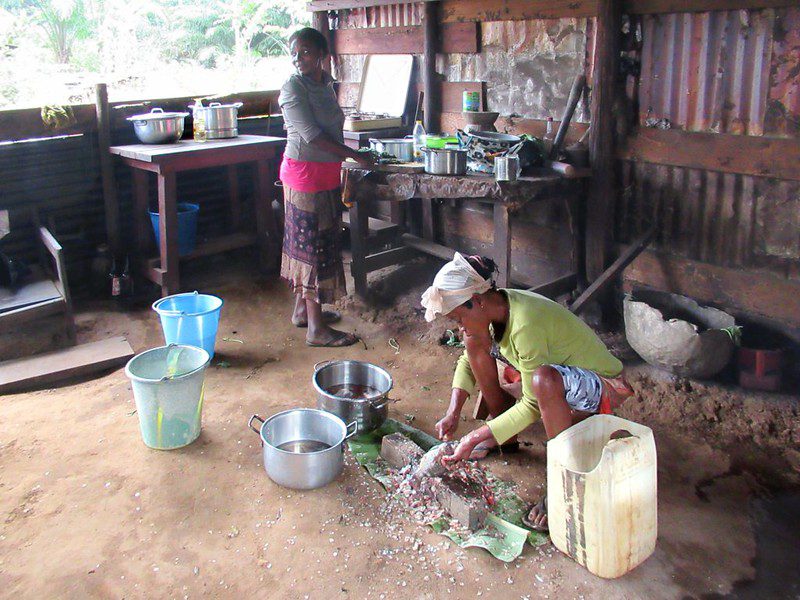
 Gabon is a Central African nation with an abundance of culture, wildlife and landscapes. However, the country faces a range of challenges, including its continuous and worsening struggle with human trafficking. Gabon finds itself in a challenging predicament as it has become a popular location for human trafficking, especially child trafficking. Mélanie Mbadinga Matsanga, Gabon’s social affairs director-general, even referred to Goban as an Eldorado for human trafficking.
There has been a steady decadence in the severity of human trafficking in Gabon. The nation has witnessed unrestrained and swiftly burgeoning growth of trafficking with no rigorous systemic mechanisms to tackle the issue.
Between 2003 and 2010, there were no trafficking-related convictions in Gabon, while the nation has downgraded to a Tier 2 Watch List in the U.S. Department of State’s 2022 report.
The Reality of Gabon’s Human Trafficking
Gabon has become a popular transitory or final destination for human trafficking victims of West and Central Africa. Gabon both receives and sources trafficked people. Those who end up trafficked often by force become street vendors, transportation assistants, mechanics, fishermen, domestic servants, illicit gold miners, wildlife trafficking or sex workers, according to the Department of State.
The state of human trafficking in Gabon is due to its inadequate systems to prevent and address the issue at hand. A glaring indicator of this absence of systemic instruments is the nation’s inability to adopt an anti-trafficking national action plan (NAP) for the third consecutive year. To compound the issue, the federal government has neglected to create a functioning anti-trafficking coordination system within the national inter-ministerial commission.
Moreover, the lack of national coordination has also made data collection and usage immensely more complicated, thereby hindering the ability to properly understand, investigate and prosecute. For instance, the Gabonese authorities claim to have begun 10 human trafficking-related investigations, while there were zero in 2020 and only three in 2019, according to the Department of State.
Corruption and Collusion
To aggravate the situation, there have been persistent accusations and a scarcity of inquiries for governmental corruption and collusion in human trafficking. Experts have alleged that there has been intentional postponement or dismissal of trafficking cases that bribed judges cause. The Department of State suggests that while the government contends that delays stem from legal inadequacies and the absence of knowledge, the lack of concrete action against corruption accusations foments concerns.
Furthermore, Gabon’s existing anti-trafficking programs and committees lack transparency and commitment. The government has not disclosed the funding for the nation’s anti-trafficking programs and the government’s interministerial committee against trafficking has not convened since 2019. There is a discouraging aura of depreciation and inconsequence to solving these heinous crimes.
Gabon’s Poverty and Human Trafficking
In the shadows of human trafficking in Gabon lies a root catalyst of systemic inequalities and disparities. Poverty renders certain groups significantly more susceptible to exploitation and possible trafficking. Conflict, lack of access to professional and educational opportunities and mass displacement all have poverty as a central element that leaves individuals especially vulnerable.
U.N. Special Rapporteur on Trafficking in Persons Joy Ngozi Ezeilo emphasizes how poverty, some traditional Western African and domestic work’s high demand in high Gabonese society are the foundation for the nation’s human trafficking issues. The dire conditions people face in extreme poverty leave them desperate and more likely to accept risky jobs or sell their daughters into marriage. Traffickers meticulously scout potential victims who live in a cycle of poverty, miseducation, unemployment, desperation and violence.
International Organization for Migration (IOM)
While the concerns and shortcomings of Gabon’s handling of its human trafficking situation, the national government and international institutions have made genuine efforts to tackle the issue.
One of the institutions that has been playing a vital role in the fight against human trafficking is the International Organization for Migration (IOM). IOM assists the Gabonese government in managing migration-related issues, emphasizing mixed population movements, migration governance and migration flows.
The return and reintegration of migrants, including minors in reception centers and adult migrants, is a crucial component of IOM’s activity in Gabon. IOM helped 143 migrants, the majority of whom were trafficking victims, return safely and integrate into their communities in 2020 and 2021 alone.
In addition, IOM Gabon works to advance the goals outlined in the Global Compact for Safe, Orderly and Regular Migration (GCM). The organization helps to ensure that migration is secure, effectively managed and advantageous for both migrants and the societies they join by cooperating with this global endeavor.
Future Hopes
Gabon is in dire need of action and attitudinal change in order to properly solve trafficking in its nation. “I am confident that Gabon can become a model for other countries in the region and beyond in the fight against trafficking,” said Joy Ngozi Ezeilo
With the appropriate mechanisms in place that strengthen prevention, ensuring the protection and reintegration of victims, paired with the support of international organizations, there is a genuine possibility of amending human trafficking in Gabon and creating a brighter future for its people.
– Agustín Pino
Photo: Flickr

Striving for Societal Freedom in Indonesia
Indonesia, renowned for its diverse population and rich cultural heritage, has faced and continues to grapple with challenges in pursuit of transformation. The country has remarkably transformed over six decades, transitioning from the tumultuous era of Sukarno’s “guided democracy” to becoming a thriving democracy and a regional powerhouse. It has grown from a near-failed state and regional pariah to a successful economy with a 25 million-strong middle class. Here is some information about societal freedom in Indonesia.
Progress in Indonesia’s Societal Freedom
A 2007 report by the Asian Studies Association highlights that Indonesia has witnessed extraordinary changes, highlighting the expansion of democracy, economic advancements and social development.
From the start of the study in 1997 to the publication of this article in 2007, the Indonesian population experienced a surge from approximately 200 million to more than 236 million — resulting in the rapid construction of homes and buildings, and the expansion of cities. Rice fields have given way to urban development, and forests have been cleared for agricultural purposes.
Indonesia has also made strides in political freedom through democratic elections and an active civil society. Women now enjoy full political rights and political parties must adhere to 30% gender quotas.
Education has also made progress in Indonesia, with an increase in school participation rates and longer durations for children staying in school. At present, approximately 90% of all Indonesians aged 15 or older possess the ability to read and write.
NGOs are currently working to drive societal freedom in Indonesia. Currently, there are efforts underway to address social issues, promote equality and empower marginalized communities.
Kopernik
Kopernik, an influential NGO, actively contributes to societal freedom in Indonesia by finding innovative solutions to social and environmental challenges. Kopernik’s remarkable distinction lies in its application of SDGs (Sustainable Development Goals).
For 13 months, the organization actively partnered with the Australia-Indonesia Partnership for Gender Equality and Women’s Empowerment (MAMPU) program. This collaboration prioritized women’s empowerment while simultaneously strengthening sustainability objectives.
During the project, Kopernik actively collaborated with five women’s empowerment organizations to establish a financial sustainability framework. The initiative produced promising outcomes as it trained women homeworkers and women-led microbusinesses, empowering them to sell their products online. Consequently, by the end of 2020, these women achieved an impressive 74% increase in their profits.
YCAB Foundation
The recently published YCAB Foundation Impact Report for 2022 shines a light on the organization’s remarkable accomplishments in empowering underprivileged youth and communities. Since its establishment in 1999, the foundation has made a significant impact on the lives of 5 million underprivileged youths and low-income families.
YCAB actively prioritizes the empowerment of mothers, student learners and youth earners, as well as fostering a thriving social enterprise ecosystem. Its impact report for 2022 demonstrates how the foundation actively empowered the next generation of youths through ongoing education. It successfully reached 3.7 million youths, resulting in an impressive 86% employment rate among graduates.
A significant number of Indonesia’s 30 million women entrepreneurs continue to encounter challenges in expanding their businesses. The foundation empowers Indonesian women by promoting economic independence and fostering sustainable businesses for their well-being. YCAB initiated the Indonesia Women Empowerment Fund (IWEF), which has invested in nine women-led start-ups and facilitated additional private capital investments.
The report highlights YCAB’s commitment to bridging the digital divide and promoting digital inclusion. In 2021-2022, YCAB embarked on a digital approach to foster societal freedom in Indonesia, reaching a total of 2.4 million Indonesians through digital outreach. The organization launched the nationwide movement Do Something Indonesia, engaging more than 20,000 youths aged 16-24 to support social actions through digital platforms, introducing more than 100 campaigns.
NGOs Involved in Anti-Corruption Endeavors
Transparency International is currently working on eliminating corruption in Indonesia. Its findings present a positive outlook on Indonesia’s political anti-corruption efforts.
Scoring 40 out of 100, Indonesia has achieved a two-point improvement on the CPI (Corruptions Perception Index), reaching its highest score since 2012. This signifies the country’s progress in combating corruption within its government, including through the efforts of the Corruption Eradication Commission (KPK).
Civil society organizations and citizens actively engage in supporting anti-corruption measures, showcasing a growing awareness and support. International cooperation and partnerships strengthen these efforts, contributing to the progress made by Indonesia in eradicating corruption and fostering a transparent and accountable governance system.
The Road Ahead for Indonesia
As Indonesia moves forward, it faces both opportunities and challenges. The government has implemented constitutional reforms aimed at protecting human rights, religious freedom, freedom of expression, media and women’s rights. However, there are still challenges to be addressed, particularly in ensuring freedom of expression and promoting equality for minority groups.
– Tanya Hamad
Photo: Flickr
Fighting Generational Poverty with Trust Funds for Babies
The immensity of the wealth gap in both developing and developed nations is a daunting and cyclical contributor to global poverty. Without an influx of capital, those who have lived in generational poverty lack the fiscal autonomy and security to climb upwards. However, trust funds can make a difference.
Statistics suggest that hard work and luck are not enough to escape generational poverty. In the United States (U.S.), for example, only 4% of poor Americans climb the rungs of the economic ladder toward wealth. The majority of Americans born into the lowest income bracket remain there for life. Economist Darrick Hamilton confidently stated in The Journal that “Wealth is the paramount indicator of economic security and wellbeing.” Accepting this philosophy, the key question becomes: How does a society accumulate and distribute wealth to people born into the throes of poverty? And the answer just might be establishing trust funds for babies.
Looking to Babies to Address Generational Poverty Through Trust Funds
In 2002, the United Kingdom (U.K.) piloted a long-term savings account for minors called the Child Trust Fund (CTF). CTF was a tax-free savings account parents could open for their kids without facing any decrease in government benefits or tax credits. The parents of any child born in the U.K. between 2002 and 2011 received a £250 voucher to launch a CTF — they could then contribute an additional £9,000 per year. Once the child turned 18, they could access the funds in their account for any combination of reinvestment and spending they saw fit.
The government knew this was a small step in the direction of addressing generational poverty — a £250 stipend would not be enough to solve the nation’s fiscal inequity — but the hope was that a tax-free savings account for children would promote the possibility of home ownership, higher education and healthy investment practices for many who never thought such would be attainable.
Beyond the UK: Child Trust Funds in Canada
In Canada, every family is eligible to open a Registered Education Savings Plan (RESP): a low-tax, long-term saving account to help guardians save for their child’s future education. RESP funds can go toward any post-secondary education including colleges, trade schools, universities and formal apprenticeship programs.
While Canadians from all income brackets are encouraged to open an RESP for their children, Canada provides direct capital to low-income families’ RESPs. Any Canadian child born into a low-income family after 2004 is eligible for the Canada Learning Bond (CLB). The Canadian government provides an initial payment of $500 in the child’s first year and continues to add $100 each year until the total governmental contribution hits $2,000.
The Canada Learning Bond, much like the U.K.’s CTF, aims to chip away at the generational wealth gaps that prevent low-income youth from actualizing their full intellectual and economic potential.
Extrapolating the Baby Bonds Model to the US
In Connecticut, nearly 15,000 children are born into poverty each year. To help close the state’s wealth gaps and encourage innovation, investment and long-term economic growth, Connecticut recently implemented a Baby Bonds program modeled on the U.K. and Canada’s previous successes.
Any child who is born into a family on Connecticut’s public health insurance — on or after July 1, 2023 — will be automatically enrolled in CT Baby Bonds. The government will contribute up to $3,200 to each child’s trust, and at 18, after completing a financial literacy course, the child can claim their capital. The funds are to be used for home ownership, business investment, education or retirement planning. Despite the program name, CT Baby Bonds, Governor Ned Lamont backed off of the original idea to fund the program using money from investors in exchange for bonds. He worried about debt accumulation. Instead, the state will be funding the program through a deposit of $381 million of state budget surplus — meaning there will be no inflated state debt or increased tax.
The Potential Impacts of CT Baby Bonds
While a leg-up of a few thousand dollars is certainly not the end-all-be-all for leveling the playing field, it is a powerful tool in revolutionizing saving philosophies in low-income communities. “You’re more focused on possibly going to college if you see a pathway, if there’s a fund,” Former Connecticut State Treasurer Shawn Wooden shared. “You’re more focused on one day owning a home, which some people in poverty never aspire to because they don’t think it’s ever achievable.”
Shondell Vann, a mother living in Bridgeport, Connecticut with a two-year-old daughter, sees earnest hope in the Baby Bonds program. “I feel like the program would give her a little bit more of a leg up,” she said of her daughter, Maria, in an interview with The Journal. “If she wanted to have a business just like me, she would be able to fund it with no problem. Just anything she wanted to do with that money to be able to be a little bit more successful than she was or just be a little bit better off than she was, is better than nothing.”
– Elena Unger
Photo: Flickr
6 European Nations Providing Aid to Ukrainian Refugees
The 2022 Russian invasion and assault have resulted in the emergence of Ukrainian refugees. The majority have stayed in Europe, with almost every country taking people in. All these individual nations have been different in regard to dealing with Ukrainian refugees. Here is a brief look into what six European countries have done for Ukrainian refugees.
Looking Ahead
Despite the challenges posed by the Ukrainian refugee crisis resulting from the 2022 Russian invasion, several European countries have shown commendable efforts in providing support and assistance. Nations like Poland, Romania, Lithuania, the United Kingdom, Germany and Finland have taken various measures to accommodate and aid Ukrainian refugees, including setting up special schools, addressing health care needs and implementing specific schemes. Although some challenges and concerns have emerged, the commitment of volunteers and international collaborations is indicative of the collective commitment to assisting those affected by the conflict.
– Josh Sobchak
Photo: Flickr
Everything You Need to Know About Women’s Rights in Gabon
Historical Discrimination
Historically, Gabon is a country with limited women’s rights. Gabonese women experience inequalities in marriages, such as husbands having control of their wives’ ability to work and women not being allowed to have their own bank accounts. Women also faced gender-based discrimination in financial services, and this made it difficult for them to access credit. Although domestic violence is illegal, it is still prevalent, and authorities rarely intervene to stop it. Female domestic workers often face sexual harassment with minimal resources to obtain legal support.
Gabonese women disproportionately suffer from poverty compared to their Gabonese male counterparts. According to the United Nations Women Count for Gabon, 3% of employed women in Gabon live below the international poverty line compared to 1.3% of employed men. Additionally, 28.5% of women in Gabon above the age of 15 are unemployed, which is 14.1% higher than the unemployment rate for men.
Progress for Women’s Rights
In recent years, lawmakers made several legislative strides to improve women’s rights in Gabon. In 2021, Gabon passed new legislation to prevent discrimination against women in the economy and financial institutions and decrease violence against women.
The Gabonese government also changed laws concerning marital rights. In the past, the government required women to get the permission of their husbands to administer marital assets. With the passing of these new shared marital assets laws, women now have equal rights to administer those assets. Women can also open bank accounts separate from their husbands, own property and be the official heads of their households.
Barriers Against Women in Gabon
According to the U.S. State Department’s 2022 Human Rights Report for Gabon, societal barriers prevent women from reporting sexual assault and rape. Although the law criminalizes rape, victims are typically unwilling to testify. Researchers found that almost half of Gabonese women experienced domestic violence.
Women and girls in poverty continue to endure exploitation in various areas, including restaurants, servitude and the commercial sex trade. Their conditions include forced labor, little pay and long hours. There are still no laws that require equal wages for men and women. As things stand, women earned lower wages compared to men for performing equivalent work.
Looking Ahead
Key women leaders, such as First Lady Sylvia Bongo Ondimba, Minister of Social Affairs and Women’s Rights Prisca Raymonda Nlend Koho and Vice President Rose Christiane Ossouka Raponda continue to fight for the improvement of women’s rights in Gabon. In 2020, they began implementing a strategy to promote women’s rights. Their efforts contributed to the passing of a new labor code that grants women access to employment in all jobs and sectors of work.
Gabon also implemented new legislation which better protects women from violence. With research showing that 90% of sexual violence victims in Gabon affect women, this legislation is an important step in protecting women from violence. Gabon’s new law establishes criminal penalties for violence against women. It also requires protection orders to be given to victims of violence within two days of receiving a report of violence occurring.
These advancements are just a few crucial actions taken to improve women’s rights in Gabon. And the country’s leaders continue to fight for more rights and equal treatment for Gabonese women.
– Marisa Del Vecchio
Photo: Flickr
The Use of Child Soldiers in Palestine
According to the Defense for Children International Palestine (DCIP), between 2011 and 2020, both Israeli and Palestinian armed groups recruited Palestinian children for use in combat. Israeli forces allegedly recruited Palestinian children, defined as anyone under the age of 18, as informants using torture and other forms of coercion. Israeli troops jailed Palestinian youngsters in Israel and the Occupied Palestinian Territories under military regulations that did not adhere to international norms for treating detainees and juvenile justice. According to reports, the Palestinian Authority hired minors to work in its security forces on non-combat missions. Palestinian armed organizations used children in combat and suicide bombings. Here is some additional information about child soldiers in Palestine.
Recruited Child Soldiers in Palestine
Though there was no proof that Palestinian armed factions who openly opposed using minors in warfare routinely recruited youngsters, many under the age of 18 receive military training. Multiple children become messengers and couriers. Children occasionally deploy suicide bombs and fight in attacks against Israeli soldiers and civilians. Moreover, all major political parties, including Fatah, Hamas, Islamic Jihad and the Popular Front for the Liberation of Palestine, involve youngsters in this way. Between October 2000 and March 2004, at least nine children sacrificed themselves in suicide bombings in Israel and the Occupied Territories. According to Palestinian non-governmental organizations, from September 2000 to March 2004, 30 youngsters actively participating in organized military activity died. Most of the fatalities happened as a consequence of explosive mishaps or during violent encounters with Israeli soldiers.
Youths from the most challenging socioeconomic backgrounds testified that they were freely recruited and often the readiest to participate. It was alleged that children were occasionally used unintentionally or under coercion in attacks. Reports state that armed groups distributed explosives to children. In January 2004, improvised bombs were used in Gaza, where at least three children died and four more became injured.
Jihad and its Influence on Palestinian Children
On numerous instances, Fatah denounced the use of kids in suicide missions. However, its military wing, the al-Aqsa Martyrs’ Brigades, had links to at least four of these operations, involving four young men aged 16-17. Additionally, three 13-15-year-old boys allegedly attempted to attack an Israeli village in March 2004 with the help of Al-Aqsa and Islamic Jihad. Islamic Jihad stated that it opposed the use of children in combat. In April 2002, it said, “We refuse any encouragement given to young people that might drive them to act alone or be pushed by others into action. They are not ready and not able to do so.” Nonetheless, Islamic Jihad was responsible for at least three suicide bombs by 17-year-olds between 2002 and 2004.
Hamas has repeatedly demanded an end to the use of youngsters in violent attacks and suicide missions. In April 2002, Hamas urged schools “to address this issue without sacrificing the enthusiasm or spirit of [the] martyrdom of our youth” and imams “to mention this issue in their sermons.” The Popular Front for the Liberation of Palestine claimed only one child died committing himself to their cause.
The Palestinian Economy Suffers in Poverty
The Palestinian economy faces significant challenges as a result of Israeli limitations on the free flow of people and goods. The unemployment rate in 2012 was 27%, and the latest data indicates that 26% of Palestinians live in poverty. Just one in two teenagers in Gaza, the country’s most impoverished region, had the opportunity to work.
The negative effects of poverty on children’s lives are numerous. For example, because kids frequently drop out of school at a young age to work and support their families, they are usually unable to finish their education. Poverty fuels teenage criminality and early marriages of young girls aged 15-19. In addition, reports of Israeli soldiers killing children have caused rising fear, especially in war-torn places like the Gaza Strip.
Optional Protocol
The Optional Protocol, also known as the Gaza-Israel ceasefire agreements, refers to a series of agreements between the State of Israel and the Palestinian organizations that control the Gaza Strip, including Hamas and Islamic Jihad. These agreements aim to reduce hostilities and end violence between the two sides. The Optional Protocol includes several key elements, including a cessation of rocket attacks from Gaza into Israel and a halt to Israeli airstrikes and ground operations in Gaza. It also endorses the reopening of border crossings. The Palestinian Authority favored the Optional Protocol during the U.N. Special Session on Children in May 2002. It repeated in 2004 that it denounced the exploitation of minors and the targeting of civilians and children by all parties. “Our children should have hope and a future and should not be suicide bombers,” said Palestinian Minister Saeb Erekat. “We want them to be doctors and engineers.”
Looking Ahead
Israeli occupation forces allegedly use Palestinian youths as informants under torture and other types of coercion. Israeli soldiers imprisoned Palestinian children in Israel and the Occupied Palestinian Territories under military rule. The soldiers did not follow standards set forth by the international community for the treatment of detainees and juvenile justice. Through the use of Islamic Jihad, recruiters can compel children to fight for their cause.
A global initiative called PCS Week aims to stop the exploitation of Palestinian children as child soldiers. It is inclusive, political and nonpartisan. The movement seeks to compel and humiliate the guilty groups into stopping their crimes. Causes such as PCS are available to end the use of child soldiers in Palestine, raising awareness of the issue.
– Dalia Hasan
Photo: Flickr
Mental Health in Serbia
The Impacts of the War and Poverty
Serbia’s historical stressors have impacted the mental health of individuals. A research article by Dusica Lecic Tosevski and others explains these stressors as “civil war in neighboring countries, United Nations (U.N.) economic sanctions, which lasted for 3.5 years and 11 weeks of NATO bombing in 1999.” As a result, Serbians grappled with damaged/destroyed infrastructure, significant populations of refugees and internally displaces persons, financial struggles, social unrest and a failing health care system. The same research article highlights that the existence of mental health conditions rose by 13.5% between 1999 and 2002 alone.
Poverty and unemployment also impact mental health in Serbia. The at-risk-of-poverty rate stands at 21.2% in Serbia, meaning that one-fifth of Serbians have a monthly income of just above €200. The populations most vulnerable to falling into poverty are children/youth and the elderly. According to the National Employment Service data, at the close of February 2023, about 430,000 people faced unemployment, although this number has visibly decreased over the years.
Furthermore, Serbia is among the 10 European countries with the highest rates of income inequality, according to UNICEF. The most affluent 20% of the Serbian population had six times more proceeds compared to the most impoverished 20%. Unfortunately, enduring poverty or the risk of poverty places stress on a person that could contribute to mental health deterioration.
Mental Health in Numbers
According to the World Health Organization Mental Health Atlas 2020, Serbia has a distinct piece of mental health legislation published in 2013 that aligns with all human rights covenants. Individuals are also fully insured for mental health services and associated medicines and treatments. Serbia has about 492 psychiatrists and 1,875 mental health nurses. The country also has seven mental health hospitals and 36 psychiatric units in general hospitals.
Advancing Mental Health in Serbia
The mental health and well-being of children and youth in Serbia stand as one of UNICEF’s priorities. According to UNICEF, the impact of the COVID-19 pandemic has exacerbated mental health conditions across populations, particularly among the younger generation. UNICEF’s assessment shows that about 4% of the general population in Serbia showed signs of depression while almost 11% of students experienced negative moods and about 22% felt anxiety and nervousness at least weekly.
“Mental health services are not well connected with other systems, and therefore on a practical level are unable to provide timely and adequate response and referral to prevent minor mental health issues from developing into conditions,” says UNICEF.
In response, UNICEF will be supporting the Serbian government and other key players to increase access and availability of mental health and well-being initiatives for young people, especially the most vulnerable and disadvantaged.
Through a collaborative approach involving “awareness-raising campaigns, online tools development, mental health education in schools and youth centers and strengthening capacities of professionals,” UNICEF aims to advance mental health in Serbia.
In October 2022, UNICEF Serbia revealed its plans to create a support system for the young in the country who face mental health issues by cooperating with the private and business sectors.
Unbreakable Campaign
The Hemofarm Foundation and the Faculty of Philosophy in Belgrade with the support of the Ministry of Health created the Unbreakable campaign in April 2021 to address the growing mental health needs of people, raise awareness of the mental health issues impacting populations and provide information and resources for people seeking help. The campaign used billboards, its website, email helplines and an anonymous SOS hotline to provide support and information and raise awareness.
The campaign creators estimate that within the first nine months, the campaign had reached more than 1 million individuals and received close to 9,000 inquiries and requests for help or more information.
The Serbian telecommunications operator company, Telekom Srbija, supported the establishment of the free SOS hotline, which operated 24/7 and ran with the assistance of 40 mental health professionals.
Through ongoing efforts and collaborative partnerships, there is hope for mental health in Serbia to improve. And initiatives that prioritize the mental health and well-being of the country’s people hold the potential to ensure lasting change.
– Klaudia Laura Sebestyen
Photo: Unsplash
Unmasking Human Trafficking in Gabon
There has been a steady decadence in the severity of human trafficking in Gabon. The nation has witnessed unrestrained and swiftly burgeoning growth of trafficking with no rigorous systemic mechanisms to tackle the issue.
Between 2003 and 2010, there were no trafficking-related convictions in Gabon, while the nation has downgraded to a Tier 2 Watch List in the U.S. Department of State’s 2022 report.
The Reality of Gabon’s Human Trafficking
Gabon has become a popular transitory or final destination for human trafficking victims of West and Central Africa. Gabon both receives and sources trafficked people. Those who end up trafficked often by force become street vendors, transportation assistants, mechanics, fishermen, domestic servants, illicit gold miners, wildlife trafficking or sex workers, according to the Department of State.
The state of human trafficking in Gabon is due to its inadequate systems to prevent and address the issue at hand. A glaring indicator of this absence of systemic instruments is the nation’s inability to adopt an anti-trafficking national action plan (NAP) for the third consecutive year. To compound the issue, the federal government has neglected to create a functioning anti-trafficking coordination system within the national inter-ministerial commission.
Moreover, the lack of national coordination has also made data collection and usage immensely more complicated, thereby hindering the ability to properly understand, investigate and prosecute. For instance, the Gabonese authorities claim to have begun 10 human trafficking-related investigations, while there were zero in 2020 and only three in 2019, according to the Department of State.
Corruption and Collusion
To aggravate the situation, there have been persistent accusations and a scarcity of inquiries for governmental corruption and collusion in human trafficking. Experts have alleged that there has been intentional postponement or dismissal of trafficking cases that bribed judges cause. The Department of State suggests that while the government contends that delays stem from legal inadequacies and the absence of knowledge, the lack of concrete action against corruption accusations foments concerns.
Furthermore, Gabon’s existing anti-trafficking programs and committees lack transparency and commitment. The government has not disclosed the funding for the nation’s anti-trafficking programs and the government’s interministerial committee against trafficking has not convened since 2019. There is a discouraging aura of depreciation and inconsequence to solving these heinous crimes.
Gabon’s Poverty and Human Trafficking
In the shadows of human trafficking in Gabon lies a root catalyst of systemic inequalities and disparities. Poverty renders certain groups significantly more susceptible to exploitation and possible trafficking. Conflict, lack of access to professional and educational opportunities and mass displacement all have poverty as a central element that leaves individuals especially vulnerable.
U.N. Special Rapporteur on Trafficking in Persons Joy Ngozi Ezeilo emphasizes how poverty, some traditional Western African and domestic work’s high demand in high Gabonese society are the foundation for the nation’s human trafficking issues. The dire conditions people face in extreme poverty leave them desperate and more likely to accept risky jobs or sell their daughters into marriage. Traffickers meticulously scout potential victims who live in a cycle of poverty, miseducation, unemployment, desperation and violence.
International Organization for Migration (IOM)
While the concerns and shortcomings of Gabon’s handling of its human trafficking situation, the national government and international institutions have made genuine efforts to tackle the issue.
One of the institutions that has been playing a vital role in the fight against human trafficking is the International Organization for Migration (IOM). IOM assists the Gabonese government in managing migration-related issues, emphasizing mixed population movements, migration governance and migration flows.
The return and reintegration of migrants, including minors in reception centers and adult migrants, is a crucial component of IOM’s activity in Gabon. IOM helped 143 migrants, the majority of whom were trafficking victims, return safely and integrate into their communities in 2020 and 2021 alone.
In addition, IOM Gabon works to advance the goals outlined in the Global Compact for Safe, Orderly and Regular Migration (GCM). The organization helps to ensure that migration is secure, effectively managed and advantageous for both migrants and the societies they join by cooperating with this global endeavor.
Future Hopes
Gabon is in dire need of action and attitudinal change in order to properly solve trafficking in its nation. “I am confident that Gabon can become a model for other countries in the region and beyond in the fight against trafficking,” said Joy Ngozi Ezeilo
With the appropriate mechanisms in place that strengthen prevention, ensuring the protection and reintegration of victims, paired with the support of international organizations, there is a genuine possibility of amending human trafficking in Gabon and creating a brighter future for its people.
– Agustín Pino
Photo: Flickr
Impact of COVID-19 on Poverty In Austria
Increase in Automation
Due to COVID-19 and the inability of many people to work in person, many employers turned to automation or the use of robots and machines to do the work of employees.
According to an OECD report, the emergence of COVID-19 “accelerated automation, putting additional pressures on places with relatively high shares of jobs at risk”
The jobs at risk of automation are “predominantly in the private sector and in larger, single-site workplaces.” Additionally, 15.5% of workers on a temporary contract have a high risk of automation compared to just 13.5% without a contract.
The increased automation has significantly affected many people’s lives and has caused thousands of Austrians to become unemployed and eventually impoverished. According to a 2022 World Bank report, the unemployment rate was 4.7%.
Increased Prices
During the second half of 2020, Austria’s economy struggled with inflation, as commodities such as food alongside industrial services recorded price hikes.
These hikes occurred due to “significant supply chain bottlenecks” resulting from increased demand when the government lifted COVID-19 restrictions. Additionally, the Russia-Ukraine war put extra pressure on Austria’s economy by increasing energy prices.
According to the World Bank, COVID-19 caused inflation to increase by more than 7%, going from 1.2% to 8.5% in 2022, the highest it had ever been. So, at the same time that Austrians were getting laid off or had to close their businesses, the cost of everyday necessities was increasing, pushing more people toward poverty. Alongside other factors, this issue of inflation represented the impact of COVID-19 on poverty in Austria.
Hope
According to KPMG, which supplies tax assistance to many organizations, the Austrian government made €100 million worth of loans available to hotels that lost 15% in sales.
Additionally, on March 13th, the Austrian government implemented a €38 billion fund for “COVID-19 crisis management.” This fund went solely toward stimulating the Austrian economy. Some efforts of the fund include helping businesses affected by COVID-19 by giving them subsidies for fixed costs and providing them with €4 billion worth of aid. In addition, restaurants benefitted from “value-added tax relief.”
As a result of government aid and subsidies, the economy improved remarkably. Fewer businesses had to shut down, and as a result, the unemployment rate decreased from 5.4% in 2020 to 4.7% in 2022. Additionally, The GDP growth skyrocketed from -6.5% in 2020 to 4.6% in 2021.
Finally, as a result of the government providing aid to hotels in Austria, the tourism industry continued to stay afloat in 2020. According to World Data.info, “Austria recorded a total of 15 million tourists in 2020, ranking 18th in the world.” Furthermore, the industry generated at least $15 billion, which might have been impossible without the government’s help in keeping hotels open.
Looking Ahead
Despite the significant impact of COVID-19 on poverty in Austria, there are reasons for hope. Government initiatives and financial aid programs have provided support to businesses and individuals, leading to a decrease in unemployment rates and an improved economy. The tourism industry also received assistance, allowing it to continue operating and generating revenue. These positive developments highlight the efforts of the country to recover from the challenges posed by the pandemic and alleviate the effects of poverty.
– Hope Yonehara
Photo: Max Pixel
Renewable Energy in Tajikistan
Nonetheless, it appears that an encouraging future lies ahead. Since independence, the Tajik government has been subsidizing electricity across the nation and the specialization of renewable energy in Tajikistan unveils a frontier of untapped possibilities to eliminate poverty. Given that impoverished households are able to access electricity at more affordable costs, healthier and more efficient forms of cooking, studying and heating become accessible and reduce poverty.
Hydroelectricity
Tajikistan has an extensive dependence on hydroelectricity. The numerous lakes, glaciers and rivers contribute to 98% of the country’s electrical production hydro-based. Furthermore, Tajikistan is home to eight large and multiple small hydropower plants like the notable Nurek and Baipaza HPPs. These two plants alone create 15 billion kilowatt-hours (kWh) of electricity, according to ADB.
All of these factors contribute to the International Energy Agency (IEA) ranking Tajikistan as the eighth highest nation in the world for hydropower potential (527 terawatt-hours as of 2022). In spite of these feats, poverty has not directly decreased as only 4% of this potential is realized.
Variables like the climate crisis, natural disasters and seasonal changes all hinder the potential of renewable energy in Tajikistan to alleviate energy poverty. From 1992 to 2016, the former two negatively impacted 7 million Tajiks and decreased the national GDP by $1.8 billion, according to the IEA. The harsh winters in Tajikistan cause many of its water sources to freeze over, thus not meeting the high demand for heating. Its poor infrastructure and lack of diversification in the energy sector exacerbate this problem. However, as a country, Tajikistan has natural features that are suitable for hydroelectric power. Also, it possesses ample resources for various other forms of renewable energy.
Solar and Wind Power
Unlike hydroelectric power, solar and wind are not limited by the rigid seasons or landscape in Tajikistan. The nation’s potential for both solar and wind power is high. The Agency of Hydrometeorology of Tajikistan states that, given Tajikistan’s geographical location, it is in a “golden belt” for sunshine, according to CABAR.asia. Up to 3,166 hours of sunlight and 300 clear sunny days make the nation ideal for solar energy.
Furthermore, the use of solar panels eliminates problems caused by poor infrastructure or terrain that inhibits the use of electrical wires. Tajikistan’s Ministry of Energy calculates that solar energy can potentially create 3.1 billion kWh per year; more than enough to make up for winter energy shortages, according to CABAR.asia.
Tajikistan made its first solar power plant in 2020 in Murghab, but the current hydroelectric output shadowed its production. Regardless, solar energy is an untapped and promising facet of renewable energy in Tajikistan that can potentially reduce the rate of poverty.
The potential for wind is relatively unknown, but CABAR.asia estimates of its energy production are promising, with the forecasted figure standing at 30 billion-100 billion kWh per year, effectively rivaling the production of some hydroelectric plants.
Solutions Underway
New innovations, stronger enforcement and political regulations can further help actualize the potential for hydroelectric energy. The IEA proposes the need for energy service companies and the production of solar panels and wind turbines while recognizing efforts underway, including the World Bank-operated Central Asia South Asia Electricity Transmission and Trade Project (CASA-1000). Alongside Tajikistan’s commitment to UN climate treaties and regulations, such as the Kyoto Protocol and Paris Agreement, these advancements in renewable energy carry the potential to help the fight against national poverty.
Since 2018, Uzbekistan has been helping Tajikistan reconnect with the Central Asian Power System (CAPS) and import energy, according to IEA. Furthermore, USAID and Pamir Energy collaborated on creating the Murghab solar energy plant, which was commissioned in 2020, according to CABAR.asia.
Through this foreign aid intervention, renewable energy in Tajikistan stands a chance to reach its full potential and show the world that going green can create a poverty-free future.
– Sahib Singh
Photo: Unsplash
How Mamotest is Improving Breast Cancer Detection in Latin America
Breast cancer is “the second leading cause of cancer deaths among women in the Americas,” accounting for 16% of female cancer-rated mortality, the Pan American Health Organization (PAHO) reported in 2018. However, the survival rate for breast cancer in Latin America (27%) is significantly lower than in the U.S. (99%). This is due to a number of factors, including a lack of access to early detection and treatment services. Poverty also plays a role. In Latin America, 80% of females older than 40 lack access to mammograms due to equipment insufficiencies and a lack of health care professionals in this field. Also, where mammogram services are available, the costs are very high, UNDP Digital X explains. Furthermore, many women lack formal employment, making the high costs of mammograms prohibitive. Mamotest aims to improve breast cancer detection in Latin America.
Mamotest
Mamotest is a digital health company that is using artificial intelligence (AI) to improve breast cancer detection in Latin America. The company’s AI-powered platform can detect breast cancer with accuracy. Mamotest also offers a mobile app that allows women to book appointments, upload their mammograms and receive their results online. Mamotest has operated in Argentina since 2017 and it has recently expanded into Mexico. Guillermo Pepe founded it in 2013 as the first telediagnostic solution for breast cancer detection in Latin America.
The Benefits of Mamotest
Mamotest’s AI-powered platform is a significant advancement in the fight against breast cancer in Latin America. The platform makes it possible to provide early detection and treatment services to women who would otherwise not have access to them. This helps to increase the survival rate for breast cancer in the region. Early detection can raise the survival chances to 90% or more.
The United Nations (U.N.) regards Mamotest as “one of the four organizations changing the first level healthcare sector globally,” Mexico Business News reports.
The company has screened around 650,000 women. In Argentina, the company has 15 centers with a screening rate of 60,000 women per year. Mamotest helped 87% of the screened patients to receive an early diagnosis and begin treatment early on.
It is cost-effective, efficient and easily accessible to women in remote areas with certified examination reports available within 24 hours. UNDP Digital X says a mammogram in Latin America costs between $70 and $150 and the public sector does offer these services but the waiting list is typically four to six months.
Monetary Savings
As per the Swiss consultancy agency LeFil, Mamotest has resulted in benefits of around $6.2 million annually. Patients have saved $1.73 million annually due to “avoided out-of-pocket diagnostic costs, transportation expenses, treatment cost for uninsured patients and unpaid work days for patients without insurance or formal employer’s coverage,” LeFil says. Families of patients have saved $1.1 million annually that could have arisen from funeral expenses and lost income for household members caring for the ill member, among other costs.
A Notable Impact
Mamotest has made a notable impact so far. It has delivered “100 medical refresher courses,” diagnosed 150,000 women and ran 35 breast cancer awareness-raising campaigns. Further, Mamotest has performed 10,000 free mammograms through the support of Fundación Telmed. Mamotest’s efforts, in part, have influenced three provinces to pass a legal policy ensuring all people a day off work to undergo medical tests.
Owing to its positive impact on the lives of marginalized women in Latin America, Mamotest won the Zayed Sustainability Prize in 2022 in the health category for being an innovative and sustainable tech solution.
Mamotest is committed to continuing to innovate and improve its services. The company is currently working on developing new AI algorithms that will improve the accuracy of its platform. Mamotest is also working on expanding its services to reach other parts of Latin America like Peru, Uruguay and Mexico to help women fight breast cancer.
– Sarmad Wali Khan
Photo: Flickr