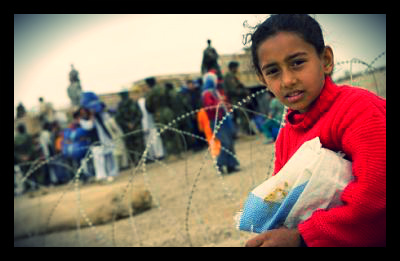
Protecting girls and women during emergencies is an essential part of humanitarian work. However, aid workers neglect protection and instead focus on other tasks such as saving lives, moving trucks, bringing in tents and distributing food. All necessary work, but protection measures also need to be established during emergencies.
Conflicts and natural disasters result in mass displacement, often leading to a breakdown in social structures. Through this breakdown women become more exposed than men to sexual violence.
Typhoon Haiyan has affected millions in the Philippines. According to the United Nations (UN) at least 4,200 people have been killed, 500,000 homes have been damaged, 3 million people have been displaced and a total of 9.8 million people have been affected by the typhoon. These numbers are devastating.
Additionally, thousands of women and girls have also been uniquely affected by this disaster. The UN office for the coordination of humanitarian affairs estimates that 47,600 women between the ages of 15 and 49 affected by Typhoon Haiyan are at risk of sexual violence.
Currently, there is great efforts of protecting women and girls during conflicts. The UK government has especially been acknowledged for their efforts in addressing violence against women. Through The Department for International Development, the UK Government led talks for a new resolution on conflict prevention, resolution and peace-building. The UN Security Council has since passed this resolution. Additionally, through their Foreign and Commonwealth Office an initiative preventing sexual violence was launched in an effort to better prevent and respond to sexual violence during conflicts and prosecute perpetrators.
However, according to Phumzile Mlambo-Ngcuka, executive director of UN Women, more attention needs to be given to the practical responses to an emergency in order to protect women and girls.
Mlambo-Ngcuka, along with other aid leaders, suggests instituting several measures to assist the women and girls who are abused in this manner.
1. As refugees, these women and girls do not experience the same level of rights or access to necessary emotional and physical services. Policies need to be implemented that protect these women as refugees.
2. Well lit toilet blocks or water points need to be built close to where people live. As women and girls have higher visibility, the chances of being abused are diminished.
3. Women often look after orphans during a conflict. Resources need to be provided to these women, whose efforts are often overlooked by governments and local leaders.
4. As sexual violence is prominent, women must have access to appropriate health services such as emergency contraception.
5. Cooking facilities need to be easily accessible, not requiring women to travel long distances into isolated areas in search of firewood.
6. Aid workers need to make sure that women have equal access to food vouchers during distribution. Often times the men get the vouchers, and then women are forced to compromise themselves to get the vouchers they need to provide food for their children.
7. Long-term support in the form of policies and programs is necessary to ensure the rights of these women and girls are upheld.
Lastly, Mlambo-Ngcuka states that the battle of combating violence against women will be won in countries where women engage and confront their governments, and where boys and men are supportive of protecting women.
– Caressa Kruth
Sources: The Guardian, NBC World News, IRIN News

Action Against Hunger Foundation
Action Against Hunger | ACF International (ACF) is recognized as a leader in the fight against malnutrition. It’s a global humanitarian organization with missions of saving the lives of malnourished children in the world and bringing impoverished communities out of poverty.
ACF integrates activities in emergency nutrition, longer-term food, security, and water, sanitation & hygiene. So far, the organization has run life-saving programs in about 40 countries and benefited around 5 million people annually for 30 years. More than 4,200 professionals work around the world, helping ACF bring solutions to scale to save millions of lives.
Although the programs run by ACF may vary from country to country, they all share the same strategies, which are “context-specific, needs-based and customized through direct community participation.”
ACF is on the frontline and reach out to many destitute communities in the world. For example, in 2012, ACF treated more than 157,000 seriously malnourished individuals and helped 662,000 people reach essential water, sanitation and hygiene solutions in Kenya, Nigeria, Uganda, South Sudan, D.R. Congo and Pakistan.
In Congo, it trained thousands o health workers, equipped hundreds of hospitals and health centers and provided lifesaving therapeutic care for over 42,000 severely malnourished kids.
In Nigeria, ACF worked with Nigerian government to strengthen the capacity of its health systems and ensure access to nutritional care for children. The number of children treated for malnutrition was also tropled from 12,000 t 36,000.
Also, about 550,000 farmers in the world were provided with tools after drought and displacement in 2012.
ACF, due to its contributions to global poverty, has been named one of the top nonprofits of 2012 by Great Nonprofits reviewers.
– Liying Qian
Sources: ACF International 1, 2, 3
The Impact of Pakistan’s Growing Population
According to the most recent National Nutrition Survey conducted in Pakistan, approximately 60 percent of the country’s population is facing food insecurity. Of these households, 50 percent of the women and children were found to be malnourished. The growing population in Pakistan poses a significant threat to food security, yet little attention has been devoted to studying the country’s large population numbers and their impact on Pakistan’s development and stability. Perhaps numbers such as these are the reason why more focus is now being placed on the country’s population and its relationship to food security.
According to The Nation, the Population Association of Pakistan (PAP) held its 14th Annual Research Conference on November 20and 21, 2013, during which many problems facing the country were addressed. The theme of the conference was “Pakistan’s Population: New Realities and Challenges for Human Development.”
The country’s food security problems are manifested through the widespread malnutrition experienced by its residents, and these problems were highlighted during the conference by Shahnaz Wazir Ali, President of the Population Association of Pakistan. According to the National Nutrition Survey, stunting (low weight for age), wasting (low weight for age) and micronutrient deficiencies are all major problems in Pakistan.
Another major obstacle in addressing the population problem in Pakistan is poor demographic data. During the conference, Dr. Zeba Sathar, an eminent Pakistani demographer, pointed out that a census has not been conducted in Pakistan since 1998. Although a census has not been conducted in almost a decade, there is information and research evidence that is routinely collected regarding the population. However, this information typically fails to make it into the hands of policy makers.
According to Dr. Sathar, “[w]hat we [Pakistan] need now is that at the federal level, the ministries of planning [and] development and national health services sit together and come up with an overarching, broad and evidence based, strategically focused national population and development policy that outlines guiding principles.”
In response to the information presented at the conference, Minister of State for National Health Services, Regulation and Coordination Saira Afzal Tarar stated it is time to investment in education of Pakistan’s children to meet future challenges, according to the Associated Press of Pakistan. Tarar believes that education and employment are two of the keys to reducing the population in Pakistan. Improvements in these two areas would help reduce the adverse effects on the economy, effects which appear to be related to food security and malnutrition.
Despite the challenges, Pakistan’s leaders are convinced that the country can become a vibrant democracy with a growing economy and a healthy and prosperous population.
– Cavarrio Carter
Sources: The Nation, Daily Times, Associated Press of Pakistan
Photo: Pakistan Real Estate Market
Cost Comparison: Coffee
Perhaps it’s time to start looking where your money goes, and even further where your money could be going. According to Accounting Principal’s 2012 survey, the average American worker spends more than $20 a week on coffee, adding up to a yearly average of around $1,092. For java-lovers, this may seem like a hard habit to kick. However, by even simply making your own coffee at home, you can both save calories and spend that money in a more useful way – combating global poverty.
If more Americans skipped their morning Starbucks and instead donated that money, two things could happen. 1. American obesity would significantly decline 2. Global poverty would significantly decline. Of the roughly 315 million people in the United States, if simply 30 million (about 1 out of 10 people) put their coffee money toward combating global poverty, it could be entirely eliminated.
You heard correctly. The United Nations estimates that it would take nearly $30 billion a year to put an end to world hunger. Therefore, this small and easy adjustment could save the lives of millions worldwide. Is your cup of coffee really worth more than the lives of people everywhere?
There are many ways to start taking steps to make a change toward combating world hunger. While going cold turkey and saving the money for donation is definitely an option, there are other alternatives as well. A basic Keurig Coffee Brewer costs about $120, and including the price of the coffee that goes in them (an extra $180 a year), you can still have your coffee and save the difference between buying coffee every day. While the total is slightly less, it gives coffee-lovers an option to still enjoy their brew but also fight for a good cause.
You may think your contribution won’t make a difference- but it does. Talk to friends, family and encourage them to give up buying a daily cup of java and instead save the money to donate to poverty-groups. This way, we can save the world, one coffee been at a time.
– Sonia Aviv
Sources: Consumerist, Borgen Project, LA Times
Photo: Consumer Channel Dynamics
Typhoon Stirs Risk of Sexual Violence Against Women
Protecting girls and women during emergencies is an essential part of humanitarian work. However, aid workers neglect protection and instead focus on other tasks such as saving lives, moving trucks, bringing in tents and distributing food. All necessary work, but protection measures also need to be established during emergencies.
Conflicts and natural disasters result in mass displacement, often leading to a breakdown in social structures. Through this breakdown women become more exposed than men to sexual violence.
Typhoon Haiyan has affected millions in the Philippines. According to the United Nations (UN) at least 4,200 people have been killed, 500,000 homes have been damaged, 3 million people have been displaced and a total of 9.8 million people have been affected by the typhoon. These numbers are devastating.
Additionally, thousands of women and girls have also been uniquely affected by this disaster. The UN office for the coordination of humanitarian affairs estimates that 47,600 women between the ages of 15 and 49 affected by Typhoon Haiyan are at risk of sexual violence.
Currently, there is great efforts of protecting women and girls during conflicts. The UK government has especially been acknowledged for their efforts in addressing violence against women. Through The Department for International Development, the UK Government led talks for a new resolution on conflict prevention, resolution and peace-building. The UN Security Council has since passed this resolution. Additionally, through their Foreign and Commonwealth Office an initiative preventing sexual violence was launched in an effort to better prevent and respond to sexual violence during conflicts and prosecute perpetrators.
However, according to Phumzile Mlambo-Ngcuka, executive director of UN Women, more attention needs to be given to the practical responses to an emergency in order to protect women and girls.
Mlambo-Ngcuka, along with other aid leaders, suggests instituting several measures to assist the women and girls who are abused in this manner.
1. As refugees, these women and girls do not experience the same level of rights or access to necessary emotional and physical services. Policies need to be implemented that protect these women as refugees.
2. Well lit toilet blocks or water points need to be built close to where people live. As women and girls have higher visibility, the chances of being abused are diminished.
3. Women often look after orphans during a conflict. Resources need to be provided to these women, whose efforts are often overlooked by governments and local leaders.
4. As sexual violence is prominent, women must have access to appropriate health services such as emergency contraception.
5. Cooking facilities need to be easily accessible, not requiring women to travel long distances into isolated areas in search of firewood.
6. Aid workers need to make sure that women have equal access to food vouchers during distribution. Often times the men get the vouchers, and then women are forced to compromise themselves to get the vouchers they need to provide food for their children.
7. Long-term support in the form of policies and programs is necessary to ensure the rights of these women and girls are upheld.
Lastly, Mlambo-Ngcuka states that the battle of combating violence against women will be won in countries where women engage and confront their governments, and where boys and men are supportive of protecting women.
– Caressa Kruth
Sources: The Guardian, NBC World News, IRIN News
Gift Ideas that Help the Poor
As the holiday seasons quickly approaches everyone is starting to brows stores and write shopping lists for their friends and families. This year take a few moments to consider an alternative gift list for your loved ones. There are some innovative organizations that make donation gifts a lot more fun. Instead of giving classic material gifts like scarves or chocolates to your family you can help families struggling with hunger and poverty around the globe.
Heifer International Heifer International’s mission is to work with communities to end hunger and poverty. When American Dan Heifer worked as an aid worker during the Spanish Civil War he realized that distributing cups of milk to the hungry was only a temporary solution. He thought to himself “why not give them a cow?” This is the philosophy that drives Heifer International.
Their holiday gift catalog titled “The Most Important Gift Catalog in the World” allows individuals the chance to give a very meaningful gift to those on their list. In the catalog you can chose from a variety of options including donating an animal, providing women with empowerment, supporting sustainable farming, or providing families with basic necessities. Here are some of the great gifts you can give:
1. Heifer – $500 (full) or $50 (share)
2. Sheep – $120 (full) or $10 (share)
3. Bountiful Harvest Basket – $72
4. Gift of Irrigation Pumps – $150
5. Launch a Small Business – $365
World Vision World Vision has a similar program called the “World Vision Gift Catalog” that allows people to give gifts that aid people living in poverty both in the United States and globally. They have a large assortment of gifts ranging from emergency aid to care for orphans and widows. Some of their most popular gifts are:
1. Goat and Two Chickens – $100
2. $350 Worth of Medicine – $35
3. Hope for Sexually exploited Girls – $35
4. $250 worth of necessities in the USA – $25
5. Share of a Deep Well – $100
Charity Choice If you would like to let your loved one chose a charity that will be particularly meaningful to them consider Charity Choice Gift Cards. Founded in 2004 by Mark Finkel, Charity Choice allows buyers to make a donation and receive either a paper card or eCard. This gift card entitles the recipient to select a charity for their gift to be donated to from an online list of over 250 charities.
Sources: Heifer International, World Vision, Charity Choice
Children’s Books on Poverty
In America, we often tend to live inside of a bubble, a comfortable space in which we utilize blissful ignorance to the outside world and its problems.
But this bubble has a negative impact on what’s beyond it – the rest of the world. By choosing to live in ignorance, people who need help are unable to receive it. Where that problem begins is in the home – with children.
Being privileged to a comfortable lifestyle as a child, I grew up typically getting what I wanted for Christmas and birthdays. My sister was given an iPod when they first came out, while I eventually came to be the owner of a Gameboy Color, a Nintendo 64 and a GameCube. Then again, sometimes there were disappointments – things I had asked for that were not wrapped up in brightly colored packages under the tree.
It was important to my parents to make sure that my sister and I got gifts we would actually use, but even more important was the lesson that we wouldn’t always get what we want.
That lesson applies in a large scale to the problem of global poverty, and authors are now tackling it. Not only do these lessons come in large, adult books, but they are now being offered in the pages of children’s books.
The following books educate and reinforce principles regarding economic differences, while also validating the emotions of the poor readers. The refreshing part is that these books do not intend to preach; they teach the values of resourcefulness and gratefulness.
– Samantha Davis
Sources: Huffington Post, Scholastic
Photo: Georgina Public Libraries
Pizza Hut Donates to Philippines
It is almost impossible to watch a program on television without seeing an advertisement from one of America’s top pizza restaurants, Pizza Hut. Pizza Hut is a subsidiary of Yum! Brands, Inc. and is known for delivering more pizza, pasta and wings than any other restaurant in the world. The Pizza Hut name has come very far since its invention in Wichita, Kansas 55 years ago.
Pizza Hut is also a top partner of the United Nations World Food Programme (WFP), the world’s largest effort to fight hunger worldwide. Pizza Hut has been involved with WFP since 2007 and has donated over $10 million in the form of over 40 million meals to fight hunger in the United States. Pizza Hut also founded the Pizza Hut Harvest Program to independently donate meals to shelters in the United States.
Pizza Hut recently declared that a designated percentage of its World Hunger Relief donations will go to the Philippines. The recent typhoon in the Philippines has left 2.5 million survivors hungry and in need of food. Scott Bergren, President and CEO of Pizza Hut, emphasized the importance of aid to the survivors when he said “the purpose and intent of our partnership with the World Food Programme is to provide relief through food to those most in need, and nowhere is that need more urgent now than in the Philippines.” Bergren also took a moment to thank the WFP for allowing Pizza Hut and Yum! Brands to help so many people.
Other major companies such as Royal Caribbean Cruises, FedEx and Google have also donated to those in the Philippines in light of the recent tragedy.
– Lienna Feleke-Eshete
Sources: CNN Money, Market Watch
Photo: Entrepreneur
Ryan Gosling as an Advocate
The famous female-favorite movie star Ryan Gosling – notably known for films such as Drive and The Ides of March – is much more than just the typical Hollywood hunk. Over the past few years Gosling has proven to be quite a proactive and admirable advocate.
Gosling’s main advocacy passion is for animal rights: he has on numerous occasions spoken for maltreated farm animals. In the spring of this year, for instance, he learned of an atrocious practice about which he wrote a letter to People for the Ethical Treatment of Animals (PETA), urging them for immediate action. Apparently, farms across the nation would engage in extremely painful dehorning methods of cows. Using dangerous chemicals or simply amputating the appendages would leave a three-month healing time; only about a tenth of all farms use any kind of pain reliever for their animals. Ryan Gosling advocates that the simple solution here would be to breed hornless cows. The letter was publicized in its fullness on PETA’s website and quickly spread across the internet.
In 2011, Gosling appeared on the Jimmy Kimmel show raising another important issue: the war in Congo and how we are fueling it by buying products – everyday electronics – which contain minerals obtained there. Advocating for human rights, Gosling states, “We want our products conflict free.” The star personally visited Congo prior to his appearance on the show, meeting with various organizations and actively advocating against the war. He urges viewers of Jimmy Kimmel to do the same by supporting Raise Hope for Congo – a campaign geared against the ongoing conflict in eastern Congo.
In a separate letter to the Globe and Mail, Ryan Gosling advocates for maltreated pigs by drawing a parallel between them and his beloved dog, George. Intelligent and curiously close to humans in plentiful ways, pigs are being kept in solitary confinement for weeks by the pork industry, leading to the deterioration of both mind and muscle. Gosling means that he could never imagine doing that to his four-legged companion; actually, could any Canadian (or sensible person in general)?
Ryan Gosling as an advocate is a true knight in shining armor for the world of the weak and the voiceless. The characters he portrays in his films are often troubled yet highly likable. Using that same charisma outside of the big screen is Gosling’s advocacy wild card. Decidedly down-to-earth and concerned with making the world a better place, he manages to seamlessly intertwine his career with his passion for aiding those in need. Instead of putting on glamorous events or the likes, he often chooses the more subtle, yet efficient approach of going straight to the source. As individuals stumble upon these letters he’s taken the time to personally write, they may stop and think for an extra moment, and feel more motivated to act themselves. Because, let’s be frank: few can resist the inspiring, mysterious, yet heartwarming appeal of Ryan Gosling.
– Natalia Isaeva
Sources: IMDB, PETA, Ecorazzi, Raise Hope for Congo, Buzzfeed, The Globe and Mail
Photo: Mirror UK
UN Foundation Gives Children a Shot@Life
Every 20 seconds, a child dies from mundane diseases that have faded from first world concerns like nothing but a nightmare. But 1.5 million children die every from pneumonia, diarrhea, measles and polio—all diseases that are preventable with the vaccines one might find at a routine clinic. For children living in impoverished regions, these diseases are an all too prevalent reality caused by the lack of access to vaccines.
United Nations Foundation-sponsored Shot@Life is the latest movement in garnering support and advocacy in humanitarian efforts to provide vaccines to children in need. The movement stresses the importance of Americans to reach out to Congress to make vaccinating children around the world a political priority. Shot@Life emphasizes the dire consequences of slashing global health funding and other forms of foreign aid, that Americans can no longer remain complacent in informing their government of children under five in peril of seemingly antiquated diseases like polio and measles.
The routine life-saving shots one normally receives at Kindergarten are denied to 2.5 million at-risk children.
U.S. paralympian Dennis Ogbe, an advocate for polio eradication, is a living testament to the ever-present threat of the disease. Raised in Nigeria, the track-and-field athlete contracted polio at the age of 3 and was confined to a wheelchair whilst his friends were allowed to run and play. Through force of will and support from his father, Ogbe miraculous regained mobility in one leg—one leg that would scale him to a place high amongst Olympians.
Though now 99% eliminated worldwide, polio still remains a presence—one that might continue grow and resurface as a more serious threat through complacency. There are still 200 cases per year with remaining polio epidemics in Nigeria, Pakistan and Afghanistan. Permanent polio teams have been established in hard-to-reach provinces in Pakistan and Afghanistan, while Nigeria has employed satellite technology in order to best reach out to children in need of vaccines.
Funding shortages in global partnerships have hampered efforts to completely eradicate polio; it is reported that nearly $1 billion is needed to fully rid the world of polio. The projected benefits and returns in investing in polio eradication are impressive: by 2035, the world’s poorest countries will receive benefits of up to $50 billion. Furthermore, investing in channels of dispersing polio vaccines would in turn open up cost-effective channels to deliver more vaccines and thereby prevent more types of diseases, such as measles and rotaviruses, in regions of extreme risk and poverty.
It is time to construct a world in which all children of all countries are protected from all preventable diseases and given an equal shot at living. UN Foundation’s Shot@Life is a call for Americans to their part in the name of global health equality.
– Malika Gumpangkum
Sources: Shot@Life, AAP Global, CNN, CNN
DJ David Guetta: a Humanitarian Campaign for Love
David Guetta is a Grammy Award winning international DJ who is best known for his electro-house dance club hits and has worked with the likes of acts such as Akon, Usher, Lady Gaga, Tegan and Sara, and Jay-Z. Recently, the 46-year-old French producer teamed up with the United Nations for “The World Needs More” campaign which integrates social media messaging and sponsored humanitarian campaign donations. Launched in support of World Humanitarian Day, “The World Needs More” campaign encourages fans to hashtag a Sponsored word on Twitter or Facebook which will unlock a $1 donation of that sponsors choosing. Fans are also allowed to donate via text message.
Whether that word is #Empowerment supported by Intel or #Strength promoted by Gucci, all sponsored words that are sent in with in company of the hashtag #TheWorldNeedsMore, will be turned into aid which will go towards specific humanitarian efforts around the world. Considering Guetta included the term Love in the title of his debut album, “Just a Little More Love,” and one of his most popular singles, “When Love Takes Over,” it comes as no surprise which word he’s sponsoring. “There’s been a lot of my songs about love and that’s the kind of person that I am, the biggest energy in the world. Universal love. Have a little bit of compassion and love for each other.”
Joining Guetta’s campaign are various countries and organizations including the UN Foundation, the UN Development Programme (UNDP), the UN Office for the Coordination of Humanitarian Affairs (OCHA), the International Council of Volunatry Agencies (ICVA), and advertising agency Leo Burnett New York. The campaign was initially launched in August, though it was recently rebuffed at the knowledge of the costly devastations occurring in the Philippines at the hands of Typhoon Haiyan. Additionally money raised by Guetta will provide much needed food relief to those suffering from shortages in all parts of the world.
Guetta was also inspired to create an exclusive song to go along with his #Love campaign which he titled, “One Voice” featuring Mikky Ekko. His recent interest in global matters spurned his decision to create a song with a deeper meaning, “I’ve never had songs that are like this kind of subject, so I’m really excited about this. It’s a big change lyrically, but also sonically. Just, you know, growing up, trying to do something bigger than myself. It’s a big stretch from Sexy Chick.”
The visuals for the song were projected onto the face of the United Nations Secretariat Building in New York on November 22, 2013. Succeeding the broadcast of “One Voice,” the building was used as a backdrop for an interactive twitter wall which displayed tweets from across the world. This event was the first promotion of its kind and was hosted by United Nations Secretary-General Ban Ki-moon who began his week with a visit to an Auschwitz concentration camp in Poland. Mr. Ban praised Guetta for his “courage to change and create a new future for us all.”
– Jeffrey Scott Haley
Feature Writer
Sources: Rolling Stone, Lubbock Online, UN, World Humanitarian Day
Photo: Radio