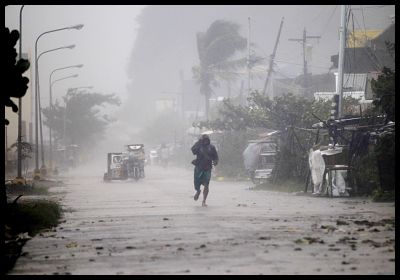
On November 8, 2013, the strongest storm ever to make landfall hit nine regions of the Philippines, leaving upwards of 11 million people to suffer in its wake.
Typhoon Haiyan was underestimated by both local and national officials and wound up decimating numerous cities, equipped with a low number of emergency supplies and a general lack of planning. For nearly 24 hours, officials in the city of Tacloban had no way to even call for help. Though the strength of the storm was grossly underestimated, neighboring nations still kept out a watchful eye, and once word got out from the regions most affected, emergency relief efforts came rushing to provide aid for those affected.
The Agency for Technical Cooperation and Development (ACTED) had an immediate response being reactive on the ground two days post-typhoon with three bases in Northern Leyte, Eastern Samar and Davao. It was one of the first NGOs in Guiuan to meet emergency needs for those affected. Since the disaster, ACTED has continued to focus on community-led recovery and development by responding to two major needs: water hygiene and sanitation access and housing reconstruction.
ACTED provides the following data on the work they have been engaged in throughout the past year:
- Water: 30,000 people have improved access to safe water.
- Sanitation: 30,000 people have improved access to adequate sanitation services and facilities.
- Information: 42,286 people participated in information sessions to prevent water-related diseases and hygiene promotion activities.
- Healthy schools: 4,633 children have access to safe water, sanitation and hygiene facilities in their learning environment; they also participated in hygiene promotion sessions.
In addition, ACTED has joined efforts with ShelterBox, an international disaster relief charity, to support 300 families in rebuilding their homes, providing housing material, training local carpenters and mobilizing communities to build houses using safer techniques. Thus far, 71 households received shelter materials, 841 people attended workshops and 30 carpenters were trained.
Typhoon Haiyan left millions of people displaced in the aftermath of a disaster. A year later, families continue to struggle to rebuild their lives even with the aid of others.
And when Typhoon Hagupit hit, ACTED was ready for a quick response.
After the first sign of its arrival, ACTED teams took every measure to be prepared in responding to emergency needs, stocking on food, water, fuel, petrol and other essential items. They also set up evacuation centers with food and access to toilets at the ready.
As a result of the advanced planning, thousands of people were evacuated to safe places like schools, but Typhoon Hagupit nevertheless brought about disaster to homes and even to areas that still haven’t recovered from the previous typhoon only a year ago.
In the immediate aftermath of both Typhoon Haiyan and Typhoon Hagupit, ACTED teams have positioned themselves across the country to access the extent of the damage and the type of response that will need to be carried out to support locals in rebuilding their lives. Currently, they are bringing sustainable efforts, such as building the capacity of farmers, supporting farmers’ organizations and facilitating linkages with markets.
ACTED’s vocation is to support vulnerable populations affected by natural disasters, wars, economic and social crises, and more. They are committed to addressing the needs across the globe with a multidisciplinary approach that can be adapted to any context. Implementing about 260 programs per year, ACTED seeks to cover the multiple aspects of humanitarian and development crises in the following fields: emergency relief, food security, health promotion, education and training, economic development, microfinance, advocacy and institutional support, and cultural promotion.
Their work is quietly, yet effectively accomplishing UN Millennium Development Goals in these days of crisis in the Philippines.
– Chelsee Yee
Sources: ACTED 1, ACTED 2, InterAction
Photo: NBC

ICRW Fights for Gender Equality
In the developing world, one in three girls is married before age 18, and over 200,000 women die each year from pregnancy-related causes. In Sub-Saharan Africa, women account for approximately 60 percent of HIV infections, despite making up just over half of the population.
The International Center for Research on Women, or ICRW, a Washington, D.C.-based global research institute and registered nonprofit, has been working for nearly 40 years to combat statistics like these.
Founded in 1976, the ICRW conducts empirical studies intended to measure the obstacles that hinder women in the developing world from reaching their full potential. The ICRW then recommends policy priorities and designs “evidence-based plans” for donors, program designers and policy makers that enable needy women to lead happier, healthier lives.
The ICRW focuses its research on several main areas related to women’s empowerment. The first of these areas centers on issues that begin in adolescence.
Specifically, the ICRW conducts research on child marriage, education, work, healthcare and relationships. By identifying ways to make the attitudes and options of adolescent boys and girls more equitable, the ICRW hopes to empower women to take better control of their own futures.
The ICRW also focuses its research on how disparity between men and women affects agricultural productivity and food security in developing nations; women’s economic empowerment, employment opportunities and property rights; reproductive health and fertility control; HIV contraction, stigma and discrimination; and domestic violence issues.
In the four decades since its inception, the ICRW’s research has been instrumental in bringing about meaningful change in the lives of women in need. Its research efforts have, among other accomplishments, guided the passage of a 2005 law in India working to combat domestic violence, increased the availability of microfinance loans available to women in developing nations and helped integrate women’s empowerment and gender equality into the Millennium Development Goals.
With new regional offices in Kenya and India, the ICRW continues to conduct relevant research aimed to produce “a path of action that honors women’s human rights, ensures gender equality and creates the conditions in which all women can thrive.”
– Katrina Beedy
Sources: International Center for Research on Women, Coalition for Adolescent Girls
Photo: Flickr
ACTED Continues Aid in Wake of Typhoon Hagupit
On November 8, 2013, the strongest storm ever to make landfall hit nine regions of the Philippines, leaving upwards of 11 million people to suffer in its wake.
Typhoon Haiyan was underestimated by both local and national officials and wound up decimating numerous cities, equipped with a low number of emergency supplies and a general lack of planning. For nearly 24 hours, officials in the city of Tacloban had no way to even call for help. Though the strength of the storm was grossly underestimated, neighboring nations still kept out a watchful eye, and once word got out from the regions most affected, emergency relief efforts came rushing to provide aid for those affected.
The Agency for Technical Cooperation and Development (ACTED) had an immediate response being reactive on the ground two days post-typhoon with three bases in Northern Leyte, Eastern Samar and Davao. It was one of the first NGOs in Guiuan to meet emergency needs for those affected. Since the disaster, ACTED has continued to focus on community-led recovery and development by responding to two major needs: water hygiene and sanitation access and housing reconstruction.
ACTED provides the following data on the work they have been engaged in throughout the past year:
In addition, ACTED has joined efforts with ShelterBox, an international disaster relief charity, to support 300 families in rebuilding their homes, providing housing material, training local carpenters and mobilizing communities to build houses using safer techniques. Thus far, 71 households received shelter materials, 841 people attended workshops and 30 carpenters were trained.
Typhoon Haiyan left millions of people displaced in the aftermath of a disaster. A year later, families continue to struggle to rebuild their lives even with the aid of others.
And when Typhoon Hagupit hit, ACTED was ready for a quick response.
After the first sign of its arrival, ACTED teams took every measure to be prepared in responding to emergency needs, stocking on food, water, fuel, petrol and other essential items. They also set up evacuation centers with food and access to toilets at the ready.
As a result of the advanced planning, thousands of people were evacuated to safe places like schools, but Typhoon Hagupit nevertheless brought about disaster to homes and even to areas that still haven’t recovered from the previous typhoon only a year ago.
In the immediate aftermath of both Typhoon Haiyan and Typhoon Hagupit, ACTED teams have positioned themselves across the country to access the extent of the damage and the type of response that will need to be carried out to support locals in rebuilding their lives. Currently, they are bringing sustainable efforts, such as building the capacity of farmers, supporting farmers’ organizations and facilitating linkages with markets.
ACTED’s vocation is to support vulnerable populations affected by natural disasters, wars, economic and social crises, and more. They are committed to addressing the needs across the globe with a multidisciplinary approach that can be adapted to any context. Implementing about 260 programs per year, ACTED seeks to cover the multiple aspects of humanitarian and development crises in the following fields: emergency relief, food security, health promotion, education and training, economic development, microfinance, advocacy and institutional support, and cultural promotion.
Their work is quietly, yet effectively accomplishing UN Millennium Development Goals in these days of crisis in the Philippines.
– Chelsee Yee
Sources: ACTED 1, ACTED 2, InterAction
Photo: NBC
Malala Yousafzai: Nobel Peace Prize Winner
Malala was born in 1997 in Mingora, Pakistan, where she was not banned from the opportunity to have an education. Yousafzai attended a school that her father founded. Once the Taliban began attacking their rights to education, she knew she had to say something about it. She gave a speech in 2008 entitled “How dare the Taliban take away my right to basic education?” This was just the start of her growing platform of writing and speeches in activism towards girl’s education.
In 2009, Yousafzai made her first BBC blog post that exposed the daily hardships that girls faced daily in the Swat Valley of Pakistan. Her posts were under a pseudonym that eventually was discovered. At the time the Taliban in the area was banning all girls from attending school, this did not stop Yousafzai from her protests. Even after her name was discovered, Yousafzai continued to post blogs about the daily violence, intimidation, ridicule and suffering that the girls faced.
As her popularity grew, the Taliban began to view Yousafzai as a threat. The uprisings built up and on October 2012, as Yousafzai was boarding her school bus, she was shot three times. The injury was so serious she was sent to Birmingham, England for further care. Even after the attempted assassination, Yousafzai continued to be an activist for women’s rights, especially education.
The United Nations petition for all children to have access to education by 2015, was inspired by Yousafzai. She has been honored with countless awards, including the 2014 Nobel Peace Prize along with Kailash Satyarthi of India, who is fighting against child slavery around the world. Both individuals were awarded because of their efforts towards “their struggle against the suppression of children and young people and for the right of all children to education.”
Malala Yousafzai is a perfect example that if you have a strong enough belief in something, you do have the power to enact change. She stood up for not only herself, but girls all across the world who were told that they would not be given an education.
The power of one voice is truly strong enough to rattle the world.
– Charisma Thapa
Sources: Optimist World, A&E, USA Today
Photo: Flickr
China’s Role in Global Poverty Reduction
From 1990 to 2010, the percentage of the world population living in extreme poverty dropped from 36 to 18 percent. In two decades, nearly a billion people were pulled from the depths of extreme poverty. Who did the pulling?
The 2014 U.N. progress report on the Millennium Development Goals (MDGs) cited the drop in extreme poverty as evidence of the MDGs’ impact on poverty reduction. However, the report also notes that most of the progress came from China, where the poverty rate dropped from 60 percent in 1990 to 12 percent in 2010.
Not only did China not sign up for the MDGs framework, much of its progress came prior to the MDGs. As of 1980, China had more people living in poverty than any other country in the world. From 1981 to 2010 however, China succeeded in pulling roughly 680 million of its people out of poverty. China alone accounts for nearly 75 percent of the world’s decline in poverty over the last thirty years.
Much of China’s success stemmed from agricultural and rural development. According to a World Bank study, roughly three-quarters of China’s overall poverty reduction between 1981 and 2001 came from gains to the rural poor.
China’s experience in combatting severe poverty rates could make for a valuable export. In a November conference, officials from China and the African Union met in Ethiopia to discuss how Africa can benchmark Chinese industrialization practices, as it tries to make its own push out of poverty. A jointly commissioned comparative study on Special Economic Zones in China was presented at the conference, with the goal of improving Special Economic Zones in Africa.
Ethiopian president, Dr. Mulatu Teshome, believes that cooperation with China will be essential in helping drive the African continent out of poverty: “Benchmarking China’s best practices in industrialization is essential, in that that it is almost unthinkable to realize the African dream of becoming an industrialized, united and prosperous continent by 2063 only through Africa’s own technology generation.”
– Parker Carroll
Sources: Economist, Huffington Post, New Business Ethiopia
Photo: Blogspot
House Approves $1 Trillion Spending Package
The U.S. House of Representatives approved a $1 trillion government spending package on Thursday, December 11. The agreement will keep the government open into next year. With major opposition from House Democrats, the bill narrowly squeaked by on a 219-206 vote. The Senate passed a two-day funding bill after the House vote, dodging a government shutdown that would have started at midnight on the 12th.
House Democrats interrupted plans for a Thursday afternoon vote on the bill because of opposition to provisions entailing more relaxed regulations on Wall Street and with campaign finance laws. This opposition incited a rare case in which House Democrats became pitted against President Obama, who approved of the deal for its inclusion of several of his specific spending priorities. These priorities include more funds to fight Islamic State militants, help combat the Ebola outbreak in West Africa and distribute more Pell Grants for college students.
The clash began on Tuesday when Senator Elizabeth Warren (D-Mass.) strongly opposed the bill’s weakening of a certain provision of the 2010 Dodd-Frank financial services law that was created to protect taxpayers from risks resulting from complex financial trades by large banks. Democrats were further dissatisfied with a provision that significantly increased the funding private donors can grant to political conventions. Nancy Pelosi (D-Calif.) insisted she was not made fully aware of the provision’s extent before the package’s initial unveiling.
After Democrats voted against advancing the bill on Thursday afternoon, House GOP leaders took the bill off the floor and the White House began trying to drudge up Democratic support for the package. President Obama and Vice President Biden began personally calling House Democrats in the final few hours before the dreaded government shutdown, encouraging them to view the bill more favorably. Meanwhile White House Chief of Staff Denis McDonough went to Capitol Hill in an effort to change dubious Democrats’ minds, insisting that passing the deal would place more confidence into the economy. Democrats exiting the meeting claimed that McDonough had told them the federal government could not survive on constant short-term continuing resolutions.
Some Democrats supported the bill, arguing in favor of the fact that it does contain several democratic spending priorities. Notably, Minority Whip Steny Hoyer (D-Md.), who is the second-highest-ranking House Democrat, openly supported the package. Some Republicans, on the other hand, opposed the bill on the grounds that it would not be able to succeed in reining in the President’s order. This internal opposition meant that Republicans needed Democratic votes in order to pass the deal.
Eventually many House Democrats decided to offer up their support for the legislation, enough to ultimately ensure that it successfully passed. 57 Democrats ended up crossing the divide to vote in favor of the bill along with 162 Republicans. The deal has arisen out of weeks of negotiations between Senate Appropriations Chairwoman Barbara Mikulski (D-Md.), House Appropriations Chairman Hal Rogers (R-Ky.), and their respective party leaders.
– Shenel Ozisik
Sources: USA Today, Politico
Photo: ABC
The Health Impacts of Poverty
There is a substantial relationship between poverty and health. Long-term poverty and economic insecurity have broad-reaching long-term ill- health consequences. In addition to creating stress, which causes a myriad of health problems, poverty also results in low levels of sanity, high incidences of infectious disease and mental health issues.
Prime indicators that poverty directly affects health are life expectancy, prevalence of chronic or communicable diseases, behavioral and self-control issues and high levels of long-term stress. Long-term poverty imposes a huge burden of stress on the impoverished. The hardships of finding permanent work, taking care of children, finding affordable food and clean water can all take an enormous toll on physical and mental health.
Long-term stress also creates hormones that compromise the immune system, opening the door for communicable diseases. Women who experience high levels of stress during pregnancy are more probable to have children who are predisposed to developing diabetes.
Children are especially susceptible to the health consequences of poverty. Bernard Fuemmeler, associate professor in Community and Family Medicine at Duke University School of Medicine, says that “poverty during childhood not only appears to affect child development, but can have lasting effects on the types of health choices made during adolescence and early adulthood.” His research finds that economic insecurity in the home during childhood can permanently affect the way people make decisions and their ability to self-regulate.
Urban poverty is characterized by crowded, unsanitary conditions that lead to higher incidences of communicable disease. Transmission becomes very easy for highly-infectious diseases the closer people are to one another. Dirty water, unclean food and cook spaces and improper waste disposal are common in crowded areas.
Poor countries as well have high public health obstacles to overcome. Lack of funding, stigma and myth, bureaucratic complications and limited infrastructure all contribute to a reduction in capacity to deal with health crises and public health issues. Low access to vaccines and medication is a particular public health nightmare for poor countries because it creates not only drug resistance but also black markets for hard-to-get medicine.
– Caitlin Huber
Sources: Think Progress, News-Medical, Jama Network, NAS, UN, Wisconsin-Madison
Photo: TIME
Global Climate Change: Will India Follow?
The breakthrough collaborative announcement by the United States and China on curbing greenhouse gases has sparked a global movement on climate change. For many years, international climate talks have been ignored by those who caused the problem of climate change. The United States and China remain the two largest emitters of carbon dioxide, and have now pledged to reduce emissions by at least 40 percent by 2030. With India on board with the global change, the movement would spark continual momentum.
A critical question is whether India will join the United States and China’s side in climate talks. India has become the third world’s largest emitter of greenhouse gases. The world needs India to join many other countries to help alleviate climate change; without India, efforts to tackle global climate change will be difficult. India must consider its investment in developing clean and renewable energies, and reconsider its investment on coal.
India and China share a common domestic problem; fossil fuels that cause climate change also create major air pollution. Over the years, air pollution has risen to harmful levels. The World Health Organization monitors for air pollution, and has stated that China and India’s cities failed the organization’s test for satisfactory levels of airborne particulate. This microscopic matter is believed to be one of the most deadly air pollutants for the human health. More than half of these cities also fail to uphold to their own specific standards.
The pollution shortens lives and is costly to China and India’s economic growth. As a result, many Chinese citizens have called for change. China’s leaders have responded by taking big actions on the global climate change, and should motivate India to do the same before the problem poses a bigger threat.
India could possibly follow China. India’s Prime Minster, Narendra Modi, has publicly acknowledged the recognition of the country’s severe pollution problem. Modi made a public announcement on his objectives to make air quality data accessible to the public. India has a reputation for investing huge amounts on coal. In the last five years, India has increased its coal power capacity by 73 percent. Moreover, India plants to double domestic coal production to one billion tons a year, by 2019, to fuel new plants and boost imports.
India’s air is among the world’s dirtiest, with largely unregulated and unmonitored coal plants. Unfortunately India’s decisions to invest big on coal plants kills up to 115,000 Indians a year, and costs the Indian people about $4.6 billion annually.
Many climate change advocates in India have expressed doubts following India’s Prime Minister, Narendra Modi’s, choice to not attend the United Nations Climate Summit to speak about the change.
The Green Climate Fund, which operates to redistribute money from the developed world to the developing world in order to assist developing nations in adapting to climate changes, have risen close to $10 billion in funds. Pledges to the fund come from the government of 22 countries; four developing countries were among the contributors.
If India makes amends to follow other nations in pledging towards helping the change, this will make its mark in history as one of the largest movements in confronting climate change.
– Sandy Phan
Sources: WHO, UNFCCC, Center for Climate and Energy Solutions
Photo: LA Times
Education in Yemen Still Needs Attention
Yemen, a small Middle Eastern nation southwest of Saudi Arabia, has embarked on an ambitious goal in the past decade and a half to drastically reform its education system. As part of the 2000 UN Millennium Development Goal project launched nearly 15 years ago, Yemen set a goal of reaching 100 percent primary school enrollment by 2015.
As 2014 draws to a close, it appears that Yemen will not be meeting its Millennium Development education goal by next year. However, statistics indicate significant progress has been made in recent years, though more attention is needed to bring education in Yemen up to par with other developed nations. According to the World Bank, Yemen’s net primary school enrollment rate stood at 86 percent in 2013, the last year data was made available. These numbers are up from 66 percent in 2001.
Educational improvements may in part be attributed to the implementation of several ambitious educational reform projects. One such project, the Secondary Education Development and Girls Access Project (SEDGAP), was launched in 2007 with the goal of addressing three main areas of the Yemeni education system: “improving equity and reducing gender gaps, enhancing the quality of service delivery, and project management and monitoring.”
To help reduce educational gender gaps, SEDGAP imposed a minimum 15 percent female representation requirement in new teaching posts. As of 2008, only 7.5 percent of secondary school teachers in rural areas were female. Anecdotal evidence has suggested that hiring female teachers attracts greater female enrollment rates. According to the International Development Association (IDA), this may be due in part to the fact that Yemeni parents tend to object to male instructors teaching their daughters, particularly in higher grades.
Other material and social factors such as lack of transportation, poor school facilities and early marriage have also been significant contributors to the educational gender gap. These material factors appear to disproportionately affect girls living in rural areas.
SEDGAP has introduced a variety of other reforms to improve service delivery and monitoring. Some of these reforms include new guidelines aimed to balance out uneven student-teacher ratios across rural and urban schools, more consistent oversight of teacher absenteeism and salaries, textbook revisions for grades 1-12, and new oversight regulations for Yemen’s three public educational ministries.
SEDGAP implementation will be completed in late January 2015. A February 2014 impartial review of the project concluded moderate satisfaction in meeting progress development objectives.
World Bank data indicates gross enrollment rates for basic, secondary and tertiary education have increased overall for Yemeni boys and girls. Nevertheless, more time is needed to meet Millennium Development education goals, particularly for secondary education targets among females. According to the United Nation Development Programme, only 7.6 percent of Yemeni females age 25 and over have at least some secondary education.
– Katrina Beedy
Sources: World Bank 1, World Bank 2, World Bank 3, World Bank 4, World Bank 5
Photo: National Yemen
The Causes of Multi-Drug Resistant Tuberculosis
In 2013, five percent of global tuberculosis cases were known as multi-drug resistant tuberculosis. MDR TB is a form of tuberculosis that does not respond to the standard first-line drugs of Isoniazid and Rifampicin, which are used to treat TB.
Multi-drug resistant tuberculosis is on the rise around the world. There are 27 high MDR TB burden countries. A large majority of these are also high burden countries for regular TB as well. MDR TB rates are extremely high in Eastern Europe, where as many as 28 percent of new TB cases are MDR. Two countries, India and China, carry the most incidences of MDR TB.
Multi-drug resistant tuberculosis is a man-made problem created by inadequate or improper administration of TB drugs. Because of the length of treatment required for TB, improper drug use is common. As patients start to feel better, they stop taking their medication. The TB bacteria are still not eradicated from the body so the TB builds resistance to the first-line drugs that the patient has already taken. When the patients fall ill again, their TB strain will not only not respond to first line drugs, it will be highly contagious.
Weak TB control programs at the country-level contribute to drug resistance because they allow for improper TB treatment. Because of the risk that patients will not finish the TB treatment cycle, TB control programs are designed to create a system of observation by health professionals that insures proper treatment. However, countries with low health infrastructure and limited resources cannot follow the progress of every TB patient.
A growing concern is not the new instances of MDR TB cases but the infectiousness of the people who already have it. Because TB disproportionately affects the poor, who live in crowded, unsanitary conditions, the threat of contagion is much greater. This is especially true in high-burden countries like India and China, where the living conditions of the poor are extremely crowded.
The treatment for MDR TB is extremely expensive and much harder to access. The treatment cycle can last upward of two years and includes a daily injection for a period of six months, increasing the risk of patients not finishing the treatment even more than regular TB treatment. Patients who do not finish treatment create resistance to the second-line drugs.
A new phenomenon emerging is an extremely drug resistant, or XDR, strain of TB. XDR TB cases only make up five percent of MDR TB cases. XDR TB is resistant to any fluoroquinolon, at least one of three second-line drugs and both first-line drugs. Research and infrastructure dealing directly with XDR TB are very limited and resource consuming. For least-developed and developing countries with limited medical resources, XDR TB is almost impossible to treat.
– Caitlin Huber
Sources: E-Medicine Health TB Alliance, WHO
Photo: The Guardian
Holiday Gifts that Keep Giving
According to the National Retail Federation, Americans are projected to spend over $600 billion on holiday gifts during the 2014 season alone. A staggering statistic when compared to the fact that an estimated $40 billion would be necessary to provide clean water and sanitation, reproductive health for women and basic education, health and nutrition to every person living in a developing country worldwide.
Fortunately, many nonprofits, online marketplaces and charitable organizations are doing something to help redirect some of the money that Americans spend each holiday season to those who need it most. If you’re in the market for a gift that does double-duty this year, check out the following stores and nonprofit organizations for ample meaningful gift ideas:
1. Heifer International:
Give the gift of an animal in your friend or family’s name and help provide a family in a developing country with both food and a reliable source of income. Heifer International
2. Books for Africa:
Honor a friend or family with a book donation through Books for Africa (BFA), a non-profit dedicated to increasing literacy rates and children’s access to books in Africa. For donations of $50 or more, BFA will send a hand-written thank-you note to your honoree. $50 provides 100 books for a classroom. Books for Africa
3. Oxfam America Unwrapped:
Browse an endless array of gifts online—from goats and honeybees, to books and school meal programs for kids—and give to a family or child in need on behalf of a friend or family member. In return, a free, personalized card will be sent to the ‘gift-giver,’ along with a photo of the gift and information about how specifically it makes a difference in the lives of people living in poverty. Oxfam America Unwrapped
4. JADEtribe:
100 percent natural and ethical, JADEtribe’s bags, clothing and accessories truly embody the phrase “fashion with a conscience.” Each piece is handcrafted by women in South East Asia, and proceeds from JADEtribe purchases directly improve the lives of the female artisans who contribute to the company’s extensive selection. JADEtribe
5. Global Goods Partners:
Artisans living in third-world countries have an opportunity to sell their beautiful handmade goods on this online marketplace. Purchase a gift from this site, and a high percentage of sales will go directly back to the artisan who made it. Global Goods Partners
6. Ten Thousand Villages:
A fair-trade retailer since 1946, Ten Thousand Villages has stores across the United States, and an extensive collection of jewelry, clothing, kitchen and household items, and home décor, among many other gift ideas. The store partners with artisans around the world, in Bangladesh, India, Nigeria, Cambodia and Peru, among dozens of other countries. Its mission: sustain livelihoods, empower women, preserve cultural arts, and build global relationships. Ten Thousand Villages for online purchases or to find a store near you.
7. The Little Market:
Lauren Conrad’s e-commerce site, which is filled with vibrant, handmade goods, was created to serve as a platform for female artisans living in third-world countries worldwide to reach a wider audience. The proceeds for items such as jewelry, clothing, bags and ceramics go directly back to the women who made them. The Little Market
8. Bead for Life:
Bead for Life was founded to empower women in Uganda by helping them start their own bead-making businesses. The Beading Program provides women in impoverished countries with a steady source of income, derived from handcrafted beaded jewelry. Invite friends and family to shop for the cause by hosting a Beading Party from your home; a customized inventory of jewelry will be sent directly to your doorstep beforehand. Or order beads online. Bead for Life
Whether you’re giving a life-changing gift of an animal to a family in need, or wrapping a selection of handmade bags, scarves and jewelry that will help support the livelihood and businesses of female artisans worldwide, choosing a gift from the above list automatically makes you an ally in the fight against global poverty. Why not send a feel-good present or two this year, when it’s guaranteed to touch the friend or family member you’re choosing to honor, and to alter the lives of the person, family or community on its receiving end?
– Elizabeth Nutt
Sources: The Borgen Project, Info Wars
Photo: Nugget Market