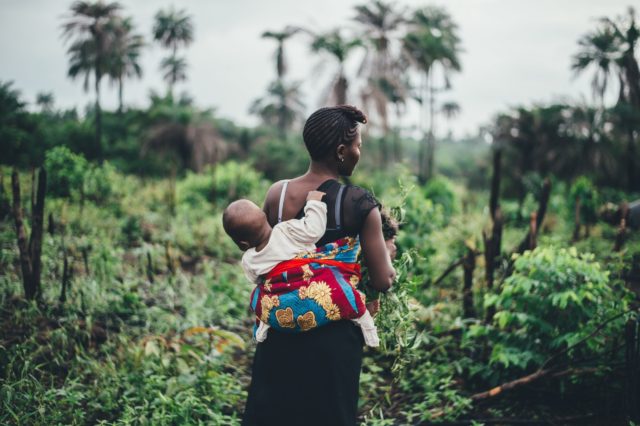
MyAgro is an organization working from the ground up to address poverty and it is doing so through an innovative technique. With the latest research proving that user-friendly mobile systems accessible in low internet areas are some of the best ways to reach people in poverty, myAgro built a cellphone-based savings program called Mobile Layaway. It helps smallholder farmers in Mali and around the world pay for supplies. Smallholder farmers no longer have to struggle to save lump sums in order to purchase seeds and fertilizer for their farms.
Who Are Smallholder Farmers?
Smallholder farmers are people who work on up to 10 hectares of farmland. Smallholders have family-focused motives behind their work and generally rely on family labor for production. Not only is farming their job, but they often depend on it to feed their family. They also provide up to 80 percent of the food supply on an equal percentage of the farmland in sub-Saharan Africa.
How Does MyAgro’s Mobile Layaway Work?
Smallholders often have difficulty saving enough money to purchase bulk farm goods. The majority of rural farmers live too far from banks and do not have the money to access them and make deposits. Furthermore, bank fees would deplete their savings quickly.
However, many of these farmers already go to the store to purchase cards for minutes on their phones, so they are familiar with Mobile Layaway’s system. With Mobile Layaway, farmers go to their local village store where they purchase a prepaid scratch card, which can range from 50 cents to $50. After texting the scratch-off code, the value of the purchased card goes into a “savings account,” which can accumulate to pay for fertilizer, seeds and training packages. Mobile Layaway is similar to having a savings account at a bank, however, it is on the smallholder’s phone, which makes it easy to save money while buying supplies for their homesteads.
MyAgro takes this program one step further as well; its field agents train the smallholder farmers in modern farming techniques and methods that work specifically in the West African landscape.
The Situation in Mali
Mali ranks number 21 on the list of the poorest countries by population. In 2009, the poverty rate in Mali stood at 49.7 percent, meaning that almost half of the population lived on less than $1.90 per day. Though 2019 numbers are not officially out, the World Bank estimates that the poverty rate has reduced from the 2017 rate of 43.4 to 41.3 percent. The World Bank attributes this recent decrease to “exceptional agricultural production.”
Mali’s economy greatly relies on its agricultural sector. It makes up 80 percent of the populations’ daily activities and income. The country ranks number 44 for countries with the most arable hectares for agricultural production, at a whopping 4.8 million hectares. What is more shocking is that Mali is using only 7 percent of this land.
Because of Mali’s substantial possibility of growth, many organizations have stepped in to build a more sustainable agriculture system. Building a sustainable agriculture system required aiding the farmers in developing a farming capacity, reducing food insecurity and increasing livelihoods. A byproduct of work in Mali has been an increase in people’s awareness of the necessity for better techniques. In recent years, organizations have had to alter their strategies to adapt to climate change effects such as floods and droughts.
MyAgro’s Benefits
Mali’s government went through a military coup when myAgro was just a pilot savings-based payment model in its first year. International NGOs and foreign governments all left as the government shut down, and the country was in political chaos. MyAgro stayed, and during that time, it learned that smallholder farmers in Mali still saved money through their mobile phones. MyAgro allowed for this possibility as most banks closed during that period. With loan-based payment models, many farmers would have defaulted on their payments during a time of conflict like in Mali.
MyAgro’s Impact
Originally, the organization’s reach was slow-moving. In fact, its users changed from a few thousand in 2011 to 30,000 in 2017. Since then, it took only two years for the number of users to double; the company hit 60,000 farmers in 2019. MyAgro estimates that it will be able to increase these numbers even further and reach 120,000 farmers in 2020.
Reaching farmers is one thing, but the personal impact on each individual is also phenomenal. If a smallholder farmer implements the techniques that MyAgro offers, they can expect to see a 50 percent increase in their harvest yield per hectare, at minimum. Some farmers have even seen a 100 percent increase per hectare. This equates to about $150 to $300 in additional income for the smallholder farmers each year. MyAgro is not stopping there and is “working to increase the direct economic impact of the program to over $550 per farmer in the next few years to move each farmer above the poverty line.”
MyAgro’s Longterm Goals
Because myAgro’s mission is to move smallholder farmers in Mali and the world out of poverty, it is no surprise that its ultimate goal is to reach 1 million farmers and their 10 million family members. By 2025, myAgro aims to work with these smallholder farmers to increase their income by $550 a year. This additional income would push the farmers and their families out of poverty.
MyAgro started an enormously challenging pilot model that led to a successful organization. It not only aids smallholder farmers in their rise out of poverty but changes people’s perceptions of farmers’ abilities to handle their money. Through all of this, myAgro has built a resilience with Malian citizens that the country has never seen before.
– Cassiday Moriarity
Photo: Unsplash
10 Facts About Life Expectancy in Burkina Faso
10 facts About Life Expectancy in Burkina Faso
These 10 facts about life expectancy in Burkina Faso depict a nation that has made great achievements and is ready to face its contemporary problems with assistance from international partners.
– Perry Stone Budd
Photo: Flickr
9 Facts About Life Expectancy in Equatorial Guinea
9 Facts About Life Expectancy in Equatorial Guinea
Life expectancy in Equatorial Guinea continues a slow upward trajectory. According to UNICEF, drinking water coverage has improved over the last two decades and sanitation coverage improved as well, estimating at over 70 percent. The number of children attending school has also increased over the last five years. Deprivations remain most severe for children living in rural areas, in the poorest households, with mothers who lack education.
As a small oil economy, at a time when oil prices can fall steeply without warning, the challenges to life expectancy in Equatorial Guinea will persist. The government’s willingness to accept outside assistance from international NGOs may hold the greatest promise for its citizens.
– Sarah Wright
Photo: Flickr
Poverty Among Indigenous Peoples in Central America
Indigenous people in Central America have struggled against prejudice and a lack of visibility for hundreds of years. This struggle to maintain their place throughout the region has taken a toll on the living conditions and health among their communities. Here is more information about poverty among indigenous peoples in Central America.
Costa Rica
Approximately 1.5 percent of the population of Costa Rica is made up of indigenous people. They are considered among the most marginalized and economically excluded minorities in Central America. Approximately 95 percent of people living in Costa Rica have access to electricity. The majority of indigenous peoples in the country are included in the remaining five percent. Many believe this is due to a lack of attention from the government in the concerns of indigenous people and the living conditions in their communities.
A lack of education is also a problem among indigenous peoples in Costa Rica. The average indigenous child in Costa Rica receives only 3.6 years of schooling and 30 percent of the indigenous population is illiterate. In the hopes of reaching out to indigenous communities and reducing their poverty rates, the University of Costa Rica instituted a plan in 2014 to encourage admissions from indigenous peoples from across the country. By 2017, the program was involved in the mentoring of 400 indigenous high school students and saw 32 new indigenous students applying for the university.
Guatemala
Indigenous peoples make up about 40 percent of the population in Guatemala and approximately 79 percent of the indigenous population live in poverty. Forty percent of the indigenous population lives in extreme poverty. With these levels of poverty among the indigenous people, many are forced to migrate, as the poorest are threatened with violence among their communities. Ninety-five percent of those under the age of 18 who migrate from Guatemala are indigenous.
One organization working to improve the living conditions for indigenous people in Guatemala is the Organization for the Development of the Indigenous Maya (ODIM). ODIM, which was started with the intention to support the indigenous Maya people, focuses on providing health care and education to indigenous people in Guatemala. One program it supports is called “Healthy Mommy and Me,” which focuses on offering mothers and their young children access to health care, food and education. These efforts are benefiting 250 indigenous women and children across Guatemala.
Honduras
In Honduras, 88.7 percent of indigenous children lived in poverty in 2016. Approximately 44.7 percent of indigenous adults were unemployed. Nineteen percent of the Honduran indigenous population is illiterate, in comparison to 13 percent of the general population. Despite the wide span of indigenous peoples across Honduras, they struggle to claim ownership of land that belonged to their ancestors. Only 10 percent of indigenous people in Honduras have a government-accredited land title.
Due to the poverty indigenous people in Honduras face, many seek opportunities in more urban areas, but the cities simply don’t have the capacity to support them all. As a result, many settle just outside of the cities to be close to opportunities. There are more than 400 unofficial settlements near the capital of Honduras, Tegucigalpa. Despite the difficulties they face in living just outside of a city that has no room for them, being in urban areas does have its benefits for indigenous people. Ninety-four percent of indigenous people living in urban Honduras are literate, versus 79 percent in rural areas.
For those among the indigenous peoples in Honduras who struggle with poverty, Habitat for Humanity has put a special focus on indigenous people in its construction programs. Habitat for Humanity worked with different ethnic groups within the indigenous community to provide homes for those most in need, reaching 13,810 people throughout Honduras.
Panama
Poverty affects more than 70 percent of indigenous people in Panama. Among their communities, health problems and a lack of access to clean water are common.
In 2018, the World Bank approved a project to improve health, education, water and sanitation among 12 different indigenous groups in Panama. The Comprehensive National Plan for Indigenous Peoples of Panama aims to implement positive development in indigenous communities while protecting and maintaining the culture within those communities.
The aim of this project is to create a positive relationship between indigenous peoples and the government in Panama to further developments of their communities down the road. It is projected to assist some 200,000 people through improved living conditions and infrastructure among indigenous communities.
With poor access to an education and a certain level of prejudice fueling a wage gap between indigenous and non-indigenous people, natives globally face a unique challenge in their efforts to escape poverty. In many countries around the world, indigenous people are forgotten and often fall to the bottom of the socio-economic ladder. This creates particularly difficult circumstances for indigenous peoples of regions that already have high poverty rates overall. However, people like those who work with the World Bank are working to see a reduction in poverty among indigenous peoples in Central America and see that indigenous people are not forgotten and are no longer neglected.
– Amanda Gibson
Photo: Flickr
MyAgro Aids Smallholder Farmers in Mali
MyAgro is an organization working from the ground up to address poverty and it is doing so through an innovative technique. With the latest research proving that user-friendly mobile systems accessible in low internet areas are some of the best ways to reach people in poverty, myAgro built a cellphone-based savings program called Mobile Layaway. It helps smallholder farmers in Mali and around the world pay for supplies. Smallholder farmers no longer have to struggle to save lump sums in order to purchase seeds and fertilizer for their farms.
Who Are Smallholder Farmers?
Smallholder farmers are people who work on up to 10 hectares of farmland. Smallholders have family-focused motives behind their work and generally rely on family labor for production. Not only is farming their job, but they often depend on it to feed their family. They also provide up to 80 percent of the food supply on an equal percentage of the farmland in sub-Saharan Africa.
How Does MyAgro’s Mobile Layaway Work?
Smallholders often have difficulty saving enough money to purchase bulk farm goods. The majority of rural farmers live too far from banks and do not have the money to access them and make deposits. Furthermore, bank fees would deplete their savings quickly.
However, many of these farmers already go to the store to purchase cards for minutes on their phones, so they are familiar with Mobile Layaway’s system. With Mobile Layaway, farmers go to their local village store where they purchase a prepaid scratch card, which can range from 50 cents to $50. After texting the scratch-off code, the value of the purchased card goes into a “savings account,” which can accumulate to pay for fertilizer, seeds and training packages. Mobile Layaway is similar to having a savings account at a bank, however, it is on the smallholder’s phone, which makes it easy to save money while buying supplies for their homesteads.
MyAgro takes this program one step further as well; its field agents train the smallholder farmers in modern farming techniques and methods that work specifically in the West African landscape.
The Situation in Mali
Mali ranks number 21 on the list of the poorest countries by population. In 2009, the poverty rate in Mali stood at 49.7 percent, meaning that almost half of the population lived on less than $1.90 per day. Though 2019 numbers are not officially out, the World Bank estimates that the poverty rate has reduced from the 2017 rate of 43.4 to 41.3 percent. The World Bank attributes this recent decrease to “exceptional agricultural production.”
Mali’s economy greatly relies on its agricultural sector. It makes up 80 percent of the populations’ daily activities and income. The country ranks number 44 for countries with the most arable hectares for agricultural production, at a whopping 4.8 million hectares. What is more shocking is that Mali is using only 7 percent of this land.
Because of Mali’s substantial possibility of growth, many organizations have stepped in to build a more sustainable agriculture system. Building a sustainable agriculture system required aiding the farmers in developing a farming capacity, reducing food insecurity and increasing livelihoods. A byproduct of work in Mali has been an increase in people’s awareness of the necessity for better techniques. In recent years, organizations have had to alter their strategies to adapt to climate change effects such as floods and droughts.
MyAgro’s Benefits
Mali’s government went through a military coup when myAgro was just a pilot savings-based payment model in its first year. International NGOs and foreign governments all left as the government shut down, and the country was in political chaos. MyAgro stayed, and during that time, it learned that smallholder farmers in Mali still saved money through their mobile phones. MyAgro allowed for this possibility as most banks closed during that period. With loan-based payment models, many farmers would have defaulted on their payments during a time of conflict like in Mali.
MyAgro’s Impact
Originally, the organization’s reach was slow-moving. In fact, its users changed from a few thousand in 2011 to 30,000 in 2017. Since then, it took only two years for the number of users to double; the company hit 60,000 farmers in 2019. MyAgro estimates that it will be able to increase these numbers even further and reach 120,000 farmers in 2020.
Reaching farmers is one thing, but the personal impact on each individual is also phenomenal. If a smallholder farmer implements the techniques that MyAgro offers, they can expect to see a 50 percent increase in their harvest yield per hectare, at minimum. Some farmers have even seen a 100 percent increase per hectare. This equates to about $150 to $300 in additional income for the smallholder farmers each year. MyAgro is not stopping there and is “working to increase the direct economic impact of the program to over $550 per farmer in the next few years to move each farmer above the poverty line.”
MyAgro’s Longterm Goals
Because myAgro’s mission is to move smallholder farmers in Mali and the world out of poverty, it is no surprise that its ultimate goal is to reach 1 million farmers and their 10 million family members. By 2025, myAgro aims to work with these smallholder farmers to increase their income by $550 a year. This additional income would push the farmers and their families out of poverty.
MyAgro started an enormously challenging pilot model that led to a successful organization. It not only aids smallholder farmers in their rise out of poverty but changes people’s perceptions of farmers’ abilities to handle their money. Through all of this, myAgro has built a resilience with Malian citizens that the country has never seen before.
– Cassiday Moriarity
Photo: Unsplash
10 Facts About Human Trafficking in Brazil
Brazil is known as the most developed country in Latin America. The country’s rapid economic growth, coupled with urbanization, is attracting more businesses to invest in Brazil. On top of this, Brazil’s strong tourism industry further bolsters the country’s positive image. However, the presence of human trafficking in Brazil is also a well-known fact throughout the international community. Here are 10 facts about human trafficking in Brazil.
10 Facts About Human Trafficking in Brazil
The 2010 crisis in Venezuela created a massive exodus of migrants from Venezuela. These Venezuelan migrants in border cities and other parts of Brazil are especially vulnerable to sex trafficking and forced labor. Traffickers recruited these migrants in Brazil by offering them fraudulent job opportunities.
Special Mobile Inspection Group (GEFM), the group was initiated in 1995. GEFM consists of labor inspectors and prosecutors. The group conducts unannounced inspections of factories, farms and firms. The Ministry of Labor reported that, through more than 600 inspections, the task force rescued more than 5000 workers from forced labor between 2013 and 2016.
Human trafficking in Brazil has many faces. Forced labor and prostitution are the main concerns of the Brazilian government when it is dealing with human trafficking in the country. It is clear that the Brazilian
government is striving to remedy the current situation. Laws such as the 13.344/16 help to protect and assist the victims of human trafficking while MTE’s Lista Suja aims to dissuade businesses from utilizing human trafficked labor. With these kinds of continued efforts, human trafficking in Brazil is sure to decrease.
– YongJin Yi
Photo: Wikimedia Commons
10 Facts About the Armenian Genocide
On Oct. 29, 2019, the U.S. House of Representatives voted overwhelmingly to acknowledge the Armenian genocide that occurred at the hands of the Ottoman Turks during the First World War. Armenian-Americans have long-awaited this action, which was taken at a time of worsening U.S. and Turkey relations. The Prime Minister of Armenia, Nikol Pashinyan, lauded the motion on Twitter and called it “a bold step towards serving truth and historical justice.” Here are 10 facts about the Armenian genocide to further contextualize this important decision.
10 Facts About the Armenian Genocide
H. Res. 296: Affirming the United States Record on the Armenian Genocide
The House of Representatives recently passed a resolution acknowledging the genocide. This action is significant, as the previous U.S. attempts to recognize the genocide have resulted in renewed bilateral talks between Turkey and Armenia. Another positive effect of the United States’ recognition of the genocide is that it is front-page news across Turkey. Thus, recognition of the Armenian genocide brings greater awareness to it, especially to Turks who never knew it occurred since the history of the mass killings was omitted from school books.
On April 8, 2019, Representative Adam Schiff [D-CA-28] introduced H.Res. 296 which had 141 cosponsors, including 120 Democrats and 21 Republicans. The House passed the resolution on Oct. 29, 2019, by a margin of 405 to 11. In the weeks leading up to the vote, Turkey outraged members of Congress by its ground offensive against the Syrian Kurds and U.S./Turkey relations have continued to sour since then.
On Dec. 12, 2019, the Senate unanimously voted to affirm the Armenian genocide, despite the Trump administration’s objections.
The Armenian genocide was a horrific tragedy that led to the deaths of one and a half million people, yet many people still deny the reality of the genocide for political reasons. As these 10 facts about the Armenian genocide prove, the mass ethnic cleansing did happen, and its effects are felt to this day.
– Sarah Frazer
Photo: Flickr
10 Facts About Under Skin Vaccination Development
Bioengineering researchers at M.I.T. have developed a method to store and maintain immunization records for people in developing countries, primarily children, who have little or no access to paper records. The M.I.T. researchers have applied an invisible dye technology to detect patterns of quantum dots; one can place this dye under the skin during vaccinations. Once administered, a computer similar to a smartphone interprets the near-infrared marks to access medical records. If further improved, this technology could save lives by helping to maintain an accurate medical history for vulnerable populations. Here are 10 facts about under skin vaccination.
10 Facts About Under Skin Vaccination
These 10 facts about under skin vaccination development illustrate advancements in record-keeping. Utilizing these technologies, developing countries would have advanced strategies for tracking immunizations, ultimately increasing vaccination efficacy. This new method could potentially reduce the number of unnecessary deaths due to lost or forgotten medical information with a noninvasive, safe technology during critical years of childhood development. It could also be the start of a new system of storing data through biosensing that could significantly improve health care like that seen in futuristic science fiction.
– Caleb Cummings
Photo: Flickr
How China Reduced its Poverty
China reduced its poverty from 97 percent in 1978 to 1.7 percent in late 2018. In the late 1970s, China began focusing on poverty reduction and economic development. Through various economic efforts, China became market-oriented to decrease poverty, which subsequently grew the private sector, created modern banks, reformed the agricultural industry, developed the stock market and spurred foreign trade and investment. China aims to reduce poverty rates to 0 percent in 2020, which is in line with the U.N. Sustainable Development Goal of eliminating global poverty.
China’s Alleviation Method
The International Poverty Reduction Center in China reported lifting more than 850 million of its people out of poverty from 1981 to 2013. During that time period, extreme poverty decreased from 88 percent to 1.85 percent. To achieve a 0 percent poverty rate, China is using extensive expertise in helping Chinese nationals who reside in poorer regions. The current poverty rate of 1.7 percent primarily encompasses those in poor rural regions.
Similar to the approach that China took in the 1970s and 1980s, it aims to increase efforts to open the economy for trade, diversify the marketplace, improve agricultural practices and implement education reform.
Poverty is still an issue throughout the agricultural industry, but the government is aiming to completely eliminate the Chinese poor. China created a poverty registration system that enables tracking of information relevant to those in poverty. It gathered data from more than 128,000 villages and 290,000 households that indicated that many of the poor reside in Guizhou, Yunan, Henan, Hunan, Guangxi and Sichuan. China aims to accomplish additional poverty reduction techniques through policies based on industrial development, relocation, eco-compensation, education and social security improvement. The Chinese government has managed to reduce poverty through direct involvement in hard-to-reach rural areas that have innately higher levels of poverty.
To support economic growth, the Chinese government is pushing for new industries in these poor regions, such as e-commerce and tourism. Furthermore, the relocation of poor families residing in areas prone to earthquakes or landslides has supported Chinese poverty reduction measures. The country is also emphasizing education and occupational training. Public health services will be available to the poor, especially in the remote mountainous regions. These actions indicate that China has reduced poverty not only through broad approaches but also through direct impacts.
Direct Progress
Progress is already underway in the government’s push for new industries. China has reduced poverty through these industries that benefit hundreds of thousands of Chinese citizens. China E-commerce centers, known as Taobao villages, enable the Chinese to sell their produce and specialties online. In 2015, 780 Taobao villages employed more than one million people and included more than 200,000 active online storeowners. Comparatively, in 2019, the number of Taobao villages grew to 4,310 and active online shops totaled to more than 660,000.
China’s Investments in Africa
China also helps other countries with economic development and poverty reduction. As an economy grows, poverty trends to gradually lower; on the other hand, job growth, economic diversification and agricultural productivity improve. One can see a specific example of China’s method for poverty reduction through its investments in African countries to build foreign economies. China has provided more than $57 billion in financial aid to more than 170 countries. In 2018, China accounted for almost 20 percent of all infrastructure and capital project investment in Africa.
A Chinese Poverty-Reduction Model for Global Use
China reduced its poverty through economic development and direct impact. In 2016, China sent 775,000 officials to poor regions to alleviate poverty. The country sent these officials out to work in one to three-year posts. This direct impact demonstrates how a country can eliminate poverty through strong economic growth in remote regions.
Brett Rierson, China representative for the World Food Program said, “China invested in agriculture to reduce poverty and successful agricultural projects were built up from the grassroots.” Rierson believes China is a good model for how to reduce poverty in developing countries.
Although China has been a positive influence on developing economies, one country alone cannot eliminate global poverty. Other developed countries could use China as a model for reducing poverty and improving living standards.
– Lucas Schmidt
Photo: Flickr
The Evolution of Brain Drain in Developing Countries
Brain Drain in Developing Countries
Brain drain in developing countries is a proven difficult hurdle for governments to overcome, and the effects of globalization have redefined what brain drain entails for countries such as India and Pakistan. The issue with this movement of intellect and skills lies in the fact that oftentimes, foreign-born workers and students in developed countries rarely return to their countries of origin, and they do not put the knowledge they obtain back into developing economies and development programs.
Why Does Brain Drain Happen?
One of the major causes of the phenomenon is the greater rates of technological advancement in developed countries compared to those in the developing world. Many developing countries have established education programs and continue to do so, but funding for research opportunities and investments in the scientific sector is lacking. For example, in 2000 there were 836,780 immigrants from India to the United States, with 668,055 of them having received tertiary education. These people tend to stay and work in the countries they migrated to. Brain drain does not only affect jobs in technical fields. Ten percent of teachers and people in academia are foreign-born, with 6 percent of them from developing countries.
Brain drain in developing countries produces more immigrants to countries such as the United States, and the theory suggests that the knowledge they obtain in a foreign country remains there and fails to make its way back to their country of origin.
As economies and education become more dependent on technological advancement, the circulation of foreign-born workers becomes increasingly important to globalization. An inverse effect of globalization as the world becomes increasingly aware of other countries’ international influence is the expansion of technological and scientific programs at a much faster rate in developed countries. One can see this in those nations with existing programs, funding and infrastructure to support technological advancements as opposed to those that do not.
The Future of Brain Drain
At the heart of the discussion of brain drain lies a necessity for a better understanding of how globalization affects perceptions of brain drain and its implications for education and employment in developing countries. Despite the negative effects of brain drain in developing countries, good things come from it too. An increase in attention from governments to education, incentives for developing countries to invest in the development of skilled jobs and globalization brings greater mobility and intellectual circulation that enhances the knowledge of the general population. The circulation of knowledge allows for an exchange of intellect between countries, improving relations and promoting understanding of different cultures. Brain linkage creates an opportunity for increased technological advancement when foreign-born workers interact with their home countries, furthering transnational connections. The understanding of brain drain in developing countries has shifted to allow for more positive mindsets surrounding brain circulation to allow for poor countries to experience the benefits of globalization.
– Jessica Ball
Photo: Wikimedia Commons
7 Facts About Diabetes in Sub-Saharan Africa
7 Facts About Diabetes in Sub-Saharan Africa
While diabetes in sub-Saharan Africa has been on the rise for decades, progress is being made in various countries throughout the region. With more improvements to technology, healthcare, education and self-management,sub-Saharan Africa could reduce the extreme rates of diabetes.
– Alyson Kaufman
Photo: Pixabay
“The Borgen Project is an incredible nonprofit organization that is addressing poverty and hunger and working towards ending them.”
-The Huffington Post
Inside The Borgen Project
International Links
Get Smarter
Ways to Help