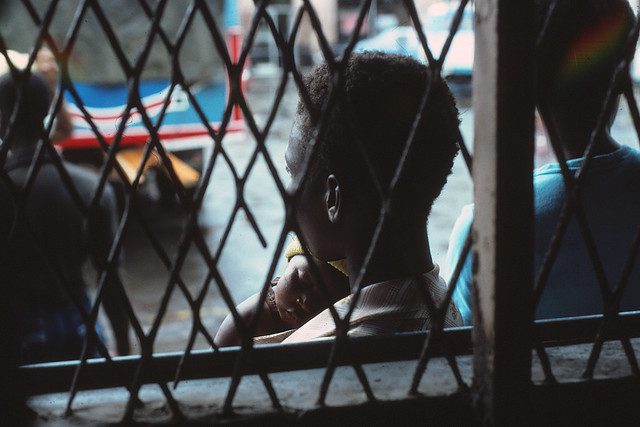
Many know Grenada, an island country in the Caribbean Sea, for its beautiful tourist attractions and flourishing spice trade. Unfortunately, poverty in Grenada affects almost one-third of its 107,000 residents.
The World Bank estimates that 32% of Grenada’s residents live below the poverty line. In addition, 13% of the population is considered “extremely poor.”
Dr. Elinor Garely of eTN noted that Grenada’s poorest residents are located in the rural regions of the country. She explained that this is due to inadequate access to the mainstream economy.
The mainstream economy is based on tourism and spice exportation, among other products. Grenada also depends on foreign aid. Without suitable access to the main cities and these economic opportunities, the rural communities suffer.
Youth in Grenada
Grenada’s demographic is quite young, with one-fourth of the population under the age of 14. Poverty in Grenada impacts youth most of all. In fact, Garely explained that 66.4% of the poor are under 24 years of age.
Due to a lack of birth control resources, there are high numbers of teen pregnancies, which often correlates to violence against children. Additionally, physical and sexual abuse have emerged as the main issues facing the children of Grenada. More than one-third of children in Grenada have suffered from sexual violence. Women and children experience significant abuse due to the lack of laws against physical punishment.
Causes of Poverty in Grenada
Poverty in Grenada has links with a number of different factors. With inadequate defenses against natural disasters, ineffective education and unprepared workers, poverty is “entrenched in the very fiber of the country.”
Natural disasters, such as hurricanes, frequently threaten the small island. The last two hurricanes occurred in 2004 and 2005. Hurricane Ivan hit first and devastated the majority of Grenadian homes. A year later, Hurricane Emily swept through the area, furthering the damage not yet repaired from Hurricane Ivan. However, significantly fewer lives were lost, as the Grenadian people took important precautions that had been neglected during Hurricane Ivan.
Education and unprepared workers are two other causes of poverty in Grenada, and they go hand in hand. Without proper education, the youth do not have the necessary skills to get jobs that offer livable pay. The jobs that are available, mainly agricultural, do not appeal to the youth because of “perceived instability, [the youths’] lack of interest in physical labor and very low wages,” according to Garely. It would be more beneficial for the Grenadian youth to work in the tourism sector, but, unfortunately, it requires skills that many residents lack.
Efforts to Reduce Poverty in Grenada
The government is making strides to alleviate many of the issues that stem from or cause poverty in Grenada. While it currently lacks enough funds to be effective, Grenada does have “a system to place orphans and children with domestic problems with other families.” In addition, laws are in place to protect girls from sexual assault. However, boys still remain vulnerable.
The country has taken important steps to defend against natural disasters. Creating a plan for natural disasters became a priority after the devastation of Hurricane Ivan and Hurricane Emily. The change was obvious immediately due to how the people of Grenada reacted differently to Hurricane Emily after experiencing Hurricane Ivan; “the rush contrasted with the attitude before Ivan, when Grenadians took few precautions.”
While Grenada is still improving its ability to defend against natural disasters and internal issues such as violence, it has wonderful potential.
– Abbey Lawrence
Photo: Flickr

10 Facts About Sanitation in Bhutan
10 Facts About Sanitation in Bhutan
Overall, these 10 facts about sanitation in Bhutan demonstrate that the sanitation, water and hygiene conditions are quickly improving in the country. Initiatives by the government, UNICEF and other nonprofits in the country have led to substantial positive changes. However, inequality in access to improved sanitation services remains a major issue, and Bhutan still has a long way to go to provide improved sanitation throughout the entire country.
– Kayleigh Crabb
Photo: Pixaby
5 Facts About Tuberculosis in Côte d’Ivoire
5 Facts About Tuberculosis in Côte d’Ivoire
One important organization is The Stop TB Partnership. By pairing government agencies with other foundations, research agencies and private sector resources, this organization aims to create a TB-free world. In 2014, various partners met with specialists from the Programme National de Lutte contre la Tuberculose to design a national committee tasked with controlling and treating tuberculosis in Côte d’Ivoire. The members of these groups were responsible for designing a plan for infection control, allocating monetary and human resources and outlining the structure of the new committee. Through this workshop, the anti-TB program in Côte d’Ivoire established clear strategies for tackling the problem of tuberculosis. Stop TB developed oversight committees, regulations for how resources are spent and a plan for reducing the spread of TB.
According to the United Nations, Côte d’Ivoire is on the way to reaching various Sustainable Development Goals (SDGs). The U.N. is actively helping Côte d’Ivoire eradicate illnesses like HIV, malaria and TB by the year 2030 through free doctor visits and accessible medicine.
It is crucial that the citizens of Côte d’Ivoire receive the proper treatment and financial assistance to help them overcome the tuberculosis endemic. It is imperative that those diagnosed with this illness are immediately identified and properly treated. With strategic planning, proper funding and extensive training for medical professionals, the infection rate of tuberculosis in Côte d’Ivoire is expected to decrease in the coming years.
– Danielle Kuzel
Photo: Flickr
Recent Progress: Addressing Poverty in Colombia
Macroeconomic trends show there has been equitable growth in Colombia. While as of 2017, Colombia held the second-highest wealth inequality rate in Latin America, only slightly better than Brazil, it has been on a downward trend since 2000. Additionally, poverty in Colombia dropped by 15% between 2008 and 2017 to a low of 27%. Extreme poverty reduced by half from 2002 to 2014, with more than 6 million people moving out of poverty. This put more Colombians in the middle class than in poverty for the first time. Finally, between 2008 and 2017, the country’s gross domestic product (GDP) grew at a rate of 3.8%. This is more than twice as fast as the members of the Organization of Economic Cooperation and Development (OECD).
Problems
However, increasing exports drive much of the recent growth and reduction in poverty in Colombia. Commodity prices have risen significantly over the past several years. This growth is unsustainable, as a recent drop in prices has hindered the export industry. Colombia has also been struggling with such issues as a lack of financial inclusion, low productivity, low-skilled workers and a large informal economy.
The informal economy consists of such jobs as farm workers, taxi drivers and street vendors where “they make no direct tax contributions, have no security of employment and do not receive pensions or other social benefits.” As of May 2014, informal workers made up nearly two-thirds of the Colombian labor force. This means millions do not possess a dependable income. They do not have the opportunity to contribute to or receive a pension fund or other government benefits. For these reasons, the large informal sector is also a big contributor to inequality and poverty in Colombia.
Another major issue holding back Colombia has been its decades-long internal struggle for peace. Nearly a quarter-million Colombians have died from the conflict, with 25,000 disappearances and nearly 6 million displaced. Although a peace agreement was reached in 2016, tensions are still high in the country between the government and the rebel militia.
Solutions
Nonetheless, steps are occurring to ensure that Colombia is able to continue its recent progress. With nearly 6 million people displaced because of the internal conflict, land restitution is a key step to make. With the help of the World Bank, 1,852 land restitution legal cases occurred by the end of 2014. Additionally, the World Bank helped the Colombian government give reparations to those the conflict affected, with a focus on Afro-Colombian and indigenous groups who the conflict disproportionately affected.
Some are using digitalization and technology to help formalize businesses by simplifying the registration process and making tax collection more efficient, enabling businesses and individuals to pay taxes and contribute to the pension system and providing them access to many social benefits. Digitalization also provides greater access to financial services. This is occurring by providing micro-credits, expanding the outreach of banking services, lowering the cost of financial services and simplifying electronic payments.
USAID’s Role in Poverty Reduction in Colombia
The United States Agency for International Development (USAID) has also helped decrease poverty in Colombia by increasing the presence of democratic institutions in the country. Through this, the USAID hopes to “foster a culture of respect for human rights, promote access to justice, increase public investment and provide services to historically underserved and conflictive rural areas.” This organization fights for inclusive growth and encourages investment in rural areas. Additionally, it helps producers expand their market, provides financial services and helps restore the land to its original owners before the conflict.
All of these efforts and many more are helping reduce poverty in Colombia. The goal is to keep the country on a path toward equitable and inclusive development that leads to a reduction of inequality.
– Scott Boyce
Photo: Flickr
Uganda’s Water Crisis and the Economy
What Uganda’s Water Crisis Looks Like
Although Uganda experienced three decades of a growing economy, almost 40% of Ugandans still live on less than a dollar a day. In addition to its history of poverty, many people in Uganda struggle to find clean water. Traditionally, communities with high poverty rates rely heavily on natural water sources because they lack the technology to build wells and plumbing. The lack of clean water sources in impoverished communities propels the cycle of poverty.
A video by a global relief organization called Generosity.org documents the lives of Ugandans who struggle to find clean water. The video features a Ugandan mother, Hanna Augustino, who spends three hours a day getting water for her family of nine. Hanna explains that the water is so dirty it has worms and gives them diseases like Typhoid Fever. However, when the family gets sick, they cannot afford to go to the hospital. The lack of clean water in an already impoverished community leads to disease. In 2015 Uganda experienced a Typhoid Fever outbreak that was mainly due to contaminated water sources. For many in these communities, medical care is unaffordable. The water crisis causes a need for medical care for a treatable disease. The need for more medical care creates more financial hardship on families already struggling in poverty.
Economic Impacts
In addition to disease, collecting water is very time-consuming. In some areas like Hanna’s, it can take hours to retrieve water. People spend hours getting water instead of working to provide income for their families or as caregivers themselves. Water retrieval is another aspect of the water crisis that negatively impacts local economies and continues the cycle of poverty.
Farmers are some of the most negatively impacted by the water crisis. Farming and agriculture make up a large part of the Ugandan economy. Poverty-stricken communities need water sources for irrigation and farming, which some families rely on as a household income. About 24% of Uganda’s GDP comes from agriculture. This portion of the economy is dependent on clean, accessible water sources. Without clean water sources, farmers’ animals and crops would die. Without farmers, local communities would have no food. As a result, farmers are an important local resource for local communities and an important cog in local economies.
A Helping Hand
Despite the rippling effects of the water crisis, there are many organizations working to alleviate the crisis. For instance, Lifewater is an organization that funds “water projects.” These projects build clean water sources for villages that have none. Lifewater is currently funding 220 water projects in Uganda alone. If you are interested in learning more about Lifewater, you can go to their website at Lifewater.org.
Lifewater is one of many organizations working to provide villages in Uganda with clean water. Along with being essential to human life, water can affect many different aspects of daily life. Spending hours fetching water or drinking dirty, disease-ridden water can negatively impact the local economy. Any negative impact on the economy is especially devastating for communities already affected by poverty. Like Lifewater, there are many organizations bettering local economies through their clean water efforts.
– Kaitlyn Gilbert
Photo: Flickr
Poverty in Grenada
Many know Grenada, an island country in the Caribbean Sea, for its beautiful tourist attractions and flourishing spice trade. Unfortunately, poverty in Grenada affects almost one-third of its 107,000 residents.
The World Bank estimates that 32% of Grenada’s residents live below the poverty line. In addition, 13% of the population is considered “extremely poor.”
Dr. Elinor Garely of eTN noted that Grenada’s poorest residents are located in the rural regions of the country. She explained that this is due to inadequate access to the mainstream economy.
The mainstream economy is based on tourism and spice exportation, among other products. Grenada also depends on foreign aid. Without suitable access to the main cities and these economic opportunities, the rural communities suffer.
Youth in Grenada
Grenada’s demographic is quite young, with one-fourth of the population under the age of 14. Poverty in Grenada impacts youth most of all. In fact, Garely explained that 66.4% of the poor are under 24 years of age.
Due to a lack of birth control resources, there are high numbers of teen pregnancies, which often correlates to violence against children. Additionally, physical and sexual abuse have emerged as the main issues facing the children of Grenada. More than one-third of children in Grenada have suffered from sexual violence. Women and children experience significant abuse due to the lack of laws against physical punishment.
Causes of Poverty in Grenada
Poverty in Grenada has links with a number of different factors. With inadequate defenses against natural disasters, ineffective education and unprepared workers, poverty is “entrenched in the very fiber of the country.”
Natural disasters, such as hurricanes, frequently threaten the small island. The last two hurricanes occurred in 2004 and 2005. Hurricane Ivan hit first and devastated the majority of Grenadian homes. A year later, Hurricane Emily swept through the area, furthering the damage not yet repaired from Hurricane Ivan. However, significantly fewer lives were lost, as the Grenadian people took important precautions that had been neglected during Hurricane Ivan.
Education and unprepared workers are two other causes of poverty in Grenada, and they go hand in hand. Without proper education, the youth do not have the necessary skills to get jobs that offer livable pay. The jobs that are available, mainly agricultural, do not appeal to the youth because of “perceived instability, [the youths’] lack of interest in physical labor and very low wages,” according to Garely. It would be more beneficial for the Grenadian youth to work in the tourism sector, but, unfortunately, it requires skills that many residents lack.
Efforts to Reduce Poverty in Grenada
The government is making strides to alleviate many of the issues that stem from or cause poverty in Grenada. While it currently lacks enough funds to be effective, Grenada does have “a system to place orphans and children with domestic problems with other families.” In addition, laws are in place to protect girls from sexual assault. However, boys still remain vulnerable.
The country has taken important steps to defend against natural disasters. Creating a plan for natural disasters became a priority after the devastation of Hurricane Ivan and Hurricane Emily. The change was obvious immediately due to how the people of Grenada reacted differently to Hurricane Emily after experiencing Hurricane Ivan; “the rush contrasted with the attitude before Ivan, when Grenadians took few precautions.”
While Grenada is still improving its ability to defend against natural disasters and internal issues such as violence, it has wonderful potential.
– Abbey Lawrence
Photo: Flickr
Planting Trees of Knowledge: A Way to Make Education Accessible
Education Challenges in Zimbabwe
In countries like Zimbabwe, the problem is pronounced. Most children in Zimbabwe receive primary education but only 49% of high-school-aged Zimbabweans attend secondary school. Furthermore, economic challenges have tightened funding for public and boarding schools, causing a steep increase in the cost of attendance. As a result, communities have taken to creating make-shift alternative schools run by locals to save on expenses. These schools remain unregistered in order to avoid fees and therefore do not undergo government inspections.
These challenges, however, are not unique to Zimbabwe. There is an urgent need to improve access to education in many communities throughout Sub-Saharan Africa. Experts have suggested that the implementation of technology into educational services may be a more cost-effective route than building physical infrastructure. Additionally, much of the population has access to basic smartphones or mobile devices. In fact, Sub-Saharan Africa is the world’s fastest-growing region in terms of smartphone adoption, estimating an addition of 167 million subscribers by 2025.
However, inconsistent and expensive data coverage as well as limited electricity for charging limits internet connectivity for many devices. Zimbabwean AI expert and entrepreneur, William Sachiti, has recently taken up this challenge with an idea for improving access not only to the internet but also to educational tools in rural areas. The project is entitled Trees of Knowledge, which reflects the common practice of gathering under the shade of a tree for class.
Technological Solutions
The Trees of Knowledge technology allows a tree or other landmark to broadcast a Wi-Fi signal. Any device within a 100-meter radius can connect to the network and access a pre-loaded server of educational content. The signal is produced by a micro-computer molded into the tree to protect it from damage. The module is powered by a small rechargeable battery that can run for several years without maintenance. The system also includes a solar-powered charging station that users can plug their devices into.
Any content can be uploaded to the educational server, but Sachiti hopes to eventually transition toward including lessons from local educators, making the content specific to each region. This would allow teachers to work with each country’s department of education to ensure that the curriculum is appropriate.
Trees of Knowledge has the potential to improve educational opportunities for rural and excluded communities. This highly integrated solution could mitigate long commutes to school, which can span from five to 1o kilometers. The system provides access to educational content as well as guidance for those unfamiliar with these new resources. As an open-source technology with no patents or intellectual property regulations, the logistics behind Trees of Knowledge are available to be shared and replicated. Since its publication in 2019, several large NGOs in Africa have picked up the idea.
Future Steps
The concept behind Trees of Knowledge is highly adaptable and can be applied to other uses. Similar technologies have recently been implemented by some national parks and nature preserves, who are using interactive digital programs to teach visitors about the ecology of an area. In rural communities, this technology could provide tutorials on first-aid skills, health and hygiene. On remote trails or routes, it may be used to offer critical safety information and orientation.
By removing the obstacles of cost, data coverage and power consumption, Trees of Knowledge is a highly sustainable idea aligned with the goal of minimizing climate change and habitat destruction. This new technology can provide a variety of educational resources by seamlessly integrating into the environment, yet leaving it unchanged.
– Sylvie Antal
Photo: Wikimedia
5 Facts about Hunger in the Bahamas
The Bahamas also face frequent natural disasters such as hurricanes which further aggravate the issue. The recent outbreak of COVID-19 has also left many Bahamians without access to food. Furthermore, these disasters also increase the price and decrease the availability of food in the country. Here are five facts about hunger in the Bahamas.
5 Facts About Hunger in the Bahamas
Change is needed and coming into the food production system in the Bahamas. With improved access for citizens to independently produce more food, the Bahamas will have less obesity, greater academic accomplishments, improved economy, and better quality of life for its citizens. Organizations such as Hands for Hunger are at the forefront of this change. These changes will allow the Bahamas to be known to the world as more than just a beautiful vacation spot.
– Allison Caso
Photo: Flickr
6 Facts about Hunger in the Russian Federation
6 Facts About Hunger in the Russian Federation
At the turn of the century, the Russian Federation modernized the economy and opened the doors for businesses to thrive. After the collapse of the Soviet Union, the Russian Federation faced financial peril but rapidly improved its economy from a GDP of $259 billion in 2000 to $1.65 trillion in 2018. The country recovered quickly, considering the collapse of the previous government, and the standard of living subsequently improved for the Russian people. The Russian Federation effectively addressed the problem of hunger and halved the poverty rate. Although the country still faces health issues stemming from obesity and a lack of fresh produce, the past two decades are a success story in the fight against hunger in the Russian Federation.
– Noah Kleinert
Photo: CIA.gov
5 Facts about Poverty in Uzbekistan
Situated between Kazakhstan and Turkmenistan sits the culturally rich and beautiful country of Uzbekistan. With thriving cities and lush mountainsides, Uzbekistan’s environment makes for blossoming communities. However, the country and communities within it have drastically changed within the last two decades. The Uzbekistan government has successfully lowered poverty rates, decreased unemployment rates and increased education, although these instances rarely make headlines. Here are five facts to know about poverty in Uzbekistan.
5 Facts About Poverty in Uzbekistan
Looking Ahead
With a continuous decrease in poverty rates and an increase in educational and sanitation infrastructure, Uzbekistan has made large strides to improve the lives of its citizens. Poverty in Uzbekistan has dramatically shifted over the last two decades. Unemployment rates have dropped, neonatal mortality rates have decreased by more than half and resources such as education and clean water are becoming more accessible to all communities. With progress like this, Uzbekistan is on its way to great improvement.
– Hannah Kaufman
Photo: Flickr
SongAid Streams Away Hunger
What Is SongAid?
SongAid is a project that works with major music streaming sites to donate profits made from streaming to the WhyHunger Rapid Response Fund. On May 29, 2020, SongAid released its first playlist. The playlist included a variety of artists from Wilco to Galatic. Listeners can find the SongAid playlists, curated by diverse groups of celebrities, on major music streaming platforms like Apple Music, Spotify, Amazon Music and Youtube Music. SongAid releases new music every Friday. Every time someone streams a SongAid song or playlist, the proceeds go directly to WhyHunger. Additionally, SongAid will host virtual gaming, music and artists events throughout the summer to promote its partnership with WhyHunger.
What is WhyHunger?
WhyHunger is a global nonprofit organization started by artists Harry Chapin and Bill Ayres in 1975. The musician and DJ started the organization to provide global access to safe, nutritious food. Several strategies of operation guide the organization. These strategies include empowering and supporting grassroots movements, advocating for social justice and uplifting community voices. Additionally the organization also focuses on protecting the right to adequate food and promoting agro-ecology. WhyHunger has raised $13 million through initiatives like Artists Against Hunger & Poverty, where artists band together to raise funds to support the various components of WhyHunger, such as the Global Movement Program, the Find Food Database and the WhyHunger Hotline.
Through its Global Movement Program, WhyHunger supports international movements for greater access to food, land and water. They have supported the World March of Women, La Via Campesina International and the World Forum of Fisher Peoples. Between 2012 and 2017, the organization raised $1.2 million to support more than 100,000 small farmers in 68 countries.
COVID-19, Poverty and Food Insecurity
Organizations like WhyHunger worked to reduce food insecurity and poverty around the world before the COVID-19 pandemic. However, individuals and organizations such as those brought together through SongAid have begun to recognize that the work WhyHunger does is even more crucial during this pandemic. The pandemic has disrupted the global food supply chain by forcing countries to close their borders. Additionally, restricting exports and keeping workers at home also affect the food supply chain.
Estimates show that half a billion people will fall into poverty as a result of disruptions to the global economy. Additionally, food prices continue to rise due to panic buying and increased demand. For example, the cost of wheat has increased by 15% and the value of rice by 12% around the globe. Moreover, less than 20% of already low-income countries do not have systematic support to provide aid to citizens that are facing exacerbated hunger and poverty.
Despite the seemingly hopelessness situation, coalitions like SongAid are fighting to help people around the world get access to the food and resources they need in spite of the global pandemic.
– Tiara Wilson
Photo: Pixabay