The Morocco-Western Sahara Conflict
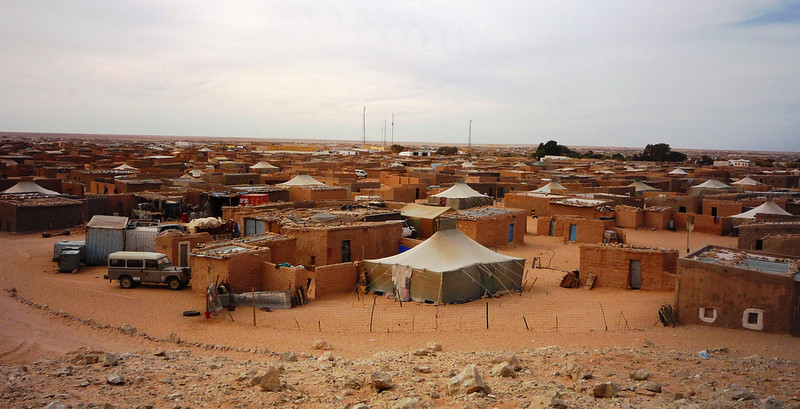
A relic of the Cold War, the Morocco-Western Sahara conflict remains frozen and mired in uncertainty. Nearing its 50th year, the clash has displaced and killed thousands over the years. Thankfully, some organizations have floated proposals to remedy this fight, although obtaining little success. Still, some humanitarian organizations are on the ground and working to improve the lives of those who desperately need it.
What is Western Sahara?
Western Sahara is the largest non-autonomous territory in the world. With an area of 266,000 square kilometers, Western Sahara is home to over 650,000 people. That’s roughly the size of Colorado, with a little more than a tenth of its population. Although rather poor, the desertic region contains significant phosphate deposits and rich fisheries off its coast. The arid climate over there prevents substantive agriculture, forcing Western Sahara to import much of its food. Life expectancy there is low, averaging only 64 years, and infant mortality is high, with 47.9 deaths per 1,000 children born.
The Dispute.
As colonial powers relinquished many of their claims, Spain decided to leave Western Sahara in the early 1970s — known then as the Spanish Sahara. The Spanish finally left the territory in 1975, as the tensions regarding the ownership of the region began heating up.
In 1974, the International Court of Justice had issued an advisory opinion finding that Morocco did not have a claim to the ownership of Western Sahara. This decision, which was mired in Cold War politics, was effectively ignored by Morocco. Shortly after the decision had been issued, more than 300,000 unarmed Moroccans marched into Western Sahara with copies of the Quran in what became known as the “Green March”. Then, Spain brokered a deal between Morocco and Mauritania, giving both countries part of Western Sahara and withdrawing from the region in late 1975.
Presence of the UN.
Peace, however, did not flourish. In 1979 Mauritania ceded its claim to Western Sahara, leaving Morocco as the sole ruler. Then, Algeria – Morocco’s neighbor and geopolitical rival – worked with the independence movement Polisario Front to oppose Moroccan rule, thereby starting a conflict that stretched for close to a decade and took the lives of nearly 14,000 people. With the collapse of the Soviet Union, the Polisario Front lost many of its backers, leaving the two sides in somewhat of a stalemate.
The Morocco-Western Sahara conflict has been locked in a ceasefire since 1991 when the UN sent in peacekeepers to make sure violence was kept to a minimum. This mission, which was officially called the UN Mission for the Referendum in Western Sahara (MINURSO) was also intended to provide a forum through which Morocco and Western Sahara could reach an agreement on the region’s autonomy. Sadly, no agreement has been made and Western Sahara’s fate still remains in limbo.
What is Being Done?
Since then the living conditions in Western Sahara have deteriorated thanks to the war and to its arid landscape. More than 40,000 Sahrawi refugees who were displaced by the conflict now live in camps in Algeria. One camp in Tindouf – the site of the 1963 “Sand War” between Morocco and Algeria – has been in operation since the onset of the war. Deutsche Welle reported that the dry conditions limit agriculture and the availability of water there. Thankfully, some aid organizations have stepped up to supply the refugees with much-needed basics.
Early this year, Italy provided the World Food Programme with over $500,000 to provide monthly food rations. Other organizations have operated as forces for good in Western Sahara:
- Oxfam responded to the COVID-19 pandemic by equipping 33 health clinics in the Tindouf camps.
- UN peacekeepers constructed wells in Western Sahara, giving residents access to a vital resource.
- Action on Armed Violence assisted Sahrawis in removing mines, cluster bombs and other un-detonated explosives. In total, 22,000 devices were cleared.
- AOAV also gave micro-grants to over 200 people who had been injured by these remnants of war.
Future Perspectives.
In 2006, Morocco proposed the Autonomy Plan, whereby Western Sahara would be governed by Morocco and yet retain some sovereignty of its own. The UN Security Council endorsed the idea, as have several other countries. Morocco controls 80% of Western Sahara and most Sahrawis already live under Moroccan control. But this plan has so far stalled. In its own fashion, Morocco has improved life in Western Sahara for some people. In 2015, the General Confederation of Moroccan Enterprises announced a $609 million investment plan for Western Sahara.
Still, much remains to be done. Despair is still common among refugee camps and long-term solutions have yet to be realized. Therefore, organizations on the ground need to increase their assistance while other countries and international organizations need to revisit the Morocco-Western Sahara conflict with redoubled efforts. Perhaps this frozen conflict can eventually thaw into peace.
– Jonathan Helton
Photo: Flickr
