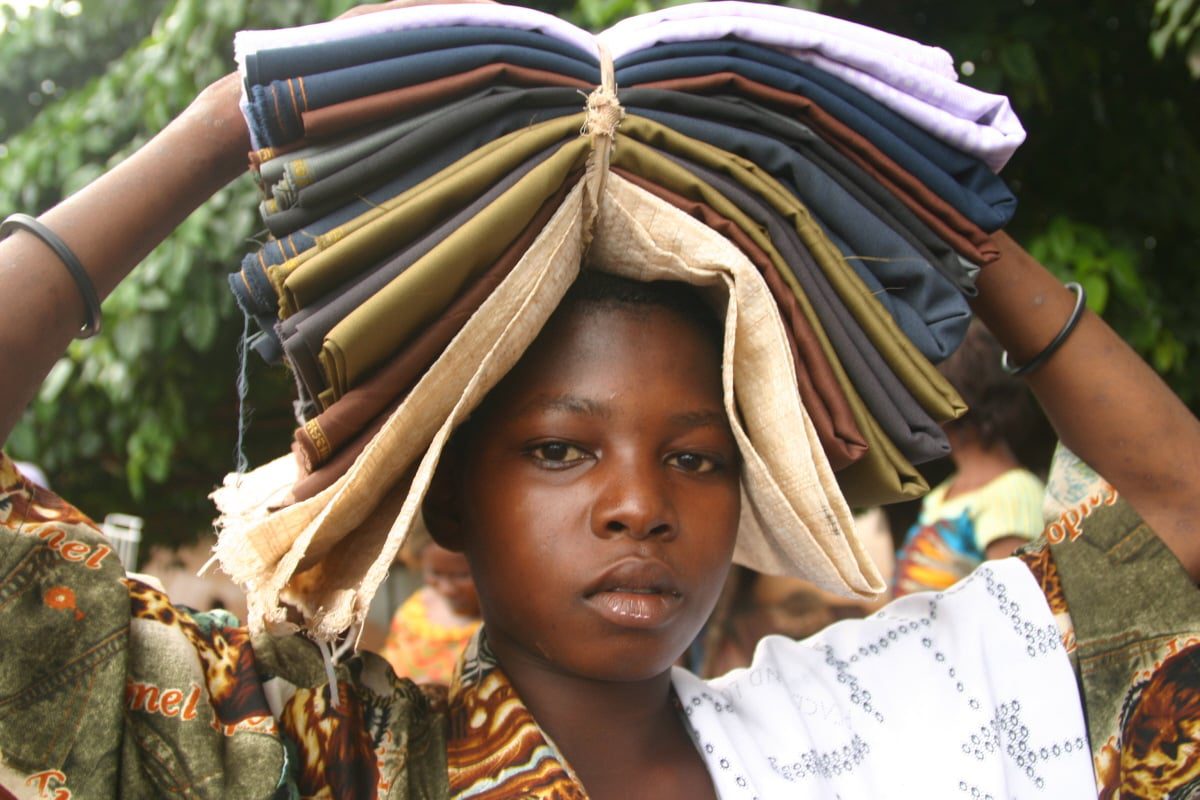
On July 29, 2020, Ghana released its Multidimensional Poverty Index (MPI) report, which outlines the various conditions that contribute to poverty in the country. Instead of using a monetary metric, the report looks at education, health and living standards to interpret the rate of poverty and determine the efforts to eradicate poverty in Ghana.
Using data collected between 2011 and 2018, the report found that the rate and severity of multidimensional poverty have reduced across Ghana, with significant improvements in electricity, cooking fuel and school attainment. Overall, Ghana reduced its incidence of multidimensional poverty by 9 percentage points from 55% in 2011 to 46% in 2017. This indicates that poverty itself has reduced and that the experience of the impoverished has improved.
The report measured each dimension through specific indicators relevant to poverty in Ghana. The government then prioritizes the country’s needs by examining the various deprivations that the poor experience most.
The report concluded that the indicators that contribute most to multidimensional poverty are lack of health insurance coverage, undernutrition, school lag and households with members that lacked any education. The report also revealed the stark differences between poverty in rural and urban populations, with 64.6% of the rural population and 27% of the urban population being multidimensionally poor. Based on the results of the report, it is paramount that resources go to the health and education sectors to improve the quality of life for the most at-risk members of Ghana, particularly in rural areas.
Efforts to Eradicate Poverty: Health Care
USAID is addressing the need for comprehensive health care reform through a multi-pronged approach to improve care for children and women in rural Ghana. Since 2003, the Ghanaian government has developed and expanded the National Health Insurance Scheme (NHIS), which provides residents with public health insurance. The program has provided many improvements to the health care system, but systemic barriers continue to limit the quality and accessibility of care.
In particular, a 2016 study that the Ghana Medical Journal published found that rural hospitals’ lack of personnel, equipment and protocol put women and children at the highest risk. This is due to poor nutrition, inability to seek neonatal care and lack of health insurance.
To address barriers to health care, USAID first compiled a network of preferred primary care providers to allow health care workers to communicate, educate and synchronize their standards of quality care. “The networks help connect rural primary health facilities with district hospitals, enabling mentoring between community health workers and more experienced providers at hospitals,” USAID stated.
The second prong was providing training to government staff and frontline health care workers to better understand health data and its uses for maternal and child health decision-making. By using the network of providers and standardizing data, doctors are better equipped to determine whether patients need a referral to a specialized caregiver.
USAID reported that these improvements have resulted in a 33% reduction in institutional maternal mortality, a 41% increase in the utilization of family planning services and a 28% reduction in stillbirths. As the health care sector has grown stronger and poverty has decreased, USAID and other outside support have scaled back aid to allow the network of health providers to operate autonomously.
This is a positive indication that the country is moving in the right direction to end poverty and improve the quality of life in the coming years, but it is also a critical moment in its development. The Duke Global Health Institute warns that the country must secure a robust medical infrastructure for the transition to independence to be a success.
According to the Duke Global Health Institute, if global aid is removed too early, the poor will suffer the most. Therefore, they state that it is essential that the government has a firm grasp of funding and organizing principles before they move away from outside aid.
Efforts to Eradicate Poverty: Education
The level of deprivation of education is also heavily dependent on whether someone lives in a rural or urban setting. One can measure the differences between education in rural and urban areas by looking at school attendance, school attainment and school lag. In rural areas, 21.1%, 33.9% and 34.4% of the population do not have access to each respective indicator. In contrast, the deprivation is only 7.2%, 10% and 12.8%.
To combat education deprivation, the current government has vowed to make secondary education free in an attempt to retain students who cannot afford to continue their education past primary schooling. Before secondary school became free in 2017, 67% of children who attended elementary went on to secondary school. In 2018, the ministry of education reported that attendance had increased to 83%. To promote education in rural areas, this past March, the ministry of education presented more than 500 vehicles, including 100 buses, to secondary schools throughout the country.
Efforts to Eradicate Poverty: Living Standards
Deprivation of proper sanitation ranked highest out of all indicators for living standards, health and education. The report stated that sanitation deprivation affected 62.8% of the rural population and 25.8% of the urban population.
Although more than 75% of the country lacks access to basic sanitation, little improvement has occurred. Between 2000 and 2015, access only increased from 11% to 15%. To encourage private investments in the sanitation sector, the ministry of sanitation and water resources hosted a contest between public and private entities to design liquid waste management strategies for different localities throughout the country.
In 2019, nine public and six private partners were the winners of a total prize of £1,285,000 and $225,000 respectively. They received the prize for excellence in the implementation of urban liquid waste management strategies. Winning strategies included an aquaponic system that sustained vegetable growth with treated water and the rehabilitation of a treatment center to raise fish.
Overall, the competition provided education about sanitation to rural communities, increased access to private toilets and spurred economic interest in developing the sanitation system in Ghana.
– Sophie Kidd
Photo: Flickr

Countries Have Outgrown the Terms ‘Developed’ and ‘Developing’
‘Developed’ and ‘Developing’ Countries
The terms ‘developed’ and ‘developing’ have become almost universal terms to describe the economy or wealth of countries. However, there is not one specific definition for these terms. Organizations such as the United Nations use the terms colloquially. However, they never introduced a specific, measurable definition for what actually classifies whether a country is developed or still developing.
In the 1960s, the terms were mostly based on infant mortality and birth rates. Developed countries had lower mortality and birth rates while developing countries had higher infant mortality and birth rates.
But ‘developed’ and “developing” have become outdated in this way, as just about every country in the world has improved infant mortality rates since the 1960s. In fact, some ‘developing’ countries of today have lower infant mortality rates than ‘developed’ countries in 1960.
Overall, the two terms are incapable of separating countries beyond ‘rich’ and ‘poor.’ This is a problem because the majority of people in most countries live somewhere in the middle. In fact, one can label 85% of countries as ‘developed.’ Meanwhile, 15% are in between and one can consider only 6% as “developing” in terms of fertility and mortality rates. That is why Hans Rosling uses four income levels to describe all countries instead.
The Four Income Levels
This four-tiered system does not completely account for the variations within countries, but it provides more information than the previous terms. For example, some people living in level one countries are significantly richer than the $2 per day average, and many people living in level four countries experience poverty.
However, organizing countries in this way allows for a more accurate measure of progress. Bill Gates has argued that “It’s hard to pick up on progress if you divide the world into rich countries and poor countries. When those are the only two options, you’re more likely to think anyone who doesn’t have a certain quality of life is ‘poor.’” It is important to properly track global progress and development. We can then use the information to understand where further action must be taken.
A New Official Classification
It is difficult to distinguish between various countries with only two terms. The World Economic Forum stopped using the terms ‘developed’ and ‘developing’ in official reports. Instead, it has used a similar four-tiered categorization since 2016. The World Economic Forum states that it will now collect data “for the whole world, for regions, and for income groups – but not for the ‘developing world’ (or the sum of low and middle income).” Similarly, in 2016, the World Bank released a working paper looking into classifying countries by income as well.
According to Bill Gates, “Any categorization that lumps together China and the Democratic Republic of Congo is too broad to be useful.” Using these levels in data analysis creates a better understanding of variations between countries and their incomes.
– Sydney Bazilian
Photo: Unsplash
How NASA Satellites Prevent Disease Outbreaks
Tracking Rift Valley Fever
In 2006, NASA scientists were able to predict and track an outbreak of Rift Valley Fever in East Africa. Even with intervention efforts, the outbreak led to the deaths of over 500 people and cost the regional economy over $60 million due to export restrictions and livestock deaths. Although the researchers could not adequately predict the outbreak then, the results of that mission gave them confidence that they could predict the next outbreak even better the next time El Niño conditions arose.
Ten years later, the NASA team successfully predicted the location of the next potential outbreak. They subsequently warned the Kenyan government before the disease could strike and gave them ample time to prepare. Thanks to the combined efforts of the Kenyan government and NASA satellites, Kenya saw no outbreak of Rift Valley Fever in 2016. The country protected the lives and livelihoods of rural farmers throughout the country and saved millions of dollars.
The success of the Rift Valley Fever prediction models gave the researchers more confidence in their methods. They believed that NASA satellites could predict and halt all manner of outbreaks. Researchers focus on neglected diseases like cholera. These diseases have connections to environmental conditions that hit developing countries and impoverished people the hardest. Newer satellites add the ability to measure variables like temperature and rainfall. Researchers are able to use it more than just the visual data utilized in the initial Rift Valley Fever predictions, thanks to the improved models.
Tracking Cholera
Cholera infects from 1.4 to 4 million people and kills more than 140,000 each year. There are two distinct forms of cholera: endemic and epidemic. Endemic cholera is present in bodies of water primarily during the dry season. This means communities living along the coasts are typically prepared for an outbreak. Epidemic cholera comes about during weather events like floods and often leaves inland communities unprepared for the disease. Due to its infectiousness and connection to weather events, it is the most promising disease that new scientific models have analyzed.
In 2013, a research team successfully modeled cholera outbreaks in Bangladesh using NASA satellites. The real test of the team’s predictive models would come in 2017, however, when it used the same model in a very different part of the world: Yemen. The model worked nearly perfectly. Researchers predicted exactly where the outbreaks would occur nearly a full month in advance. The fact that the models worked in impoverished and war-torn Yemen is especially notable for those concerned with extreme poverty. It means that the previously expensive and dangerous work of entering countries like Yemen in order to do disease research is no longer necessary. Instead, early warning systems can be implemented. But even if they fail, governments and organizations can send vaccines and medicines to exactly the right locations. Cholera outbreaks and their disproportionate death rates among the global poor will hopefully soon be a thing of the past.
Hope for the Future
By halting outbreaks before they begin, international aid dollars can have more efficient use. Prevention is always less expensive than reaction. Information in and of itself is valuable and the more information poverty-fighting organizations have, the better they can spend their dollars to maximize utility and help the most people. As satellite technology advances along with newer predictive models, preventing disease outbreaks could save developing economies and aid organizations hundreds of millions of dollars each year.
– Jeff Keare
Photo: Pixabay
Homelessness in Liechtenstein
Homelessness is a global issue and perhaps surprisingly to some, it even occurs in developed countries. For instance, an estimated 500,000 people go homeless on any given night in the U.S. Homelessness is a difficult problem to tackle because it can arise as a result of many different and complex factors. These variables include housing affordability, drug use, racial or gender discrimination, domestic abuse, loss of jobs and more. With such a plethora of causes, it can seem daunting, if not impossible to handle.
However, some countries in the developed world (as well as undeveloped nations) have done a good job of reducing homelessness. Homelessness in Liechtenstein is virtually nonexistent. Liechtenstein is a small country in the mountains between Switzerland and Austria, spanning 25 kilometers and boasting a population of just less than 40,000. While there are hardly enough homeless shelters in the U.S., Liechtenstein had to shut one down due to its lack of use. Liechtenstein has taken several policy initiatives that help it achieve this level of success in eradicating homelessness.
Addressing Homelessness in Liechtenstein
To prevent homelessness in Liechtenstein, the government provides housing subsidies to its citizens. The lack of affordable housing is perhaps the single greatest cause of homelessness, worldwide. With more and more people looking for housing, the value of land increases substantially. In this same vein, even the cost of renting a home has increased. This, in turn, creates a housing crisis for those with lower incomes. When these vulnerable populations are unable to afford a place to live, many consequently turn to the streets for shelter.
Notably, Liechtenstein mitigates this problem using several measures to ensure that everyone has access to housing. There are subsidies for the purchase of private homes and the construction and renovation of houses are also promoted by the government of Liechtenstein. For families whose income falls below a certain line, the government will provide financial alleviation in the form of rental subsidies.
Fighting Unemployment
Unemployment is another common cause of homelessness. Moreover, Liechtenstein has done a good job retaining high employment rates. Liechtenstein is a very small country; so small that the amount of jobs in the country is greater than its total population. Due to this, unemployment levels are perpetually low. The majority of jobs in Liechtenstein are in the financial and manufacturing sectors. This, in turn, makes the country an attractive place to work. Furthermore, Liechtenstein is one of the most industrialized countries in the world.
Homelessness in Liechtenstein does not exist for two main reasons: (1) low unemployment and (2) its government policies that make housing affordable for everyone. It is encouraging to see that there are places in the world today where homelessness does not exist and people are enabled to thrive. While each country has its unique issues to resolve and challenges to overcome, they will all strive to fight against poverty and eliminate homelessness within their borders. In that regard, the world can look toward Liechtenstein’s policies and practices as an example.
– Alison Ding
Photo: Wikimedia Commons
A Solution to Nicaragua’s Dust Bowl
“When the wind blows strong in León, the sky changes color. Doors and windows slam shut. Darkness swallows the daylight and dust falls like ashes over the houses, buildings, churches and offices.” This statement from Maynor Salazar describes a common occurrence in Nicaragua: giant dust storms. Heavy winds pick up fine dust that whips through towns and cities. The air can get so thick that it becomes impossible to see. Already one of the poorest countries in the world, Nicaragua’s dust storms have made life difficult for families trying to climb out of poverty. Moreover, these dust storms form through extensive and overbearing farming of brittle soil. Fortunately, there is a solution to Nicaragua’s dust bowl.
Problems
Nicaragua continues to be one of the poorest countries in the world. According to the World Bank, around 13% of Nicaragua’s population lives on less than $3 a day. The giant dust storms that ride through the country only exacerbate the problem. Winds can whip dust as fast as 18-30 mph. There is little shelter against Nicaragua’s dust bowl. Many houses in Nicaragua are not airtight, so the dust easily gets in. This also causes numerous problems. Dust storms can create clouds so thick that it makes it hard to see. Traffic slows to a near standstill. People can barely stay outside without masks. In addition, dust particles can carry bacteria which spreads disease and lowers air quality. Nicaragua has experienced increased cases of influenza and pneumonia, as well as skin irritation and contaminated water due to dust storms.
Additionally, incomes halt when a dust storm rages. Many Nicaraguans sell goods in stands outside of their house. Dust storms make it nearly impossible to continue their business, which many rely on to provide for their families. It is clear that these giant dust storms have created numerous problems for poor communities. A solution to Nicaragua’s dust bowl would provide relief for the millions of people living in poverty.
Peanut Farming and the Storms
Nicaragua’s dust storms do not have natural causes. These storms are a result of peanut farms. Peanuts are one of Nicaragua’s main exports, and the industry continues to grow. There are three problems with peanut farming that lead to dust storms.
A Solution
Because these dust storms are a result of human intervention, humans can also prevent them. The Nicaraguan government has initiated a program to plant trees around peanut farms to serve as “wind-breakers.” The Nicaraguan government has also offered tax breaks for irrigation systems. Aside from stopping dust storms, this is a step towards sustainable and environmentally friendly farming. Nicaragua has long suffered from bad farming practices, and the consequences show. Additionally, by providing tools like irrigation and wind-breaker trees, Nicaragua can continue to grow its important industries without harming the environment and its people. Promoting renewable farming has proven to be a solution to Nicaragua’s dust bowl.
Already one of the poorest countries in the world, Nicaragua continues to suffer due to its numerous dust storms. These storms have many negative impacts such as halted traffic, slowed businesses and spread diseases. Furthermore, peanut farmers in Nicaragua grind the already dry soil so much that the wind easily carries it away. There are very few trees that surround these farms. As a result, this makes it easy for the dust to get into cities. Fortunately, this means that these dust storms can be stopped. Local authorities are planting trees around farms to serve as wind-breakers. The Nicaraguan government has offered tax breaks for irrigation systems to moisten the dry soil. Farmers are on the path to more sustainable practices. A solution to Nicaragua’s dust bowl has already begun to sprout.
– Evan Weber
Photo: Flickr
How Education in South Korea Slashed Poverty
After the Korean War, South Korea was one of the poorest countries in the world with a GDP per capita of $79. Today, it is home to many innovative technology companies and has a GDP of $1.619 trillion. This massive progress is largely due to the high standards of education in South Korea. With a strong cultural emphasis on education, the country was able to develop a flourishing economy and facilitate poverty reduction.
The Principles of Education
Education has always been important for Koreans. In the 18th century Korea, neo-Confucianist ideals and a stringent class system framed the Korean social order. Many considered education essential to slowly eliminate social stratification and offer equal opportunities. In fact, King Sejong the Great, the fourth king of the Joseon dynasty, created the Korean alphabet Hangul for that specific purpose. He wanted all of his people to be able to read and write, not just those of higher social class.
During the Japanese colonization of Korea, which lasted from 1910 until 1945, Japanese became the official language and Hangul was completely banned. Despite Japan’s imposed restraints on potential educational opportunities for Koreans during this time, the desire for education persisted. It was so tremendous that after Korea gained independence, the Korean people overwhelmingly demanded more opportunities for education. It evolved into a standard of economic and social mobility, or the fairest way to move up the socio-economic ladder. The industrialization process began through this principle, subsequently making education essential for employment.
South Korea’s Rise to the Top
In 1945, around the end of Japanese colonization, South Korea’s literacy rate was 22%, among the lowest in the world. To eradicate illiteracy, South Korea launched campaigns that aimed to educate those who did not have primary education. Additionally, in the 1950s, the government made elementary school obligatory by law. As a result, South Korea’s literacy rate rose to 96% by 1958.
The policies used to increase literacy rates also contributed to the rise in post-secondary education. South Korea ranks as the number one most educated country, where almost 70% of individuals between the ages of 25 and 34 have completed college, university or any other form of higher education.
Along with education in South Korea, the country’s economy transformed tremendously. Many consider South Korea’s economy to the most innovative economy regarding technology and has ranked number one in innovation for several years, raising its GDP to $1.619 trillion. Its ratio of research and development program spending to GDP is the highest in the world. South Korea has one of the most intricate and interconnected economies, leading in exports of information and communications technology as well as automobiles. It is also the first country to introduce 5G internet services for mobile carriers.
Education, Labor and Technology
The South Korean government believed that economic development on a national scale required high learning abilities and cognitive skills. By investing in education, students would develop skills and knowledge that would help in becoming excellent workers. The economy then flourishes and begins to invest back into education. The government also made sure to provide vocational or technical training which, alongside education in South Korea, has contributed to the low unemployment of 3.7%.
The emphasis on education in South Korea extends beyond national economic improvement. Technological companies such as Samsung encourage corporate-academic collaborations with universities like Sungkyunkwan University in Seoul and the Korea Advanced Institute of Science and Technology in Daejeon where they collaborate on research in electrochemistry and the development of new energy sources. Samsung has also provided technology to classrooms in an attempt to reduce the education gap.
Reduction of Poverty
The international community has long-since known that education alleviates poverty. There is a strong correlation between education, economic empowerment and low unemployment. Education helps economies grow and infrastructures develop. In South Korea, it was government policy that made education the biggest portion of the budget, next to defense. Government policy also used land reform to boost education. Land reform redistributed land which significantly reduced land ownership inequality. It thereby changed social policy, reduced poverty and aided in bringing educational levels to an all-time high. Rural populations with higher levels of education in South Korea produced a large workforce of well-educated individuals that served as a catalyst for industrialization and reduction of poverty. Today, although South Korea still battles poverty and an education gap between the rich and the poor, the country and its economy have greatly transformed since 1945.
– Nada Abuasi
Photo: Unsplash
4 Nonprofits Fighting Poverty in Tajikistan
Poverty in Tajikistan is significant with approximately 2.9 million of its 9.5 million inhabitants living below the national poverty line. Tajikistan’s low GDP capita further underscores the country’s dismal socioeconomic situation. In 2019, it did not exceed $871, making it the lowest in Central Asia.
Limited employment opportunities have forced the local population either to solicit work in Russia, with remittance payments accounting for up to 50% of the GDP and reaching close to $2 billion in 2016, or turn to agriculture. Farming employs as many as 50% of the workforce, but seeing as almost one in four Tajik households does not possess secure access to food, it has failed to mitigate poverty. Although Tajikistan is an agrarian economy, its mountainous terrain, degraded pastures and such problems as exiguous agricultural knowledge and subpar infrastructure militate against the farmers’ yields and perpetuate food shortages.
However, this has not escaped worldwide attention, and many international nonprofits are currently present in Tajikistan. Their actions are helping people climb out of poverty. These organizations include the following.
Aga Khan Foundation (AKF)
The Aga Khan Foundation is an international nonprofit that has regional projects covering agricultural assistance, educational opportunities and investment in the Tajik energy sector. One of its pilot initiatives was the First Microfinance Bank Tajikistan. Since its creation in 2003, it has generated 3,500 jobs across the country and financed more than 20,000 clients.
Equally worth mentioning is its Mountain Societies Development Support Program, working with 300,000 farmers to maximize crop yields by managing resources better and to adapt to floods and landslides, which otherwise displace 100,000 villagers each year.
Recipients could obtain seeds from one of the AKF’s 67 agricultural input revolving funds. To support these positive developments, this NGO has financed 1,600 rural infrastructure projects, expanding farmers’ access to markets away from their remote communities and helping 108,000 rural Tajiks gain confidence in their ability to feed themselves both sufficiently and regularly.
Since combatting poverty in Tajikistan cannot occur without education, it undertook steps toward broadening the local children’s learning opportunities. Besides teaching students English through its Learning Support Program and enhancing their leadership skills at summer camps, the AKF manages its own school. The Aga Khan Lycée, based in Khorog, a town populated by no more than 30,000 people, serves 1,000 pupils. With 180 of them enrolled in scholarships, many of those who attend this school and receive a good education, come from poor or disadvantaged families.
Operation Mercy
Operation Mercy has headquarters in Sweden and collaborates with Tajik farmers to improve their yields. More specifically, it targets the nation’s apple growers and trains them in orchard management and soil development, while also providing infrastructural support by procuring equipment and building greenhouses. Thanks to its aid, one farmer from the Pamir mountains, where cultivating anything but root vegetables was previously an unattainable dream, collected more than 700 kilograms of vegetables in a single year.
DVV International
Operating in Tajikistan since 2003, DVV International belongs to the German Adult Education Association and focuses on providing disadvantaged groups, such as former prisoners, people with special needs or impoverished youths with high-quality vocational training. These are among the most vulnerable to poverty in Tajikistan, seeing that many lack the skills to find permanent jobs and some of them may not even partake in agricultural activities. In the country’s capital, Dushanbe, this international nonprofit offers training courses as well as career guidance.
Furthermore, it has partnered with the Tajik Adult Education Association and numerous local NGOs to staff schools and training centers and equip them with the required materials. Its Promotion of Social Change and Inclusive Education scheme saw the group organize 18 peer-to-peer vocational training activities for disabled youths. It also conducted small business development courses and gave business start-up grants to aspiring young entrepreneurs in Tajikistan’s Gorno-Badakhshan Autonomous Region as part of its YES to Change project, which was realized between 2015 and 2018 with an estimated budget of $727,500.
Agency for Technical Cooperation and Development (ACTED)
ACTED is a French-based international nonprofit that boasts four offices in different towns across Tajikistan and works primarily on disaster aversion and preparation. Its activists assist farmers by teaching them watershed management techniques and advising them on how to protect their crops from floods.
In the country’s Sughd region, containing more than 3 million hectares of pasture lands, ACTED continues to support measures to prevent pasture degradation, whereas in other herding-reliant provinces, it has organized a Policy Forum for herders and authorities to discuss this issue and decide upon collective action. Albeit not necessarily quantifiable, the organization’s contribution is tangible, as it helps forestall the impoverishment of even more Tajiks from climatic disasters and land mismanagement.
Many Tajiks witness extreme poverty, but the international community and international nonprofits, in particular, are striving to improve the situation. Whether through promoting better farming techniques, broadening vocational training opportunities or helping eschew natural disasters and their dire consequences, NGOs are making a valuable contribution to eradicating poverty in Tajikistan.
– Dan Mikhaylov
Photo: Flickr
Innovations in Poverty Eradication in China
China has made tremendous progress in alleviating poverty through the government’s efforts, as the number of people living in poverty in China has fallen from 750 million in 1990 to just 16.6 million in 2019. However, obstacles remain ahead of China’s efforts to completely eradicate poverty and improve the standard of living for its residents.
Poverty Eradication Under Xi Jinping
In 2014, China’s government implemented a strategy of Targeted Poverty Alleviation, which allows the government and local officials to address the needs of individuals and households rather than entire villages. Local officials use data from a local registration system containing information from more than 128,000 villages to identify and provide support to poverty-stricken areas. According to China’s President Xi Jinping, Targeted Poverty Alleviation follows an approach based on policies in five areas:
At a local level, the Targeted Poverty Alleviation program employs the pairing-up strategy, which enables impoverished families in western provinces to receive support from the more affluent eastern provinces. Officials who exclusively support rural inhabitants support impoverished households, including those in ethnic minority areas. The government supports the local industry by establishing internet commerce centers in rural areas known as Taobao villages. In Taobao villages, rural residents can support themselves by selling crops and local products online. By 2015, Taobao villages supported 200,000 shop owners and employed one million people.
The Targeted Poverty Alleviation campaign has also implemented nationwide initiatives to facilitate industrial development. In 2019, China spent 19 billion dollars on a variety of infrastructure initiatives. Through these initiatives, China has been able to build or renovate more than 124,000 miles of roads and provide 94% of rural villagers with internet access.
China also uses a resettlement program to help elevate rural residents from poverty. Under this program, the government encourages residents in remote and ecologically vulnerable rural regions to relocate to areas closer to the cities. By one estimate, over nine million people have been resettled by this initiative between 2016 and 2020. Increased economic opportunities in cities and reforms that allow greater internal migration in China have also encouraged resettlement. These migrations have resulted in China’s urbanization rate rising from 17.92% in 1978 to 57.3% in 2016.
Metrics of Success
China’s efforts to alleviate poverty have been judged as tremendously successful by most measures. Between 2014 and 2019, 68 million rural residents have risen from poverty. China’s reforms to its economy has enabled 730 million people to emerge from poverty over the past four decades, accounting for nearly three-fourths of global poverty accomplishments from this time period. According to the UN Millennium Global Development Report, China’s policies have enabled the international community to meet the UN’s goal of reducing extreme global poverty by 50%.
China’s economic success has enabled it to address disparities between its urban and rural populations in healthcare. Urban and rural populations have both witnessed infant mortality rates decline below 1%, and maternal mortality rates for urban and rural mothers have declined and attained parity at the level of two per million in 2019.
Obstacles
Despite China’s progress in eliminating poverty, the nation continues to face obstacles in attaining its ambitious standards and supporting the needs of poor residents. Local officials’ administration of financial support is often arbitrary or impeded by stringent bureaucratic procedures, which has resulted in some poor households being denied or receiving insufficient financial support. The increased funds invested in poverty alleviation efforts has also contributed to significant “corruption and mismanagement.”
China’s Central Commission for Discipline Inspection (CCDI) reported that 730 yuan (112.21 million USD) in poverty alleviation funds were misappropriated in 2018 through violations, such as embezzlement, fraud and bribery. The government uses the CCDI to maintain oversight on how its funding is used, and officials who fail to accomplish poverty reduction in their region face expulsion from the Communist Party and “career oblivion.”
The government’s poverty alleviation efforts have also been criticized for its emphasis on the rural poor while ignoring those in urban areas who are struggling to meet high living costs. China’s poverty alleviation campaign invited high polluting industries, such as those that have been associated with reduced air and water quality in impoverished regions, causing many to question whether China’s progress is sustainable. The relocation program has also been controversial as many rural residents often relinquish their land for little compensation, only to subsequently struggle to find work in the cities. Government officials have also expressed impatience with residents who were unwilling to relocate.
The progress of the poverty alleviation campaign was also complicated by the COVID-19 pandemic. During the initial four months of 2020, unemployment rose to 6.2% and one expert calculates that 80 million people in China were unemployed when rural villagers and migrant workers were included in the calculation. Despite the economic effects of the pandemic, Beijing has not relented in its endeavor to eliminate poverty, and experts doubt that China will admit to having failed to meet its goal for 2020, regardless of the state of the economy. Regardless of whether China attains its goal for 2020, experts doubt that it will abandon its endeavors to improve its people’s standard of living.
China’s efforts towards eradicating poverty have yielded tremendous success, yet the government and the country’s people will be responsible for ensuring that its progress is sustainable and results in tangible improvements to the standard of living of people in urban and rural areas.
– Bilal Amodu
Photo: Pixabay
Efforts to Eradicate Poverty in Ghana
On July 29, 2020, Ghana released its Multidimensional Poverty Index (MPI) report, which outlines the various conditions that contribute to poverty in the country. Instead of using a monetary metric, the report looks at education, health and living standards to interpret the rate of poverty and determine the efforts to eradicate poverty in Ghana.
Using data collected between 2011 and 2018, the report found that the rate and severity of multidimensional poverty have reduced across Ghana, with significant improvements in electricity, cooking fuel and school attainment. Overall, Ghana reduced its incidence of multidimensional poverty by 9 percentage points from 55% in 2011 to 46% in 2017. This indicates that poverty itself has reduced and that the experience of the impoverished has improved.
The report measured each dimension through specific indicators relevant to poverty in Ghana. The government then prioritizes the country’s needs by examining the various deprivations that the poor experience most.
The report concluded that the indicators that contribute most to multidimensional poverty are lack of health insurance coverage, undernutrition, school lag and households with members that lacked any education. The report also revealed the stark differences between poverty in rural and urban populations, with 64.6% of the rural population and 27% of the urban population being multidimensionally poor. Based on the results of the report, it is paramount that resources go to the health and education sectors to improve the quality of life for the most at-risk members of Ghana, particularly in rural areas.
Efforts to Eradicate Poverty: Health Care
USAID is addressing the need for comprehensive health care reform through a multi-pronged approach to improve care for children and women in rural Ghana. Since 2003, the Ghanaian government has developed and expanded the National Health Insurance Scheme (NHIS), which provides residents with public health insurance. The program has provided many improvements to the health care system, but systemic barriers continue to limit the quality and accessibility of care.
In particular, a 2016 study that the Ghana Medical Journal published found that rural hospitals’ lack of personnel, equipment and protocol put women and children at the highest risk. This is due to poor nutrition, inability to seek neonatal care and lack of health insurance.
To address barriers to health care, USAID first compiled a network of preferred primary care providers to allow health care workers to communicate, educate and synchronize their standards of quality care. “The networks help connect rural primary health facilities with district hospitals, enabling mentoring between community health workers and more experienced providers at hospitals,” USAID stated.
The second prong was providing training to government staff and frontline health care workers to better understand health data and its uses for maternal and child health decision-making. By using the network of providers and standardizing data, doctors are better equipped to determine whether patients need a referral to a specialized caregiver.
USAID reported that these improvements have resulted in a 33% reduction in institutional maternal mortality, a 41% increase in the utilization of family planning services and a 28% reduction in stillbirths. As the health care sector has grown stronger and poverty has decreased, USAID and other outside support have scaled back aid to allow the network of health providers to operate autonomously.
This is a positive indication that the country is moving in the right direction to end poverty and improve the quality of life in the coming years, but it is also a critical moment in its development. The Duke Global Health Institute warns that the country must secure a robust medical infrastructure for the transition to independence to be a success.
According to the Duke Global Health Institute, if global aid is removed too early, the poor will suffer the most. Therefore, they state that it is essential that the government has a firm grasp of funding and organizing principles before they move away from outside aid.
Efforts to Eradicate Poverty: Education
The level of deprivation of education is also heavily dependent on whether someone lives in a rural or urban setting. One can measure the differences between education in rural and urban areas by looking at school attendance, school attainment and school lag. In rural areas, 21.1%, 33.9% and 34.4% of the population do not have access to each respective indicator. In contrast, the deprivation is only 7.2%, 10% and 12.8%.
To combat education deprivation, the current government has vowed to make secondary education free in an attempt to retain students who cannot afford to continue their education past primary schooling. Before secondary school became free in 2017, 67% of children who attended elementary went on to secondary school. In 2018, the ministry of education reported that attendance had increased to 83%. To promote education in rural areas, this past March, the ministry of education presented more than 500 vehicles, including 100 buses, to secondary schools throughout the country.
Efforts to Eradicate Poverty: Living Standards
Deprivation of proper sanitation ranked highest out of all indicators for living standards, health and education. The report stated that sanitation deprivation affected 62.8% of the rural population and 25.8% of the urban population.
Although more than 75% of the country lacks access to basic sanitation, little improvement has occurred. Between 2000 and 2015, access only increased from 11% to 15%. To encourage private investments in the sanitation sector, the ministry of sanitation and water resources hosted a contest between public and private entities to design liquid waste management strategies for different localities throughout the country.
In 2019, nine public and six private partners were the winners of a total prize of £1,285,000 and $225,000 respectively. They received the prize for excellence in the implementation of urban liquid waste management strategies. Winning strategies included an aquaponic system that sustained vegetable growth with treated water and the rehabilitation of a treatment center to raise fish.
Overall, the competition provided education about sanitation to rural communities, increased access to private toilets and spurred economic interest in developing the sanitation system in Ghana.
– Sophie Kidd
Photo: Flickr
Tackling Child Poverty in Niger
About 48% of children in Niger are living below the poverty line, and 75% of all Nigerien children under the age of 5 lack access to basic social services. As of February 19, 2020, more than 1.5 million Nigerien children needed humanitarian assistance. This article discusses child poverty in Niger and possible solutions.
The Issue
Niger has frequent droughts and sporadic rainfall. Food shortages commonly lead to malnutrition and displace families. About 40% of children under 5 experience malnutrition. Unfortunately, many children in poverty, particularly displaced children, cannot attend school. For example, Niger experienced a food crisis from 2005 to 2010; many schools closed as a result. Missing school can have lasting effects on a child’s life; sporadic school attendance links with crime involvement, drug abuse and joining armed groups.
Malnutrition is one of the many obstacles to education that Nigerien children face. Various conflicts on the border of Mali and Burkina Faso have endangered 111 schools and displaced over 78,000 people. Only 8% of preschool-aged children are enrolled in school; a fifth of children do not finish primary education. For children enrolled in school, 93% cannot perform basic reading or writing skills. Meanwhile, only 31% of girls and 42% of boys attend secondary school.
As discussed in the previous paragraph, girls are less likely to attend school. Child marriage is one reason girls are less likely to attend. In fact, about 76% of girls marry before they reach 18; meanwhile, 36% of girls between 15 and 19 either become pregnant or give birth. Nigerien women tend to play a different societal role than Nigerien men. The education gap reflects this difference: 26.9% of girls are literate in comparison to 50.2% of boys.
Overall, child poverty endangers Nigerien children and forces many to enter extreme, unsafe situations. About 380,000 Nigerien children are at risk of acute malnutrition. Children in Niger are also subject to inadequate education, violence and environmental issues. Many girls must enter marriage while others depend on prostitution to make a living. Similarly, young boys often experience exploitation by working at cheap labor or recruitment by arms groups.
The Solution
The issue of child poverty in Niger can be overwhelming, but the problem continues to improve with support. Children in Niger are more likely to reach their fifth birthday in the present day than 20 years ago. The efforts of various organizations have helped make this possible.
Save the Children, for example, has committed itself to the improvement of education and the prevention of child marriages. It has improved the lives of 3,632,000 children, saved 3,111,000 children from malnourishment and educated 192,000 children. Save the Children also reports having protected 93,000 children from harm, saved 852,000 children from crises and lifted 102,000 children out of poverty.
Additionally, Save the Children has invested in future programs that partner with the government of Niger and USAID in order to support vulnerable communities and bring them out of poverty. Since the project’s launch in 2020, it has worked to solve crises in impoverished communities. It aims to reach 1.4 million girls of reproductive age and 1.1 million children under the age of 5.
By 2019, the United Nations Children’s Fund had raised and mobilized $24 million to combat child poverty in Niger; this is more than half of the funds necessary to resolve the humanitarian crisis. With this money, UNICEF educated 59,000 children. It also distributed school kits to a total of 301,000 children. Additionally, UNICEF treated more than 414,000 children suffering from malnutrition.
Concluding Thoughts
There is a great need for humanitarian aid in order to eradicate child poverty in Niger. Child poverty in Niger stems from a lack of health, nutritional and educational resources as well as country-wide conflict and environmental issues. UNICEF has called for $45.9 million to combat the crisis, but it has only raised $24 million (58% of what it has called for). This is not enough to solve the crisis in Niger, but considerable progress has occurred.
– Adelle Skousen
Photo: Flickr
3 Groups Fighting Disease in Nicaragua
The Foundation for International Medical Relief of Children (FIMRC), Project Hope, and AMOS Health and Hope all fight disease in Nicaragua with different approaches. All of these organizations have similar health-related missions and make a considerable impact on the lives of those in need. Both FIMRC and AMOS focus their efforts on the youth impacted by diseases rather than the entirety of communities. Project Hope can assist a wider range of ages as it focuses its efforts on a smaller region than the other organizations.
The Foundation for International Medical Relief of Children
The Foundation for International Medical Relief of Children is a nonprofit working to create sustainable health services for those in need. For almost two decades, the organization has been helping vulnerable health communities through three areas of pediatric clinical services, health education and special initiatives.
The organization’s Nicaragua program Project Limón illustrates its success. Limón is popular for tourists; however, the surrounding areas are considered vulnerable as many locals are left without health services. For instance, 17% of children 5 years and younger in Nicaragua are impacted by chronic malnutrition. FIMRC is working to lower this percentage and disease in Nicaragua in general by catering its program around community needs. After assessing their needs, the organization began to build clinics and provide medical care.
Project Hope
Project Hope focuses its health services on those suffering from diabetes. It also stands out as it concentrates on supporting health professionals. For instance, the organization trains and assists health care workers to maximize the number of people they can help. It places a large emphasis on education rather than aid.
Project Hope began fighting disease in Nicaragua through its partnership with the University of León. Through the partnership, the organization began to establish itself in the nation and support the health infrastructure. For instance, with the help of one of its partners, it administered over a million vaccines of Pneumovax to the population. Also, one of its successful programs benefitted nearly 9,000 women and children through “health education as well as micro-lending training.”
AMOS Health and Hope
AMOS Health and Hope has a broader plan of action compared to the other two groups. The group’s mission statement is to ensure children are not dying from preventable diseases. Similar to FIMRC, it works directly with the community it aims to help to develop long-term health solutions. Its solutions to fight disease in Nicaragua are based around three main pillars: treat, prevent and strengthen.
Although its mission statement is broad, AMOS only works within Nicaragua, catering towards those in vulnerable communities. Within the nation, its efforts help 24 different communities in need. Thus far, it has trained 670 health services workers in those communities and has helped 74,600 individuals.
Overall, although groups have different approaches to fighting disease in Nicaragua, their efforts all work to assist those in need of health services. Supporting the health workers and those in need ensures that both sides of the issue are met.
– Erica Burns
Photo: Flickr