• Link to X
  • Link to Facebook
  • Link to Instagram
  • Link to TikTok
  • Link to Youtube
  • About
    • About Us
      • President
      • Board of Directors
      • Board of Advisors
      • Financials
      • Our Methodology
      • Success Tracker
      • Contact
  • Act Now
    • 30 Ways to Help
      • Email Congress
      • Call Congress
      • Volunteer
      • Courses & Certificates
      • Be a Donor
    • Internships
      • In-Office Internships
      • Remote Internships
    • Legislation
      • Politics 101
  • The Blog
  • The Podcast
  • Magazine
  • Donate
  • Click to open the search input field Click to open the search input field Search
  • Menu Menu

Tag Archive for: Puerto Rico

Posts

Disease, Global Poverty

Zika infections in Puerto Rico


According to National Public Radio (NPR), health researchers have reported that the number of new cases of Zika infections in Puerto Rico has risen to over 34,000 since 2015. The Center for Disease Control (CDC) states that the virus peaked during the summer months of 2016, with more than 2,000 new cases being reported per week.

Because Zika is a relatively new epidemic, individuals living in Puerto Rico have not yet developed any immunity to the virus. Therefore, the transmission of the disease has been rampant.

In more recent months, the number of Zika infections in Puerto Rico has decreased to around 200 new cases per week. However, it continues to remain a serious problem within the region. Researchers from the CDC have confirmed that the number of Zika infections in Puerto Rico has far surpassed that of dengue virus infections. Dengue is another disease most commonly spread by mosquitoes.

The Zika virus is transmitted via the bite of an infected Aedes species mosquito. Pregnant women who become infected are especially at risk of the disease.  Those infected are likely to pass on the infection to the fetus during pregnancy, which can lead to serious birth defects. Additionally, sexual relations and blood transfusions can spread the virus. Common symptoms of Zika virus include fever, rash, headaches, muscle pain and red eyes.

As of 2017, over 1,000 confirmed cases of reported Zika infections in Puerto Rico were among pregnant women. Doctors at the High-Risk Clinic at the University of Puerto Rico have treated some of these infected women. They witnessed at least 14 cases of babies born with severe brain damage.

Notwithstanding, some babies may not begin to show signs of defects or abnormalities until several years after birth. This calls for babies to be closely monitored by health professionals for up to four or five years after birth.

The CDC has listed different recommendations for preventing contraction of the disease. These recommendations are especially important because of the lack of a vaccine for the disease. Some of their recommendations include wearing long-sleeved shirts and long pants when mosquitoes are around, ridding homes of any standing water and using insect repellents registered by the Environmental Protection Agency. They especially advise against pregnant women traveling into Puerto Rico or any other areas where the virus is present.

– Lael Pierce

Photo: Flickr
April 12, 2017
https://borgenproject.org/wp-content/uploads/borgen-project-logo.svg 0 0 Borgen Project https://borgenproject.org/wp-content/uploads/borgen-project-logo.svg Borgen Project2017-04-12 01:30:262024-05-27 23:59:49Zika infections in Puerto Rico
Global Poverty

The Human Cost of Puerto Rico’s Debt

The Human Cost of Puerto Rico's Debt
A humanitarian crisis is marked, among other things, by massive emigration and the failure of public services. These are two criteria already met by the increasingly perilous solvency issues mainly caused by Puerto Rico’s debt. If the U.S. does not respond quickly to this situation, its own citizens may require humanitarian aid.

Recently, Puerto Rico defaulted on a $58 billion debt owed by its Public Finance Corporation. Only $628,000 was attached in payment for what Governor Alejandro Garcia Padilla has called an unpayable debt. Meanwhile, conditions are deteriorating for those who remain on the island. Over 45% of Puerto Ricans live below the poverty line, and with the new Puerto Rico Oversight, Management, and Economic Stability Act (PROMESA), things are unlikely to improve in the near future.

One of PROMESA’s provisions will reduce the minimum wage in Puerto Rico to $4.25 for anyone under age 24. Residents paid up to 33% in local taxes even before the crisis and are now looking to the informal economy to supplement their incomes.

“It’s more lucrative to sell drugs than to work in Burger King,” said Ataveyra Hernandez, a former advisor to the governor. “Burger King wages won’t pay for a home.”

However, homes can certainly pay wages. In Puerto Rico’s public housing projects, residents working in the informal sector report zero income in order to gain preferential rents of only $25 per month. Factor in utility allowances from the federal government, $65 per month on average, and one can actually earn $40 per month by living in one of the island’s 54,000 public units.

Nevertheless, PROMESA does have its benefits. The first is a protection clause that stays any legal action by creditors that could disrupt Puerto Rico’s essential services. In August the U.S. District Court for Puerto Rico stayed three different lawsuits from creditors. These cases as well as others will remain frozen until Feb. 15, 2017.

PROMESA also caused the business community in San Juan to think critically about the island’s future. Puerto Rico is the fifth largest manufacturer of pharmaceuticals in the world, representing 12 of the top 20 firms.

This strong source of revenue has motivated airlines such as DHL and United to expand refrigerated transport services to Puerto Rico’s more than 45 pharmaceutical plants. United announced that there will be a six-fold increase in the number of flights from New York to San Juan as of December.

It is this sort of business development that could drive the island’s recovery. Colonial policies such as the 1920 Jones Act — which strictly limits maritime trade to American firms and shipping — may be re-thought after PROMESA.

For now, the U.S. will need to stem the human cost of Puerto Rico’s debt. That may mean loosening business controls on the island or perhaps even a referendum on statehood.

– Alfredo Cumerma

Photo: Flickr

October 15, 2016
https://borgenproject.org/wp-content/uploads/borgen-project-logo.svg 0 0 Borgen Project https://borgenproject.org/wp-content/uploads/borgen-project-logo.svg Borgen Project2016-10-15 01:30:252024-12-13 17:55:56The Human Cost of Puerto Rico’s Debt
Global Poverty

Debt Crisis Bill Reduces Child Poverty in Puerto Rico

Poverty in Puerto Rico
The United States House of Representatives amended the Puerto Rico debt crisis legislation and passed a bill aimed to reduce child poverty in Puerto Rico.

The legislation received support from both parties and passed in a landslide last Thursday. The voice vote approved the bill at 297-127.

The amendment will now move to the U.S. senate, where it is expected to receive a similar level of support.

Representatives David Jolly and Carlos Curbelo (R-FL) were the coauthors of the bill. It is a part of the Puerto Rico Oversight, Management and Economic Stability Act, or PROMESA.

PROMESA is designed to allow the Puerto Rican debt commission to continue its work on a professional survey of the debt plaguing the island.

However, the second part of the amendment requires the territory’s Congressional Task Force on Economic Growth to report any recommended programs or changes to federal law needed to reduce the number of children living in poverty in Puerto Rico.

According to the most recent Community Report of the U.S. Census from 2010, 56 percent of Puerto Rico’s children live below the poverty line. Some estimates are even higher.

The island is also $72 billion in debt. Because of this major debt crisis, the territory has had to close nearly 250 schools and hospitals. The crisis also forced them to lay off many workers.

But it wasn’t just the high poverty rate that motivated this bill. The debt crisis negotiations took on a high level of urgency due to the recent breakout of the mosquito-born virus known as Zika.

The territory may see a significant number of cases of this virus. In addition, the outbreak would likely add to the strain the island is already facing in its public health district. This could lead to an even bigger increase in poverty levels, and it has prompted U.S. policy makers to act.

The executive director of the religious development coalition Jubilee USA, Erin LeCompte, was a strong advocate for the amendment.

He said that it was important to design the language of the bill to create a clear set of targets for child poverty reduction. He labeled the amendment as a “moral imperative.”

“Child poverty in Puerto Rico is its own crisis. I’m grateful for such bipartisan support in the House of Representatives to address the high child poverty rates in Puerto Rico. As we reduce the debt we must reduce the 56% child poverty rate on the island,” LeCompte said.

A number of additional religious groups also supported the child poverty reduction amendment. Some of these include the US Conference of Catholic Bishops, Catholic Charities USA, the United Methodist Church, the Presbyterian Church of USA, the United Church of Christ, the Union of Reform Judaism and the Church of the Brethren.

– Katie Grovatt

Photo: Flickr

June 28, 2016
https://borgenproject.org/wp-content/uploads/borgen-project-logo.svg 0 0 Borgen Project https://borgenproject.org/wp-content/uploads/borgen-project-logo.svg Borgen Project2016-06-28 01:30:442020-06-12 07:37:58Debt Crisis Bill Reduces Child Poverty in Puerto Rico
Activism

Roberto Clemente: Sports’ Most Charitable Legend

Roberto Clemente Sports Most Charitable Legend
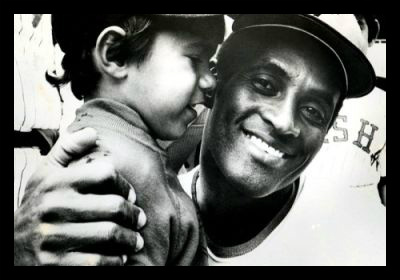
He amassed 3,000 hits and four batting titles in his seventeen-year career with the Pittsburgh Pirates.  He was the NL MVP in 1966, and helped guide the Pirates to a World Series crown in 1971.  Add twelve consecutive Gold Glove Awards for defensive excellence in right field and Roberto Clemente’s resume as one of the greatest players in the history of Major League Baseball is impressive.  Clemente’s legacy, however, goes far beyond key hits and defensive web gems.

Roberto Clemente was MLB’s most beloved humanitarian.  Born in Puerto Rico in 1934, Clemente worked tirelessly to promote greater accessibility and equality for Latino Americans, both within baseball and outside of it.  Clemente was famous for hosting baseball clinics for underprivileged youth free of charge.  He also delivered significant financial aid to people in his native Puerto Rico, the Dominican Republic, and other countries in Latin America.

Clemente made a reported annual salary of $125,000, which amounts to less than $1 million in today’s terms.  Yet Clemente still made charity a focal point of his professional life.  Clemente once famously said, “There is nothing wrong with our homes, our country, that a little more care, a little more concern, a little more love, won’t cure.”  Clemente’s vision of humanitarianism is one that contemporary athletes should take to heart.

And many have.  Since 1971, MLB has given the Roberto Clemente Award to the player who exemplifies Clemente’s commitment to community involvement.  This year’s winner is St. Louis Cardinals outfielder Carlos Beltran.  Beltran created the Carlos Beltran Foundation to support academic achievement for underprivileged youth.  This culminated in the opening of the Beltran Academy in Puerto Rico, which will house a state-of-the-art learning facility for young students and athletes.

A few months after reaching the exclusive 3,000 hit club, Roberto Clemente flew to Nicaragua.  The country was reeling after a devastating earthquake in 1972.  Clemente was traveling to Nicaragua to deliver relief and aid supplies, a further example of his devotion to humanitarianism.  His plane crashed en route to Nicaragua on New Year’s Eve in 1972.  Roberto Clemente died at the age of 38, fighting to help those in need.

– Taylor Diamond

Sources: Pro Baseball Hall of Fame, Total Pro Sports, Smithsonian Institute, MLB

January 13, 2014
https://borgenproject.org/wp-content/uploads/borgen-project-logo.svg 0 0 Borgen Project https://borgenproject.org/wp-content/uploads/borgen-project-logo.svg Borgen Project2014-01-13 22:09:462024-06-04 01:03:12Roberto Clemente: Sports’ Most Charitable Legend
Page 2 of 212

Get Smarter

  • Global Poverty 101
  • Global Poverty… The Good News
  • Global Poverty & U.S. Jobs
  • Global Poverty and National Security
  • Innovative Solutions to Poverty
  • Global Poverty & Aid FAQ’s
Search Search

Take Action

  • Call Congress
  • Email Congress
  • Donate
  • 30 Ways to Help
  • Volunteer Ops
  • Internships
  • Courses & Certificates
  • The Podcast
Borgen Project

“The Borgen Project is an incredible nonprofit organization that is addressing poverty and hunger and working towards ending them.”

-The Huffington Post

Inside The Borgen Project

  • Contact
  • About
  • Financials
  • President
  • Board of Directors
  • Board of Advisors

International Links

  • UK Email Parliament
  • UK Donate
  • Canada Email Parliament

Get Smarter

  • Global Poverty 101
  • Global Poverty… The Good News
  • Global Poverty & U.S. Jobs
  • Global Poverty and National Security
  • Innovative Solutions to Poverty
  • Global Poverty & Aid FAQ’s

Ways to Help

  • Call Congress
  • Email Congress
  • Donate
  • 30 Ways to Help
  • Volunteer Ops
  • Internships
  • Courses & Certificates
  • The Podcast
Scroll to top Scroll to top Scroll to top